SOUTHWESTERN STYLE SHEPHERD’S PIE WITH PICO DE GALLO

I am sure that my UK blogger friends are looking at this thinking, “What in the hell does he know about shepherd’s pie?” They are probably right even though this is one of my all-time favorite comfort foods. Detractors should be aware that the US Southwest is sheep country, and we eat a lot of lamb. It is also true that we have a hard time resisting putting green chile in just about everything. I suspect that someone has even made green chile ice cream.

Cooked lamb ready for the pie

Canned chopped green chiles

Chopped potatoes

I have tried to be true to the basic recipe while making it a uniquely Southwestern (USA, that is) by using local ingredients. That means roasted Hatch green chiles, asadero cheese ( a cheese that is made with a method similar to that used for mozzarella. Curds are cooked gently in hot water and then stretched. It is popular in Mexico and the southwestern United States, but if you can’t find it you can use mozzarella or even Monterrey jack.)  You could also use the Mexican cheese, queso fresco, and if you can’t find that, fresh farmer’s cheese will do.  As with real shepherd’s pie, the main ingredient is lamb.
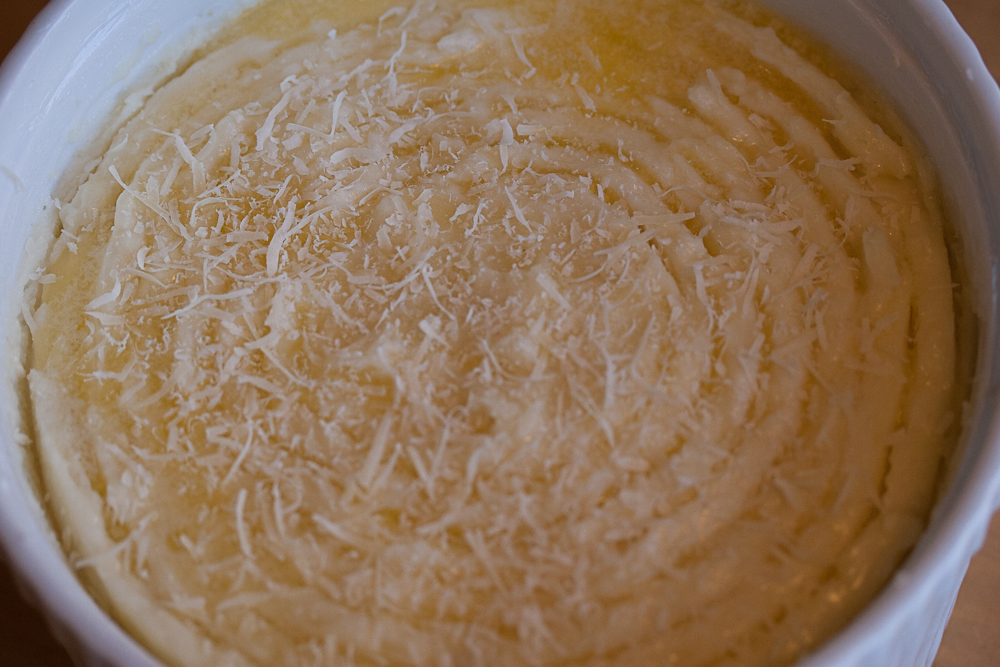
Ready for the oven

Americans often like to douse their shepherd’s pie with ketchup (I hear another UK shudder), but this version seems to cry out for pico de gallo. This is a salsa made with fresh ingredients. The name means “rooster’s beak” in Spanish. There are several explanations for how the name came to be, but none sound very likely.

Baked and ready to eat

RECIPES

Southwestern Style Shepherd’s Pie

Ingredients

  • 2 tablespoons olive oil
  • 1 medium onion, chopped
  • 1 pound ground lamb
  • 8 ounces, green chiles, chopped (fresh, frozen, or canned) Heat according to your preference
  • ¼ teaspoon ground cumin
  • 2 tablespoons dried Mexican oregano, shredded between your palms
  • 2 cloves garlic, finely chopped
  • 3 tablespoons all-purpose flour
  • ½ cup water or vegetable stock
  • salt and pepper to taste
  • 2 medium russet potatoes, peeled and cubed
  • 4 tablespoons butter
  • ½ cup heavy cream
  • ½ cup asadero cheese, chopped or grated
  • ¼ teaspoon Cholula hot sauce (optional)
  • salt and pepper to taste
  • 2 tablespoons butter, melted, for top

Method

  • Heat the oil in a medium frying pan until it shimmers. Add the chopped onions and cook until translucent, stirring frequently to prevent browning.
  • Add the ground lamb and continue to stir until the lamb is lightly browned
  • Stir in the  green chiles, cumin, oregano, and garlic. Continue to cook for a few minutes until the ingredients are well combined. Simmer for another 5 minutes.
  • Stir in the flour and stir until everything is well coated. Cook long enough (5 minutes or so) so that the flour loses its raw taste.
  • Add the water or stock and stir until the gravy thickens. Adjust the seasoning with salt and pepper. Add more water if you want a thinner gravy. Set aside for final assembly
  • In the meantime, peel and cube the potatoes. Put them in a medium pot with salted water. Bring to the boil and boil for 20 minutes or until the potatoes are soft.
  • Drain the potatoes and pass them through a potato ricer. Stir in the butter, cream, and grated cheese. Add a dash of hot sauce if you wish and correct the seasoning with salt and pepper
  • Butter the insides of an oven-proof casserole. Pour the meat mixture into the prepared dish, top with the mashed potatoes, and paint with melted butter
  • Bake in the middle of a pre-heated oven at 325° for about 60 minutes or until the top is lightly browned.

Pico de Gallo

Pico de Gallo

Ingredients

  • 1 large, ripe tomato
  • ½ yellow onion, coarsely chopped
  • 3 green onions, cleaned and coarsely chopped, including the green tops
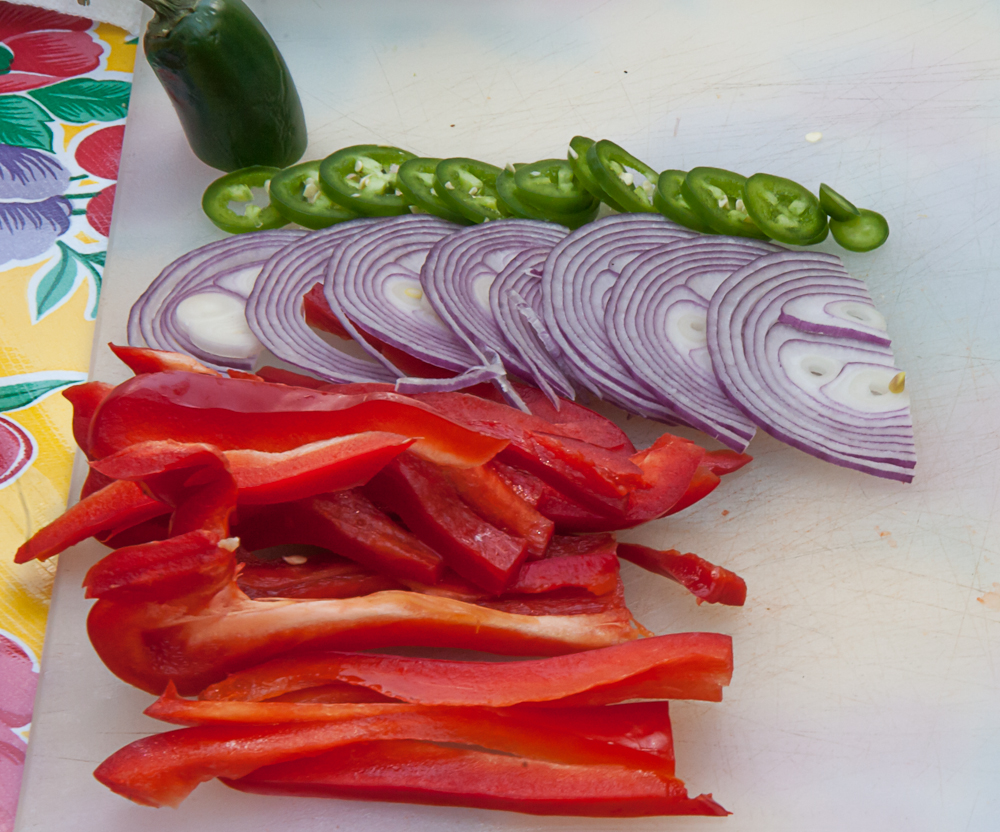
  • 2 fresh Anaheim chiles, seeded and coarsely chopped
  • 1 jalapeño chile, seeded and chopped (optional)
  • juice of 1 lime
  • A generous handful of cilantro leaves, chopped coarsely
  • salt and pepper to taste

Method

  • Blanch the tomato for 10 seconds in boiling water. Then peel, seed, and chop coarsely
  • Combine all of the ingredients in a medium bowl. Adjust the seasoning, and chill in the refrigerator for 30 minutes.
  • Serve like any other salsa. Use generously on the Southwestern Style Shepherd’s Pie.
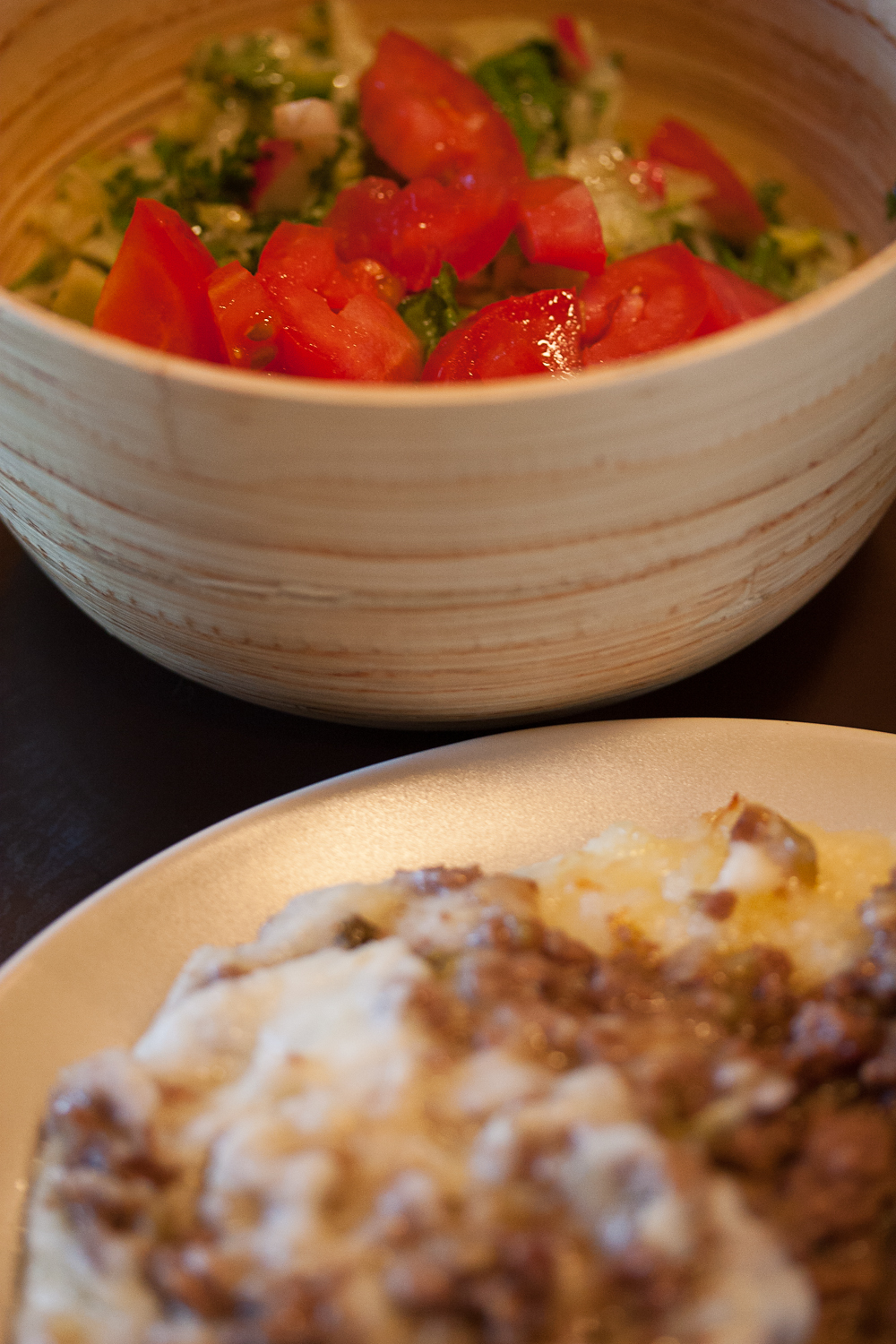
Southwestern style shepherd’s pie with pico de gallo on the side

3 Comments

Filed under Food, Photography, Recipes

RHUBARB AND STRAWBERRY PIE

A few weeks ago, that great blog, Baking with Sibella,  http://bakingwithsibella.wordpress.com/ featured a beautiful rhubarb and strawberry galette. More recently, Sibella has shown us how to make a rhubarb and strawberry sauce. Such inspiration!

I remember days in my grandmother’s back yard in the spring. She had three very old and very large rhubarb plants growing under a huge cottonwood tree. The leaves of the rhubarb were enormous – and of course inedible – but the children would pick a stalk, pull off the outer rind, sprinkle a little salt, and then pucker up our mouths from the sour-salt taste. That was fun while we waited for the sweet rhubarb pie.

Rhubarb has been a feature of our local farmers market for several weeks, and strawberries are just now becoming available. It’s the beginning of summer, and I think of rhubarb as a harbinger of spring. Never mind that my seasons are messed up, rhubarb and strawberry pie seems like the perfect thing to bake right now, so here goes:

RECIPES

Pie Crust

Ingredients

  • 2 cups all-purpose flour
  • 1 teaspoon sugar
  • 1 tablespoon sugar
  • 2/3 cup vegetable shortening
  • 1/3 cup ice water

Method

  • In a large bowl, combine the flour, salt, and sugar. Then cut in the shortening with a pastry blender until the mixture resembles fine crumbs
  • Stir in the ice water using a fork to combine. Pull together any loose crumbs, and pat the dough into a ball. Cover with plastic wrap and refrigerate for at least 30 minutes.

Pie crust mix after cutting in the vegetable shortening

Rhubarb and Strawberry Filling

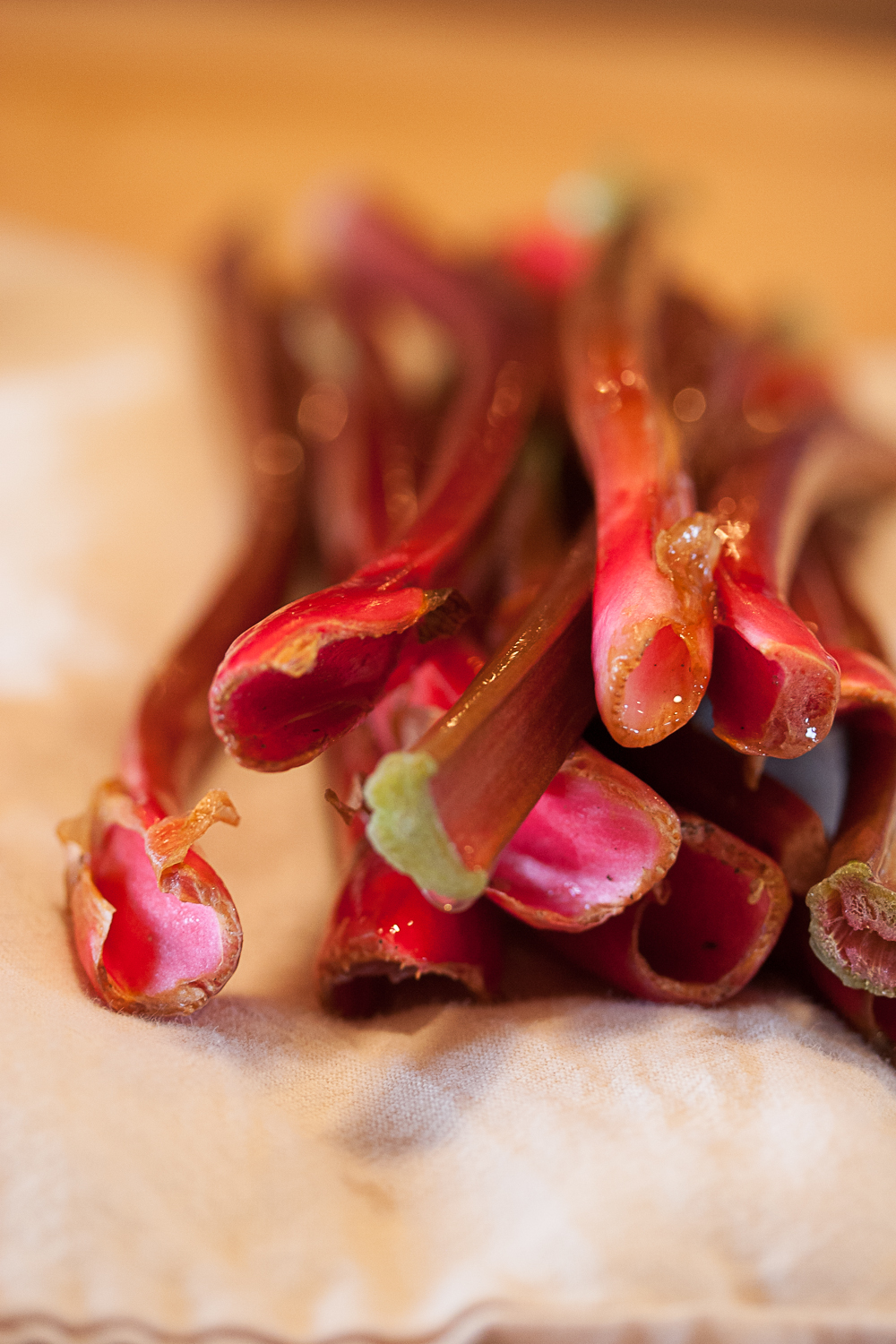
Stalks of rhubarb

Diced rhubarb

Ingredients

  • 1½ cups sugar
  • 1/3 cup all-purpose flour
  • 1/4 teaspoon salt
  • ½ teaspoon vanilla extract
  • 3 cups rhubarb (6 to 10 stalks, depending on siz), cut crosswise in ½ inch pieces
  • 1 quart strawberries, washed and hulled

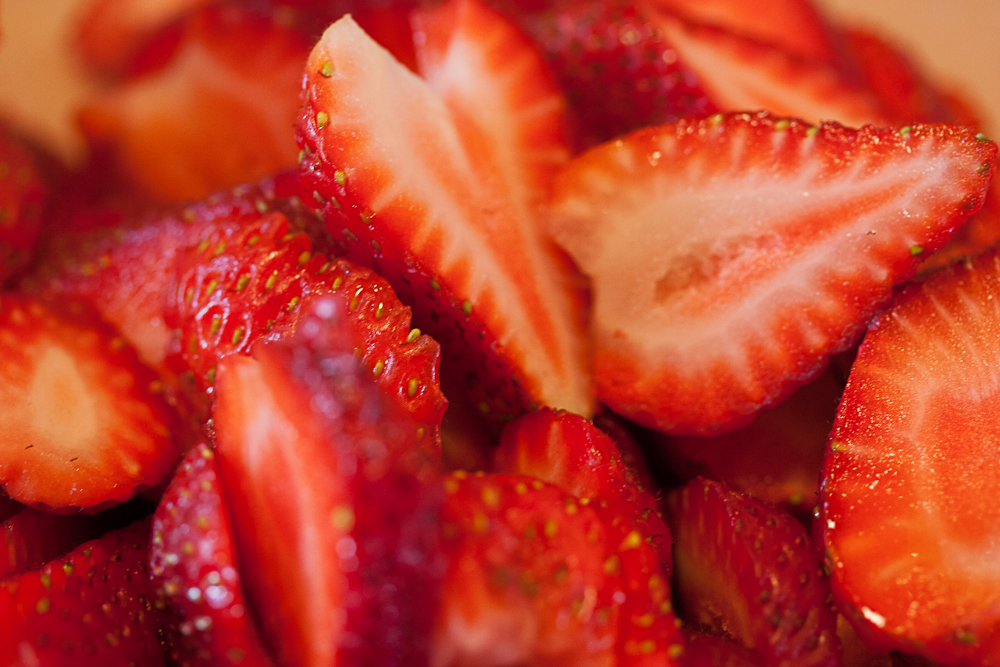
Fresh strawberries

Sliced strawberries

Method

  • In a large bowl, combine the sugar, flour, salt, and vanilla extract.
  • Add the rhubarb and strawberries. Mix well

Final Assembly

Ingredients

  • pie dough and filling from above
  • 2 tablespoons unsalted butter
  • 1 egg white mixed with 1 tablespoon water
  • 3 tablespoons turbinado sugar

Baked pie on the cooling rack

Method

  • Preheat oven to 450°
  • Remove the prepared pie dough from the refrigerator. Divide in half.
  • Roll out one half of the dough into a circle large enough to line a 9 inch pie pan
  • Roll out the remaining half of the dough for the top crust.
  • Transfer the rhubarb and strawberry mixture to the empty pie shell.
  • Dot the top of the filling with the butter and cover with the top crust. Crimp the edges of the pie and cut off any extra dough.
  • Cut several vents in the top crust. Paint the top lightly with the egg white mixture using a pastry brush. Then sprinkle with the turbinado sugar.
  • Bake at 450° for 15 minutes. Then reduce the heat to 350° for 40 minutes longer or until done. Be sure to have a pan on a lower shelf of the oven to catch any drips. If the edge of the crust gets too dark before the pie is baked, shield it with a ring of aluminum foil.
  • Cool on a baking rack.

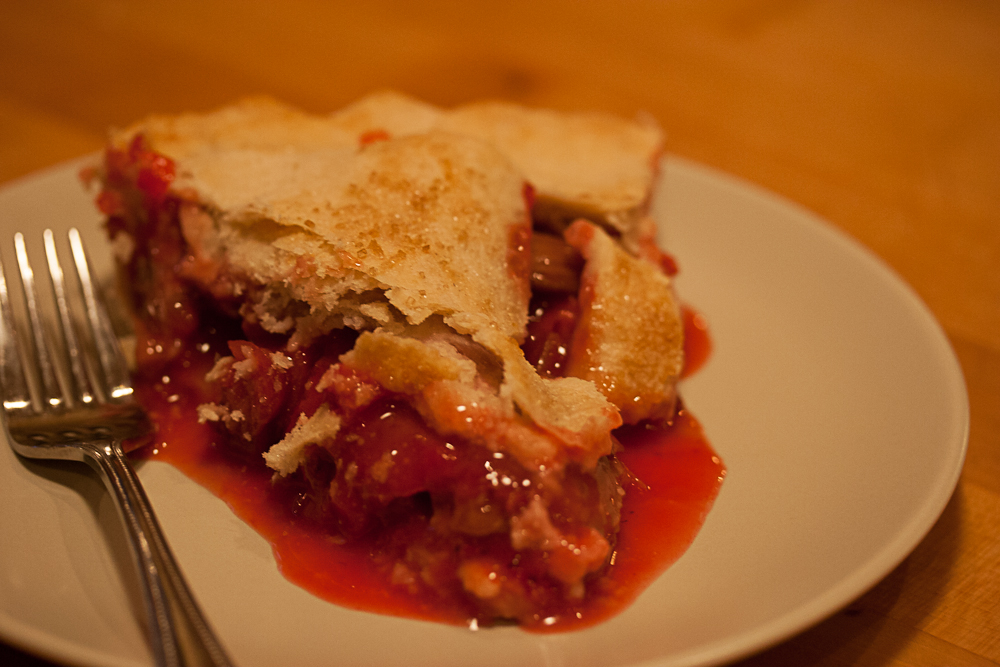
Ready to eat

4 Comments

Filed under Food, Photography, Recipes

PAELLA AND CHAMOMILE/LIME FLAN

The other evening we had some friends over for dinner. I had tasted a bottle of Spanish granacha, Cruz de Piedra, at our neighborhood wine tasting the week before, so of course I thought of making paella in our back yard over our open fire pit. It turned out to be Spanish night with manchego, membrillo, white anchovies, paella, and chamomile/lime flan with home-made cajeta. I was pretty proud of the result, and then I discovered that our friends’ daughter, who runs the first food truck in our town, serves paella on a regular basis. Not only that, she writes a food blog where she has done a very complete and scholarly description of the history and traditions of paella. You can read all about it on her blog, http://www.foodtruckclick.com/

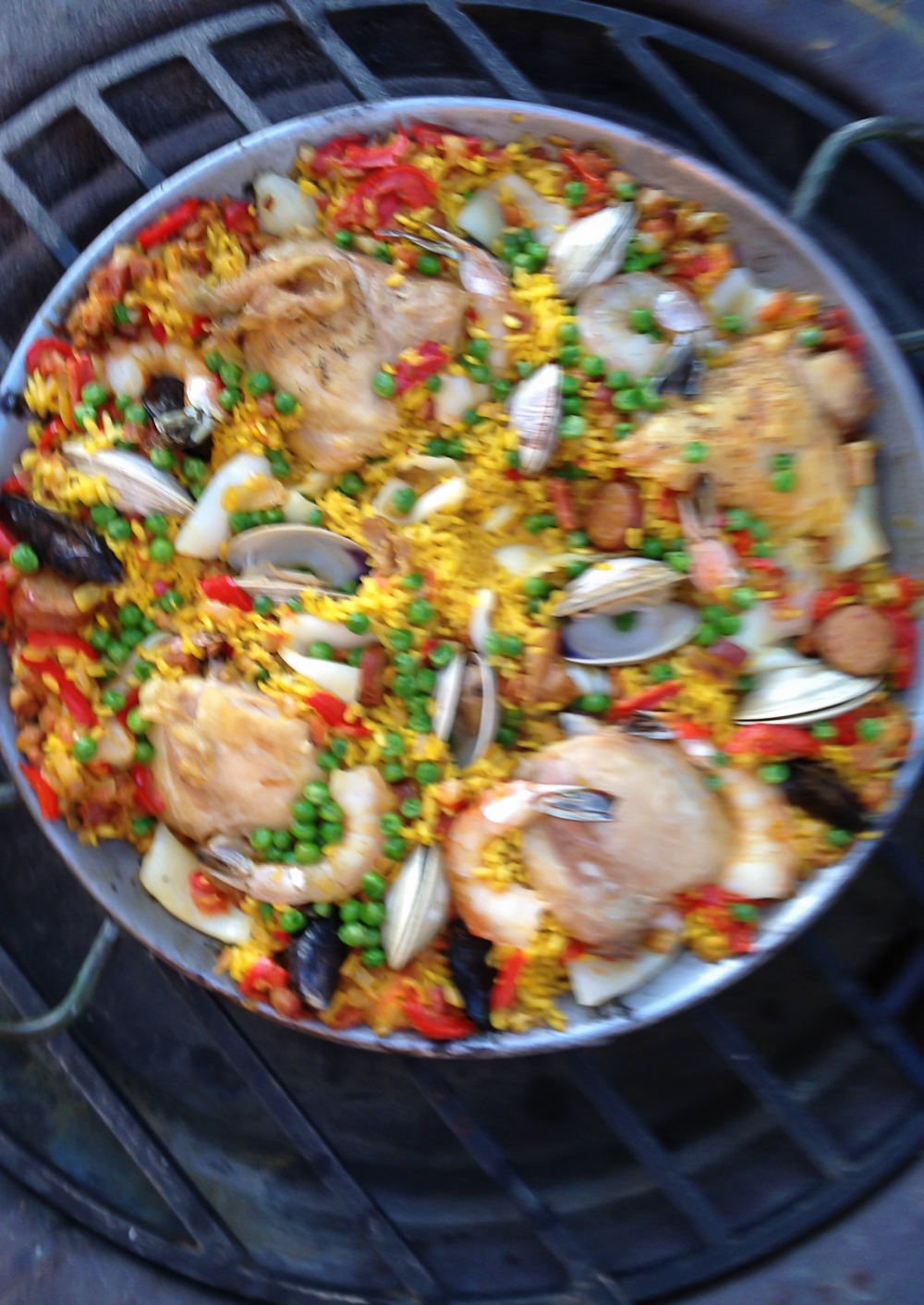
Paella on the fire pit

We still had a good time at our gathering, and cooking the paella over an open fire was the hit of the evening.

We enjoyed some of the Cruz de Piedra, along with some vinho verde in deference to the Portuguese and a warm evening. Our friends brought a tasty green salad dressed with a simple vinaigrette along with a crusty batard of farm bread.

Dessert was a classic flan except that it was flavored with chamomile and lime. I served it with the traditional caramel topping but along with cajeta made with fresh goat’s milk.

As evening came, we just relaxed on the patio and watched the sun go down.

Paella is one of those things where you can just do whatever you please except for the required rice and saffron. The recipe that follows is the version I chose for the evening.

Ready to eat

RECIPES

Paella

Ingredients

  • ½ cup olive oil, divided
  • 4 chicken thighs
  • 3 ounces pancetta, chopped
  • 2 chorizo sausages, one diced and one sliced crosswise
  • 1 medium yellow onion, diced
  • 1 large tomato, peeled, seeded, and chopped
  • 1 red bell pepper, seeded and cut into ¼ x 1½ inch strips
  • 3 cloves garlic, peeled and minced
  • 2½ cups Arborio rice
  • 2½ cups fish stock
  • 2½ cups chicken stock
  • 1 teaspoon kosher or sea salt
  • ½ teaspoon Spanish saffron (no other)
  • 8 clams
  • 8 mussels
  • 8 large shrimp, shelled except for the tail and deveined
  • ½ cup fresh or thoroughly thawed frozen green peas
  • 4 medium squid tubes, each cut into 4 pieces

Method

  • On the stove, heat half of the olive oil over a medium high flame. When it is just shimmering, add the chicken thighs, skin-side down. Brown the chicken until the skin is crisp and brown, turning frequently so the chicken cooks through completely. Drain the chicken on paper towels and set aside. You may want to refrigerate if dinner is a long way away.
  • Add the sliced chorizo to the hot oil and chicken fat. Turn frequently until lightly browned. Drain the cooked chorizo on paper towels and set aside.
  • Add the pancetta and diced chorizo to the still hot pan. Stir frequently until the pancetta is just slightly browned but not crispy. Then add the onion, tomato, pepper, and garlic. Cook until the vegetables are well wilted, liquid has boiled  off, and the mixture is a thick sauce. This is the sofrito. Transfer to a bowl and set aside.
  • About an hour before you plan to start the paella, build a fire in the fire pit. Although a wood fire is traditional, charcoal briquettes are perfect.
  • Back in the kitchen, pour out the oil and chicken fat from the pan. Add the remaining olive oil and heat until it shimmers. Then add the rice, stirring frequently until it is well coated.
  • In the meantime, combine the fish and chicken stock in a large pot and bring to the boil.
  • When the rice is evenly coated stir in the sofrito, salt, and saffron. Then pour in the boiling stock, and bring it back to the boil.
  • It is now time to take the pan out to the fire pit. Be careful not to spill.
  • When the pan is firmly set on the grate, make sure it is bubbling gently. From now on, don’t stir.
  • Now it is time to add the other ingredients. First arrange the chicken thighs around the outside of the pan. Then put in the sliced chorizo. After a few minutes, place the clams, hinge side down, deep into the rice. Next add the mussels, and then the shrimp.
  • Sprinkle the peas over the top. Then check to see how everything is going. Add more water if needed. Stir only if the bottom seems to be burning.
  • Cooking should take around 20-30  minutes, depending upon the heat of your fire.
  • Just 3 or 4 minutes before you think things are done, bury the pieces of squid in the rice. They will get tough if you cook them too long.
  • Serve immediately.

Chamomile/Lime Flan

Ingredients

  • 2/3 cup white sugar
  • ¼ cup water
  • 2 cups whipping cream
  • 2 bags pure chamomile tea (some have mint or other herbs)
  • rinds of 2 limes
  • ½ cup sugar
  • 2 whole eggs
  • 2 egg yolks
  • 2 quarts boiling water

Method

  • Preheat oven to 300° and set out 4  6-ounce ramekins
  • In a small sauce pan, combine the sugar and water. Bring to a boil over medium heat. Do not stir but continue to boil until the mixture is a light amber color.
  • Working quickly, pour some of the caramelized sugar into each of the ramekins, turning them so the caramel coats the bottoms and sides. Set aside.
  • In a heavy-bottomed saucepan,  heat the cream to a simmer along with the added tea bags and lime rinds. Heat for about 10 minutes. Then stir in the sugar, and remove from the heat.
  • Let steep off the heat for another 10 minutes. Then strain into a bowl.
  • In the meantime, combine the eggs and egg yolks in another bowl, using a whisk. Make sure that they are very well mixed.
  • Whipping constantly, Pour a small stream of the heated cream into the egg mixture/ Not too much so that the eggs don’t scramble. Add a little more of the heated cream to temper the eggs, and then pour that mixture into the cream, whipping to combine completely.
  • Pour the egg and cream mixture into the prepared ramekins.
  • Arrange the ramekins in an oven-proof pan which will hold them comfortably.
  • Pour the boiling water into the pan ust to the level of the tops of the flans, being careful not to get water in the ramekins.
  • Transfer to the middle of the preheated oven and bake for 30 minutes. Remove the pan from the oven. The centers of the custards will still be soft.
  • Place the pan on a cooling rack and allow the flans to cool completely in the water bath. They will finish their cooking as they cool.
  • Cover the cooled ramekins with plastic wrap and chill in the refrigerator for at least an hour and even over night.
  • To serve, run a thin spatula around the edge of each flan. Invert over the serving plate. The flan should slide out easily. If it does not, twist gently and it should come free.

2 Comments

Filed under Food, Photography, Recipes, Restaurants

HAUTE CUISINE IN THE WILDERNESS

Beginning of small rapids

Running the rapids

This last weekend we spent three days on a raft trip down a wild part of the Rio Chama in northern New Mexico. The trip was sponsored by the New Mexico Wilderness Alliance., who are working to preserve the river.  The river and its immediate environs are currently a federal wilderness study area. If the Congress approves the plan, this beautiful river and the surrounding mountains will be designated a Federal Wilderness Area which will ensure protection of the unique, fragile, and beautiful environment. We tagged along for the adventure and to see the scenery The Wilderness Alliance is working hard to obtain wilderness designation, so their staff also wanted to look at the river.

The raft trip was run by an outfitter from Taos, New Mexico, named Far-Flung Adventures.They brought a virtual flotilla for our trip, including three paddle boats, a supply boat, and four inflatable kayaks. There were three boatmen and a single boatwoman, all of whom were extremely friendly, helpful, and competent. The trip was filled with relaxing floats, shite water rapids, sunny skies, and spectacular scenery.

What we were not expecting was the food. All of the supplies, including the food itself and the portable kitchen had to be carried with us on the river and through the rough water. Our anticipation was that we would get a lot of cold sandwiches, hot dogs, and hamburgers. Wow, were we in for a surprise.

Our first lunch was a delicatessen spread just an hour or so after we first boarded the boats. That evening we had a wide selection of cheese and dips to go with wine or beer. Then there were grilled chicken tacos with fresh-made pico de gallo along with fresh spinach, almond, and mandarin orange salad. To top it off, there was a chocolate cake with icing, baked in a three-legged Dutch oven.

Big steaks ready to grill

Cooking

Then there were tabbouleh, pasta salad with artichoke hearts, tender steaks, grilled salmon, and a cherry cobbler – again done in the Dutch oven.

Ingredients for the cherry cobbler

Brent ready to serve the cherry cobbler

I wound up gaining 3 pounds on what I thought was a wilderness expedition.

On top of all that, we had live music and poetry recitations from the multiple-threat boat crew.

Brent playing his guitar

This turned out to be a memorable trip, and one that I would highly recommend. You are pampered as much as you would like, or you can be strenuous in the kayaks to work off all those good calories.

Fresh fruit

Vegetable garnish

Tabbouleh

RECIPE

Tabbouleh

Ingredients

  • ½ cup bulgur
  • 2 cups fresh parsley leaves, finely chopped
  • 1 cup fresh mint leaves, finely chopped
  • 2 large tomatoes, seeded and chopped
  • ½ large red onion, chopped
  • ½ cup extra virgin olive oil
  • juice of 2 lemons
  • salt and pepper to taste

Preparation

  • Cover the bulgur with boiling  water and let stand for ½ hour until soft. Place the soaked bulgur in a clean kitchen towel and squeeze as dry as possible
  • Combine the bulgur with all of the remaining ingredients, adjusting seasoning with salt and pepper. Toss lightly and serve.

3 Comments

Filed under Food, Photography, Recipes

TOSTONES AND GUACAMOLE

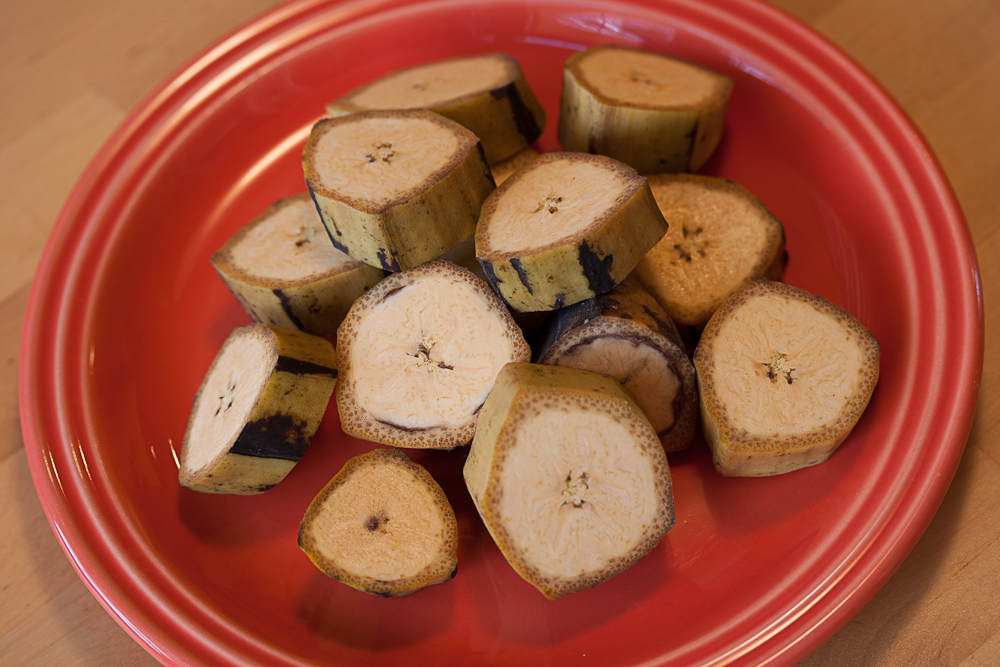
When our son, Peter, was in graduate school, he stayed in a run-down house with a number of Colombiano students. The house was on Hillmont Street, so they named the house “Casa Hillmont”. During his time at Casa Hillmont, Peter’s Spanish skills improved markedly, but he also learned to cook Colombian comfort food. One favorite was and is tostones. Tostones are the one way I know of to use plantain. This banana relative usually sits neglected in the produce section of the grocery store. Neglect those plantains no longer because tostones are easy to make,  delicious as a snack, and a great substitute for corn chips with guacamole.

Plantain slices ready to fry

First frying of plantain slices

Smashing a cooked plantain slice with a can

Tostones ready to serve

Guacamole is a Central American dish which has been imported to the American Southwest and eventually to the whole world. Probably that’s because it is easy to make The mellow flavor of the obligate avocado balanced against citrus and chile accents is hard to resist, especially with a corn chip and cold margarita in hand. According to Diane Kennedy, the legendary Mexican cookbook writer, the word comes from two Nahuatl (Aztec) words, ahuacatl (avocado) and molli (mixture). Other authorities say that the word ahuacatl actually means “testicle” referring to the shape of the fruit and its tendency to grow in pairs. More than that, the Mesoamericans reportedly believed that eating the fruit contributed to sexual prowess. Those interesting facts aside, it is easy to eat a bowl of fresh guacamole by oneself.

Ingredients for my version of guacamole

There are probably as many recipes for guacamole as there are cooks who make it. Most traditional recipes include chopped tomato. For me, the version which tends to be favored in Santa Fe is the best. It uses coarsely mashed avocado, lime juice, a little chopped onion, salt, and pepper. Garlic and cilantro are acceptable additions, and chile depends upon your tolerance for heat. I do balk at one addition that you sometimes see – mayonnaise. The Aztecs never used mayonnaise! Honestly, I prefer guacamole with a kick, but because my wife has zero tolerance for chile, I make it without any zest and then sneak a little chile into my portion.

Guacamole in a molcajete ready to serve

The recipes to follow should be enough for two people. For larger groups, just increase proportions accordingly.

RECIPES

Tostones

  • cooking oil
  • 1 ripe plantain, unpeeled and cut in ½ inch  slices (about 12 slices)
  • salt
  • Add the oil to a ½ inch depth in a heavy pan and heat over a medium-high flame. Do not let it smoke
  • Peel the plantain slices and place them in the heated oil. Brown lightly, turn, and brown the other side
  • Remove the slices to absorbent paper, and using the flat end of a large can, smash each of the cooked slices
  • Immediately return the slices to the heated oil and continue frying them until they are browned on both sides
  • Remove again to the absorbent paper, sprinkle with salt, and serve while still warm

Guacamole

Ingredients

  • 1 large, ripe avocado
  • juice of 1 fresh lime
  • 2 scallions, trimmed and chopped finely
  • salt and pepper to taste
  • 1 small tomato, peeled, seeded, and chopped (optional)
  • cilantro leaves, chopped (optional)
  • hot sauce (eg Tabasco or Cholula) to taste (optional)
  • 1 jalapeño, seeded and chopped (optional)

Method

  • Place the avocado flesh in a medium bowl and mash coarsely with a table fork
  • Add the lime juice and combine with the mashed avocado.
  • Stir in the chopped scallions, adjust seasoning with salt and pepper, and serve
  • Add optional ingredients according to your own taste

7 Comments

Filed under Food, Photography, Recipes

LEFTOVER LAMB SHANKS

The day after our farmers market feast, Sarah went off to the restaurant where she was working. Evan slept in after his last night cooking at the restaurant where he worked. Around noon, he volunteered to make lunch and headed out to the kitchen. There were lots of leftovers from the night before, but when he had finished you would not have recognized at all that they were leftovers.

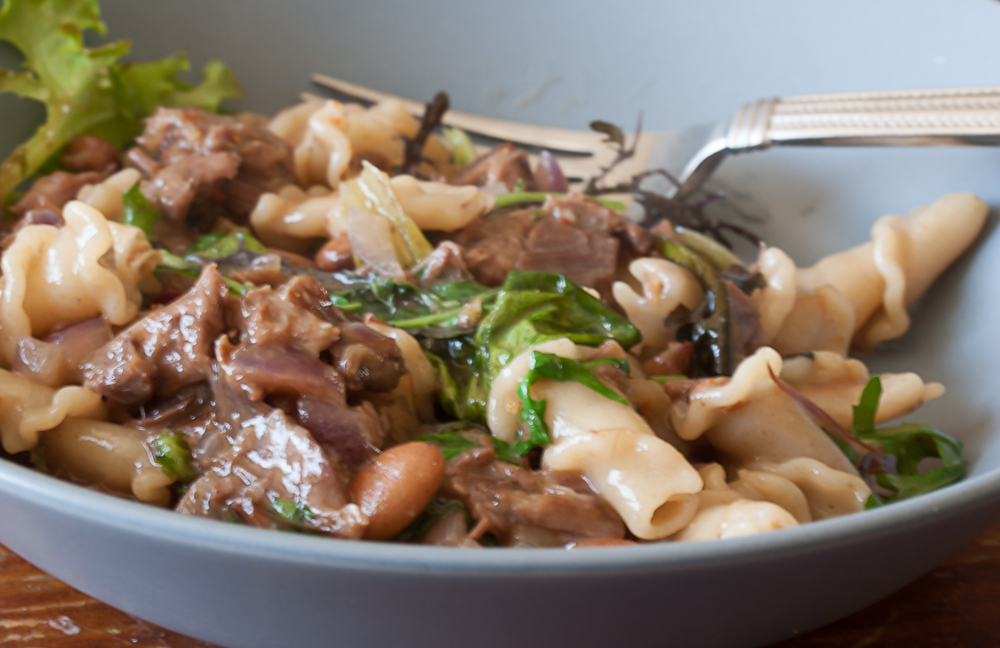
He whipped up a fragrant pasta dish which included the leftover lamb shanks, a reduction of the cooking liquid,  freshly cooked pasta, mushrooms, and some wilted baby salad greens.

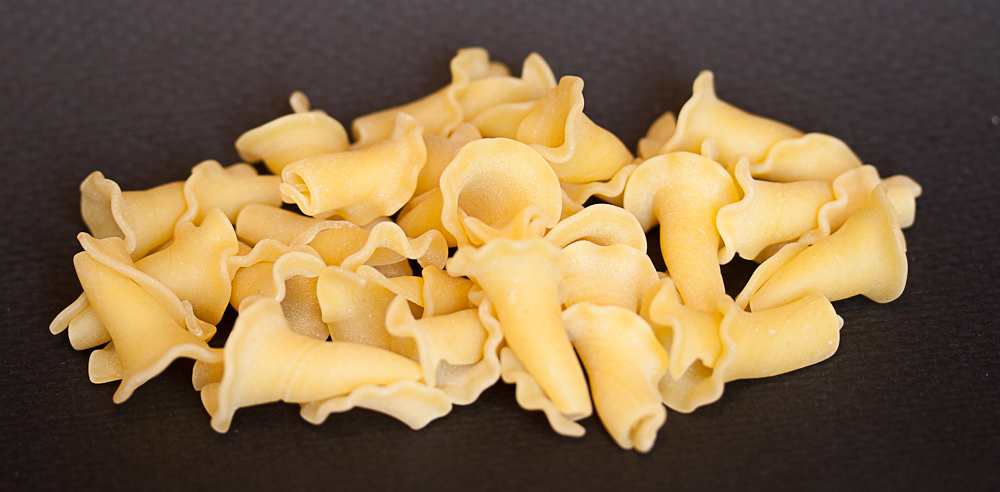
Uncooked campanelle pasta

The pasta he chose was campanelle which  with its bell shape and fluting was a perfect choice to hold the sauce. This unusual pasta shape was listed in a catalog of Sicilian pastas at the end of the nineteenth century. You can read more about it in an interesting book,  Encyclopedia of Pasta, written by Oretta Zanini de Vita and translated by Maureen B. Fant (University of California Press, Berkeley, 2009), which describes the history and  making of Italian pasta.

Lamb shanks, campanelle pasta, mushrooms and wilted greens

RECIPE

Ingredients

  • 2 cups leftover lamb braising liquid, strained and de-greased
  • 1 cup campanelle pasta
  • 1 cup leftover lamb shanks, cut into bite-sized pieces
  • 2 tablespoons olive oil
  • 1 cup mushrooms, trimmed and cut into bite-sized pieces
  • 1 cup baby salad greens
  • salt and pepper

Method

  • Bring the braising liquid to a boil and add the campanelle. Boil until the pasta is al dente.
  • Add the lamb  and warm over low heat until heated through.
  • While the pasta is boiling, heat the olive oil in a small sauté pan over medium heat. Add the mushrooms and sauté for 3 minutes.
  • Stir the mushrooms into the lamb and pasta.
  • Add the salad greens, toss lightly, correct the seasoning and serve immediately.

3 Comments

Filed under Food, Photography, Recipes

CUCUMBER-NORI-SESAME SALAD AND SAUTÉED ROYAL TRUMPET MUSHROOMS: THE FINISHING TOUCHES

Just two more dishes to finish the description of the celebratory meal we had from foods we collected at the Ferry Building Farmers Market. Both are easy to make but surprisingly unique.

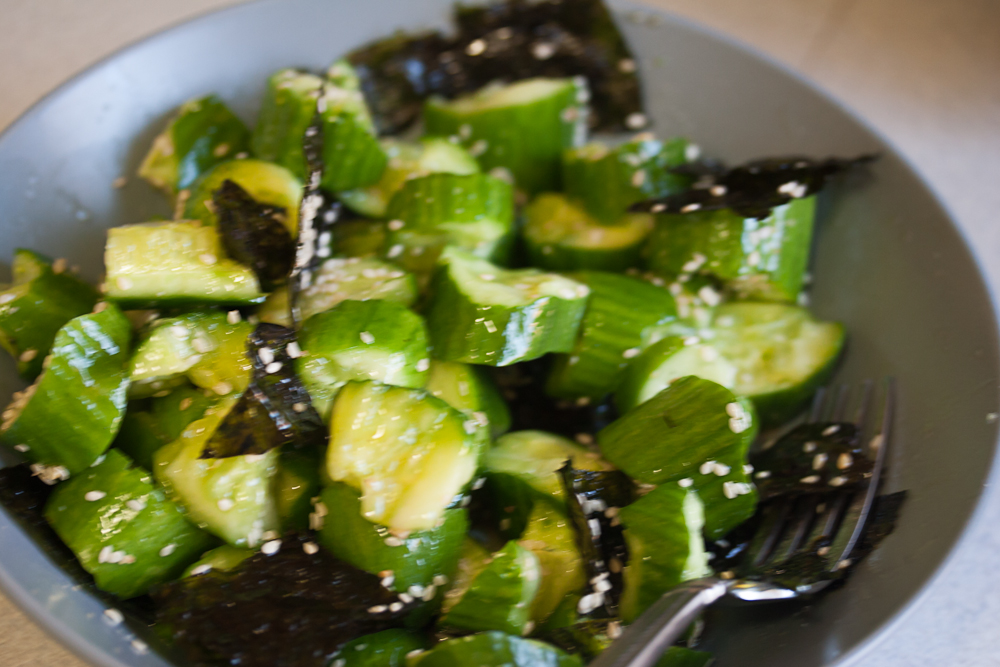
Cucumber-nori-sesame salad

The first was a refreshing salad made with amazingly crunchy and green baby cucumbers and fresh salad greens accented with bits of nori and toasted white sesame seeds.

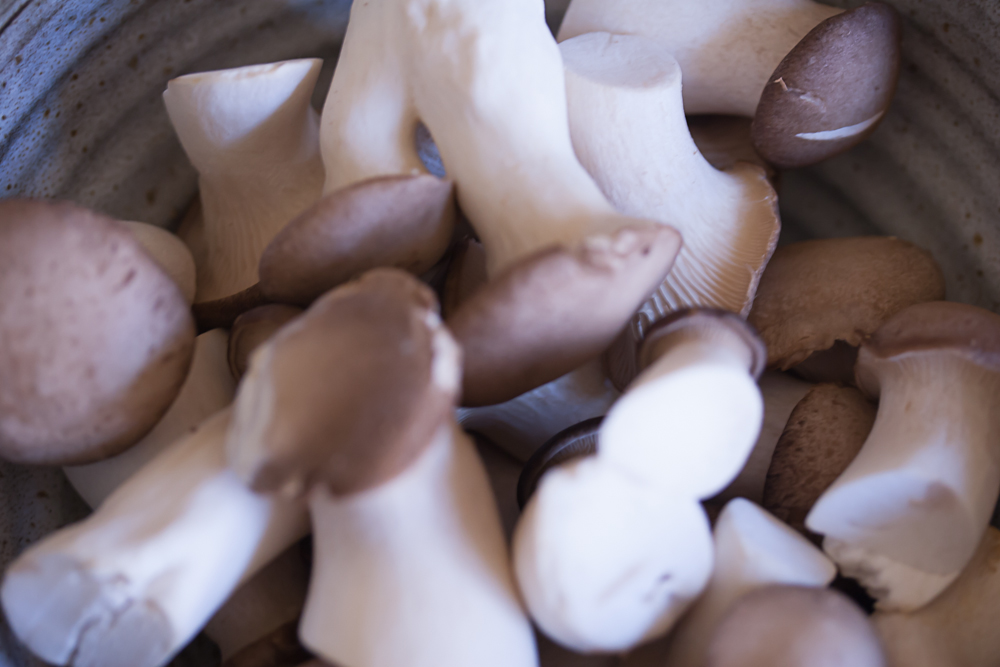
Royal trumpet mushrooms

The second was a delicate sauté of royal trumpet mushrooms with scallions.

Scallions

Sautéed mushrooms and scallions ready to serve

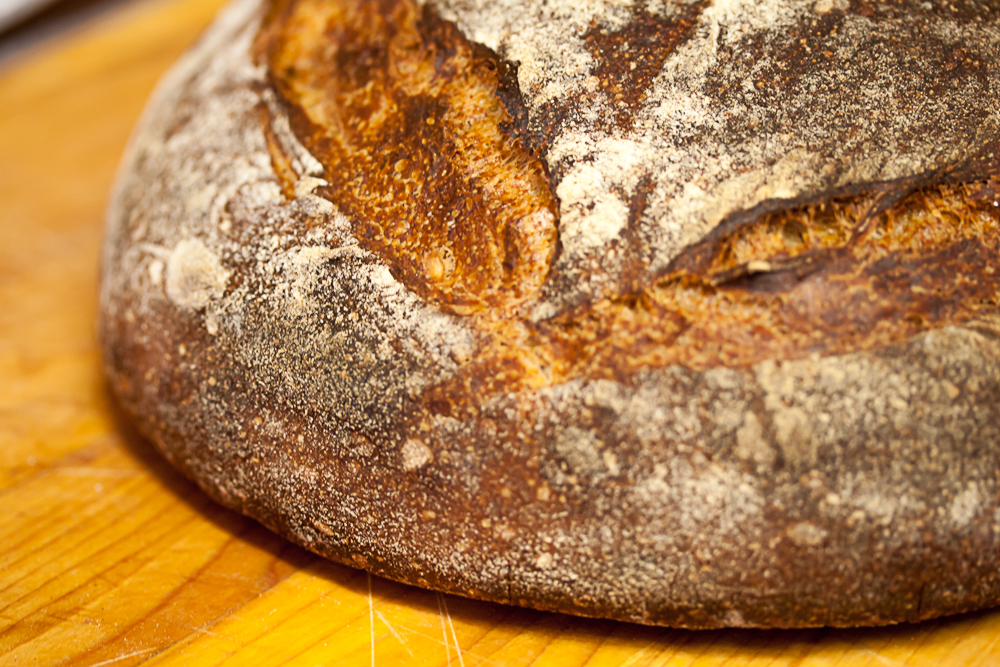
As a bonus not from the farmers market we had a fresh loaf of home-baked Tartine basic country bread made from the recipe in Chad Robertson’s elegant and detailed cookbook, Tartine Bread, Chronicle Books, Ltd, San Francisco, 2010, pages 41-79. (Yes, that’s a long recipe. I plan to post an abbreviated version soon. That should enable you to reproduce the absolutely best home-made bread I have ever tasted).

Fresh loaf of Tartine-style bread

RECIPES

Cucumber-Nori-Sesame Salad

Ingredients

  • 4 small, firm baby cucumbers cut crosswise into ½ inch slices
  • 2 Cups mixed baby salad greens
  • ½ 7 inch sheet of nori cut into ½ inch squares
  • vinaigrette (home-made is the best, but use your favorite)
  • ½ teaspoon sesame oil (optional)
  • salt and pepper to taste
  • 2 Tablespoons white sesame seeds, lightly toasted

Procedure

  • Combine the cucumbers, greens, and nori in a serving bowl.
  • Dress lightly with your favorite vinaigrette. If you like, add the optional sesame oil. Toss.
  • Adjust seasoning with salt and pepper.
  • Sprinkle with sesame seeds and serve immediately.

Should serve four

Sautéed Royal Trumpet Mushrooms with Scallions

Ingredients

  • 2 Tablespoons unsalted butter
  • 2 Tablespoons olive oil (use EVOO – extra virgin olive oil – if you like)
  • 1 small basket (about 2 Cups) fresh royal trumpet mushrooms, cleaned and trimmed
  • 1 bunch (6 to 8) scallions, trimmed and cut crosswise into ½ inch pieces, including the green tops
  • salt and pepper

Procedure

  • Heat the butter and olive oil in a medium sauté pan over medium-high heat.
  • Add the mushrooms and scallions and sauté until cooked through.
  • Correct seasonings with salt and pepper.
  • Serve immediately.

Table set with sweet peas

We set the table with the bouquet of multi-colored sweet peas bought from the flower stall, plated up the feast, and enjoyed it while Evan finished his last day at the restaurant.

Ready to eat

2 Comments

Filed under Food, Photography, Recipes

MORE FARMERS MARKET DINNER: BRAISED LAMB SHANKS

San Francisco’s Ferry Building Farmers Market is much more than the outdoor stalls which attract crowds a couple of days each week. There are all sorts of shops inside the building selling everything from kitchen gear to local caviar. The cheese shops are outstanding, the bakeries are great, and the mushroom place has a huge choice of the freshest specimens. For the carnivores, there are several great shops, but a favorite of both Sarah and me is Prather Ranch. We bought four succulent lamb shanks already done up in plastic, but clearly very fresh. These would be the centerpiece of our farmers market meal.
Turning the braising lamb shanks

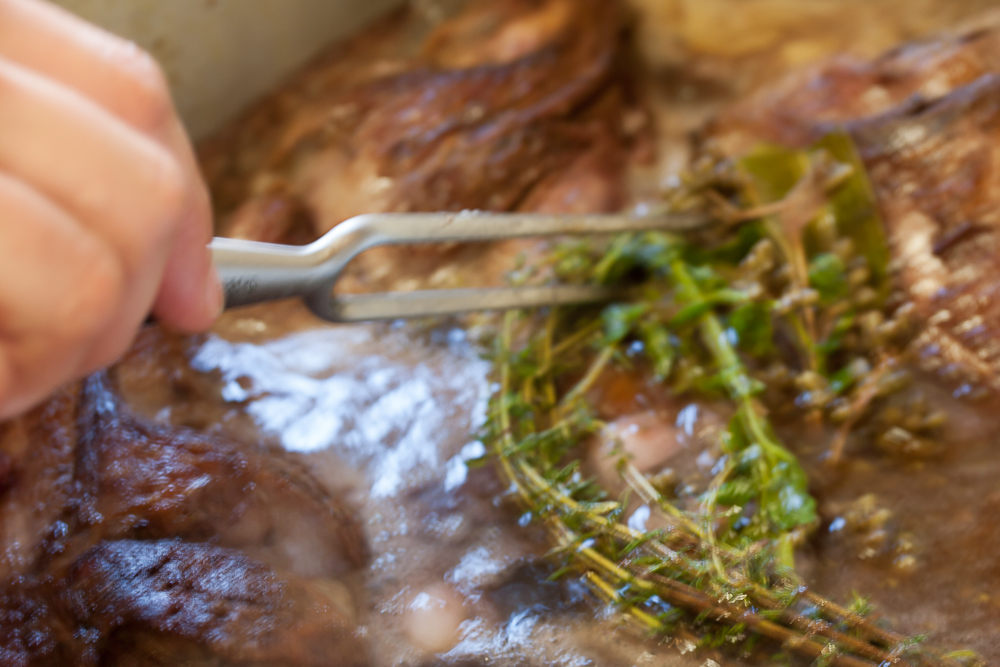
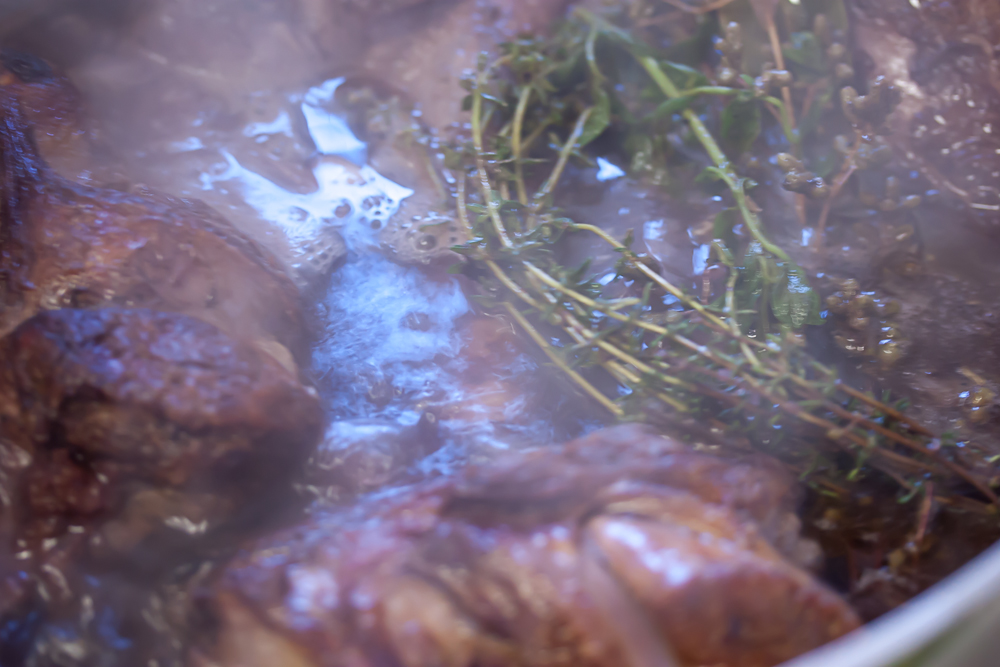
After getting the lamb shanks home, Sarah browned them in a huge Magnalite casserole along with a couple of cloves of smashed garlic and some aromatic vegetables: carrots and onions. Chefs seem divided over the use of celery in the classic mirepoix combination of onions, celery, and carrots. Some refuse to use celery as they think it is too bitter. Whatever your own personal bias might be, be sure to brown the lamb shanks in some oil and your choice of vegetables. Add some stock or water and a good slug of red wine. Season with salt and pepper. Toss in a generous handful of fresh thyme and Mediterranean (not Mexican) oregano. Bring to a boil, and then cover and reduce the heat to the lowest simmer.

Some purists insist on using rosemary and garlic as the classic seasoning for lamb. You can do that instead if you prefer, but I can guarantee that thyme and oregano work beautifully.

Steaming braising liquid with herbs

Sarah finished her dish over low heat on the stove top, turning and basting frequently as well as skimming off excess fat. If you prefer, you can braise the lamb shanks, covered,  in the oven at low heat – no more than 250°F. Be sure to check the pot frequently and skim the rendered fat. Plan to braise the shanks for at least 2 to 3 hours or until the meat is well done, tender, and falling off the bone.

When they are done to your liking, remove the lamb shanks to a platter and serve them immediately while still warm.

Finished lamb shanks

Lamb shanks vary greatly in size, but in most cases you should allow one for each diner. With only three of us and four lamb shanks we wound up with leftovers.

Ready to serve

3 Comments

Filed under Food, Photography, Recipes

THANKS TO SIBELLA

I want to thank Baking with Sibella http://bakingwithsibella.wordpress.com  for nominating me for the Liebster award. It is a special honor because Sibella has such a great blog filled not only with some of her beautiful baking efforts but also great photo images and examples of her varied artistic accomplishments. For certain you should check out her recipe for rhubarb and strawberry galette. If the images and recipe don’t make you salivate and pull out your baking gear, you are not a real food enthusiast!

The Liebster award is reserved for blogs of fewer than 50 followers, so my numbers definitely qualify me, but with friends like Sibella perhaps I can beat that limit.

1 Comment

Filed under Recipes

ASPARAGUS: LET IT STEW IN ITS OWN JUICE

Another part of our recent meal provided from our trip to the Ferry Building Farmers Market. Even though these days asparagus is available the year around, local, really fresh asparagus is still a harbinger to the spring in northern climes. It is then that it is at its best. There are lots of great ways to cook asparagus – steamed, boiled, baked, and grilled. This method taught to me by Sarah produces the greenest, freshest-tasting asparagus I’ve ever had.

Fresh asparagus spears

We bought three bundles of the thickest stalks we could find in the asparagus stall at the market.

Juicing the asparagus stems

When we were ready for dinner, Sarah cut the thick ends of the stalks where the tender flesh begins. You probably already do the same. I usually throw away those woody ends, but Sarah dropped them into her electric juicer and got the greenest asparagus juice I’ve ever seen. Actually, I’d never seen asparagus juice before.

Peeling the asparagus spears

Next, using a very sharp paring knife, Sarah made the very thinnest peelings of the skins of the asparagus spears.

Peeled asparagus spears ready to cook

Then she put the juice, seasoned with just a little salt and pepper, in a pan large enough to allow the spears to lie flat. She brought the juice to a boil, dropped in the spears, and cooked them for just a few minutes until the asparagus was tender. The finished spears were a bright green color and fragrant.

Asparagus spears cooking in asparagus juice

Sarah served the asparagus with just sections of lemon to squeeze over it, but you can use whatever is your favorite asparagus sauce – hollandaise, aioli, or home-made mayonnaise.

2 Comments

Filed under Food, Photography, Recipes