Category Archives: Photography

SANTORINI AND SPANAKOPITA

The ship sailed into the harbor at Santorini just as the dawn broke over the Aegean Sea. We were surrounded by mountaintops glistening a blazing white. Snow, I thought. In the Mediterranean? Impossible. And then I realized that the villages of Santorini were perched on the peaks surrounding us, washed an incredible white, and glued to the impossibly steep slopes all the way to the harbor below. No wonder so many tour guides call Santorini the best island escape in the world.

The islands have been populated for thousands of years, but they have also been the scene of unthinkable human disasters. Even from a ship, it is clear that the villages have been built upon the remaining walls of an ancient volcano, and that the harbor nestled in the ring of islands is the caldera of that volcano.

Minoan culture once thrived on the islands, not that of the capital in Crete, but clearly more than just an outpost. Ancient ruins have been excavated showing vivid wall paintings, impressive buildings, and a thriving population center. All of that came to an abrupt end in about 1600 BCE when the volcano exploded with one of the largest flows of smoke, lava, and ash during historical times. Crops failed in China because of the explosion, and the civilization on Santorini was annihilated. The islands remained uninhabited for hundreds of years. Some believe that the disaster is the source of the legend of Atlantis.

There have been other eruptions over the centuries, and seismic and volcanic activities have been recorded in recent years. Still the inhabitants seem oblivious to all of this, and the visitor is soon caught up in the apparent tranquility of the scene.

The sands of the popular beaches may be red or black or white depending upon the color of the volcanic layer from which they come. The environment is that of a desert with desert plants and no natural sources of water except the rains. Some of the buildings are painted in pastel shades, but the great majority are whitewashed with bold blue trim. Churches are everywhere, and their vivid blue roofs meet the clear blue of the cloudless skies. Narrow streets weave along the crests of the hills. Everyone seems to relax in a casual stroll.

Our  visit ended with a ride down the cable car with a panoramic view of the harbor down below. It is easy to see why many Greeks as well as celebrities have chosen Santorini as a quiet getaway.


SPANAKOPITA

More than forty years ago when we lived in Salt Lake City, Susan was well-known amongst our friends for one of her hors d’oeuvres which she served with drinks. The recipe came from the local Junior League’s Heritage Cookbook and was called “crab triangles”. The dish was equally popular when we moved to Shreveport. It called for flaked crab meat, cream cheese, phyllo dough, and butter. At the time, neither of us knew that the triangles were a riff on the Greek treats, tyropitas (phyllo triangles filled with cheese) or spanakopita (phyllo triangles filled with spinach and cheese)

The following recipe is not necessarily authentic (every Greek family has its own recipe so, what, after all, is really “authentic”?) But it’s pretty close to the real thing, and it is good enough that you probably will not have any leftovers. It uses frozen phyllo dough which usually comes in a 1 pound box containing two separate rolls of 20 leaves of dough in each roll. Be sure to read the label.

Ingredients

  • 2 sticks (½ pound) unsalted butter
  • 1 roll (½ pound) phyllo dough thawed according to instructions
  • 3 tablespoons olive oil
  • 2 medium shallots, minced
  • 9 ounce package of pre-washed spinach, chopped
  • ½ cup dry white wine
  • ½ teaspoon Pernod
  • 4 ounces feta cheese, crumbled
  • 2 eggs, beaten
  • 2 ounces Parmesan cheese, grated
  • salt and pepper

Method

  • Prepare clarified butter by melting butter in a small saucepan over low heat. Skim off the foam that rises to the top. Let milk solids settle to the bottom of the pan. Then pour the skimmed butter slowly into a glass measuring cup, being careful not to pour the milk solids into the cup. Set aside the clarified butter in a warm, not hot, place.
  • Heat a medium frying pan over a medium-low flame. Add the olive oil. When the oil is hot, stir in the shallots and cook until wilted and translucent. Do not brown.
  • Add the chopped spinach, cover, and cook until the spinach is wilted. Add the wine and Pernod. Cook until the mixture has given up most of its moisture and is dry. Do not brown or allow to burn. Cool for 5 minutes.
  • Combine spinach mixture, feta cheese, eggs, and Parmesan. Adjust seasoning with salt and pepper. Set aside.
 

10 Comments

Filed under Food, Photography, Recipes, Travel

SAN FRANCISCO AND THE PRESIDIO SOCIAL CLUB

San Francisco is one of the great cities of America with endless things to see and do. Of course, the Golden Gate Bridge is iconic, but the beautiful bay, the wonderful Victorian houses, cable cars, winding Lombard Street, the Marina and Fishermen’s Wharf, the Ferry Building Farmers Market, and Coit Tower are all landmarks on most tourists’ check lists.

Often the Presidio gets overlooked, and that’s too bad because it is one of the real treasures of the Bay Area.

The Spanish established presidios (military garrisons) to protect their territories as they moved further and further into what eventually became the American Southwest. Their advance into California was relatively late, and San Francisco Bay was not discovered until 1774. The Presidio at San Francisco was established in 1776 to protect what was then called La Boca del Puerto de San Francisco – the Mouth of the Port of San Francisco – a name that continued until the 1840s. In 1846, the straits between the Marin Headlands and Land’s End on the San Francisco side were renamed by the famous explorer, John C. Fremont, who said they had the same importance as the Golden Horn in the Bosporus. The renaming occurred two years before the discovery of gold at Sutter’s Mill. I guess Fremont knew what he was talking about.

The Spanish also established a small pueblo named Yerba Buena to support the presidio. The little town was in the area now known as the Mission District where the Mission Dolores still stands. These were the beginnings of today’s modern San Francisco.

The garrison was a constantly occupied military base for over 200 years, under the jurisdiction of Spain, Mexico, and then the US, until it was decommissioned in 1995. At that time, the Presidio was turned over to the US National Park Service with the charge to develop the facility as if it were a national park but with the requirement that, unlike a park, it must generate enough revenues to make it self-sustaining.

That charge has been taken seriously. Military housing has been converted into apartments and beautiful residences which are well-maintained, highly desired, and often available only after spending time on a waiting list. Barracks and the world-famous Letterman General Hospital have been converted into office buildings, museums, and workshops for such companies as Disney and George Lucas Productions. There are public golf courses, abundant hiking trails, campgrounds, and beaches open year-around to the public.

Scenery is spectacular. The famous Golden Gate Bridge has its southern access from the headlands in the Presidio. The view to Land’s End, with crashing surf, rugged rock outcroppings, is a gorgeous part of the walk along the ridge leading down to Baker Beach. There are hawks, hummingbirds, many other bird species, coyotes, and smaller mammals. Chances are pretty good that you can catch a glimpse of at least one of these creatures. Flowering plants, towering trees including the beautiful but invasive eucalyptus, and plenty of herbs fill the woods along the trails.

Converted nineteenth century barracks filled with displays and museums

Converted nineteenth century barracks filled with displays and museums

Golden Gate Bridge from the East Battery

Golden Gate Bridge from the East Battery

View of the Golden Gate Bridge from near the Main Post

View of the Golden Gate Bridge from near the Main Post

The Park Service has not ignored the stomach. There are several restaurants and more in the process of development. The Presidio Social Club may be the most popular, because it is close to the Walt Disney and George Lucas facilities and is a popular place for business lunches. Still, it is large enough that you may not need to wait too long for a table.

The restaurant is actually housed in a converted barracks that once served the famous African-American “Buffalo Soldiers” who played such an important role in opening up the American West.

The Social Club  serves both lunch and dinner.  The menu is not large, but you should be able to find something to suit your fancy.

For a recent lunch, I got a grilled meatloaf sandwich with melted Gruyère cheese. The sandwich came perfectly grilled on real pain de mie, not white sandwich bread. The meatloaf was juicy and cut to just the right thickness. Gruyère cheese and Dijon mustard set it off to a T.  The side salad of baby greens was dressed exactly as it should be with enough vinaigrette to flavor the lettuce but not so much as to be cloying. Susan got the Dungeness crab Louie salad which came with mollet eggs in a very large serving with lots of fresh crab. The only downside was that there were several shells that had been missed when the crab was picked over. Sarah says that to avoid that unforgivable restaurant sin, Rich Table uses a black light which causes bits of shell to glow a bright blue – who would have thought!

For dessert we split an order of brioche beignets served with creme anglaise. There are actually four beignets to an order, but they looked so good that we dived in before I took the picture.

The wine list was small but well-chosen, and the prices were reasonable. Service was excellent, and the surroundings were attractive and historic. The restaurant is a keeper, especially if you take my advice and make a day of visiting the Presidio.

5 Comments

Filed under Food, Photography, Restaurants, Travel

EPHESUS AND LOKUM (TURKISH DELIGHT)

Ephesus

One of the highlights of our recent visit to the Mediterranean was the ruins of  Ephesus in Turkey. Our ship docked in the nearby port of Kusadasi (Bird Island) which is named after the island, now called Pigeon Island, which dominates the harbor. The island is crowned by an ancient Byzantine fortress which has been rebuilt several times over the centuries and is still a commanding presence. The island has restaurants and entertainment centers and is connected to the mainland by an ornate causeway. At night the lights along the causeway and on the fortress battlements create a stunning view.

Ephesus is not far away on a modern highway and is only a little over a mile from the modern Turkish city of Selçuk, population 36,000. . Ephesus dates back thousands of years and was one of the twelve cities of the Ionian League during the seventh century BCE.  One of the seven wonders of the ancient world, the Temple of Artemis, was located nearby. Ephesus was a center of Greek culture until the second century BCE when it became a part of the Roman Empire.  At its height, the city had between 250,000 and 500,000 inhabitants and was one of the largest cities in the entire empire. Later, it was an important city of the Byzantine Empire.  Its dominance was because  it was a center of trade, related to its harbor. Over the years and in spite of dredging efforts, the port and the river silted up, and Ephesus became landlocked. Earthquakes and Arab raids also contributed to the decline of the city, and it was abandoned in the eighth century.

Ephesus was important in early Christian activities. Because of its size and importance, there were early missionary activities there. In the Book of Acts in the New Testament, there is a story of Paul arriving to preach in the massive open-air theater. He was discouraged from doing so by friends who worried for his safety. One of Paul’s’ letters, “Epistle to the Ephesians”, was addressed to the Christian community in Ephesus. Tradition has it that Saint John was imprisoned here and that Jesus’s mother Mary lived out her final days in a house a bit removed from the city.

Ephesus was clearly a wealthy city. The ruins, including baths, gymnasia, temples, theaters, and enormous residences all bear that out. The Library of  Celsus is beautifully restored and preserved. In its day it served as a mausoleum for a prominent Roman as well as a library with many scrolls.

Terrace homes of wealthy residents line one side of the main thoroughfare, Curetes Street. The houses were at their peak from about 100 to 700 CE at around the time of abandonment of the city. The rooms filled with dirt resulting in remarkable preservation comparable to that in Pompeii and Herculaneum. Still under excavation, the homes reveal elaborate mosaic floors, ornate wall decorations, and marble doors, walls, and pools.

The enormous theater, seating 35,000 has been amazingly well-preserved as have the agoras (gathering places) with their arcades and shops, public latrines, a brothel, and numerous public buildings.

Map of archaeologic site open to visitors

Map of archaeological site open to visitors

Of course the marble streets are filled with tourists, and you could easily spend much more time than that alloted in the usual tours. Even with all that, though, it is a place well worth visiting.

Lokum

This is a traditional sweet that was invented by a famous Turkish cook in the 1700’s. It is soft, sweet, dusted in sugar, and usually flavored with rosewater.  Supposedly lokum or Turkish delight is offered to guests with coffee, but you will see it everywhere, boxed up for purchase from street vendors or small shops.

There are many recipes for lokum on the internet. In general, they fall into three categories depending upon what is used as a firming agent. Some use cornstarch; some use gelatin; and some use pectin. This recipe is derived from one published in the Joy of Cooking as late as 1975. Subsequently the recipe disappeared from the index of the cook book, I think because the candy may turn into a sticky mess if you are not careful. I have made the recipe several times over the years, and this is by far the most successful version. You need to make sure the pan and waxed paper are well-greased or you will never get the candy out of the bottom of the pan.  Actually, I had to throw away the pan the first time I tried making Turkish delight. You also need to make sure that you cook the sugar mixture at least to the soft ball stage or it will not get firm enough.

My very strong advice is that you should travel to Turkey and buy your supply of Turkish delight from a street vendor. Failing that, go to your local Middle Eastern market.


RECIPE

Lokum (Turkish Delight)

Ingredients

  • 2 tablespoons water
  • 1 packet (  ) liquid fruit pectin
  • ½ teaspoon baking soda
  • 1 cup light corn syrup
  • ¼ cup sugar
  • ¼ cup fruit jelly
  • 1 tablespoon lemon juice
  • ½ cup unsalted pistachio nuts, coarsely chopped
  • confectioners’ sugar

Method

  • Prepare an 8 x 8 inch baking pan: grease well with butter, line with two buttered sheets of waxed paper arranged crosswise and overhanging the rim of the pan. Set aside.
  • Combine the water, pectin, and baking soda in a heavy 2 quart sauce pan. The mixture will expand and foam.
  • In a second saucepan, combine the corn syrup and sugar.
  • Bring the corn syrup and sugar mixture to the boil and heat to the soft ball stage, 240° F. Check with a candy thermometer. Then bring the pectin and baking soda to the boil over another flame. Stir until foaming subsides.
  • Gradually pour the pectin mixture into the sugar mixture, stirring continuously.
  • Stir in the jelly
  • Remove from the heat, stir in the lemon juice and pistachio nuts.
  • Pour into the prepared pan and let cool at room temperature for at least 3 hours or preferably over night.

6 Comments

Filed under Food, Photography, Recipes, Travel

NAPA CABBAGE AND BREAD SOUP

I had some napa cabbage left over from my New Year’s Day braised cabbage, so I decided to make some soup.

Napa cabbage (also spelled nappa cabbage) is an authentic Chinese cabbage. The name comes from a Japanese word that means something like vegetable greens.  So far as I have been able to figure out, the name has nothing to do with the Napa Valley in California. I think that name is probably from the Spanish, meaning an aquifer or gas layer. The taste of the cabbage is milder than regular cabbage, and the leaves are crisper

Regular cabbage dates back to the Egyptians, but probably cabbage heads did not appear on the culinary scene until the twelfth century in Germany. For this recipe, you can use regular cabbage, but I think you will like the flavor better with Chinese cabbage.

The soup makes a simple lunch or dinner. We had the added pleasure of a slice of Srah’s new bread, Douglas fir scented levain topped with fresh butter. A perfect winter-time light lunch

RECIPE

Napa cabbage soup with Douglas fir levain-1Napa Cabbage and Bread Soup with Croutons and Parmesan Cheese

Ingredients

  • 3 tablespoons extra virgin olive oil
  • 1 medium onion, chopped
  • ½ large head napa cabbage, cored and shredded
  • 4 cups vegetable stock
  • ½ teaspoon beau monde seasoning, or to taste
  • salt and pepper to taste
  • 2 ½ inch slices good quality white bread cut in ½ inch cubes
  • 2 ounces Parmesan cheese, freshly grated
  • ¼ cup minced parsley

Method

  • In a medium, heavy-bottomed saucepan or stockpot, heat the olive oil over medium heat. Add the chopped onions, stir, and cover. Cook for about 5 minutes or until the onions are wilted and translucent. Do not allow them to brown.
  • Add the shredded cabbage to the pot, cover and continue to cook until completely wilted. Do not brown. Then add the vegetable stock, bring to a boil, and then reduce to a simmer. Add the beau monde seasoning and adjust with salt and pepper.Cook for 40 minutes or until the cabbage is soft. Add more liquid if necessary.
  • In the meantime, place one of the diced slices of bread on a small baking sheet and dry in the middle of an oven preheated to 225°. Bake for 30 minutes, turning frequently, until the bread cubes are completely dry and crisp. Remove from the oven and set aside.
  • When the cabbage is fully cooked and tender, stir in the remaining cubed slice of bread. The bread should dissolve and thicken the soup. Add more liquid if needed.
  • When ready to serve, plate the soup in 4 wide soup bowls, top with the croutons, sprinkle with the grated Parmesan cheese and parsley. Serve immediately.

2 Comments

Filed under Food, Photography, Recipes

DANISH EBELSKIVERS

During our recent visits from children, one of the big food hits was making Danish ebelskivers (ebleskivers, æbelskivers, æbleskivers – lots of alternative spellings) with the grandchildren. I took down the heavy cast iron pan hanging on a nail in the garage, cleaned it up, and got it ready for the process. After many years, the pan was in great shape for a ritual that our kids remembered with fondness from their own childhood. Honestly, the procedure is more fun than the finished product, but the little, round pastries are delicious, with a little hollow just begging to be filled with jam or jelly.

Our cast iron ebelskiver pan is at least 40 years old, but new ones are available in cooking shops or online. There are also more “modern” versions  made of cast aluminum and lined with no-stick coating. I have never used the modern pan, although it has its adherents. Of course, there are lots of complaints about the traditional version – too heavy, rust, not suitable for use with modern smooth-surfaced kitchen ranges, limited to a single use, special turning tools are too expensive, etc., etc.,

To the critics I offer the following comments:

  1. Cast iron cooking tools are, by design, heavy. That’s the whole point – to hold the heat and make it consistent so that cooking or baking is even for whatever is inside .
  2. Any cast iron implement will rust if you don’t take proper care of it. Heating it to dry over an open flame after you wash it (If you need to) and sealing the surface with a thin coating of cooking oil before you put it away will prevent rust. I have 5 cast iron skillets along with a three-legged spider, the combo pan for my Tartine bread and several cornstick pans. None of them is rusted because of that approach.
  3. Can’t help  with the cooking surface. If you choose infra-red or inductive cooking surfaces for their looks, you just have to deal with your cooking options.
  4. It is true that ebelskiver pans have fairly limited use, but creativity increases their versatility. One of the Iron Chefs on a recent International Iron Chef Showdown used an ebelskiver pan for cooking diver scallops to perfection. You could probably use the pan for a variation of cornsticks or even cupcakes. Besides, if you are a kitchen gadgeteer you probably have lots of other single-use tools that languish in a drawer or a shelf in the garage. (How about deep fryers, truffle slicers, or panini presses?)
  5. You don’t need an expensive turning tool. A disposable wooden skewer or metal skewer will work. The only concern there is that especially the metal skewer could scratch and ruin any non-stick coating.

If you can get past all of these concerns, you can actually have fun with kids making this special breakfast treat. You can also test your creative streak for party appetizers – ball-shaped blini with a dollop of red caviar, grown-up-suitable fillings, batters made with different flours like spelt, whole wheat, or cornmeal. Just lighten up a bit and have a good time.

The only other instructions that are important before you start are to heat the pan until it is evenly hot and the right temperature. Medium heat will probably work. Too hot and the ebelskivers will burn on the outside before they are done; too cool and the ebelskivers will never get the golden brown color you are looking for. Before each batch, use a  paper towel soaked with vegetable oil to wipe each cup before refilling.


RECIPE

Danish Ebelskivers

Ingredients

  • 3 eggs, separated
  • 2 tablespoons sugar
  • 2 cups buttermilk
  • 2 cups flour
  • 1 teaspoon baking powder
  • 1 teaspoon baking soda
  • ½ teaspoon salt

Method

  • Beat egg whites until they form stiff peaks. Set aside.
  • Beat together the egg yolks and sugar until they form a ribbon. Then stir in the buttermilk to form a smooth batter.
  • Stir together the dry ingredients, flour, baking powder, baking soda, and salt. Then stir into the batter and mix thoroughly.
  • Fold the stiff egg whites into the batter by thirds. Do this gently so that you have a light batter.
  • In the meantime, heat the ebelskiver pan over a medium flame. Oil each cup generously with a paper towel dipped in vegetable oil.
  • Spoon into each cup enough batter to fill about 2/3 full (A large tablespoonful is usually about right.)
  • After about 20 or 30 seconds turn each ebelskiver a half turn using a wooden or metal skewer. Uncooked batter should run down into the cup. Repeat the process by half turns until you form a baked balls that are golden brown, plump, and hollow with just a tiny opening on one side.
  • Adjust the heat so that the ebelskivers are finished baking in about 1 minute, neither too dark nor too light.
  • Remove to a serving plate and serve along with your choices of powdered sugar, honey, maple syrup, butter, jelly, jam, or whatever comes to mind.
  • Repeat the process until all the batter is used up. The recipe should make at least 5 to 6 batches.

2 Comments

Filed under Food, Photography, Recipes

NEW YEAR GOOD LUCK – BLACK-EYED PEAS AND CABBAGE

It is the custom in the US South to eat black-eyed peas and cabbage on New Year’s Day, one for good luck and one for wealth. Some believe that not to eat these dishes will result in the opposite effect, bad luck and poverty.

Our family lived in Louisiana to get into the custom, even though we didn’t really believe the superstition. The habit has persisted even though we have lived outside the South for many years. There must be lots of other former Southern citizens in our Southwest community, because canned and frozen black-eyed peas are always sold out days before New Year’s Eve.

There are many versions of cooked black-eyed peas which qualify as good luck charms the New Year: Hoppin’ John, Texas caviar, black-eyed pea vinaigrette, and plain ol’ Southern black-eyes. The following recipe borrows from all of those classics. Likewise, the cabbage dish is an update of plain old boiled cabbage.

It may be too late for you to get your protection for 2013, but hold onto the recipes for next year. In the meantime, HAPPY NEW YEAR!


RECIPES

Good-Luck Black-Eyed Peas

Ingredients

  • 3 strips bacon
  • 1 medium onion, chopped
  • 1 pound dried black-eyed peas
  • water for cooking peas
  • 1 medium green bell pepper, diced
  • 3 stalks celery, chopped
  • 4 Roma tomatoes, diced
  • 1 (4 ounce) can chopped green chiles
  • 3 ounces Canadian bacon, large dice
  • 1  teaspoon salt
  • ½ teaspoon ground black pepper
  • 1 or more dashes Tabasco sauce

Method

  • Fry the bacon in a small pan over medium heat until crisp. Drain the bacon on paper towels and transfer the bacon drippings to a heavy-bottomed soup pot.
  • Over medium heat, put the chopped onion in the soup pot, cover, and sweat for 5 minutes until translucent and softened
  • Add the peas and enough water to completely cover the peas. Bring to the boil and then reduce to the simmer, covered, for 1½ to 2 hours or until the peas are tender.
  • Add the bell pepper, celery, tomatoes, and green chiles. Stir in the Canadian bacon.  Continue to simmer for 30 minutes more or until the tomatoes are cooked down.
  • Adjust seasoning with salt, pepper, and Tabasco
  • Serve in wide-brimmed soup bowls.

Braised Napa Cabbage, Red Onions and Mushrooms with Dilled Greek Yogurt

Ingredients

  • 1 small napa cabbage cut in half lengthwise
  • 1 medium red onion sliced in thin crosswise rounds
  • 6 cremeni mushrooms, sliced
  • 1 cup chicken stock
  • ½ cup dry white wine
  • salt and pepper to taste
  • 1 cup Greek yogurt
  • 1/3 cup minced dill fronds

Method

  • Combine the cabbage, onion, mushrooms, chicken stock, wine, salt, and pepper in an oven-proof covered pan
  • Over medium-high flame, bring the pan to a boil, cover, and then transfer to the middle of an oven pre-heated to 250°F
  • Braise the vegetables for 60 minutes or until they are tender. Check frequently, and add water if needed
  • In the meantime, combine the yogurt and dill in a small bowl. Adjust seasoning with salt and pepper.  Chill in the refrigerator while the vegetables are braising to bring out the dill flavor.
  • Drain the cooked vegetables and serve with yogurt SAUCE.

If you wish, serve the black-eyed peas with cooked rice, along with cornbread on the side for dipping.

3 Comments

Filed under Food, Photography, Recipes

RED BEANS AND RICE

Whenever our children visit us with their families, as they did this Christmas season, we try to make old favorites from their childhood. Often the food is drawn from the Southwest, but all three of them grew up in Louisiana, so Cajun and Creole dishes are high on the list of favorites. Gumbo is popular, and boiled crawfish in the spring is almost required. Bread pudding and shrimp creole are also on the list, along with red beans and rice.

For as long as anyone can remember, Monday has been laundry day in New Orleans. For as long as anyone can remember, red beans and rice has been the standard Monday supper in New Orleans because it can be started when the wash is started, stirred from time to time during the day, and finished when everyone is ready to gather around the table in the evening. We didn’t live in New Orleans, but the custom is common throughout the entire state of Louisiana.

An essential part of the dish is the meat that is used in the red beans. Traditionally a ham hock is tossed in – mostly for flavor – but also for the morsels of ham that are closest to the bone. Andouille sausage is popular as is Tasso ham. Sometimes you will see whole pork chops swimming in the stew. For this version, I chose boneless pork loin which gives good flavor and tenderness without bones. The chunks of pork fit perfectly on the fork and make a single melt-in-your-mouth bite.

Usually red beans and rice have the spiciness that is famous in Cajun and Creole cooking, but because one of our family members has severe reactions to hot spices, we make it without red pepper or chiles. Not to worry, because it is easy to add your preferred level of hotness at the table with Tabasco or Louisiana hot sauce.


RECIPE

Red Beans and Rice

Ingredients

  • 1 pound dry small red beans
  • water to cover the beans for cooking
  • 3 tablespoons olive oil
  • 1 medium onion, chopped
  • 3 ribs celery, chopped
  • 1 large bell pepper, seeded and membranes removed, chopped
  • 2 cloves garlic, minced
  • 2 pounds boneless pork loin, cut into ¾ inch cubes
  • 1 bunch green scallions including green stems, chopped
  • 2 bay leaves or ¼ teaspoon ground bay leaves
  • ¼ teaspoon ground thyme
  • salt and pepper to taste
  • Louisiana hot sauce to taste
  • 1 cup long-grain rice, rinsed in a fine sieve with cold water
  • 1½ cups water

Method

  • Pour the beans into a heavy-bottomed pot and cover with water. Bring to the boil and then reduce heat to a ver slow boil. Cover and cook the beans for 1½ to 2 hours or until they are tender. Stir the bottom occasionally and add more water if needed.
  • When the beans are tender, transfer them and the cooking liquid to a large bowl Rinse and dry the pot. Then return the pot to a medium flame and add the olive oil.
  • When the olive oil is just shimmering, add the chopped onions, lower the heat and cover so that the onions “sweat” (become soft and translucent and give up some of their moisture). Do not let them brown.
  • Remove the lid, turn up the heat to medium and stir in the celery, green pepper, and garlic. Cook, stirring frequently until the vegetables are throughly wilted. Then transfer them and their juices to a plate.
  • Return the pot to the stove. Add the cubes of pork and brown them. Use more oil if needed.
  • When the meat is evenly browned, return the beans and their liquid, along with the vegetables, and bring the mixture to the boil. Add the scallions, bay leaves, and thyme.
  • Simmer the mixture, covered, for an additional hour. Adjust the seasonings with salt, pepper and, if desired, hot sauce. Remove the bay leaves
  • While the red beans are cooking, prepare the rice by combining the rice and water in a small covered pot. Bring to the boil. Stir. Cover and reduce the flame to very low. Do not remove the cover, but cook for 20 minutes. Test for doneness. The water should be completely absorbed, and the rice should be fluffy with individual grains.
  • Serve by placing a scoop of rice in the middle of a wide-mouthed bowl. Top with the red bean mixture, and serve with additional hot sauce.

Should serve 6 to 8

6 Comments

Filed under Food, Photography, Recipes

CHICKEN TAMALES, A CHRISTMAS TRADITION

Our family has lived in the Southwest USA long enough that we have adopted many of the local traditions, especially those that have to do with food and with Christmas. For many years we have gathered around the kitchen table on Christmas Eve to make and then eat tamales.

The event is festive, with everyone laughing and each person assigned a particular task. Susan usually prepares the masa – always with lard, and beaten until the dough floats on water to show that it has enough incorporated air. I prepare the corn husks in hot water so that they are pliable and can be used to wrap up the dough and filling. Others make the filling. Our favorite is chicken. The recipe came from the back of a bag of masa harina from many years ago.

Pork in red chile is more traditional, and we sometimes make those, too, but our family favorite is chicken with an unusual ingredient – olives.

After the filling and dough are prepared, the teamwork and fun begin.  Some spread the masa dough on the corn husks. Others put on the filling. Others wrap up the tamales. We try to make things come out even with just enough filling for the masa dough. Usually it doesn’t, and we have a little of one or the other left over. Even at that, we always wind up with enough tamales for everyone to get their fill.

Finally, the tamales  are stacked on a trivet in a big pot to be steamed. The steamer pot is put on the stove, and the tamales are cooked to perfection.

While we wait – it may take an hour or so – we sit around the Christmas tree and enjoy a mug of home-made eggnog. Then the feast begins before it is time for bed and dreams of Christmas Day.

This year, Sarah and her son will join us for a few days before Christmas while Carol and her family will arrive on Christmas Eve so we won’t be able to have our tamales party. Instead we will make them ahead, freeze them, and then thaw and steam them for each of our visiting families.


RECIPE

Ingredients

Filling

  • 1 medium onion, chopped
  • 1 tablespoon vegetable oil
  • ½ cup taco sauce, canned or homemade
  • 1/3 cup black olive slices
  • 1 teaspoon cumin
  • 1 teaspoon salt
  • 4 cups shredded cooked chicken

Masa

  • 1 cup lard (may substitute vegetable shortening)
  • 2½ cups masa harina
  • 2 teaspoons ground red chiles (do not use chili powder)
  • 1 teaspoon salt
  • 1¾ cups chicken stock

Corn husks for filling (about 2 dozen, soaked in hot water)

Method

  • Sauté onions in oil. Then add taco sauce, olives, cumin, salt, and chicken.  Combine well, cook over medium heat for about 5 minutes, then set aside.
  • In a stand mixer, cream the lard (or shortening) until fluffy. Then add masa harina, chiles, salt, and chicken stock. Continue to beat until the mixture is light and fluffy enough that a small piece of the dough floats in water.
  • Divide the masa into 24 balls. Spread each of the dough balls onto a soaked corn husk so that the dough comes to the edge of the husk. Place a good-sized tablespoon of the filling on the dough, fold over the two edges of the husk so that the dough completely covers the filling. Then fold over the two edges of the corn husk so that the dough completely covers the filling. Fold the tail of the folded husk over the tamal.
  • Stack the finished tamales on a trivet over water in a large kettle
  • Steam, covered, over gently boiling water for about one hour or until the masa does not stick to the corn husks. Serve warm with your favorite chile sauce or molé.
  • If you choose to freeze the tamales, thaw them completely before steaming.

Don’t try to make the dough without a mixer as the dough is heavy and it really does need to float in water before you quit beating. That’s hard on the modern wrist. You can use vegetable shortening if you wish, but the tamales are never as tasty as those made with lard. Choose your own degree of heat with the ground chiles. Personally, I prefer “hot”, but some in our family are incredibly sensitive so we choose “mild”. You can always douse your personal tamales with hot sauce.

IMPORTANT: Remember to remove the corn husk wrapper before you eat the tamal.

There should be about 2 dozen tamales.

4 Comments

Filed under Food, Photography, Recipes

LAS POSADAS AND BISCOCHOS

Along the Border in El Paso, they’re called biscochos and in Northern New Mexico they are called bizcochitos, but they are the same cookie and an important part of the Christmas tradition. They are served at nearly every party, but they are essential to Las Posadas. This celebration recalls the biblical story of Mary and Joseph seeking lodging on their journey to Bethlehem in order to participate in the census. Throughout New Mexico the story is re-enacted in villages and urban centers alike. Two individuals dressed as Mary and Joseph lead a band of pilgrims from door to door, often around the plaza, seeking lodging. Repeatedly they are turned away, often with scornful cries, until at last they are welcomed in –  usually at the church on the plaza – to find rest and warmth.

Once the crowd is inside the welcoming site, there is a celebration with traditional songs, hot drinks like atole, and treats, always including biscochos.

There are many recipes for biscochos, but the best ones always include lard. This recipe is the best of the best. It comes from Lorenza Zuñiga, an amazing woman who worked as my promotora de salud many years ago when I worked in the clinics in the colonias along the Texas-Mexico border.

RECIPE

Ingredients

For cookies

  • 7½ cups flour
  • 1½ cups sugar
  • ½ teaspoon salt
  • 3 teaspoons baking powder
  • 1½ teaspoon ground cinnamon
  • ½ teaspoon ground anise
  • 1 pound lard
  • 4 eggs, beaten
  • 1/3  cup pineapple juice (more if the dough is too dry)

For sugar-coating

  • 1 cup sugar
  • 1 tablespoon ground cinnamon
  • 1 teaspoon ground anise

Method

  • Sift together the flour, sugar, salt, baking powder, cinnamon, cloves, and anise. Then add lard and mix well before adding beaten eggs and enough pineapple juice to make a soft dough. You may need to knead with your hands for a few minutes to incorporate all the ingredients.
  • Roll out the dough on a lightly floured surface to a ¼ inch thickness. This should make a circle about 20 to 24 inches across. Cut into diamond shapes and place on an ungreased baking sheet.
  • Bake in an oven preheated to 350° for 10 to 15 minutes or until light brown. Check often as the cookies burn easily.
  • While the cookies are baking combine the remaining sugar, cinnamon and anise and place in a tray or other wide, shallow container.
  • When the cookies are baked, transfer them, still warm, to the sugar mixture in a tray. Turn them while cooling to completely coat them
Lard and dry ingredients

Lard and dry ingredients

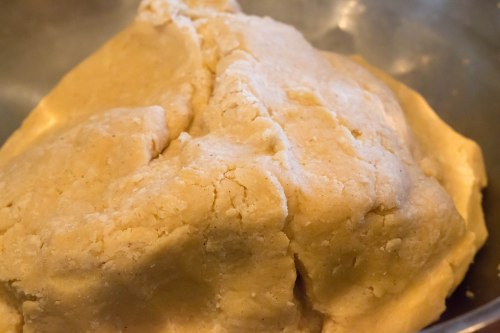
Kneaded dough

Kneaded dough

Sugar and spice topping

Sugar and spice topping

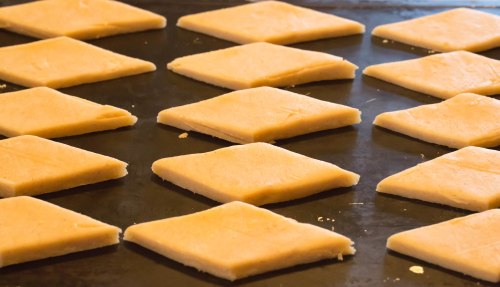
Cutting two-inch diamond shapes

Cutting two-inch diamond shapes

Ready to bake

Ready to bake

Cooling and ready to eat

Cooling and ready to eat

The recipe makes about 3 dozen cookies, of course depending on the size of the diamonds.

8 Comments

Filed under Food, Photography, Recipes

HUEVOS RANCHEROS

Daughter Sarah surprised us with a short visit, so we cooked up some of the favorites of her childhood. One of the breakfast specials was huevos rancheros. The real version takes some effort since you need to make the ranchero sauce from scratch along with a base of refried beans.

This version can be cooked up in a flash using items from the pantry like bottled salsa. You may not be able to find blue corn tortillas – they seem to be sort of a New Mexico specialty – but any kind of corn tortilla will do. We had some guacamole left over from the night before, but fresh avocado slices also make a good garnish.

Blue corn tortillas

Blue corn tortillas

RECIPE

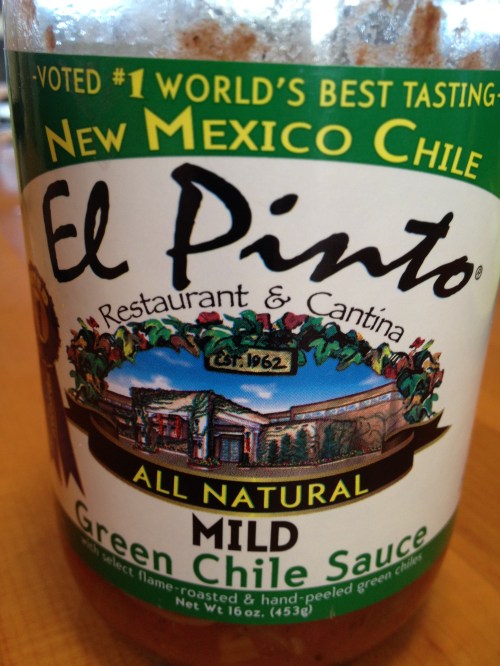
Green chile sauce

Green chile sauce

Huevos Rancheros

Ingredients

  • 2 blue corn tortillas (yellow, white, or any other color will do)
  • 2 ounces sharp Cheddar cheese, shredded
  • 2 tablespoons chopped white onion
  • 2 eggs
  • butter
  • green chile sauce, heated
  • 3 tablespoons guacamole

Method

  • Heat the tortillas on a dry hot skillet until they bubble a bit and are lightly covered with brown flecks. They should remain soft and flexible
  • Place one tortilla on a plate. Arrange half the cheese and onions on top. Cover with the second tortilla topped with the remaining cheese and onions.
  • Heat the plate in an oven at 200° or in a microwave for 20 seconds or so until the cheese is melted.
  • In the meantime, fry the two eggs in a skillet with butter.
  • When the eggs are cooked to your preference, transfer them to the stacked tortillas
  • Surround the eggs with the heated green chile sauce and garnish with guacamole.
  • Serve immediately.
Huevos rancheros

Huevos rancheros

1 Comment

Filed under Food, Photography, Recipes