Category Archives: Food

FOR WANT OF A NAIL – THE BUTTERFLY EFFECT

On the last leg of our marathon child-tending expedition in California, we headed back to the Bay Area.  This was also sort of holiday, so we drove up Highway 1 through Big Sur, one of our favorite places to visit.

For the first few days we were in Silicon Valley while our daughter-in-law was in Prague at a meeting. (Someone has to do it, right?) She sent us back images of goulash, beer, and sausage. Otherwise, there were no food adventures. We ordered a lot of takeout. I made macaroni and cheese and opened a jar of spaghetti sauce with NO additional seasoning. Both of the girls have very specific and definite food biases, One night at the dinner table the 9-year-old was asked if we could get her anything. Her reply was, “A good cook.” You get the idea.

Then we went back to San Francisco with the two toddlers while their parents went out of town to judge a cooking contest. That is the source of my tale and the title of this little essay. You recall the old proverb … “For want of a nail, a shoe was lost; for want of a shoe, a horse was lost; for want of a horse, a knight was lost; for want of a knight, a battle was lost; for want of a battle, a kingdom was lost.” Also, there is the butterfly effect in chaos theory which stems from the suggestion that the fluttering of a butterfly can influence a subsequent hurricane.

Sarah and Evan left for Shreveport early in the morning. They talked about getting an Uber car to the airport, and then decided to drive. In retrospect, a big mistake. Then the little one awoke unexpectedly as they were heading out the door. First delay. Interstates 280 and 380 were both busier than expected even though it was early during the morning rush hour. Next delay. Then the airport parking lot was full, so they had to go to the off-site lot. Next delay. The man in front of them couldn’t get the gate to the lot opened so they had to wait for him to solve his problem. The shuttle to the terminal was delayed. But they still had time. Then they faced a long line for baggage and check-in, but they got their bags checked.

Of course, security was impossible, but they finally made it through, only to discover the gate had closed. Unfortunately, their bags had made it on the plane to go through Dallas to Shreveport, so they couldn’t change airlines, and the next available flight was eight hours later. (The lesson from this: don’t check bags if you are running late.) They were told that there were no late flights to Shreveport so that they would have to spend the night in Dallas. Meanwhile their luggage made it to Shreveport.

It is only a 3 hour drive on interstate between DFW and Shreveport, so they decided to rent a car at DFW. By now it was after midnight, and the car rental had a hard time finding a car. Finally, that was solved, and they were in fairly good spirits. UNTIL – about 2 AM, with Sarah asleep as they made it through the East Texas Piney Woods, Evan said, “Oh, my God,” waking Sarah just in time for a loud crash and a huge rush of steam onto the windshield. The steam blocked their view of the road. When they were able to pull over, Sarah got out of the car (Evan was afraid of getting hit by traffic) to find a deer impaled on the radiator. A highway patrolman did come and pulled the deer out of the car, but the car was not driveable.  So the next task was to find a tow truck – a challenge at 3 AM. They were finally towed into the Shreveport airport so that the ruined car could be deposited and the hapless couple could retrieve their luggage. There was no replacement car available, but with some effort one was found at a competing rental agency in exchange for more money.

By this time, it was 6 AM. When they arrived at their hotel, Sarah and Evan were told that their room had been given away, and that the hotel was booked up. Sarah burst into tears; a room was found; and the two were able to catch a couple of hours of sleep before the event.

Everything then went well, and Sarah and Evan had a good time serving as judges for a sort of “Chopped” event featuring some local cooks. They even won a few dollars at the sponsoring casino.

The story ended happily when they came back to their smiling boys. Besides, they will now have a great tale to tell their grandchildren many years from now.

Just remember, your fate may hang on the wings of the butterfly you see in your garden.
14 Comments

Filed under Food, Photography, Travel

THANKS ARE ALWAYS WELCOME

We’re back home at last from our 5-weeks child-ending adventure. We have rested a few days, done the household chores that needed to be done after a long absence, paid bills, and caught up on 700+ e-mails.

I have to admit that another reason for my absence from posting lately is a certain loss of enthusiasm. I have 300 posts over four and a half years, and some readers may think that I have run out of things to say along with needing some new recipes. But the main reason I have been a little quiet is receiving a couple of snarky comments that made me wonder, at my age, if I really need that. The way I look at it, if you don’t like my blog, just don’t read it. After some soul-searching, I have decided to write at least a few more posts. To do otherwise would let the boo-birds win, and I have never been inclined to do that.

So…

This post is to thank all of our children for their gracious ways of thanking my wife and me for our efforts.

The Los Angeles family made a point to go to a nice restaurant. Unfortunately, I missed the event so there are no images of food, but they took my wife to Bashi, the Asian-inspired restaurant at Terranea Resort. It has a wonderful ocean view, great service, a lovely dining space and delicious food. The only thing I can report is that they had a great time.

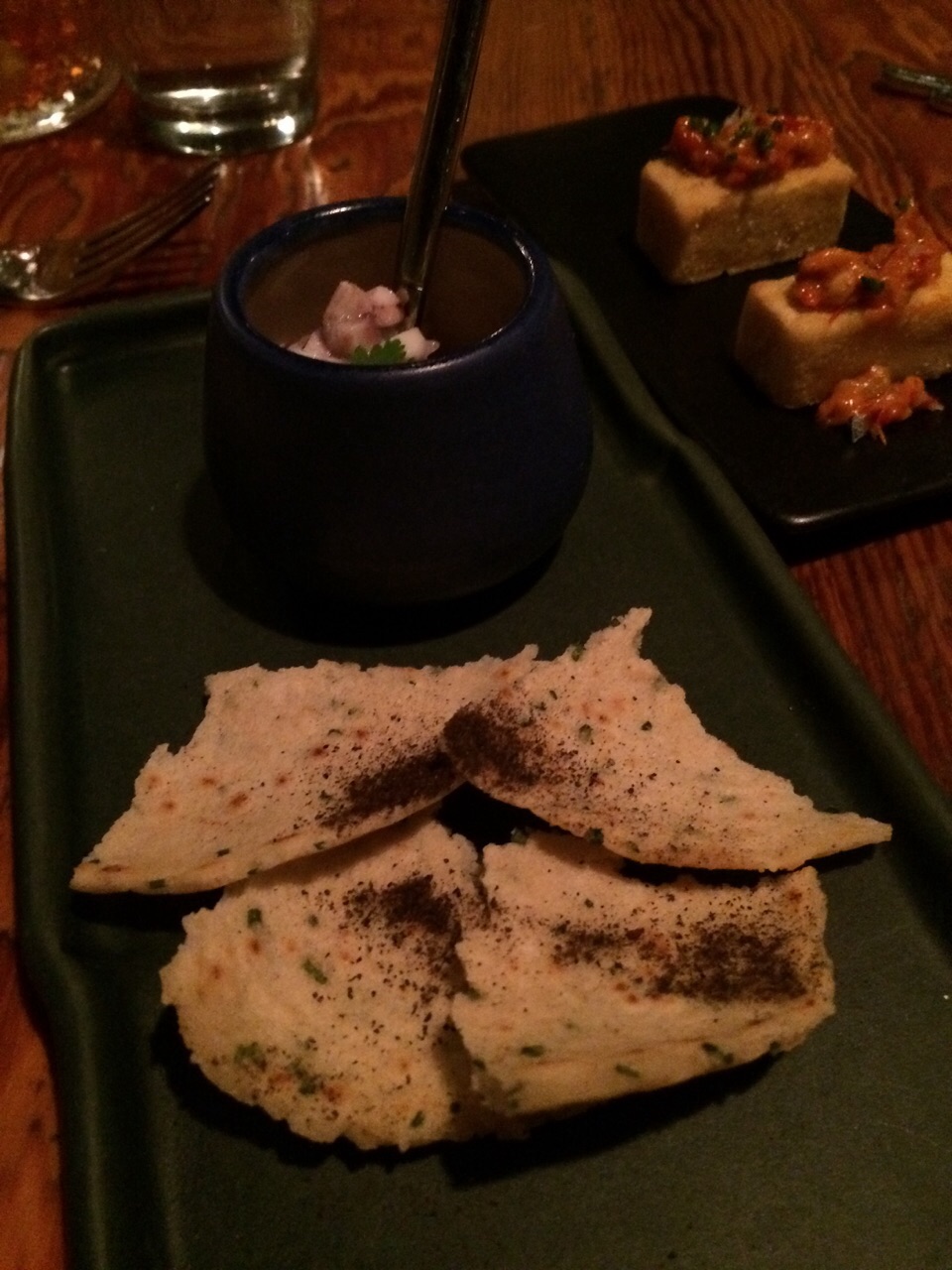
The San Francisco family made sure we had an evening at Rich Table. Evan was cooking that evening, so he pulled out all the stops. The list of things he sent out included:

Sarah’s popular fennel pollen levain served with house-cultured butter. The warm slabs of bread smeared with a delicious butter could be a meal by themselves.

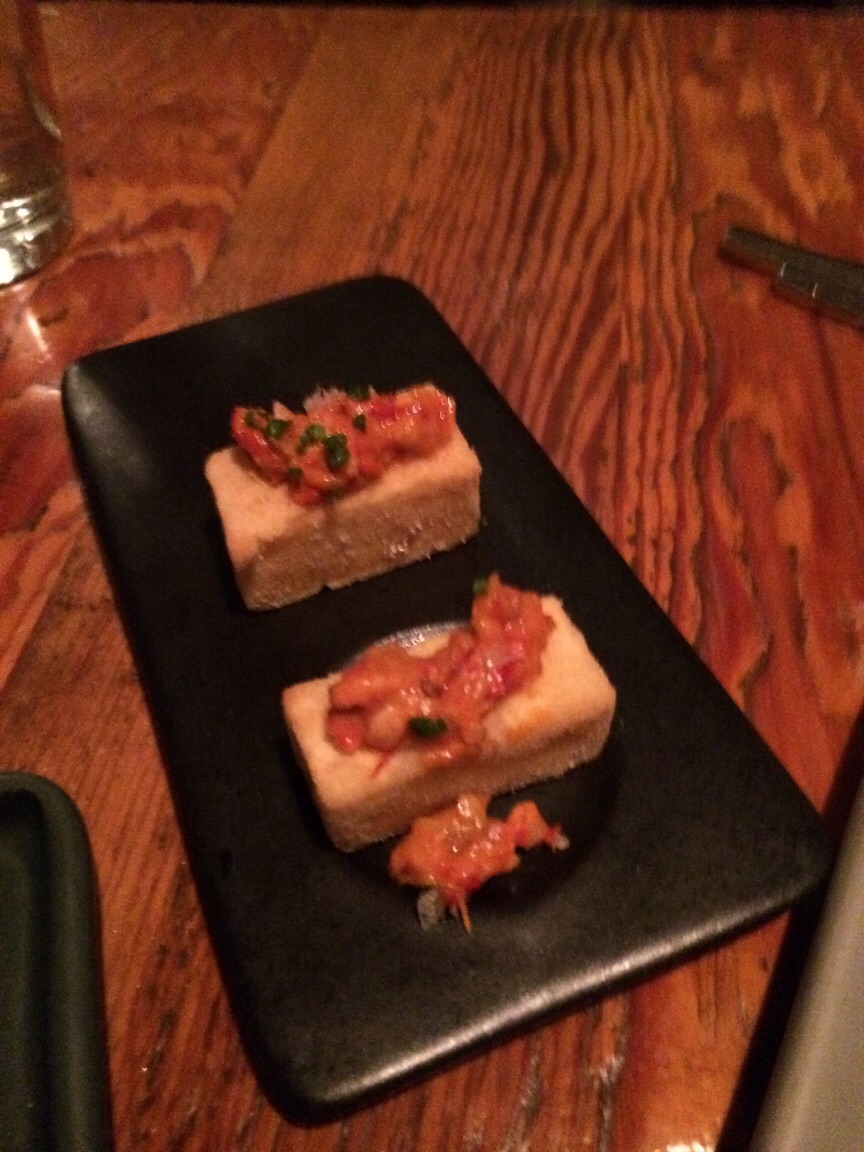
An amuse that was just a bite, but a delicious bite.

image

Octopus with grapefruit, hearts of palm, and sansho pepper.

image

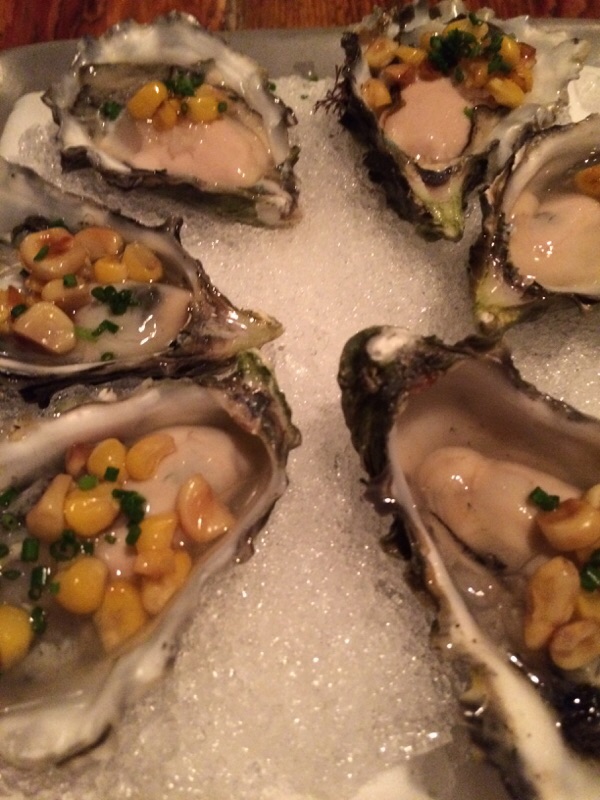
Oysters on the half shell with charred corn mignonette. Rich Table oysters always come well-scrubbed so there are no fragments of shells that you often encounter at some of the best seafood restaurants.

image

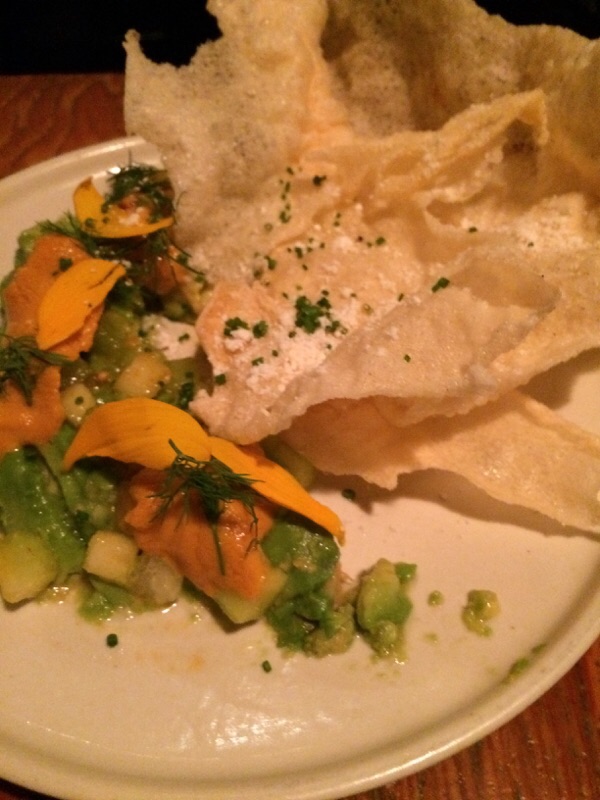
Avocado, sea urchin, fermented jalapeño, prawn crackers. I couldn’t even think of such a combination of flavors, but it definitely worked.

image


“Green juice” granite, avocado mousse, Stobe fruit, and brown butter ice cream.

image

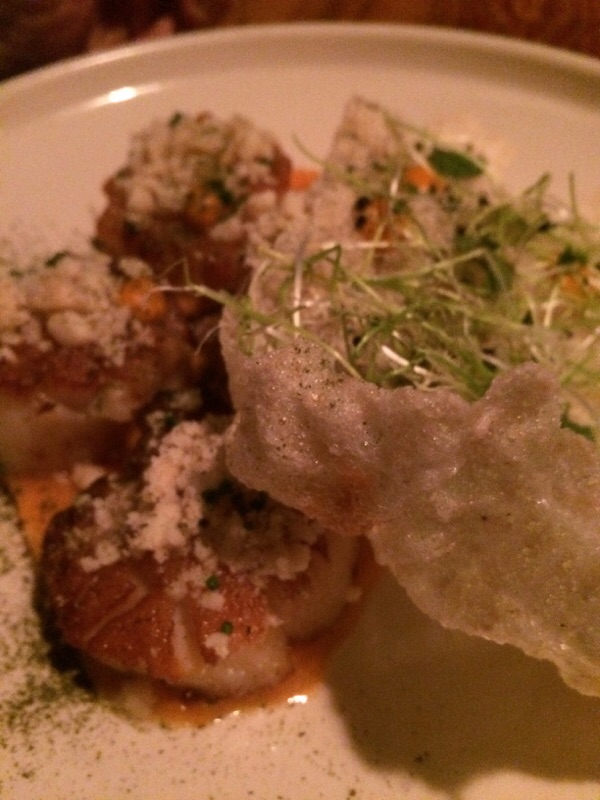
Scallops, sweet potato, red curry, macadamia nut, brown rice. Again, a combination that defied our imagination. The predominant flavor, of course, was the sweet scallops.

image

Grilled rib-eye with roasted cauliflower, almond, and sake lees. The steak is heavily marbled with a lot of fat. Whatever you do, don’t cut off the fat, but pop it in your mouth. The fat has absorbed all of the other flavors and just melts away as a delicious extra treat.

image

A dessert of sweet corn pot de creme with creme fraiche, strawberries, and lemon crumble. A little vegetal, but surprisingly sweet and refreshing.

image

The Silicon Valley family sent us some beautiful artisanal chocolates and a beer mug from Prague where our daughter-in-law had gone to a business meeting.

image

All of that was so unnecessary because taking care of the kids was gift enough, but it made us feel truly thanked and truly blessed.

19 Comments

Filed under Food, Restaurants

THE PIE LADY

Susan has long been known as the pie baker in our family. Her crusts are always flaky; no one else can seem to master the skill. She says that it is something her mother taught her, and that the only secret is to keep everything cold.

Because of her reputation, she was drawn to a new cookbook on Sarah’s shelf when we were in San Francisco. The book is titled, The Four & Twenty Blackbirds Pie Book, (Grand Central Life & Style, New York, 2013).  It won an award by the James Beard Foundation as one of the best cookbooks of the year. The recipes sound wonderful, and the illustrations are beautiful. On top of that, the authors are two sisters, Emily and Melissa Elsen, from South Dakota who have gained fame in Brooklyn running a pie shop with the same name as the book. The two women hail from the little town of Hecla, population 224 ±, located just a few miles northeast of one of the main metropolises of South Dakota – Aberdeen. That’s where many of my relatives live and close to where both of my parents grew up, so it has some personal interest.

I ordered a copy of the book so that Susan could study it while we were in Los Angeles with our grandchildren there. I was hoping she would be inspired to bake, and I was not disappointed. She baked two pies that both disappeared quickly.

Cover of the cookbook

Cover of the cookbook

The first pie was a lattice-topped peach pie. Susan usually makes her crusts with vegetable shortening, but this time she followed the cookbook and used pure butter. It turned out not to be as flaky, but the flavor was outstanding. Judge for yourself about the beauty. Peaches came from the local farmers market.

Lattice-topped peach pie

Lattice-topped peach pie

A slice of peach pie

A slice of peach pie

The second pie was a black bottom lemon pie. Susan again used pure butter for the crust. For the filling, she made ganache and a lemon curd according to directions  from the cookbook. The only change to be made was that the recipe called for 30 minutes in the oven. In the end, it took twice that much time, although that could have been because of the oven. In any event, a warning to watch the baking time, and make sure that the lemon curd has set up at least three inches from the edge of the pan before you take it out to let it continue cooking while it is cooling.
Black bottom lemon pie

Black bottom lemon pie

A slice of black bottom lemon pie

A slice of black bottom lemon pie

Glad the Pie Lady has not lost her touch, and with this beautiful cookbook, she may continue to surprise us with new delights.

8 Comments

Filed under Food, Photography

FRIED SMOKED SALMON DEVILED EGGS

This last week our traveling child care project moved to Los Angeles. We had assumed that watching teenagers would be easier than toddlers. In some ways we were right. The teenagers clearly have required less direct supervision, and there is not diaper changing. Scheduling is the main problem. Both require transportation to and from school as well as extra-curricular activities. The high school student has a variable schedule: sometimes she needs to be at school at 7:30 and sometimes she doesn’t go until 8:30. There seems to be no fixed schedule. In the evening she has practice for the swimming team. That cuts into the dinner hour. Then she disappears into her room for a prodigious amount of homework.

The middle school student has a different schedule,. He has his own homework, and grandparents are supposed to help in the absence of parents. What?  I can barely remember my own name. Even though the two schools are only a few blocks apart, dropping off and picking up require at least five and sometimes seven separate trips a day. It is a mystery to us how our daughter and son-in-law can get all of this accomplished and still both hold down full-time jobs with commutes of at least one hour each way.

Susan and I had planned to use our spare time doing some of the things in LA that we have wanted to do. We didn’t get that accomplished; mostly we just wanted to take a quick nap. The one outing we were able to accomplish was a visit to Terranea Resort with a nice lunch at one of their restaurants.

Southern Californians are almost as crazy about golf as they are the beach. In the community where our family lives, there are five golf courses, the oldest dating back to over ninety years ago. The most recent additions are the Trump National Golf Course Los Angeles, and its arch competitor, Terranea Resort. Both are built on the cliffs overlooking the Pacific Ocean and offer stunning views, especially at sunset. Both offer luxurious resort facilities, and both have excellent restaurants. Locals seem to prefer Terranea, but that suggestion runs the risk of being a political commentary in this day and time.

We chose to go to the Catalina Kitchen at Terranea. The restaurant is beautifully appointed with a comfortable indoor dining room and an outdoor terrace that looks out on the ocean. The wait staff is very professional but friendly; they know the menu inside and out. The menu is filled with old standards, but the big surprise is that the chef has added new and creative twists to items that have gotten a bit ho-hum. Susan ordered crab Louie, which came piled high with fresh Dungeness crab. I ordered the Caesar salad with salmon. It came with beautiful croutons on the side (They were not out of a package). The dressing had just a hint of anchovy, and on top were beautiful filets of white anchovy. The salmon was perfectly cooked with just a light glaze, and it was a generous portion.

With all of that, the highlight of the meal was fried deviled eggs. They were singularly delicious. They were served in a little pool of bright green basil-infused olive oil, crusted with a lightly browned panko, and topped with a bacon chiffonade and a tiny slice of  radish so thin that you could see through it.

image

I have tried to put my spin on that dish. My version is nowhere as elegant as the model, and it took more effort than the usual deviled egg, but it wound up being fairly tasty. I added smoked salmon to my version, which I thought gave it a nice taste. This recipe makes six deviled eggs, but you can expand the recipe as needed.

RECIPE

Fried Smoked Salmon Deviled Eggs

Ingredients

  • 3 eggs
  • ¼ cup sour cream or mayonnaise
  • 1 tablespoon Dijon mustard
  • snipped dill for filling and as garnish
  • 2 ounces smoked salmon (You could use lox)
  • salt and pepper
  • Tabasco sauce (optional)
  • all-purpose flour
  • 1 egg white
  • 1 tablespoon water
  • panko
  • oil for frying
  • capers
  • snipped chives

Method

  1. Hard boil the eggs according to your usual method. Chill in ice water. Peel. Cut in half lengthwise. Remove the yolk and set aside until ready to fry and stuff.
  2. Press the yolks through a strainer or sieve into a small bowl. Stir in the mustard and dill.
  3. In a small food processor, pulse the smoked salmon until smooth. Stir into the egg mixture. Adjust seasoning with salt and pepper. Add optional Tabasco to taste.
  4. Prepare the breading by placing the flour, egg white mixed with water, and panko in individual small bowls large enough to accommodate the egg white cases but small enough so that they can be completely immersed.
  5. Dry the reserved egg white cases.  Dip the cases into the flour, dusting off any extra. Dip in the egg-water wash, coating completely but draining any extra liquid from the hollow. Coat with panko.
  6. Using a spider or slotted spoon, transfer the coated egg whites one by one into frying oil, about 2 inches of vegetable oil heated to 350°F,, turning until browned on all sides. Transfer the fried egg white cases to several thicknesses of paper towel, using the same spider or slotted spoon to keep the coating intact. Cool.
  7. With a pastry sleeve fitted with a large star shape, pipe the filling into the egg white casings. Garnish with a few capers, some of the snipped dill and snipped chives. Serve.


18 Comments

Filed under Food, Photography, Recipes, Restaurants, Travel

HUEVOS ROTOS (BROKEN EGGS)

Last week while we were in San Francisco, our son and his family came up from Silicon Valley to spend Sunday with us. Susan rested to catch up with a week of intense child watching while René generously took the four kids to one of the playgrounds on the Presidio.

That gave me an opportunity to take Peter to brunch. We haven’t had a time alone for a long time, so both of us seemed to relish the opportunity. We went to the Presidio Social Club, which has become one of our favorite restaurants on the Presidio. It is housed in a very old barracks building that has been restored and filled with pictures and memorabilia from the days when the building served as a canteen during the Second World War. We enjoy everything about the place: the atmosphere is inviting, the service is good, and the food is very good without being too expensive. Besides all that, it is a short drive through the woods of the Presidio so you don’t have to get out on the busy streets of the city and spend a long time looking for a rare parking space.

The brunch menu is filled with the usual sorts of things that people order on a lazy late Sunday morning. Peter ordered a PSC Spritzer and I got a PSC Bloody Mary. Then we checked out the menu. Both of us focused on the chilaquiles as they are a favorite of everyone in our family. Peter and I have this funny custom that if one orders a dish, the other does not. We agreed that he should order the chilaquiles. Then I saw the huevos rotos. The dish was described as eggs, potatoes, and chorizo. It sounded sort of like my usual, huevos rancheros, and had the additional intrigue that I had never heard of it before. So I ordered it. In El Paso, I had eaten huevos divorciados – two eggs separated by chilaquiles or refried beans and topped one with green sauce and one with red. I had eaten huevos revueltos – scrambled eggs – and migas – eggs with chorizo and crisp tortilla strips. There’s machaca with eggs – shredded beef and eggs. And of course, the ubiquitous breakfast burrito. I had never eaten or heard of huevos rotos. In part that’s probably because it is originally a Spanish dish.

The version of huevos rotos served by the Social Club was so good, that I decided to try to replicate it at home. Here’s my version for 2 persons, but you should be as creative as you want with additional ingredients. I think you will find the dish so good, and so easy, that you will make it often for breakfast, lunch, or a snack.

RECIPE

Huevos Rotos (Broken Eggs)

Ingredients

  • 5 small Yukon Gold potatoes
  • vegetable oil for frying
  • ½ medium white onion, peeled and chopped very coarsely
  • 1 link Spanish chorizo (Do not use Mexican chorizo for this dish), casing removed, crumbled and chopped coarsely
  • hot Spanish paprika
  • salt and pepper to taste
  • Sriracha (optional, to taste)
  • 4 eggs

Method

  1. In a saucepan, boil the potatoes, unpeeled in salted water for about 10 minutes or until slightly soft but not cooked through. Remove from the heat, drain, and cut the potatoes into ½ inch chunks.
  2. In a skillet over medium heat, sauté the potatoes in enough oil to coat them. Toss frequently until lightly browned.
  3. Stir in the chopped onions and crumbled chorizo. Continue to sauté. Sprinkle with hot paprika, and adjust the seasoning with salt and pepper.
  4. Drain off any extra fat, transfer to a plate, and keep warm, covered loosely with foil, in a 170°F oven until ready to assemble the dish.
  5. Divide the potato-chorizo mixture equally between two warm serving plates. Top with Sriracha if desired.
  6. In a small non-stick frying pan, fry the eggs in oil over medium-low heat, turning once so that they are over-easy and the yolks remain runny.
  7. Top each plate with two over-easy fried eggs. Pierce the eggs with a knife so that the yolks run over the top of the dish.  Serve immediately.


4 Comments

Filed under Food, Photography, Recipes, Restaurants

HOG ISLAND OYSTER COMPANY

Hog Island Oyster Company is on Tomales Bay, just a short, beautiful drive north of San Francisco. Once there, you can buy unshucked oysters and other shellfish to take back home with you, or you can have all varieties of raw and cooked oysters, clams, and mussels in a spacious restaurant with great views of the bay.

Don’t worry if you can’t make the time to take the drive. You can still get fresh oysters at the Hog Island Oyster Company at the Ferry Building in San Francisco. The Ferry Building is one of the great destinations for visitors to the city. It has been lovingly renovated and occupies a dominant place on the Embarcadero. On Saturdays it serves as home for a huge farmers market where all of the city’s chefs shop. You are likely to catch a glimpse of someone you have seen on television or in whose restaurant you have eaten.

The Ferry Building is lined with shops filled with hard-to-find food, well-known products like Cowgirl Creamery cheeses, pottery, jewelry, and expensive one-of-a-kind kitchen gadgets.

The building sits right on the water because in times past it served as the terminal for the many ferries that crossed San Francisco Bay. Now the Oakland Ferry has a berth just a few steps away from the restaurant of the Hog Island Oyster Company. The beautiful new Bay Bridge makes a perfect backdrop, so that Hog Island is a popular stop for locals and tourists alike.

The Oakland Ferry and the Bay Bridge in the background

The Oakland Ferry and the Bay Bridge in the background

Expect a crowd on the weekend or when the weather is beautiful. That means you will have to wait, but the line moves quickly. It moves even more quickly if you get a bloody mary from the bar to pass the time.

Waiting in line

Waiting in line

Of course, outdoor seats are at a premium, so you may have to wait a little longer for them. But seats at the counter are often available, and to me they are preferable. You can watch the woman who runs the garde manger station as she whips up salads with blinding speed. Her knife skills are amazing as she cuts fresh basil into a fine chiffonade while she surveys the dining room. You can also watch the three oyster shuckers working non-stop to fill all the orders for oysters on the half shell.

Non-stop oyster shucking

Non-stop oyster shucking

Whenever we visit San Francisco, we almost always make at least one pilgrimage to Hog Island, and we almost always order their biggest tray of raw oysters – 2 dozen, mixed.

This time there were seven different kinds of oysters, so they sent out four each of six kinds. We asked for Kumomotos, our favorite, but they did not include Hog Island’s own Kumomotos. They are beautifully fluted and much smaller than other varieties, but they have a sweetness, brininess, and flavor that are unique. When we complained to the waiter, he promised to bring out some more, and he did. Then we recognized him as a server who had worked at Rich Table when it first opened.

Acme bread

Acme bread

Raw oysters

Raw oysters

You need a glass of wine to wash down the oysters

You need a glass of wine to wash down the oysters

We had a nice visit with Charles and then got down to business: eating all of those oysters with a tasty mignonette along with glasses of refreshing wine. Next came a plate of yellow fin crudo prepared by the garde manger lady and topped with her incredibly fine basil chiffonade.

Yellow fin crudo

Yellow fin crudo

Susan had an oyster roast instead of her usual clam chowder. I finished up with rustic seafood stew. I asked why, if this is San Francisco, it’s not called ciappino. The reply was that it didn’t have the crab required to call it that. It had everything else. Tentacles of the calamari, heads on the shrimp, clams, mussels, chunks of white fish, savory broth, and toasted Acme bread to soak up any leftover broth.  If there would have been.

Rustic seafood stew

Rustic seafood stew

Then home to catch a quick nap before it was time to pick up they boys.

4 Comments

Filed under Food, Photography, Restaurants, Travel

KLAMATH RIVER SALMON

Peter is our family outdoorsman, and his wife, René, and their two girls also enjoy the outdoors. Several weeks ago they camped out on their trip to Alaska, and the girls gathered dried yak chips for the fire. That’s tough!

This last holiday weekend they camped out on a friend’s land on the Klamath River. They canoed and went fishing. The result of that adventure was three big salmon that Peter plans to grill.

We are babysitting our two youngest grandchildren, ages 4 and 2 while their parents are at a cooking demonstration in Hawaii. We’re just up the road from Peter and family, so we have been invited to the feast. We agreed to bring dessert and a side dish. Small price to pay for the chance to eat fresh, hand-caught salmon.

Peter and René are in the middle of a massive home renovation, so the salmon sat in a cooler on ice and dry ice in the middle of their kitchen. René made one of her famous salads. We cheated and stopped at Bianchini’s Market for corn-mango-jicama salsa, three-bean salad,  a loaf of Acme sweet batard, and some wine.

Dessert turned out to be an apple tart from Schubert’s Bakery on Clement Street in the Richmond district of San Francisco. It was hard to chose from all of the beautiful cakes, tarts, and pastries. Even picky eaters liked it.

We ate in the front yard al fresco as there is no dining room in the house right now. It was just as well. The temperatures in the Bay Area are breaking all records – in the 90s – so everyone does as much as they can outdoors. Baker Beach is jammed.

The kids played in the front yard as we enjoyed a glass of wine and the delicious put together meal.

RECIPE

Baked Salmon with Parsley and Garlic

Ingredients

  • fresh salmon
  • olive oil
  • melted butter
  • chopped parsley
  • minced garlic
  • fresh lemon juice

Method

  1. Cut the salmon into 3 ounce serving pieces. Remove skin and bones.
  2. Baste with oil and melted butter. Top with parsley, garlic and lemon juice. Bake in the middle of an oven pre-heated to 400º F for 20 minutes. Serve while still hot.

4 Comments

Filed under Food, Photography, Recipes

LEEK AND MUSHROOM SALAD IN THE STYLE OF THE CAMBRIDGE CLUB

Many years ago I did a lot of executive recruiting for my organization in Shreveport, Louisiana. Whenever someone –  especially a recruit– comes to Louisiana, he or she expects to eat well. Shreveport, like most cities in Louisiana, has a number of excellent restaurants specializing in a variety of cuisines, many with a Southern or Creole emphasis.

In my recruiting days, the Cambridge Club was the best of the best. It was actually a private dinner club run by two cousins from Italy, Vincent Campanella  ran the front of the house, and Giuseppe Brucia commanded (my choice of words) the kitchen. They were both trained at a famous Swiss hotel and restaurant school in Lucerne. How they got to Shreveport was anyone’s guess, but nobody cared because the setting, service, and food were so good.

On special occasions like birthdays, anniversaries, and celebrations I would take the family to dinner. They loved to go, first stopping at the front door of a beautiful house that evoked the Cotswolds to be greeted by a doorman who came out of a bright red English telephone booth and then escorted into a candlelit room with attentive waiters and delicious food.

Unfortunately, the Cambridge Club is long gone. Vincent retired years ago and Giuseppe opened his own place with a gigantic kitchen and dining rooms filled with patrons wolfing down huge plates of spaghetti and meatballs. Vincent and Giuseppe sold the Cambridge Club, and after only a few years it folded. That seems to be the story of so many legendary restaurants.

One of our family favorites on the Cambridge Club menu was a mushroom salad topped with a dab of red caviar. We talked Chef Brucia into giving us the recipe, and it was copied into our family recipe file in the teenage hand of our older daughter. Susan’s favorite salad was a leek and mushroom salad, but since our daughter runs from anything that remotely smells or tastes like an Allium, she did not copy that recipe.

What follows is a synthesis of the two recipes, minus the red caviar. But you should feel free to add that if you wish. The only other guidance is that the mushrooms absolutely must be peeled, not washed. That is much easier than it sounds. Just place the sharp point of a paring knife under the edge of the mushroom cap next to the gills, lift up and the thin covering strips away. Continue around the edge of the mushroom until it is completely peeled. That should take much less than a minute.  It is amazing how much more delicate peeled mushrooms become, how thin you can slice them, and how much more receptive they are to fresh lemon juice and the best EVOO (That’s what Sarah, Evan, and their cooks call extra virgin olive oil.)

RECIPE

Leek and Mushroom Salad in the Style of the Cambridge Club

Ingredients

  • white part of 1-2 large leeks
  • 2-3 large white mushrooms per serving
  • mesclun
  • juice of ½ lemon for each serving
  • 3 tablespoons of the best extra virgin olive oil for each serving
  • Parmigiano-Reggiano or Asiago of good quality
  • red caviar (optional)

Method

  1. With a very sharp knife, slice the leeks crosswise as thinly as possible. Rinse in a colander to remove any bits of sand and dirt. Refrigerate in ice water until ready to use.
  2. With a paring knife, peel the mushrooms. Slice crosswise as thinly as possible. Save the peelings for vegetable stock if you wish.
  3. Assemble the salad by placing a nest of mesclun on individual serving plates.  Drain the leeks. Divide the sliced leeks and mushrooms among the plates.
  4. Dress each plate with lemon juice and olive oil. Use salt and pepper if needed
  5. Top with slivers of Parmigiano-Reggiano or Asiago shaved as thinly as possible with a vegetable peeler.
  6. If you are feeling flush, add a dab of red caviar to the top of each serving. Remember, this is purely optional.


4 Comments

Filed under Food, Photography, Recipes, Restaurants

DAUBE GLACÉE

This is one of the most traditional of all Creole dishes not only in New Orleans but also in much of southern Louisiana. According to Emeril Lagasse, the recipe first made its way to Louisiana when royalists escaped the French Revolution and settled in the town of St. Martinsville, called “petit Paris” and located just a few miles south of Lafayette. I have been unable to confirm or refute this claim.

Daube glacée has become less and less popular and is no longer common on restaurant menus. Perhaps part of the reason is that it is really a party dish, served with toast points or other bread. It can also be sliced to make an excellent sandwich. Most recipes make a LOT – often enough to serve 50 people.

River Road Recipes, published by the Junior League of Baton Rouge, bills itself as “The Textbook of Louisiana Cuisine”, and indeed it has been the most authoritative source book for Louisiana home cooks for over 55 years. The recipe there calls for 10 pounds of boneless chuck roast and advises that you mold it in “a vegetable crisper or other large enamel pan.” Emeril Lagasse’s recipe in Louisiana Real & Rustic calls for 3 pounds of beef round and 3 pounds of veal rump roast along with some bacon. Roy F. Guste, Jr., of the family that has owned Antoine’s Restaurant for generations, includes pig’s feet in his version in The 100 Greatest Dishes of Louisiana Cookery.

I think there is little doubt why the dish has fallen into obscurity, and all the recipes I found were way beyond what I was looking for. All I really wanted to do was to use up the meat and broth from my effort with bouilli. As you will see, this is a very simplified version of daube glacée. Remember, when it is chilled it will need more salt than when it is warm.  Plan to decorate it with vegetables, fresh or cooked, in the gelatin and mayonnaise on top, if you wish. Serve with crackers or crostini. If you use it for sandwiches, season it with horseradish and whole-grain mustard. Delicious!

Daube glacée-1

RECIPE

Daube Glacée

Ingredients

  • ½ pound boiled beef, chilled
  • 2 cups strained, chilled  beef stock reserved from preparation of bouilli (see previous post)
  • 1 envelope unflavored gelatin
  • ½ cup port
  • juice of ½ lemon
  • salt and pepper to taste

Method

  1. Cut the chilled beef into bite-sized cubes. Set aside.
  2. n a small bowl, transfer ½ cup of the chilled beef stock and sprinkle the powdered gelatin. Allow to “bloom” for about 5 minutes.
  3. In the meantime, heat the remaining beef stock to boiling in a saucepan. Turn off the heat.
  4. Stir the fully bloomed gelatin mixture into the hot beef stock and stir continuously until the gelatin is completely dissolved, about 5 minutes.
  5. Stir in the port and correct seasonings with salt and pepper. Stir in the cubed beef.
  6. Pour into a lightly oiled 1-quart mold. Cool to room temperature. Then cover with plastic wrap and chill in the refrigerator overnight.
  7. Unmold by running a thin-bladed knife around the edge, dipping the mold into hot water for no more than 30 seconds and then covering with your serving plate and inverting to release the daube.
  8. Arrange garnish and small toasts around the daube and serve immediately with a knife or spoon for guests to serve themselves, or cut into slices and use for sandwiches.

4 Comments

Filed under Food, Photography, Recipes

NATIVE AMERICAN VINEYARD DINNER

Yesterday evening we drove north of Santa Fé to the Estrella del Norte Vineyard located just outside of Nambé Pueblo. The weather was delightfully cool, and the drive was beautiful. The purpose of our trip was to participate in a dinner sponsored by the vineyard.

They have al fresco dinners throughout the summer, but this one was of special interest to us. The guest chef was Lois Ellen Frank. She lives in Santa Fé, but she is internationally known as a chef and cookbook author.

Like most of us, Chef Frank traces a broad heritage, but she is part Kiowa. Possibly because of that, she has had a long-standing interest in the foods of the New World and in the rich and varied cuisines of the Native American peoples. Not only is she a professionally trained photographer and chef, but she also holds a PhD in cultural anthropology with an emphasis in Native American foods and plants. She has travelled extensively throughout North, Central, and South America collecting plants, tracking down traditional recipes, and preparing food with native cooks.

Lois Ellen Frank has been a prodigious cookbook author, and her Foods of the Southwest Indian Nations, (Ten Speed Press, Berkeley, 2002) received the James Beard Kitchenaid Book Award. It is a beautifully illustrated volume that contains many new and original recipes using traditional foods like yucca blossoms, posole, chicos, cactus, and many others. A copy of the book should definitely be on your shelf if you are interested in beautiful photography and/or foods of the Southwest.

The evening turned out to be special. We arrived early so we took a quick tour of the vineyards and grounds. Grapes were ripening on the vine. There were interesting sculptures all around, and a glass of chilled white wine was awaiting us when we arrived in the reception area.

Here’s the menu. Unfortunately none of the recipes are included in the cookbook. That’s ok, because there are similar ingredients and dishes described.

Hors d’oeuvres included chipotlé shrimp with a sweet mango dipping sauce and empanaditas stuffed with either lamb or a vegetarian filling and served with guajillo chile and tomato sauce. These were accompanied by the winery’s vino de manzanas.

Everyone was summoned to dinner at a very long table set under a portal. The first course was caprese made from heirloom tomatoes and fresh basil from the Santa Fé farmers market and a locally-made mozzarella. The accompanying bread was freshly made, and the wine was the vineyard’s Seyval blanc.

Grilled quails were perfectly prepared and served with a red chile honey glaze along with hand-harvested wild rice, yellow corn, mushrooms, chard, roasted beets, and carrots. The wine was the vineyard’s Montepulciano

Dessert was a crisp of local berries served with a choke cherry syrup hand-harvested by the chef and her helpers, topped with whipped cream flavored with canela (Mexico’s “cinnamon”) This beautiful and delicious dessert was complemented by the vineyard’s Luna Rosa Especial port-style dessert wine.

It turned out to be a great evening in a lovely setting with delicious food and lively conversation. I am absolutely certain that Native Americans from earlier times never dined as wonderfully. We will definitely do this again.

2 Comments

Filed under Food, Recipes