Tag Archives: Sarah Rich

DEVILED QUAIL EGGS

There is a new international grocery store in town. It is filled with some of the most interesting and amazing ingredients – octopus tentacles, duck feet, Asian fresh fruit, etc., etc. During a recent visit, I noticed sitting in the cooler were little packages of 10 quail eggs each. The eggs were so beautifully speckled and tiny that I couldn’t resist buying them even though I didn’t have any idea what to do with them. There are recipes on the internet for fried quail eggs and Scotch quail eggs, but both of those suggestions seemed like a waste of a unique ingredient. My thought was to wait until our daughter the chef came to visit and have her give me a cooking lesson. So I did. She suggested deviled eggs as being easy to do, very tasty, and insurance that the eggs would be well cooked and safe to eat. (She’s in the middle of her pregnancy.) That sounded like a plan, and I am glad that I followed her suggestion. In the end we cooked them up for the rest of the family so we didn’t worry about presentation. There was no time for that before the eggs disappeared. They were cute and delicious, and Sarah’s recipe is worth modifying for conventional deviled chicken eggs.

RECIPE

Deviled Quail Eggs

Ingredients

  • 10 fresh quail eggs
  • 1 quart water
  • 1 teaspoon Dijon mustard
  • 1 teaspoon sour cream
  • salt and pepper to taste
  • fresh dill fronds

Method

  1. Place the eggs in a strainer or steaming basket. Lower into a small pan filled with boiling water. Reduce the heat under the pan to the lowest possible level and cook the eggs in the hot, not boiling, water for 4 minutes if you are at sea level and 6 minutes if you are in Santa Fe (7,000 feet). Discard any eggs that float to the surface when you put them in the water as that indicates they may be spoiled
  2. Remove the eggs from the hot water and immediately plunge into ice water.  Cool until still slightly warm. Peeling them will be easier while they are a little warm. Crack the shells all over with the back of a teaspoon, and peel under a stream of running water.
  3. Using a cheese wire, cut the eggs in half lengthwise. You can use a knife, but it must be razor-sharp or you will be disappointed with your effort.
  4. Remove the yolks and place them in a small bowl with the mustard, sour cream, salt, and pepper. Using a dinner fork, mash the ingredients together until they form a smooth paste. Adjust the seasoning. If you wish, you can press the mixture through a tea strainer to make it even smoother.
  5. Load the mixture in a pastry bag fitted with a small point. Pipe the mixture into the empty egg white cases. Decorate with a small frond of fresh dill.

2 Comments

Filed under Food, Photography, Recipes

DR. D’S LOUISIANA ANDOUILLE AND CHICKEN GUMBO

During this Christmas holiday, we were fortunate to have visits from two of our children and their families. Christmas is always a time to enjoy old family favorites, and since our youngest spent most of her growing-up years in Louisiana, we decided to make gumbo for our first evening. We lived long enough in Louisiana to learn how to make some of its classic dishes. We also benefited from lessons from some great cooks among our friends, some of them Cajuns. Nothing says “Cajun” quite as much as gumbo, and the great thing about the dish is that you can make it with whatever you like: oysters, shrimp, a mixture of seafood, duck, alligator, or whatever. This version, chicken and andouille sausage, is one of the most popular because the ingredients are readily available and taste so good together.

I don’t know where I got this recipe. Certainly it has been influenced by my friends, Reggie Graves and Ronnie George, but over the years I have tuned it and tweaked it so that I feel like it is “mine”.

When our daughter, Sarah, was in cooking school at the French Culinary Institute in Manhattan, as with all of the students she was responsible for preparing one family meal for her classmates. She chose to make this gumbo, and it was so popular that it was included in the official recipe book of the school. They called it, “Dr. D’s Gumbo”, and so here it is. It’s really very simple, but there are a lot of individual steps. You can take shortcuts, but if you do, it just won’t be real Louisiana gumbo.

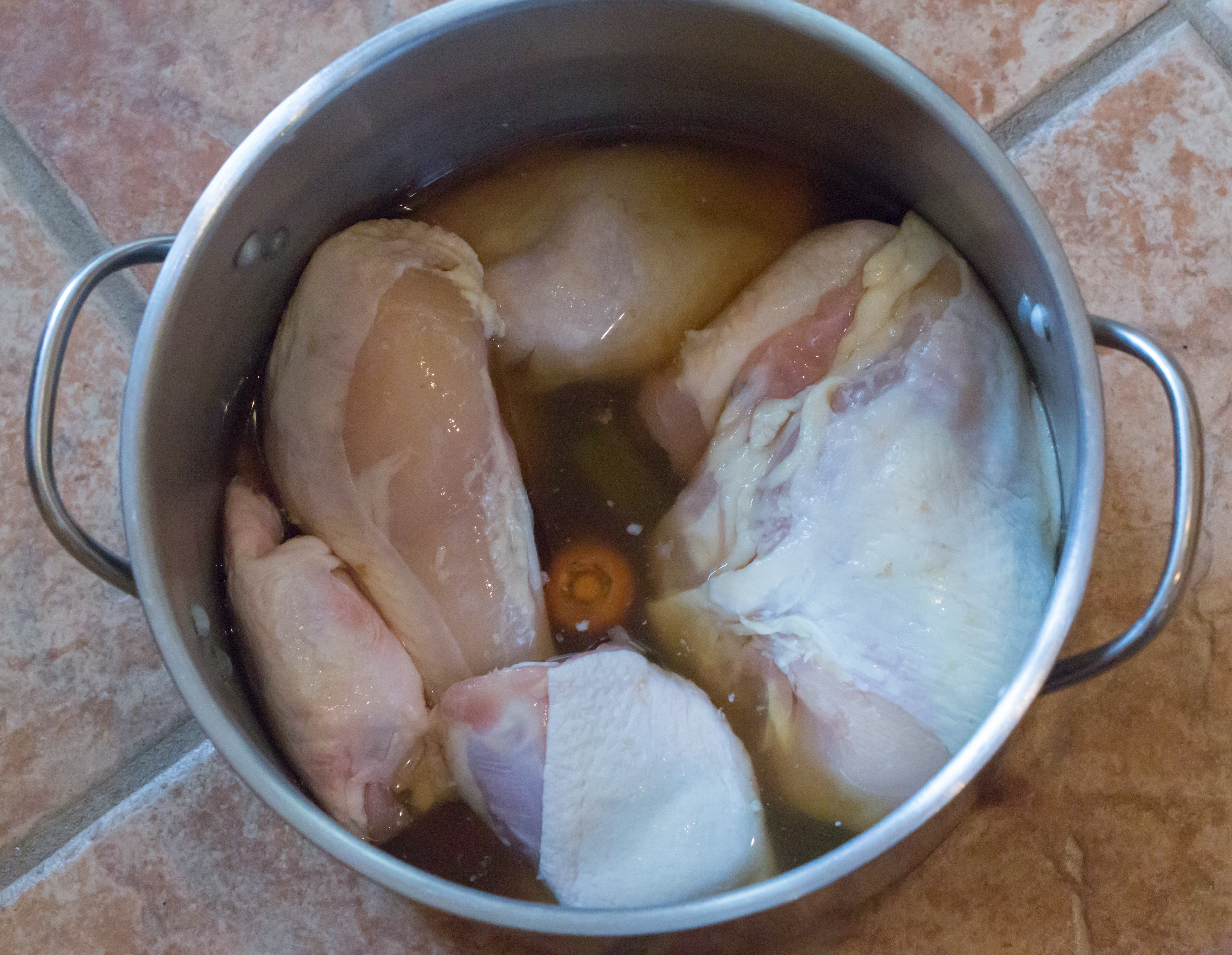
Chicken stock. First, you make your own chicken stock. Actually, you start out with commercial chicken stock, but with your own vegetables, seasonings, and chicken, it becomes home-made and doubly rich. You will need chicken, commercial chicken stock, yellow onion, carrot, celery, garlic, and fresh tomato along with salt and black peppercorns.

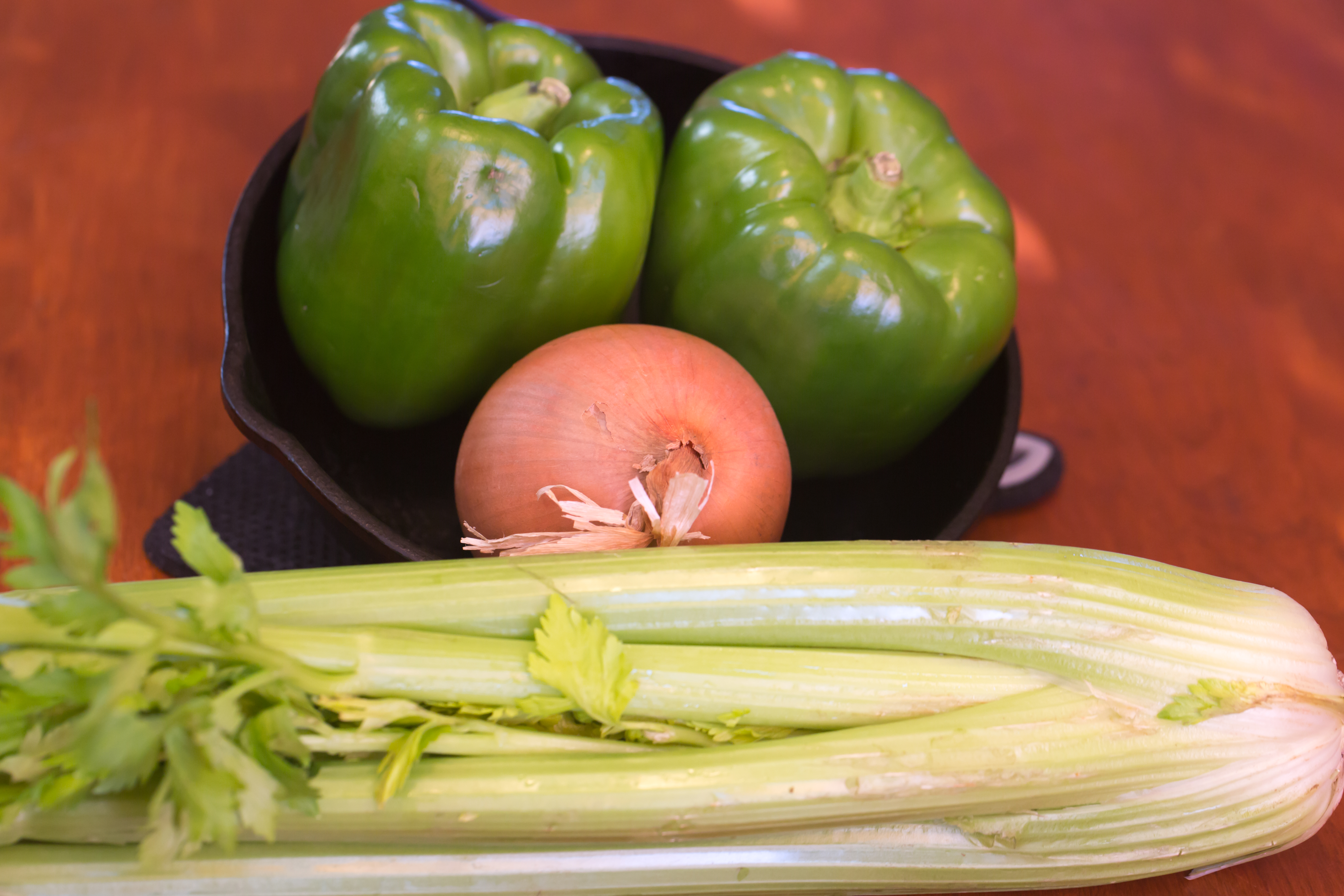
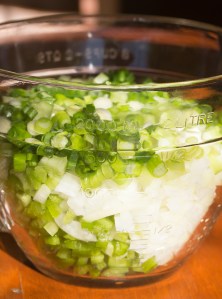
The Cajun Holy Trinity. Second, you need to prepare your vegetables – the so-called Cajun Holy Trinity of onion, green pepper, and celery – before you start to cook. When you make the roux, you will be skating on the edge of disaster. It must be just the right color – as dark as you can make it – but if it burns, you will need to start over. The cut vegetables serve several important parts of the recipe. Of course, flavor is a major purpose, but stopping the roux from further cooking is equally important. That’s why you need to have it at your elbow to dump in the pot just when you think the roux is finished.

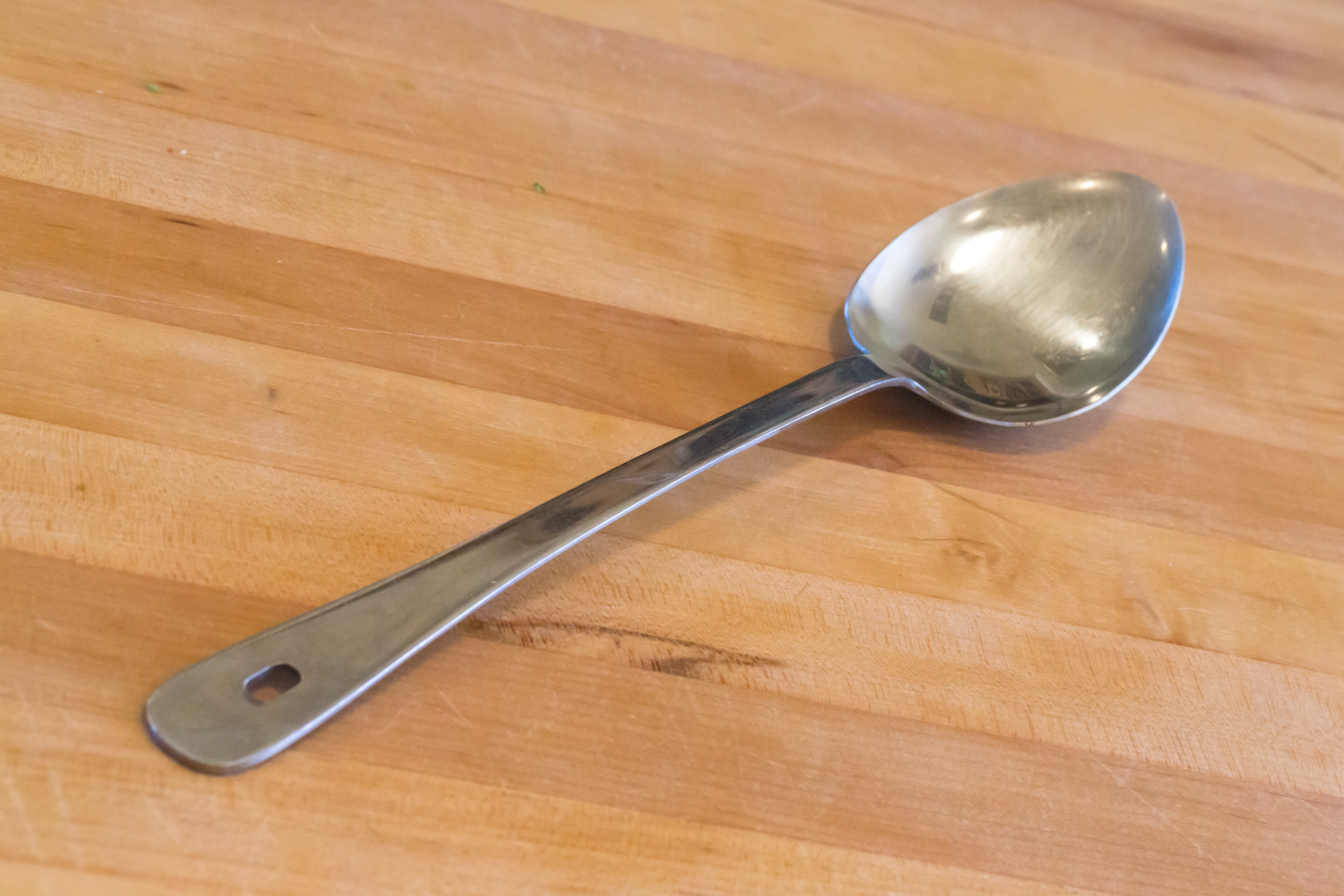
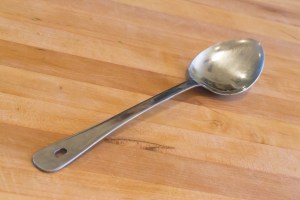
Roux. Third, you need to find the heaviest pot you have and the biggest metal spoon. Undoubtedly you have made a traditional French roux for béchamel or as thickening for various soups and sauces. That is not Cajun roux. The whole idea is to get the roux as dark as you can so that the rich smokiness flavors the soup. That requires constant stirring in a heavy-bottomed pot until your level of fear overtakes you. Any black bits – in other words, if it burns – you have to start over from the beginning.

Thickening.  As the roux darkens,  the flour loses its thickening power while adding to its flavoring power. As a result, there are two other ingredients used to thicken the soup.

First is okra. In fact the OED says that the word, “gumbo” comes from the Angolan word for okra. Many cooks prefer okra in the gumbo during the growing season. In the winter, when gumbo is guaranteed to take the edge from a cold day, filé becomes the preferred ingredient. There are many Cajuns who prefer filé for thickening all year long.

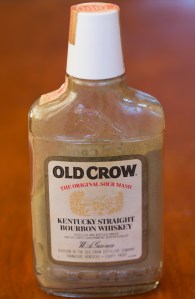
Filé is ground up dried sassafras leaves. If you live in the US South, you probably know where there is a nearby sassafras tree, and you can make your own filé. Aficionados swear it is by far the best to make your own. For the rest of us, there are several Louisiana food companies that sell filé in bottles. Once you buy your filé, the first thing to do is to transfer it to an empty Old Crow half-pint whiskey bottle to serve as your decanter on the dining room table.  Tightly stoppered, the filé keeps for a long time, but if you notice it has lost some of its thickening power, buy a fresh bottle.

Sausage. Traditionally, gumbo is made with andouille sausage. The Louisiana version is made with pork; the French version is made with chitterlings (I think you know what they are) so be sure you know what you are buying.  These days, most large super markets have andouille in the meat section, but if you have a hard time finding it you can substitute Polish kielbasa.

Spice. Gumbo can be as mild or spicy as you like. most folks from Louisiana like it on the spicy side, but food sensitivities in our family dictate a mild version. Fortunately you can add your favorite chile sauce to give the gumbo you prefer. Traditionally, Tabasco is often favored, but it has a vinegary punch that some don’t like. There are any number of other Louisiana hot sauces you can choose, or you can opt for Cholula from Mexico, or the current popular hot sauce, sriracha.

RECIPE

Louisiana Andouille and Chicken Gumbo

Ingredients

  • 32 ounce container of commercial chicken stock
  • 1 whole chicken, giblets and neck removed
  • 1 large yellow onion, halved
  • 2 ribs celery cut in thirds
  • 1 large carrot, cut in thirds
  • 2 cloves garlic
  • 3 or 4 stems of parsley
  • 1 teaspoon salt
  • 12 whole black pepper corns
  • water to cover
  • 1 ripe tomato
  • 1½ pounds andouille sausage
  • 1 large yellow onion, chopped
  • 3 ribs celery chopped
  • 2 large green bell peppers, seeds removed and chopped
  • 5 scallions with green tops chopped + more for garnish
  • 2/3 cup vegetable oil (You may use lard if you want to be authentic)
  • 2/3 cup all-purpose flour
  • Louisiana hot sauce (optional)

Method

  1. In a large stock pot, pour in the chicken stock. Add the chicken, onion, celery, carrot, garlic, salt and pepper. Add water to cover the chicken. Then bring to a boil, and reduce the heat to a simmer. Cook until the chicken is done, about 45 minutes. With your hand, squeeze in the tomato, seeds and all. Simmer for an additional 10 minutes. Remove from the heat. Remove the chicken to cool until it is easy to handle. Strain the stock into a large bowl, and set aside.
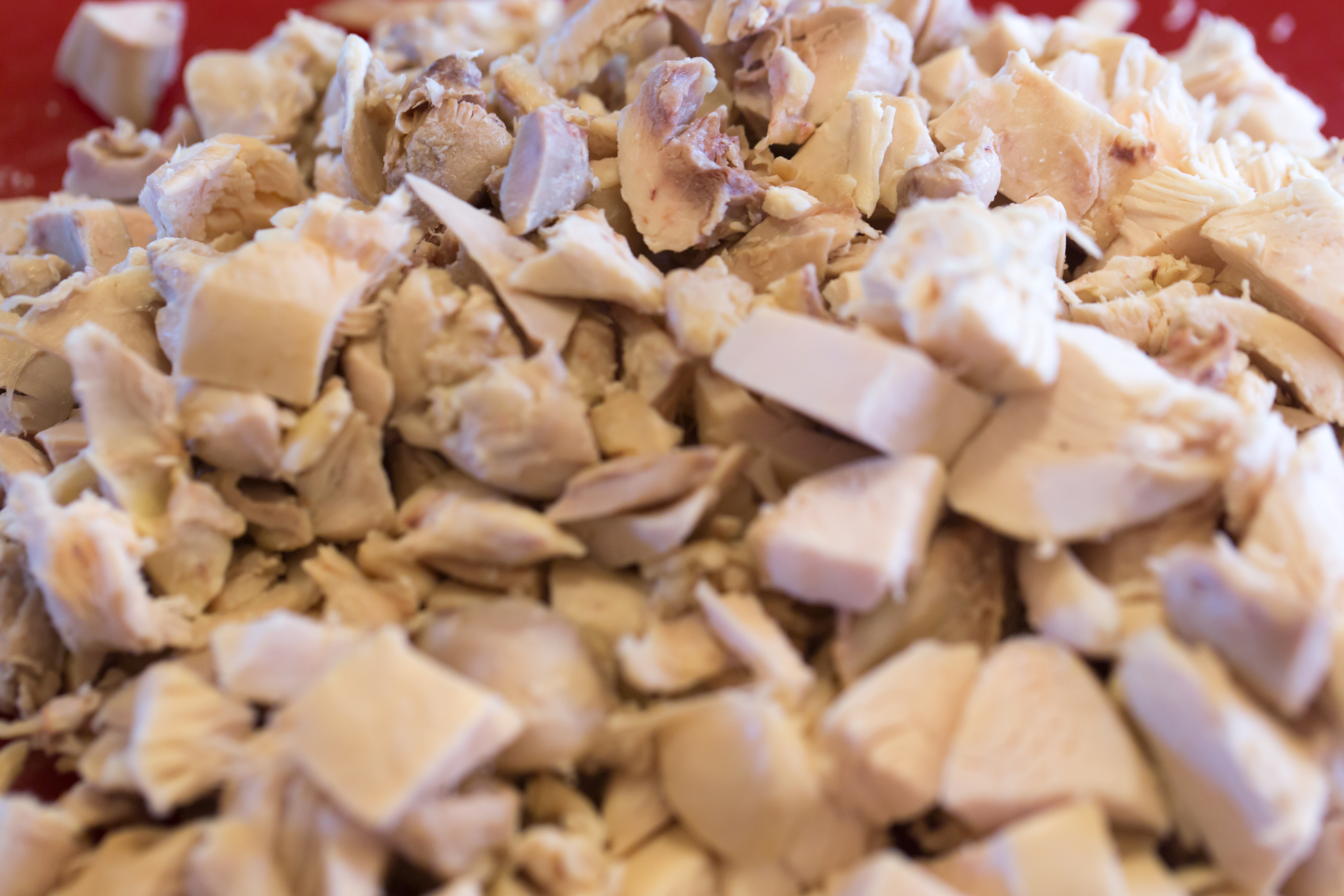
  2. When the chicken is cool enough to handle, remove the skin. bones, and any veins you might see. Cut the chicken meat into bite sized pieces and set aside.
  3. Cut the andouille sausage into 1 inch sections and then quarter each section. Set aside.
  4. Combine the chopped onion, celery, green pepper, and scallions in a large bowl. Place next to the roux pot so you can add it quickly to the roux before it burns.
  5. Using a very heavy pot and long-handled metal spoon, place the oil over high heat. As the oil begins to shimmer and just before it smokes, sprinkle the flour gradually into the oil while stirring constantly. The flour should sizzle as it hits the hot oil. It will start to darken immediately. Constant stirring is essential, being ure to scrape the corners of the pot. You can stop whenever the roux is colored to your liking, but Cajun moms will push it until it is almost black (ALMOST black – if you get some black flecks, it means that you have burned the roux and need to start over)
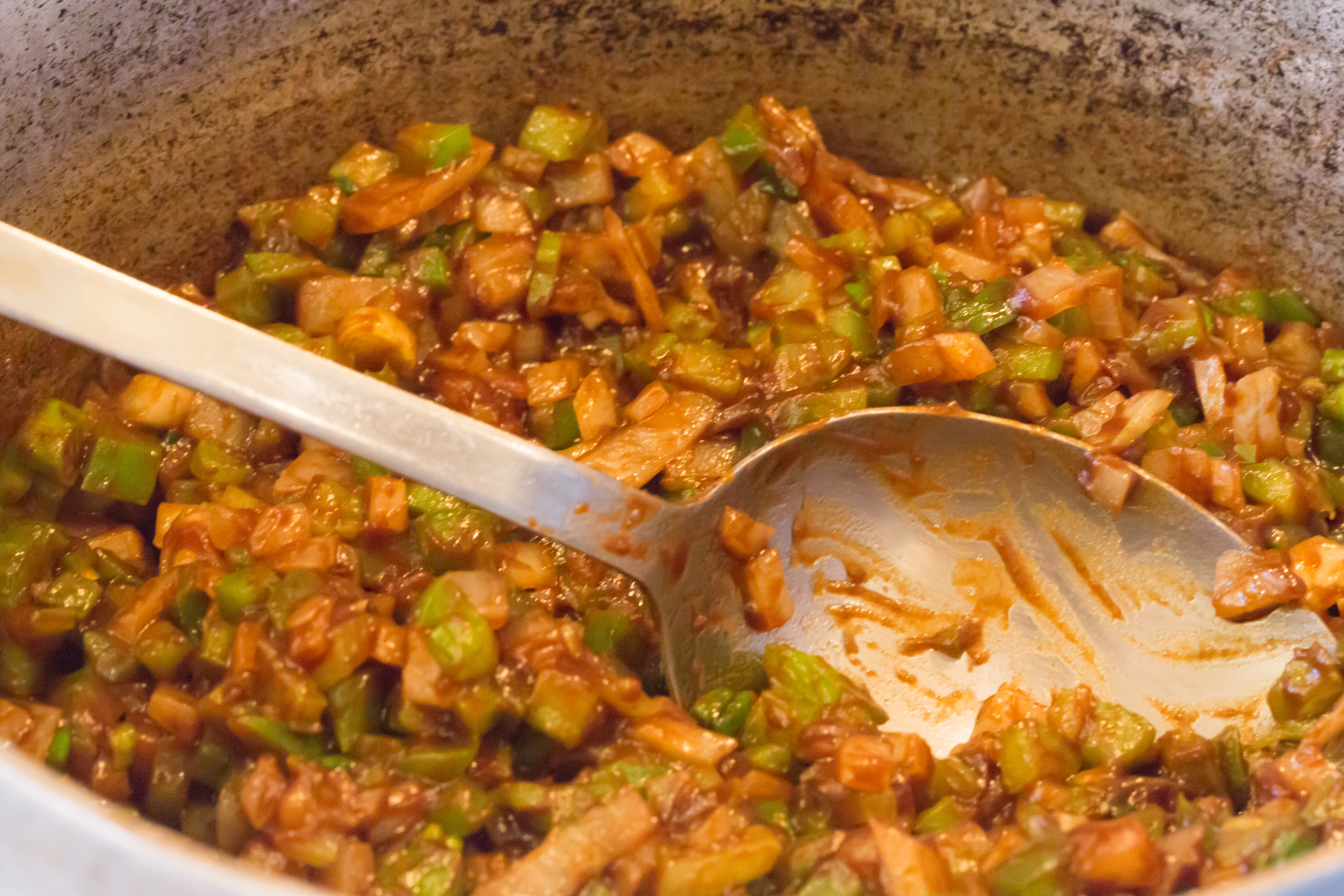
  6. Immediately dump in the chopped vegetables to stop the roux from darkening further. Stir. Reduce the heat to medium-low, and continue to cook until the vegetables are soft and translucent.
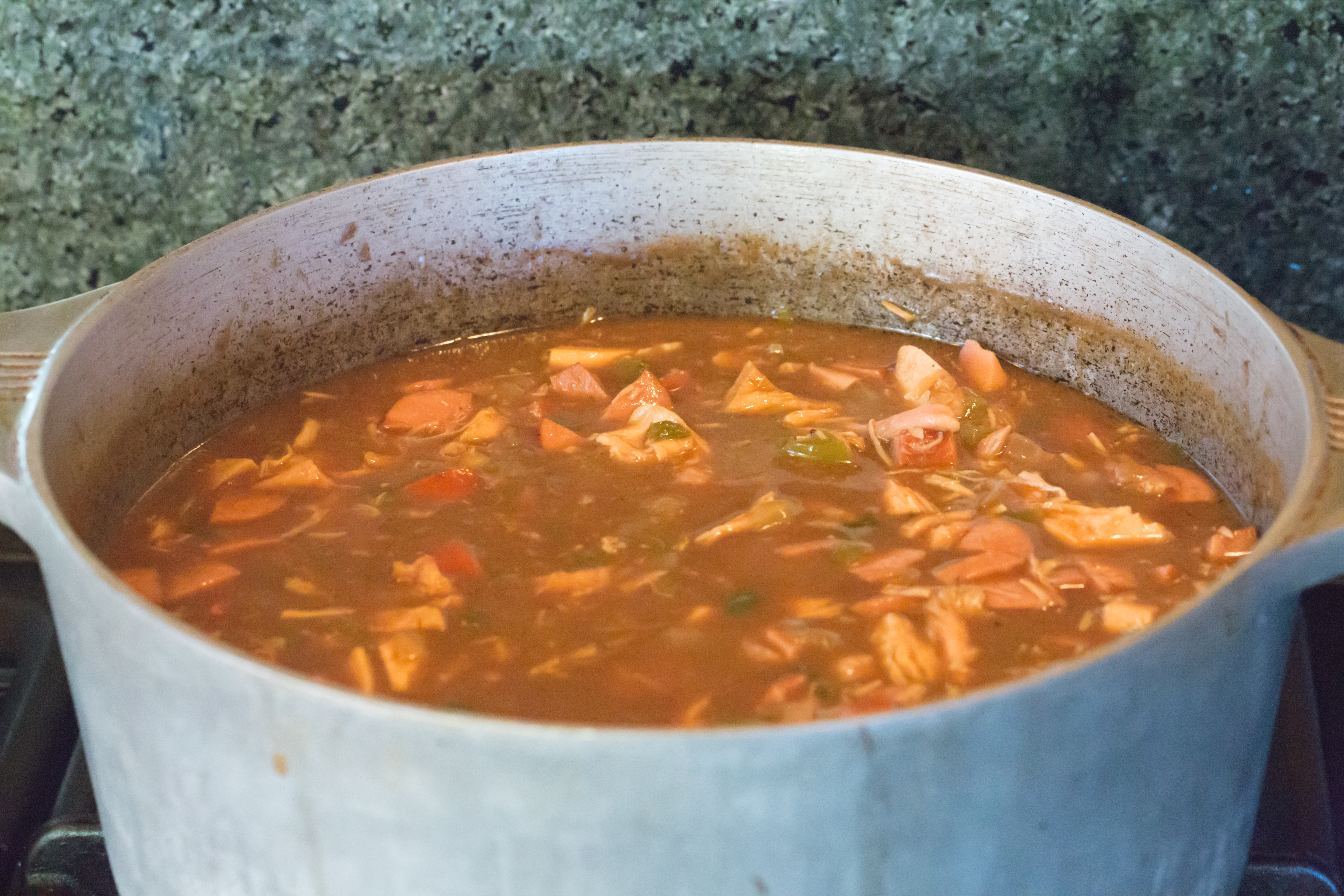
  7. Stir in enough of the chicken stock to get the consistency you want. Return to the boil. Add the chicken and andouille and simmer for another 30 minutes to meld the flavors.
  8. Correct the seasoning with salt, pepper, and hot sauce.
  9. Serve in a large soup bowl over a heap of cooked white rice. Pass chopped scallions, filé, and more hot sauce so that all can suit themselves.
 

A bowl of chicken and andouille gumbo
A bowl of chicken and andouille gumbo


File in the obligate Old Crow bottle

File in the obligate Old Crow bottle


Your choice of Louisiana hot sauces

Your choice of Louisiana hot sauces


Apot of gumbo ready to be served over rice
Apot of gumbo ready to be served over rice


Cooked chicken ready for the gumbo pot

Cooked chicken ready for the gumbo pot


Andouille sausage

Andouille sausage


Gumbo base simmering

Gumbo base simmering


The Cajun Holy Trinity stirred in to stop the roux from darkening too mucn

The Cajun Holy Trinity stirred in to stop the roux from darkening too mucn


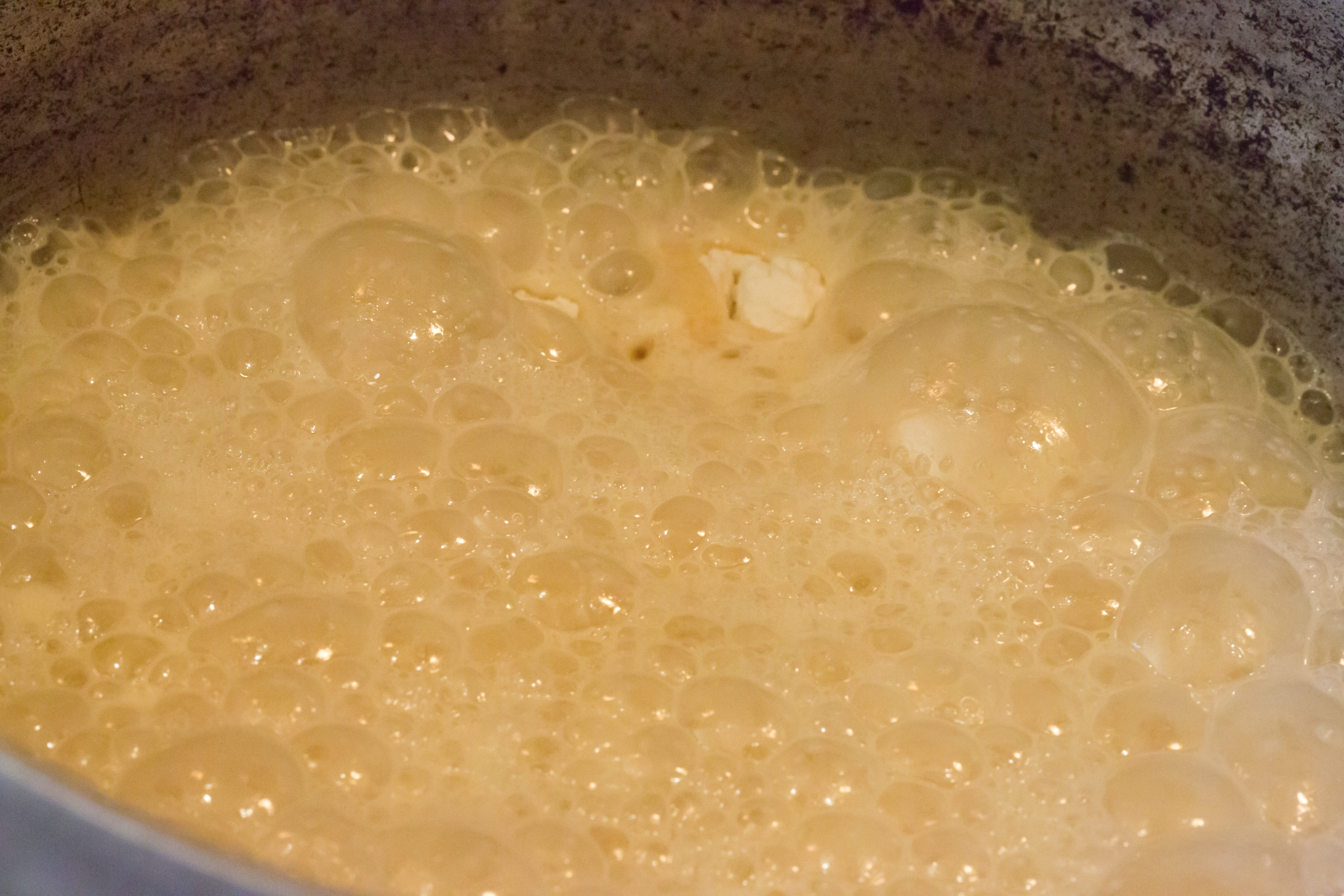
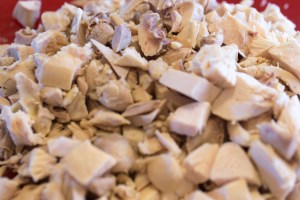
Roux beginning to cook but it needs to get a lot darker than this
Roux beginning to cook but it needs to get a lot darker than this


You need the biggest metal spoon you can find to keep you from getting burned with Cajun napalm
You need the biggest metal spoon you can find to keep you from getting burned with Cajun napalm


The bowl of chopped vegetables ready to be dumped into the roux

The bowl of chopped vegetables ready to be dumped into the roux


Chopped vegetables

Chopped vegetables


The Cajun Holy Trinity

The Cajun Holy Trinity


Cooking the chicken to also make a double-rich chicken stock

Cooking the chicken to also make a double-rich chicken stock

This recipe should easily serve 8 to 12 hungry people

5 Comments

Filed under Food, Photography, Recipes

SCALLION PANCAKES – FAMILY MEAL

One of the great traditions in restaurants – unfortunately tending to die out – is Family Meal. That’s when everyone takes a break from preparative work to gather together, talk about the evening ahead, and  share a meal prepared by one of the cooks. The meal is almost always comfort food made with leftover ingredients or inexpensive ingredients ordered just for the meal. The great thing is that the cooks rotate the assignment so the pressure is on to prepare something that everyone will enjoy. This is definitely not the time or place to embarrass yourself in front of your peers. Often Family Meal will feature food from childhood – a family favorite or Mom’s secret recipe. I have previously written about Sarah’s brisket and biscuits that became so popular the kitchen staff cheered when they appeared on the menu.

During a recent trip to San Francisco I got to spend the afternoon with Sarah in the prep room at Rich Table. That’s where Jonathan Tu whipped up his mother’s recipe for scallion pancakes. Nearly every Asian nation has its own version of this treat, but they all come down to a simple flour and water dough and chopped green scallions.  Kneading, layering with oil, and rolling out the dough a couple of times makes a flaky, multi-layered pancake rivaling puff pastry but without all the hassle.  There are a few little tricks or special touches in rolling out the dough, but in the end scallion pancakes are so simple and so good.

Jonathan served his pancakes with chicken sausage, rice, and a sauce of mustard, soy sauce, sesame oil, and chili flakes, but it’s up to you to choose your favorite dipping sauce or topping.


RECIPE

Scallion Pancakes

Ingredients

  • 2½ cups all-purpose flour
  • 1 cup water
  • kosher salt
  • ½ cup chopped scallions, including green tops
  • sesame oil

Method

  1. In a large bowl, combine the flour and water. Mix until it holds together and forms a ball. Continue to knead for about 10 minutes or until the dough becomes soft and shiny.
  2. Cover the dough with plastic wrap and let rest for 30 minutes.
  3. Divide the dough into four equal balls. On a well-floured work surface, roll out one of the balls to about 1/8 inch thick. Keep the remaining balls covered with a cloth until you are ready to roll them out..
  4. Drizzle the top of the rolled out dough with sesame oil. Sprinkle with ¼ of your chopped scallions and kosher salt. Fold it over and roll it out again.
  5. Roll up the flattened dough like a cigar. Divide the cigar crosswise into two pieces. Coil each piece like a snake or snail. Flatten the coil with your hand and then roll out into a circle with a rolling-pin.
  6. Repeat with the remaining balls of dough. You should have eight pancakes.
  7. Heat a heavy cast iron skillet to medium high or use a heated plancha. Lightly oil the cooking surface, and then transfer one of the pancakes to the skillet or plancha. Cook for two minutes. Then flip and cook the other side for two minutes. The pancakes should be a light golden brown.
  8. Repeat with each of the remaining pancakes. You may keep them in a warm (200°F) oven while you cook the rest.
  9. Cut each pancake into 6 or 8 wedges and serve with dipping sauce or accompaniments of your choice.

3 Comments

Filed under Food, Photography, Recipes, Restaurants, Travel

LEVAIN WITH FENNEL FRAGRANCE

One of the favorites on the Rich Table menu is Sarah’s country style levain. The bread is served warm with house-churned cultured butter. Sometimes the bread is scented with Douglas fir, but the most popular version is when it is flavored with wild fennel “pollen”. The pollen is actually the bright yellow tiny flowers of wild pollen that grows all over Northern California and blooms from mid to late summer. Rich Table has their own forager who brings the pollen in from fields north of San Francisco, and the restaurant has an abundance now. Unfortunately the source is regional and seasonal – that’s one of the reasons for using Douglas fir – but if you don’t happen to live in Northern California, ground fennel seeds can make a workable substitute. The smell and taste are not as delicate, and if you use too much can be overpowering, so use it carefully.

On a recent visit to San Francisco, I watched Sarah make her bread in the basement prep kitchen at Rich Table. The experience inspired me to try to adapt the recipe for the home baker. This is pretty close to the real thing, but Sarah did not share any of her baking secrets with Old Dad.

Sarah’s recipe makes twelve large loves, too much for the home baker. For that reason, I have pared down the ingredients to make two generous loaves. I have made some other modifications to make it easier for the home baker. First, professional bakers weigh their ingredients, while home bakers usually measure things in cups and spoons, so I have set the quantities in the home style. Second, if you have your own sourdough starter, that is great, but if you don’t you can substitute packaged dry yeast. Third, if you have harvested your own wild fennel “pollen” (actually fennel flowers) that’s also great, but you can substitute ground fennel from your spice shelf.  Finally, you can mix the dough by hand, but that is a labor of love, so I have used a stand mixer equipped with a dough hook for the kneading and gluten-release process. Resting times are very important to make sure the gluten releases and supports good lift of the dough.

RECIPE

Levain with Fennel Fragrance

Ingredients

  • 3 cups + ¼ cup water
  • 1 cup levain* or substitute 1 envelope dry yeast
  • 6 cups bread flour
  • ½ cup whole wheat flour
  • ½ cup rye flour
  • 1 tablespoon salt
  • ½ teaspoon ground fennel seeds
  • vegetable shortening or butter for greasing bread pans

* Baker’s note: You can find the method for making your own levain or sour dough starter in an earlier post. If you choose to use yeast instead, increase the water and flour in the recipe by ½ cup each.

Method

  1. Place 3 cups water in the large bowl of a stand mixer. Using the paddle attachment, mix in the levain (it should float in the water, otherwise it has not risen enough) or yeast. You should feed your levain the night before you bake to make sure it has good rising power the next morning.
  2. Slowly mix in the flour, a cup or so at a time.  When the dough becomes stiff enough, change to the dough hook attachment.
  3. Add all the flour. Then beat with the dough hook at a slow speed for 10 minutes until smooth and shiny.
  4. Let the dough rest in the bowl for 30 minutes.
  5. Dissolve the salt in the ¼ cup water.
  6. Beat the salt mixture and ground fennel into the rested dough until completely incorporated.
  7. With a scraper, transfer the dough to a large metal bowl.
  8. Cover the dough with a plastic film and let rest for 30 minutes. Then turn the dough gently in all directions with moistened, clean hands. Recover the dough with the plastic film.
  9. Repeat turning the dough every 30 minutes for three additional times.
  10. Turn the dough out on a well-floured work surface. Divide into two equal pieces. Each piece should weigh a little over 2 pounds.
  11. Shape each piece of dough into a ball and let rest for 5 minutes.
  12. After the rest, shape the dough by lifting the far edge of the ball and pulling it to the center. Repeat this motion in all directions. Pinch closed any seams and let rest, covered with a cloth, for 10 minutes while you prepare the baking pans.
  13. Prepare two 9 x 5 inch bread pans by greasing the insides well with vegetable shortening  or butter.
  14. Arrange the dough pieces, seam side down, in the two bread pans, cover with a clean cloth, and set in a warm place to rise until doubled.
  15. While the bread is rising, pre-heat the oven to 450°F (232 °C)
  16. When the loaves have risen, slash the tops with a sharp knife and transfer to the middle of the pre-heated oven.
  17. Bake for 15 minutes. Then reduce the oven temperature to 350°F  (177°C) and continue to bake for 45 additional minutes. Turn the loaves front to back at least once during the baking.
  18. At the end of the baking time, test for doneness by thumping the bottoms for a hollow sound. Transfer the baked loaves to a cooling rack and allow to cool completely.

7 Comments

Filed under Food, Photography, Recipes, Restaurants, Travel

PANNA COTTA

Even though Sarah is trained as a savory cook, by default she has also been doing baked goods and desserts at Rich Table. She doesn’t think of herself as a pastry chef, but her success proves otherwise. Desserts have been among some of the most popular items at Rich Table since it opened over a year ago. There is always pressure to keep some of the old favorites on the menu, but there is also pressure to introduce new items on a fairly constant basis.

Two recent additions are:

Blue corn cake with honey-griddled plums, and vanilla ice cream. This dessert is a riff on Sarah’s favorite cornbread recipe, but made with blue corn meal. I suspect that comes from her interest in New Mexico traditions. She also has a good source for blue cornmeal from  Tierra Vegetables in the farmers market at the San Francisco Ferry Building.

Blue corn cake with honey-grilled plums and vanilla ice cream

Blue corn cake with honey-grilled plums and vanilla ice cream

Bittersweet chocolate ganache with almond butter crunch and passion fruit meringue.

Bittersweet chocolate ganache with almond butter crunch and passion fruit meringue

Bittersweet chocolate ganache with almond butter crunch and passion fruit meringue

Panna cotta is one of the old favorites, but Sarah has come up with lots of variations that have kept it popular and fresh. Some of those variations include buttermilk, coconut, and more recently cream cheese.  Panna cotta is a cousin of flan, crema catalana, and crème brûlée. Those custards are made with eggs which are cooked gently to provide thickening. Panna cotta has gelatin added for the thickening agent. In commercial kitchens, leaf or sheet gelatin is the form most commonly used, but that form is not often available in grocery stores and is a little trickier to use. That’s ok, because a perfectly good panna cotta can be made with the granulated form, although you may need to experiment and cut back on the amount of the gelatin if the finished panna cotta too firm for your taste.

Sarah’s current cream cheese panna cotta is delicious, but if you want to try it at home you will need to tinker with the amount of gelatin you use. The firm texture of the cream cheese sets up too hard with the usual amounts of gelatin.

I think her buttermilk panna cotta is every bit as good. Sarah makes it with fresh cultured buttermilk that the restaurant gets when it house-churns its own butter. That’s not practical at home, but fresh commercial buttermilk will work. That’s my version below.

RECIPE

Panna Cotta

Ingredients

  • ¼ cup water
  • 1 packet unflavored gelatin
  • 1½ cups heavy cream
  • 1½ cups buttermilk
  • ½ cup sugar
  • 2 teaspoons orange blossom water
  • 1 tablespoon Grand Marnier or other orange liqueur (optional)

Method

  1. Place the water in a small bowl and sprinkle the gelatin over the top. Let stand for 5 minutes or until the gelatin softens. Do not let it stand too long or it will turn into a solid blob that is hard to dissolve.
  2. In a medium saucepan, combine the cream, buttermilk, and sugar. Bring to a  boil for 5 minutes. Remove from the heat.
  3. Using a whisk or immersion blender, stir in the softened gelatin. Stir for at least a minute. Make sure that the gelatin is completely dissolved. Otherwise it will sink to the bottom and form a separate gelled layer.
  4. Stir in the orange blossom water and optional Grand Marnier or other orange liqueur.
  5. Pour into 6 6-ounce cups. Cover tightly with plastic wrap and chill in the refrigerator for 3 hours or overnight.
  6. Serve with fresh berries or your choice of toppings.

4 Comments

Filed under Food, Photography, Recipes, Restaurants

CHICKEN LASAGNA WITH PUMPKIN AND GREENS – SAN FRANCISCO BAY AREA RISING STAR CHEFS

A while back we spent some time in the Bay Area baby sitting while our kids were involved in out-of-town business trips. One of the payoffs for our efforts was that we got to attend the Silicon Valley crawfish boil I wrote about. Another bonus was the chance to attend the San Francisco Rising Stars celebration sponsored by Starchefs, an organization that publishes magazines and websites catering to food professionals. Once a year, in a different city, Starchefs throws a big event to recognize rising star chefs from that community. This year it was San Francisco’s turn. Sarah and Evan were fortunate enough to be selected among the eight Rising Star chefs, along with outstanding pastry chefs, artisans, restaurateurs, brewers, and mixologists.

The event was held at AT&T Park, the home of the San Francisco Giants. There is a lot of excitement just with the prospect of seeing a huge major league baseball park all spiffed up and without the crowds.

Still, there was a different crowd: for a select few (actually willing to pay a lot more for their tickets) there was a VIP reception in the main-floor restaurant and lounge. “Free” drinks, appetizers when you could intercept the servers, and some women in long gowns – in a baseball park.

After the reception, everyone headed to the seats behind home plate to watch the awards ceremony. One by one the winners were called out of the dugout to run to home base for an introduction, award, and photos.

Next, everyone rode elevators up to the Club level, complete with spectacular views of the stadium and San Francisco Bay behind it. There the winners had all prepared some of their signature dishes and served them from tables set up around the lobby, interspersed with tables of wine paired with each of the dishes.

There was some pretty spectacular food, and this is just a sampler:

  • Nick Balla, Bar Tartine                            Fisherman’s stew with green chile
  • Richie Nakan, Hapa Ramen                   Crispy ramen noodle cake
  • Jessica Largey, Manresa                         Verbena- and chamomile-poached sea bream collar
  • Jason Fox, Commonwealth                    Scallop, hearts of palm, popcorn puree
  • Brett Cooper, Outerlands                       Fish sauce-glazed Berkshire pork belly
  • Duncan Holmes, Sons & Daughters     Squab with marcona almond butter
  • Mark Liberman, AQ                                 Australian beef short ribs with black garlic

Of course, we were partial to Sarah and Evan’s offering from Rich Table, chicken lasagna with pumpkin and greens

All in all, it was a great evening in a great setting in a great city.  My only concern was getting out of the parking lot with all of those other revelers.

2 Comments

Filed under Food, Photography, Restaurants, Travel

CHIPOTLE CULTIVATE SAN FRANCISCO

We just returned from a week in the San Francisco Bay area. Our trip was primarily a baby-sitting junket, but we wound up experiencing a non-stop rush of food events. The main reason for our trip was so that our daughter and son-in-law could go to New York City to cook in a charity event in Rockefeller Center for CityMeals on Wheels, but we wound up baby-sitting while they cooked at their restaurant, Rich Table, for visiting chefs attending the Chipotle Cultivate Festival in Golden Gate Park. Then there was the NYC event itself, and while the offspring were out of town, we helped my son and his family with their annual crawfish boil in Silicon Valley, and then cooked a birthday dinner for my son.  In between all of this we had a spectacular all-holds-barred dinner at Rich Table and a late lunch at the Presidio Social Club, a lovely little place on the Presidio grounds. Finally we attended the awards ceremony for San Francisco’s Rising Star Chefs held in the Giants’ AT&T Park. Sarah and Evan cooked again, and the reception was a real food blowout.

Now we have to work on losing the weight we gained during this food extravaganza.

My first report from the week is about the Chipotle Cultivate Festival, sponsored by the Chipotle Mexican Grill restaurant chain. This started out as an event in Chicago’s Lincoln Park three years ago, spread to Denver’s City Park last year, and now this year moved to include San Francisco’s Golden Gate Park. The event was held in Hellman Hollow with nearby Lloyd Lake. The festival was free with lots of live music, so there were big crowds. Chipotle had food stands around the grounds with some of their specialties for sale. There were lots of other food vendors, but one of the highlights was a series of cooking demonstrations by well-known chefs. Amanda Freitag, perhaps best known as one of the judges on the Food Network’s Chopped, travelled from New York City. So did Douglas Quint and Bryan Petroff, co-owners of Big Gay Ice Cream Trucks, wildly popular in NYC. Ludo Lefebvre, Jon Shook, and Vinny Dotolo came up from Los Angeles. Michael Charello of Bottega in Napa Valley, Richard Blais from Atlanta, corporate chefs from Chipotle, and San Francisco chefs Minh Tsai, Evan Bloom, Led Beckerman, and Sarah and Evan rounded out the list of chefs who did cooking demonstrations throughout the day.

Sarah and Evan chose to prepare Sarah’s popular dessert, caramelized olive oil cake with fresh strawberry sauce and cream cheese ice cream. Oil cakes have been around for years, but recipes in cookbooks are often hard to find. Oil is used as a substitute for butter or shortening. Its liquid state at room temperature makes a moist cake, but that also means it will not support cake loft as much as solid fats. For that reason, the cake is more dependent upon incorporated air in other ingredients so it is important to beat those ingredients enough to give the cake lightness. Olive oil has only recently become a popular ingredient. The 1975 edition of the Joy of Cooking has three recipes for oil cakes but also strong advice to avoid olive oil because of its strong flavor. These days, that strong flavor has made olive oil cakes popular.

An additional step that makes Sarah’s cake special is caramelization. As she says, you can caramelize the top, the top and bottom,or all sides, depending how much time you want to spend. One way to caramelize the cake is to sprinkle it with sugar and use a salamander or torch as you might for a crême brulée, but that may be too tricky, so you can accomplish the same thing in a very hot skillet or griddle. The caramelization step can only be done when you are ready to serve the cake.

The second part of the demonstration dish was a strawberry sauce made from fresh strawberries. California strawberries fresh from the farm are totally unlike the flavorless, cardboardy kinds you get in the supermarket. The farm varieties are red, juicy, sweet, tender, and filled with the strawberry flavor of long ago. Adriana Silva, the owner of   Tomatero Farms near Watsonville and the strawberry purveyor, also participated in the demonstration. She has gone from 2 to 200 acres under cultivation in just a few years, and she raises six different varieties of strawberries which come in at different times during the season. The variety used for the demonstration was “Seascape”, a red, sweet beauty.

The final part of the dish for the demonstration was a generous topping of cream cheese ice cream, churned at Rich Table that morning. It is like eating a bite of cold New York cheesecake except that it melts in your mouth.

RECIPE

Olive Oil Cake

Ingredients

  • 8 large eggs
  • 1½ cups granulated sugar
  • 1 teaspoon salt
  • 1½ lemons, zested
  • 1 1/8 cups whole milk
  • 1½ cups all-purpose flour
  • 1 cup cake flour
  • 1 1/3 cups almond flour
  • ¼ cup baking powder
  • 1½ cups extra virgin olive oil + more to grease the cake pan
  • granulated sugar to caramelize the top

Method

  1. In the bowl of a stand mixture, combine the eggs and sugar. With the mixer set on medium speed, cream the eggs and sugar together for at least five minutes to incorporate as much air into the mixture as possible. It should form a smooth, shining ribbon.
  2. Turn the mixer to low and add the salt and lemon zest
  3. Slowly drizzle in the mil with the mixer still running.
  4. While the eggs and sugar are mixing, sift together the flours and baking powder.
  5. Add the sifted flours to the mixture, continuing to beat on low.
  6. Drizzle in the olive oil very slowly as you would making mayonnaise.
  7. Prepare a half sheet cake pan ( 16 x 12 x 3 inches) by oiling liberally with the extra olive oil
  8. Pour the batter into the prepared pan. Use a spatula to make sure the batter fills the corners of the pan.
  9. Bake in the middle of an oven pre-heated to 325°F for 25 minutes or until the cake springs back to the touch and/or tests clean with a toothpick
  10. Remove from the oven. Cool on a baking rack for five minutes. Then invert onto a flat surface. Gently transfer the cake. You may need to use your fingers or a thin spatula get the cake out in one piece.
  11. When ready to serve, cut the cake into serving-size pieces, sprinkle with sugar, and place sugared-side down on a clean hot griddle or skillet. When the sugar is caramelized (2-3 minutes) serve caramelized side up with sauce, whipped cream, or ice cream.

3 Comments

Filed under Food, Photography, Recipes, Restaurants, Travel

RICH TABLE – KEEPING OUR FINGERS CROSSED

What a year this has been! About this time last year Rich Table was a construction site, and Sarah and Evan were wondering if they could open on time. They were also wondering if they would get enough customers to pay the bills.  Their anxieties have been addressed. The doors of their new restaurant opened right on schedule, and almost from the beginning, they have been busy. One of the biggest complaints on Yelp is that getting a reservation is almost impossible. As proud parents, we know the feeling. When we are visiting San Francisco, we need to call Sarah weeks ahead to make sure we have a table. Sometimes we have had to sit at the bar, and once we only got in when there was a last-minute cancellation.

Great reviews on local food blogs and by Michael Bauer in the San Francisco Chronicle have certainly helped with their popularity, but the excellent service by “celebrity” wait staff, creative cocktails, and – of course – the imaginative food have drawn in lots of repeat customers and regulars.

The chefs have travelled to places as far away as Chicago and Mumbai to cook at the invitation of restaurants and chefs in those settings.

Now, even before the first anniversary of their enterprise, Sarah and Evan are enjoying an experience that once they could only dream of. Along with their friends,  the husband-wife team who operate State Bird Provisions in another part of San Francisco, they are among five finalists for the James Beard Foundation award for the outstanding new restaurant in the United States.

For those of you who don’t know, the James Beard Foundation Awards is cooking’s version of the Oscars. It is black-tie/long dresses in the Lincoln Center in New York City. There are categories for all sorts of food-related honorees, including best chef, best restaurant, best restaurateur, best television show, best cookbook, even best food blog (I am not on the list). There are lots of pre- and post-event parties, so it becomes a days-long celebration of food. I am certain that there is a lot of amazing food at all of the parties and events.

I thought you might be interested in the lists of finalists in two categories: Best New Restaurant and Individual Food Blog, so here they are:

BEST NEW RESTAURANT

  • Empellón Cocina                       NYC
  • Grace                                           Chicago
  • The Ordinary                             Charleston
  • Rich Table                                  San Francisco
  • State Bird Provisions               San Francisco

INDIVIDUAL FOOD BLOG

  • Cannelle et Vanille                       www.cannellevanille.com    Aran Goyoaga
  • Hunter Angler Gardener Cook   www.honest-food.net           Hank Shaw
  • Vinography                                      www.vinography.com           Alder Yarrow

Cookbook, television, and journalism awards will be announced on May 3, 2013. The other awards will be announced May 6, 2013. If you are interested in checking out all of the finalists in all of the categories, go to www.jamesbeard.org/awards

6 Comments

Filed under Food, Restaurants

CORNBREAD II: DEANIE HICKOX’S SWEET CORNBREAD

Several months ago, my daughters and I started on a book project about the history of corn, cornmeal, and corn-based recipes. As part of our effort, we got into a friendly competition to find the best cornbread recipe. As a purist, my contribution was totally sugar-free. Sarah submitted this recipe, which has a lot of sweetening including honey. For my taste, it is too sweet to sop up pot liquor or beans. Still, it is absolutely delicous, so much so that it is difficult to resist eating the whole batch by oneself even though it should serve four to six. There is relatively little cornmeal as most cornbread recipes go, and it is almost like a cake. That is why in this post I have presented it as a dessert paired with macerated strawberries and whipped cream.

The recipe came from one of Sarah’s cooking friends, Deanie Hickox, who at one time worked as a pastry chef at Michael Mina’s in San Francisco.  The original version made enough cornbread for a crowd of restaurant customers, so I adapted it for the home baker. You’ll see that my finished cornbread fell a little in the middle.  That was from my using too much baking soda for this altitude (7,000 feet). If you are a high altitude baker,  see the note below

RECIPE

Ingredients

Dry Mix

  • 1½  cups all-purpose flour
  • ½ cup cornmeal
  • 1½ teaspoons baking soda *(for high altitudes, reduce to 1 teaspoon)
  • ¾  cup sugar
  • 1 tablespoon salt

Wet Mix

  • 2 large eggs, beaten
  • 4 ounces (one stick) unsalted butter, melted and cooled
  • 1 cups buttermilk
  • ¼ cup cream
  • 1/3 cup canola oil
  • 1½ tablespoons honey

Method

  1. Combine dry ingredients
  2. Mix eggs and butter, and then add other wet ingredients. The order is important to keep the butter from solidifying too much.
  3. Add the wet mix to the dry mix and stir. Don’t worry about getting out all the lumps. Most of them are lttle clumps of butter that will melt during baking.
  4. In a pre-heated oven, bake at 350°F (177°C) in a greased 8 x 8 x 2 inch pan for about 45minutes. Cover with foil if the cornbread takes on too much color.
  5. Cool for 5 minutes. Then cut into serving-sized squares.
  6. For dessert, add macerated strawberries or other fruit, and top with whipped cream.

3 Comments

Filed under Food, Photography, Recipes

BISCUITS – A FAMILY SECRET REVEALED

My son enjoys cooking, and is very good at it, but  his scientist training attracts him to difficult recipes or those with a lot of instructions.   This is the edited version of Peter’s biscuits.  As I was collecting biscuit recipes from all of the good bakers in the family, I asked Peter for his version.  He sent me some copious notes in addition to the recipe: [1] Don’t use rancid shortening. Probably the voice of experience. [2] Use a pastry blender, although a large spoon works fine. [3]  Biscuits mix better on wood than Formica because the wood grain holds the flour. [4] To re-heat a day-old biscuit, put it inside a plastic bag and warm it for a few seconds in the microwave; then put it in the toaster oven for the final warm-up to remove the sogginess of the microwave. All useful suggestions either for the neophyte or experienced biscuit baker.

Other suggestions include: [1] the shortening in this recipe is on the low end of most recipes which go all the way up to 6 tablespoons of fat. The lower amounts of shortening produce flakier biscuits, the larger amounts produce soft biscuits. It’s only a matter of preference. Butter has more water content than vegetable shortening, so the finished biscuit is softer. Bacon grease is a good substitute, but it ought to be solid – not melted. [2] The less manipulation of the dough after you have added liquid the better. Folding is better than kneading so you get flaky layers. [3] Cold is better than warm. Be sure to chill the flour mixture before you add the liquid to get the flakiest biscuits. [4] Biscuits squeezed together in a cake pan will rise higher than those spread out on a baking sheet.

Peter learned the original, non-scientific version of his recipe from his maternal grandmother and then passed it on to his younger sister, who is a professional chef. She has worked in well-known restaurants in New York City and San Francisco. A common tradition in all of these places is the “family meal”. Chefs and cooks take turns preparing a meal for cooks and wait staff before evening service begins. The kitchen crews in all of those places are used to complex meals  with expensive ingredients. Yet in every single one of them, when Sarah cooks “family meal”,  cheers inevitably go up for her biscuits and barbecued brisket. There is never a single biscuit left when service starts.

In fact, the biscuits are so popular with restaurant staff that they will go to great lengths to get their share. One time a baking sheet of hot biscuits had just come out of the oven, ready to be passed around the table. Before anyone knew what was happening, the pan crashed to the floor, and the biscuits spilled out. Next stop for the biscuits was the trash barrel in spite of the cries of the hungry staff. One frustrated cook leaped up and went head down into the trash barrel to retrieve those precious gems.


PETER AND SARAH’S FAMILY MEAL BISCUITS

Ingredients

  • 2 cups flour
  • 1 teaspoon  salt
  • 2½ teaspoons baking powder
  • 2 tablespoons shortening (Crisco much preferred)
  • ¾ cup  whole milk

Method

  1. Preheat oven to 450º.
  2. In a large mixing bowl, sift together the flour, salt, and baking powder.
  3. Using a pastry blender, cut in the shortening until the mixture is consistent and the size of small peas.
  4. The biscuits will be flakier if you chill the dry mixture in the refrigerator for 30-45 minutes.
  5. Add the milk, and mix with a fork, being careful not to over-mix.
  6. Turn the dough onto a heavily floured surface. Knead the dough gently by pressing and folding. Don’t overdo it!  Four foldings should be enough, and more than six is too many.  Coat the dough with flour before the final folding to make splitting the biscuits easier.
  7. Pat the dough into a flat rectangle about ¼ to ½ inches thick. Using a two-inch biscuit cutter, cut out biscuits and place them on an ungreased baking sheet. Gather up the scraps, pat them together and flatten them, cutting biscuits until the dough is used up.
  8. Bake in the middle of the preheated oven for about 15 minutes, or until done.

Yield: Between 12 and 24 biscuits depending on size and thickness

13 Comments

Filed under Food, Photography, Recipes