Tag Archives: Carol

BRINED ROOT VEGETABLES AND CAULIFLOWER

Here’s my take on the brinded vegetables served at Bar Tartine. Even though mine are not nearly as good as those at the restaurant, they have turned out ok.

This exercise began at the farmers market. One of the vendors we especially like had some freshly-dug parsnips. That got me to thinking about brining some root vegetables, and I found some turnips and carrots at the grocery store. I couldn’t find anything green – I guess broccoli would have worked – so I settled on a mix of the four.

Then, of course, I had to drag out my Harsch Steinzeug sauerkraut crock. The task also gave me the opportunity to try out my copy of “The Art of Fermentation” by Sandor Ellix Katz. My daughter, Carol, had given me the book as a gift, and I was so pleased because it has become a classic and the “standard” on the topic in just the short two years since it has been published. The only other things I needed were some Kosher salt and water.

My crock is 5 liters, which is just the right size for me, but it comes in larger and smaller sizes as well. If you haven’t seen a Harsch Steinzeur crock, it is a thing of beauty with a gleaming brown glaze, shaped handles, and a straight-sided lid with a stylish knob on top. It is also an example of German ingenuity and practical design. During my childhood, my grandmother made crocks and crocks of sauerkraut. The process was tedious and odoriferous. As well, skimming the scum off the top of the crocks took lots of attention for weeks.

My crock overcomes all of those problems. Inside are two half-moon weights that fit tightly together to keep whatever you are brining submerged. There are notches in the rim to provide escape for carbon dioxide, and there is a shallow trough around the lip that you fill with water to form an air-tight seal. That cuts down on the smell of fermenting vegetables. Once you have your system set up, and the vegetables start to ferment, you will hear an occasional “frog croak” as a burp of carbon dioxide escapes. That’s reassurance that things are going alright.

Some briners are careful to weigh out the salt and to balance it with enough water to make a brine of specific concentration, but you don’t need to do that so long as you make sure to add enough salt to make a good brine. Even though I peeled the vegetables, you don’t have to do that either, but I thought they would be more attractive with their peelings gone – especially the turnips and rutabegas.

I harvested my vegetables after about ten days of brining. They were still crisp with a briny, slightly pickled taste. If you want a stronger pickle, you can brine them longer, and you can check from time to time to see if the vegetables are to your liking. Just remember when you repack the crock to charge it with more salt and water and to seal the lid with water as you did at the beginning of the process.

So here’s what I did:

RECIPE

Brined Root Vegetables and Cauliflower

Ingredients

  • 3 parsnips, peeled and cut into chunks
  • 3 rutabagas, peeled and cut into eighths, lengthwise
  • 3 turnips, peeled and cut into discs
  • 4 large carrots, peeled and cut into chunks
  • 1 head cauliflower, cut into florets
  • Kosher salt
  • water

Method

  1. Prepare the vegetables
  2. Arrange a single layer of mixed vegetables on the bottom of the crock. Sprinkle generously with salt.
  3. Repeat the process, layer by layer, until you have used all of the vegetables
  4. Arrange the half-moon weights so that they fit together and the vegetables are covered.
  5. Add water to cover the weights with at least two inches
  6. Place the lid on top of the crock, and move to a cool place out of the way of your cooking.
  7. When the crock is in place pour water into the groove around the lid and go about your business
  8. Check the level of water around the lid on a daily basis. Fill with more water if needed
  9. After about 4 4 days listen for the “burp”
  10. You should probably plan on at least 10 days before you check the vegetables. That will be a good time to remove any scum that might have formed on the weights, although there will probably be none or very little because of the air-lock system. If you want to brine the vegetables longer, sprinkle the top of the vegetables with more salt, adjust the water level, and replace the weights. Refill the watereseal around the lid and let the process work for another week.
  11. Remove and serve the vegetables whenever they suit your taste.

Leave a comment

Filed under Food, Photography, Recipes, Restaurants

FAMILY CELEBRATION: CAROL’S SHRIMP AND MUSHROOMS WITH COUSCOUS

Our family birthday celebration was a multi-day affair with the culmination being dinner for all of the adults at Rich Table. In the meantime we had other meals together, and our other daughter, Carol, had volunteered to cook for children and adults on the night before the party.

Talk about bravery! Have you ever tried to cook for seven adults and five kids, all of whom have their own food hang-ups – “The sausage touched my scrambled egg, and I can taste the sausage!” “I don’t like pasta.” “The only thing I like is pasta.”

In spite of similar premonitions, Carol took on the challenge and prepared a wonderful meal that everyone enjoyed. There was nothing left.

Shortly before dinner time, Carol went shopping at the local farmers market and a grocery store. She brought home some beautiful heirloom tomatoes, fresh basil, home-made mozzarella in little balls, raw shrimp, and fresh mushrooms.

The first course was a sort of caprese salad made from the variously sized tomatoes, mozzarella balls, fresh basil, balsamic vinegar and olive oil.

For the main meal, Carol cleaned and shelled the shrimp with a little help, cleaned and sliced the mushrooms, and began to cook. I forgot to mention she melted a half pound of butter. Then she guessed at the amount of couscous, erring on the high side since both pasta-lovers and pasta-haters averred to liking couscous. She served this with a side dish of broccoli roasted in butter, lemon, and garlic.

Things were cooked up in a flash, and before anyone could even think of complaining about being hungry, the meal was on the table.

There was enough food for seconds, and soon dinner was over, plates were clear, and the serving bowls were empty.

That’s what I call success.

RECIPES

Heirloom tomato caprese salad

Ingredients

  • 2 pounds ripe heirloom tomatoes, various sizes
  • 2 packages (12 ounces each) marinate small mozzarella balls
  • 1 bunch fresh basil
  • 1 tablespoon balsamic vinegar
  • 3 tablespoons extra virgin olive oil
  • salt and pepper to taste

Method

  • Wash and cut the tomatoes into large chunks. Leave cherry tomatoes whole.
  • Combine the prepared tomatoes and mozzarella balls
  • Chop the basil leaves coarsely and add to the mixture
  • Dress with balsamic vinegar and olive oil, adjust seasoning with salt and pepper, and serve

Shrimp and mushrooms with couscous

Ingredients

  • 2 pounds crimini or white button mushrooms
  • 3 pounds unshelled raw shrimp
  • ½ pound butter
  • 3 cloves garlic, peeled and minced
  • 4 branches fresh rosemary
  • 2 lemons, juiced
  • salt and pepper
  • 2 packages couscous

Method

  • Clean and slice the mushrooms. Set aside.
  • Peel and clean the shrimp. Set aside.
  • In an oven pre-heated to 400°, melt the butter in a large casserole.
  • Add the minced garlic and  rosemary.
  • Add the mushrooms to the melted butter. Bake, stirring occasionally, until the mushrooms are cooked through, about 10 minutes.
  • Add the shrimp to the mushrooms and bake, continuing to stir occasionally until the shrimp are pink and have lost their translucency, about 5 minutes.
  • Remove the rosemary, stir in the fresh lemon juice, and correct seasoning with salt and pepper.
  • In the meantime, prepare the couscous according to directions on the box.
  • Serve as a generous helping of couscous topped with the shrimp and mushroom mixture.
  • Serves 12

3 Comments

Filed under Food, Photography, Recipes

WEST TEXAS COWBOY SOURDOUGH BISCUITS

A few months ago I wrote about Carol’s favorite biscuit recipe, the Southern classic “Touch of Grace Biscuits”.  This post is about sourdough biscuits. When we lived in West Texas, for several years I attended an annual all-male overnight fishing trip held by some rancher friends  on the banks of one of the branches of the Brazos River running through a parcel of one of the legendary West Texas cattle ranches. Menus included classic ranch fare – grilled steaks, beans, fish (if we caught enough), hamburgers,  barbecue of all sorts, and of course lots of beer. The highlight, though, was a chuck wagon breakfast. The cooks would arise before everyone else, stir up the fires that had been stoked for the night, and begin to cook huge slabs of sliced bacon and scrambled eggs in surplus Army ammunition cans set over the open fires. They also stirred up the dough for sourdough biscuits to be baked in old-fashioned spiders (three-legged Dutch ovens with flat lids) that would be buried in the coals of the campfires. This was a feast for a king, or at least some satisfied West Texas cowmen.

Three-legged spider Dutch oven

Sourdough biscuits need to be started the night before you serve them at a cowboy breakfast out on the range, so be sure to get things going before the libations and campfire stories move into full pace. Hopefully you will have a sourdough starter that you have been treasuring and “feeding” for a long time, but don’t despair if you don’t. You can start your own in a week or two before the cookout. Yeast is a fall back, but it is definitely not viewed with favor out on the ranch. Depending upon how many mouths there are to feed, you will need to increase the recipe. Allow for at least three apiece, because even modern cowboys are hungry.  If you want to bake these at home, you don’t need to dig a fire pit, you can just use your oven. However, the instructions change a bit.

A pan full of biscuits about to go into the oven

A pan full of biscuits about to go into the oven

Cowboy Sourdough Biscuits

Sourdough biscuits fresh out of the oven

Ingredients

½ Cup                    sourdough starter

1 Cup                     milk

2 ½ Cups              all-purpose flour

¾ teaspoon         salt

1 Tablespoon      sugar

1 teaspoon          baking powder

½ teaspoon         baking soda

                             bacon grease from bacon cooked earlier (or 2 tablespoons of salad oil and 2 tablespoons of melted butter)

  1. The night before, dissolve the starter thoroughly in the milk. Be sure to use a large metal container that can be covered securely to keep out any varmints – human or otherwise – during the night.
  2. Thoroughly stir in one cup of flour, cover securely, and set in a warm place: not too close to the fire, but also not out in the cold night air.
  3. In the morning, combine the remaining 1½ cups of flour, salt, sugar, baking powder, and soda.  Then add to the starter mixture from the night before, and using clean hands (!?), combine into a soft dough. Knead in the metal container for a few minutes and let rest.
  4. In the meantime, prepare the fire: quench any active flames and with a hoe or shovel pull the coals to the edge of the fire pit so that your spider or Dutch oven will fit easily into the hole.
  5. On a flat, lightly floured surface, pat the dough into a round about ½ inch thick. Then cut individual biscuits. If this is a high-class cookout use a 2½ inch biscuit cutter. Otherwise use your cleanest knife to cut 2 inch squares.
  6. Dip each biscuit in bacon grease and place it in the bottom of the cast iron pot until the pot is completely full. Put the lid on the pot and lower the whole thing into the prepared cooking pit using the bale attached to the pot and a hook or hoe.
  7. With the hoe or shovel, layer some of the coals on the top of the cast iron pot – enough to evenly cover the lid.
  8. Bake for about 30 to 35 minutes.  It is very hard to check the baking, but you can try to remove the coals from the lid to check. Just remember to put them back on top if you bake some more. It is more likely that you will just have to take pot luck (so to speak), but my observation is that the usual crowd is just happy to get something to eat.
  9. If you are baking at home, dip each biscuit in melted bacon grease or a combination of oil and melted butter (bacon grease may be too strong a flavor for a home meal). Arrange the biscuits in a 10 inch cast iron frying pan. Bake in a preheated oven at 375° for 30 to 35 minutes.
  10. Serve immediately. Cold cowboy sourdough biscuits get as hard as a rock.

Yield: About 10 to 15 biscuits

Hot sourdough biscuits ready to eat

SOURDOUGH STARTER

Sourdough starter bubbling and ready to use

Sourdough starter can last a long time if it is properly cared for. We got one from a neighbor in Utah nearly forty years ago. That starter subsequently traveled to Texas, back to Utah, on to Louisiana, back to Texas again, and now New Mexico. Starter can be easily kept out-of-the-way in a closed jar in the back of the refrigerator for years. If you haven’t used it for several months it will have to be revived before using it.  If you can’t revive it, never mind. It is easy enough to start a new one. But don’t expect your friends to help.  Years ago we gave a starter to my brother and his wife.  They enjoyed it for some time and even gave some to their friends. Calamity struck and their jar of starter got thrown out when an unknowing individual cleaned out the refrigerator.  When my sister-in-law asked her friend for a new starter batch, the “friend” refused! It’s always better to be independent of others. Sourdough is slower than commercial yeast so breads made with it often do not rise as much. For that reason, breads made with sourdough alone require a long rise or fermentation, but starter can still be used for flavoring.  The most successful recipes are for biscuits, cornbread, pancakes, traditional country loaves, and French bread.

TRADITIONAL METHOD I

Ingredients

2 Cups   milk

2 Cups   all-purpose flour

  1. Mix the milk and flour together in a large ceramic bowl until smooth. Set uncovered in a warm kitchen for 2 to 5 days, stirring occasionally.  When the mixture is bubbly and has a yeasty, sour smell, the starter is ready.
  2. Store well covered in a glass or ceramic container on the counter or in the middle of the refrigerator.  Keep at least 3 cups on hand.
  3. Replenish by stirring in equal portions of milk and flour


TRADITIONAL METHOD II

Ingredients

1 Cup                     all-purpose flour

1 Cup                     water

  1. In a 4 cup or larger clear glass jar, mix the flour and water into a smooth paste. Set uncovered in a warm place. The kitchen is usually the best choice.
  2. Every day, check the mixture for bubbles, remove any tough skin that has formed on the top, pour off about half of the mixture, and add an additional ½ cup of flour and ½  cup of water, stirring to form a smooth paste.
  3. Repeat this process each day until the mixture is covered with bubbles and expands to double size or so. You should observe frequently during the day and evening because a good starter will eventually collapse from its own weight and lose volume.
  4. You will probably need to repeat the process for a week or more before you have established a good starter.
  5. After that, you should repeat the replenishment process for at least a couple of days before you plan to bake.
  6. You may store the starter in the refrigerator, but that is not necessary and even encourages less desirable things to grow and discolor the mix. If that happens, pour off the discolored top part, keeping just a few tablespoons of the starter to rejuvenate your stock.


NEW METHOD

Ingredients

2 Cups                   all-purpose flour

2 Cups                   water or milk

1 Tbsp                   sugar

½ pkg                    dry yeast

  1. Mix the flour, milk and sugar together into a smooth batter. Sprinkle the yeast over the surface and stir in. Allow to stand uncovered in a warm kitchen until the mixture is bubbly and with good aroma. The starter is ready.
  2. Store and replenish as above.
  3. If you have not used the starter for a long time, you may need to add milk and flour in equal amounts with a tablespoon of sugar, and let the mixture stand overnight before using.

 A LITTLE SOMETHING EXTRA (IN LOUISIANA IT’S LAGNIAPPE)

Sarah and Evan cooking at one of their popular pop-up dinners

For those of you who have been wondering about Sarah and Evan’s restaurant, it is moving closer to reality. They have signed a lease on space at 199 Gough in San Francisco’s Hayes Valley. Now they are waiting on the liquor license before they start renovation and moving in. You can read all about the venture on Kickstarter and at the same time have an opportunity to participate in the project. http://www.kickstarter.com/projects/1777795794/rich-table

1 Comment

Filed under Food, Photography, Recipes

BOUILLABAISSE

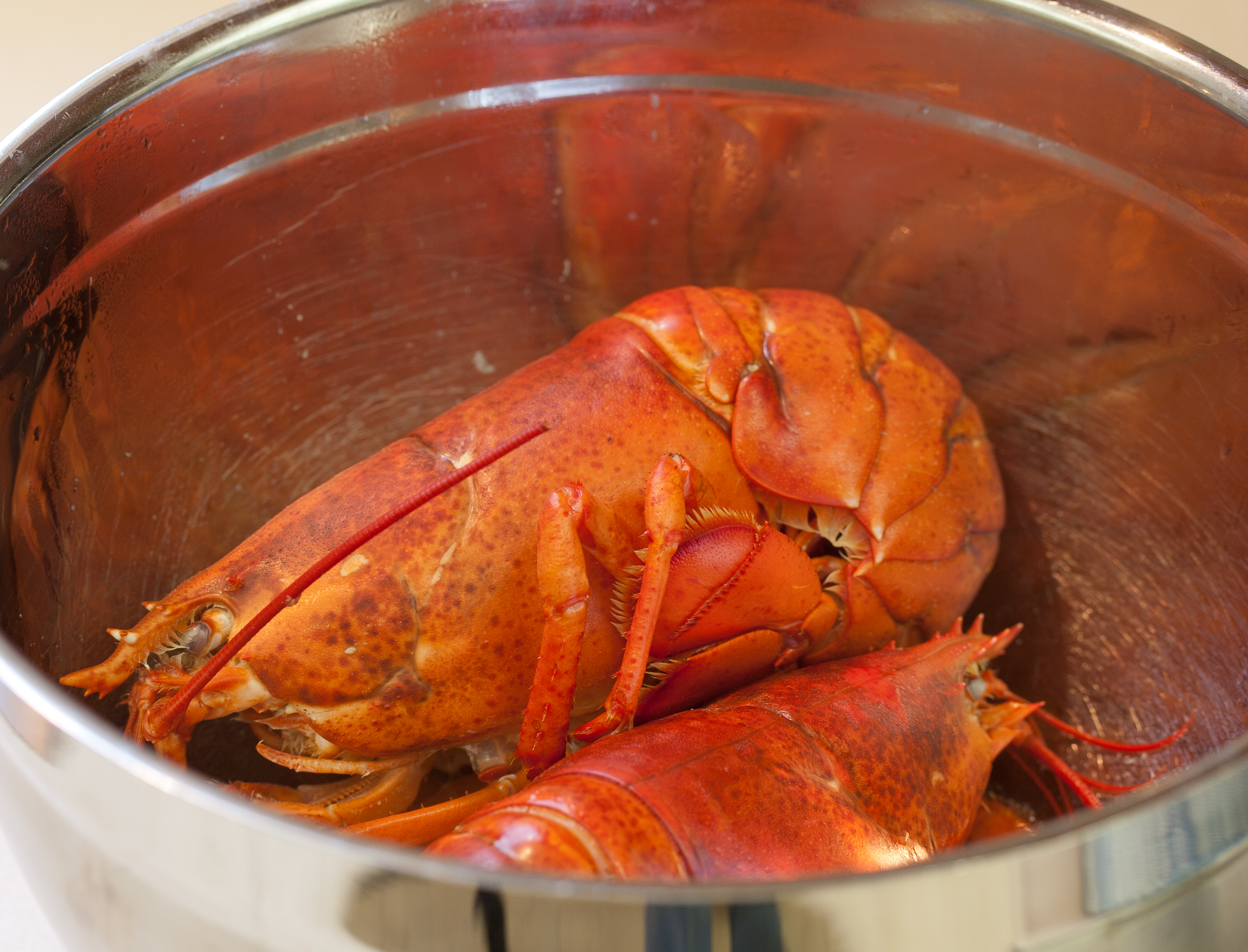
Live lobster

Fish soup or chowder in one of the true delights of an early winter evening this time of year. There are so many delicious soups that it is hard to list them: clam chowder – both New England and Manhattan – cioppino, fish stew, seafood gumbo, and on and on. Probably the most elegant of all, though, is bouillabaisse.

Cooked lobster

Lobster ready to go in the soup

In Volume I of “Mastering the Art of French Cooking”, Julia Child reminded us that bouillabaisse started out as a simple fish soup made from the catch of the day or from leftovers of the fish monger. These days, though, the soup has morphed into something special served at the best restaurants.  There are hundreds of variations of this French classic, and each is claimed to be more authentic than the next.

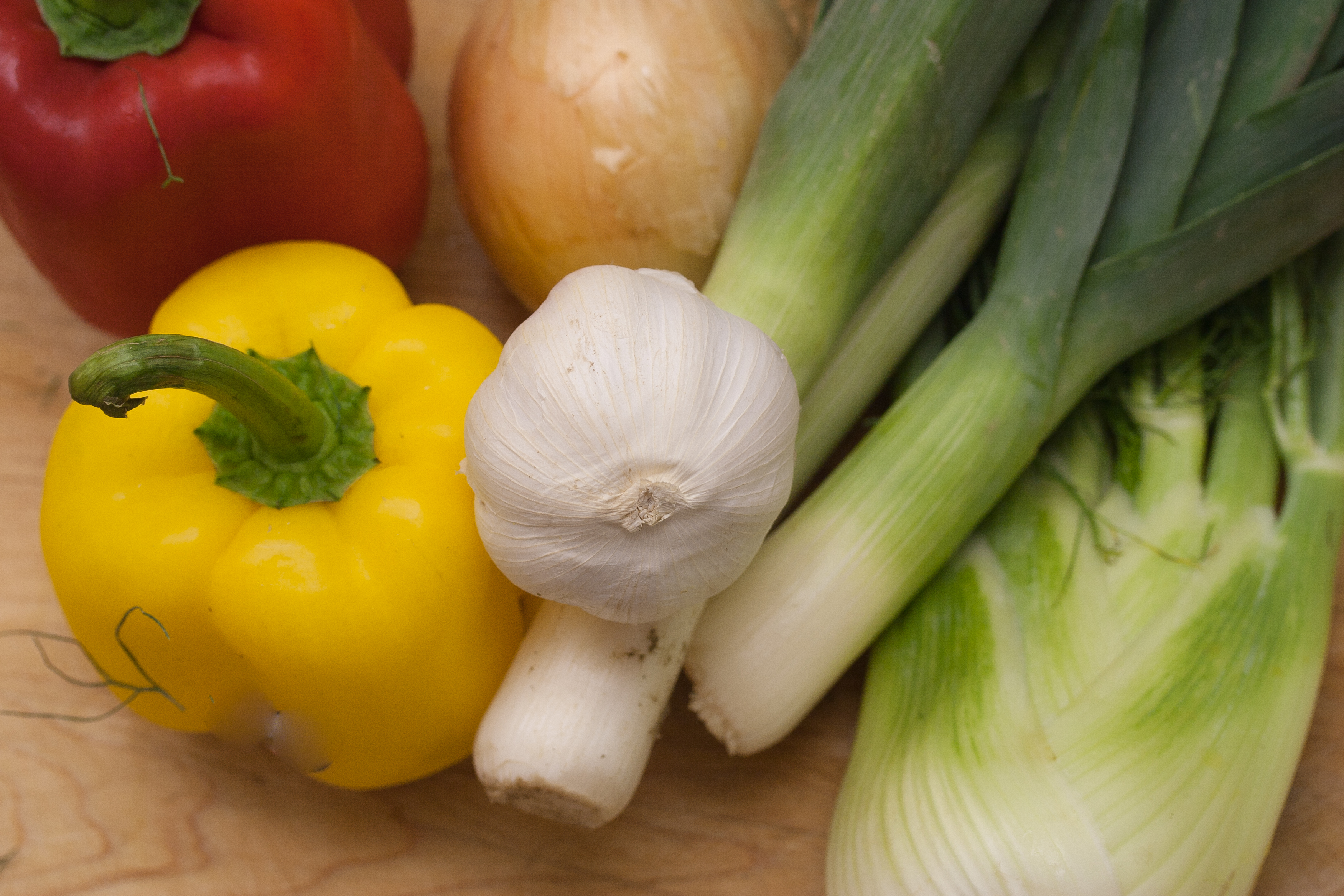
Fresh vegetables for the soup

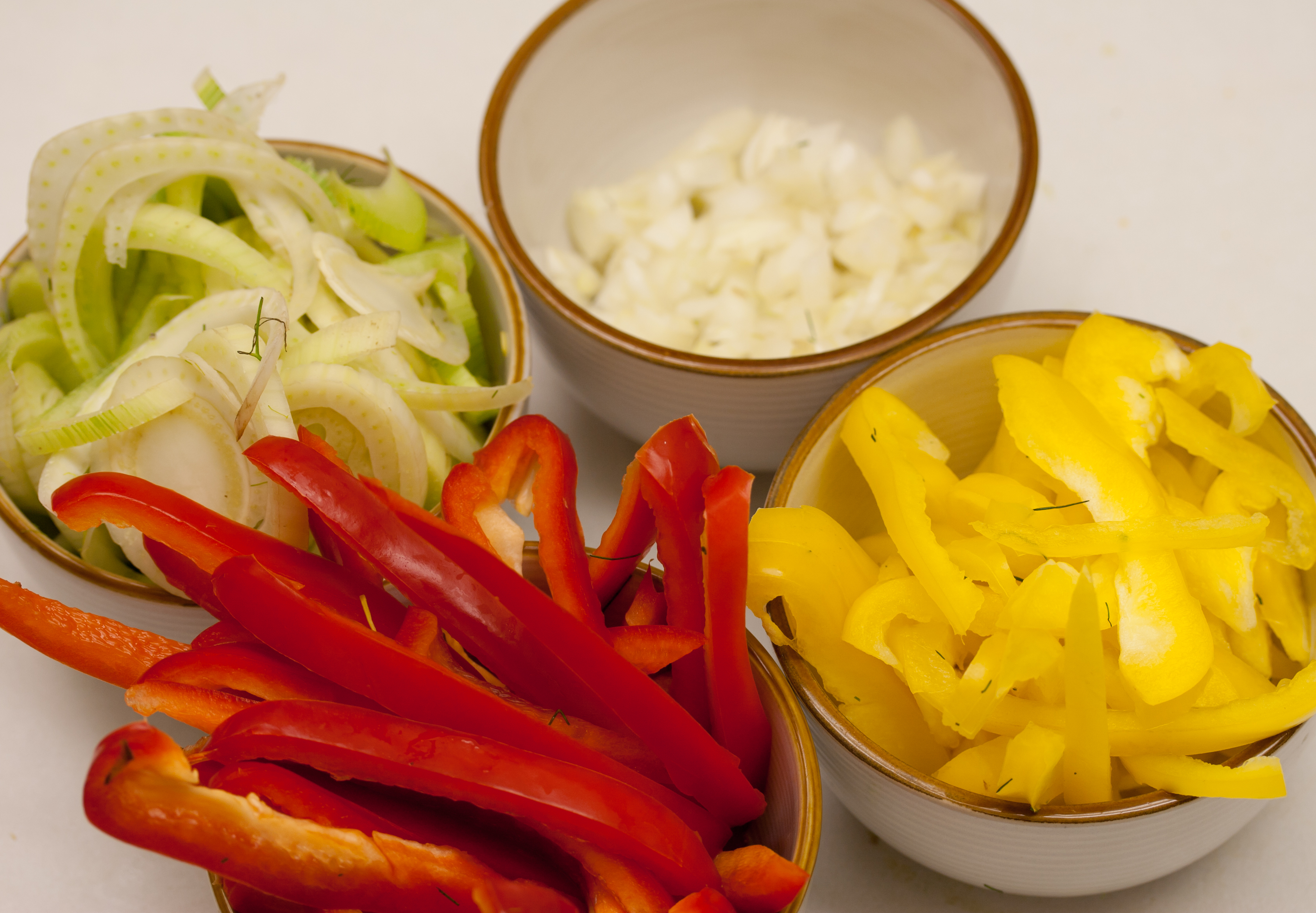
Prepared vegetables

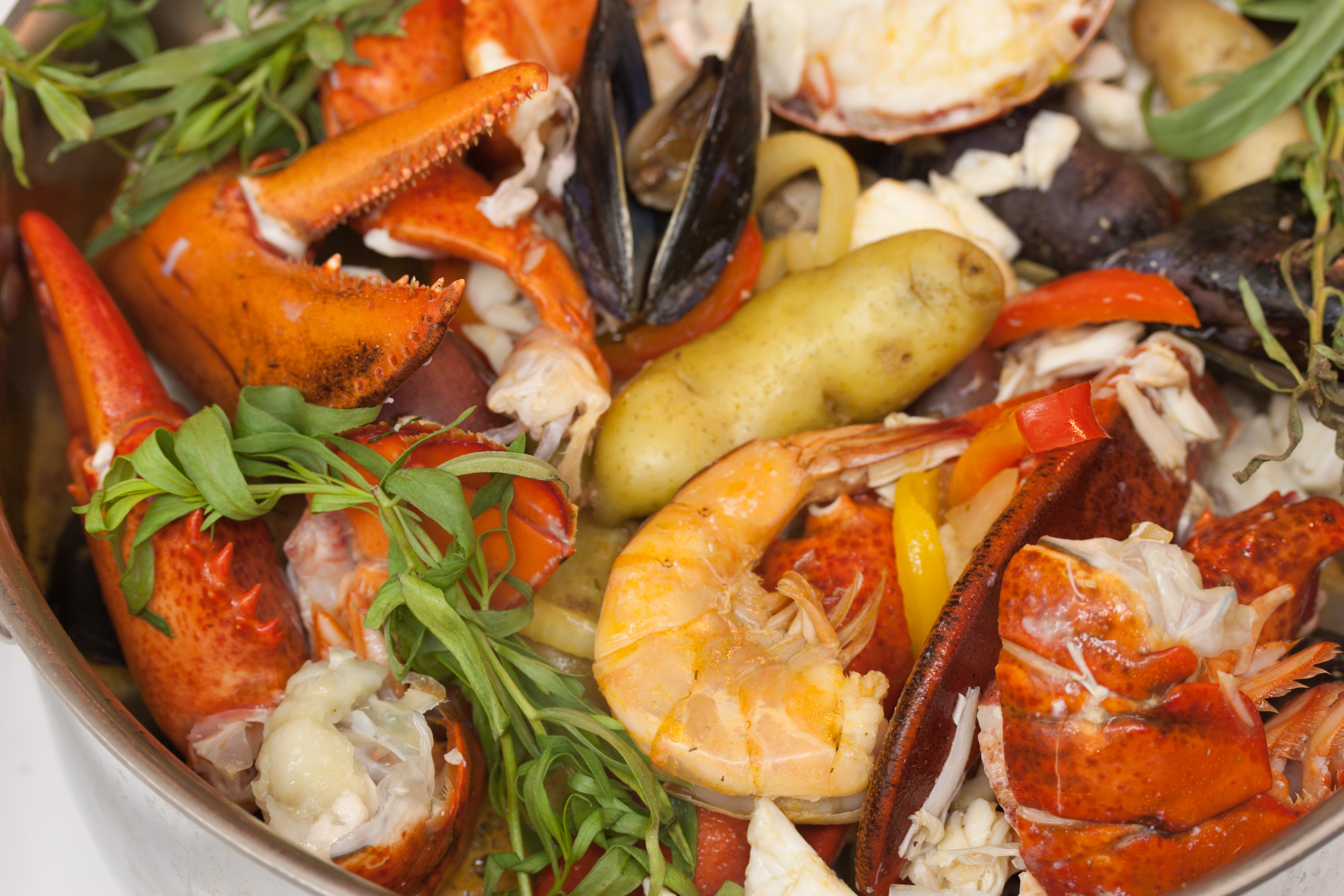
Whenever we visit our daughters, they always try to make something special and yet also play on one of our favorites. This year, we visited our daughter in Los Angeles during the Thanksgiving week. This is her version of bouillabaisse, based upon a recipe by Alfred Portale in his classic cookbook, “Gotham Bar and Grill Cookbook”, Doubleday, 1997. It is filled with lobster, clams, mussels, shrimp, and crabs. You can add any other fish you like, and squid is also a good addition.

Stirring the pot

Ready to be served to the hungry crowd

The recipe is lengthy, to say the least, but worth the effort and expense.

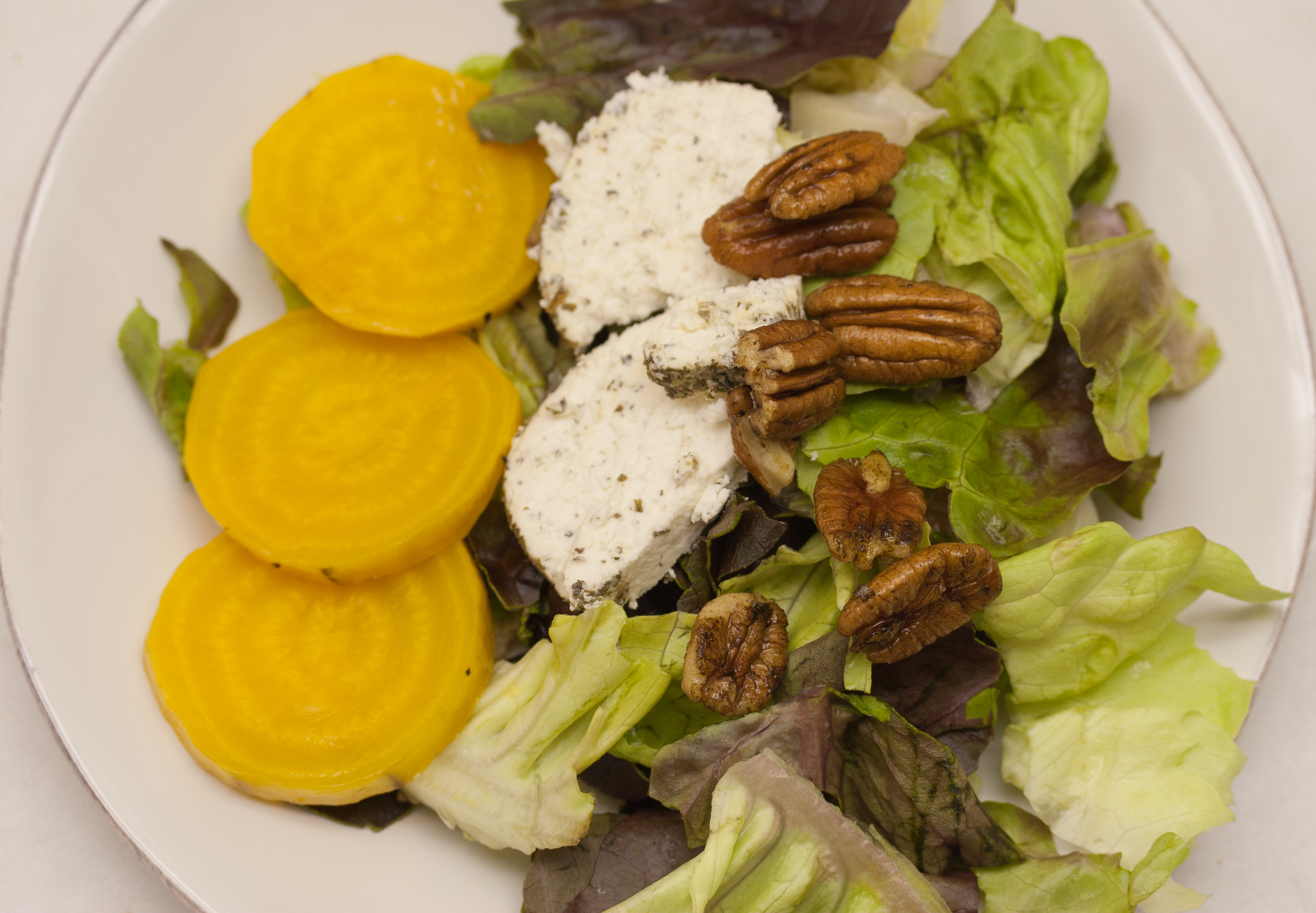
Serve it with a light salad. My daughter chose a salad of roasted golden beets, sugared pecans, and warm goat cheese on a bed of mesclun. She also served a crusty French bread for dipping after the shellfish and lobsters are all eaten.

Roasted beet salad with candied pecans and warm goat cheese

RECIPES

Ingredients

Bouillabaisse

2 live lobsters

1/2 Cup olive oil

4 Cups fish stock

1 medium onion, chopped

1/2 Cup chopped fresh fennel

1/2 Cup chopped leeks, whites only

1 head garlic, cut in half

2 teaspoons ground fennel seed

2 teaspoons ground white pepper

10 sprigs fresh thyme

2 sprigs fresh tarragon

1 star anise

1/2 teaspoon saffron threads

1/4 teaspoon sweet paprika

1/8 teaspoon red pepper

1 bay leaf

4 Tablespoons tomato paste

1 Cup canned tomatoes with juice

1 Cup dry white wine

2 Cups chicken stock

1 medium red bell pepper, seeded and thinly sliced

1 medium yellow bell pepper, seeded and thinly sliced

1/8 teaspoon saffron threads

24 large, unshelled shrimp

24 Manila clams

20 mussels

8 ounces lump crab meat

2 Tablespoons Pernod

Bouilli Butter

3 three-inch strips of orange zest

8 Tablespoons unsalted butter, softened

1 large garlic clove mashed to a paste with salt

1/2 teaspoon chopped fresh tarragon

Kosher salt to taste

1/2 teaspoon sweet paprika

1/4 teaspoon ground star anise

1/4 teaspoon ground fennel seed

1/4 teaspoon saffron

1/4 teaspoon cayenne

1/4 teaspoon white pepper

  1. Bring at 3 gallons (12 quarts) of salted water to a rolling boil in a large pot. Plunge the lobsters in the boiling water, cover, and cook for about 4 minutes.
  2. Remove the lobsters to a cutting board, twist off the large claws and return them to the pot for an additional 4 minutes.
  3. Separate the lobster heads from the tails. Cut the tails in half lengthwise and combine them with the cooked claws in a large bowl. Cover and refrigerate.
  4. In a large stockpot over medium heat, heat the oil and then add the lobster heads. Cook for about 10 minutes, stirring frequently, until the lobster heads are bright red. Then add the fish stock, onions, fennel, leeks, and garlic. Reduce the heat to low, cover, and cook for about 5 minutes.
  5. Add the fennel seed, white pepper, thyme, tarragon, star anise, saffron, paprika, red pepper, and bay leaf. Cook for 5 minutes. Then add the tomato paste, tomatoes, and wine. Raise the heat to high and cook until reduced to about half.
  6. Add the chicken stock and enough water, if needed, to cover the ingredients. Bring to a boil then reduce the heat and simmer uncovered for 45 minutes.  Remove from the heat for 20 minutes. Then strain into a large container, pressing the solids to extract the flavor.
  7. Cook the fingerlings in  a large pot of salted boiling water until tender, about 15 minutes. Set aside in the cooking water.
  8. In a large stockpot, heat the remaining oil over low heat. Add the onion and fennel, cooking until tender. Add the red and yellow peppers, cooking for another 15 minutes
  9. Add the strained stock. Bring to a boil over high heat. Drain the potatoes and add them to the boiling stock. Add the shrimp. clams, and mussels. Cover and cook for 3 minutes. Then add the cooked lobster with its juices and the crab.  Cook until all the shellfish open, about 3 minutes.
  10. In the meantime, prepare the bouilli butter. Blanch the orange zest in boiling water for 1 minute, drain, chop finely, and combine with paprika, star anise, fennel, saffron, cayenne, and white pepper. Add to the softened butter and combine throughly. Place the mixture on a plastic wrap, shape into a log, and chill for one hour in the refrigerator.
  11. Strain through a large colander into a large bowl. Transfer the shellfish and vegetables to a large serving bowl. Pour the strained liquid back into the stockpot and bring to the boil. Add Pernod and 4 tablespoons of the prepared bouilli butter. Then pour the soup into the serving bowl.
  12. Serve in large, deep soup bowls with plenty of good French bread for dipping.

Serves 6 to 8

Leave a comment

Filed under Food, Photography

SCHOOL LUNCHES AND BENTO BOXES – WHAT IS A MOTHER TO DO?

When I was growing up, my mother would make a peanut butter and jelly sandwich and put it in a brown paper sack along with some carrot sticks, an apple or orange, and some home-made cookies. When we moved to the suburbs the school had a lunch program. For twenty-five cents children could get a hot meal served in a war surplus Army metal divided tray. For a quarter you got a main dish like spaghetti, a salad, hot bread, fruit, dessert, and a little glass bottle of milk. All the kids loved lunch and lunchtime because the food was good, and it was a break from the classroom. Nobody threw anything away. The reason it was so cheap was that the meal was mostly made from “commodities” which the government had purchased from the farm subsidy program. Cheese, meat, chickens, eggs, butter, and produce were all part of the program, so it was possible to make a tasty meal from high quality ingredients. The other reason the lunches were so popular was that they were made by the “lunch ladies” who usually were mothers of some of the school children. Their kids were often your friends, and the cooks knew everyone’s name. In those days, nobody would dream of wasting food, especially in front of a mother who might tell your mother. Besides, the ladies would often make special treats like home-made potato chips to go with juicy hamburgers and all the trimmings.

My mom became one of those lunch ladies, and for many years she cooked meals which the children loved. Her fresh, hot rolls were famous as were her pumpkin pie and chocolate sheet cake. She loved “her children” and they loved her.

Then something happened. The commodity program shrunk dramatically. School boards across the country decided that they needed to cut payrolls and that they could provide lunches cheaper by contracting with big restaurant firms. The home-made lunches disappeared, and in their place came frozen TV-dinner-like meals that got heated up in the microwave. It was about the same time that a garbage barrel got placed at the end of cafeteria line where kids could dump their uneaten tray and head for the vending machines filled with soft drinks, corn snacks, and candy bars. It was about that time, too, when the decision was made to count ketchup as a vegetable to make sure of the “nutritional value” of the meal, and when childhood obesity began to inch up.

Now some schools have contracted with caterers who have the child choose from a menu of items that are popular with kids. The food is apparently better, but it is still not the solution to having the kids eat a healthy lunch.

In frustration, my daughter Carol decided to do something about it. Peanut butter sandwiches are often no longer allowed. Although she is not really concerned about some of the other food restrictions which have multiplied seemingly geometrically in the last few years –  mercury content of tunafish, dairy products in drinks, estrogens in soy products, gluten in bread – and on and on – she wanted to make a lunch her kids would eat, and so she turned to bento boxes.

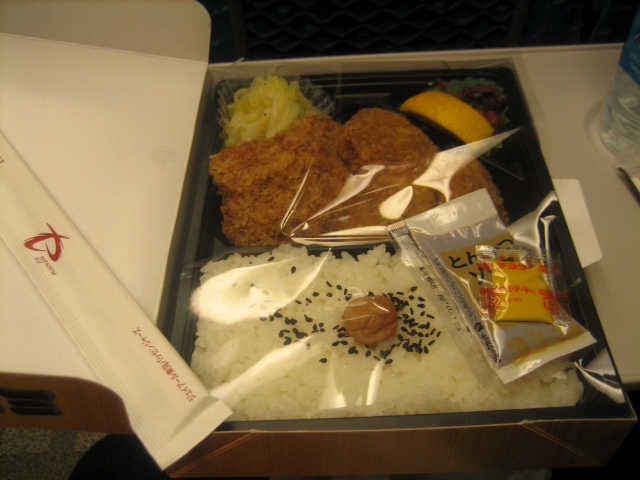
Sarah's authentic bento box from the Kyoto train station

She picked up a copy of “The Just Bento Cookbook” by Makiko Itoh (one of this year’s top ten cookbooks on the Amazon list) and bought some bento boxes. Then she prepared this menu from the book: chicken kijiyaki, pan-steamed sweet potato, cucumber and turnip salad with lime, rice, and apple bunnies.

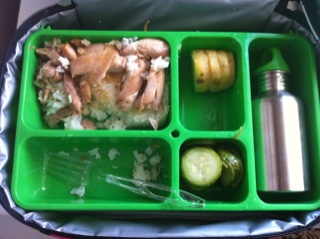
Carol's bento box in the morning

Being the good cook that she is, Carol made a point of seasoning the food to kid tastes and arranging it beautifully in the boxes.

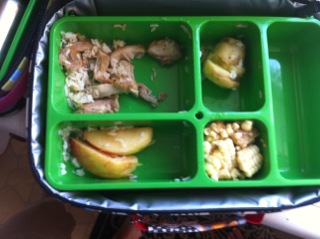
Cameron's bento box in the afternoon

Ciara's bento box in the afternoon

Alas, with all that effort, she felt let down when her kids returned from school with their bento boxes in tow. Now, it’s on to another ploy to get her kids to eat a healthy lunch at school.

RECIPES (adapted from “The Just Bento Cookbook” by Makiko Itoh, published by Kodansha International, 2010)

Chicken Kijiyaki

1 chicken thigh, boned with skin on

1 Tablespoon rice wine vinegar

1 Tablespoon soy sauce

1 teaspoon sugar

  1. Pierce the skin of the chicken with a sharp fork and place it skin-side down on a hot non-stick skillet. Saute until the skin is crisp, turn over and saute the other side until done.
  2. Remove the chicken from the pan, clean the skillet with a paper towel and return the skillet to the heat. Add the mirin, soy sauce, and sugar, stirring until the sugar is melted and the sauce is hot. Return the chicken, turning it to coat it with the sauce. Remove the chicken from the pan, let it cool, slice it, and arrange it in the bento box.

Pan-steamed Sweet Potato

1 small sweet potato, peeled and sliced into 1/2 inch rounds

1/8 teaspoon salt

1 teaspoon honey

  1. Arrange the sweet potato slices in a single layer in a sauce pan. Add enough water to half cover the slices. Sprinkle with salt.
  2. Bring to the boil. Then cover and reduce the heat to low. Cook for about 10 minutes or until the sweet potato slices are tender. Turn once about half way through the cooking.
  3. Drain the water from the sauce pan, drizzle honey over the slices. Then let them cool completely before packing them in the bento box.

Cucumber and Turnip Salad with Lime

1 small cucumber

1/2 turnip, peeled

1 teaspoon salt

zest of 1 lime

1/2 Tablespoon fresh lime juice

  1. Cut the cucumber in half lengthwise and slice very thin half-moons.
  2. Slice the turnip into small, thin slices and combine with the cucumber slices
  3. Rub the vegetables all over with the salt. Let stand for 10 minutes until they are limp. Then squeeze out any excess water
  4. Add the lime zest and lime juice. Place in a covered container, and refrigerate overnight

Apple Bunnies

1 ripe, red apple

juice of 1 lime

1 Cup water

  1. Cut the apple into wedges and remove the core
  2. With a sharp paring knife, score the skin of an apple with the shape of a triangle, its base at the top of the wedge
  3. Again with the sharp knife cut through the apple just below the skin on either side of the triangle
  4. Gently remove the skin from the triangle
  5. Place the carved apple in the lime juice added to the water to prevent discoloration of the cut apple and so that the “ears” curl and

Leave a comment

Filed under Food, Photography

SCARY FOOD FOR HALLOWEEN

When I was growing up, Halloween parties often consisted of dunking for apples and playing pin the tail on the donkey. Some of the more adventurous moms created scary experiences: with blindfolds on, the kids stuck their hands in a bowl of cold spaghetti while being told it was “guts”. Another bowl was filled with “eyeballs” – actually peeled grapes. Those experiences now seem silly, and modern cooks come up with all kinds of creepy Halloween dishes.

A pan of ghost potatoes

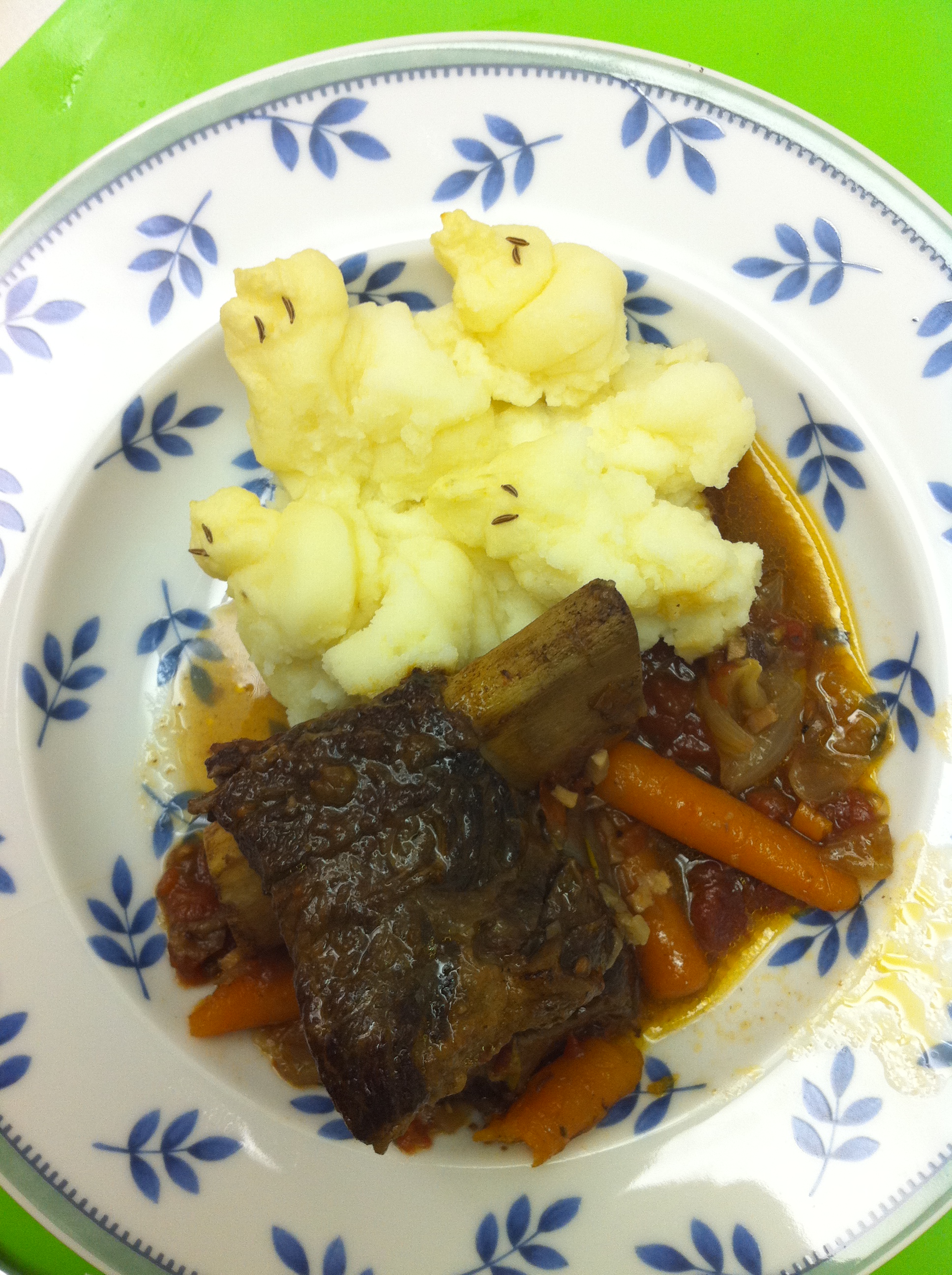
Skeleton ribs with ghost potatoes

As I’ve mentioned before, my daughter Carol goes out of her way to make sure that her kids eat a healthy and balanced diet. She does that with some creative cooking along with her full-time job and community responsibilities. Although not always up to her usual healthy-food standards, her Halloween meals turn into extravaganzas that almost make the requisite trick or treating an afterthought.There are several dishes which have become Halloween traditions. She has found the recipes in several sources including Epicurious.com, but she has put her own spin on them to make them hers.

Mummy frankfurters

Ghost cupcake

You, too, can go to the internet to find all sorts of Halloween recipes, but with a little thought and some creativity you can invent your own versions of scary food, keeping in mind the spider webs, ghosts, black cats, skeletons, vampires, and yes, even zombies that make up the modern cast of characters for a Halloween party.  To get your brain working, here are a few favorite recipes of Carol and her kids.

RECIPES

Ghost Potatoes  (Adapted from Epicurious.com and Gourmet, October 1995)

Ingredients

4 pounds potatoes, peeled and cubed

salt and pepper to taste

6 Tablespoons butter

1¼ Cups milk

3 large egg yolks

Caraway seeds

  1.  Place the cubed potatoes in a large pot of salted water. Bring to the boil and cook until easily pierced with a fork, about 20 minutes. Drain and rice with a food mill or potato ricer into a large bowl.  Season with salt and pepper. Keep warm.
  2.  While the potatoes are cooking, combine the butter and milk in a small saucepan and heat over a medium flame until the butter is melted.
  3.  Combine until smooth  the riced potatoes, butter and milk mixture, and egg yolks using an electric beater.
  4.  Spread about one-third of the mixture in the bottom of a 1-quart baking dish. Then transfer the remaining potatoes to a pastry bag fitted with a ¾ inch plain tip.
  5. Using the pastry bag, pipe individual mounds or “ghosts” on the bed of potatoes. Garnish each ghost with two caraway seeds for eyes. (You may need clean tweezers for this step)
  6. Bake in a preheated oven at 400° for 20 minutes or until the ghosts are golden

Skeleton Ribs

Ingredients

2 Tablespoons vegetable oil

4 pounds beef short ribs, bones in

1 medium yellow onion, peeled and cut in half

1 stalk celery, cut in thirds

1 large carrot, cut in thirds

2 whole cloves garlic, peeled

5 branches fresh thyme

2 whole bay leaves

2 Cups beef stock

1 Cup dry red wine

3 Tablespoons tomato paste

1 Tablespoon Worcestershire sauce

1 pound peeled baby carrots

1 Tablespoon corn starch dissolved in ½ cup water

1 Tablespoon fresh lemon juice

salt and pepper to taste

  1. In a heavy metal oven-proof pot with lid, heat the oil over a medium-high flame on the stove. Add the short ribs, turning them frequently until evenly browned on all sides. Remove the browned ribs to a plate.
  2. Add the onion, celery, and large carrot to the pot, Add more oil if necessary. Brown the vegetables over medium-high heat. Then return the ribs to the pot. Add the garlic, thyme, bay leaves, beef stock, red wine, tomato paste, and Worcestershire sauce . Bring to the boil. Then cover. Transfer to the middle of an oven preheated to 225°.
  3. Continue to braise for at least three hours or until the ribs are tender and the bones are loosened. Check from time to time and add more liquid if needed.
  4. About 40 minutes before you are ready to serve, add  baby carrots.
  5. When the meat and vegetables are thoroughly cooked, remove the pot from the oven. Discard the onion, celery, large carrot, thyme, and garlic. Transfer the ribs and baby carrots to a plate. Cover with aluminum foil and keep warm in the oven.
  6. Drain the liquid into a sauce pan, skimming any excess fat. Then bring to a boil over a medium-high flame and reduce to about one half. Correct the seasoning with salt and pepper and stir in the corn starch dissolved in ½ cup of water. Stir constantly until the sauce is thickened. Add the lemon juice and stir briefly.  Adjust seasoning with salt and pepper. Remove from the heat.
  7. Divide the ribs and vegetables into four servings and sauce with the thickened gravy

Mummy Franks

Ingredients

8 ounces refrigerated crescent rolls

8 large frankfurters

cooking spray

mustard

  1. Unroll the crescent roll dough and cut into ¼ inch strips
  2. Wrap the frankfurters in the strips of dough to resemble mummy wrappings. If you wish, leave one end of each frankfurter free for a “face”.
  3. Place the wrapped frankfurters on an ungreased baking sheet. Spray them lightly with cooking spray and bake them for 15 minutes in an oven preheated to 375°.
  4. Remove from the oven. Decorate, if desired, with dots of mustard for “eyes” and serve immediately.

Ghost Cupcakes

Ingredients

Two dozen of your favorite chocolate cupcakes

1 batch of homemade chocolate frosting or one 16 ounce can of prepared chocolate frosting

Ice cream, divided into 24 1½ inch balls and frozen until ready for assembly

16 ounces frozen whipped topping, thawed

48 miniature M&Ms

  1. Cut 1½ inch cone-shapes from the centers of the tops of the cupcakes. Reserve the cones.
  2. Frost the tops of the cupcakes, leaving the hole free.
  3. Place an ice cream ball in each of the holes in the cupcake tops, Top the balls with the cones and press the assembly down to set it in the hole
  4. Place the thawed whipped topping into a large zippered plastic bag. Cut off a corner of the bag and use it as a pastry bag to pipe whipped topping around the ice cream ball and around the base of the cone-shaped cake on top of the ice cream. Then pipe more topping to cover the cupcake and to make a peaked ghost head that covers the ice cream and cake cone.
  5. Decorate the ghost head with two M&Ms for eyes. Return to the freezer until ready to serve. If frozen solid, let the frozen cakes stand at room temperature for 10 minutes before serving.

1 Comment

Filed under Food, Photography

TOUCH OF GRACE BISCUITS

A few years ago, my wife Susan and I compiled a family cook book based upon the hundreds of hand-written index cards in our jammed recipe box. We also asked our children to send us their favorite recipes. Carol, our older daughter, sent us a recipe for “Touch of Grace Biscuits” which she described as one of her favorites. Although she was born in the Mountain West, she grew up in the Deep South, so her palate often favors Southern tastes.  She has perfected Touch of Grace Southern biscuits. There are lots of recipes for biscuits, but few of them seem to rise up tall with a flaky inside.  These definitely do. This recipe is one of Carol’s specialties that she gleaned from a couple of Southern cookbooks.  There are various explanations for the “touch of grace” title, but they all trace back to the noted Southern food expert and cook book author, Shirley O. Corriher. According to Bernard Clayton in his encyclopedic “Complete Book of Breads”, six Atlanta cooks including Shirley Corriher were gathered together by Nathalie Dupree to create the best Southern biscuit from a large collection of recipes. Ms. Corriher offered up her grandmother’s recipe which she described as made with a “touch of grace”. Another version says that the source was a hand-written note in the margin of the recipe. Ms. Corriher herself describes the origin of the name in her own book, “CookWise: the Secrets of Cooking Revealed”. Unable to duplicate her grandmother’s biscuits, Shirley Corriher asked, “Nannie, what did I do wrong?” to which her grandmother replied, “Honey, I guess you forgot to add a touch of grace.” Whatever the real story of the name, these biscuits remain popular and appear in many a Southern baking book.

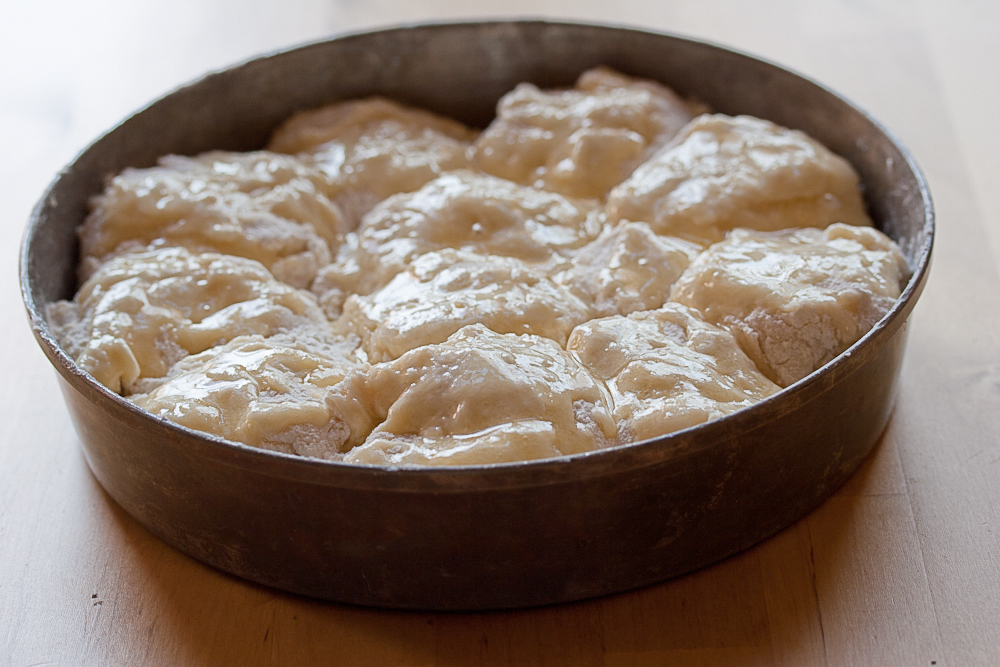
Touch of Grace Biscuits ready for the oven

One of the key ingredients for the recipe is Southern self-rising flour. Most Southern bakers insist that the only flour to use is White Lily flour.  To the dismay of many, the original mill in Knoxville, TN closed in 2008 after operating since 1883.  Production was shifted to two mills in the Midwest by the new owner, the J.M Smucker Company, who insists that the new product is indistinguishable from the old. Blind testers refute that statement and have demonstrated that they can tell the difference. Some Southern home bakers resorted to hoarding the old stuff when they learned of the plan to relocate the mill.  Apparently, there were many reasons that White Lily was different from the flour that you buy at grocery stores outside of the South. Perhaps most importantly, White Lily was made from softer Southern wheat with only about 8 percent protein while Northern and Midwestern flours are milled from wheats with 10 to 12 percent protein. The flour was supposed to be ground more finely, bleached with chlorine rather than other bleaching agents, and sifted several times before packaging. Even without the original White Lily flour, Touch of Grace biscuits are light and delicate. I can only wonder how much better they would be with White Lily.

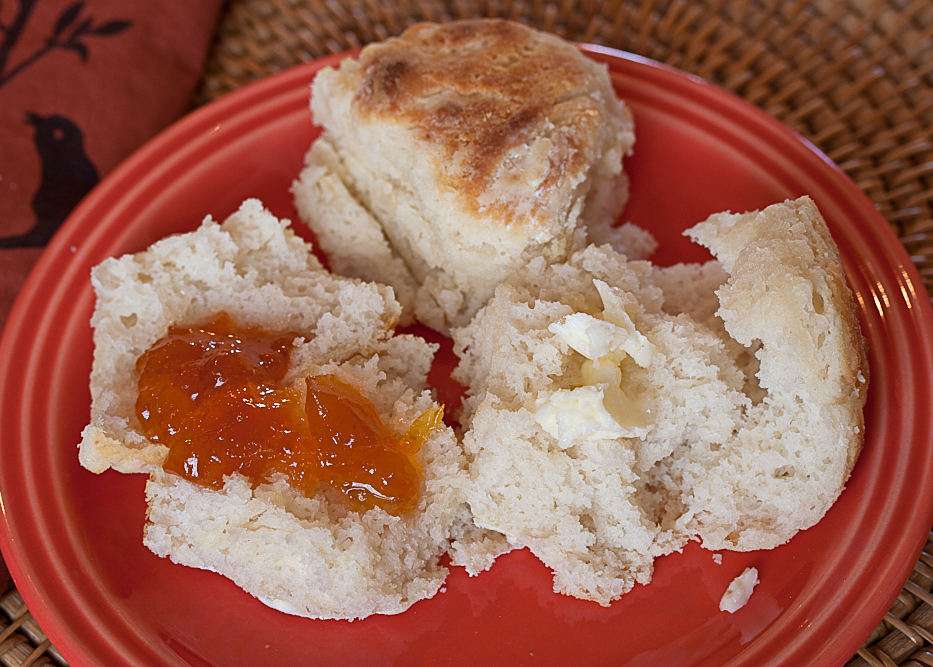
Touch of Grace Biscuits fresh from the oven

Here is the recipe as my daughter sent it to me. The ingredients are exactly the same as the original by Shirley Corriher with some minor modifications in the method. The dough will be much softer than usual biscuit dough. That is why you don’t cut the biscuits but rather form them into rough balls and dredge them in all-purpose flour before putting them in the pan. Crowding them will make them rise higher.

TOUCH OF GRACE SOUTHERN BISCUITS

Ingredients

1½  Cups              sifted self-rising flour

1/8 tsp                  baking soda

1/3 tsp                  salt

1 Tbsp                   sugar

3 Tbsp                  shortening (not butter)

1¼  Cups             buttermilk

1 Cup                    all-purpose flour

2 Tbsp                  butter, melted

  1. Preheat oven to 475º and spray round cake pan with cooking spray
  2. Combine self-rising flour, soda, salt, and sugar  in large mixing bowl. Work in shortening using a pastry blender until the mixture is a pea-sized meal.
  3. Stir in buttermilk  and let stand for 2 to 3 minutes. The dough should be soft and wet.
  4. Pour the all-purpose flour into a pie pan.  Spoon a lump of the dough into the flour, working and shaping it into a soft round. Shake loose any extra flour and place the round in the greased cake pan, continuing to shape and place biscuits until the pan is full. Have the biscuits touch one another as you fill the pan.
  5. Brush the tops of the shaped biscuits with the melted butter and bake for 15-20 minutes until the biscuits are a golden brown.  Serve immediately.

Yield: About one dozen biscuits

Ready to eat with butter and jam

As an aside, self-rising flour is a fairly standard Southern ingredient which may be relatively un-used or even hard to find in other parts of the country. Exactly what is it? Self-rising flour is a regular flour that has been pre-mixed with baking powder. Because of that, you should not use it when a recipe calls for yeast as a leavening agent. If Southern-style self-rising flour is not available, you can make your own by sifting together 1 cup all-purpose flour, ½ cup “instant” flour (Wondra is a popular brand which contains a mixture of wheat and malted barley flavors) and 1½ tsp baking powder.

Leave a comment

Filed under Food, Photography