trixfred30's avatarHappiness Stan Lives Here

Is the increase in so-called street entertainment a desperate ploy by high street retailers to attract people out of their homes to spend money? Probably not but there some increasingly weird street artists around at the moment. Take this chap, sitting on air:

sitting man

View original post 92 more words

Leave a comment

Filed under Recipes

EPHESUS AND LOKUM (TURKISH DELIGHT)

Ephesus

One of the highlights of our recent visit to the Mediterranean was the ruins of  Ephesus in Turkey. Our ship docked in the nearby port of Kusadasi (Bird Island) which is named after the island, now called Pigeon Island, which dominates the harbor. The island is crowned by an ancient Byzantine fortress which has been rebuilt several times over the centuries and is still a commanding presence. The island has restaurants and entertainment centers and is connected to the mainland by an ornate causeway. At night the lights along the causeway and on the fortress battlements create a stunning view.

Ephesus is not far away on a modern highway and is only a little over a mile from the modern Turkish city of Selçuk, population 36,000. . Ephesus dates back thousands of years and was one of the twelve cities of the Ionian League during the seventh century BCE.  One of the seven wonders of the ancient world, the Temple of Artemis, was located nearby. Ephesus was a center of Greek culture until the second century BCE when it became a part of the Roman Empire.  At its height, the city had between 250,000 and 500,000 inhabitants and was one of the largest cities in the entire empire. Later, it was an important city of the Byzantine Empire.  Its dominance was because  it was a center of trade, related to its harbor. Over the years and in spite of dredging efforts, the port and the river silted up, and Ephesus became landlocked. Earthquakes and Arab raids also contributed to the decline of the city, and it was abandoned in the eighth century.

Ephesus was important in early Christian activities. Because of its size and importance, there were early missionary activities there. In the Book of Acts in the New Testament, there is a story of Paul arriving to preach in the massive open-air theater. He was discouraged from doing so by friends who worried for his safety. One of Paul’s’ letters, “Epistle to the Ephesians”, was addressed to the Christian community in Ephesus. Tradition has it that Saint John was imprisoned here and that Jesus’s mother Mary lived out her final days in a house a bit removed from the city.

Ephesus was clearly a wealthy city. The ruins, including baths, gymnasia, temples, theaters, and enormous residences all bear that out. The Library of  Celsus is beautifully restored and preserved. In its day it served as a mausoleum for a prominent Roman as well as a library with many scrolls.

Terrace homes of wealthy residents line one side of the main thoroughfare, Curetes Street. The houses were at their peak from about 100 to 700 CE at around the time of abandonment of the city. The rooms filled with dirt resulting in remarkable preservation comparable to that in Pompeii and Herculaneum. Still under excavation, the homes reveal elaborate mosaic floors, ornate wall decorations, and marble doors, walls, and pools.

The enormous theater, seating 35,000 has been amazingly well-preserved as have the agoras (gathering places) with their arcades and shops, public latrines, a brothel, and numerous public buildings.

Map of archaeologic site open to visitors

Map of archaeological site open to visitors

Of course the marble streets are filled with tourists, and you could easily spend much more time than that alloted in the usual tours. Even with all that, though, it is a place well worth visiting.

Lokum

This is a traditional sweet that was invented by a famous Turkish cook in the 1700’s. It is soft, sweet, dusted in sugar, and usually flavored with rosewater.  Supposedly lokum or Turkish delight is offered to guests with coffee, but you will see it everywhere, boxed up for purchase from street vendors or small shops.

There are many recipes for lokum on the internet. In general, they fall into three categories depending upon what is used as a firming agent. Some use cornstarch; some use gelatin; and some use pectin. This recipe is derived from one published in the Joy of Cooking as late as 1975. Subsequently the recipe disappeared from the index of the cook book, I think because the candy may turn into a sticky mess if you are not careful. I have made the recipe several times over the years, and this is by far the most successful version. You need to make sure the pan and waxed paper are well-greased or you will never get the candy out of the bottom of the pan.  Actually, I had to throw away the pan the first time I tried making Turkish delight. You also need to make sure that you cook the sugar mixture at least to the soft ball stage or it will not get firm enough.

My very strong advice is that you should travel to Turkey and buy your supply of Turkish delight from a street vendor. Failing that, go to your local Middle Eastern market.


RECIPE

Lokum (Turkish Delight)

Ingredients

  • 2 tablespoons water
  • 1 packet (  ) liquid fruit pectin
  • ½ teaspoon baking soda
  • 1 cup light corn syrup
  • ¼ cup sugar
  • ¼ cup fruit jelly
  • 1 tablespoon lemon juice
  • ½ cup unsalted pistachio nuts, coarsely chopped
  • confectioners’ sugar

Method

  • Prepare an 8 x 8 inch baking pan: grease well with butter, line with two buttered sheets of waxed paper arranged crosswise and overhanging the rim of the pan. Set aside.
  • Combine the water, pectin, and baking soda in a heavy 2 quart sauce pan. The mixture will expand and foam.
  • In a second saucepan, combine the corn syrup and sugar.
  • Bring the corn syrup and sugar mixture to the boil and heat to the soft ball stage, 240° F. Check with a candy thermometer. Then bring the pectin and baking soda to the boil over another flame. Stir until foaming subsides.
  • Gradually pour the pectin mixture into the sugar mixture, stirring continuously.
  • Stir in the jelly
  • Remove from the heat, stir in the lemon juice and pistachio nuts.
  • Pour into the prepared pan and let cool at room temperature for at least 3 hours or preferably over night.

6 Comments

Filed under Food, Photography, Recipes, Travel

NAPA CABBAGE AND BREAD SOUP

I had some napa cabbage left over from my New Year’s Day braised cabbage, so I decided to make some soup.

Napa cabbage (also spelled nappa cabbage) is an authentic Chinese cabbage. The name comes from a Japanese word that means something like vegetable greens.  So far as I have been able to figure out, the name has nothing to do with the Napa Valley in California. I think that name is probably from the Spanish, meaning an aquifer or gas layer. The taste of the cabbage is milder than regular cabbage, and the leaves are crisper

Regular cabbage dates back to the Egyptians, but probably cabbage heads did not appear on the culinary scene until the twelfth century in Germany. For this recipe, you can use regular cabbage, but I think you will like the flavor better with Chinese cabbage.

The soup makes a simple lunch or dinner. We had the added pleasure of a slice of Srah’s new bread, Douglas fir scented levain topped with fresh butter. A perfect winter-time light lunch

RECIPE

Napa cabbage soup with Douglas fir levain-1Napa Cabbage and Bread Soup with Croutons and Parmesan Cheese

Ingredients

  • 3 tablespoons extra virgin olive oil
  • 1 medium onion, chopped
  • ½ large head napa cabbage, cored and shredded
  • 4 cups vegetable stock
  • ½ teaspoon beau monde seasoning, or to taste
  • salt and pepper to taste
  • 2 ½ inch slices good quality white bread cut in ½ inch cubes
  • 2 ounces Parmesan cheese, freshly grated
  • ¼ cup minced parsley

Method

  • In a medium, heavy-bottomed saucepan or stockpot, heat the olive oil over medium heat. Add the chopped onions, stir, and cover. Cook for about 5 minutes or until the onions are wilted and translucent. Do not allow them to brown.
  • Add the shredded cabbage to the pot, cover and continue to cook until completely wilted. Do not brown. Then add the vegetable stock, bring to a boil, and then reduce to a simmer. Add the beau monde seasoning and adjust with salt and pepper.Cook for 40 minutes or until the cabbage is soft. Add more liquid if necessary.
  • In the meantime, place one of the diced slices of bread on a small baking sheet and dry in the middle of an oven preheated to 225°. Bake for 30 minutes, turning frequently, until the bread cubes are completely dry and crisp. Remove from the oven and set aside.
  • When the cabbage is fully cooked and tender, stir in the remaining cubed slice of bread. The bread should dissolve and thicken the soup. Add more liquid if needed.
  • When ready to serve, plate the soup in 4 wide soup bowls, top with the croutons, sprinkle with the grated Parmesan cheese and parsley. Serve immediately.

2 Comments

Filed under Food, Photography, Recipes

DANISH EBELSKIVERS

During our recent visits from children, one of the big food hits was making Danish ebelskivers (ebleskivers, æbelskivers, æbleskivers – lots of alternative spellings) with the grandchildren. I took down the heavy cast iron pan hanging on a nail in the garage, cleaned it up, and got it ready for the process. After many years, the pan was in great shape for a ritual that our kids remembered with fondness from their own childhood. Honestly, the procedure is more fun than the finished product, but the little, round pastries are delicious, with a little hollow just begging to be filled with jam or jelly.

Our cast iron ebelskiver pan is at least 40 years old, but new ones are available in cooking shops or online. There are also more “modern” versions  made of cast aluminum and lined with no-stick coating. I have never used the modern pan, although it has its adherents. Of course, there are lots of complaints about the traditional version – too heavy, rust, not suitable for use with modern smooth-surfaced kitchen ranges, limited to a single use, special turning tools are too expensive, etc., etc.,

To the critics I offer the following comments:

  1. Cast iron cooking tools are, by design, heavy. That’s the whole point – to hold the heat and make it consistent so that cooking or baking is even for whatever is inside .
  2. Any cast iron implement will rust if you don’t take proper care of it. Heating it to dry over an open flame after you wash it (If you need to) and sealing the surface with a thin coating of cooking oil before you put it away will prevent rust. I have 5 cast iron skillets along with a three-legged spider, the combo pan for my Tartine bread and several cornstick pans. None of them is rusted because of that approach.
  3. Can’t help  with the cooking surface. If you choose infra-red or inductive cooking surfaces for their looks, you just have to deal with your cooking options.
  4. It is true that ebelskiver pans have fairly limited use, but creativity increases their versatility. One of the Iron Chefs on a recent International Iron Chef Showdown used an ebelskiver pan for cooking diver scallops to perfection. You could probably use the pan for a variation of cornsticks or even cupcakes. Besides, if you are a kitchen gadgeteer you probably have lots of other single-use tools that languish in a drawer or a shelf in the garage. (How about deep fryers, truffle slicers, or panini presses?)
  5. You don’t need an expensive turning tool. A disposable wooden skewer or metal skewer will work. The only concern there is that especially the metal skewer could scratch and ruin any non-stick coating.

If you can get past all of these concerns, you can actually have fun with kids making this special breakfast treat. You can also test your creative streak for party appetizers – ball-shaped blini with a dollop of red caviar, grown-up-suitable fillings, batters made with different flours like spelt, whole wheat, or cornmeal. Just lighten up a bit and have a good time.

The only other instructions that are important before you start are to heat the pan until it is evenly hot and the right temperature. Medium heat will probably work. Too hot and the ebelskivers will burn on the outside before they are done; too cool and the ebelskivers will never get the golden brown color you are looking for. Before each batch, use a  paper towel soaked with vegetable oil to wipe each cup before refilling.


RECIPE

Danish Ebelskivers

Ingredients

  • 3 eggs, separated
  • 2 tablespoons sugar
  • 2 cups buttermilk
  • 2 cups flour
  • 1 teaspoon baking powder
  • 1 teaspoon baking soda
  • ½ teaspoon salt

Method

  • Beat egg whites until they form stiff peaks. Set aside.
  • Beat together the egg yolks and sugar until they form a ribbon. Then stir in the buttermilk to form a smooth batter.
  • Stir together the dry ingredients, flour, baking powder, baking soda, and salt. Then stir into the batter and mix thoroughly.
  • Fold the stiff egg whites into the batter by thirds. Do this gently so that you have a light batter.
  • In the meantime, heat the ebelskiver pan over a medium flame. Oil each cup generously with a paper towel dipped in vegetable oil.
  • Spoon into each cup enough batter to fill about 2/3 full (A large tablespoonful is usually about right.)
  • After about 20 or 30 seconds turn each ebelskiver a half turn using a wooden or metal skewer. Uncooked batter should run down into the cup. Repeat the process by half turns until you form a baked balls that are golden brown, plump, and hollow with just a tiny opening on one side.
  • Adjust the heat so that the ebelskivers are finished baking in about 1 minute, neither too dark nor too light.
  • Remove to a serving plate and serve along with your choices of powdered sugar, honey, maple syrup, butter, jelly, jam, or whatever comes to mind.
  • Repeat the process until all the batter is used up. The recipe should make at least 5 to 6 batches.

2 Comments

Filed under Food, Photography, Recipes

NEW YEAR GOOD LUCK – BLACK-EYED PEAS AND CABBAGE

It is the custom in the US South to eat black-eyed peas and cabbage on New Year’s Day, one for good luck and one for wealth. Some believe that not to eat these dishes will result in the opposite effect, bad luck and poverty.

Our family lived in Louisiana to get into the custom, even though we didn’t really believe the superstition. The habit has persisted even though we have lived outside the South for many years. There must be lots of other former Southern citizens in our Southwest community, because canned and frozen black-eyed peas are always sold out days before New Year’s Eve.

There are many versions of cooked black-eyed peas which qualify as good luck charms the New Year: Hoppin’ John, Texas caviar, black-eyed pea vinaigrette, and plain ol’ Southern black-eyes. The following recipe borrows from all of those classics. Likewise, the cabbage dish is an update of plain old boiled cabbage.

It may be too late for you to get your protection for 2013, but hold onto the recipes for next year. In the meantime, HAPPY NEW YEAR!


RECIPES

Good-Luck Black-Eyed Peas

Ingredients

  • 3 strips bacon
  • 1 medium onion, chopped
  • 1 pound dried black-eyed peas
  • water for cooking peas
  • 1 medium green bell pepper, diced
  • 3 stalks celery, chopped
  • 4 Roma tomatoes, diced
  • 1 (4 ounce) can chopped green chiles
  • 3 ounces Canadian bacon, large dice
  • 1  teaspoon salt
  • ½ teaspoon ground black pepper
  • 1 or more dashes Tabasco sauce

Method

  • Fry the bacon in a small pan over medium heat until crisp. Drain the bacon on paper towels and transfer the bacon drippings to a heavy-bottomed soup pot.
  • Over medium heat, put the chopped onion in the soup pot, cover, and sweat for 5 minutes until translucent and softened
  • Add the peas and enough water to completely cover the peas. Bring to the boil and then reduce to the simmer, covered, for 1½ to 2 hours or until the peas are tender.
  • Add the bell pepper, celery, tomatoes, and green chiles. Stir in the Canadian bacon.  Continue to simmer for 30 minutes more or until the tomatoes are cooked down.
  • Adjust seasoning with salt, pepper, and Tabasco
  • Serve in wide-brimmed soup bowls.

Braised Napa Cabbage, Red Onions and Mushrooms with Dilled Greek Yogurt

Ingredients

  • 1 small napa cabbage cut in half lengthwise
  • 1 medium red onion sliced in thin crosswise rounds
  • 6 cremeni mushrooms, sliced
  • 1 cup chicken stock
  • ½ cup dry white wine
  • salt and pepper to taste
  • 1 cup Greek yogurt
  • 1/3 cup minced dill fronds

Method

  • Combine the cabbage, onion, mushrooms, chicken stock, wine, salt, and pepper in an oven-proof covered pan
  • Over medium-high flame, bring the pan to a boil, cover, and then transfer to the middle of an oven pre-heated to 250°F
  • Braise the vegetables for 60 minutes or until they are tender. Check frequently, and add water if needed
  • In the meantime, combine the yogurt and dill in a small bowl. Adjust seasoning with salt and pepper.  Chill in the refrigerator while the vegetables are braising to bring out the dill flavor.
  • Drain the cooked vegetables and serve with yogurt SAUCE.

If you wish, serve the black-eyed peas with cooked rice, along with cornbread on the side for dipping.

3 Comments

Filed under Food, Photography, Recipes

RED BEANS AND RICE

Whenever our children visit us with their families, as they did this Christmas season, we try to make old favorites from their childhood. Often the food is drawn from the Southwest, but all three of them grew up in Louisiana, so Cajun and Creole dishes are high on the list of favorites. Gumbo is popular, and boiled crawfish in the spring is almost required. Bread pudding and shrimp creole are also on the list, along with red beans and rice.

For as long as anyone can remember, Monday has been laundry day in New Orleans. For as long as anyone can remember, red beans and rice has been the standard Monday supper in New Orleans because it can be started when the wash is started, stirred from time to time during the day, and finished when everyone is ready to gather around the table in the evening. We didn’t live in New Orleans, but the custom is common throughout the entire state of Louisiana.

An essential part of the dish is the meat that is used in the red beans. Traditionally a ham hock is tossed in – mostly for flavor – but also for the morsels of ham that are closest to the bone. Andouille sausage is popular as is Tasso ham. Sometimes you will see whole pork chops swimming in the stew. For this version, I chose boneless pork loin which gives good flavor and tenderness without bones. The chunks of pork fit perfectly on the fork and make a single melt-in-your-mouth bite.

Usually red beans and rice have the spiciness that is famous in Cajun and Creole cooking, but because one of our family members has severe reactions to hot spices, we make it without red pepper or chiles. Not to worry, because it is easy to add your preferred level of hotness at the table with Tabasco or Louisiana hot sauce.


RECIPE

Red Beans and Rice

Ingredients

  • 1 pound dry small red beans
  • water to cover the beans for cooking
  • 3 tablespoons olive oil
  • 1 medium onion, chopped
  • 3 ribs celery, chopped
  • 1 large bell pepper, seeded and membranes removed, chopped
  • 2 cloves garlic, minced
  • 2 pounds boneless pork loin, cut into ¾ inch cubes
  • 1 bunch green scallions including green stems, chopped
  • 2 bay leaves or ¼ teaspoon ground bay leaves
  • ¼ teaspoon ground thyme
  • salt and pepper to taste
  • Louisiana hot sauce to taste
  • 1 cup long-grain rice, rinsed in a fine sieve with cold water
  • 1½ cups water

Method

  • Pour the beans into a heavy-bottomed pot and cover with water. Bring to the boil and then reduce heat to a ver slow boil. Cover and cook the beans for 1½ to 2 hours or until they are tender. Stir the bottom occasionally and add more water if needed.
  • When the beans are tender, transfer them and the cooking liquid to a large bowl Rinse and dry the pot. Then return the pot to a medium flame and add the olive oil.
  • When the olive oil is just shimmering, add the chopped onions, lower the heat and cover so that the onions “sweat” (become soft and translucent and give up some of their moisture). Do not let them brown.
  • Remove the lid, turn up the heat to medium and stir in the celery, green pepper, and garlic. Cook, stirring frequently until the vegetables are throughly wilted. Then transfer them and their juices to a plate.
  • Return the pot to the stove. Add the cubes of pork and brown them. Use more oil if needed.
  • When the meat is evenly browned, return the beans and their liquid, along with the vegetables, and bring the mixture to the boil. Add the scallions, bay leaves, and thyme.
  • Simmer the mixture, covered, for an additional hour. Adjust the seasonings with salt, pepper and, if desired, hot sauce. Remove the bay leaves
  • While the red beans are cooking, prepare the rice by combining the rice and water in a small covered pot. Bring to the boil. Stir. Cover and reduce the flame to very low. Do not remove the cover, but cook for 20 minutes. Test for doneness. The water should be completely absorbed, and the rice should be fluffy with individual grains.
  • Serve by placing a scoop of rice in the middle of a wide-mouthed bowl. Top with the red bean mixture, and serve with additional hot sauce.

Should serve 6 to 8

6 Comments

Filed under Food, Photography, Recipes

CHICKEN TAMALES, A CHRISTMAS TRADITION

Our family has lived in the Southwest USA long enough that we have adopted many of the local traditions, especially those that have to do with food and with Christmas. For many years we have gathered around the kitchen table on Christmas Eve to make and then eat tamales.

The event is festive, with everyone laughing and each person assigned a particular task. Susan usually prepares the masa – always with lard, and beaten until the dough floats on water to show that it has enough incorporated air. I prepare the corn husks in hot water so that they are pliable and can be used to wrap up the dough and filling. Others make the filling. Our favorite is chicken. The recipe came from the back of a bag of masa harina from many years ago.

Pork in red chile is more traditional, and we sometimes make those, too, but our family favorite is chicken with an unusual ingredient – olives.

After the filling and dough are prepared, the teamwork and fun begin.  Some spread the masa dough on the corn husks. Others put on the filling. Others wrap up the tamales. We try to make things come out even with just enough filling for the masa dough. Usually it doesn’t, and we have a little of one or the other left over. Even at that, we always wind up with enough tamales for everyone to get their fill.

Finally, the tamales  are stacked on a trivet in a big pot to be steamed. The steamer pot is put on the stove, and the tamales are cooked to perfection.

While we wait – it may take an hour or so – we sit around the Christmas tree and enjoy a mug of home-made eggnog. Then the feast begins before it is time for bed and dreams of Christmas Day.

This year, Sarah and her son will join us for a few days before Christmas while Carol and her family will arrive on Christmas Eve so we won’t be able to have our tamales party. Instead we will make them ahead, freeze them, and then thaw and steam them for each of our visiting families.


RECIPE

Ingredients

Filling

  • 1 medium onion, chopped
  • 1 tablespoon vegetable oil
  • ½ cup taco sauce, canned or homemade
  • 1/3 cup black olive slices
  • 1 teaspoon cumin
  • 1 teaspoon salt
  • 4 cups shredded cooked chicken

Masa

  • 1 cup lard (may substitute vegetable shortening)
  • 2½ cups masa harina
  • 2 teaspoons ground red chiles (do not use chili powder)
  • 1 teaspoon salt
  • 1¾ cups chicken stock

Corn husks for filling (about 2 dozen, soaked in hot water)

Method

  • Sauté onions in oil. Then add taco sauce, olives, cumin, salt, and chicken.  Combine well, cook over medium heat for about 5 minutes, then set aside.
  • In a stand mixer, cream the lard (or shortening) until fluffy. Then add masa harina, chiles, salt, and chicken stock. Continue to beat until the mixture is light and fluffy enough that a small piece of the dough floats in water.
  • Divide the masa into 24 balls. Spread each of the dough balls onto a soaked corn husk so that the dough comes to the edge of the husk. Place a good-sized tablespoon of the filling on the dough, fold over the two edges of the husk so that the dough completely covers the filling. Then fold over the two edges of the corn husk so that the dough completely covers the filling. Fold the tail of the folded husk over the tamal.
  • Stack the finished tamales on a trivet over water in a large kettle
  • Steam, covered, over gently boiling water for about one hour or until the masa does not stick to the corn husks. Serve warm with your favorite chile sauce or molé.
  • If you choose to freeze the tamales, thaw them completely before steaming.

Don’t try to make the dough without a mixer as the dough is heavy and it really does need to float in water before you quit beating. That’s hard on the modern wrist. You can use vegetable shortening if you wish, but the tamales are never as tasty as those made with lard. Choose your own degree of heat with the ground chiles. Personally, I prefer “hot”, but some in our family are incredibly sensitive so we choose “mild”. You can always douse your personal tamales with hot sauce.

IMPORTANT: Remember to remove the corn husk wrapper before you eat the tamal.

There should be about 2 dozen tamales.

4 Comments

Filed under Food, Photography, Recipes

LAS POSADAS AND BISCOCHOS

Along the Border in El Paso, they’re called biscochos and in Northern New Mexico they are called bizcochitos, but they are the same cookie and an important part of the Christmas tradition. They are served at nearly every party, but they are essential to Las Posadas. This celebration recalls the biblical story of Mary and Joseph seeking lodging on their journey to Bethlehem in order to participate in the census. Throughout New Mexico the story is re-enacted in villages and urban centers alike. Two individuals dressed as Mary and Joseph lead a band of pilgrims from door to door, often around the plaza, seeking lodging. Repeatedly they are turned away, often with scornful cries, until at last they are welcomed in –  usually at the church on the plaza – to find rest and warmth.

Once the crowd is inside the welcoming site, there is a celebration with traditional songs, hot drinks like atole, and treats, always including biscochos.

There are many recipes for biscochos, but the best ones always include lard. This recipe is the best of the best. It comes from Lorenza Zuñiga, an amazing woman who worked as my promotora de salud many years ago when I worked in the clinics in the colonias along the Texas-Mexico border.

RECIPE

Ingredients

For cookies

  • 7½ cups flour
  • 1½ cups sugar
  • ½ teaspoon salt
  • 3 teaspoons baking powder
  • 1½ teaspoon ground cinnamon
  • ½ teaspoon ground anise
  • 1 pound lard
  • 4 eggs, beaten
  • 1/3  cup pineapple juice (more if the dough is too dry)

For sugar-coating

  • 1 cup sugar
  • 1 tablespoon ground cinnamon
  • 1 teaspoon ground anise

Method

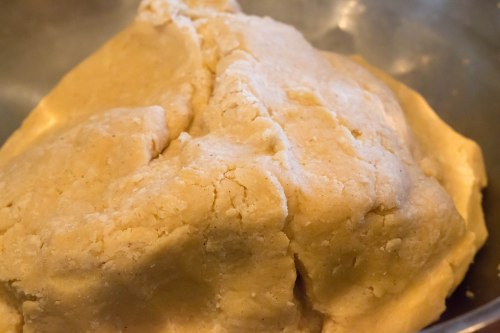
  • Sift together the flour, sugar, salt, baking powder, cinnamon, cloves, and anise. Then add lard and mix well before adding beaten eggs and enough pineapple juice to make a soft dough. You may need to knead with your hands for a few minutes to incorporate all the ingredients.
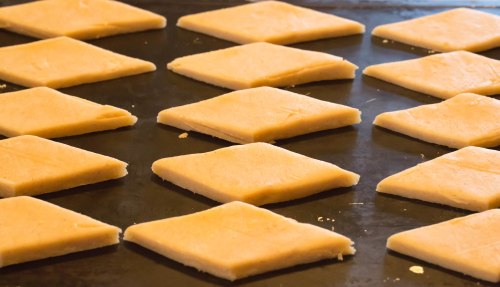
  • Roll out the dough on a lightly floured surface to a ¼ inch thickness. This should make a circle about 20 to 24 inches across. Cut into diamond shapes and place on an ungreased baking sheet.
  • Bake in an oven preheated to 350° for 10 to 15 minutes or until light brown. Check often as the cookies burn easily.
  • While the cookies are baking combine the remaining sugar, cinnamon and anise and place in a tray or other wide, shallow container.
  • When the cookies are baked, transfer them, still warm, to the sugar mixture in a tray. Turn them while cooling to completely coat them
Lard and dry ingredients

Lard and dry ingredients

Kneaded dough

Kneaded dough

Sugar and spice topping

Sugar and spice topping

Cutting two-inch diamond shapes

Cutting two-inch diamond shapes

Ready to bake

Ready to bake

Cooling and ready to eat

Cooling and ready to eat

The recipe makes about 3 dozen cookies, of course depending on the size of the diamonds.

8 Comments

Filed under Food, Photography, Recipes

HUEVOS RANCHEROS

Daughter Sarah surprised us with a short visit, so we cooked up some of the favorites of her childhood. One of the breakfast specials was huevos rancheros. The real version takes some effort since you need to make the ranchero sauce from scratch along with a base of refried beans.

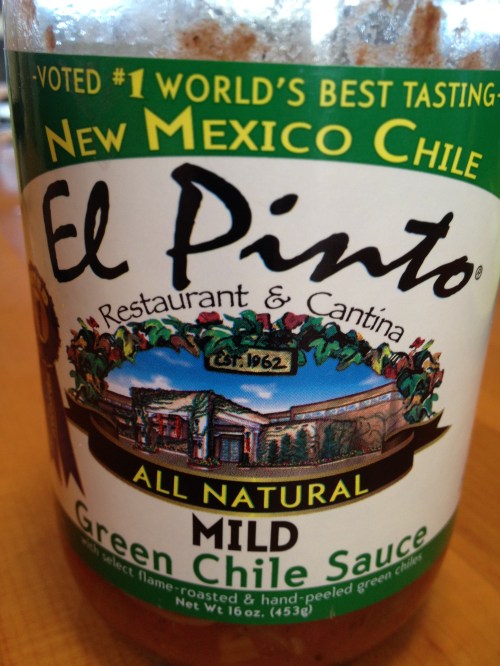
This version can be cooked up in a flash using items from the pantry like bottled salsa. You may not be able to find blue corn tortillas – they seem to be sort of a New Mexico specialty – but any kind of corn tortilla will do. We had some guacamole left over from the night before, but fresh avocado slices also make a good garnish.

Blue corn tortillas

Blue corn tortillas

RECIPE

Green chile sauce

Green chile sauce

Huevos Rancheros

Ingredients

  • 2 blue corn tortillas (yellow, white, or any other color will do)
  • 2 ounces sharp Cheddar cheese, shredded
  • 2 tablespoons chopped white onion
  • 2 eggs
  • butter
  • green chile sauce, heated
  • 3 tablespoons guacamole

Method

  • Heat the tortillas on a dry hot skillet until they bubble a bit and are lightly covered with brown flecks. They should remain soft and flexible
  • Place one tortilla on a plate. Arrange half the cheese and onions on top. Cover with the second tortilla topped with the remaining cheese and onions.
  • Heat the plate in an oven at 200° or in a microwave for 20 seconds or so until the cheese is melted.
  • In the meantime, fry the two eggs in a skillet with butter.
  • When the eggs are cooked to your preference, transfer them to the stacked tortillas
  • Surround the eggs with the heated green chile sauce and garnish with guacamole.
  • Serve immediately.
Huevos rancheros

Huevos rancheros

1 Comment

Filed under Food, Photography, Recipes

AIX-EN-PROVENCE AND PASTRY CREAM

Back to Europe. One of our favorite visits during our recent Mediterranean cruise was a beautiful little city just north of Marseilles. Aix-en-Provence is about the same size as Santa Fe but a lot older. We think that Santa Fe is old and it is for the USA, going back to 1510. But Aix-en-Provence dates back at least to 300 BCE and was a Roman outpost in 150 BCE. The main part of the “old” town, though,  dates to the sixteenth,  seventeenth and eighteenth centuries, while the “new” city is filled with modern buildings and young students from the several universities and colleges located there.

We spent a too-short-day strolling up the Cours Mirabeau from the elegant fountain set in the center of la Rotonde to the statue of the “Good King” René at the head of the street before turning into narrow streets lined with beautiful old houses and interesting shops. The Cours Mirabeau is a narrow street set between two wide sidewalks under palisades of towering plane trees. Moss-covered fountains sit in roundabouts in the narrow street. Banks line one side of the boulevard, and there are several cafés on the other side. The cafés include the Deux Garçons famous for hosting Cézanne, Zola, and other famous artists and writers.

Instead of stopping in one of those cafés, we chose to continue our stroll through the old town. One of our stops was a farmers’ market in the place de l’Hotel de Ville. There were rows and rows of stalls filled with fresh fish and shellfish, meats, sausages, eggs, vegetables of all sorts, jellies, soaps, and even a smiling bronze boar peeking from behind a refrigerator truck. The market stood under the shadow of a sixteenth century clock tower and flags of the European Union, France, and Provence.

Enticed by a windowful of elegant pastries, we took a break at La Boutique du Glacier with tea and coffee and pastries including a delicious napoleon.

We walked past the carousel before boarding our tour bus to end a most enjoyable day that we would like someday to repeat.


RECIPES

Inspired by our visit to Aix, this is an effort to make a simple napoleon with absolutely no pretenses of duplicating the wonderful pastry we enjoyed in France.

First task is to make the pastry cream. This is a cousin to the three sibling creams I wrote about a while back: creme anglaise, creme brulee, and crema catalana. The main difference with this cousin is the addition of flour which enables you to boil the sauce without worrying about scrambling the egg yolks. It is actually fairly easy to make..

Puff pastry is beyond most home cooks – at least this one – so frozen sheets of pastry become the ticket to making an easy, quick, but tasty “home-made” napoleon.

CRÈME PÂTISSIÈRE

Ingredients

  • ¼ cup sour cream
  • ¾ cup milk
  • ¼ cup sugar
  • 3 tablespoons flour
  • ¼ teaspoon salt
  • 4 egg yolks
  • 2 teaspoons vanilla extract
  • 2 tablespoons unsalted butter

Method

  • In a medium, heavy saucepan, heat the milk just to boiling
  • In a medium bowl, mix the sugar, flour, and salt. Then pour in the heated milk gradually, stirring to eliminate lumps. Then return the mixture to the saucepan and bring to a gentle boil, stirring continually until the mixture is thickened and smooth.
  • Remove from the heat and cool just slightly before beating in the egg yolks. Stir constantly while returning to a boil. The eggs will not curdle with the added flour.
  • Cook for about 1 minute. Then remove from the heat and, beating constantly, let it cool for about another minute before adding the vanilla and butter.
  • Continue to beat until the butter is completely  melted and incorporated into the sauce.
  • Transfer the sauce to a small bowl. Cover with plastic film directly on top of the sauce to prevent the formation of a skin, and cool in the refrigerator for an hour or mor

EASY NAPOLEONS

Ingredients

  • 1 sheet commercial frozen puff pastry
  • 1 batch creme patissiere
  • 2 teaspoons cocoa powder
  • 2 teaspoons confectioner’s sugar

Method

  • Remove one sheet of frozen puff pastry from the package and thaw according to package instructions
  • Place the thawed pastry sheet on a lightly floured surface and roll very lightly with a rolling-pin to smooth the folds in the pastry.
  • With a sharp knife, cut the sheet in half and then each half into 6 equally-sized bar shapes.
  • Transfer the shaped pastries onto a parchment-lined baking sheet.
  • Bake at 400° for 15 minutes or until the tops are lightly browned
  • Cool the baked pastries on a rack. Then split each in half so that you have 24 individual layers
  • Spread pastry cream between layers, stacking them so that each pastry has four layers. You will probably need to flatten the top of the bottom pastry by slicing a thin layer off the top with a very sharp knife.
  • Brush the tops of the assembled pastries with milk and then sprinkle with a mixture of the cocoa and confectioner’s sugar using a tea strainer.

Makes six napoleons

6 Comments

Filed under Food, Photography, Recipes, Restaurants, Travel