Category Archives: Recipes

YIN-YANG CHILI

In spite of the wild weather in Southern California, Peter and René braved a drive down the 5. One of their daughters is a big Harry Potter fan. The purpose of the trip was to celebrate her birthday with a visit to Universal Studios and Harry Potter Land. It turned out to be a great visit. They helped with hanging pictures and moving heavy furniture. But the highlight was the gathering around the family table at Carol’s house. The star offering before dinner was what Carol called a cheese tart. There will be more about it in a later post, but it was beautiful and delicious with layers and layers of filo (and butter) filled with four different cheeses and then baked.

Dinner turned out to be a wonderful gathering with simple food and lots of laughter. Carol specifically wanted to keep it simple, so she made a salad and chili. She asked me to make something else because she planned to cook her chili without onions in deference to her and her allium-averse family. I could appease the onion lovers. She wound up making black bean chili with tender chunks of beef rather than the usual ground beef. So I decided to cook white chili with chicken and white beans. The result posed a dilemma for some of the folks around the table: they couldn’t choose between black and white; they wound up opting for both. I made some southern buttermilk cornbread, and Carol made a delicious lemonade birthday cake for the celebrant. It was an outstanding family gathering, and no one wanted to break it up, but Harry Potter beckoned early in the morning. It was a long drive across LA.

Here’s the recipe for White Chili. There are those in our family who cannot tolerate any spiciness, so this recipe uses only mild green chiles. But you can pep it up with hot green chiles or hot sauce. You can also put a bottle of hot sauce on the table so that each person can adjust according to his or her preference.yin-yang

RECIPEimg_0899

White Chili

Ingredients

  • 1 pound great northern beans
  • 1 teaspoon baking soda
  • 2 large boneless chicken breasts
  • 1 quart chicken stock
  • 1 large carrot cut into thirds
  • 1 stalk celery, cut into thirds
  • ½ large onion
  • 2 tablespoons canola oil
  • 1 large onion, chopped
  • 1 7 ounce can chopped green chiles
  • 2 tablespoons flour
  • ½ teaspoon garlic powder
  • 1 teaspoon ground cumin
  • 2 tablespoons dried Mexican oregano
  • salt and pepper
  • Siracha, to taste (optional)
  • 2 tablespoons yellow cornmeal

Method

  1. The night before, place the beans in 2 quarts of water to which has been added the baking soda. Bring to the boil, boil for 2 minutes, cover, and remove from the heat. Let the beans soak overnight.
  2. In a large cooking pot, place the chicken breasts in the chicken stock along with the carrot, celery, and onion. Bring to the boil. Boil gently for 25 – 30 minutes until the chicken is cooked through. Remove the chicken to a plate. Cool and strain the cooking liquid, and set aside. Rinse and dry the pot.
  3. Heat the oil in the clean pot over medium-low heat. Add the onions, stir, and cover. Sweat for 5 minutes. Do not brown the onions. Add the green chiles and cook, uncovered for an additional 5 minutes. Stir in the flour and cook for another few minutes to remove the raw taste of the flour. Add the reserved cooking liquid along with the garlic powder and cumin. Crumble the oregano between your hands and add to the pot. Adjust the seasoning with salt and pepper.
  4. Drain the beans and stir into the soup. Return to the boil and boil slowly until the beans are tender.
  5. Cut the chicken into ½ inch cubes and add to the mixture. Adjust the seasoning again. Add the optional Siracha to taste.
  6. Stir in the cornmeal and simmer for another 5 minutes until the soup is thickened.
  7. Serve immediately. You may wish to add garnishes such as Fritos chips, chopped onion, chopped cilantro leaves, grated cheddar or Monterey jack cheese, and sour cream.

12 Comments

Filed under Food, Recipes

BAKED WONTONS

The Sunday family dinner with Carol and her family has become a regular thing. Carol always comes up with interesting and delicious things to cook. In general, she has also tried to make things that are relatively simple so that she and the family can spend most of Sunday on the beach or at one or another family activity. Still, that puts the pressure on me to come up with something that is easy and tasty – with the added requirement that it is not a repeat of one of our earlier menus. This last week my assignment was appetizer and dessert. For dessert I made a mixed berry galette. I have included the recipe in an earlier post, but I had never made it for our family dinners, so its inclusion seemed legitimate. Berry galette bakes up beautifully and has the fresh, sweet taste of spring (even though it’s winter) I have made the recipe a number of times. My most important insight is that you should bake the galette on a parchment or Silpat lined jelly roll pan and NOT a cookie sheet. No matter how hard you try to seal the crust around the berries, some of the juice well leak out. If you have no sides to the baking pan, they will spill into the oven creating a lot of smoke and a huge cleanup project.

For the appetizer, I was looking for something simple and tasty. There is a recipe for deep-fried cheese-filled wonton wrappers in our family cookbook which served as the beginning idea. A search of the internet revealed a large number of versions of filled wontons, baked or fried, lots of fillings, often centered on crab. Since some of the family have an aversion to crab (How is that possible?), that was out. One of our diners has a great affinity for goat cheese. That was in. I picked shrimp, spinach, and mushrooms as other good stuffing ingredients.

These wontons are basted in olive oil and baked rather than deep-fried. I’m not sure if that cuts back on the calories, but it makes one feel more righteous. Our family recipe just calls for the wonton wrapper to be folded over the filling into a triangle. That seems dull. This version pulls the corners of the wonton wrapper into a little pyramid that bakes up with a golden crust. They look difficult to make. Actually, they are just as easy as the boring triangles

There was enough filling for 40 to 60 individual baked wontons. At the end of the evening there were none left. I call that success.

RECIPE

Baked Wontons

Shrimp filling

Ingredients

  • ½ cup crumbled goat cheese (may substitute softened cream cheese)
  • ½ pound small (51-60/pound) shrimp (sometimes called salad shrimp), cleaned, peeled and cooked
  • zest and juice of ½ lemon
  • ½ teaspoon Old Bay seasoning
  • salt and pepper

Method

  1. Pulse the goat cheese in a food processor until smooth.
  2. Add the remaining ingredients and pulse only until combined, leaving shrimp bits to your liking.
  3. Set aside until ready to fill the wontons.

Mushroom and spinach filling

Ingredients

  • 2 tablespoons olive oil
  • 6 crimini mushrooms, chopped coarsely
  • 4 handfuls fresh baby spinach leaves
  • ½ cup goat cheese (may substitute softened cream cheese)
  • zest and juice of ½ lemon
  • 1 teaspoon Pernod
  • salt and pepper

Method

  1. Heat the olive oil in a medium sauté pan over medium-low heat
  2. Add the mushrooms and sauté for a few minutes until the mushrooms are cooked through. Add the spinach and cook until the spinach is completely wilted.
  3. Pulse the mixture in the bowl of a food processor until the desired consistency.
  4. Add the goat cheese and pulse until well combined. Add Pernod and adjust the seasoning with salt and pepper.
  5. Set aside until ready to fill the wontons

Baked wontons

Ingredients

  • 1 package of wonton wrappers (should have at least 60 wrappers)
  • fillings as above
  • 1 egg
  • 1 teaspoon water
  • olive oil

Method

  1. On a clean, dry surface, arrange wonton wrappers for filling.
  2. Place about 1½ teaspoons of filling in the center of each wrapper. Be careful not to overfill so that the wontons will stay sealed during baking.
  3. In a small bowl, beat the egg and water together until well combined. With your finger, trace the outer edge of a wonton with the wash. Then, pull up adjacent corners of the wonton and press together. Repeat with the other corners to form a four-sided “tent”. Make sure that the edges are all well sealed.
  4. Repeat with the remaining wontons. Repeat the entire process until you have used up all the filling or have gotten tired.
  5. Lightly oil a baking sheet with olive oil. Arrange the filled wontons so that they do not touch one another. With a pastry brush, lightly brush the tops of the wontons with more olive oil.
  6. Bake for 10-12 minutes in the middle of an oven pre-heated to 400°F.
  7. Cool on a rack. Serve while still warm or later reheat in a 300°F oven for no more than 5 minutes. Makes about 40-60 wontons.


2 Comments

Filed under Food, Photography, Recipes

ZUCCHINI AND SPINACH UN-QUICHE

We are entering our third week of unpacking. We had thought that by now we would be able to have Carol and her family over for our alternating family Sunday dinner. Unfortunately that was not to be although our kitchen is in good enough order to do some cooking. This week I was scheduled to make the main dish and sides. Carol was scheduled to make appetizers and dessert. The modified modified plan was for me to cook in our kitchen and then take it to Carol’s house for the dinner.

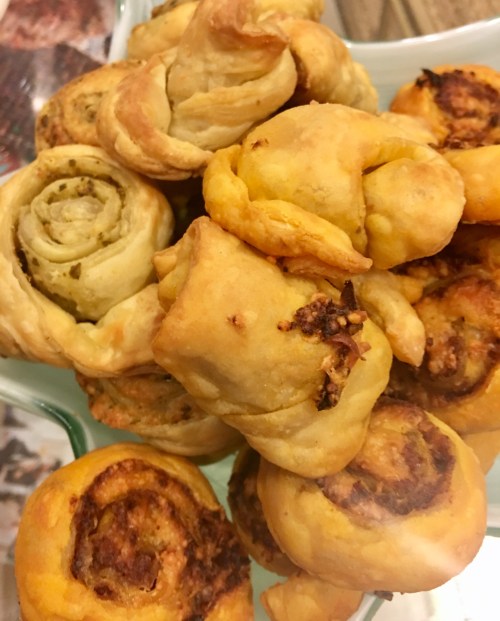
Carol made some outstanding appetizers and a delicious bread pudding (I forgot to make the promised whiskey sauce, but not to worry – there was whipped cream and/or ice cream to substitute.) Carol calls the appetizers puff pastry pinwheels. She had two kinds: pesto and sun-dried tomato. She says that the family’s favorite is prosciutto. It would have to be great to beat the two that she baked. Her bread pudding was made from an extra Christmas panettone augmented with chocolate and raisins.

Puff pastry pinwheels

Puff pastry pinwheels

For the main dish I roasted a whole chicken along with Hasselbach potatoes.  The challenge was the green vegetable. This time of year you can always find broccoli, broccolini, and green beans, but for me they have worn out their welcome. I know that summer squash is out of season, but in Southern California everything seems to be in season all year long. Unfortunately zucchini often cooks up watery with not much color. I decided to combine it with another watery vegetable but with more color: spinach. And mushrooms. Cheese and mushrooms sounded like good additions, and suddenly you have the makings of a quiche. The crust was definitely too much effort and too filling for a side dish, but the stand-alone filling sounded good.

Here’s the whole menu – puff pastry pinwheels, roast chicken, Hasselbach potatoes,  zucchini-spinach un-quiche, and panettone bread pudding.

RECIPE

Zucchini and Spinach Un-Quiche

Ingredients

  • 3 medium zucchini
  • 3 tablespoons olive oil
  • 3 generous handfuls, more or less, fresh baby spinach
  • 5 crimini mushrooms, sliced
  • salt and pepper
  • 2 tablespoons Pernod
  • 2 ounces Swiss cheese, coarsely grated
  • 3 eggs, well beaten
  • 1 cup heavy cream
  • ¼ cup panko
  • ¼ cup finely grated Parmesan cheese
  • 1 tablespoon unsalted butter

Method

  1. Wash the zucchini and cut off the stems. Grate with the coarse side of a box grater. In a clean towel or with clean hands, squeeze as much liquid as you can from the grated zucchini.
  2. Heat the olive oil over medium heat in a large sauté pan. Add the grated squash and sauté until the squash gives up its liquid. Then add the spinach and cook until the leaves are completely wilted and they have given up their liquid. Add the mushrooms and sauté for another 3-5 minutes. Correct the seasoning with salt and pepper. Add Pernod
  3. Transfer the mixture to a strainer. Drain. Use a heavy spoon to press out as much moisture as you can. Place in a well-buttered 2 quart baking dish or soufflé bowl.  Top with grated Swiss cheese.
  4. Combine the well-beaten eggs and cream. Add a little bit more salt and pepper. Pour over the zucchini/spinach mixture and stir until well combined. Sprinkle the top with panko and grated Parmesan cheese. Dot with butter.
  5. Bake in the middle of an oven preheated to 350°F for 1 hour or until bubbling and well-browned. Remove from the oven, cool for 5 minutes, and serve while still warm.

Cook’s Notes

  • The casserole will deflate as it cools. It will not reinflate with reheating, but it will still taste good if it is rewarmed.
  • You can turn this into quiche by baking it in a blind-baked pie shell at the same temperature for the same time.
  • You can turn it into a soufflé by separating the eggs, combining yolks with the cream, and gently folding in the stiffly-beaten egg whites. Use the same time and temperature.


3 Comments

Filed under Food, Photography, Recipes

EASY AS APPLE PIE

I have been away from the blogosphere for much of the month of January. Instead, Susan and I have been opening boxes after our move from Santa Fe to Southern California. In spite of downsizing, we are still trying to figure out how to cram the accumulations of over 50 years of marriage into our condo that is a lot smaller than the house we left.

For nearly three weeks, our focus has been on getting settled in, but we have made time to spend with our daughter and her family. Carol has suggested that we start a new tradition with family dinners, alternating between our homes every Sunday. Everyone gets a part of the meal to cook. This week, I was assigned dessert. Carol is a great dessert cook, and so is her mother. The pressure was on. It occurred to me that apple pie is a favorite for most, and it certainly fits in with family tradition.

I was right. Apple pie was a big hit, especially with the teenagers who went back for seconds. The recipe I used was my modification of a recipe published by Sam Sifton in the New York Times. His recipe was a modification of one by Kierin Baldwin, a well-known NYC pastry chef. The key to the pie’s success is cooking the filling before you put it in the pie. I added lemon juice and a good splash of Calvados. Cream instead of the usual egg wash gives the pie a nice sheen. I also increased the cornstarch so that the filling became custard-like. For that reason, it is extremely important to let the pie cool completely before you serve it. Also, use a glass pie pan if you can. Everything seems to bake more evenly. Confession: I used a commercial pie crust. If you’re a purist, make your own.

One other diversion we have been able to do when we can’t open another box is to go to the shore and watch the sunsets. This image is of Point Vicente and its lighthouse just as the sun is setting. Truly a beautiful spot.

Point Vicente at sunset

Point Vicente at sunset

RECIPE

Apple Pie

Ingredients

  • 4 tablespoons unsalted butter, divided
  • 5 large Jonagold apples, peeled, cored, and cut into 8 wedges each
  • ¾ cup sugar
  • ¼ teaspoon ground nutmeg
  • ½ teaspoon ground cinnamon
  • ¼ teaspoon kosher salt
  • 2 tablespoons all-purpose flour
  • 1 tablespoon corn starch
  • juice of ½ lemon
  • ¼ cup Calvados
  • 1 carton commercial ready-made pie crusts (2 discs)
  • cream
  • 1 tablespoon turbinado sugar

Method

  1. Melt 2 tablespoons of butter in a large sauté pan over medium heat. Add the prepared apple slices and stir until they are well covered with butter.
  2. Combine the sugar, nutmeg, cinnamon and salt. Sprinkle over the apples and stir until the apples are completely coated. Continue to sauté until the apples are softened and the coating begins to caramelize. Sprinkle in the flour and cornstarch. Stir and cook until the mixture is smooth, about 3-5 minutes.
  3. Stir in the lemon juice and Calvados. Transfer to a bowl and cool completely.
  4. When you are ready to assemble the pie, remove the pie crusts from the refrigerator. Line a glass pie plate with one of the crust circles. Fill with the apple mixture, mounding it slightly in the middle. Dot with bits of the remaining 2 tablespoons of butter.
  5. Paint the rim of the filled pie shell with cream. Top with the second crust circle and press the rim firmly to seal the crust. Turn the edge of the assembled crust under and crimp with a fork or your fingers. Paint the top crust of the pie with cream. Sprinkle with turbinado sugar. Cut 4 slits near the center of the pie. Lower-down slits will encourage the filling to bubble out during baking.
  6. Place the pie on a rimmed baking sheet that has been preheated in the middle of a 425°F oven. Bake for 20 minutes. Reduce the heat to 375°F and continue to bake for an additional 30-40 minutes or until the pie is golden brown.
  7. Remove to a cooling rack and allow to cool completely, 2 hours or more.
  8. Serve with whipped cream, ice cream, or sharp Cheddar cheese.

9 Comments

Filed under Food, Photography, Recipes

OYSTERS ROCKEFELLER WITH BAKED EGGS

This year we decided to stay home for Thanksgiving and not cook. All of our children are spending time with the other grandparents, and we are pleased that they can all get together. Our friends are doing overnights at local but interesting places. We’re filling up boxes; cooking/cleaning up was the last thing that either of us wanted to do. Our neighborhood bistro had an offer that was tough to pass up: complete turkey dinner with clam chowder, salad, all the fixin’s, and five choices of pie all boxed up. That’s what we decided to do, but somehow Thanksgiving seemed to call out for a little bit more. (Isn’t that the nature of Thanksgiving?)

We always like oysters at the holidays, and oysters Rockefeller is one of our favorites. Then I thought how about baked eggs instead? (I had been reading Michel Roux’s beautiful little book, Eggs.) Then I thought, how about combining the two? So that’s what I did.

Oysters Rockefeller is a New Orleans classic that has become popular all over the country. The dish was invented in 1899 by Jules Alciatore, the son of the founder of Antoine’s, the famous French Quarter restaurant in New Orleans. The story his great-grandson tells is that Alciatore was looking for a luxurious dish, but one that would incorporate extra table garnishes like scallions, parsley, and celery. The most “luxurious” name he could think of was Rockefeller who was then the richest man in the world. Rockefeller was never really served oysters Rockefeller at Antoine’s. No matter. The name stuck.

To this day, the original recipe is a closely guarded family secret. The family swears that Antoine’s oysters Rockefeller contain not a single shred of spinach. That is an interesting assertion, because recipes for the dish are plentiful. Almost all include spinach. There are three separate versions in the legendary River Road Recipes of the Baton Rouge Junior League. Every one includes spinach.  So does mine. Obviously, I am not privy to the family secret.

There are a couple of cooking notes. First, it is important to cook the spinach sauce over as low a flame as possible. It is very easy to scorch it, and then it is ruined. Second, you can choose not to use the water bath with the baked eggs, but you then run the risk of having tough egg whites instead of the custard-like fusion of cream and egg white. The water bath is the same technique as you might use with panna cotta, flan, baked custard, etc. The contents of the cooking vessel are cooked more evenly than they would be when depending upon uneven air circulation in the oven.

Here is a twist on my version of oysters Rockefeller with the added fillip of baked eggs.

RECIPE

Oysters Rockefeller with Baked Eggs

Ingredients

  • 6 strips bacon
  • ¼ cup panko
  • butter, softened
  • 4 scallions
  • ½ cup Italian parsley leaves, stems removed
  • 1 rib celery, strings removed
  • 9 ounce package frozen spinach
  • 1 tablespoon unsalted butter
  • 1 tablespoon all-purpose flour
  • 6 ounce jar oysters, about 4-6 medium with liquor
  • water as needed
  • 2 teaspoons Pernod
  • salt and pepper to taste
  • 1 dash or to taste Tabasco (optional)
  • 4 eggs, room temperature
  • 4 tablespoons heavy cream
  • ½ cup freshly grated Parmesan
  • boiling water for the water bath

Method

  1. Sauté the bacon until it is browned and completely rendered. Cool and drain on paper towels, chop,  and set aside.
  2. In a small, dry skillet, lightly brown the panko, being careful not to burn. Set aside.
  3. Butter the insides of 4 ramekins and arrange in a baking pan with tall sides that has been lined on the bottom with waxed paper or parchment.
  4. Chop the scallions, parsley, and celery finely. Cook the spinach according to package instructions. Squeeze the cooked spinach with your hands to remove as much water as possible. Chop the spinach finely.
  5. Combine the scallions, parsley, celery, and spinach in a food processor. Pulse 6 to 10 times, enough to mince the vegetables but not so much as to purée them. The vegetables should retain some of their texture.
  6. In a small saucepan, melt the unsalted butter, add the flour, and cook over very low heat for about 5 minutes until the flour is cooked and the mixture forms a smooth paste. Stir in the liquor from the jar of oysters.
  7. Add the minced vegetables. You may need a little extra water to form a thick sauce. Add the Pernod. Adjust seasoning with salt and pepper. Add optional Tabasco. Cook, covered, over the very lowest heat for 1 hour. Stir frequently. Do not let the mixture come to the boil.
  8. When you are ready to assemble,  arrange one oyster in each of the ramekins. Divide the spinach sauce equally among the four ramekins and spread gently to cover the oysters. Sprinkle with about 1 teaspoon of crumbled bacon, reserving enough to top the dish.
  9. One by one, break the eggs into a small dish. Slide an egg onto the top of each oyster and sauce. Repeat until all four ramekins have been assembled. Pour 1 tablespoon of cream over each egg, being careful not to cover the yolk. Sprinkle on the remaining bacon along with Parmesan and panko.
  10. Pour boiling water into the baking pan around the ramekins, being careful not to get water into the dishes. Place the pan with the ramekins in the middle of an oven that has been pre-heated to 325°F (165°C). Bake for 14 minutes or until the egg whites have set, but the yolks are still runny. Remove from the oven. The eggs will continue to cook after you have removed them from the oven. Serve immediately.

16 Comments

Filed under Food, Photography, Recipes

SHRIMP CREOLE

Nearly four years ago I posted a recipe for quick and easy shrimp Creole.  Actually, the real deal doesn’t take that much effort, so I thought another recipe might be in order. The stimulus was my discovery of a bag of shrimp in the freezer. In our de-cluttering effort we are trying to clean out a small chest freezer we keep in the garage. Some decisions of what to get rid of were easy. Down at the bottom of the chest I found dates that went back years (No “Best to use by” labels here.) The shrimp were near the top and represented a fairly recent purchase, so they were moved to the freezer in the house to be used soon. Shrimp creole seemed like the easiest solution. Of course, the star of the dish is shrimp, but it couldn’t be Creole without the so-called Cajun Trinity – onions, celery, and green bell pepper. Those three vegetables are the base for so many Louisiana dishes including gumbo, jambalaya,  and etouffée.  In South Louisiana, many recipes call for Creole tomatoes, which are big, flavorful, and juicy. Large fresh tomatoes of other varieties are a good substitute, but in winter, canned tomatoes will have to do. If you’re using canned tomatoes, use a large can (28 ounces) of whole tomatoes, well drained and crushed in your hands before you add them to the sauce. As to spiciness, some in our household are extremely sensitive to hot chiles, so the seasoning in this version is fairly mild, but you should feel free to spice up your batch as much as you like. Most importantly, enjoy the fruits of your labor.


RECIPE

Shrimp Creole

Ingredients

  • 2 tablespoons vegetable oil
  • 1 medium onion, peeled and chopped coarsely
  • 1 rib celery, chopped coarsely
  • 1 green bell pepper, seeded and chopped coarsely
  • 3 large, ripe tomatoes, blanched, peeled,  seeded, and coarsely chopped
  • 3 cloves garlic, minced
  • 2 cups fish stock
  • 1 8 ounce can tomato sauce
  • 1 sprig thyme
  • 1 bay leaf
  • 2 teaspoons dried basil
  • salt and pepper to taste
  • ½ teaspoon cayenne pepper (adjust according to taste)
  • dash Tabasco sauce (adjust according to taste)
  • 2 teaspoons sugar
  • juice of ½ lemon
  • 2 pounds extra large (16-20/pound) shrimp, deveined, peeled, and tails removed
  • ½ cup chopped Italian parsley (more or less)
  • cooked rice

Method

  1. Heat the oil in a large, heavy-bottomed pot over a medium flame. Add the onions,, stir, and cover to sweat the onions – about 5 minutes –  until the onions are translucent. Do not let them brown. Add the celery and bell pepper. Stir and cook for about 5 minutes until the vegetables are wilted.
  2. Add the garlic, fish stock, tomato sauce, thyme, bay leaf and basil. Simmer for 15 minutes, stirring frequently. Adjust seasoning to taste with salt, pepper, cayenne, and Tabasco. Add sugar and lemon juice. Add more salt if needed.
  3. At this point, you may cool the sauce and refrigerate for later use. The flavor improves overnight, but you probably shouldn’t try to hold it much longer.
  4. When you are ready to serve, prepare a batch of cooked rice according to your usual method. Return the sauce to a heavy pot and bring to a low boil. Add the raw shrimp and return to the boil for about 5 minutes until the shrimp have turned pink and they have lost their translucence.
  5. Ladle into large soup bowls over a mound of hot, cooked rice, garnish with parsley, and serve immediately. Have more Tabasco available for those who like their shrimp Creole spicier. Should serve 4 to 6.

11 Comments

Filed under Food, Photography, Recipes

THREE-CHEESE ROASTED CAULIFLOWER

Cauliflower is a beautiful vegetable. The usual variety is snowy white and reminds me of the huge cumulus clouds that build over the New Mexico mountains during the summer and fall. Those clouds are very much a part of the art of Georgia O’Keeffe. Now there are cauliflower varieties of  electric green and purple. They are also gorgeous and beg to be eaten. A creative cook can find many ways to prepare cauliflower. You can use it raw as a crudité along with a dip, or heaven forbid, ranch dressing, or in a garden salad. You can roast it in thick slabs, and then it tastes almost like steak. The Indians use it for delicious pakoras. There are other ways to prepare it, but the fallback in most home kitchens is a steamed head of cauliflower smothered in cheese sauce. Actually, I love that combination, but in my hands the cauliflower gets soggy in the steamer and the cheese sauce slides off the cauliflower into a pool on the plate. This is my effort to correct those shortcomings by roasting the cauliflower and using a thick sauce that clings to the head  of cauliflower and  browns quickly in the oven.

RECIPE

Three-Cheese Roasted Cauliflower

Ingredients

  • 1 large cauliflower, washed, trimmed of leaves and stem
  • 2 tablespoons unsalted butter
  • 2 tablespoons all-purpose flour
  • ¾ cup milk
  • ¼ pound sharp Cheddar cheese, grated
  • ¼ teaspoon ground nutmeg
  • salt and pepper
  • ½ cup grated Swiss cheese
  • 3 tablespoons freshly grated Parmesan cheese
  • 3 tablespoons panko
  • melted unsalted butter

Method

  1. Place the cauliflower head in a well-buttered baking dish. Bake  in the middle of a pre-heated oven at 350°F for about 30 minutes or until the cauliflower is easily pierced with a kitchen fork. Remove from the oven and cover with aluminum foil until you are ready to add the sauce.
  2. While the cauliflower is roasting, prepare the cheese sauce. Melt the butter in a small saucepan. Stir in the flour and cook for a minute or two to remove the raw flavor of the flour. Add the milk, and stir until the mixture is thickened. Stir in the Cheddar cheese and nutmeg. Stir until the cheese is completely melted and the sauce is smooth. Adjust the seasoning with salt and pepper.
  3. Spread the sauce over the roasted cauliflower, sprinkle with the Swiss cheese, Parmesan, and panko. Drizzle melted butter over the top.
  4. Return to the oven and increase the temperature to 400°F. Roast until the topping is lightly browned and bubbling, about 10 minutes. Remove from the oven and serve immediately while still warm. I served it with sliced New York strip steak, but it will go with just about any protein you might like.

7 Comments

Filed under Food, Photography, Recipes

SALMON CAKES AND MUSHROOM SAUCE

The de-cluttering campaign has moved to the pantry. There are lots of opportunities there: several boxes of salt, two or three tins of sardines, and five – or is it six? – different varieties of vinegar. One item caught my eye, a can of salmon. Fortunately, canned salmon is one of those virtually indestructible items like Spam and Twinkies. It can sit on a shelf for years, just waiting for some culinary emergency. This can had sat on the shelf for longer than I wish to recount, so it seemed like the time had come to use it.

When I was growing up, my mother often used canned salmon. I think that may have reflected her growing up in a Dakota sod-buster family on the flat and isolated prairie. She used to tell of waiting for shipments of otherwise unavailable foods to arrive , preserved in one way or another, on the trains from Minneapolis. Salmon loaf was one of my mother’s  specialties,, and salmon salad sometimes showed up with the salmon straight out of the can. You were able to eat it that way because the canning process essentially cooked the salmon, bones and all. I was never a fan of the bones that you could find. The little vertebrae had a fascinating shape, and they crunched easily between your teeth. But when I found out what they were, those little bones finished off my enthusiasm for canned salmon. These days, we often have salmon, but it is grilled or roasted, and always a fresh steak or a beautiful filet. Canned salmon seemed like a distant memory but a good challenge. Salmon cakes were an obvious choice.

I also had to deal with mushrooms. The other day, Susan wanted to make her favorite Hungarian mushroom soup from the Moosewood cookbook. The recipe called for 2 pounds of fresh mushrooms. When I bought some at the grocery store, I carefully weighed out 2 pounds. It seemed like a lot. Clearly the scale at the store was not working because we wound up with enough mushrooms to make several batches of soup.  It occurred to me that mushroom sauce for the salmon would be a good way to use up at least some of the mushrooms. The sauce I made was thicker than you might like, but you can always thin it out with stock.

RECIPES

Salmon Cakes

Ingredients

  • 1 large, thick slice good-quality sourdough bread
  • ½ cup cream
  • 1 14 ounce  can salmon, drained
  • 2 eggs, room temperature
  • 1 tablespoon Dijon mustard
  • 1 tablespoon dried dill weed
  • juice of ½ lemon
  • 1 teaspoon Old Bay seasoning
  • 1 teaspoon kosher salt
  • ½ teaspoon ground black pepper
  • vegetable oil

Method

  1. Tear the bread into chunks and place in the beaker of a food processor. Pulse several times to form coarse crumbs.
  2. In a medium bowl, combine the bread crumbs and cream. Stir in the salmon with a fork, breaking up the fish into shreds about the size of the bread crumbs. (This should collapse any intact vertebrae)
  3. Stir in the mustard, dill weed, lemon, seasoning, salt and pepper until thoroughly combined. Shape into a ball, cover with plastic wrap and refrigerate for at least 30 minutes.
  4. When you are ready to make your salmon cakes, remove the salmon mixture from the refrigerator and divide into four equal balls. Between two pieces of waxed paper, form each ball into a patty about ½ inch thick.
  5. Heat just enough vegetable oil to coat the bottom of a large skillet. Over medium-high heat when the oil is shimmering, add the salmon cakes. Sauté until crisp and lightly browned on one side, about 5 minutes. Turn once and brown the other side. Serve while still warm.

Mushroom Sauce

Ingredients

  • 4 tablespoons unsalted butter
  • ½ pound Cremini mushrooms, sliced
  • 2 tablespoons all-purpose flour
  • 1½ cups vegetable stock + more if needed
  • salt and pepper

Method

  1. Melt the butter in a small saucepan over medium heat. Stir in the mushrooms and sauté  until the mushrooms are cooked through and lightly browned
  2. Stir in the flour so that the mushrooms are completely coated. Cook another minute or two.
  3. Add the vegetable stock, stirring continuously until it is completely incorporated and the mixture has thickened. Add more stock as needed for your desired consistency. Adjust the seasoning with salt and pepper.
  4. Serve over warm salmon cakes.

7 Comments

Filed under Food, Photography, Recipes

VOL-AU-VENT

We are continuing our decluttering project and have moved to the garage where we store most of our infrequently used kitchen gear. That was where we found our two croquembouche molds that have subsequently been given to our daughters. That is also where we keep our stove-top smoker (a useful item) and supplies and equipment for making sausage.

I was excited to discover in a large bin of items a set of vol-au-vent cutters. One is shaped like a fish, one is shaped like a flower, and one is shaped like a heart. The cutters are cleverly designed with a central cutter that is just very slightly shorter than the outside cutter so that it does not completely cut through the pastry. It is also designed so that if you want to make pastry shells with only one layer of pastry dough you can do so. But you can also stack layers to make a taller shell. Most cookbooks that have a recipe (not many!) recommend using three layers.img_0751

It is said that vol-au-vents were invented by the great French chef, Marie-Antoine Careme. He, by the way, is considered to be the first celebrity chef as well as the inventor of such kitchen essentials as the toque, the tall chef’s hat. His fame came from all of the elaborate dishes and food displays that he prepared for his patrons, including Talleyrand, Napoleon, Czar Alexander I, British King George IV, and one of the famous Rothschild family.

Vol-au-vents are not commonly seen on restaurant menus these days. The name translates to “flying with the wind”, presumably because of the lightness of the puff pastry casing used to contain a delicate sauced meat or poultry. The original dish was, to say the least, complicated. Here is the recipe for Careme’s version, drawn from the book, Cooking for Kings by Ian Kelly and reported on NPR by Melissa Block.

DON’T TRY THIS AT HOME!

Les Petits Vol-Au-Vents á la Nesle
Brighton Pavilion and Chateau Rothschild

20 vol-au-vent cases, the diameter of a glass
20 cocks-combs
20 cocks-stones (testes)
10 lambs sweetbreads (thymus and pancreatic glands, washed in water for five hours, until the liquid runs clear)
10 small truffles, pared, chopped, boiled in consommé
20 tiny mushrooms
20 lobster tails
4 fine whole lambs’ brains, boiled and chopped
1 French loaf
2 spoonfuls chicken jelly
2 spoonfuls velouté sauce
1 tablespoon chopped parsley
2 tablespoons chopped mushrooms
4 egg yolks
2 chickens, boned
2 calves’ udders
2 pints cream
sauce Allemande
salt, nutmeg

Forcemeat:

Crumb a whole French loaf. Add two spoonfuls of poultry jelly, one of velouté, one tablespoon of chopped parsley, two of mushrooms, chopped. Boil and stir as it thickens to a ball. Add two egg yolks. Pound the flesh of two boned chickens through a sieve. Boil two calves’ udders — once cold, pound and pass through a sieve.

Then, mix six ounces of the breadcrumbs panada to ten ounces of the chicken meat, and ten of the calves’ udders and combine and pound for 15 minutes. Add five drams of salt, some nutmeg and the yolks of two more eggs and a spoonful of cold velouté or béchamel. Pound for a further ten minutes. Test by poaching a ball in boiling water — it should form soft, smooth balls.

Make some balls of poultry forcemeat in small coffee spoons, dip them in jelly broth and after draining on a napkin, place them regularly in the vol-au-vent, already half filled with:

a good ragout of cocks-combs and stones (testicles)
lambs’ sweetbreads (thymus and pancreatic glands, washed in water for five hours, until the liquid runs clear)
truffles
mushrooms
lobster tails
four fine whole brains

Cover all with an extra thick sauce Allemande.

Here’s a simpler, more modern version which uses substantially fewer ingredients along with store-bought frozen puff pastry. You can fill the pastry shell with anything you like, sweet or savory. Ice cream and berries make a good sweet choice. For savory, I have used a scallop sauce adapted from Julia Child’s recipe for coquilles St. Jacques à la Parisienne, but creamed chicken would be another good choice.  Another tip: you don’t really need the specialized cutters. You can just use the rim of a jelly glass or biscuit cutters of two different sizes. Finally, although I thought my end result tasted good, it certainly did not win any awards for appearance. The puff pastry burned around the edges where it was not covered by sauce. The lesson is to watch for burning and remove from the broiler before that happens.

RECIPE

Vol-au-Vent with Scallops and Mushroom Sauce

For the Pastry

Ingredients

  • 1 package (2 sheets) packaged puff pastry, thawed according to instructions
  • 1 egg yolk
  • 1 tablespoon water

Method

  1. Place the thawed sheet of puff pastry on a lightly floured work surface. Roll it gently to flatten the dough and remove creases.
  2. Using your vol-au-vent cutter or improvised cookie cutters, cut out your preferred shapes and sizes.
  3. transfer to a baking sheet lined with parchment
  4. Beat the egg yolk and water together. With a pastry brush, brush the egg mixture onto the pastry shapes, being careful not to let the egg mixture drip onto the parchment as that may prevent even rising.
  5. Bake according to package instructions. Mine called for 10 minutes in a 400°F oven. I baked them for a few minutes longer to make sure the insides were done.
  6. Cool in a rack, and remove the “lid”. Hollow out the center with a paring knife and teaspoon to form a little “bowl” for the filling.

For the filling

Ingredients

  • 1 cup white wine
  • bay leaf
  • 2 scallions, including green tops, minced
  • 1 pound scallops, rinsed and patted dry
  • ½pound Crimini mushrooms, sliced
  • water
  • 3 tablespoons unsalted butter + 1 tablespoon for top
  • 4 tablespoons flour
  • ¾ cup milk
  • 2 egg yolks
  • ½ cup cream
  • few drops of lemon juice
  • salt and pepper to taste
  • 4 tablespoons Swiss cheese

Method

  1. In a small saucepan, combine the wine, bay leaf, and scallions. Bring to the simmer. Add the scallops and mushrooms with enough water to cover them. Return to the boil and then simmer until the scallops are cooked through, about 5 minutes.
  2. Remove the scallops and mushrooms to a plate. Bring the liquid back to the boil and continue to boil until it has been reduced about half to 1 cup.
  3. In another saucepan over medium heat, stir the flour and butter together and cook for a few minutes to remove the raw taste of the flour.
  4. Off the heat, stir in the hot liquid from cooking the scallops along with the milk. Return to the heat and boil for 1 minute.
  5. Blend the egg yolks and cream in a small bowl. Gradually drizzle the sauce mixture into the egg/cream mixture, stirring constantly to prevent the egg yolks from scrambling.
  6. Return the sauce to the pan and boil for one minute. Adjust the seasoning with salt, pepper, and lemon juice. If the sauce is too thick, add more cream as needed.
  7. Combine 2/3 of the sauce with the reserved scallops and mushrooms. Spoon into four prepared puff pastry shells. Top with the remaining sauce,  sprinkle with grated Swiss cheese, and dot with butter.
  8. Place the filled shells under a hot broiler just long enough to melt and lightly brown the Swiss cheese. Serve immediately

7 Comments

Filed under Food, Photography, Recipes

HIDDEN OLIVES

This is another offering I took to the poetry reading. The recipe found its way into the family cookbook many years ago when my sister-in-law sent it to Susan from CaliforniaShe had made hidden olives for a cocktail party, and they got rave reviews. Now the reason that the recipe made it into the cookbook is not because it is delicious – even though it is – but rather because of the laughs that go along with it. The first time she tried the recipe, Susan used jumbo-size olives and the individual pieces turned out also to be JUMBO. At the time, Bernadette Peters was making us all laugh with her advertisement for a medication for indigestion. “What a big dumpling,” her on-screen husband say. “I can’t believe I ate the whole thing!” We, Susan included, thought that the hidden olives were our equivalent of the television big dumpling. If you decide to try the recipe, there are two things to remember about the olives: (1) use small olives, and (2) use olives that have had the seed removed.

For this version, I added butter to make the dough come together. It worked, but it probably also enhanced spreading in the oven. Try the recipe without butter; you can always add some if you need to. Note that with that addition, the recipe is nearly identical with the Southern classic, cheese straws.

RECIPE

Hidden Olives

Ingredients

  • 1 pound sharp or extra sharp Cheddar cheese
  • 1 cup flour
  • 4 tablespoons (½ stick) butter, cut in ½ inch cubes
  • 1/8 teaspoon cayenne pepper
  • 1/8 teaspoon garlic powder
  • 1 teaspoon Worcestershire sauce
  • 32 small pimiento-stuffed olives (a 5 ounce jar should contain more than enough)

Method

  1. Grate the cheese and let stand at room temperature until soft.
  2. Place the grated cheese, flour, butter, cayenne, garlic powder, and Worcestershire sauce in the bowl of a food processor. Process until the ingredients come together as a smooth, soft dough.
  3. On a work surface, shape the dough into a round ball. Cut in half. Shape each half into a ball and again cut in half. Repeat three more times. You should have 32 equal-sized pieces of dough.
  4. One by one, press an olive into the center of one of the pieces of dough, covering the olive completely and rolling between your palms to form a ball.
  5. Arrange the olive-filled balls on a baking sheet lined with parchment or a Silpat, leaving at least 1½ inches between the balls. They will spread during baking.
  6. Bake in the middle of an oven preheated to 400°F for 12 minutes. Remove from the oven and transfer to a cooling rack.
  7. Reheat for a few minutes to serve warm, if possible, though they’re still good at room temperature.

5 Comments

Filed under Food, Photography, Recipes