Category Archives: Photography

QUICK QUICHE

This project started with a Nordic Ware 8.5 or 10 inch quiche and tart pan (not sure about the measurements – wider at the top than the bottom) that I bought from our local kitchen store for another project. The pan is a little deep for some tarts, but it is perfect for pie-like fillings, and it seemed to insist that I make a quiche. The removable bottom is convenient for unmolding the quiche, but an ordinary pie pan will work just fine.
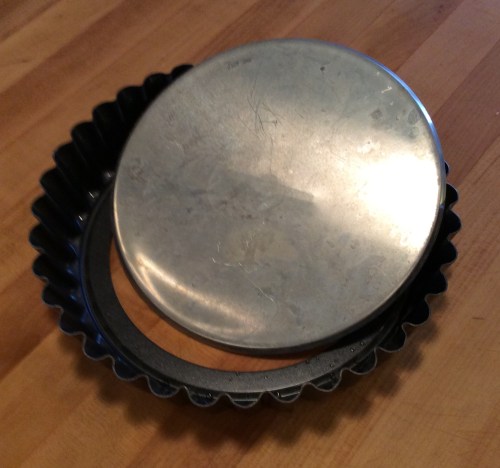
Tart and quiche pan with removable bottom

Tart and quiche pan with removable bottom

I confess that making a quiche from scratch is usually more than I want to undertake, so this time I decided to use all of the short-cut methods I could find. This approach included buying a ready-made pie crust from the refrigerator section at the grocery store, along with pre-diced ham. I could have also used ready-shredded Swiss cheese, but shredding my own seemed simple enough.

With a little rolling, I made the pie crust big enough to fit easily into the pan. I baked it blind, so even though the crust started out at the edge of the pan, there was a little shrinkage and the sides were not as tall as they could be. I chilled the unbaked crust for a half-hour in the refrigerator to reduce shrinkage – which it did – but there was still some. The other challenge of baking blind is that you need to prick the bottom of the crust with a fork to prevent it from rising in the middle. Then, when you fill the partially baked crust with a liquid to be baked, you run the risk of leaks. I dealt with that problem by making a thick paste of flour and water so that when the crust had cooled but had not been filled, I dabbed some of the paste on all of the fork holes to seal them. No leaks, but as additional insurance I baked the filled quiche on a baking sheet. I also baked it in the pan even though one should be able to remove the pan before you bake the filled quiche. I’m just naturally cautious.

Finally, figuring out when the quiche is done is always a challenge. Usual instructions include stabbing the center with a knife to see if it comes out clean, or jiggling the quiche to see if the center is too liquid. You don’t have to do either of those tricks. If you watch carefully while the quiche is baking you will notice that it first begins to firm up around the edges in a ring, and that ring of cooked quiche works its way to the middle until the whole pie top has the same appearance. That’s the sign it is done. You don’t want it to overbake or it will be rubbery, but you don’t want it to underbake or you will have soup. For me, watching the top cook inward remains the most reliable way to determine when the quiche is done.

RECIPE

Quick Quiche

Ingredients

  • 1 9-inch prepared pie crust, thawed if frozen
  • paste made of equal parts of flour and water
  • 3 tablespoons butter
  • ½ medium red onion, diced
  • 5 medium mushrooms, coarsely chopped
  • 2 jumbo eggs
  • 1½ cups heavy cream
  • salt and pepper
  • ¼ teaspoon ground nutmeg
  • 4 ounces diced ham
  • ½ cup grated Swiss cheese
  • 1 tablespoon chilled butter cut into 16 small pieces

Method

  1. Follow directions on the package for preparing the pie crust. On a flat surface, roll it out with a rolling-pin so that it will fit into your baking pan with a little extra over the edges. Transfer the prepared crust to the pan, pressing it firmly against the bottom and the sides. Do not trim the edges until you have chilled the unbaked crust. Prick the bottom in several places with a fork. Chill in the refrigerator for 3o minutes.
  2. When you are ready to blind-bake the crust, remove it from the refrigerator, trim off the edge of the crust with your finger. If you are using a regular pie pan, crimp the edge as you would normally. Line the pie shell with a square of non-stick aluminum foil, non-stick side down, and pressing firmly. Fill the foil lining with beans or pie weights, and bake the pie shell in the middle of an oven preheated to 400°F for 8 minutes. Remove from the oven, and remove the foil and weights. Prick the bottom again with a fork in several places and return to the oven for 2 more minutes or until the crust has very lightly browned. Remove from the oven, and cool completely. Inspect for holes made by the fork. Dab any holes with the flour/water paste and set the crust aside until you are ready to fill it.
  3. In a medium sauté pan over medium heat, melt the butter. Stir in the onions and cook until they are translucent. Add the mushrooms, cover, and cook for a minute or two until the mushrooms give up their liquid. Remove the cover and continue to simmer for a few minutes until the liquid has boiled off and the mushrooms have started to brown. Remove from the heat. Cool completely.
  4. In a medium mixing bowl, beat the eggs until well combined. Add the cream, salt and pepper, and nutmeg. Stir in the cooled onion/mushroom mixture. At this point, you can refrigerate the mixture until you are ready to complete the quiche.
  5. When you are ready to bake the quiche, spread the diced ham on the bottom of the partially baked pie shell. Ladle the egg, cream, onion, and mushroom mixture over the ham. You should have about 2½ cups of the liquid which should just fill the Nordic quiche pan about ¾ full. Do not fill more than that, or the filling may over-run the sides of the crust when it puffs up during baking.
  6. Sprinkle the grated cheese over the top of the filling, dot with the bits of butter, and bake in the upper third of an oven preheated to 375° for about 40 minutes. Toward the end of the baking time, check the top of the quiche to see if it has set to the middle. When the quiche is set, turn off the oven, crack the oven door ajar, and let rest for 10 minutes.
  7. Remove from the oven. If you are using a tart pan, balance the pan on a wide support so that the ring can fall away. With a broad spatula, transfer the quiche to a serving plate. If you have a hard time removing the quiche from the pan bottom, just serve it with the bottom on the plate – not as elegant, but it will work.
  8. Serve while warm. Makes excellent cold leftovers. Should serve 4 to 6 depending on what else you are having.

10 Comments

Filed under Food, Photography, Recipes

CORZETTI WITH SAUSAGE AND CLAMS

Our daughter, Carol, has been visiting us for a few days without her family. For her it has been a relaxing time with no chauffeuring duties to swimming, school meetings, the morning school rush, and cooking. She has been doing some work from her office, but she has also found time to sleep a little late, to shop, and to eat out.

Carol has her own big library of cookbooks, but it is different from my collection, so she has spent time leafing through some of my newer acquisitions. She also enjoys working in the kitchen with Susan and me, and we enjoy that, too.  We agreed to cook together on a recipe that appealed to her. She found a recipe in Flour + Water (Ten Speed Press, Berkeley, 2014), the eponymous cookbook from the San Francisco restaurant owned by Thomas McNaughton, a friend of Sarah and Evan.

The recipe she chose was entitled, “Corzetti with Sausage, Clams, and Fennel”, page 186. It involved making pasta – which sounded like fun. The challenge was to re-create the corzetti. Oretta Zanini de Vita (Encyclopedia of Pasta, translated by Maureen B. Fant, University of California Press, Berkeley, 2009) describes the pasta dating back to the thirteenth century and consisting of a bit of pasta dough with two thumb indentations to resemble an “8”. That shape was apparently for commoners because by the Renaissance the pasta was often pressed with special wooden stamps that included coats of arms and other designs. These days you can buy corzetti stamps on the Internet. They are designed to cut the pasta into circles with an imprint on both sides. The little devices are often made of exotic woods and quite beautiful. Trouble is, you have to make a lot of corzetti to justify the purchase as the stamps run $60 or more.

We made do with what I had: a 1½ inch ring from my nest of pastry cutters and a wooden mold that I use for butter and springerle cookies. Carol and I wound up imprinting only one side of the pasta, but that was effort enough for two cooks. The finished pasta, though, cooked beautifully, and the sauce was delicious. It all turned out to be a perfect meal with a nice Italian red, a tossed salad, and a fresh baguette. Pistachio gelatto finished it off. This recipe should serve four generously.

Note: Fennel “pollen” is a common ingredient on the West Coast as wild fennel grows prolifically along the roadsides from south of Big Sur to north of the Bay Area. The yellow “pollen” (I think it is actually the flowers and seeds) is often foraged by chefs from the Bay Area. Ground toasted fennel seeds will make an adequate substitute.

RECIPES

Pasta

Ingredients

  • 2 cups all-purpose flour
  • 1 teaspoon kosher salt
  • 2 large eggs
  • 3 egg yolks
  • 1½ teaspoons extra virgin olive oil
  • water

Method

  1. Heap the flour in the middle of a large, flat, clean surface. Form a well in the middle. Add the salt
  2. Add the eggs, egg yolks, and olive oil to the well, and with a fork, combine the eggs and oil, being careful not to incorporate any of the flour. When the eggs are combined, gradually pull bits of the flour into the mixture until it is completely incorporated. Sprinkle in a few drops of water if you cannot incorporate all of the flour.
  3. Draw the mixture into a ball. Knead for 10 minutes until the dough is smooth and slightly shiny. Add a few more drops of water if necessary. Wrap with plastic film and let rest at room temperature for at least 30 minutes.
  4. When you are ready to roll out the pasta, cut the dough in fourths, working with one piece at a time and rewrapping the remaining pieces.
  5. Pat the piece of dough into a flattened, elongated piece and run it through the pasta machine rollers at the widest setting. Fold in thirds and run through the rollers once more. Repeat the process one more time. Then run the dough through the rollers, decreasing the setting by steps until you have reached the thickness you desire.  (Different machines will have different settings.) You shouldn’t need to flour the dough, but if it is too sticky, lightly dust it while you roll it out.
  6. Place the rolled dough under a clean kitchen towel while you roll out the remaining pieces of dough.
  7. With a 1½ inch circular pastry cutter, cut the sheets of pasta. Then, using a stamp of the same diameter, press firmly on each dough circle to form an imprint. Separate the imprinted circles from the remaining dough (Save that for some other use.) and let rest until you are ready to boil it.

Sausage and Clam Sauce

Ingredients

  • 3 pounds Little Neck clams
  • 1 tablespoon olive oil + more for sautéing the sausage
  • 1 shallot, thinly sliced
  • 1 garlic clove, thinly sliced
  • 2 cups + ½ cup white wine
  • 8 ounces bulk pork sausage
  • 1 medium red onion, diced
  • ½ teaspoon fennel pollen (if you can’t harvest your own fennel pollen, dry-toast fennel seeds and grind finely in a spice grinder. Substitute ½ teaspoon of the ground fennel
  • 2 garlic cloves, minced
  • 1 cup chicken stock
  • juice of ½ lemon
  • salt and pepper to taste
  • extra virgin olive oil
  • 1 tablespoon chopped Italian parsley
  • 1 tablespoon snipped chives
  • grated Romano cheese (optional)

Method

  1. Scrub the clams and let them stand in cold water in a colander for a few minutes to give up their sand. Drain.
  2. In a large sauté pan, heat the olive oil over a high flame. Stir in the shallot and cook until translucent. Add the sliced garlic, 2 cups of white wine, and the washed clams. Cover and cook until the clams open, about 10 minutes. Remove the clams and continue to boil the liquid until it has reduced by half. Cool the liquid completely.
  3. Remove the clams from their shells and return to the cooled liquid. Refrigerate until ready to use.
  4. Wipe the sauté pan clean and return to high heat. Add a tablespoon or so of the olive oil. Then stir in the sausage and brown on all sides, breaking it up as you cook it. Stir in the red onion. Cook until the onion is translucent, about 2 minutes.
  5. Stir in the fennel and minced garlic. Continue to cook until the garlic is lightly browned (Do not burn!). Add ½ cup of white wine and boil until it has almost completely evaporated.
  6. Add the chicken stock, the clams, and their cooking liquid. Bring to the simmer.

Assembly

  1. Cook the pasta by adding it to a large pot of boiling, well-salted water. Return to the boil and cook for 3 – 5 minutes or until the pasta is al dente. Be careful not to overcook.
  2. Drain the pasta and add to the sausage and clam sauce. Simmer the mixture for 2 to 3 minutes until the sauce thickens a bit. Adjust the seasoning with lemon juice, salt, and pepper. Drizzle with extra virgin olive oil.
  3. Divide the pasta and sauce between four plates, top with parsley and chives, and serve immediately. Top with optional grated Romano cheese.

7 Comments

Filed under Food, Photography, Recipes, Restaurants

SANTA FE STYLE COQUILLES ST. JACQUES

The pressure started on Thanksgiving and will extend into January. The pressure, of course, is to keep the weight off in the face of food, food, food. Because of that, we have been trying to eat wisely, including a lot of seafood. I found some frozen scallops at the local Sprouts, and thought they would be tasty even though I wasn’t sure how I would prepare them.  Scallops are delicious grilled over an open flame, but I have already abandoned the outdoor grill for the winter. Besides, that approach is reserved for big diver scallops, and the frozen ones were smaller – about 36 to the pound.

My other favorite ways to do scallops are the two recipes for coquilles St. Jacques in the first volume of Mastering the Art of French Cooking. One of the recipes is in the Parisian style with a thick cream sauce. The other is in the Provençale style with herbs. I decided to meld the recipes and add some touches that would be reminiscent of Santa Fe. That would mean ground chiles, cilantro,  and perhaps a few pine nuts.

Along with the scallops, I decided to use up some leftover grits from the refrigerator. (Grits are definitely not Santa Fe.) To give them some added flavor, I added egg and chopped parsley.

RECIPES

Santa Fe Style Coquilles St. Jacques

Ingredients

  • ½ pound (about 18-20 medium) scallops
  • 2 tablespoons unsalted butter + more for topping
  • 5 medium cremini mushrooms, sliced
  • 2 scallions, minced
  • 1 cup white wine
  • water to cover
  • 2 tablespoons flour
  • ½ cup milk
  • 2 egg yolks
  • ½ cup cream
  • 1-2 teaspoons ground Chimayó red chile (to taste)
  • ¼ cup pine nuts (optional)
  • ¼ cup chopped cilantro
  • salt and pepper
  • ¼ cup asadero cheese, grated (Use Swiss cheese if you can’t find asadero)

Method

  1. Heat the butter over medium-high heat in a small sauté pan. When it has stopped foaming, add the scallops and brown them lightly. Remove from the heat, reserving the browned butter.
  2. In the same pan with the reserved browned butter, combine the browned scallops, mushrooms, scallions, and wine. Add enough water to just cover the mixture. Bring to the boil and then simmer for 5 minutes. Remove the scallops and mushrooms. Return the liquid to the boil and reduce to about one-half. Remove from the heat and stir in the flour and milk.
  3. In a bowl, beat the eggs lightly and stir in the cream. Beat in the still-hot wine and milk mixture. Return to the heat set at low, stirring constantly until the mixture has just thickened. Do not let it get too hot or the eggs will scramble. Remove from the heat, and stir in the chile, cilantro,  and optional pine nuts.
  4. Mix the sauce with the scallops and mushrooms. Transfer to 2 well-buttered ramekins. Top with grated cheese, dot with butter, and heat under a pre-warmed broiler until the top is browned and bubbling. Serve immediately.

Fried Grits Cakes

Ingredients

  • 1½  cups leftover cooked grits
  • 1 large egg
  • ½ cup chopped parsley
  • salt and pepper

Method

  1. Combine the grits, egg, and parsley until well mixed.
  2. Adjust the seasoning with salt and pepper.
  3. Divide into two cakes and fry in about ¼ inch of peanut oil over a medium flame until the cakes are browned on both sides. Serve while still warm.


7 Comments

Filed under Food, Photography, Recipes

CHEF BRUCIA’S YAM PIE

You may be tired of pumpkin pie for Thanksgiving. That’s what Chef Giuseppe Brucia said many years ago. I have written about him before. He is an Italian trained in Switzerland, and was chef of Ristorante Firenze and the Cambridge Club in Shreveport, Louisiana. I attended one of his cooking classes nearly 40 years ago, and there he showed us how to make his substitute for pumpkin pie.

His English was not very good, and the recipe had been transcribed in a sort of shorthand by a volunteer who knew nothing about cooking. On top of that, measurements were either in restaurant terms or approximate, and some of the ingredients were restaurant grade not readily available to the home cook. Nonetheless, I tried to adapt the recipe so that it could be included in the family cookbook. Even with all of those disclaimers, I think you’ll enjoy making the pie – and eating it. Another warning, it is a bit complicated to make, especially the crust. You can save a lot of time and effort by simply using a ready-made pie crust. I’ve used a cake pan with removable bottom to give straight sides and to let the finished pie stand on its own, but without a fluted edge, the crust will shrink. A regular pie pan will work just fine.

RECIPES

Chef Brucia’s Sweet Pie Crust

Ingredients

  • 3 cups all-purpose flour
  • 11 ounces (22 tablespoons)  unsalted butter, room temperature
  • 1 teaspoon salt
  • 1 teaspoon sugar
  • 1 egg
  • 3 ounces heavy cream
  • 1 egg yolk
  • 1 teaspoon milk

Method

  1. Sift flour directly onto work surface. Make a hollow in the center
  2. Place the butter, salt, sugar, and egg in the hollow. Gently mix together with your fingers, being careful not to mix in the flour. Add 2 ounces of cream and incorporate into the mixture.
  3. With your fingers, gradually draw the flour into the mixture, continuing until all of the flour is incorporated and the dough holds its shape. Add additional cream as needed until the dough is smooth and soft.
  4. Wrap the dough in plastic and refrigerate for at least one hour or overnight. Roll the dough to fit a 9-inch tart or cake pan. Arrange the dough so that it fits snugly without stretching. Run a rolling pin across the edge of the pan to trip the dough. The dough may shrink if you have stretched it while lining the pan.
  5. Bake blind in a 350° F oven for 12 minutes, weighting down the shell with aluminum foil filled with beans or pie weights. Remove from the oven, and remove the pie weights. Paint with a glaze made by mixing the egg yolk and milk together. Return to the oven for 2-3 minutes to brown. Remove from the oven and cool.


Chef Brucia’s Yam Pie

Ingredients

  • 1 large yam
  • ½ cup water
  • 10 tablespoons sugar, divided
  • 2 fresh oranges (should yield about ½ cup of stained juice)
  • 5 ounces (10 tablespoons) unsalted butter
  • 1 package (0.25 ounces) unflavored gelatin
  • 1 egg
  • 1 egg yolk

Method

  1. Peel and dice the yam into 1 inch cubes. In a saucepan, combine the diced yam with the water and 5 tablespoons of sugar. Bring to the boil and then simmer, covered, until the yam is soft. Drain the yam, reserving the cooking liquid. Puree the yam in a potato ricer, food mill, or food processor.
  2. Using a microplane, zest the oranges, setting the zest aside. Juice the two oranges, strain the juice, and set aside.
  3. In a small saucepan, combine the cooking liquid, orange juice, and butter. Bring to the boil, and heat until the butter is melted.
  4. Sprinkle the unflavored gelatin over ¼ cup cold water and let bloom for 5 minutes. Heat gently for 15 seconds in a microwave until the gelatin is dissolved.
  5. In a separate bowl, whisk together the egg, egg yolk, and the remaining 5 tablespoons of sugar. Add the dissolved gelatin and whisk together.
  6. Combine the orange and egg mixtures and heat gently while stirring constantly until the mixture thickens. (About 155°F. Do not heat too fast or too high or you will wind up scrambling the eggs. If you wish, use a double boiler over not in boiling water.) Remove from the heat and stir in the yam puree and reserved orange zest until well incorporated.
  7. Pour the completed filling into the prepared pie shell. You may have some extra filling depending on how high the edge of the crust is. Don’t overfill. Refrigerate for at least one hour or until set.
  8. Cut into 6 to 8 wedges and serve by itself or with whipped cream or vanilla ice cream.

8 Comments

Filed under Food, Photography, Recipes, Restaurants

PECAN PIE

When Mom Mom and Pop Pop lived on their East Texas farm, Thanksgiving was a holiday that the whole family anticipated. Mom Mom would spend weeks planning the menu and then days setting a festive table. All of the children and their respective families would arrive as early in the week as they could to help with wood chopping, cooking, and schmoozing. The giant turkey was the centerpiece of the celebration, but what everyone was really looking forward to was dessert with pumpkin and pecan pie – enough that everyone could have a slice of both, along with whipped cream, of course.

The pecan pies were a joint effort. Pop Pop would sit on the front porch for days cracking pecans with his trusty impact nut cracker, and Mom Mom would use the freshly-shelled nuts for her famous pecan pie. Her version was well known among the ladies in town, and she did several versions from one-bite tassies to lindividual pies to the real thing. She had a secret that she never passed on to the town ladies, who always made their pies with Karo syrup. Mom Mom used only brown sugar and never passed on the secret to anyone except her daughters.

Of course, there must be hundreds of recipes for pecan pie, and there will be plenty more in newspapers and magazines as Thanksgiving gets closer. This recipe, though, is special. It comes from Jessica Maher and was published in the November, 2015 issue of Texas Monthly.

Jessica and Sarah have been close friends since college days. They rowed together in the women’s eights at the University of Texas at Austin. But unbeknownst to one another, their lives followed amazingly similar paths. After college, both were casting about for careers (Sarah decided it was hard to make a living with a major in Spanish and a minor in Italian.) They both wound up going to culinary school in New York, and then their paths crossed again. They both worked for a time at Bouley in Lower Manhattan. Subsequently they both moved on to other New York restaurants, but they kept in close touch. Then they both married chefs, moved away from New York, opened up restaurants while having two kids each, and wondering what to do with their spare time. To this day, though, they stay in touch, often calling one another at least every week.

Jessica and Todd have a very successful restaurant in Austin, Texas, named Lenoir. For a number of years they have been prominent in the Austin restaurant scene, and their place has gotten excellent reviews in Texas Monthly, a publication no good Texan does without. (They call themselves the “National Magazine of Texas.”) This recipe, complete with a gorgeous image, comes from the November issue.

RECIPE

Jessica Maher’s Perfect Pecan Pie

Ingredients

  • pie crust for 9 inch pie, unbaked
  • 2 cups pecans (45 halves reserved for top)
  • 1 cup dark-brown sugar
  • 2/3 cup Lyle’s golden syrup*
  • 1 tablespoon bourbon
  • 4 tablespoons unsalted butter
  • 3 eggs, lightly beaten
  • ¼ cup heavy cream
  • big pinch salt

*Note: Lyle’s golden syrup may be a bit hard to find in the US. It is one of the most popular brands of an English product made during the production of cane sugar. Dark treacle is a thick syrup that has some of the characteristics of molasses. When it is filtered and decolorized it becomes light treacle, also known as golden syrup. Unfortunately there are no good substitutes. Light Karo has added vanilla. Dark Karo may have too much flavor. Maple syrup is not as thick. Some suggest mixtures of honey and Karo or straight agave syrup. The short answer is there is no substitute. Supposedly Lyle’s is carried at Whole Foods and World Market, but if all else fails, you can order it online.

Method

  1. Use your favorite pie dough recipe or a prepared, unbaked crust
  2. Spread the pecans in a rimmed baking pan and toast in the middle of an oven preheated to 250° F for about 10 minutes, stirring frequently until the oils begin to release and the pecans become fragrant. Watch carefully to avoid scorching. Remove from the oven, cool, set aside 45 halves for the top and chop the remaining pecans coarsely.
  3. In a saucepan, combine the sugar, syrup, bourbon, and butter. Bring to the boil, stirring constantly. Remove from the heat and cool to room temperature.
  4. In a bowl, whisk the eggs, cream, and salt together. Then whisk into the sugar mixture.
  5. Spread the chopped pecans over the bottom of the pie crust fitted to a 9 inch pie pan. Then pour in the batter. Arrange the pecan halves on top of the pie in concentric circles, starting from the middle.
  6. Bake in the middle of an oven preheated to 350° F for 45 to 50 minutes or until the filling is just set and the crust is golden brown.
  7. Rest for at least one hour on a cooling rack or overnight. Serve with whipped cream or ice cream.

12 Comments

Filed under Food, Photography, Recipes, Restaurants

SALT-CRUSTED POTATOES

Here is another simple, delicious recipe from the cookbook, Genius Recipes (Ten Speed Press, Berkeley, Kristen Miglore, editor.)

The recipe comes from José Pizarro, a Spanish restaurateur who owns and cooks in two London restaurants: José, a tapas bar, and Pizarro, a full restaurant. The focus of the dish is fingerling potatoes boiled in heavily salted water until the water is boiled off, and the salt coats the potatoes. Pizarro accompanies the potatoes with cilantro mojo as a dipping sauce, but you can just as easily substitute horseradish aioli or your own favorite dipping sauce. Or, you can do as I did and just serve the potatoes as a side dish with grilled meat and a green vegetable. I chose boneless pork ribs and broccoli with pine nuts and brown butter.

At first, the salt-coated potatoes look a bit daunting, but don’t worry. There is just enough salt to flavor the potatoes, and the creamy insides are a perfect complement. In my version, the extra brown butter from the broccoli was perfect with the potatoes. But with a dipping sauce, tiny fingerlings could even serve as an hors d’oeuvre.

RECIPE

Salt-Crusted Potatoes

Ingredients

  • fingerling potatoes, enough to make a single layer in a shallow pan
  • 2 tablespoons sea salt
  • enough water to just cover the potatoes

Method

  1. Arrange the potatoes in a single layer in a wide, shallow pan. Add the sea salt, and just cover with water.
  2. Over high heat, bring the potatoes to the boil. Continue to boil, uncovered,  adjusting the heat as necessary, until the water has completely boiled off.
  3. Be careful not to burn the potatoes. Remove from the heat and serve while still warm, or cool and serve with your favorite dipping sauce.

5 Comments

Filed under Food, Photography, Recipes, Restaurants

POACHED MIGAS

Sarah always has a lot of new cookbooks. She and Evan buy a lot, and on top of that they receive others from publishers. During our last visit, we spent a lot of time looking at recent selections. One, in particular, caught the attention of both Susan and me. I wound up buying a copy because I think that anyone who likes cookbooks would want this one on his or her bookshelf.

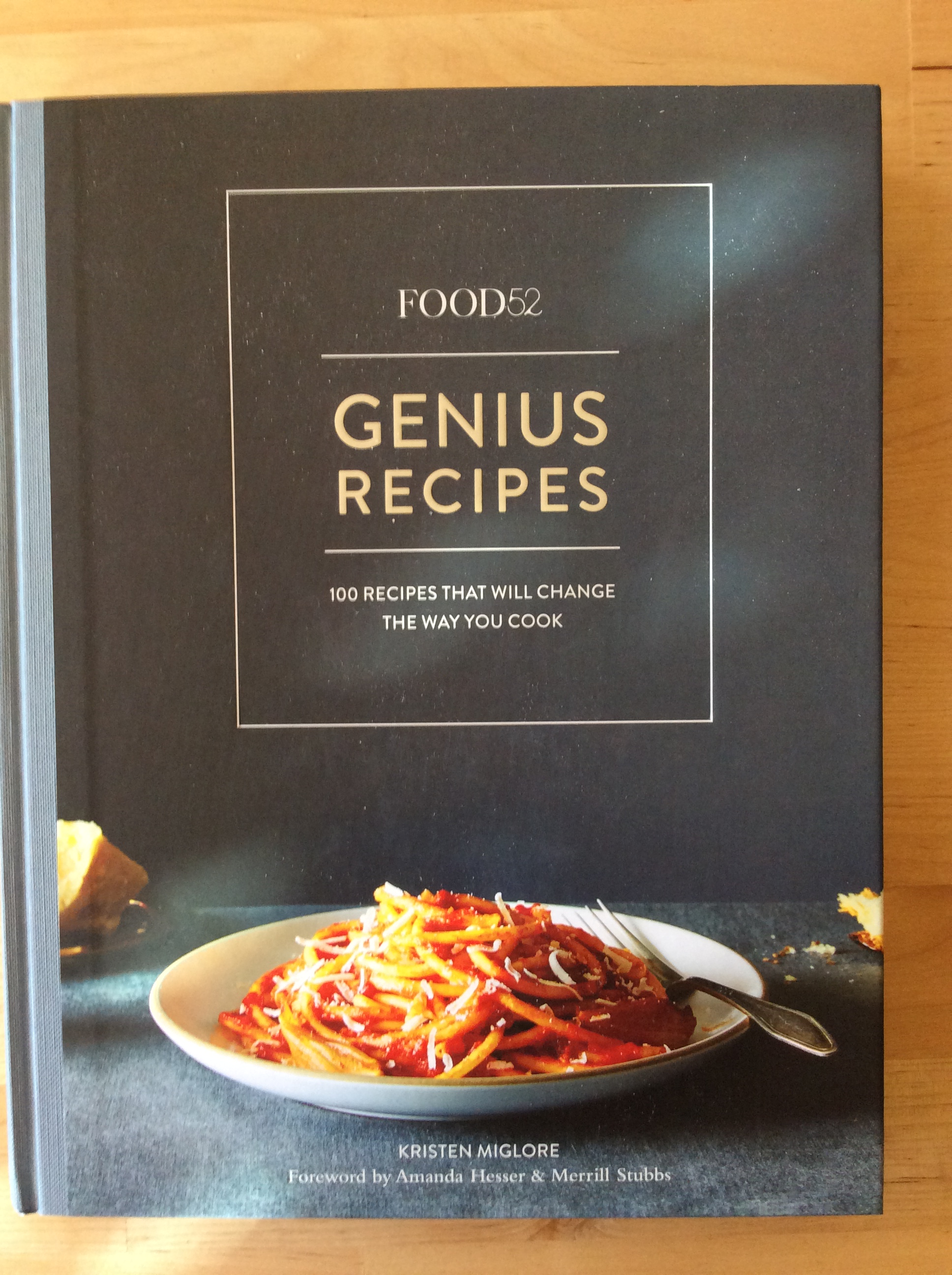
The name of the book is Genius Recipes: 100 Recipes That Will Change the Way You Cook. The book is written by Kristen Miglore, Executive Editor of the food website, Food52.com. It is filled with beautiful images by the author and published by Ten Speed Press, Berkeley.

Genius Recipes

Genius Recipes

Some critics complain that the recipes are not really “genius” and that some of them don’t work. They are partially correct. Some of the recipes, at least in my hands, don’t work and some of them I will not make again.

The real genius behind all of the recipes is that they contain tricks that you never knew or methods that make you think, “Now, why didn’t I think of that.” As well, there are recipes that have become classics. An example of that is Shirley Corriher’s Touch-of-Grace Biscuits that was daughter Carol’s first contribution to our family cookbook. Who would think that a wet blob of dough could turn into light Southern biscuits?

Another recipe that intrigued me was Daniel Patterson’s Poached Scrambled Eggs. Daniel is chef/owner of Michelin-two-star Coi where Evan and Sarah worked before they opened Rich Table. The story behind the recipe is that Daniel’s wife made him toss out his beloved Teflon-lined sauté pan, so he had to come up with a new way of scrambling eggs for his breakfast. The genius of the recipe – why didn’t I think of that – is based upon a common folly of cooks who have tried to poach the perfect egg only to have it break in the cooking water. Patterson simply mixed the eggs before he put them in the poaching liquid, and mirabile dictu, he had a scrambled egg.

This recipe takes that technique one step further. Migas are a great Tex-Mex dish which requires two basic elements – eggs and stale corn tortilla pieces – and whatever else suits your fancy. I first ate them at a cafe in Austin near the University of Texas campus. Since then they have become a family favorite that is always on the menu at family gatherings. One of the keys to this recipe is to have all of the add-ins prepped and ready to go before you cook the eggs.

RECIPE

Poached Migas

Ingredients

  • 3 corn tortillas
  • 4 crimini mushrooms, sliced
  • vegetable oil
  • 3 scallions, cut in ¼ inch slices, including green tops
  • 2¼ ounces sliced black olives
  • 3 strips bacon, cooked until crisp and then crumbled
  • ½ green or red bell pepper, seeded and chopped
  • 3 snacking peppers, chopped
  • 4 ounces Hatch green chiles, diced (optional)
  • 1 medium tomato,  seeded and chopped
  • ½ cup Cheddar or Monterey jack cheese (use a combination of the two if you wish)
  • ½ cup coarsely chopped cilantro leaves
  • 4 eggs, beaten
  • 4 tablespoons butter, melted
  • salt and pepper
  • salsa
  • sour cream for topping

Method

  1. Lightly coat the tortillas with vegetable oil. Cut into ¼ inch strips and spread out on a baking sheet. Bake at 200° F for about 20 minutes or until the strips are crisp. Cool and set aside.
  2. Sauté the mushrooms in about 2 tablespoons of oil. Set aside
  3. Gather the add-in ingredients on your work surface.
  4. In a medium saucepan, bring salted water to the boil. Turn off the heat, stir the water vigorously to create a vortex, and pour the beaten eggs into the vortex. Cover the saucepan tightly for a full minute. Remove the lid and drain the cooked eggs in a fine-meshed sieve, shaking to remove any excess water.
  5. Return the drained eggs to the saucepan along with the melted butter. Stir to loosen the eggs and incorporate the butter.
  6. Stir in the tortilla strips, mushrooms, scallions, olives, bacon, peppers, optional green chiles, tomato, cheese, and cilantro.
  7. Adjust seasoning with salt and pepper. Top with salsa. Serve immediately while still hot. Pass sour cream for topping if desired.


10 Comments

Filed under Food, Photography, Recipes, Restaurants

…A JUG OF WINE, A LOAF OF BREAD, AND…

When I was in college, many of my friends memorized lines from Omar Khayyam’s Rubaiyat so that they could impress their true loves. Most of the swains used the quote in the title of this piece, but they probably had not read much else. I think that the book has virtually disappeared from today’s college campuses.

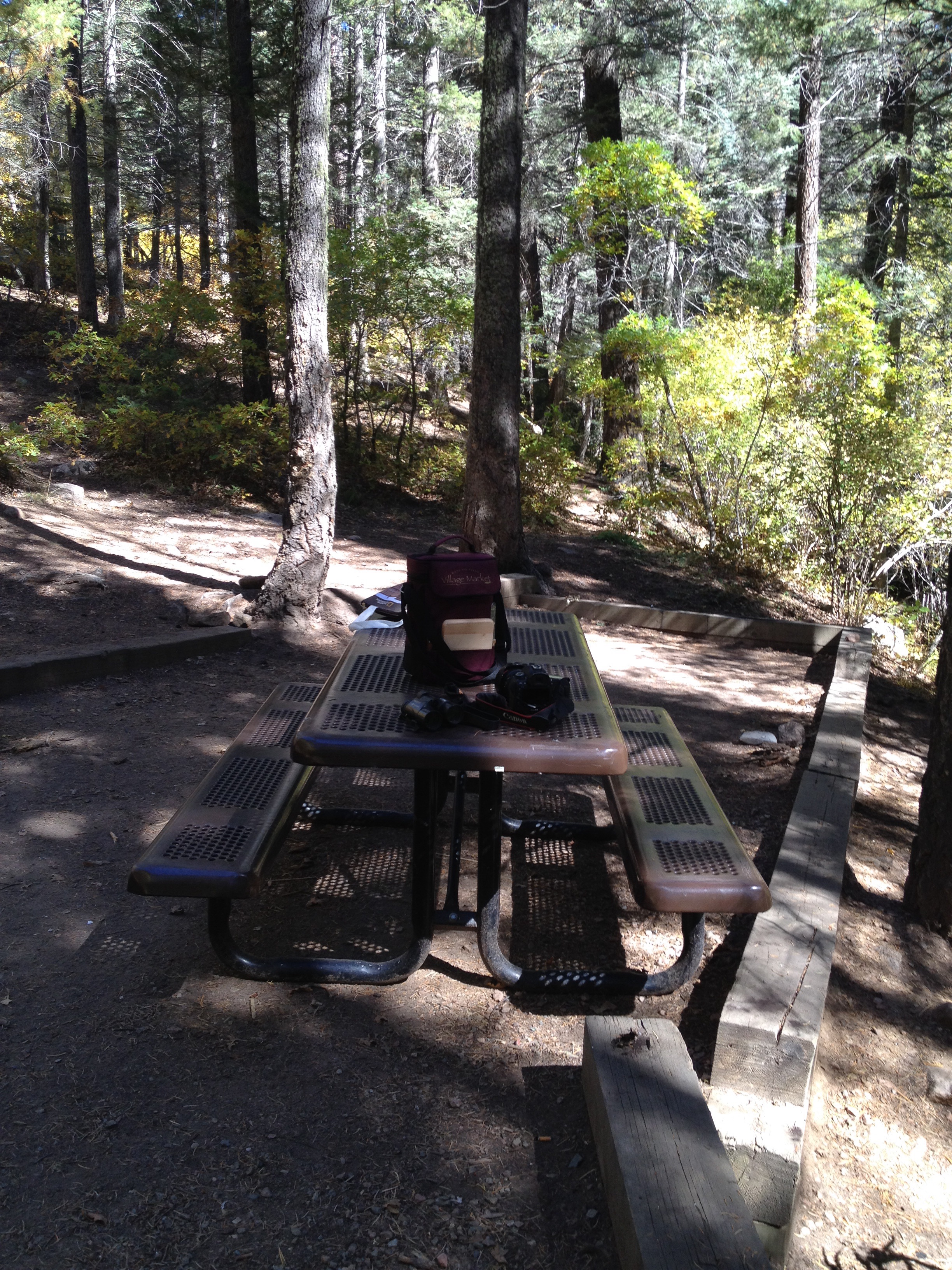
We went on a picnic recently that made me think of the quote. Since our first year of marriage, Susan and I have had an autumn tradition whenever we lived near mountains. We would pack a picnic lunch or evening meal and drive into the mountains to take a walk among the beauty and to sit under the beautiful golden quaking aspens. Of course, the children came along when they were younger. We followed the ritual even when we lived in Louisiana because the Arkansas mountains were not far away; and even though there were no aspens, the colors were spectacular. Only when we lived in Texas,  too far from mountains, did we forego the experience. In most Texas places where we lived, the leaves, except for the beautiful gums, just turned a dull brown and fell off the trees around Thanksgiving.

This year the aspens put on an especially good show, and so we packed up a simple lunch and headed up Hyde Park Road to the ski basin. By now, our hikes have gotten shorter and our drives a little longer. This time, except for about a half-hour walk, it was mostly driving. We were surprised to see the crowds, even in the middle of the week. Aspen Vista, where the entire mountainside is laid out in front of you and the trail is flat, was a huge traffic jam. All of our favorite picnic spots had already been occupied.

Fortunately, we ventured up the road in the state park with its assessment of a $5 day-use fee. There was no one around, and we easily found a table under some beautiful autumn colors.

A lovely spot for a picnic

A lovely spot for a picnic

We unpacked our simple lunch: a nice bottle of Cotes du Rhone, a fresh baguette, a roll of hard Italian salami, a wedge of Manchego, a slab of Havarti, and some chocolate. We feasted under the shimmering aspen leaves and thought back on similar days over the decades. It could not have been a more perfect meal or better afternoon. You see why I thought of Omar Khayyam.

10 Comments

Filed under Food, Photography, Travel

FOR WANT OF A NAIL – THE BUTTERFLY EFFECT

On the last leg of our marathon child-tending expedition in California, we headed back to the Bay Area.  This was also sort of holiday, so we drove up Highway 1 through Big Sur, one of our favorite places to visit.

For the first few days we were in Silicon Valley while our daughter-in-law was in Prague at a meeting. (Someone has to do it, right?) She sent us back images of goulash, beer, and sausage. Otherwise, there were no food adventures. We ordered a lot of takeout. I made macaroni and cheese and opened a jar of spaghetti sauce with NO additional seasoning. Both of the girls have very specific and definite food biases, One night at the dinner table the 9-year-old was asked if we could get her anything. Her reply was, “A good cook.” You get the idea.

Then we went back to San Francisco with the two toddlers while their parents went out of town to judge a cooking contest. That is the source of my tale and the title of this little essay. You recall the old proverb … “For want of a nail, a shoe was lost; for want of a shoe, a horse was lost; for want of a horse, a knight was lost; for want of a knight, a battle was lost; for want of a battle, a kingdom was lost.” Also, there is the butterfly effect in chaos theory which stems from the suggestion that the fluttering of a butterfly can influence a subsequent hurricane.

Sarah and Evan left for Shreveport early in the morning. They talked about getting an Uber car to the airport, and then decided to drive. In retrospect, a big mistake. Then the little one awoke unexpectedly as they were heading out the door. First delay. Interstates 280 and 380 were both busier than expected even though it was early during the morning rush hour. Next delay. Then the airport parking lot was full, so they had to go to the off-site lot. Next delay. The man in front of them couldn’t get the gate to the lot opened so they had to wait for him to solve his problem. The shuttle to the terminal was delayed. But they still had time. Then they faced a long line for baggage and check-in, but they got their bags checked.

Of course, security was impossible, but they finally made it through, only to discover the gate had closed. Unfortunately, their bags had made it on the plane to go through Dallas to Shreveport, so they couldn’t change airlines, and the next available flight was eight hours later. (The lesson from this: don’t check bags if you are running late.) They were told that there were no late flights to Shreveport so that they would have to spend the night in Dallas. Meanwhile their luggage made it to Shreveport.

It is only a 3 hour drive on interstate between DFW and Shreveport, so they decided to rent a car at DFW. By now it was after midnight, and the car rental had a hard time finding a car. Finally, that was solved, and they were in fairly good spirits. UNTIL – about 2 AM, with Sarah asleep as they made it through the East Texas Piney Woods, Evan said, “Oh, my God,” waking Sarah just in time for a loud crash and a huge rush of steam onto the windshield. The steam blocked their view of the road. When they were able to pull over, Sarah got out of the car (Evan was afraid of getting hit by traffic) to find a deer impaled on the radiator. A highway patrolman did come and pulled the deer out of the car, but the car was not driveable.  So the next task was to find a tow truck – a challenge at 3 AM. They were finally towed into the Shreveport airport so that the ruined car could be deposited and the hapless couple could retrieve their luggage. There was no replacement car available, but with some effort one was found at a competing rental agency in exchange for more money.

By this time, it was 6 AM. When they arrived at their hotel, Sarah and Evan were told that their room had been given away, and that the hotel was booked up. Sarah burst into tears; a room was found; and the two were able to catch a couple of hours of sleep before the event.

Everything then went well, and Sarah and Evan had a good time serving as judges for a sort of “Chopped” event featuring some local cooks. They even won a few dollars at the sponsoring casino.

The story ended happily when they came back to their smiling boys. Besides, they will now have a great tale to tell their grandchildren many years from now.

Just remember, your fate may hang on the wings of the butterfly you see in your garden.

14 Comments

Filed under Food, Photography, Travel

THE PIE LADY

Susan has long been known as the pie baker in our family. Her crusts are always flaky; no one else can seem to master the skill. She says that it is something her mother taught her, and that the only secret is to keep everything cold.

Because of her reputation, she was drawn to a new cookbook on Sarah’s shelf when we were in San Francisco. The book is titled, The Four & Twenty Blackbirds Pie Book, (Grand Central Life & Style, New York, 2013).  It won an award by the James Beard Foundation as one of the best cookbooks of the year. The recipes sound wonderful, and the illustrations are beautiful. On top of that, the authors are two sisters, Emily and Melissa Elsen, from South Dakota who have gained fame in Brooklyn running a pie shop with the same name as the book. The two women hail from the little town of Hecla, population 224 ±, located just a few miles northeast of one of the main metropolises of South Dakota – Aberdeen. That’s where many of my relatives live and close to where both of my parents grew up, so it has some personal interest.

I ordered a copy of the book so that Susan could study it while we were in Los Angeles with our grandchildren there. I was hoping she would be inspired to bake, and I was not disappointed. She baked two pies that both disappeared quickly.

Cover of the cookbook

Cover of the cookbook

The first pie was a lattice-topped peach pie. Susan usually makes her crusts with vegetable shortening, but this time she followed the cookbook and used pure butter. It turned out not to be as flaky, but the flavor was outstanding. Judge for yourself about the beauty. Peaches came from the local farmers market.

Lattice-topped peach pie

Lattice-topped peach pie

A slice of peach pie

A slice of peach pie

The second pie was a black bottom lemon pie. Susan again used pure butter for the crust. For the filling, she made ganache and a lemon curd according to directions  from the cookbook. The only change to be made was that the recipe called for 30 minutes in the oven. In the end, it took twice that much time, although that could have been because of the oven. In any event, a warning to watch the baking time, and make sure that the lemon curd has set up at least three inches from the edge of the pan before you take it out to let it continue cooking while it is cooling.

Black bottom lemon pie

Black bottom lemon pie

A slice of black bottom lemon pie

A slice of black bottom lemon pie

Glad the Pie Lady has not lost her touch, and with this beautiful cookbook, she may continue to surprise us with new delights.

8 Comments

Filed under Food, Photography