Category Archives: Food

WEST TEXAS COWBOY SOURDOUGH BISCUITS

A few months ago I wrote about Carol’s favorite biscuit recipe, the Southern classic “Touch of Grace Biscuits”.  This post is about sourdough biscuits. When we lived in West Texas, for several years I attended an annual all-male overnight fishing trip held by some rancher friends  on the banks of one of the branches of the Brazos River running through a parcel of one of the legendary West Texas cattle ranches. Menus included classic ranch fare – grilled steaks, beans, fish (if we caught enough), hamburgers,  barbecue of all sorts, and of course lots of beer. The highlight, though, was a chuck wagon breakfast. The cooks would arise before everyone else, stir up the fires that had been stoked for the night, and begin to cook huge slabs of sliced bacon and scrambled eggs in surplus Army ammunition cans set over the open fires. They also stirred up the dough for sourdough biscuits to be baked in old-fashioned spiders (three-legged Dutch ovens with flat lids) that would be buried in the coals of the campfires. This was a feast for a king, or at least some satisfied West Texas cowmen.

Three-legged spider Dutch oven

Sourdough biscuits need to be started the night before you serve them at a cowboy breakfast out on the range, so be sure to get things going before the libations and campfire stories move into full pace. Hopefully you will have a sourdough starter that you have been treasuring and “feeding” for a long time, but don’t despair if you don’t. You can start your own in a week or two before the cookout. Yeast is a fall back, but it is definitely not viewed with favor out on the ranch. Depending upon how many mouths there are to feed, you will need to increase the recipe. Allow for at least three apiece, because even modern cowboys are hungry.  If you want to bake these at home, you don’t need to dig a fire pit, you can just use your oven. However, the instructions change a bit.

A pan full of biscuits about to go into the oven

A pan full of biscuits about to go into the oven

Cowboy Sourdough Biscuits

Sourdough biscuits fresh out of the oven

Ingredients

½ Cup                    sourdough starter

1 Cup                     milk

2 ½ Cups              all-purpose flour

¾ teaspoon         salt

1 Tablespoon      sugar

1 teaspoon          baking powder

½ teaspoon         baking soda

                             bacon grease from bacon cooked earlier (or 2 tablespoons of salad oil and 2 tablespoons of melted butter)

  1. The night before, dissolve the starter thoroughly in the milk. Be sure to use a large metal container that can be covered securely to keep out any varmints – human or otherwise – during the night.
  2. Thoroughly stir in one cup of flour, cover securely, and set in a warm place: not too close to the fire, but also not out in the cold night air.
  3. In the morning, combine the remaining 1½ cups of flour, salt, sugar, baking powder, and soda.  Then add to the starter mixture from the night before, and using clean hands (!?), combine into a soft dough. Knead in the metal container for a few minutes and let rest.
  4. In the meantime, prepare the fire: quench any active flames and with a hoe or shovel pull the coals to the edge of the fire pit so that your spider or Dutch oven will fit easily into the hole.
  5. On a flat, lightly floured surface, pat the dough into a round about ½ inch thick. Then cut individual biscuits. If this is a high-class cookout use a 2½ inch biscuit cutter. Otherwise use your cleanest knife to cut 2 inch squares.
  6. Dip each biscuit in bacon grease and place it in the bottom of the cast iron pot until the pot is completely full. Put the lid on the pot and lower the whole thing into the prepared cooking pit using the bale attached to the pot and a hook or hoe.
  7. With the hoe or shovel, layer some of the coals on the top of the cast iron pot – enough to evenly cover the lid.
  8. Bake for about 30 to 35 minutes.  It is very hard to check the baking, but you can try to remove the coals from the lid to check. Just remember to put them back on top if you bake some more. It is more likely that you will just have to take pot luck (so to speak), but my observation is that the usual crowd is just happy to get something to eat.
  9. If you are baking at home, dip each biscuit in melted bacon grease or a combination of oil and melted butter (bacon grease may be too strong a flavor for a home meal). Arrange the biscuits in a 10 inch cast iron frying pan. Bake in a preheated oven at 375° for 30 to 35 minutes.
  10. Serve immediately. Cold cowboy sourdough biscuits get as hard as a rock.

Yield: About 10 to 15 biscuits

Hot sourdough biscuits ready to eat

SOURDOUGH STARTER

Sourdough starter bubbling and ready to use

Sourdough starter can last a long time if it is properly cared for. We got one from a neighbor in Utah nearly forty years ago. That starter subsequently traveled to Texas, back to Utah, on to Louisiana, back to Texas again, and now New Mexico. Starter can be easily kept out-of-the-way in a closed jar in the back of the refrigerator for years. If you haven’t used it for several months it will have to be revived before using it.  If you can’t revive it, never mind. It is easy enough to start a new one. But don’t expect your friends to help.  Years ago we gave a starter to my brother and his wife.  They enjoyed it for some time and even gave some to their friends. Calamity struck and their jar of starter got thrown out when an unknowing individual cleaned out the refrigerator.  When my sister-in-law asked her friend for a new starter batch, the “friend” refused! It’s always better to be independent of others. Sourdough is slower than commercial yeast so breads made with it often do not rise as much. For that reason, breads made with sourdough alone require a long rise or fermentation, but starter can still be used for flavoring.  The most successful recipes are for biscuits, cornbread, pancakes, traditional country loaves, and French bread.

TRADITIONAL METHOD I

Ingredients

2 Cups   milk

2 Cups   all-purpose flour

  1. Mix the milk and flour together in a large ceramic bowl until smooth. Set uncovered in a warm kitchen for 2 to 5 days, stirring occasionally.  When the mixture is bubbly and has a yeasty, sour smell, the starter is ready.
  2. Store well covered in a glass or ceramic container on the counter or in the middle of the refrigerator.  Keep at least 3 cups on hand.
  3. Replenish by stirring in equal portions of milk and flour


TRADITIONAL METHOD II

Ingredients

1 Cup                     all-purpose flour

1 Cup                     water

  1. In a 4 cup or larger clear glass jar, mix the flour and water into a smooth paste. Set uncovered in a warm place. The kitchen is usually the best choice.
  2. Every day, check the mixture for bubbles, remove any tough skin that has formed on the top, pour off about half of the mixture, and add an additional ½ cup of flour and ½  cup of water, stirring to form a smooth paste.
  3. Repeat this process each day until the mixture is covered with bubbles and expands to double size or so. You should observe frequently during the day and evening because a good starter will eventually collapse from its own weight and lose volume.
  4. You will probably need to repeat the process for a week or more before you have established a good starter.
  5. After that, you should repeat the replenishment process for at least a couple of days before you plan to bake.
  6. You may store the starter in the refrigerator, but that is not necessary and even encourages less desirable things to grow and discolor the mix. If that happens, pour off the discolored top part, keeping just a few tablespoons of the starter to rejuvenate your stock.


NEW METHOD

Ingredients

2 Cups                   all-purpose flour

2 Cups                   water or milk

1 Tbsp                   sugar

½ pkg                    dry yeast

  1. Mix the flour, milk and sugar together into a smooth batter. Sprinkle the yeast over the surface and stir in. Allow to stand uncovered in a warm kitchen until the mixture is bubbly and with good aroma. The starter is ready.
  2. Store and replenish as above.
  3. If you have not used the starter for a long time, you may need to add milk and flour in equal amounts with a tablespoon of sugar, and let the mixture stand overnight before using.

 A LITTLE SOMETHING EXTRA (IN LOUISIANA IT’S LAGNIAPPE)

Sarah and Evan cooking at one of their popular pop-up dinners

For those of you who have been wondering about Sarah and Evan’s restaurant, it is moving closer to reality. They have signed a lease on space at 199 Gough in San Francisco’s Hayes Valley. Now they are waiting on the liquor license before they start renovation and moving in. You can read all about the venture on Kickstarter and at the same time have an opportunity to participate in the project. http://www.kickstarter.com/projects/1777795794/rich-table

1 Comment

Filed under Food, Photography, Recipes

MORE SAUERKRAUT: THE REUBEN SANDWICH

A while back I wrote about making sauerkraut. The recipe called for two heads of red cabbage. Even that small amount of cabbage makes a lot of sauerkraut, especially if you are eating other things during the long winter.  Such surplus calls for creativity in what to do with all of the sour cabbage.

One thing comes to mind immediately: make some Reuben sandwiches. These are a real delicatessen classic, and if you have ever been close to the Lower Eastside in Manhattan, guaranteed you have had a Reuben. Katz’s Delicatessen on East Houston is one of the most famous purveyors, but that is not where the sandwich got its start.

As a matter of fact, nobody is exactly certain as to the origins of the Reuben. There are at least three stories about the creation of the sandwich. The Oxford Companion to American Food and Drink, edited by  Andrew F. Smith and Arthur Schwartz’s New York City Food contain the most authoritative descriptions of the history and the controversy surrounding the sandwich.

The most likely explanation seems tied to the famous New York delicatessen, Reuben’s Restaurant, on East Fifty-eighth Street. Arnold Reuben, the owner, reportedly created a huge sandwich for Annette Selo (variously described as making a Charlie Chaplin movie or as an out-of-work actress) who came in one day asking for something to eat. Reuben created a big sandwich which Annette suggested should be called an “Annette Special”. The reply came back something like, “Fat chance,” from Reuben, and the sandwich became so popular that it wound up on the menu as “Reuben’s Special”. It consisted of rye bread, Virginia ham, sliced roast turkey, Swiss cheese, cole slaw, and Russian dressing..

The second explanation is that the original was created in the 1920’s for some hungry poker players at the Blackstone Hotel in Omaha Nebraska, by Reuben Kolakofsky. The sandwich included corned beef, Swiss cheese, sauerkraut, and Russian dressing. An  employee of the hotel or maybe one of the poker players entered the recipe in a sandwich contest, winning the contest and ensuring the fame of the sandwich.

The third explanation is that the sandwich was created in 1937 at the Cornhusker Hotel in Lincoln, Nebraska. The hotel has reportedly produced a menu which includes the name of the sandwich and its ingredients along with the date, thus providing the only written documentation for the creation of the sandwich.

Over time, the stories have become interwoven and the dates have changed in various tellings of the stories. So, it seems likely that the real origin of the Reuben sandwich will never be known with reliability. Still, there is no doubt that the Reuben has become one of the all-time favorite American sandwiches. These days, the ingredients usually include rye bread, Russian dressing, Swiss cheese, sauerkraut, and thinly sliced corn beef. Pastrami and Thousand Island dressing are common substitutes. The sandwich is often grilled and best when it is hot.

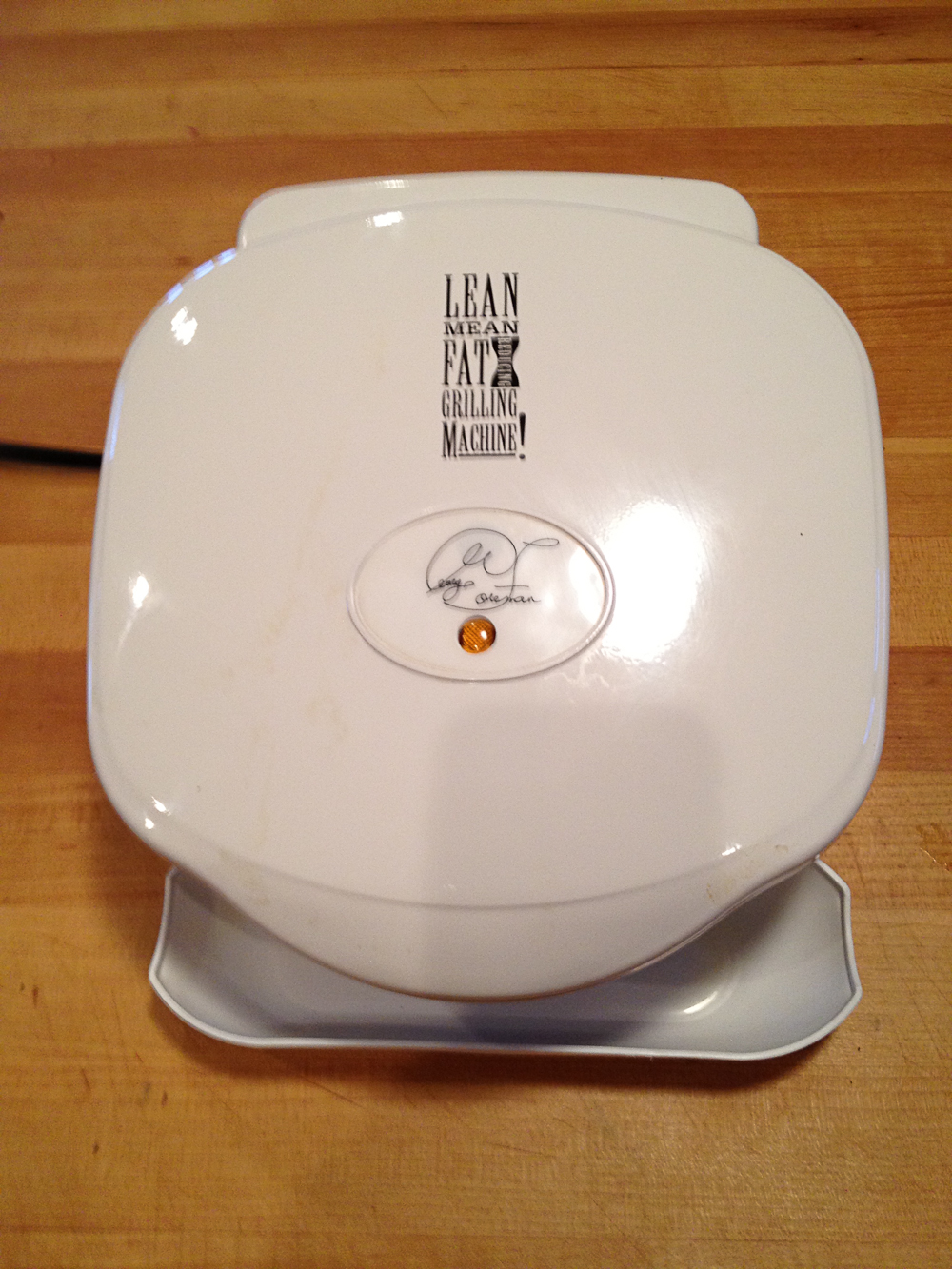
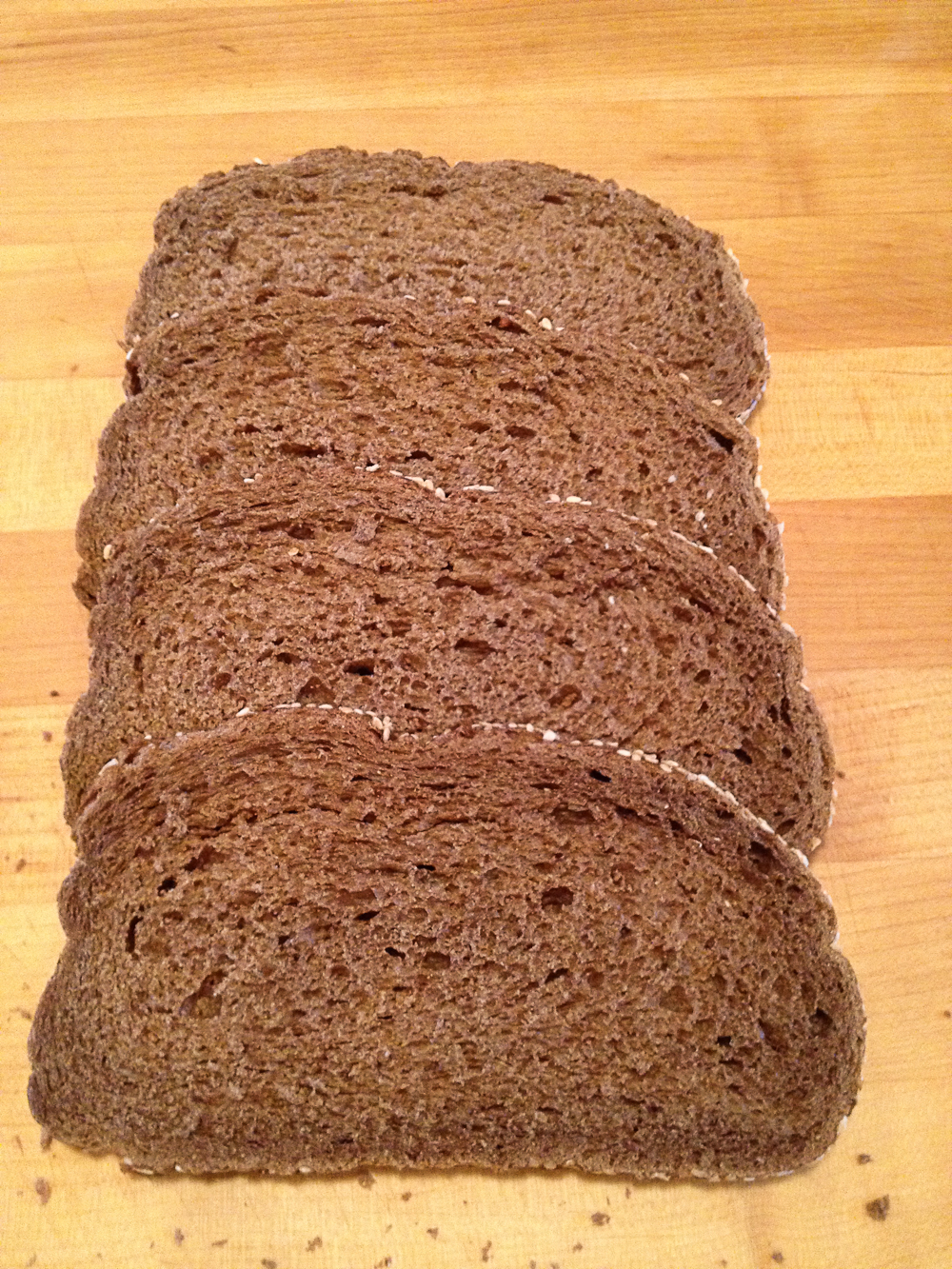
My version substitutes dark pumpernickel bread for the rye and pastrami for corned beef. Also, I am not a big fan of Russian dressing, so I have made my own sauce. The recipes that follow reflect those preferences.  But the sine qua non to me is the sauerkraut, so this is a perfect place to use that kraut you made in your own crock. I used our George Forman grill to toast the sandwiches, but you can use a panini press or a skillet. This recipe makes two large sandwiches.

RECIPES

Reuben Sandwich Sauce

Ingredients 

¼ Cup mayonnaise

2 Tablespoons Dijon mustard

2 Tablespoons ketchup

2 teaspoons grated horseradish

2 Tablespoons dill pickle relish

1 hard-boiled egg, chopped

  1. Combine all the ingredients in a small bowl, mix, and set aside.

Reuben Sandwich

Ingredients

4 slices pumpernickel bread

Reuben sandwich sauce

½ pound shaved delicatessen-style pastrami

1 Cup sauerkraut, preferably home-made, well-drained

6 slices Swiss cheese

½ Cup thinly sliced white onion

2 Tablespoons butter melted

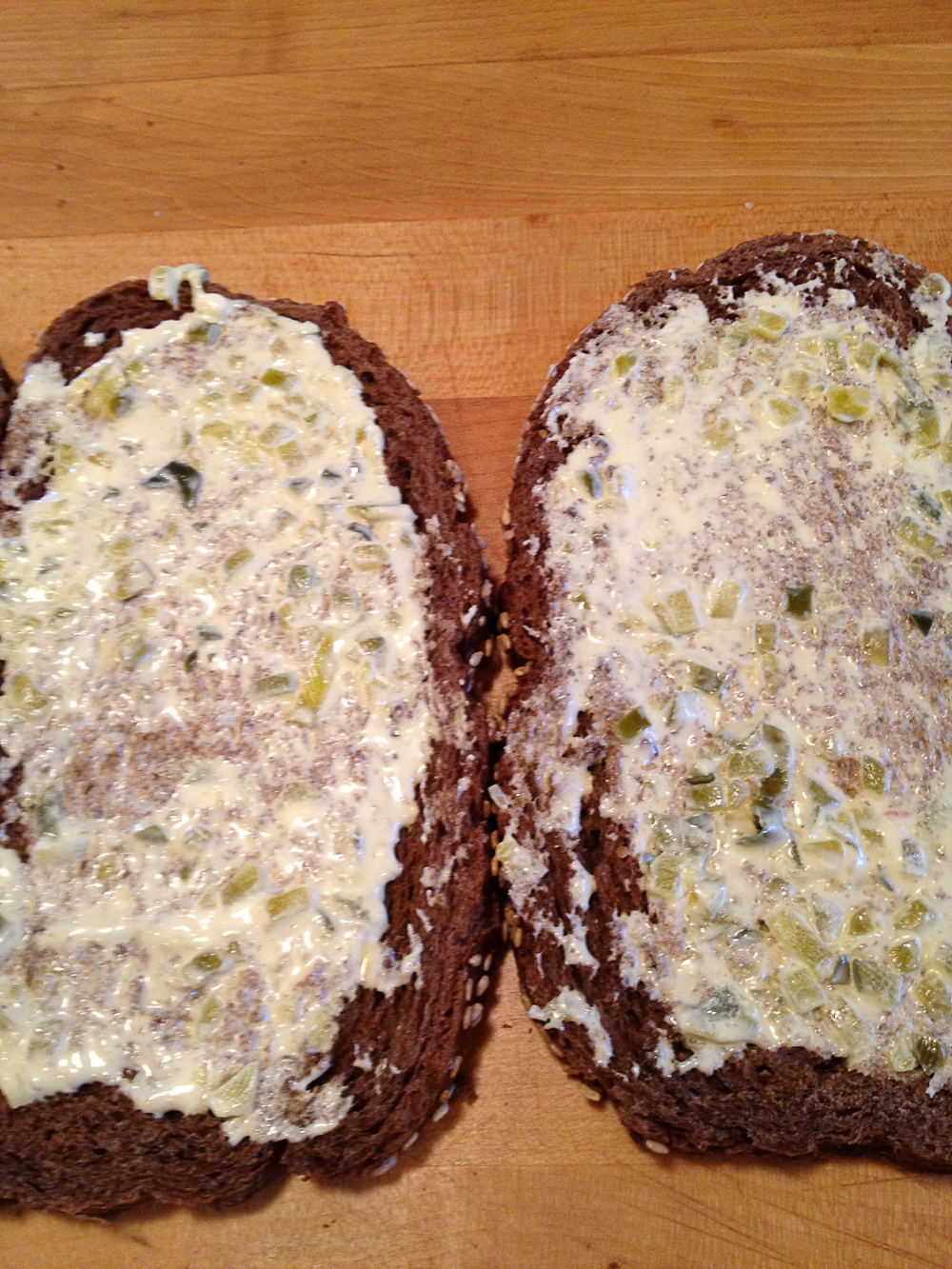
  1. Spread sauce on each slice of bread, one side only
  2. Arrange half of the pastrami on two of the slices of bread, and top with half of the sauerkraut
  3. Arrange three slices of Swiss cheese over a bed of sliced onion on each of the remaining two slices of bread and form two sandwiches.
  4. Brush the tops of both sandwiches with half of the melted butter and place the sandwiches, butter side down, in a skillet over medium heat. Press down occasionally with a spatula until the bottom is well-toasted. Alternatively, butter both sides and toast in a George Forman grill or a panini press.
  5. Brush tops of the sandwiches with the remaining butter, turn the sandwiches in the skillet, and continue toast until the sandwich is well-done on both sides.
  6. Serve immediately, preferably with a large whole dill pickle and potato chips or potato salad.

Leave a comment

Filed under Food, Photography, Recipes

EATING OUR WAY THROUGH DEATH VALLEY

This last week we were visiting our daughter in Los Angeles. For some time, we had wanted to see Death Valley, so it turned out to be a pleasant turn of events when we learned that Carol and her children had already made plans to go there over the weekend.

Susan collected a whole stack of guide books before the trip and had plotted out an itinerary. Unfortunately we could not leave before school got out on Friday, so we steered across LA in the midst of early rush hour traffic (When isn’t it rush hour traffic in LA?) and got out to the desert just as it was turning dark.  Clearly it is better to stay in the park at Furnace Creek, but that would have been another two hours of travel at night so we wound up staying in the little town of Lone Pine.

We arrived after 8 o’clock, and the already limited choices for dinner became even more limited as most closed at 9 PM. We chose the Mt. Whitney Restaurant even though there were no other customers. That was our first clue that this would not be a transcendent dining experience, but with two very tired, hungry kids that seemed secondary.

Mt Whitney Restaurant green chile buffalo cheeseburger

Mt Whitney Restaurant green chile buffalo cheeseburger

The menu was extensive, including meatloaf, open-faced meatloaf sandwich, clam chowder (in the desert?!) and regular, ostrich, or buffalo hamburgers. In my misguided quest for the perfect green chile cheeseburger, I ordered the buffalo version. The server, with some heavy ink and dressed in his cut-offs, high school T-shirt, and Converse low-tops, strongly recommended that the burger should be cooked at least medium. I complied with his suggestion, although since then I have wondered whether there might have been some motive to his advice. The adults ordered wine, and soon enough we were all brought a mini-screw-top bottle and an empty wine glass. The meals arrived, and although the French fries were good, we saw that our overall expectations had been realized.

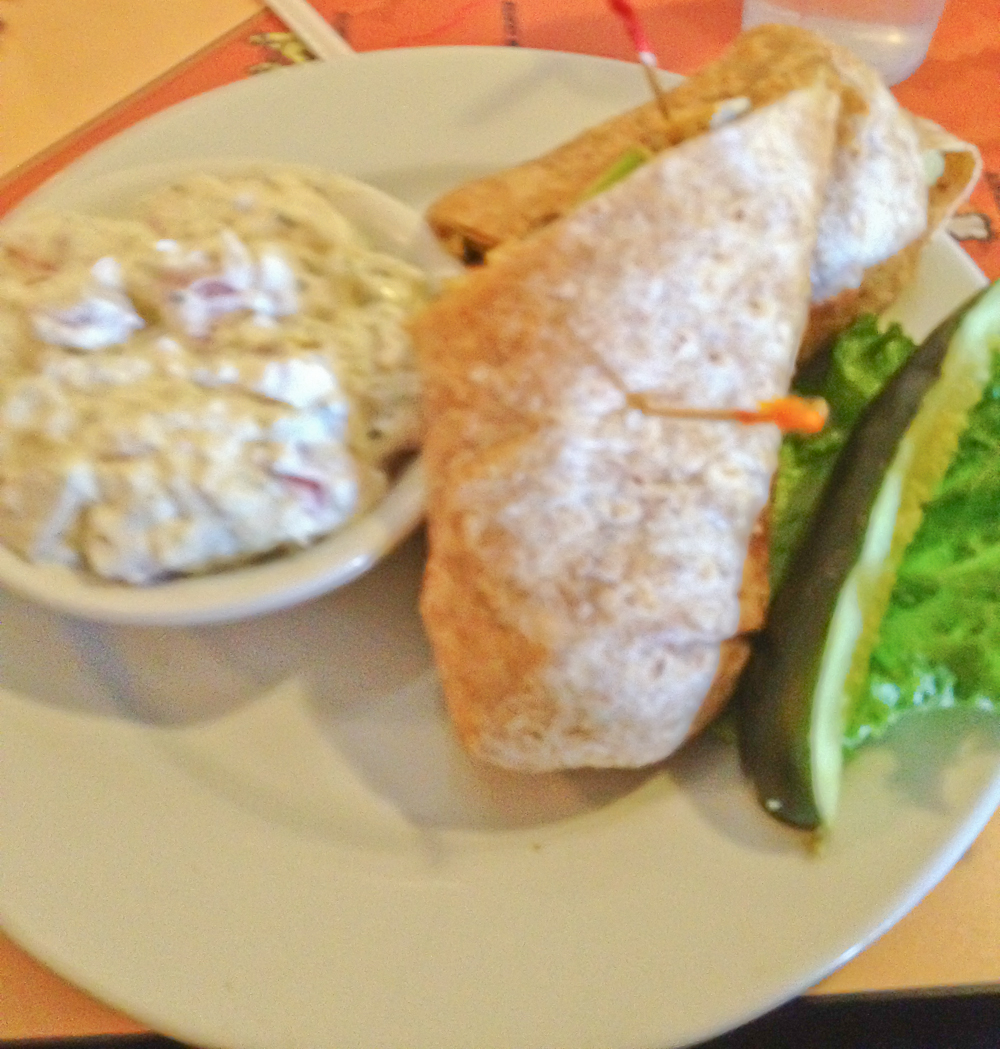
The next morning we loaded up and headed to Death Valley. The drive was long and dusty, and although the map showed stops at Panamint Springs and Stovepipe Wells, there was not much until we arrived at Furnace Creek. There, crowds milled around the restaurants, bars and gift shops at the Furnace Creek Ranch. We had a pleasant lunch in the busy but not crowded café. Service was fast, efficient, and friendly. The food was surprisingly good, plentiful, and not too expensive. I got the curry chicken salad wrap, and it hit the spot.

Furnace Creek curried chicken salad wrap

Furnace Creek curry chicken salad wrap

The real pleasure palace at Furnace Creek, though, is the Furnace Creek Inn. The elegant inn sits up on a hillside surrounded by an oasis of palm trees, flowers, and green lawns. After an afternoon of sight-seeing, we stopped in for cocktails for the adults and ice cream for the children. We sat in the beautiful lounge with amazing vistas of the desert floor. The staff was very pleasant to us even though we looked like desert rats. However, we also learned that shorts and T-shirts are not permitted in the dining room for dinner. The Inn is clearly the place to stay, just make sure your credit card is paid up before you book a room.

We drove back to Lone Pine in the twilight, cleaned up, and then went out to dinner. Our first choice, Seasons, clearly had the best menu along with white linens and a good wine selection, but reservations would have helped. After a long wait with two impatient kids, we left for the restaurant next door – the Merry-Go-Round.

Merry Go Round won ton soup

Merry Go Round won ton soup

That turned out to be a good choice. Otherwise we would not have gotten some of the laughs we enjoyed over the next couple of days. We walked into the circular dining room covered in mirrored tiles to be ushered by the young server to a too-small booth. Suddenly a stout, grey-haired older man with an apron appeared from the kitchen and announced that the booth would not do. He sent us to two tables in the middle of the room. We pushed them together only to have the old man declare loudly that we needed to pull them apart again so that he could cover them with two white tablecloths. After that, he plopped a stack of menus on the middle of the tables and announced that one menu was for Chinese while the other was for American, depending upon our wishes – and for that matter, we could order from both.

The young server then finished the table with paper placemats depicting the Chinese zodiac and promptly disappeared into a small room where he got into a loud discussion with another person accompanied by startling crashes. He reappeared but no longer had any interest in us until Susan called him over and asked him to take drink orders. I ordered some Chilean wines. He then asked, “Are you familiar with that wine? I would not recommend it.” He suggested another wine, but I chose a red from Paso Robles. Obviously, he was convinced that I had still made a bad decision, because when he brought out the wines – filled completely to the brim, he set a second glass at my place with just a swallow of the wine he had recommended. He pointed out to Susan that there was a bit of cork in her glass, but that the extra protein would do her good.  After a bit of a skirmish with the young waiter about the menu (Carol asked what vegetables were in a particular dish, and he asked in reply, “Do you really want me to have to go back into the kitchen to find out?”) – we ordered Chinese, which turned out to be surprisingly good. It was prepared by the mother in the kitchen. The gray-haired man was the boss, and the reluctant server was their son.

Throughout the entire evening, Susan kept saying, “I feel like I am in ‘The Twilight Zone'”. At one point I even thought I saw Rod Serling sitting in one of the booths. Since he died in 1975, that seemed unlikely. On the other hand, everything seemed possible by then. We finished our meal just as a couple in a nearby booth were getting ready to leave. The asked for a carry-out box for a huge plate of unfinished food. The waiter brought a tiny box which didn’t work, so he tossed it from about 10 feet onto a towering pile just behind the hapless couple.  Our bill was paid, and we returned to the motel marveling at our experience.

Still Life Café

Still Life Café

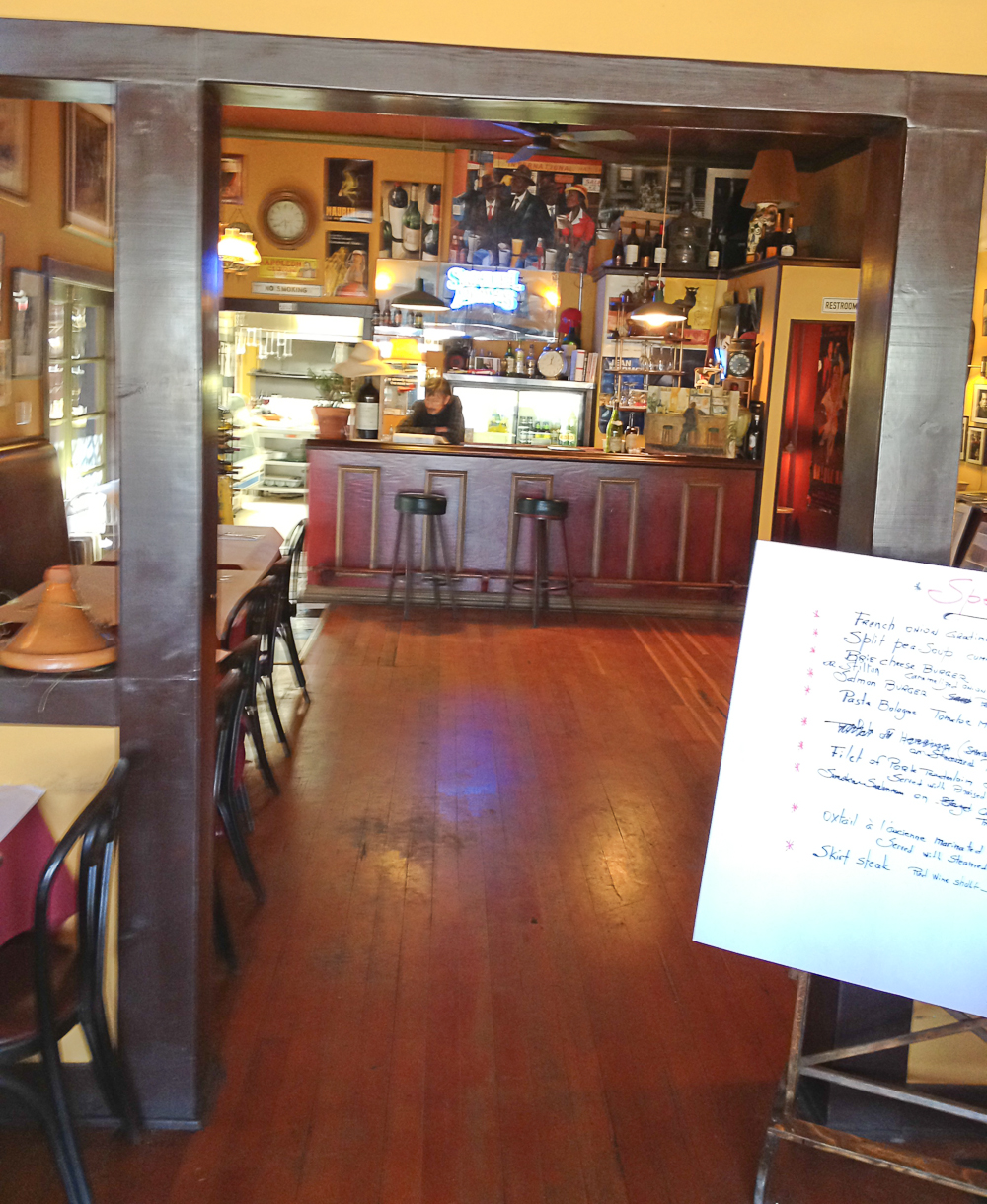
The next day we toured the Alabama Hills where all of the western movies of my childhood were made. I think I even recognized a rock where Gene Autrey hid from the bad guys. Then we drove as far as we could up the road to Mount Whitney. A tour of the National Historical Monument devoted to the Japanese internment during World War II completed the morning. The exhibit was worthwhile, and even the children got a lot out of the visit. But everyone was hungry so we stopped at a recommended restaurant in the tiny town of Independence. The Still Life Café is run by a French couple, and the menu is definitely French but also definitely good. My croque monsieur was outstanding, and the pommes frites were a cut above McDonald’s.

Still Life Café croque monsieur

Croque monsieur

With all of this food, I have failed to mention our itinerary:

First stop was the Mesquite Sand Hills. Although they are not as big as either the White Sands or the Great Sand Dunes, they are still impressive and quite beautiful in the desert setting.

Mesquite Sand Dunes

Mesquite Sand Hills

Next stop was Salt Creek where we strolled along a boardwalk, watched the pup fish swimming in the salty stream, and enjoyed the desert scenery.

Salt Creek

Salt Creek

Badwater is the lowest point in the Western Hemisphere (-282 feet) so we had to go there, along with tourists from all over the world. The formations of mineral crystals on the surface of the water were impressive and beautiful.

Badwater (282 feet below sea level)

Badwater (282 feet below sea level)

We drove through the narrow, colorful canyon of Artists Drive and made it to Zabriskie Point just as the sun was reaching a good angle for photos. Zabriskie Point may be the most famous place in Death Valley because of the movie, but it is also one of the must-see stops.

Zabriskie Point

Zabriskie Point

Our visit to Mount Whitney (highest point in the contiguous 48 states – 14,505 feet above sea level) was our final photo-op before we headed back to LA.

Mount Whitney

Mount Whitney

But we definitely plan to visit Death Valley again.

2 Comments

Filed under Food, Photography, Restaurants

SANTA FE RESTAURANTS 3: TERRA AT ENCANTADO RESORT

This has become one of our favorite restaurants in Santa Fe. We also like it for special occasions and celebrations. In an earlier post, I mentioned that our younger daughter was visiting with her 10-month-old from San Francisco. During her visit, she and her husband completed the negotiations on space for their new restaurant. That of course called for a celebration, so we made reservations at Terra.

Part of the charm of Terra is that it is several miles north of town, and the drive is beautiful. Another part of its charm is the beautiful view of the Jémez Mountains from the deck and huge picture windows of the bar and restaurant.

We chose the earliest seating so that we could arrive before the sunset to enjoy one of New Mexico’s incomparable evening displays.
We arrived at the front door of the resort and were immediately greeted by the friendly valet. The traditional Santa Fé scent of piñon smoke hung in the air as we passed the blazing fire in the huge fireplace on the deck.

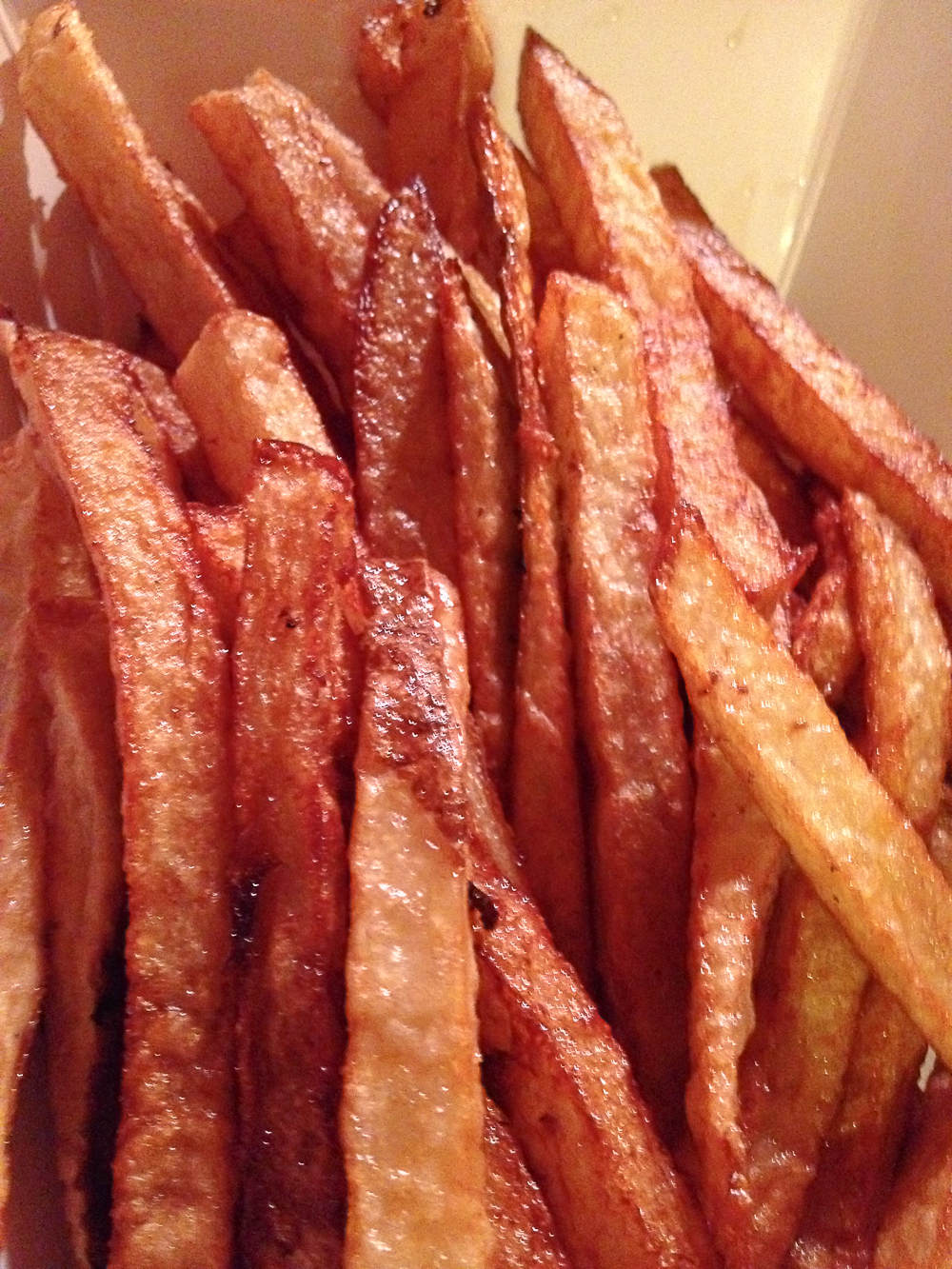
As we entered the bar, we were greeted by the bartender and welcomed into a beautiful room flanked by another fireplace – this time modern and chrome – and huge windows looking over the distant mountains. We tried to sit outside in the cool early evening, but the heaters failed to work, even with the attention of the bartender and the manager, so we came back in. That was ok, because it was warm and we still got to enjoy the beautiful sunset along with flutes of New Mexico Gruet sparkling wine and some tasty truffle French fries.

Lights in the bar at Terra

Dinner kept up the excellent experience. The room was spacious, beautifully decorated, and blessedly quiet. Another breathtaking fireplace anchored the room with a glass-enclosed wine cellar on either side.  Our server was attentive and knowledgeable but not intrusive. The wine selection was enormous. Many of choices were well beyond our budget, but there were enough modestly priced bottles that we easily found an excellent option.
The menu presented a lot of hard choices, but eventually we made our decisions, and we were not disappointed.

Diver scallop and crispy pork belly with edamame purée was beautifully presented, the flavors blended.

Crispy sweetbread salad had its high and low points: the sweetbreads were crisp yet delicate, just as sweetbreads are supposed to be, and the “potato wheel” was amazing – a single spaghetti-sized strand of potato coiled into a perfect circle and fried to a delicate golden brown. The sauce was bland and needed salt (no chef ever wants to hear that).

Crispy sweetbread salad with potato wheel

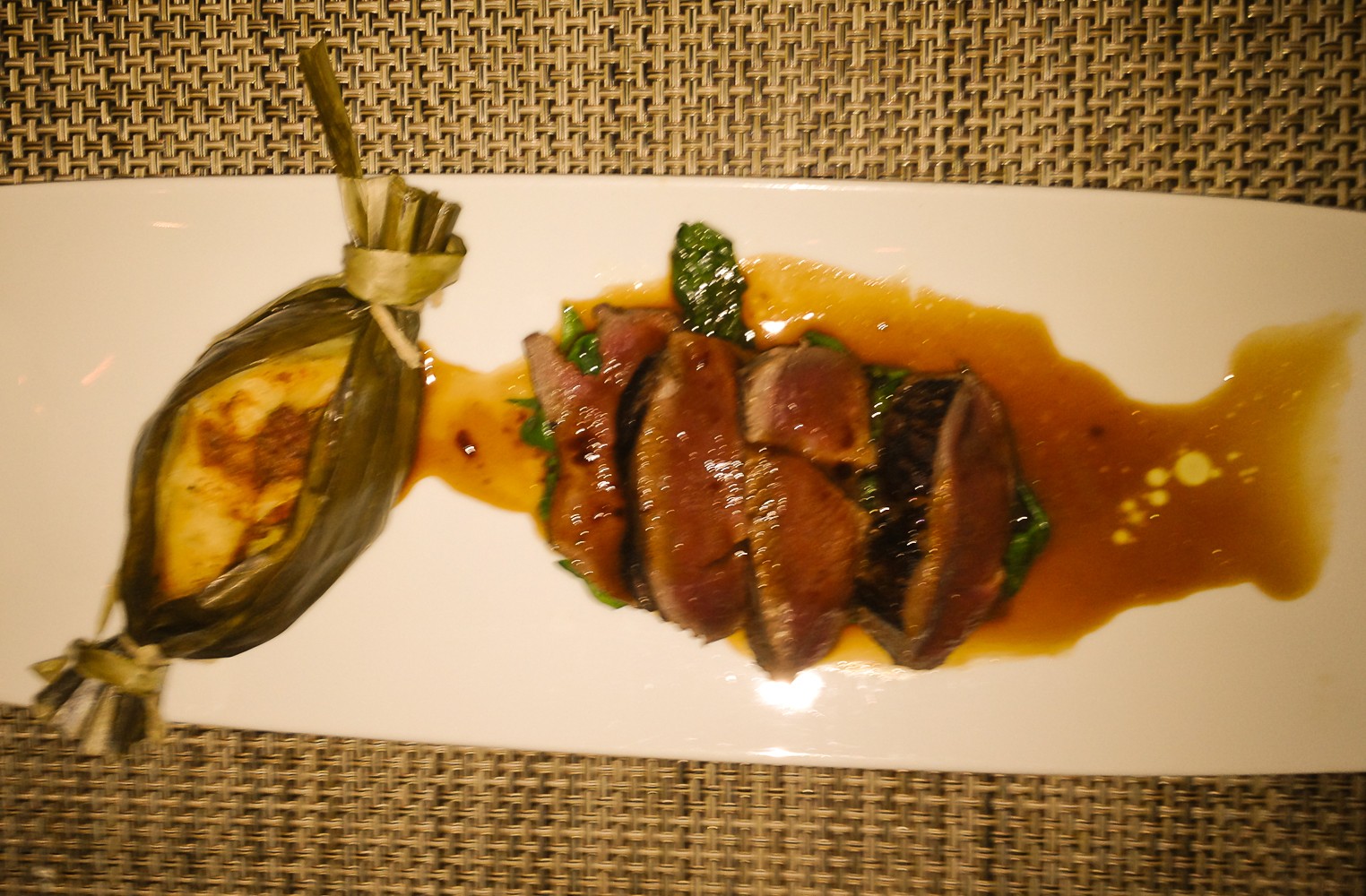
The mains, though, were flawless. The venison two ways included a creative red chile venison tamal and a perfectly roasted venison lin with Cumberland sauce.

Venison two ways

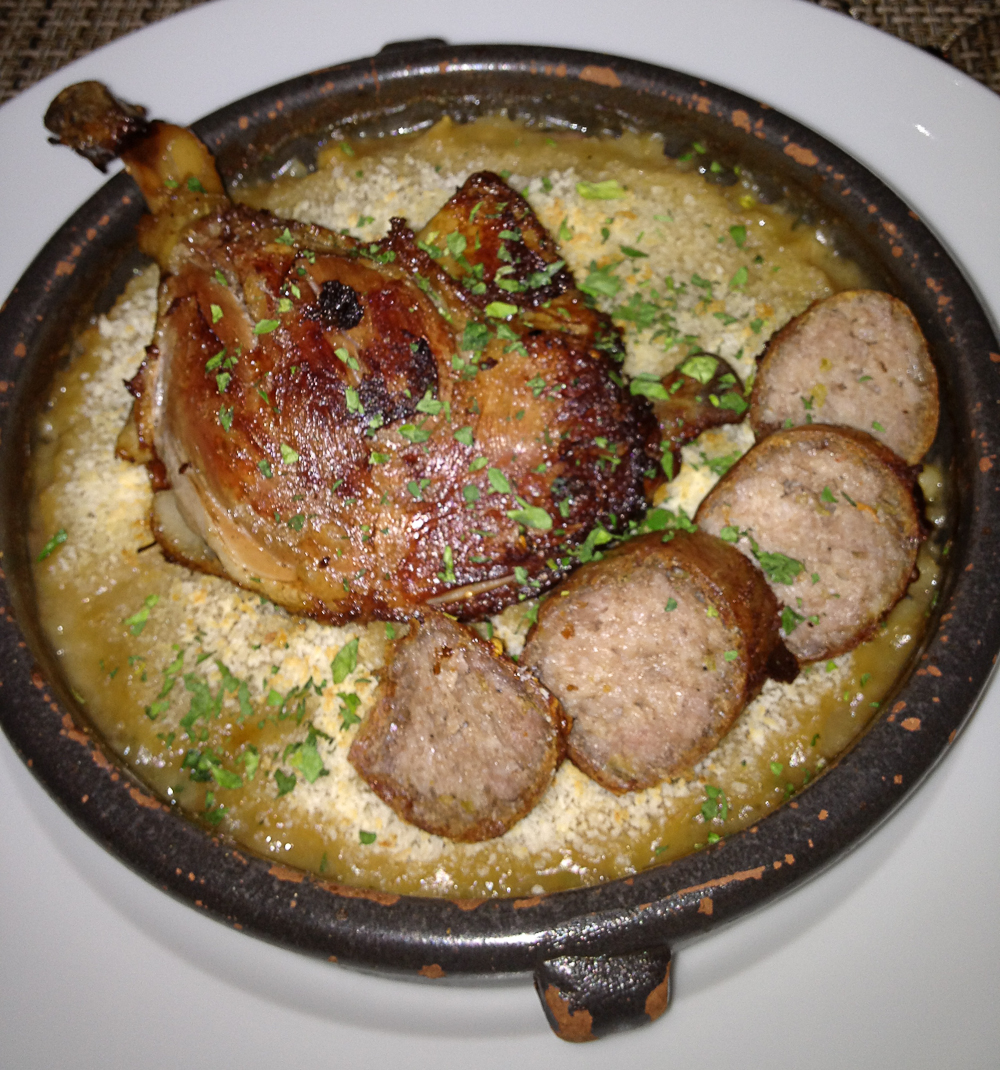
The duck cassoulet was complete with a crispy duck leg and green chile sausage along with the traditional bread crumb crust. The big surprise was that New Mexico chicos substituted for the beans.

Duck cassoulet

The hot smoked salmon was topped with a crisp “chicharrón” of salmon skin and served with a delicate cauliflower mousse flavored with almond along with roasted kale.

Hot smoked salmon

Dessert included the traditional street food, churros, but raised to a new level and accompanied by rich cajeta.

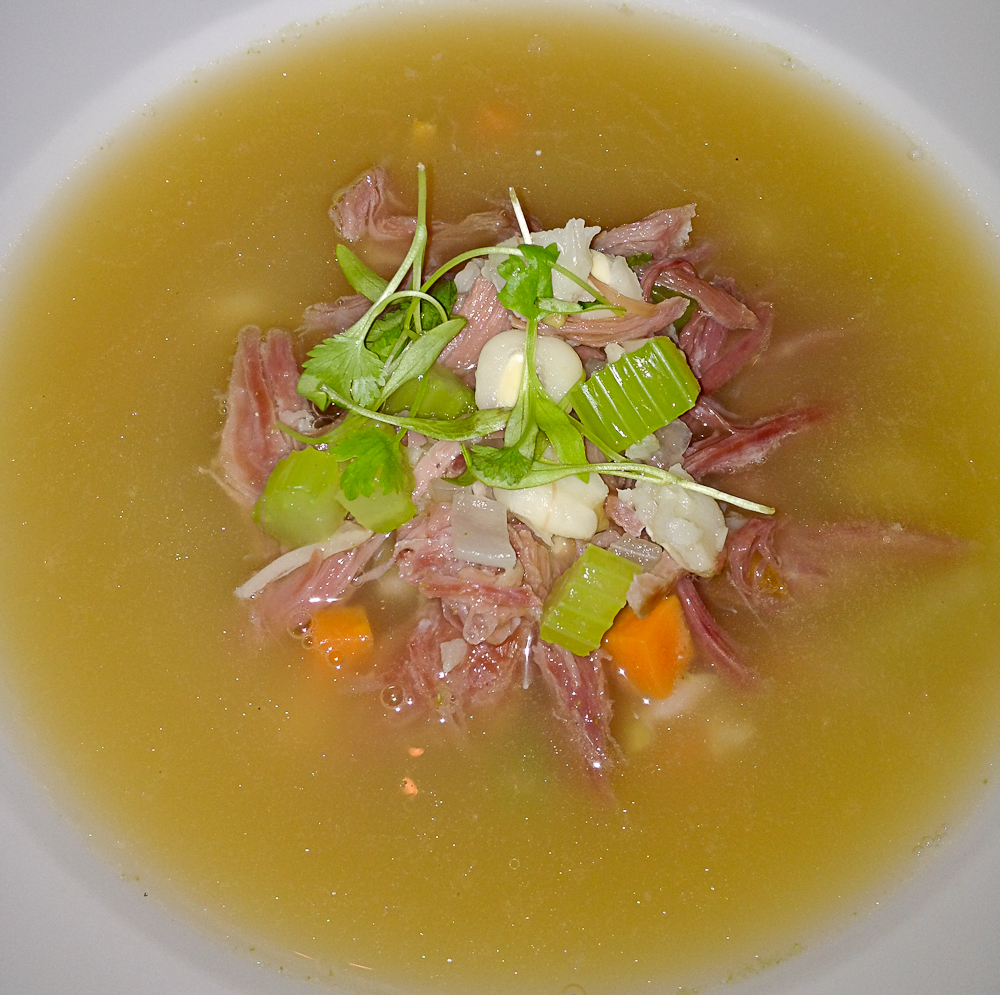
This last week, we went back with our older daughter, Carol, and her two children. The scene was just as magical, and we now had an opportunity to try more things on the imaginative menu. I had the “West of the Pecos Winter Posole”, which was unlike any posole I have ever had. A big bowl was brought to the table with a nest of shredded ham hocks, posole, and micro cilantro nestled in the middle. The server then poured a steaming pitcher of fragrant broth into the bowl. The seasoning is not for the faint-of-heart, but it was a beautiful and flavorful start.

West of the Pecos winter posole

Carol had the warm chicory salad with crispy prosciutto and topped with a glistening, perfectly poached farm egg just begging to be opened so that the yolk could flavor the whole dish.

Warm chicory salad

She also chose the Guajillo prawns with – white chocolate molé! What’s not to like about that?!

The venison from the week before looked so good, that I chose that. As before, it was well-prepared with interesting seasonings. There was a delicate “cloud” of fois gras foam as an accompaniment.

Susan chose the wild mushroom ravioli with rabbit ragu. She pronounced it delicious.


Leave a comment

Filed under Food, Photography, Restaurants

SAND HILL CRANES AND MANNY’S BUCKHORN TAVERN

Bosque del Apache

Bosque del Apache sits nearly in the center of New Mexico and it is one of our favorite places to visit, especially this time of year. It is a major bird refuge for winter water fowl. Even if you are not a birder, it is worth a three-hour drive from just about any place in the state. For that matter, serious bird watchers come from all over the United States. Snow geese and Sand Hill cranes number in the thousands, and there are many Canada geese, ducks, grebes, coots, golden eagles, and bald eagles as well.

Sand Hill crane feeding

If you plan a visit, you should do it soon, as the birds will be leaving in the next few weeks to start their northern migration to the plains and tundra of Canada. You should also plan your visit so that you arrive just before sunset or before sunrise. During the day, the cranes and geese have been feeding in nearby grain fields. When evening comes, the birds fly into the many lakes and ponds to spend a cold night safe from predators. The evening arrivals are spectacular, as large flocks fly in, making loud noises and silhouetting themselves against the mountains and the sunset. The morning flights are also beautiful, but you need to be in place well before dawn to catch the show.

Sand Hill cranes against the sunset

To get there, travel on I-25 to the little town of San Antonio. Directions from there will be clear. When you arrive, your first stop should be at the visitors’ center where friendly volunteers will tell you the current viewing sites – they tend to change over time.

In flight and ready to land

Then plan a leisurely drive around the loop to see raptors, smaller birds, dabbling ducks, geese, and cranes feeding in the fields. There is a small fee for the trip because even though this is a federal reserve, it is not well-funded. The fee is worth it. Time your tour so that before the sun has begun to set you are in place for the main event. Have your camera and binoculars at the ready because gradually the cranes will begin to come in, first by ones and twos, and eventually in great noisy flocks that continue to land in the shallow lakes even as the light fades into night.

Getting ready for the night

In the morning, the flights may be even more amazing. Usually, as if by some signal, the birds will depart in one great cloud and with noisy chatter. But they are early risers, so you will miss the even if you are not in place well before dawn.

Night time and the show is almost over

If you want to catch both the evening and morning performances, there is a small RV park nearby. Otherwise you will need to plan on staying in Socorro, a half hour or so toward the north.

Manny's Buckhorn decor

San Antonio has another claim to fame: it is home to two of the great stops on the Quest for the Best Green Chile Cheeseburger. The Owl Café is an institution, and for many years we stopped there on our trips between Santa Fé and El Paso. We always drove by a little bar on the other side of the road. It looked like a honky-tonk, and its glowing beer signs  and its name, “Manny’s Buckhorn Tavern”, seemed only to confirm that.

Buckhorn Burger - green chile cheeseburger

One night, though, we ventured in. It was not very crowded, and the crowd was clearly made up of locals. Bob Olguin, the owner and son of the founder, was behind the grill, cooking and chatting with everyone – us included. We ordered the Buckhorn burger – green chile cheeseburger – and thought we had finished the Quest.

French fries

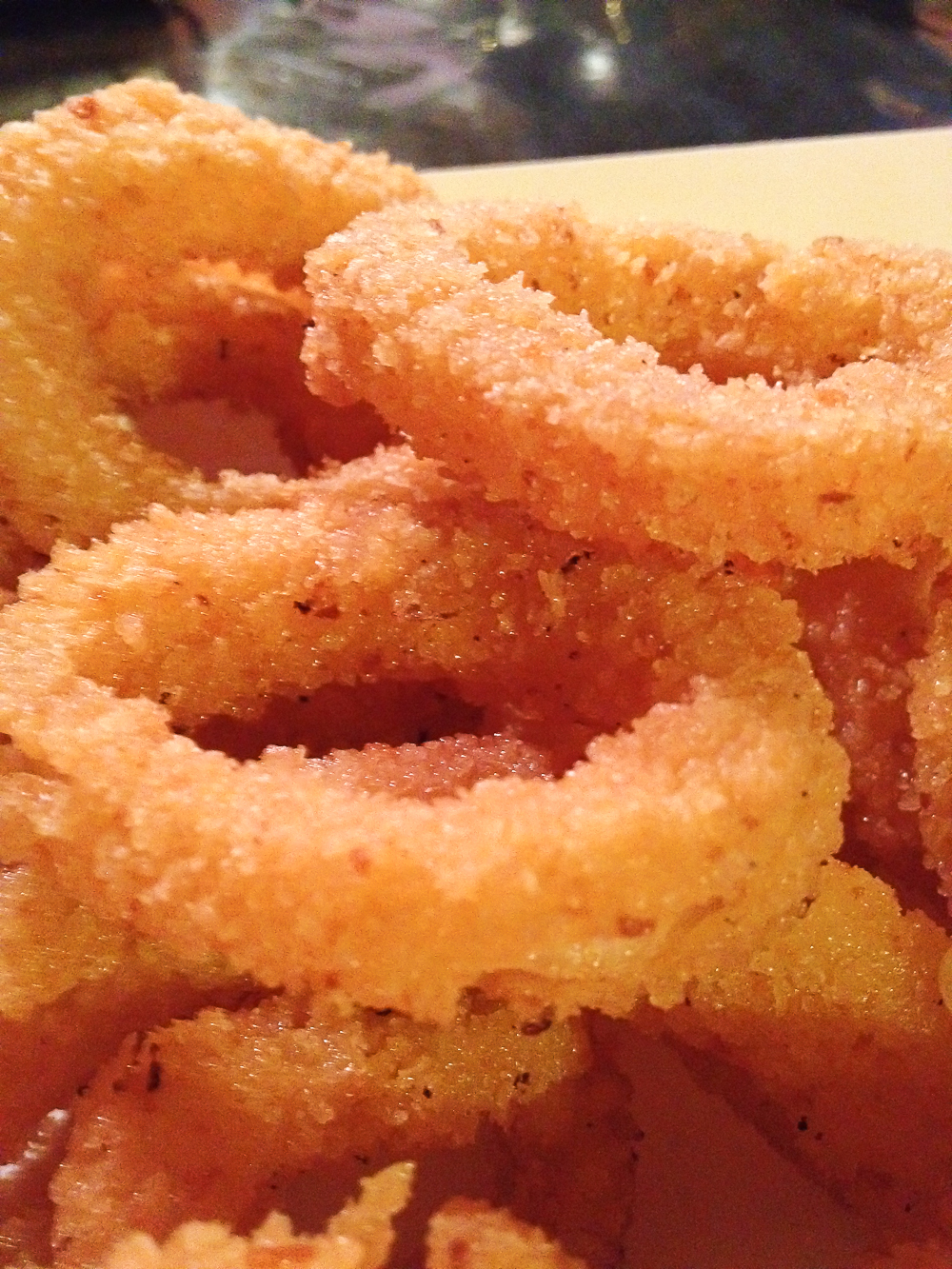
Fried onion rings

For years, we stopped at the Buckhorn; the crowds got bigger; but Bob kept his place at the grill. Then he wound up on national TV in a throw down with Bobby Flay. Since then, the crowds have become huge, especially during tourist season, and now there is a sign directing you to wait until seated. Bob no longer works the grill, but he visits each table as customers wait for their burgers. Still, the atmosphere has not changed, and the Buckhorn burgers are as good as ever. The experience is one you shouldn’t miss.  Just be sure to get fries or onion rings with your order.

2 Comments

Filed under Food, Photography, Restaurants

SARAH COOKS IN SANTA FE

This last week, our daughter Sarah and her 10 month old son, Van, visited us from San Francisco. Since she is a chef, we spent a lot of time eating at some of our favorite restaurants as well as doing a lot of home cooking. Without doubt, the food highlight of the week was the dinner which Sarah cooked for us. The menu was designed to feature the foods that Susan and I especially like, but they were all done with a restaurant-quality twist.

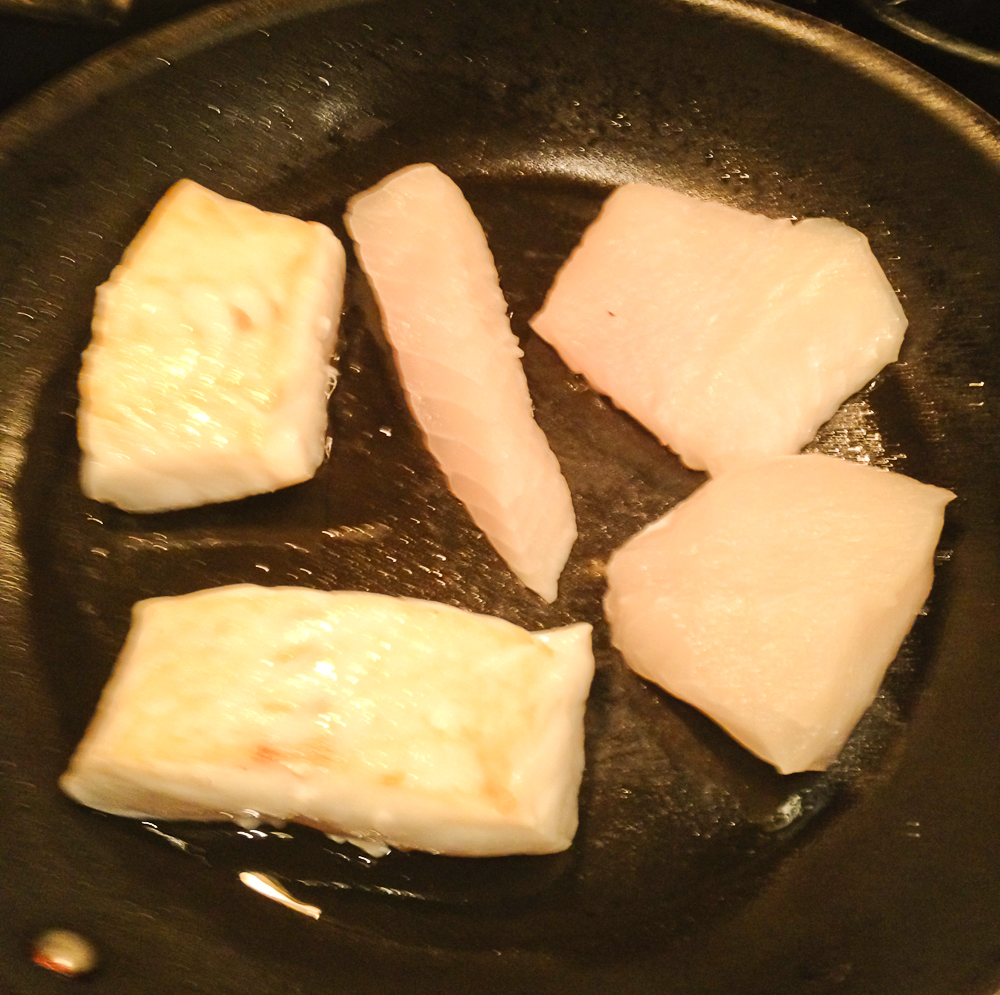
The feature of the main course was halibut. Sarah brined thick slices of the beautiful fish for just a few minutes to remove the extra moisture that you often see when a fish like halibut is cooked. Then she sautéed serving-sized fillets in butter to just underdone, finishing off by topping each piece with herb panade (more butter along with bread crumbs, garlic, salt, and herbs) and broiling for just a couple of minutes until the fish was perfectly cooked and the panade was golden brown.

Sautéing halibut filets

The starch was a delicate purée of smoked parsnips. First, Sarah smoked the parsnips along with cream in our handy Cameron stove-top smoker. She chose hickory chips to give the parsnips a definite but subtle smoky taste. Then she simmered the parsnips until they were fork tender, puréed them with a hand-held blender, and combined them with the cream and more butter until they were smooth and silky.

Cooking the smoked parsnip purée

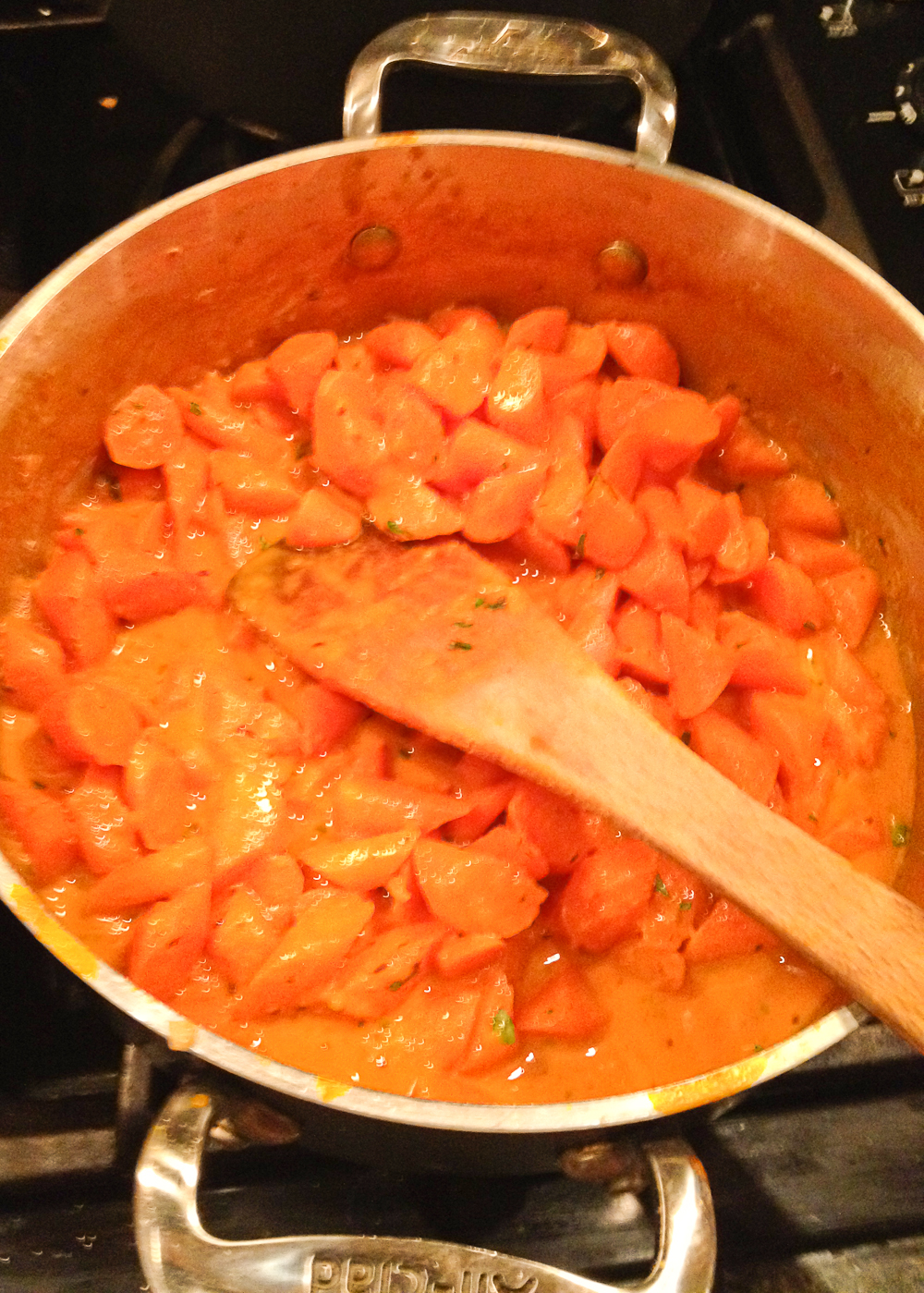
The vegetable was carrot stew: baby carrots simmered in fresh carrot juice that was then reduced to make a thick sauce. The sugar of the carrots and the carrot juice made the dish sweet – but not too sweet – without the addition of any sugar.

Carrot stew

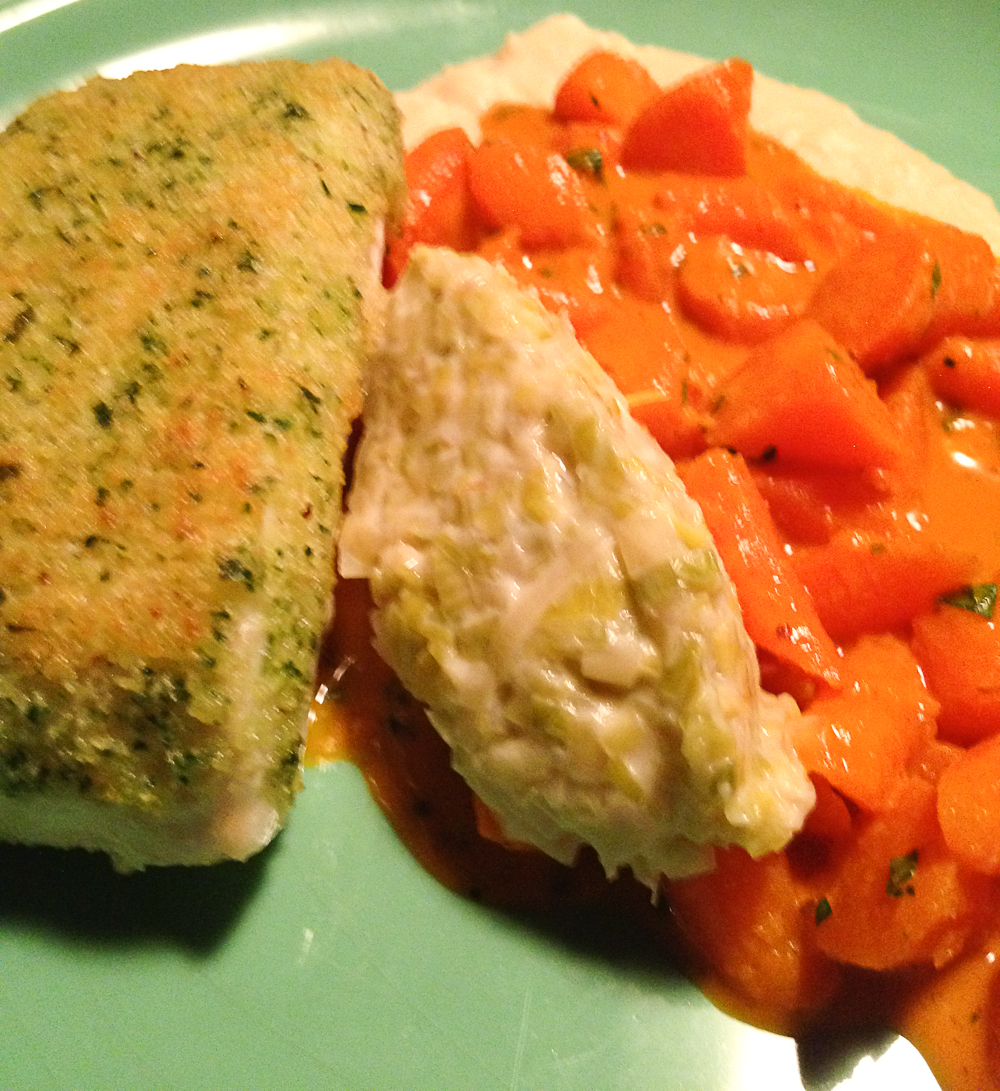
As an added touch, “melted” leeks were chopped finely and cooked into a smooth, savory dish which could be shaped into quenelles to top the vegetables. Then everything came together into a beautiful presentation.

The final plate with halibut, parsnips, carrot stew and melted leeks

For Sarah, probably the best part of the week was the news she had been anxiously awaiting for months. She and her chef husband, Evan, had been working on securing space for their own restaurant in San Francisco. The contract finally was settled, so she spent time at the kitchen table reviewing and signing the documents before faxing them back to Evan. We had a celebratory dinner at Terra (I’ll say more about that in another post).

Sarah signing the lease

Later in the week, Sarah returned to San Francisco to help post the sign in the window of the new place.

Sarah and Evan getting ready to post the sign

If you want to read more about their new restaurant, check it out at the following link:

http://insidescoopsf.sfgate.com/blog/2012/02/05/sarah-and-evan-rich-ink-a-deal-for-a-hayes-valley-restaurant/

1 Comment

Filed under Food, Photography, Recipes

MAKING SAUERKRAUT

When I was a little boy, we lived next to my grandparents. It was the Second World War, so everyone had a Victory Garden. We were no exceptions, and we even had a chicken coop where I collected eggs each morning. My grandparents, though, were serious about feeding themselves. In addition to a big garden, they had a small barn and a pond complete with ducks and a hissing goose.  Both grandparents had grown up on farms in the Dakotas, so they were used to putting up quarts and quarts of tomatoes, pickles, string beans, peas, cherries, and peaches beginning in the early spring and continuing until the first frost in the autumn.  

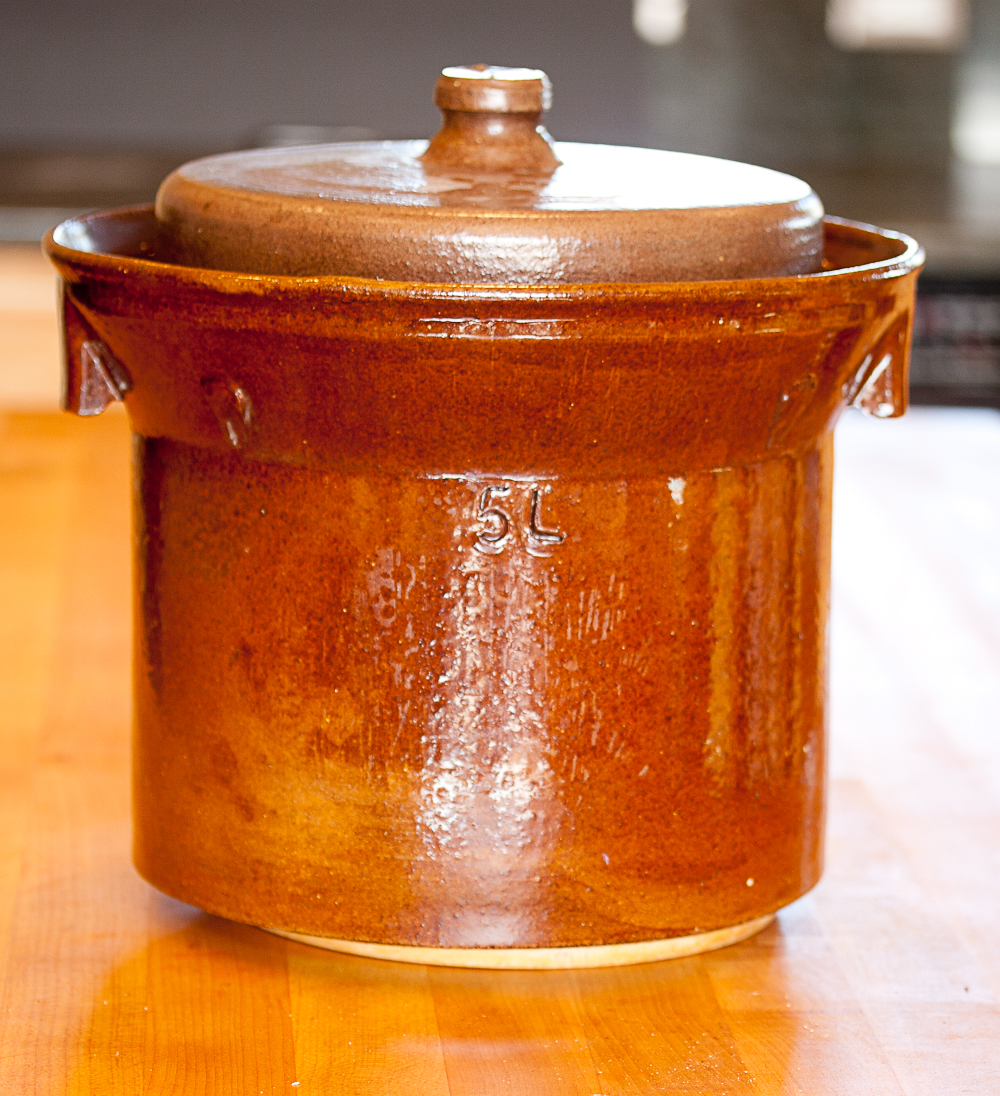
Harsch Steinzeug crock

My grandmother, though, had even more preserving to do when the rest of the harvest was over. She came from a large German family who had immigrated to North Dakota from Russia in the 1880s. German farmers had lived in Russia since the days of Catherine the Great, but when the Russians made it uncomfortable for them, the emigrated by the thousands to the Great Plains – especially to North Dakota. There they continued their German ways, including the production of huge quantities of sauerkraut to see them through the long winter.  

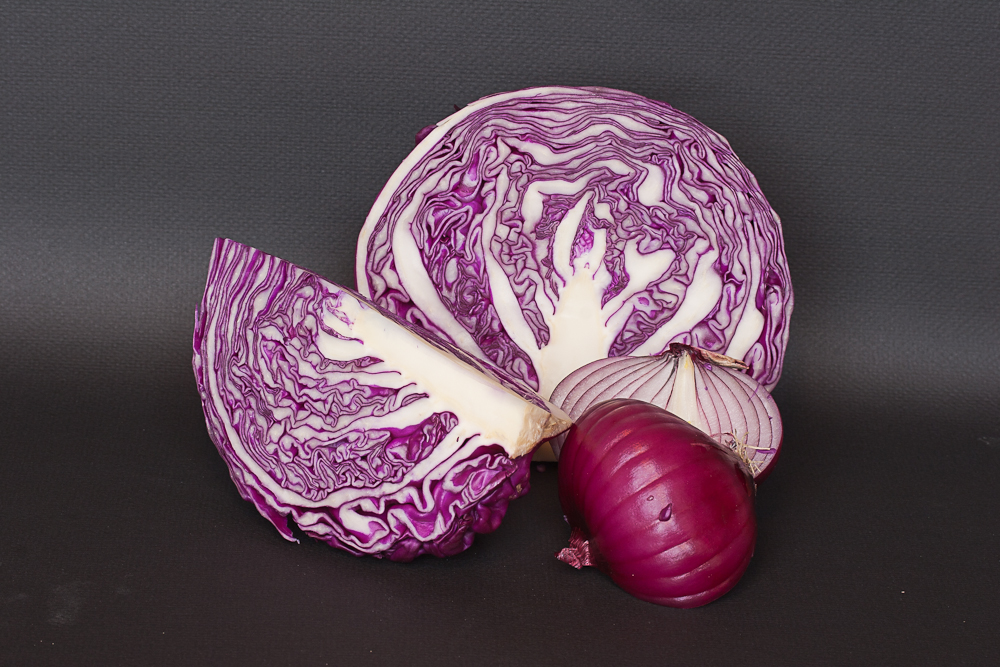
Red cabbage and red onions

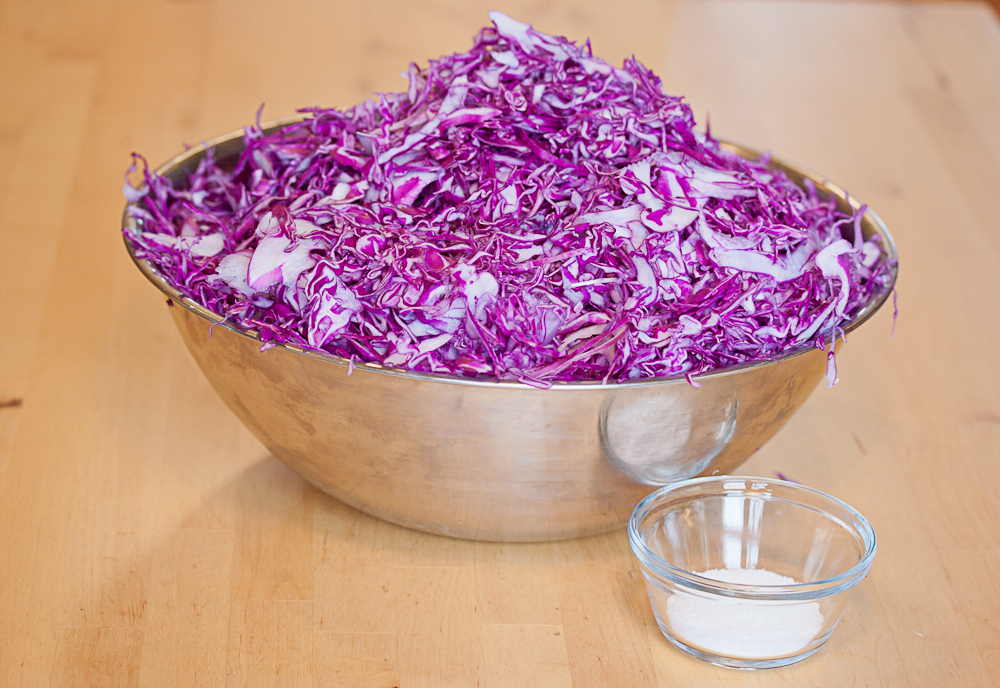
Grandma continued that tradition in her back yard, so in the early fall bushels of giant cabbage heads would magically appear between her garden and the garage door. That would then become the place for an organized production line. A big wooden kraut slicer would be hauled down from storage in the garage. Big 25 gallon crocks would be brought up from the basement to be scrubbed clean. Boxes of salt would be brought from the kitchen. A kitchen chair was moved out to sit in front of a huge bowl where the cabbages would be shredded into heaping mounds. Then the packing began: shredded cabbage was layered into the crocks, salt was sprinkled on top, and the process was repeated until the crocks were completely full. Then the crocks would be lined up along a cool wall in the garage, covered with cheesecloth and big plates. Bricks would be placed on the plates for weights, and the real process began.  

Various utensils for slicing slaw

Fermenting the cabbage went on for weeks, and it was my job to check the crocks daily, skim off any scum, and add water if they looked too dry. During those days the garage was not a good place to spend much time because the dense smell of fermenting cabbage hung in the air. Finally, my grandmother pronounced the process done. At that point all of the women fired up their canning equipment and filled dozens of quart jars with the fragrant kraut until the crocks had been emptied.  

Slaw and salt ready to go in the crock

To my dismay, the supply of sauerkraut lasted all winter, and at least once a week we had the same meal for supper – sauerkraut, bland mashed potatoes, and a big sausage.  As much as I dreaded that menu, it left a lasting impression and surprisingly fond memories.  

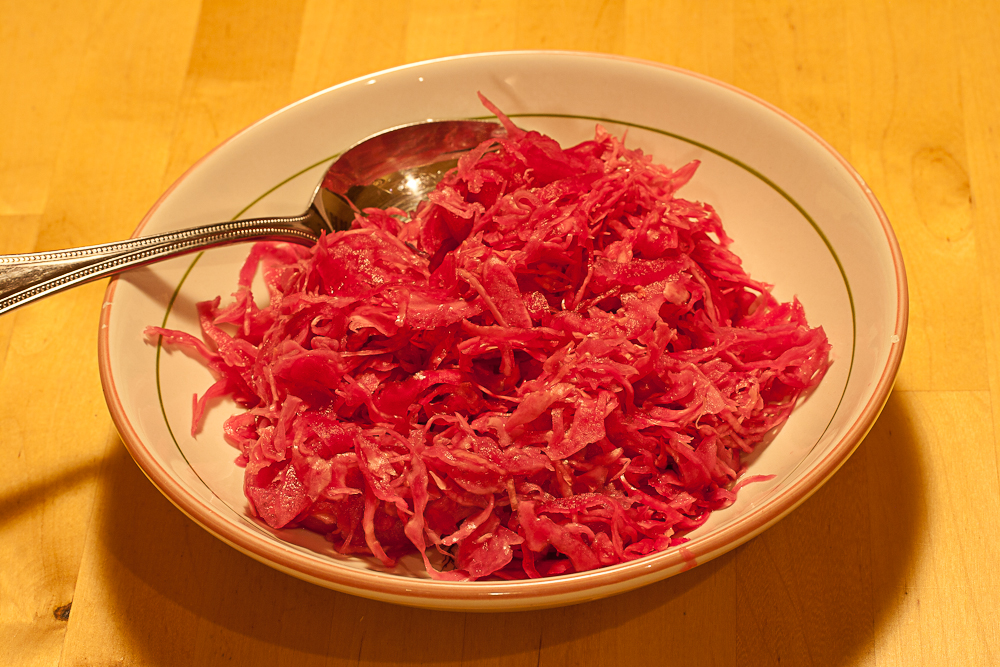
The finished sauerkraut

For that reason, I decided to make some sauerkraut in the butler’s pantry in our home in Shreveport. All of the children were school age, and all of them regularly brought home their friends who wanted to know what was in the crock sitting on the counter.  When the children announced that it was sauerkraut their dad was making, there came a long pause and shoulder shrugs. The episode also became the basis for a favorite family story – one in which Dad gets a lot of laughs.

A bowl of sauerkraut ready to serve

I have never made sauerkraut again, so I was surprised when my Christmas gift from Susan was a beautiful had-crafted sauerkraut crock made by Harsch Steinzeug in Germany along with instructions for how to make sauerkraut. My crock is the five-liter size. You can get them up to 50 liter, but unless you have a big German family and eat sauerkraut every day, the 5-liter size seems perfect for home use.  

Once again, I am making sauerkraut. I have adapted the recipe that came with the crock into the one that follows. 

RECIPE

Ingredients

2 medium heads, red cabbage

2 medium red onions

10 grams coarse kosher salt for each kg of sliced cabbage + 15 grams for brine

water


  1.  Remove the outer leaves of the cabbages, quarter, and remove the core.
  2. Shred the quartered cabbage as thinly as possible. You may use an authentic wooden slaw cutter, a French-style mandoline, a plastic mandoline, or a very sharp chef’s knife. Each implement has distinct advantages and disadvantages. The wooden cutter is the most authentic, but the blade must be sharp, and it requires a lot of muscle. The French-style mandoline works very well and is adjustable, but with all of its parts it needs a lot of cleanup afterward. The plastic mandoline is inexpensive and usually not adjustable, but the slices are fine, and the blade is very sharp.  Cleanup is easy. The knife must be very sharp, and it is hard to get the cabbage shreds as thin as you would like. I prefer the plastic mandoline.
  3. Shred the red onion and combine with the cabbage.
  4. Weigh the shredded cabbage and onion. Weigh separately 10 grams of salt for each kg of cabbage and onion.
  5. Arrange a layer of shredded cabbage and onions in the bottom of the crock. Sprinkle with salt. Continue the process, alternating cabbage and onions with salt until you have filled the crock no more than four-fifths full. This is important. Otherwise you will not be able to fit the weight stones into the pot.
  6. Press down so that liquid is released and rises an inch or so above the weight stones. If it does not, pour in brine prepared by boiling then cooling 15 grams of salt in 1 liter of water.
  7. Cover the crock with the lid, Seal the lid by pouring water in the groove to that it is above the notches in the sides of the lid, and set in a cool place.
  8. In 2 or 3 days you should hear bubbling as the kraut begins to ferment. This will continue for a week or so. Do not open the crock, but continue to make sure to keep the water seal refreshed.
  9. After three weeks or so, open the crock, remove the weight stones, and dish out your first sauerkraut. Replace the weight stones and reseal to use again at another time. 

Red cabbage sauerkraut, bratwurst, German-fried potatoes, and fresh bread

Around my grandmother’s table, we had sauerkraut, sausage, and mashed potatoes at least once a week. With my first batch of kraut, I tried to reproduce that meal, substituting German-fried potatoes for the mashers. The crispy red sauerkraut was much better than that of my memories, the freshly made bratwurst from the butcher was flavorful, and the meal turned out to be a big success with everyone.


4 Comments

Filed under Food, Photography, Recipes

SANTA FE RESTAURANTS 2: THE RANCH HOUSE

Santa Fe is viewed by many as at the epicenter of red or green chile – chile stews of both colors and made with chicken, pork, beef, or whatever – along with posole, and carne adobado. There is also the ubiquitous green chile cheeseburger which causes big disagreements about who cooks the best.  At the same time good barbecue is hard to find. Texan tourists certainly agree with that! Josh’s Barbecue was one of the few oases in the desert even though it was tucked away in a hard-to-find strip mall.

The bad news is that Josh’s has closed. The good news is that the Ranch House has opened. This is Josh’s new venue located at 2571 Cristos Road in a beautiful new building complete with great views of the mountains and spacious courtyards for outside dining in warmer weather. The old-time favorites are still on the menu, but there are some new and interesting additions. There are several dining rooms inside, so don’t be put off by a full parking lot, because you will probably be seated quickly and served by one of the attentive staff.

Baby back ribs with greens and cornbread

The day we visited for lunch, the place was busy but not crowded. Susan chose the baby back rib plate, and I chose the green chile chopped brisket sandwich – a new experience for me.  The ribs came with real Southern greens and cornbread with just enough sugar to compromise between Yankees who like sugar and Southerners who don’t.  The sandwich was good, too, although I think I prefer either a classic chopped brisket sandwich or an authentic green chile cheeseburger. For me, the highlight of the meal was the little fry basket filled with crispy sweet potato fries.

Green chile chopped brisket sandwich with sweet potato fries

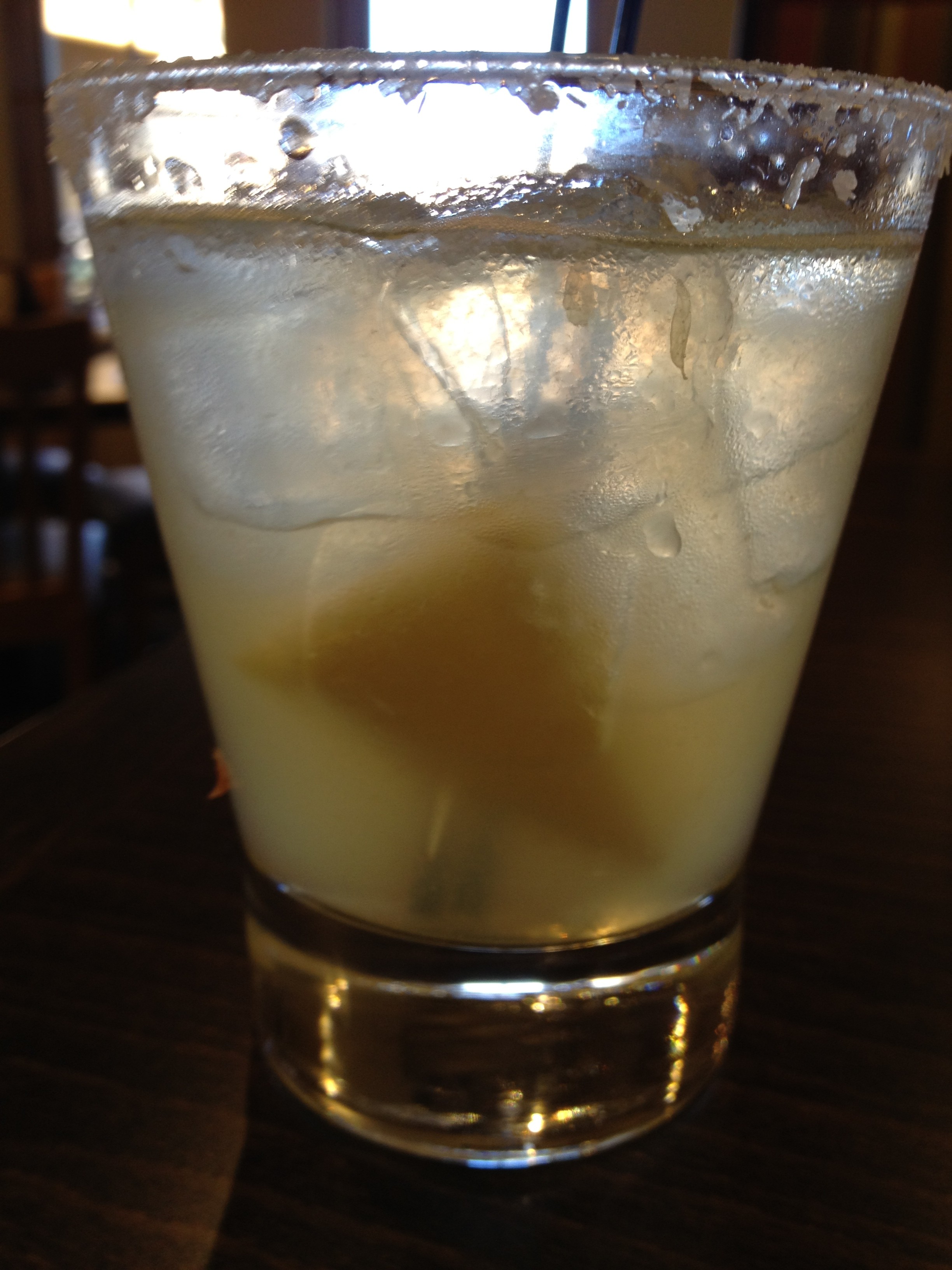
The drink selection was good though limited. Lots of beers of course, and wine (who drinks wine with barbecue?) The specialty drinks sounded good, and the pineapple margarita was a hit.

Pineapple margarita

The Ranch House is definitely worth checking out if you are a barbecue fan. And who isn’t?

1 Comment

Filed under Food, Photography, Restaurants

GREEN CHILE CHICKEN STEW

Our family has lived in the Southwest for so long that we have adopted many of its traditions. For years we have made tamales on Christmas Eve, and now that is also a tradition for our children and their families, regardless of where they live. Making tamales from scratch is fun, and the fresh, finished product always tastes better than even the best store-bought versions. Posole warms the body and the soul on a cold winter evening, and it is perfect for a family gathering on New Year’s Eve. Biscochos (in El Paso) or biscochitos (in Santa Fe) have to be homemade and – like the tamales – have to be made with lard to taste like the real thing. The crisp anise-flavored cookies compete with my grandmother’s anise-flavored German springerle when it comes to dipping into a cup of hot chocolate or a glass of milk.

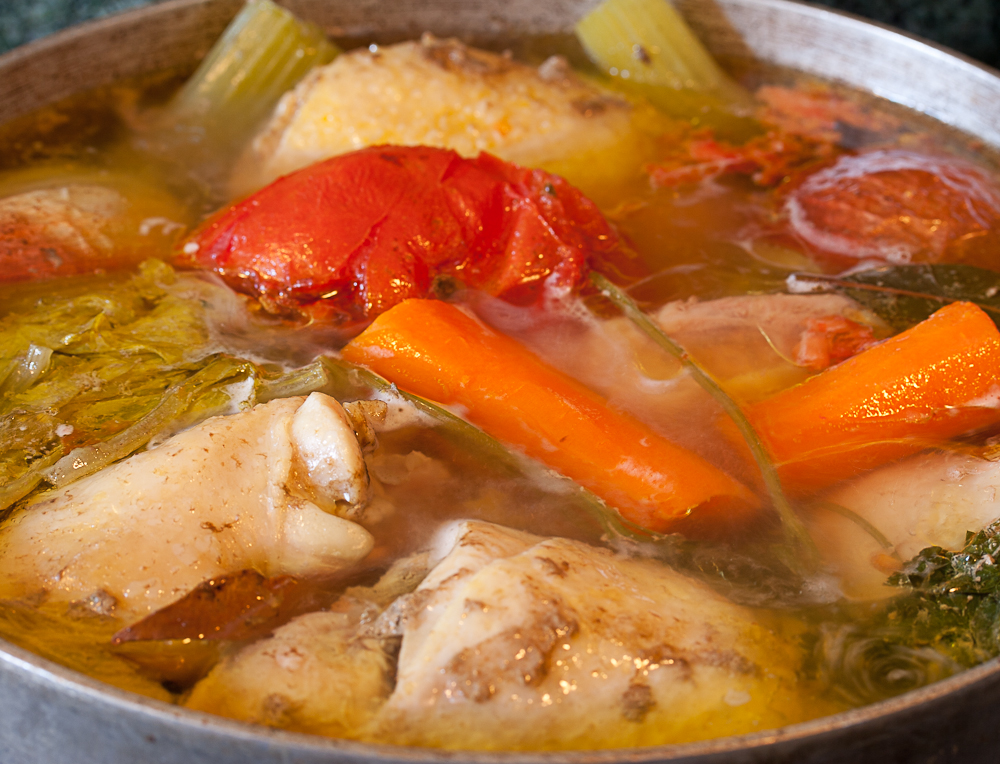
Chicken thighs cooking in stock with vegetables

Green chile chicken stew is in a class by itself. A hot bowl always reminds me of long-ago lunches in the lodges at the top of the runs at Taos Ski Valley or Ski Apache in Ruidoso. Our kids always ask for it when they visit us in Santa Fe, and so we try to have a pot on the stove for them when they arrive from a long cross-country drive. Our usual recipe calls for a whole chicken and makes enough for a large group. This version is quick, but by cooking the chicken in stock along with vegetables the broth becomes especially rich. If you are in a hurry, just skip adding the vegetables. The recipe makes enough for four adults. It is ideal for the late evening arrival of tired travelers.

Ready for your choice of garnishes

RECIPE

 Ingredients

4 Cups chicken stock

4 chicken thighs

1 medium onion, cut in quarters

1 medium carrot, cut in thirds

1 stalk celery cut in thirds

1 handful fresh celery leaves

3 stems fresh parsley

12 whole peppercorns

1 Roma tomato

2 Tablespoons cooking oil

1 medium yellow onion, diced

4 ounces chopped green chiles

2 cloves garlic, minced or pressed

3 Tablespoons all-purpose flour

2 russet potatoes, peeled and cut into ¾ inch cubes

¼ teaspoon ground cumin

2 Tablespoons dried Mexican oregano, crushed

1 teaspoon kosher salt

½ teaspoon ground black pepper

  1. In a large, heavy-bottomed pot, bring the chicken stock to the boil. Add the chicken thighs, onion, carrot, celery, celery leaves, parsley, and peppercorns. Continue to cook at a very low boil for about 45 minutes or until the chicken is cooked through.
  2.  About 10 minutes before the chicken is cooked, squeeze the Roma tomato into the stock and add the pulp.
  3.  Remove from the heat. Strain the stock into a container and allow to cool so that you can remove the fat that gathers on the top. Set aside.
  4.  Remove the skin and bones from the thigh meat, chop the meat into bite-sized pieces and set aside.
  5. Clean the pot and return it to the stove over a medium flame. Heat the oil, and then add the diced onions. Cover and sweat the onions for 5 minutes or until they are soft and translucent. Do not allow them to brown.
  6. Add the green chiles and minced garlic and continue to cook, uncovered. Stir frequently until the moisture has evaporated from the mixture. Add the flour and stir continuously for about 3 minutes so that the onions and chiles are completely coated and the flour has lost its raw taste.
  7. Add the strained, cooled chicken stock and cubed potatoes. Return to the boil, stirring frequently. Continue to cook at a low boil until the potatoes are soft and cooked through – about 20 to 30 minutes.
  8. Stir in the cumin, oregano, salt and pepper. Adjust the seasoning with more salt and pepper if needed and continue to simmer for 10 minutes.
  9. Add the chicken pieces, simmer for another 10 minutes, and then serve in large soup bowls along with your choice of garnishes.

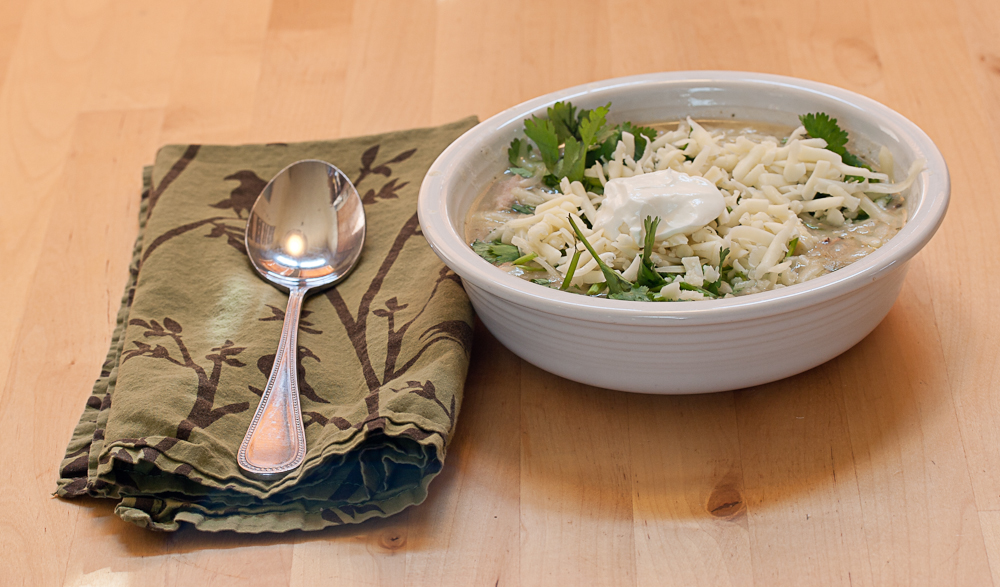
Green chle stew with the garnishes our family likes

Garnishes

There are lots of traditional choices for garnish. We always like to pass bowls of chopped fresh cilantro leaves, thin-sliced, baked corn tortilla strips, grated Monterrey jack cheese, and diced avocados along with hot sauce for those who like their soup spicier. We also like to serve hot tortillas (corn or wheat) or cornbread fresh out of the oven.

2 Comments

Filed under Food, Photography, Recipes

CHICKEN ENCHILADA CASSEROLE WITH MOLÉ ROJO

The other night we were aware that LSU was playing for the national championship in football. As former Louisianans with direct ties to LSU, we should have been planning a big TV watching party complete with gumbo or that Monday night standby in New Orleans, red beans and rice. Instead we watched an old movie and enjoyed the last of some molé rojo which one of our daughters had sent to us as a Christmas gift. To be honest, we enjoyed the old movie more than watching the drubbing administered by the Crimson Tide, and the molé made a quick meal outstanding.

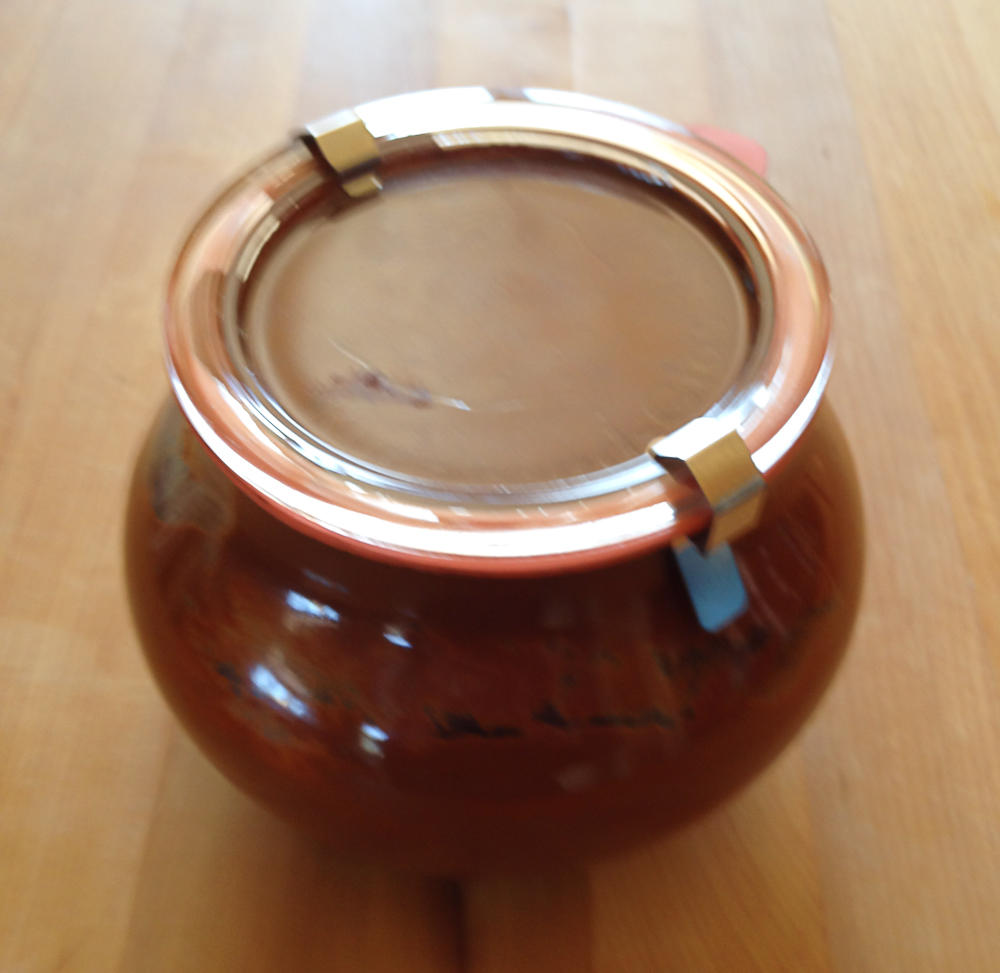
Pot of freshly made molé rojo

Classic molés have the reputation of requiring many ingredients and a long cooking process. Indeed, Rick Bayless presents his “streamlined” version in his excellent cookbook, “Authentic Mexican: Regional Cooking from the Heart of Mexico,” William Morrow and Company, New York, 1987, pp 201-203. For the recipe, go to the book, but I thought it would be interesting to provide the list of ingredients. The process involves many steps.

Ingredients

4 medium dried ancho chiles, stemmed seeded and deveined

2 medium dried mulatto chiles, stemmed seeded and deveined

1 medium dried pasilla chile, stemmed seeded and deveined

1½ Tablespoons sesame seeds

⅓ Cup lard

2 heaping Tablespoons unskinned peanuts

2 Tablespoons raisins

½ medium onion, thickly sliced

1 clove garlic, peeled

½ stale corn tortilla

1 slice dried, firm white bread

1 ripe medium tomato

3 medium tomatillos

¾ ounce Mexican chocolate, chopped

½ teaspoon dried oregano

¼ teaspoon dried thyme

1 bay leaf 8 peppercorns

3 cloves

1 inch cinnamon stick

5 Cups chicken broth

1 teaspoon salt

1 Tablespoon sugar

Clearly, the real thing is a labor of love and considerable skill. If you can’t or don’t want to go to all the trouble, bottled versions are at hand. But you will have to be satisfied with second best. Still a handy jar serves as the basis for a quick meal.

Here is my version of quick chicken enchilada casserole – certainly not authentic – but a good supper dinner for a chilly winter evening.

Chicken enchilada casserole ready for the oven

Ingredients

2 chicken thighs

4 Cups chicken stock

1 Tablespoon Mexican oregano leaves, crumbled

¼ teaspoon ground cumin

2 ounces cheddar cheese, coarsely grated + more for sprinkling on top of the casserole

2 ounces Monterey jack cheese, coarsely grated + more for sprinkling on top of the casserole

½ medium onion, chopped

salt and pepper to taste

8 fresh corn tortillas

2 Cups molé rojo Sour cream for topping

1. In a medium sauce pan, place chicken thighs in the stock, bring to a boil, reduce to a low boil, and cook for 30 to 40 minutes until the chicken is cooked. Strain the stock and reserve for another purpose. Cool the cooked chicken, remove the meat from the bones, and chop coarsely.

2. In a medium mixing bowl, combine the chicken, oregano, cumin, cheeses, and onion. Adjust the seasonings with salt and pepper.

3. Meanwhile wrap the tortillas in aluminum foil and heat for about 10 minutes at 180° in the oven until soft.

4. One at a time, fill the tortillas with the chicken mix, roll, and place seam-side down in a greased 8 x 8 inch baking dish.

5. When you have filled all of the tortillas, cover them with the molé rojo, sprinkle with the remaining grated cheese, cover the pan with aluminum foil and bake in the middle of a pre-heated oven at 300° until the enchiladas are completely heated and the cheese has melted.

6. Serve immediately with a generous tablespoonful of sour cream.

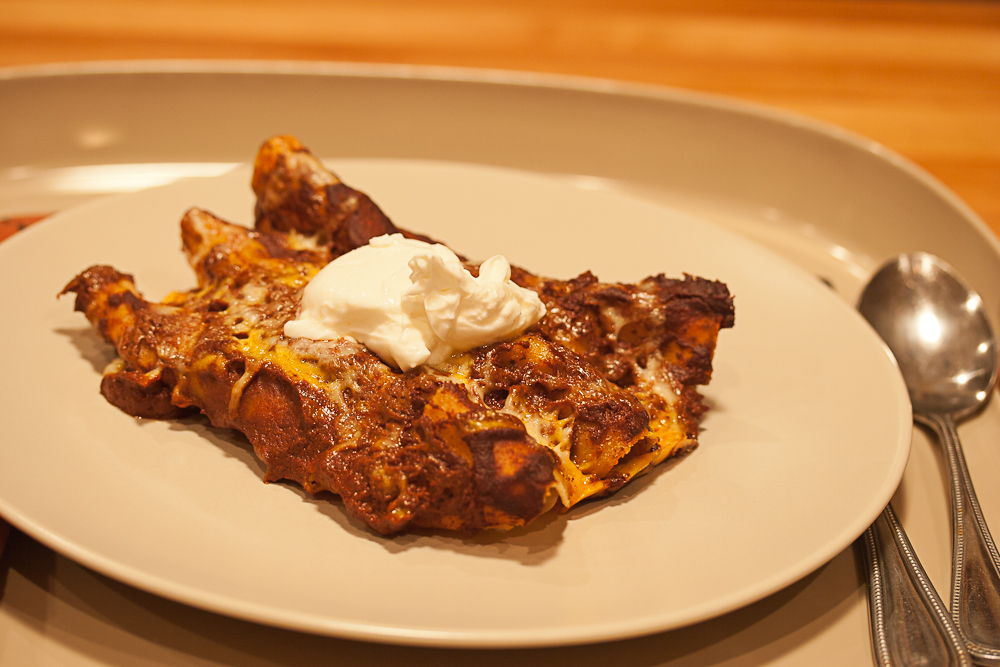
Chicken enchilada with molé rojo and sour cream ready to eat

Serves 2

2 Comments

Filed under Food, Photography, Recipes