Tag Archives: Rich Table

CRAB LOUIE

Crab Louie (or Louis or Louise depending on the reference) is a traditional salad that for many years was synonymous with elegant luncheons. Over the years it has lost some of its glamor and has fallen off many a menu. It has even disappeared from contemporary cookbooks although you can find the recipe in the Joy of Cooking and Craig Claiborne’s New York Times Cookbook as well as on the internet. Especially during Dungeness crab season, Crab Louie is still a favorite in San Francisco. Rich Table has had their version in the past. San Francisco may have a predilection for the dish as some sources say it was invented at either Solari’s restaurant or the fabled St. Francis Hotel a few years after the San Francisco earthquake.  Other sources place its origin in a Seattle country club or Portland or even Spokane. Still, it is considered a West Coast salad (I guess far-inland Spokane still qualifies as West Coast.)

There are as many variations of the salad as there are recipes, but there are only a few essentials. First, naturally, is crab – although you can add or substitute shrimp or you can use ersatz Krab. Second is lettuce, but your choices include iceberg, Bibb, red leaf, and Romaine among others. Finally, there is the sauce which is a close kin to Thousand Islands dressing usually, though not necessarily, without the pickle relish and with chili sauce instead of ketchup. Most, but not all recipes include hardboiled eggs, and asparagus spears are among the most common additions. Beyond that, everything seems to be fair game, including fresh fruit as described in the Commander’s Palace cookbook.

Over time, many renditions of Crab Louie have begun to resemble a Cobb salad or salade Niçoise. Perhaps that’s part of the reason that the salad has lost its appeal. That’s too bad, because it is delicious and easy to make. Here’s one version in which the most challenging step is to make the home-made mayonnaise. Of course, you can just use bottled mayonnaise, and that makes it even easier, but the hand-made stuff improves the taste with only a few minutes of extra effort.

My image of the finished salad shows some sliced hard-boiled eggs with a faint green ring of shame. That’s usually the result of boiling the eggs too hard and/or too long, but it can also occur when the boiled eggs have sat in the refrigerator for seveal days. That’s what happened to the ones in the image. When they were freshly cooked, the yolks were perfectly golden yellow and silky. Sorry about that, but the goof has inspired me to write later about hard boiling eggs. Post to follow.

RECIPES

Mayonnaise

Ingredients

  • 2 egg yolks, room temperature
  • 1 tablespoon Dijon mustard
  • 1 cup canola oil (or other neutral-flavored vegetable oil)
  • salt and pepper (your choice: black for flavor but black specks, white for color but off-flavor, red for a hint of spiciness. Or use a little of all of them)
  • 2 tablespoons fresh, strained lemon juice

Method

  1. In a medium bowl and using a wire whisk, beat the eggs until well mixed. Add the mustard and continue to whisk until well-combined.
  2. Add the oil very slowly, a few drops at a time, while whisking continuously. Make sure each addition of oil is incorporated before adding more oil. Addition of oil should take several minutes.
  3. After all of the oil has been added, continue to whisk for a minute or two before adding the lemon juice. Whisk until the juice has been completely incorporated and the sauce is smooth and glistening.

Crab Louie Sauce

Ingredients

  • 1 batch (a little over 1 cup) mayonnaise (see above)
  • ¼ cup chill sauce
  • ¼ cup scallions, including green tops, finely chopped
  • 3 snacking peppers, seeded and finely chopped
  • 1 teaspoon Worcestershire sauce
  • 2 teaspoons prepared horseradish
  • salt and pepper

Method

  1. Combine all of the ingredients in a medium bowl, correcting the seasoning with salt and pepper.
  2. Use immediately or refrigerate for up to 2 days.


Crab Louie

Ingredients

  • Romaine lettuce, washed
  • 1 pound fresh asparagus, trimmed, steamed for about 5 minutes, and chilled
  • 1 pound crab, cooked and picked over for cartilage
  • Crab Louie sauce
  • 3 hard-boiled eggs, chilled, peeled, and sliced

Method

  1. Arrange several whole Romaine leaves in a serving bowl. Top with coarsely chopped Romaine.
  2. Arrange chilled asparagus on the chopped lettuce.
  3. Arrange the cooked crab on the asparagus, top with sauce to your preference, and arrange sliced hard-boiled eggs around the edge.
  4. Serves 2 to 4.

4 Comments

Filed under Food, Photography, Recipes

DEVILED EGGS

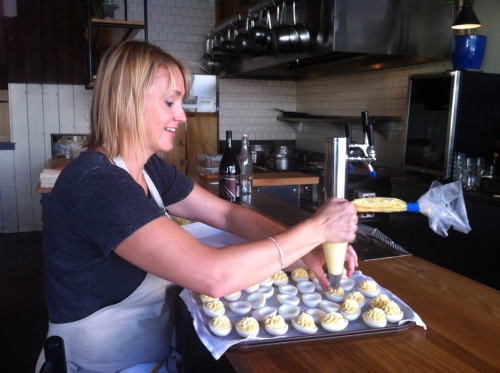
Deviled eggs seem to be enjoying a renaissance. They are on many menus these days. Sarah often makes them for catered dinners as well as for family occasions. Sometimes she stuffs them with smoked trout or other delicious fillings.

Sarah piping deviled eggs

Sarah piping deviled eggs

But in their simplest form, how difficult can deviled eggs be to make? Hard boiled eggs cut in half; yolk mashed with a little mayonnaise, mustard, lemon, salt and pepper; yolk mixture spooned or piped into the egg white halves; maybe a little garnish of paprika, snipped chives, or crumbled bacon. Simple is not always easy.

During this visit to California, deviled eggs have been on many menus. I have eaten many of them because I like them when they are good.

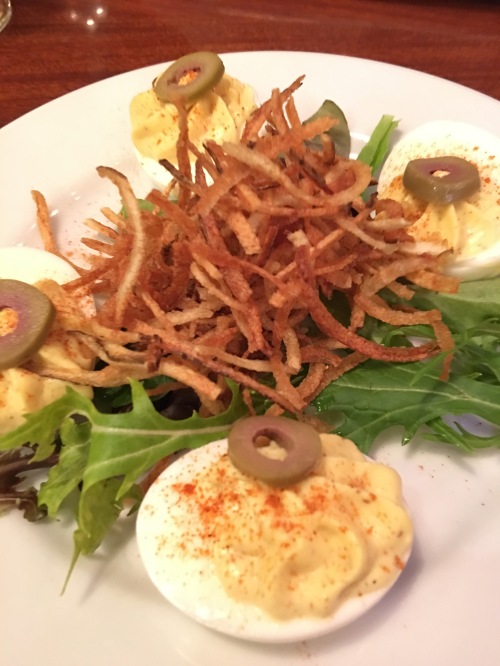
The best ones so far were served at the School Street Bistro in Lodi. My very minor quibbles were that the yolk filling was too runny (Too much mayonnaise?) and had too much mustard. Otherwise they were delicious, and their garnish of house-made French-fried potato straws was outstanding  I could have eaten a plate of the potato straws by themselves.

Sunday deviled eggs with potato straws at the School Street Bistro, Lodi, CA

Sunday deviled eggs with potato straws at the School Street Bistro, Lodi, CA

Some of the eggs have had a rubbery texture undoubtedly from the eggs being boiled too hard and/or too long.

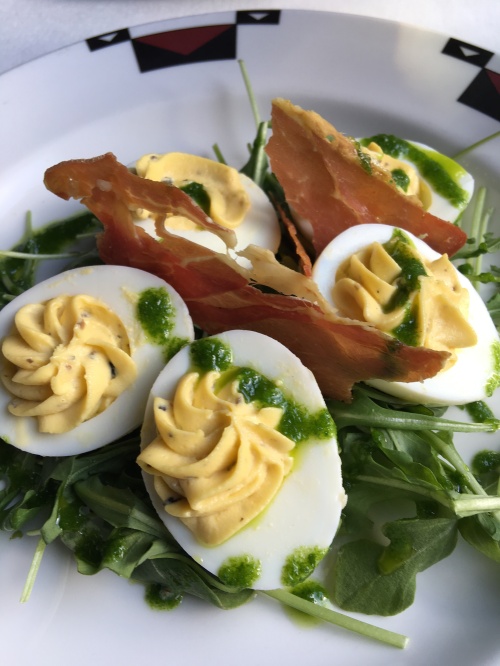
The ones I liked the least were the ones that were supposed to be the fanciest. The word, “truffles”, seems to make something more luxe. Visions of pigs rooting up fungi at the base of a French hazelnut tree come into play, or a liveried waiter shaving little shards with his special knife onto a perfect French omelet. That’s not the same as truffle oil. This condiment has been banned from many a high-end kitchen. The well-known San Francisco chef and writer, Daniel Patterson, has written a great piece in the New York Times about why truffle oil does not find favor with professional chefs.

The main reason is that almost no commercial truffle oil contains actual truffles. The fragrance and taste of real truffles come from a complex array of compounds. The most prominent appears to be a chemical, 2,4-dithiapentane, that can be synthesized in a laboratory or factory. And that is the chemical that is added to truffle oil to give it flavor. Small wonder that foods which incorporate commercial truffle oil take on a chemical flavor; some would even say petroleum-like.

Deviled eggs with truffle oil

Deviled eggs with truffle oil

Here is a basic recipe for deviled eggs, perhaps of the Southern variety. If you don’t like it, experiment by adjusting the amounts of the basic ingredients and add any extras that sound appealing to you. Just – please – don’t add truffle oil.

RECIPE

Basic Deviled Eggs

Ingredients

  • eggs, at room temperature
  • 1 teaspoon mayonnaise for each egg
  • 1/8 teaspoon dry mustard for each egg
  • few drops fresh lemon juice for each egg
  • salt and pepper to taste
  • paprika

Method

  1. Pierce the large end of each egg with an egg piercer and place in a single layer in a saucepan with enough water to cover the eggs by at least an inch. Bring to the boil over high heat, just until large bubbles begin to appear around the eggs. Cover, remove from the heat, and let stand, undisturbed, for 10 to 18 minutes, depending on the size of the eggs and the altitude.* You should work out the time beforehand. Transfer the eggs to a large bowl filled with ice and water. Chill for the same amount of time as you used for the cooking.
  2. Peel the eggs by cracking them all over and, starting at the big end, peeling them under a small stream of running water. The longer the eggs sit in the refrigerator before peeling them, the harder it will be to peel them and the more likely you are to get the dreaded green ring around the yolks, so it is best to prepare them immediately.
  3. Slice the cooled eggs in half lengthwise and gently remove the cooked yolk. Press the yolk through a fine-mesh sieve or strainer into a medium bowl. Stir in the mayonnaise, mustard, and lemon juice. If the mixture is too stiff, very slowly stir in more mayonnaise by half teaspoonfuls until the consistency suits you.  Adjust the mustard and lemon juice to please you. Correct the seasoning with salt and pepper.
  4. Spoon or pipe the yolk mixture into the empty halves of cooked egg white. Garnish with a sprinkle of paprika and serve.

* At 7000 feet, a jumbo egg takes 18 minutes to cook; a large egg takes 16 minutes. Probably at sea level you should deduct about 2 minutes for each cooking time, but it is best to work out specific times for your cooking conditions.

15 Comments

Filed under Food, Photography, Recipes, Restaurants, Travel

CHRISTMAS VISITS

This week we’ve had Sarah and her two boys – ages four and one-and-a-half – visiting. It has been a different sort of visit than Carol’s last week. A lot more Christmas excitement, visits with Santa, and games and playing.

One of the big events was the Christmas Glow at the local botanical garden. First there was the snow. None of that in the boys’ California. Everyone got bundled up, but the roaring fires set up along the paths were welcome, and we stopped at every one. The unmistakable smell of burning piñon gave a distinctive Santa Fe touch. The lighted sculptures and laser lights glowing on the snow made it magical. Hot chocolate was a favorite, and then we went home for a snack before bedtime.

Last night, Chef Sarah made the meal. First, we stopped by the Cheesemongers of Santa Fe for the makings of a cheese plate, and then we went to the grocery store for the makings of dinner. Besides the cheese, appetizers included French breakfast radishes with Rich Table house-cultured butter and Welsh Halen Môn smoked sea salt.

French breakfast radishes with Rich Table house-cultured butter

French breakfast radishes with Rich Table house-cultured butter

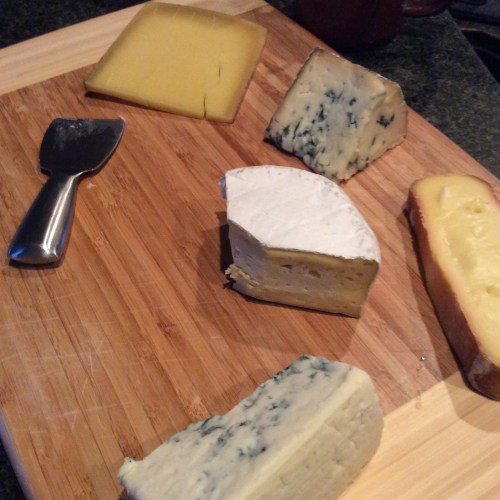
Sarah selected the cheeses. My favorite was the Bent River from Minnesota, but a close second was the Alpencase. The Ameribella stood on its own.

Cheese tray

Cheese tray

The main event included baked red snapper, bucatini with green peas and guanciale, and romanesco with roasted marrow sauce. The bathroom scale this morning told the tale.

7 Comments

Filed under Food, Photography

PECAN PIE

When Mom Mom and Pop Pop lived on their East Texas farm, Thanksgiving was a holiday that the whole family anticipated. Mom Mom would spend weeks planning the menu and then days setting a festive table. All of the children and their respective families would arrive as early in the week as they could to help with wood chopping, cooking, and schmoozing. The giant turkey was the centerpiece of the celebration, but what everyone was really looking forward to was dessert with pumpkin and pecan pie – enough that everyone could have a slice of both, along with whipped cream, of course.

The pecan pies were a joint effort. Pop Pop would sit on the front porch for days cracking pecans with his trusty impact nut cracker, and Mom Mom would use the freshly-shelled nuts for her famous pecan pie. Her version was well known among the ladies in town, and she did several versions from one-bite tassies to lindividual pies to the real thing. She had a secret that she never passed on to the town ladies, who always made their pies with Karo syrup. Mom Mom used only brown sugar and never passed on the secret to anyone except her daughters.

Of course, there must be hundreds of recipes for pecan pie, and there will be plenty more in newspapers and magazines as Thanksgiving gets closer. This recipe, though, is special. It comes from Jessica Maher and was published in the November, 2015 issue of Texas Monthly.

Jessica and Sarah have been close friends since college days. They rowed together in the women’s eights at the University of Texas at Austin. But unbeknownst to one another, their lives followed amazingly similar paths. After college, both were casting about for careers (Sarah decided it was hard to make a living with a major in Spanish and a minor in Italian.) They both wound up going to culinary school in New York, and then their paths crossed again. They both worked for a time at Bouley in Lower Manhattan. Subsequently they both moved on to other New York restaurants, but they kept in close touch. Then they both married chefs, moved away from New York, opened up restaurants while having two kids each, and wondering what to do with their spare time. To this day, though, they stay in touch, often calling one another at least every week.

Jessica and Todd have a very successful restaurant in Austin, Texas, named Lenoir. For a number of years they have been prominent in the Austin restaurant scene, and their place has gotten excellent reviews in Texas Monthly, a publication no good Texan does without. (They call themselves the “National Magazine of Texas.”) This recipe, complete with a gorgeous image, comes from the November issue.

RECIPE

Jessica Maher’s Perfect Pecan Pie

Ingredients

  • pie crust for 9 inch pie, unbaked
  • 2 cups pecans (45 halves reserved for top)
  • 1 cup dark-brown sugar
  • 2/3 cup Lyle’s golden syrup*
  • 1 tablespoon bourbon
  • 4 tablespoons unsalted butter
  • 3 eggs, lightly beaten
  • ¼ cup heavy cream
  • big pinch salt

*Note: Lyle’s golden syrup may be a bit hard to find in the US. It is one of the most popular brands of an English product made during the production of cane sugar. Dark treacle is a thick syrup that has some of the characteristics of molasses. When it is filtered and decolorized it becomes light treacle, also known as golden syrup. Unfortunately there are no good substitutes. Light Karo has added vanilla. Dark Karo may have too much flavor. Maple syrup is not as thick. Some suggest mixtures of honey and Karo or straight agave syrup. The short answer is there is no substitute. Supposedly Lyle’s is carried at Whole Foods and World Market, but if all else fails, you can order it online.

Method

  1. Use your favorite pie dough recipe or a prepared, unbaked crust
  2. Spread the pecans in a rimmed baking pan and toast in the middle of an oven preheated to 250° F for about 10 minutes, stirring frequently until the oils begin to release and the pecans become fragrant. Watch carefully to avoid scorching. Remove from the oven, cool, set aside 45 halves for the top and chop the remaining pecans coarsely.
  3. In a saucepan, combine the sugar, syrup, bourbon, and butter. Bring to the boil, stirring constantly. Remove from the heat and cool to room temperature.
  4. In a bowl, whisk the eggs, cream, and salt together. Then whisk into the sugar mixture.
  5. Spread the chopped pecans over the bottom of the pie crust fitted to a 9 inch pie pan. Then pour in the batter. Arrange the pecan halves on top of the pie in concentric circles, starting from the middle.
  6. Bake in the middle of an oven preheated to 350° F for 45 to 50 minutes or until the filling is just set and the crust is golden brown.
  7. Rest for at least one hour on a cooling rack or overnight. Serve with whipped cream or ice cream.

12 Comments

Filed under Food, Photography, Recipes, Restaurants

POACHED MIGAS

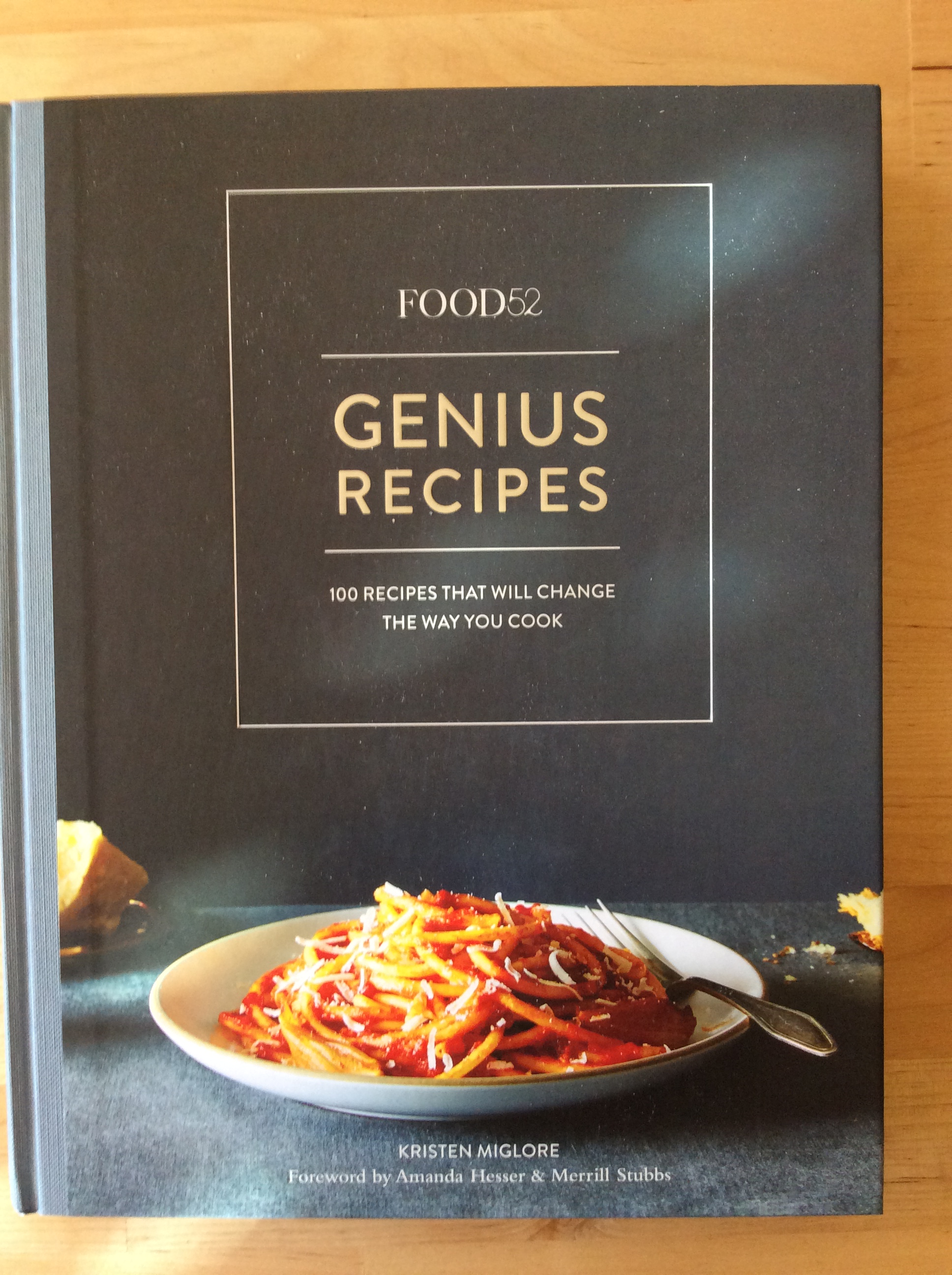
Sarah always has a lot of new cookbooks. She and Evan buy a lot, and on top of that they receive others from publishers. During our last visit, we spent a lot of time looking at recent selections. One, in particular, caught the attention of both Susan and me. I wound up buying a copy because I think that anyone who likes cookbooks would want this one on his or her bookshelf.

The name of the book is Genius Recipes: 100 Recipes That Will Change the Way You Cook. The book is written by Kristen Miglore, Executive Editor of the food website, Food52.com. It is filled with beautiful images by the author and published by Ten Speed Press, Berkeley.

Genius Recipes

Genius Recipes

Some critics complain that the recipes are not really “genius” and that some of them don’t work. They are partially correct. Some of the recipes, at least in my hands, don’t work and some of them I will not make again.

The real genius behind all of the recipes is that they contain tricks that you never knew or methods that make you think, “Now, why didn’t I think of that.” As well, there are recipes that have become classics. An example of that is Shirley Corriher’s Touch-of-Grace Biscuits that was daughter Carol’s first contribution to our family cookbook. Who would think that a wet blob of dough could turn into light Southern biscuits?

Another recipe that intrigued me was Daniel Patterson’s Poached Scrambled Eggs. Daniel is chef/owner of Michelin-two-star Coi where Evan and Sarah worked before they opened Rich Table. The story behind the recipe is that Daniel’s wife made him toss out his beloved Teflon-lined sauté pan, so he had to come up with a new way of scrambling eggs for his breakfast. The genius of the recipe – why didn’t I think of that – is based upon a common folly of cooks who have tried to poach the perfect egg only to have it break in the cooking water. Patterson simply mixed the eggs before he put them in the poaching liquid, and mirabile dictu, he had a scrambled egg.

This recipe takes that technique one step further. Migas are a great Tex-Mex dish which requires two basic elements – eggs and stale corn tortilla pieces – and whatever else suits your fancy. I first ate them at a cafe in Austin near the University of Texas campus. Since then they have become a family favorite that is always on the menu at family gatherings. One of the keys to this recipe is to have all of the add-ins prepped and ready to go before you cook the eggs.

RECIPE

Poached Migas

Ingredients

  • 3 corn tortillas
  • 4 crimini mushrooms, sliced
  • vegetable oil
  • 3 scallions, cut in ¼ inch slices, including green tops
  • 2¼ ounces sliced black olives
  • 3 strips bacon, cooked until crisp and then crumbled
  • ½ green or red bell pepper, seeded and chopped
  • 3 snacking peppers, chopped
  • 4 ounces Hatch green chiles, diced (optional)
  • 1 medium tomato,  seeded and chopped
  • ½ cup Cheddar or Monterey jack cheese (use a combination of the two if you wish)
  • ½ cup coarsely chopped cilantro leaves
  • 4 eggs, beaten
  • 4 tablespoons butter, melted
  • salt and pepper
  • salsa
  • sour cream for topping

Method

  1. Lightly coat the tortillas with vegetable oil. Cut into ¼ inch strips and spread out on a baking sheet. Bake at 200° F for about 20 minutes or until the strips are crisp. Cool and set aside.
  2. Sauté the mushrooms in about 2 tablespoons of oil. Set aside
  3. Gather the add-in ingredients on your work surface.
  4. In a medium saucepan, bring salted water to the boil. Turn off the heat, stir the water vigorously to create a vortex, and pour the beaten eggs into the vortex. Cover the saucepan tightly for a full minute. Remove the lid and drain the cooked eggs in a fine-meshed sieve, shaking to remove any excess water.
  5. Return the drained eggs to the saucepan along with the melted butter. Stir to loosen the eggs and incorporate the butter.
  6. Stir in the tortilla strips, mushrooms, scallions, olives, bacon, peppers, optional green chiles, tomato, cheese, and cilantro.
  7. Adjust seasoning with salt and pepper. Top with salsa. Serve immediately while still hot. Pass sour cream for topping if desired.


10 Comments

Filed under Food, Photography, Recipes, Restaurants

THANKS ARE ALWAYS WELCOME

We’re back home at last from our 5-weeks child-ending adventure. We have rested a few days, done the household chores that needed to be done after a long absence, paid bills, and caught up on 700+ e-mails.

I have to admit that another reason for my absence from posting lately is a certain loss of enthusiasm. I have 300 posts over four and a half years, and some readers may think that I have run out of things to say along with needing some new recipes. But the main reason I have been a little quiet is receiving a couple of snarky comments that made me wonder, at my age, if I really need that. The way I look at it, if you don’t like my blog, just don’t read it. After some soul-searching, I have decided to write at least a few more posts. To do otherwise would let the boo-birds win, and I have never been inclined to do that.

So…

This post is to thank all of our children for their gracious ways of thanking my wife and me for our efforts.

The Los Angeles family made a point to go to a nice restaurant. Unfortunately, I missed the event so there are no images of food, but they took my wife to Bashi, the Asian-inspired restaurant at Terranea Resort. It has a wonderful ocean view, great service, a lovely dining space and delicious food. The only thing I can report is that they had a great time.

The San Francisco family made sure we had an evening at Rich Table. Evan was cooking that evening, so he pulled out all the stops. The list of things he sent out included:

Sarah’s popular fennel pollen levain served with house-cultured butter. The warm slabs of bread smeared with a delicious butter could be a meal by themselves.

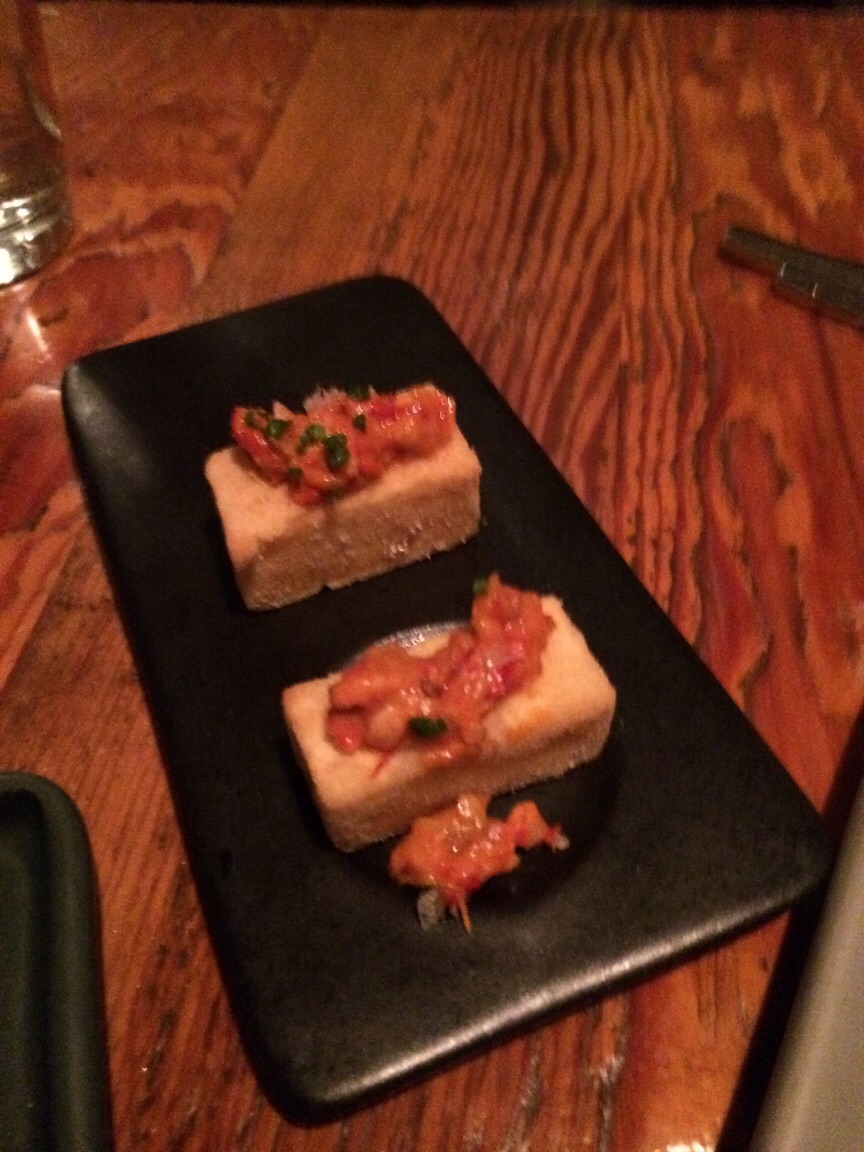
An amuse that was just a bite, but a delicious bite.

image

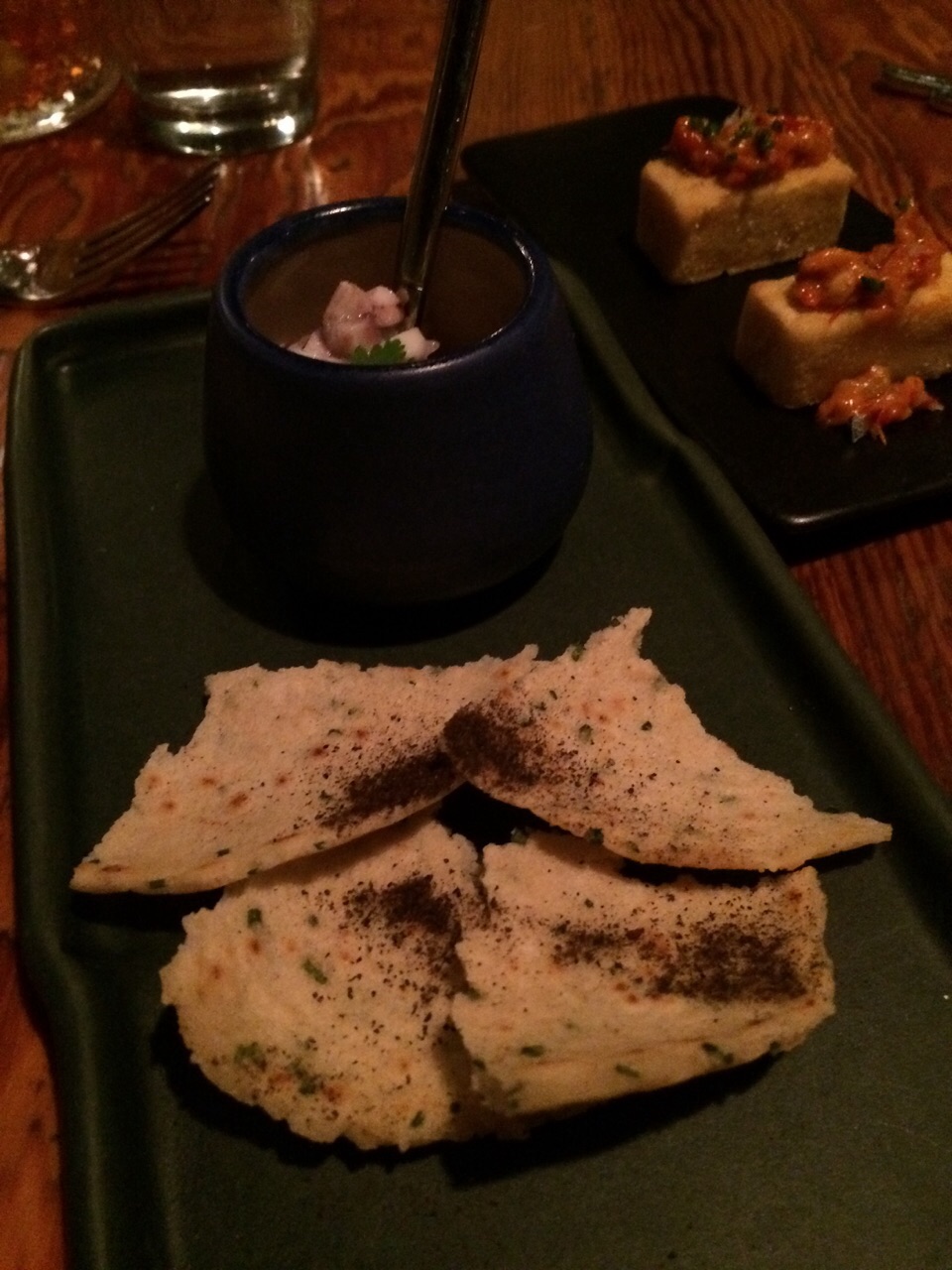
Octopus with grapefruit, hearts of palm, and sansho pepper.

image

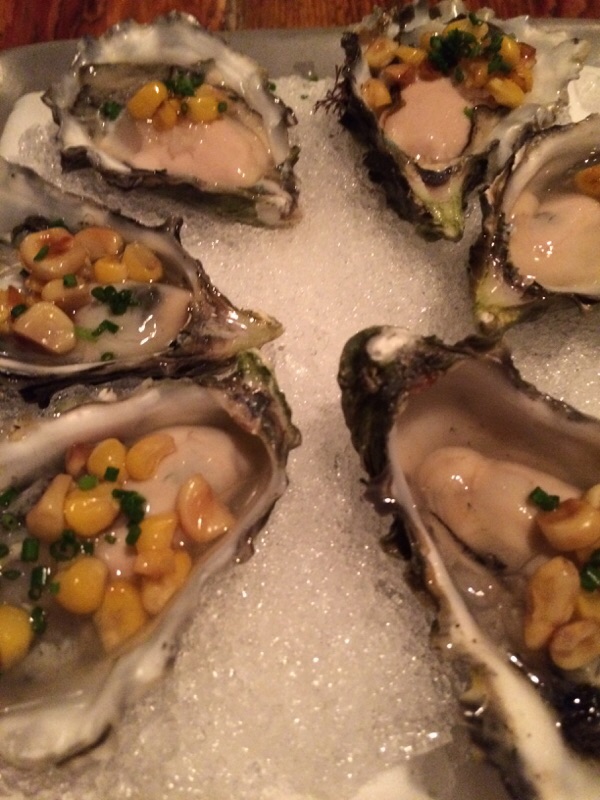
Oysters on the half shell with charred corn mignonette. Rich Table oysters always come well-scrubbed so there are no fragments of shells that you often encounter at some of the best seafood restaurants.

image

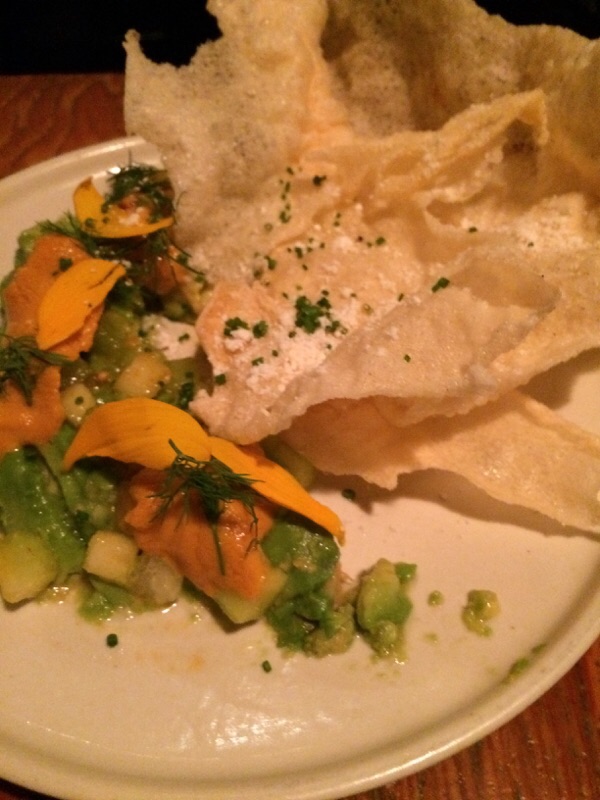
Avocado, sea urchin, fermented jalapeño, prawn crackers. I couldn’t even think of such a combination of flavors, but it definitely worked.

image


“Green juice” granite, avocado mousse, Stobe fruit, and brown butter ice cream.

image

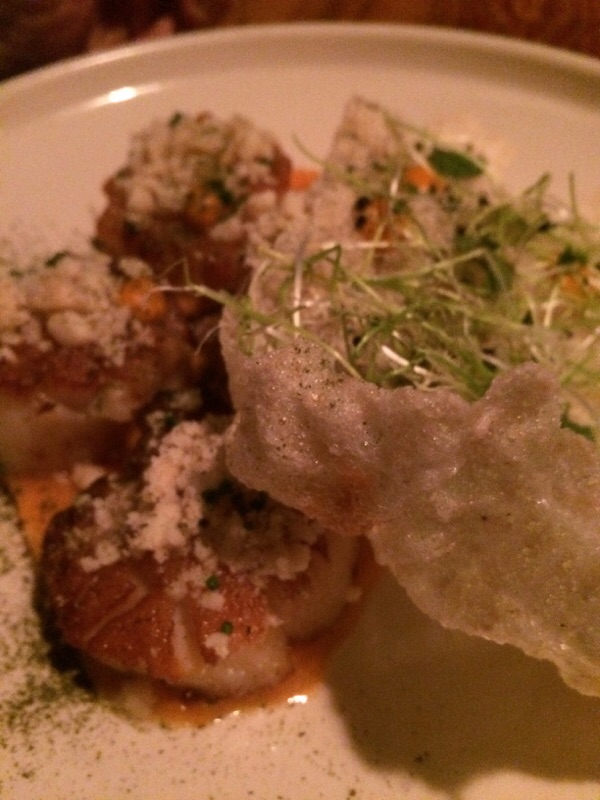
Scallops, sweet potato, red curry, macadamia nut, brown rice. Again, a combination that defied our imagination. The predominant flavor, of course, was the sweet scallops.

image

Grilled rib-eye with roasted cauliflower, almond, and sake lees. The steak is heavily marbled with a lot of fat. Whatever you do, don’t cut off the fat, but pop it in your mouth. The fat has absorbed all of the other flavors and just melts away as a delicious extra treat.

image

A dessert of sweet corn pot de creme with creme fraiche, strawberries, and lemon crumble. A little vegetal, but surprisingly sweet and refreshing.

image

The Silicon Valley family sent us some beautiful artisanal chocolates and a beer mug from Prague where our daughter-in-law had gone to a business meeting.

image

All of that was so unnecessary because taking care of the kids was gift enough, but it made us feel truly thanked and truly blessed.

19 Comments

Filed under Food, Restaurants

HOG ISLAND OYSTER COMPANY

Hog Island Oyster Company is on Tomales Bay, just a short, beautiful drive north of San Francisco. Once there, you can buy unshucked oysters and other shellfish to take back home with you, or you can have all varieties of raw and cooked oysters, clams, and mussels in a spacious restaurant with great views of the bay.

Don’t worry if you can’t make the time to take the drive. You can still get fresh oysters at the Hog Island Oyster Company at the Ferry Building in San Francisco. The Ferry Building is one of the great destinations for visitors to the city. It has been lovingly renovated and occupies a dominant place on the Embarcadero. On Saturdays it serves as home for a huge farmers market where all of the city’s chefs shop. You are likely to catch a glimpse of someone you have seen on television or in whose restaurant you have eaten.

The Ferry Building is lined with shops filled with hard-to-find food, well-known products like Cowgirl Creamery cheeses, pottery, jewelry, and expensive one-of-a-kind kitchen gadgets.

The building sits right on the water because in times past it served as the terminal for the many ferries that crossed San Francisco Bay. Now the Oakland Ferry has a berth just a few steps away from the restaurant of the Hog Island Oyster Company. The beautiful new Bay Bridge makes a perfect backdrop, so that Hog Island is a popular stop for locals and tourists alike.

The Oakland Ferry and the Bay Bridge in the background

The Oakland Ferry and the Bay Bridge in the background

Expect a crowd on the weekend or when the weather is beautiful. That means you will have to wait, but the line moves quickly. It moves even more quickly if you get a bloody mary from the bar to pass the time.

Waiting in line

Waiting in line

Of course, outdoor seats are at a premium, so you may have to wait a little longer for them. But seats at the counter are often available, and to me they are preferable. You can watch the woman who runs the garde manger station as she whips up salads with blinding speed. Her knife skills are amazing as she cuts fresh basil into a fine chiffonade while she surveys the dining room. You can also watch the three oyster shuckers working non-stop to fill all the orders for oysters on the half shell.

Non-stop oyster shucking

Non-stop oyster shucking

Whenever we visit San Francisco, we almost always make at least one pilgrimage to Hog Island, and we almost always order their biggest tray of raw oysters – 2 dozen, mixed.

This time there were seven different kinds of oysters, so they sent out four each of six kinds. We asked for Kumomotos, our favorite, but they did not include Hog Island’s own Kumomotos. They are beautifully fluted and much smaller than other varieties, but they have a sweetness, brininess, and flavor that are unique. When we complained to the waiter, he promised to bring out some more, and he did. Then we recognized him as a server who had worked at Rich Table when it first opened.

Acme bread

Acme bread

Raw oysters

Raw oysters

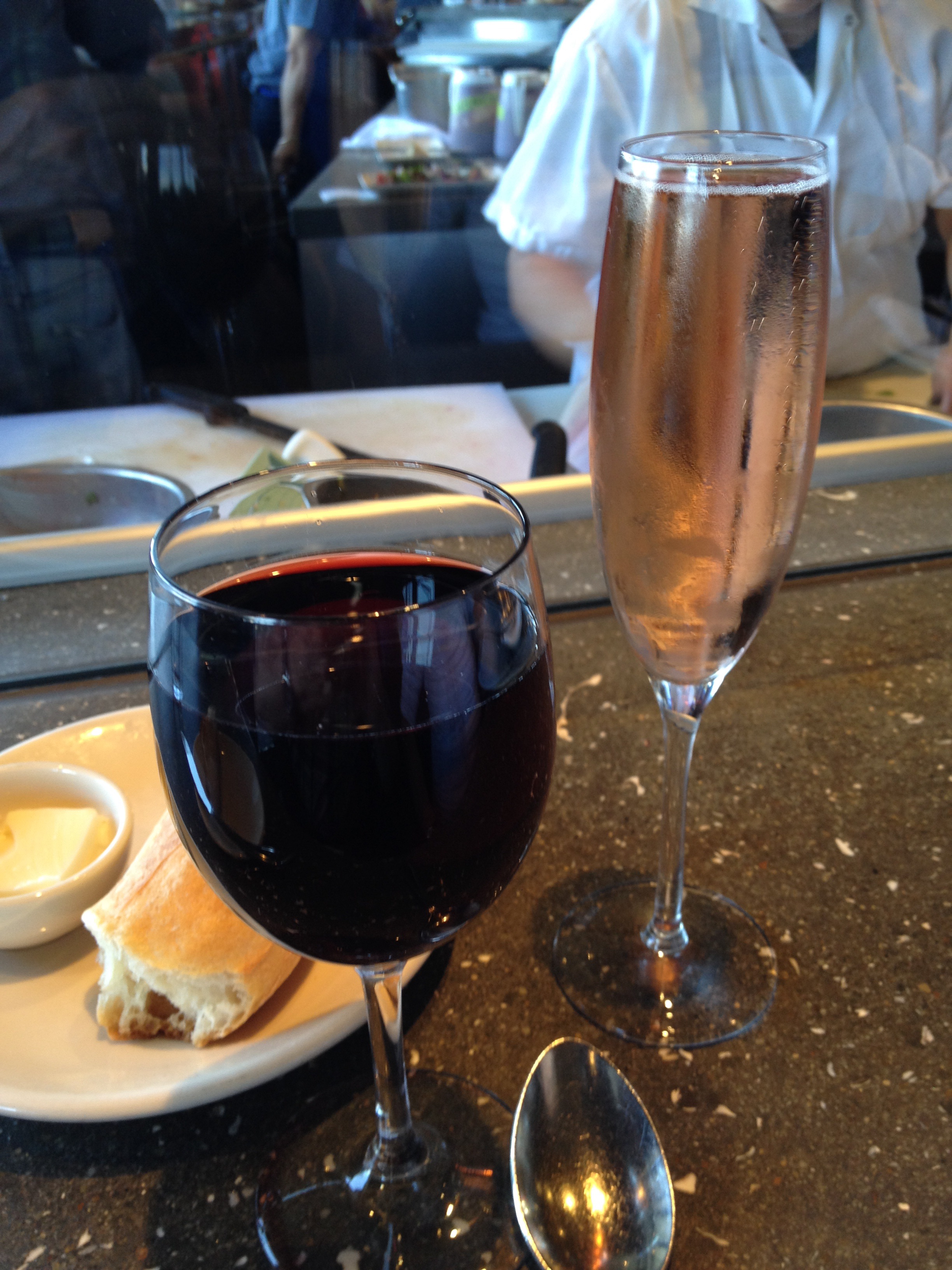
You need a glass of wine to wash down the oysters

You need a glass of wine to wash down the oysters

We had a nice visit with Charles and then got down to business: eating all of those oysters with a tasty mignonette along with glasses of refreshing wine. Next came a plate of yellow fin crudo prepared by the garde manger lady and topped with her incredibly fine basil chiffonade.

Yellow fin crudo

Yellow fin crudo

Susan had an oyster roast instead of her usual clam chowder. I finished up with rustic seafood stew. I asked why, if this is San Francisco, it’s not called ciappino. The reply was that it didn’t have the crab required to call it that. It had everything else. Tentacles of the calamari, heads on the shrimp, clams, mussels, chunks of white fish, savory broth, and toasted Acme bread to soak up any leftover broth.  If there would have been.

Rustic seafood stew

Rustic seafood stew

Then home to catch a quick nap before it was time to pick up they boys.

4 Comments

Filed under Food, Photography, Restaurants, Travel

SHAVED FENNEL AND HARICOT VERT VINAIGRETTE

Fennel is beginning to appear at the farmers market. It is unlike  that in the supermarkets. The bulbs are big, and the tops are left on so that you may have four feet of vegetable, including the fronds.

I think fennel is beautiful. The fronds are lacy and brilliant green. The bulbs have the interlocked leaf bases that remind me of a nautilus shell. The perfume is that exotic, unforgettable odor, not quite of licorice or anise, but wonderful. And it’s all edible.

When I bought my farmers market fennel, the woman behind me wondered aloud what you can do with it. The vendor said that she puts it in salads. I said, “Braise it’,” thinking of quartered bulb braised with a juicy pork chop. But you can turn both bulb and fronds into soup, a boiled vegetable, and even a desert.

The large-bulbed (not actually a bulb but the thickened ends of the stems of the fronds) variety is sometimes called Florence fennel or finocchio to distinguish it from common fennel that has no bulb and grows wild in abundance in Northern California. In the past, I’ve written about using the “pollen” from wild fennel to flavor bread, as they do at Rich Table, or to add to soups and custards.

I also bought some haricots verts from one of my favorite vendors at the market. I like his products because he has fingerling potatoes in several colors, squash blossoms, petit pan squash, and heirloom tomatoes that are not as popular with other vendors. That made me think that a fresh salad of fennel and haricot vert would be a perfect summer accompaniment to seared ahi tuna.

RECIPE

Shaved Fennel and Haricot Vert Vinaigrette

Ingredients

  • 2 tablespoons fresh lemon juice
  • 1 tablespoon Dijon mustard
  • 6 tablespoons extra virgin olive oil (Use your best stuff)
  • ½ teaspoon Pernod
  • salt and pepper
  • good pinch of sugar
  • 1 good-sized fennel bulb, trimmed and washed
  • haricots verts (about two good handfuls), trimmed and cut into 2 inch pieces
  • lettuce leaves

Method

  1. Using a dinner fork or small whisk, combine the lemon juice and mustard in a two-cup glass measuring cup
  2. Beating vigorously, gradually add the olive oil, one tablespoonful at a time, making sure it is completely incorporated.
  3. Beat in the Pernod, salt and pepper to taste, and sugar. Set aside.
  4. Using a mandolin, slice the fennel bulb into paper-thin slices.
  5. Bring a medium pot of well-salted water to the boil. Stir in the trimmed green beans and return to the boil. Boil for 3 minutes after the pot has returned to the boil. Drain and plunge the cooked beans into a bowl of ice and water that you have prepared ahead.
  6. When the beans have cooled, drain and combine with the shaved fennel. Dress with the vinaigrette, toss, and cover with plastic wrap. Reserve any remaining vinaigrette for another use.  Refrigerate for 2 hours until ready to serve on lettuce leaves.


Leave a comment

Filed under Food, Photography, Recipes, Restaurants

ROMANESCO: THE FRACTAL VEGETABLE

Fractal art has been popular for the last twenty or thirty years. It combines mathematics and art, often using computer algorithms to produce geometric patterns that are repeated at an ever smaller scale  to create irregular shapes and surfaces. You will find some amazing fractal images on the Internet or Wikipedia.

Fractal art (Image from the Internet)

Fractal art (Image from the Internet)


3D fractal art (From Wikipedia)

3D fractal art (From Wikipedia)

There are also some arresting examples of fractals in nature: the shape of the nautilus shell; the ever-diminishing tendrils of a lightning bolt; tree limbs dividing into smaller and smaller branches; pine cones; pineapple; and an aloe plant. A head of Romanesco is one of the most startling and beautiful. The color is almost electric, and the vegetable florets form amazing designs as they get smaller and smaller and rise into tiny pyramids.

My first encounter with Romanesco was when Sarah and Evan humored me a number of years ago, letting me prep vegetables in their first pop-up dinner at Radius in San Francisco. I was fascinated by the chartreuse color, the geometrically perfect florets, and the incredible shapes in a single head.

Since then, I have only seen Romanesco in a few stalls at various farmers markets. I have never seen it at the grocery store. If you should find some, select only the greenest heads and plan to use them in a day or two. Use the vegetable in your favorite recipe for broccoli or cauliflower. Or be adventurous and try something different. They’re even delicious raw.

There is a certain mystery about the vegetable. Some call it Romanesco broccoli. Some call it Romanesco cauliflower. That’s because no one seems to be quite certain what its closest relative might be. The cautious – like me – just refer to it as Romanesco. What does seem clear is that it was first developed in Rome at least as early as the 16th century and hence the name.

The great thing is that you can use it as you would either broccoli or cauliflower. You can also have a good time admiring its unique and beautiful shape. This recipe is an adaptation from one found in the lavishly illustrated, encyclopedic Vegetables from Amaranth to Zucchini by Elizabeth Schneider (HarperCollins Publishers Inc., New York, 2001, p. 124) Somehow, Romanesco, pine nuts, garlic, and Romano all seem to go together. I have browned the garlic in the brown butter. “Whoa,” you say. “Browned garlic is bitter.” But that’s not true if you make sure it doesn’t burn. Think of that delicious Mexican garlic and butter sauce, mojo de ajo. Add some grilled ham and you have a set of complementary flavors and a complete light dinner.

RECIPE

Romanesco with Brown Butter, Pine Nuts, Garlic, and Romano Cheese

Served with Grilled Ham Steak

Ingredients

  • 1/3 cup raw pine nuts
  • 1 head Romanesco
  • salt and pepper
  • 1 stick (½ cup) unsalted butter
  • 3 cloves garlic, minced
  • fresh Romano cheese, grated
  • 4 ounce boneless ham steak, grilled

Method

  1. In a dry sauté pan over medium heat, toast the pine nuts until lightly browned and the oils have been released. Stir frequently. Do not burn. Remove from the heat and set aside.
  2. In a large pot fitted with a steaming rack, place the whole head of Romanesco over about an inch of boiling water and steam, covered, for 10 minutes or until the vegetable pierces easily with a cooking fork. Season with salt and pepper.
  3. While the Romanesco is steaming, melt the butter in a small sauce pan over medium-low heat, stirring frequently until the butter solids begin to brown. Be very careful not to burn. Stir in the minced garlic. The mixture may foam up. If that happens, stir vigorously and remove from the heat until the foaming subsides. Return to the heat only until the garlic is lightly browned.
  4. Grill a small boneless ham steak and arrange in the middle of the serving plate.
  5. Place the steamed Romanesco on the grilled ham steak.  Sprinkle with the toasted pine nuts. Pour over the browned butter with lightly browned garlic. Top with grated Romano. Serve whole and cut into servings at the table.

2 Comments

Filed under Food, Photography, Recipes

ARANCINI

The name of this dish translates from Italian as “little oranges” because the puffs are golden yellow and round, resembling little oranges. You can make them as large as you wish, but the more they resemble oranges the more leaden they become. I prefer little balls that you bite into so that the hidden mozzarella oozes out onto your tongue.  You can sauce them with your favorite tomato sauce – like marinara – but I think that hides the delicate flavor of the arancini. The morsels are a favorite at one of our local bar/restaurants, Dr. Field Goods,  that serves them as bar food or as an appetizer.

For a long time, Rich Table made a dish that they called “fritters”.  The fritters were a big hit when Sarah and Evan were doing pop-ups, and they stayed on the menu for a long time after Rich Table opened.  The fritters were made with a corn batter instead of the rice of a classic arancino, but they had a similar flavor and the same surprise when you bit into the creamy middle.

For this version I have used cooked sushi rice so that it will stick together,.

RECIPE

Arancini

Ingredients

  • 4 cups chicken stock
  • 1 envelope unflavored gelatin
  • 2 tablespoons unsalted butter
  • 3 scallions, minced finely
  • 1 cup sushi rice
  • salt and pepper
  • 2 eggs
  • mozzarella cheese, cut into ½ inch cubes
  • fine, dry bread crumbs
  • peanut oil for frying

Method

  1. Place the chicken stock in a large microwave-proof measuring cup. Sprinkle the surface of the stock with the unflavored gelatin, and let it bloom for 5 minutes. Stir the gelatin into the stock so that it is completely dissolved. Heat the stock to boiling in a microwave.
  2. In a medium pot, melt the butter over medium heat. Stir in the chopped scallions and cook until translucent, but not burned. Add the sushi rice and continue to stir until the rice grains are translucent with a pale white center, about 5 minutes. Pour in about 1 cup of the heated chicken stock. Be very careful, because the mixture will boil up and may overflow the pot if you are not careful. Continue at the boil, but stir continuously. When the liquid has nearly boiled away, add more liquid, continuing to stir the pot. Gradually add the chicken stock in batches until it has all been added. The rice should be creamy, and individual grains should be well cooked. Remove from the heat and let cook for a few minutes in the pot.
  3. Transfer the rice to a baking pan lined with parchment and allow to cool completely. Then transfer to a bowl and stir in the eggs until they are thoroughly combined. Chill in the refrigerator overnight.
  4. Remove the chilled rice mixture from the refrigerator. Shape about 2 tablespoons of the mixture into a round ball, using your hands. Push a cube of mozzarella into the center of each ball, roll with your hands again until smooth, and place on a parchment-lined baking pan. Chill the formed rice balls for an additional hour.
  5. One by one, roll the rice balls in fine, dry bread crumbs. Using a slotted spoon, transfer the rice balls to a deep pan filled to about 1½ inches deep with peanut oil heated to 350°F  As they are frying, turn the rice balls until they are golden brown on all sides.
  6. Drain on several thicknesses of paper towelling, and the transfer to a baking rack.
  7. Serve while still warm.

10 Comments

Filed under Food, Photography, Recipes