HORSERADISH MAYONNAISE AND PUFF PASTRY EMPANADAS

The other evening we were invited to a dinner party. It was a little bit of a pot luck, and we were asked to bring a light appetizer. I decided to use some puff pastry from the freezer to make empanadas, but that seemed a little bland, so I also made some mayonnaise as a dipping sauce.

Mayonnaise is so easy to make, and it tastes so much better than the bottled kind, that it seems crazy not to make your own. Especially when you have a fool-proof recipe (so far at least) from one of the world’s greatest chefs. Michel Roux of the Michelin-starred, much-honored Waterside Inn in England, has written a beautiful little book simply called “eggs” (John Wiley and Sons, 2005) filled with amazingly creative, not-so-classic and classic egg recipes including, of course, mayonnaise.

I doctored up the basic recipe using some tricks from Sarah and Evan. The additions of freshly grated horseradish and finely chopped chives or green scallion tops make a great dip that perks up the empanadas.

I filled the empanadas with hearts of palm, parsley, and grated Parmesan, but you can let your imagination run wild: tiny button mushrooms, little shrimp (is that redundant?), water chestnuts, olives (seed removed, of course), cubes of cheese, dolma filling, etc., etc., would all be good. I don’t know, but maybe a little oyster would work.

This recipe makes 20-24 appetizers depending upon how big you make the empanadas

RECIPES

Horseradish Mayonnaise

Ingredients

  • 2 egg yolks, room temperature
  • 1 tablespoon Dijon mustard
  • salt and pepper
  • 1 cup peanut oil, room temperature
  • juice of ½ lemon, more if needed
  • ¼ cup freshly grated horseradish
  • ¼ cup chopped chives or green tops of scallions

Method

  1. Put the egg yolks, mustard, salt and pepper in a small mixing bowl with handles and/or on a towel or other non-slip surface. Combine with a balloon whisk until smooth.
  2. Whisking continuously, add a few drops of oil. When the oil is completely incorporated, add more oil, repeating the process  until the mayonnaise thickens. You may then add the oil in a more continuous stream, but pause occasionally to make sure the oil is fully incorporated before adding more.
  3. When all of the oil has been incorporated, whisk for another minute or so until the mayonnaise is smooth. Then add the lemon juice. The mayonnaise will become visibly less yellow. Adjust with more lemon juice, salt, and pepper to suit your taste.
  4. Stir in the horseradish and chives or scallions. Add more of either to suit your taste.
  5. Refrigerate, covered with plastic wrap, until ready to use. This should hold for several hours.

Puff Pastry Empanadas

Ingredients

  • ¼ cup parsley, finely chopped
  • ¼ cup Parmesan cheese, freshly and finely grated
  • 1 sheet commercial frozen puff pastry, thawed according to directions
  • 1 14½ ounce can hearts of palm, drained and cut into ½ inch coins
  • 1 egg, beaten well with 2 tablespoons water

Method

  1. In a small bowl, combine the parsley and Parmesan cheese. Set aside
  2. On a lightly floured work surface, open the thawed sheet of puff pastry. With a lightly floured rolling pin, flatten the pastry to about 1/16 inch thick
  3. Using a 3 inch circular cookie cutter (a 2½ inch biscuit cutter will do) cut circles in the flattened pastry dough. Working quickly, place a palm coin and about ¼ teaspoon of the parsley/Parmesan mixture in the center of each circle.  Paint the edges of the circles with the egg mixture, using a small pastry brush.
  4. One by one and using your hands, stretch the dough gently to cover the palm disk. Pinch the edges of the half-moon empanada closed with your finger and then seal with the tines of a dinner fork
  5. Arrange the empanadas on a baking sheet lined with parchment paper
  6. Paint the tops of the empanadas with the egg mixture, trying not to let it drip onto the parchment.
  7. Bake in the middle of an oven preheated to 400°F for 15 minutes or until puffed and lightly browned.
  8. Remove from the oven and transfer to a cooling rack to cool.
  9. Serve with the dipping mayonnaise either at room temperature or gently rewarmed.

11 Comments

Filed under Food, Photography, Recipes

LYTRO CAMERA, PART TWO – ASPARAGUS AND PESTO BUNDLES

I’m still learning to use my new Lytro light field camera. It has several features that make it absolutely unique. Most importantly you can focus any part of the image while it is still in the viewfinder, and unbelievably you can focus again once you upload the image to your computer (As long as you have the provided software installed). You can make images of something very close to the lens and something in the background. Then you decide which you want to emphasize or bring everything into focus. The camera is especially useful for ultra-close-ups.

I decided to play around with the camera for images of a dish to go with the shrimp, mushroom and artichoke mac and cheese from my most recent post. Actually, I had some fresh asparagus in the fridge and some puff pastry I needed to use up. I added a little pesto from the freezer, and I wound up with something easy and  a little different. The way I did things, I was only able to make three servings, but very easily – and undoubtedly better – you can make six servings by just cutting more of the stem off of the asparagus spears. The crowns are the better parts anyway.

When basil is in season and plentiful. you can make fresh pesto, but we often make extra and store it in the freezer for later use. It is also readily available in jars or frozen so that you don’t need to take the somewhat laborious extra step of making fresh pesto.

RECIPE

Asparagus and Pesto Bundles in Puff Pastry

Ingredients

  • 1 sheet frozen puff pastry, thawed according to directions
  • 9-12 fresh asparagus spears, trimmed of the woody ends
  • 1 cup fresh, frozen, or bottled pesto
  • ¼ cup pine nuts, lightly browned in a dry skillet
  • 1 whole egg beaten with 2 tablespoons water

Method

  1. On a lightly floured surface, carefully unfold the thawed puff pastry and roll with a lightly floured rolling pin until it is about 1/16 inch thick
  2. Divide the rolled dough into three strips along the fold lines.
  3. Place 3 or 4 asparagus spears in the center of each strip ( If you wish, you can divide the dough into 6 strips and use only enough of the asparagus crowns to fit the strip.)
  4. Spread a generous tablespoon of pesto over each of the asparagus bundles.
  5. Sprinkle the toasted pine nuts on top of the pesto.
  6. Paint the edges of the dough strips with some of the egg and water mixture. Fold the dough over the asparagus and pesto. With your fingers, seal the edges of the envelope. Then finish sealing, using the tines of a dinner fork and gentle pressure.
  7. Arrange the bundles on a baking sheet lined with parchment. Paint the tops of the bundles with egg and water mixture, trying not to let the mixture run down onto the parchment where it is likely to burn and may stick the baked bundles to the parchment
  8. Bake in the middle of an oven preheated to 400°F for 15 minutes or until the bundles are golden brown.
  9. Serve while still warm. A little Hollandaise couldn’t hurt if you like.

Leave a comment

Filed under Food, Photography, Recipes

USING THE LYTRO LIGHT FIELD CAMERA – SHRIMP, ARTICHOKE AND MUSHROOM MAC AND CHEESE

My son recently gave me an amazing new camera. It’s called a Lytro light field camera, and it operates on an entirely different principle than regular cameras. Peter is a techie who lives and works in Silicon Valley, so he is always up to date with the latest gadgets. This camera captures light in such a way that you can focus on any part of your image, and change the focus with the touch of a finger. You can also take close-up images from only a few centimeters away from the subject, so he thought that I would find it useful in making images of food. In spite of the instruction manual, using the camera is not intuitive – at least not for someone of my age.  With practice, though, I think I have caught the hang of it. Also, you need a computer with a fairly recent operating system to take advantage of the focusing feature. Unfortunately, when you publish the images you have to convert them to jpegs so that the focusing is lost.  Thus,  you won’t be able to get a full appreciation of how unique the camera is, and how much fun it is to use. Except for the images of the Lytro camera, which I made with my iPhone, the images in this post are made with the Lytro. Let me know what you think of them.

(Roll over image for legend, click to see gallery)

I know. I know. You are not supposed to mix fish and cheese. But I was looking for something to photograph with my new camera and decided to use what I was cooking, macaroni and cheese, as the test . But how can a person put plain old mac and cheese on a food blog? So I added a few twists to make me feel better. One of those twists is the use of Old Bay seasoning which adds just a little bit of pep to shellfish. Be careful, though, or you can over-do it. You can also omit the seasoning if you like. Here it is, then, shrimp, artichoke, and mushroom mac and cheese shot with a Lytro light field camera.

RECIPE

Shrimp, Artichoke and Mushroom Macaroni and Cheese

Ingredients

  • 5 tablespoons butter, divided + more to butter the baking dish
  • 3 tablespoons all-purpose flour
  • 1½ cups milk
  • salt and pepper
  • 1 ounce Cheddar cheese, grated
  • 1 ounce mozzarella cheese, grated
  • 2 ounces Swiss cheese, grated
  • ½ teaspoon Old Bay seasoning (optional)
  • salt and pepper
  • 2 quarts of salted water
  • 2 cups dry macaroni
  • ½ pound (31/40) shrimp, peeled, deveined, and rinsed
  • 6 medium crimini mushrooms, rinsed and broken into pieces
  • 1 cup marinated, quartered mushroom hearts, drained
  • ¾ cup panko
  • ½ cup Parmesan cheese, finely grated

Method

  1. In a medium saucepan, melt 3 tablespoons of butter over medium heat.
  2. add the flour and stir in the flour cooking for a few minutes to remove the raw flour taste.
  3. Add the milk and bring to a boil, stirring constantly to remove any lumps and to avoid scorching until thickened.
  4. Turn the heat to low and stir in the Cheddar, mozzarella, and Swiss cheeses. Adjust the seasoning with salt and pepper. Add optional Old Bay seasoning. When the cheese is melted and the sauce is smooth, remove from the heat and set aside.
  5. In a large pot, bring the salted water to a boil. Add the macaroni and cook at the boil, stirring occasionally, until the macaroni is al dente. Drain.
  6. In the large pot, combine the cheese sauce and cooked macaroni.
  7. Stir in the shrimp, mushrooms, and artichokes
  8. Prepare the baking dish  by heavily greasing the inside with butter. Then coat the butter layer with panko crumbs. Pour in the macaroni mixture.
  9. In a small saucepan, melt the remaining 2 tablespoons of butter over medium heat. Add the remaining panko and brown it lightly, stirring frequently to prevent burning. Remove from the heat
  10. Combine the toasted panko and grated Parmesan cheese. Sprinkle the mixture over the top of the macaroni mixture.
  11. Bake for 45 minutes in the middle of an oven pre-heated to 350°F. If the top becomes too brown, cover with aluminum foil and continue baking.

(Roll over image for legend, click to see gallery)

11 Comments

Filed under Food, Photography, Recipes

YOSEMITE AND THE AHWAHNEE HOTEL’S CHEFS’ HOLIDAY

One of my activities during the recent hiatus from my blog was a child-sitting assignment in Yosemite National Park. (A rough chore, I admit.) Our daughter and son-in-law had accepted an invitation to participate in the Ahwahnee Hotel’s annual Chefs’ Holiday. They did a cooking demonstration of two of their most popular dishes and then cooked a sit-down dinner for around 150 enthusiastic diners.

Of course, everyone knows about the magic of Yosemite National Park. The scenery is so gorgeous that you cannot avoid a gasp when you first see it. The crashing cascades, still water, towering monoliths, and beautiful meadows are spectacular.  Ansel Adams’s  black and white images are classics that less talented photographers like me try to imitate.

Click on image to view gallery

The Ahwahnee Hotel is less well-known although it has been there since the 1920s. The story goes that an aristocrat from England came around the turn of the twentieth century to take in the beauty of the Valley, and there was no lodging up to her standards or expectation. Thus, plans were developed to build a hotel that would suit the most discriminating visitor.  The hotel was built in a secluded meadow with a singular view of Half Dome; it was built of redwood-stained concrete so as to avoid the fires that had destroyed so many of the classic national park lodges of the time. There were lots of amenities, too, with a large staff, beautiful dining room, and comfortable guest rooms. Over the years, the hotel has been well maintained and remains the place where park visitors go when they want to feel a little pampered.

Our first night arrival was late, so we ordered drinks and bar food in the handsome Ahwahnee Bar. The food was good, but inexplicably the chili (in the western United States) was served Cincinnati-style with lots of cloves, cinnamon, and allspice. OK, but not my favorite.

Click on image to view gallery

During the tourist season, Yosemite is well known to be a crowded place, but in the winter there are many fewer visitors. This makes it wonderful to see and photograph the various sights, and it also affords the hotel the opportunity to sponsor some special events. The oldest is the Bracebridge Dinner which is held during the Christmas season and features an English banquet along with costumed players and singers. The Vintners’ Holiday highlights some of the most famous California vineyards and wines. The Chefs’ Holiday attracts well-known chefs and food experts from all over the country for cooking classes and unique dinners in the beautiful dining room.

Click on image to view gallery

Sarah and Evan demonstrated two of the most popular dishes at their San Francisco restaurant, Rich Table: porcini-dusted donuts with a fluffy raclette sauce and sardine chips accompanied by horseradish sauce. Then with the help of the kitchen staff rom the hotel, they prepared a several-course dinner and wine-pairing for 150 people.

Click on image to view gallery

While Sarah and Evan were working, Grandma and Grandpa were obliged to take care of the three-year-old. That meant walks to landmarks, playing in the fresh snow, and observing a herd of beautiful – and tame – deer. It was a most enjoyable task in a beautiful place with few tourists.

8 Comments

Filed under Food, Photography, Travel

DEVILED QUAIL EGGS

There is a new international grocery store in town. It is filled with some of the most interesting and amazing ingredients – octopus tentacles, duck feet, Asian fresh fruit, etc., etc. During a recent visit, I noticed sitting in the cooler were little packages of 10 quail eggs each. The eggs were so beautifully speckled and tiny that I couldn’t resist buying them even though I didn’t have any idea what to do with them. There are recipes on the internet for fried quail eggs and Scotch quail eggs, but both of those suggestions seemed like a waste of a unique ingredient. My thought was to wait until our daughter the chef came to visit and have her give me a cooking lesson. So I did. She suggested deviled eggs as being easy to do, very tasty, and insurance that the eggs would be well cooked and safe to eat. (She’s in the middle of her pregnancy.) That sounded like a plan, and I am glad that I followed her suggestion. In the end we cooked them up for the rest of the family so we didn’t worry about presentation. There was no time for that before the eggs disappeared. They were cute and delicious, and Sarah’s recipe is worth modifying for conventional deviled chicken eggs.

RECIPE

Deviled Quail Eggs

Ingredients

  • 10 fresh quail eggs
  • 1 quart water
  • 1 teaspoon Dijon mustard
  • 1 teaspoon sour cream
  • salt and pepper to taste
  • fresh dill fronds

Method

  1. Place the eggs in a strainer or steaming basket. Lower into a small pan filled with boiling water. Reduce the heat under the pan to the lowest possible level and cook the eggs in the hot, not boiling, water for 4 minutes if you are at sea level and 6 minutes if you are in Santa Fe (7,000 feet). Discard any eggs that float to the surface when you put them in the water as that indicates they may be spoiled
  2. Remove the eggs from the hot water and immediately plunge into ice water.  Cool until still slightly warm. Peeling them will be easier while they are a little warm. Crack the shells all over with the back of a teaspoon, and peel under a stream of running water.
  3. Using a cheese wire, cut the eggs in half lengthwise. You can use a knife, but it must be razor-sharp or you will be disappointed with your effort.
  4. Remove the yolks and place them in a small bowl with the mustard, sour cream, salt, and pepper. Using a dinner fork, mash the ingredients together until they form a smooth paste. Adjust the seasoning. If you wish, you can press the mixture through a tea strainer to make it even smoother.
  5. Load the mixture in a pastry bag fitted with a small point. Pipe the mixture into the empty egg white cases. Decorate with a small frond of fresh dill.

2 Comments

Filed under Food, Photography, Recipes

GRAVLAX AND ELISABET’S MUSTARD AND DILL SAUCE

After lots of travels round California and more problems than I wish to recount with a new wireless router, a laptop that expired without wrning, and many days in the shop for my desktop computer, I am finally back at my desk. This post has been sitting unedited since Christmas, but the food is not just for the holidays, and it’s not just for celebrations.

Two of my children and their families visited us during the week between Christmas and New Year’s Day. Even though they returned home before New Year’s Day, we tried to have some of the family favorites from New Year’s Eve buffets of the past. Gravlax definitely made the cut, although our pregnant daughter opted out for health reasons.

The recipe for gravlax originally came from the volume, Cooking of Scandinavia, from the Time-Life series of Foods of the World published in 1968 and subsequently made it – with revisions – into our family cookbook, Let’s Cook! Let’s Eat!

The sauce is the recipe of a very old and dear friend from Sweden. We first had it as part of a lavish spread at her house celebrating Saint Lucia Day. We had it again years later when Elisabet and her husband visited us in Louisiana. She thought the sauce  would go well with the crawfish boil we prepared in their honor. She was right, and I was lucky enough to talk her out of the recipe. It goes well with many fish dishes, and it will keep for along time in the refrigerator.

RECIPES

Gravlax

Ingredients

  • 1 salmon filet, skin on (about 1½ to 2 pounds)
  • 1 large bunch fresh dill
  • 2 tablespoons whole black peppercorns, crushed
  • ¼ cup kosher salt
  • ¼ cup sugar

Method

  1. Make sure scales and fine bones have been removed. Just to be sure, rub your finger lightly over the fish. If you find tiny little white bones, remove them with tweezers or fine-nosed pliers. Cut the filet into two pieces of equal length.
  2. Arrange the wider filet, skin-side down,  in the bottom of a glass or ceramic dish that will hold the fish flat. Place the bunch of fresh dill on the filet. Cover with the other half of the fish, skin-side up.
  3. Crush the pepper in a zippered plastic bag, and then combine with the salt and sugar. Sprinkle the mixture over the salmon and dill. Cover the dish tightly with plastic wrap and weight down with a heavy pan, brick or rock, or several cans of food. Place in the refrigerator
  4. Turn the fish two or three times a day for 3 days, replacing the plastic and weight each time before returning to the refrigerator.
  5. A liquid marinade will develop. Spoon over the fish each time that you turn it.
  6. When you are ready to serve, remove from dish and scrape off the dill and any remainders of the salt and peppercorns. Place the salmon on a carving board, skin-side down. With a very sharp, straight-edge knife, slice the salmon into very thin diagonal slices, detaching them from the skin.
  7. Serve with thin slices of rye bread and Elisabet’s mustard  and dill sauce.

Elisabet’s Mustard and Dill Sauce

Ingredients

  • ½ cup prepared mustard
  • 3 tablespoons Dijon mustard
  • ¼ cup vinegar
  • ¼ cup sugar
  • ½ cup salad oil
  • finely chopped dill fronds, to taste

Method

  1. In a small bowl, whisk together the mustards, vinegar, and sugar until the sugar is completely dissolved
  2. Whisk continuously while adding the oil gradually in a thin stream.
  3. Add chopped dill fronds to taste. The dill flavor will intensify as the sauce sits for a few minutes before serving.

Leave a comment

Filed under Food, Photography, Recipes

test 2

test 2Acropolis-1 Acropolis-2 Acropolis-3

3 Comments

Filed under Recipes

POSOLE

Posole (po-so-lay) is decidedly Southwestern and maybe even uniquely Northern New Mexican, although it undoubtedly has some kinship to hominy from the American South. The word refers to at least wo different things.

First, it is one of the names used for nixtamalized corn. That’s dry corn treated with lye or an alkaline solution to remove the hard outer husk. It is a process that was developed by the peoples of the New World. You can read more about the process in one of my earlier posts about the history of corn. In other places, posole is called hominy.

Second, the word refers to a soup made with posole. In New Mexico the soup is popular during the Christmas-New Year holidays, but it is really a favorite during all the colder months of winter. For that matter, lots of people eat it all year long, sometimes instead of beans and rice. The soup has as many versions as there are cooks, but some things are constant: (1) posole, (2) chile (either red or green – you could probably even use both, (3) onions, (4) protein (chicken, pork, turkey – maybe even tofu and vegetarian), and (5) herbs and spices (cumin, cilantro, and Mexican oregano). Optional items include grated asadero or Monterrey jack cheese, sliced radishes, and diced avocado.

You can buy posole canned, frozen, partly cooked, and dry. For me the best version of the soup uses dry posole, but if you choose to use it you should be prepared for a long cooking time, much longer than described in most recipes.

Whatever version you choose, it is well worth the effort. For our family, it is a universal favorite that is required some time during a visit to Santa Fe.  So here’s the recipe for pork green-chile posole.

RECIPE

Pork Green-Chile Posole

Ingredients

  • 12 ounces dry posole
  • water
  • 2 tablespoons vegetable oil
  • 1½ pounds boneless pork shoulder, cubed (If you’re feeling festive, you can substitute chops)
  • 1 large yellow onion, chopped
  • 7 ounces fresh-roasted, frozen, or canned New Mexico green chiles
  • 3 tablespoons all-purpose flour
  • 2 pints chicken stock
  • 2 cloves garlic, pressed or chopped finely
  • 1 teaspoon ground cumin
  • 1 tablespoon dried Mexican oregano, crumbled in your hand
  • salt and pepper to taste
  • 2 cups grated asadero or Monterrey jack cheese (optional but highly recommended garnish)
  • 2 cups chopped fresh cilantro leaves (optional but highly recommended garnish)
  • 2 ripe avocados, peeled and diced (optional garnish)
  • ½ cup thinly sliced radishes (optional)
  • sour cream (optional)

Method

  1. Soak the dry posole over night in a large pot of water. Add more water if the posole absorbs it all.
  2. At least 6 hours before you plan to serve the soup, heat the oil over a medium-high flame in a large frying pan. Cast iron works well. Add the pork to the hot oil, being careful not to crowd it so you can get a good brown crust on the meat. Remove the browned meat to a plate with a slotted spoon.  Lower the flame to medium-low. Then add the chopped onion. Add more oil if needed. Cover and let the onions sweat for about 5 minutes, stirring them occasionally. Do not let them brown. Add the green chiles and cook for an additional 2-3 minutes. Stir in the browned meat and pressed garlic. Add the flour and stir to completely coat the meat and vegetables. Cook for an additional 5 minutes to lose the flavor of uncooked flour.
  3. Drain the soaked posole into a large bowl, reserving some of the soaking liquid. Transfer the meat and vegetable mixture to the soaking pot, add the chicken stock and enough of the soaking water to cover.  Bring the mixture to a boil, add the soaked posole, and adjust the liquid so that everything is completely covered.
  4. Add the cumin and crumbled Mexican oregano and reduce to the simmer. Adjust the seasoning with salt and pepper. Add water if necessary.
  5. Cook until the individual posole kernels are soft and “exploded” to resemble (a little bit) popcorn. They should have the consistency of al dente pasta.
  6. When the posole is done, serve it in large bowls. Pass bowls of cheese, cilantro, avocado, radishes, and sour cream for each guest to add to taste.

Notes:

  • This recipe should serve 6 to 8 people
  • If you think the soup is finished before you are ready to serve it, just turn down the heat or even re-heat it. Posole is one of those things that gets better with time.
  • Some people prefer chicken. Use that instead if you wish. It is every bit as tasty.
  • Piquancy is controlled by the heat of the chile. Food sensitivities in our family dictate mild, but you can always add your own hot sauce if you want your bowl to be spicier.
  • Asadero is a Mexican cheese made with a process similar to that of mozzarella. If you can’t find it, mozzarella or Monterey jack will substitute perfectly.
  • Mexican oregano often comes in a package of leaves, twigs, and flowers. That’s the kind you want. You should crumble the dried pieces between your hands to get the full flavor.

12 Comments

Filed under Food, Photography, Recipes

GUMBO – PART TWO: THE IMAGES

Oops! I am not having much luck with the internet these days. First I bought a new Netgear router for my home network. It worked like a charm until I discovered that it would not talk to WordPress. After several calls the Word Press people said it was not their problem. Then I called Netgear and spent two days talking with technicians in India. While they were friendly and tried to be helpful, they could not solve the problem.

We left for LA with my laptop in tow, only to discover that it no longer connected to the internet, and the repair would cost the same as a new computer.

Next, we went to our daughter’s house, and I tried to use her computer. Her router went down and had to be reinstalled. Then I tried to use my wife’s computer at the place we are renting. You guessed it – the router went down.

Now I am working from the only 3-prong plug available, sitting out in the bright sun. I couldn’t see the screen very well and wound up pressing”Publish” instead of “Update”.

As a result of all of this, my gumbo post got published without the images. I am giving it a second try.

5 Comments

Filed under Recipes

DR. D’S LOUISIANA ANDOUILLE AND CHICKEN GUMBO

During this Christmas holiday, we were fortunate to have visits from two of our children and their families. Christmas is always a time to enjoy old family favorites, and since our youngest spent most of her growing-up years in Louisiana, we decided to make gumbo for our first evening. We lived long enough in Louisiana to learn how to make some of its classic dishes. We also benefited from lessons from some great cooks among our friends, some of them Cajuns. Nothing says “Cajun” quite as much as gumbo, and the great thing about the dish is that you can make it with whatever you like: oysters, shrimp, a mixture of seafood, duck, alligator, or whatever. This version, chicken and andouille sausage, is one of the most popular because the ingredients are readily available and taste so good together.

I don’t know where I got this recipe. Certainly it has been influenced by my friends, Reggie Graves and Ronnie George, but over the years I have tuned it and tweaked it so that I feel like it is “mine”.

When our daughter, Sarah, was in cooking school at the French Culinary Institute in Manhattan, as with all of the students she was responsible for preparing one family meal for her classmates. She chose to make this gumbo, and it was so popular that it was included in the official recipe book of the school. They called it, “Dr. D’s Gumbo”, and so here it is. It’s really very simple, but there are a lot of individual steps. You can take shortcuts, but if you do, it just won’t be real Louisiana gumbo.

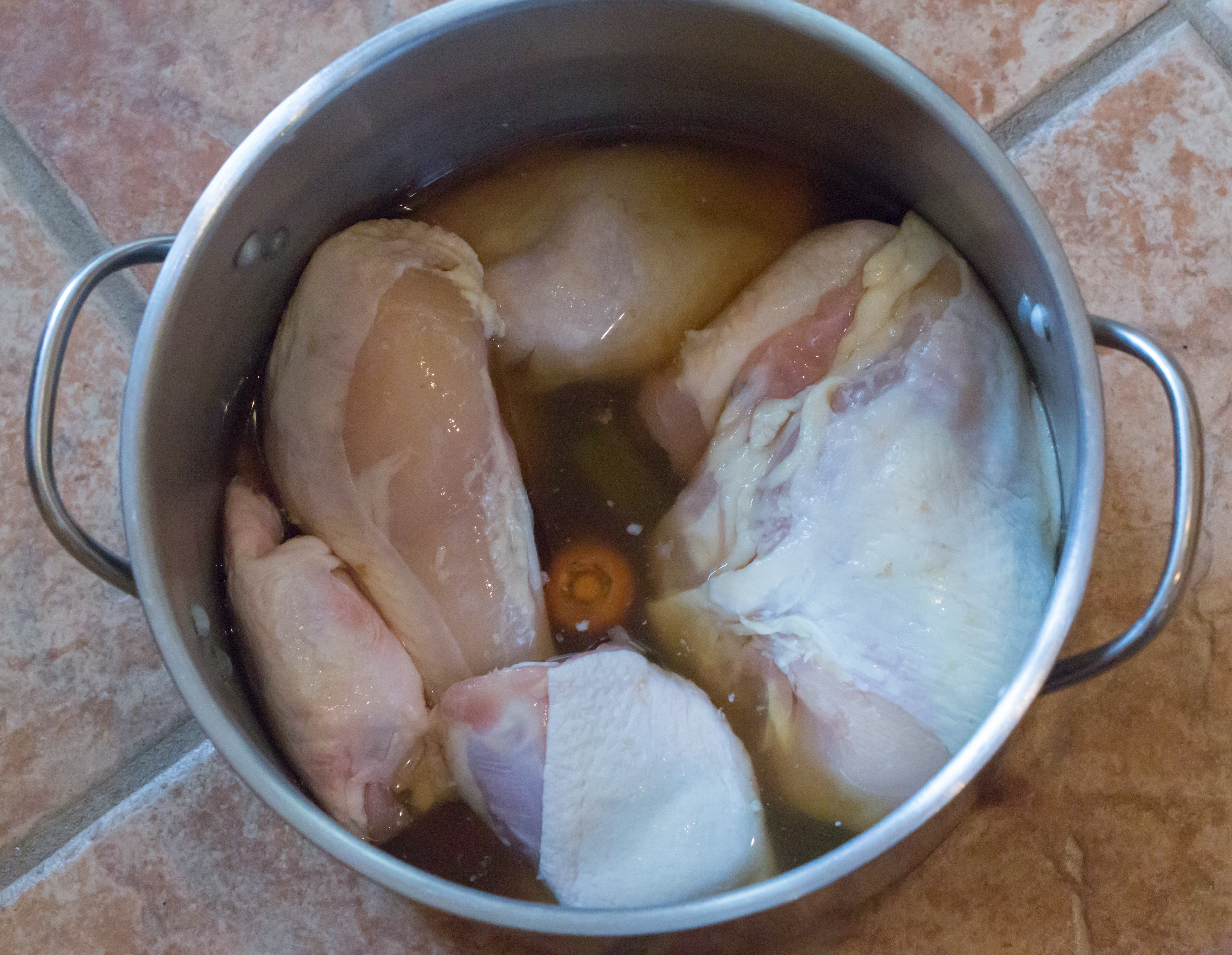
Chicken stock. First, you make your own chicken stock. Actually, you start out with commercial chicken stock, but with your own vegetables, seasonings, and chicken, it becomes home-made and doubly rich. You will need chicken, commercial chicken stock, yellow onion, carrot, celery, garlic, and fresh tomato along with salt and black peppercorns.

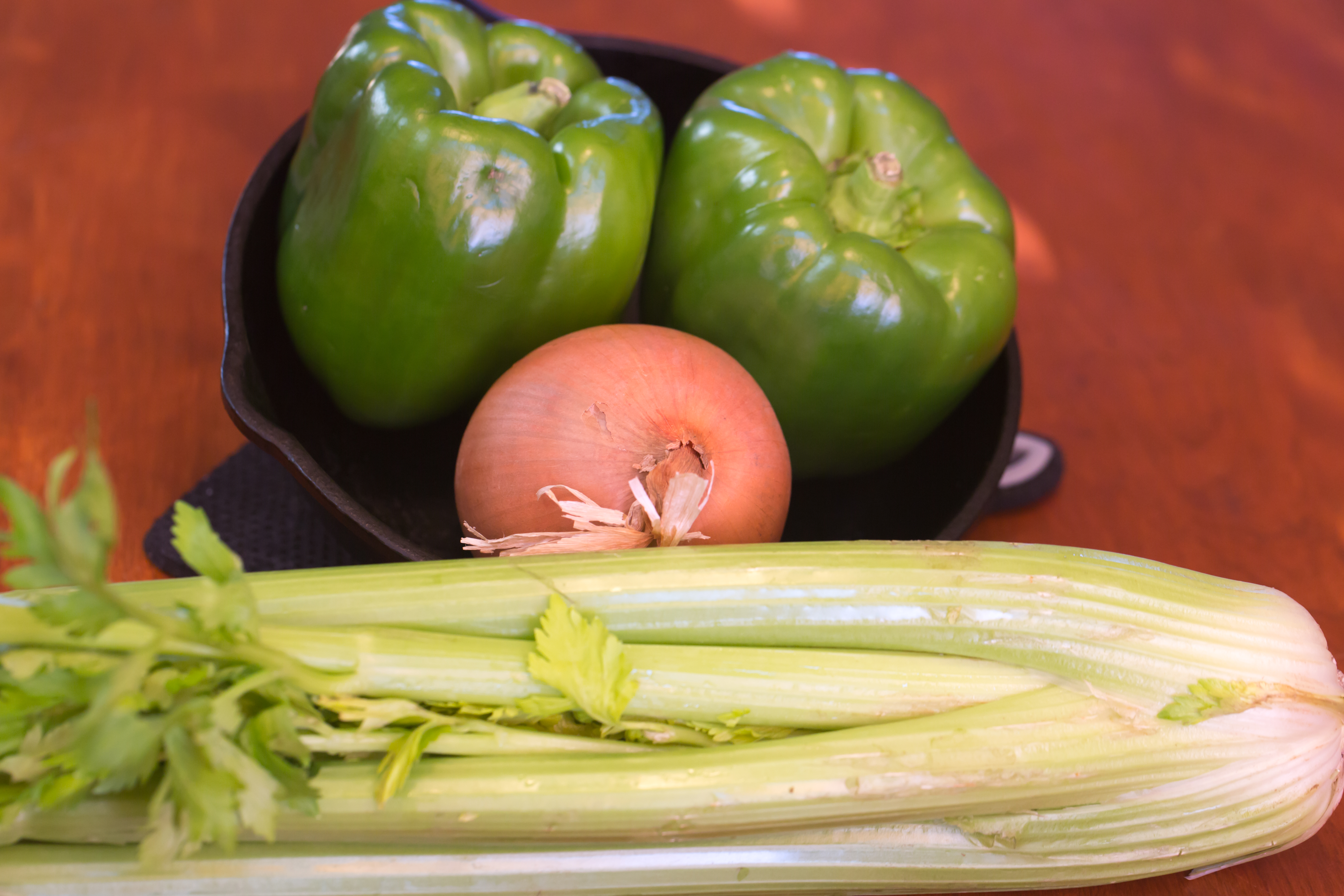
The Cajun Holy Trinity. Second, you need to prepare your vegetables – the so-called Cajun Holy Trinity of onion, green pepper, and celery – before you start to cook. When you make the roux, you will be skating on the edge of disaster. It must be just the right color – as dark as you can make it – but if it burns, you will need to start over. The cut vegetables serve several important parts of the recipe. Of course, flavor is a major purpose, but stopping the roux from further cooking is equally important. That’s why you need to have it at your elbow to dump in the pot just when you think the roux is finished.

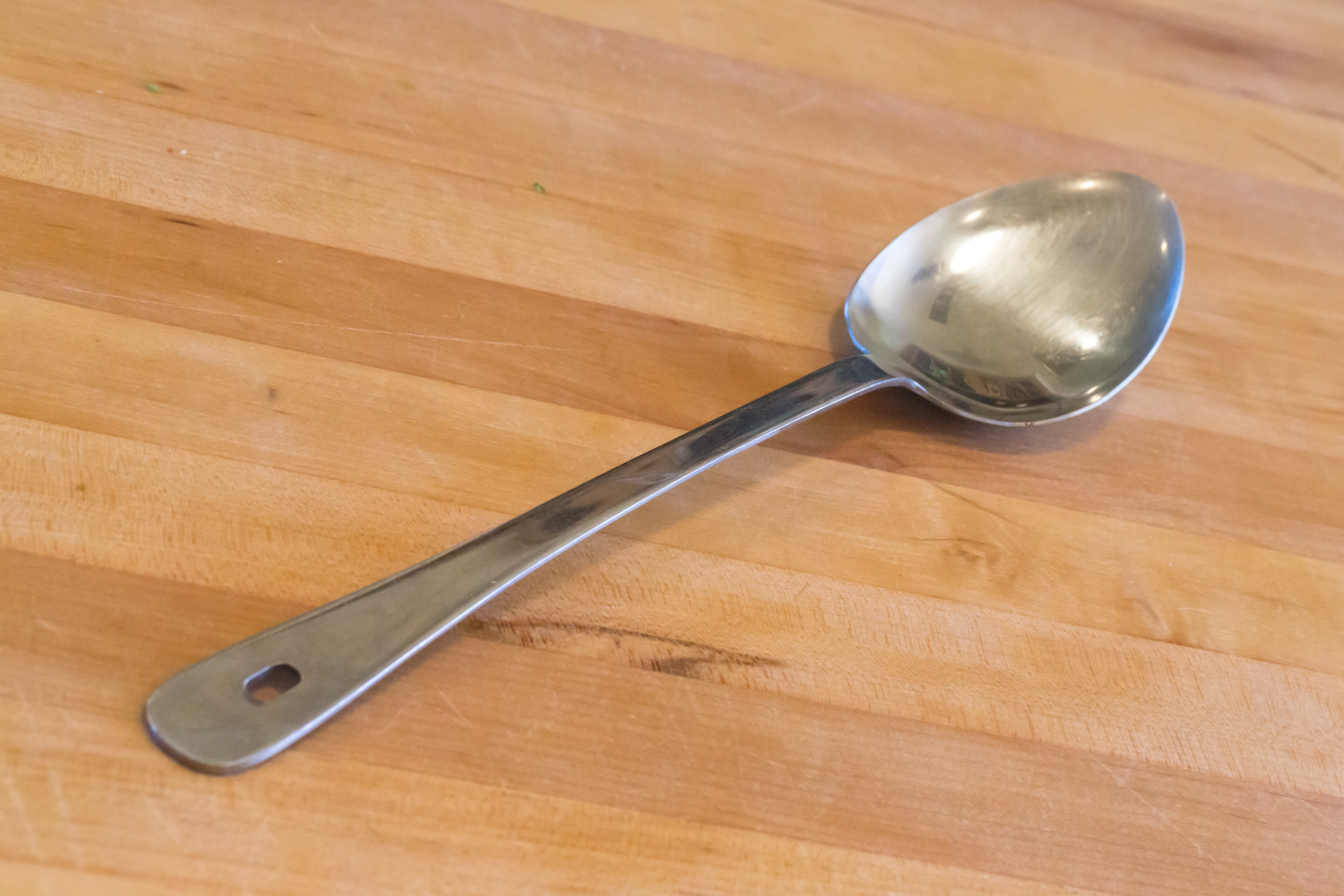
Roux. Third, you need to find the heaviest pot you have and the biggest metal spoon. Undoubtedly you have made a traditional French roux for béchamel or as thickening for various soups and sauces. That is not Cajun roux. The whole idea is to get the roux as dark as you can so that the rich smokiness flavors the soup. That requires constant stirring in a heavy-bottomed pot until your level of fear overtakes you. Any black bits – in other words, if it burns – you have to start over from the beginning.

Thickening.  As the roux darkens,  the flour loses its thickening power while adding to its flavoring power. As a result, there are two other ingredients used to thicken the soup.

First is okra. In fact the OED says that the word, “gumbo” comes from the Angolan word for okra. Many cooks prefer okra in the gumbo during the growing season. In the winter, when gumbo is guaranteed to take the edge from a cold day, filé becomes the preferred ingredient. There are many Cajuns who prefer filé for thickening all year long.

Filé is ground up dried sassafras leaves. If you live in the US South, you probably know where there is a nearby sassafras tree, and you can make your own filé. Aficionados swear it is by far the best to make your own. For the rest of us, there are several Louisiana food companies that sell filé in bottles. Once you buy your filé, the first thing to do is to transfer it to an empty Old Crow half-pint whiskey bottle to serve as your decanter on the dining room table.  Tightly stoppered, the filé keeps for a long time, but if you notice it has lost some of its thickening power, buy a fresh bottle.

Sausage. Traditionally, gumbo is made with andouille sausage. The Louisiana version is made with pork; the French version is made with chitterlings (I think you know what they are) so be sure you know what you are buying.  These days, most large super markets have andouille in the meat section, but if you have a hard time finding it you can substitute Polish kielbasa.

Spice. Gumbo can be as mild or spicy as you like. most folks from Louisiana like it on the spicy side, but food sensitivities in our family dictate a mild version. Fortunately you can add your favorite chile sauce to give the gumbo you prefer. Traditionally, Tabasco is often favored, but it has a vinegary punch that some don’t like. There are any number of other Louisiana hot sauces you can choose, or you can opt for Cholula from Mexico, or the current popular hot sauce, sriracha.

RECIPE

Louisiana Andouille and Chicken Gumbo

Ingredients

  • 32 ounce container of commercial chicken stock
  • 1 whole chicken, giblets and neck removed
  • 1 large yellow onion, halved
  • 2 ribs celery cut in thirds
  • 1 large carrot, cut in thirds
  • 2 cloves garlic
  • 3 or 4 stems of parsley
  • 1 teaspoon salt
  • 12 whole black pepper corns
  • water to cover
  • 1 ripe tomato
  • 1½ pounds andouille sausage
  • 1 large yellow onion, chopped
  • 3 ribs celery chopped
  • 2 large green bell peppers, seeds removed and chopped
  • 5 scallions with green tops chopped + more for garnish
  • 2/3 cup vegetable oil (You may use lard if you want to be authentic)
  • 2/3 cup all-purpose flour
  • Louisiana hot sauce (optional)

Method

  1. In a large stock pot, pour in the chicken stock. Add the chicken, onion, celery, carrot, garlic, salt and pepper. Add water to cover the chicken. Then bring to a boil, and reduce the heat to a simmer. Cook until the chicken is done, about 45 minutes. With your hand, squeeze in the tomato, seeds and all. Simmer for an additional 10 minutes. Remove from the heat. Remove the chicken to cool until it is easy to handle. Strain the stock into a large bowl, and set aside.
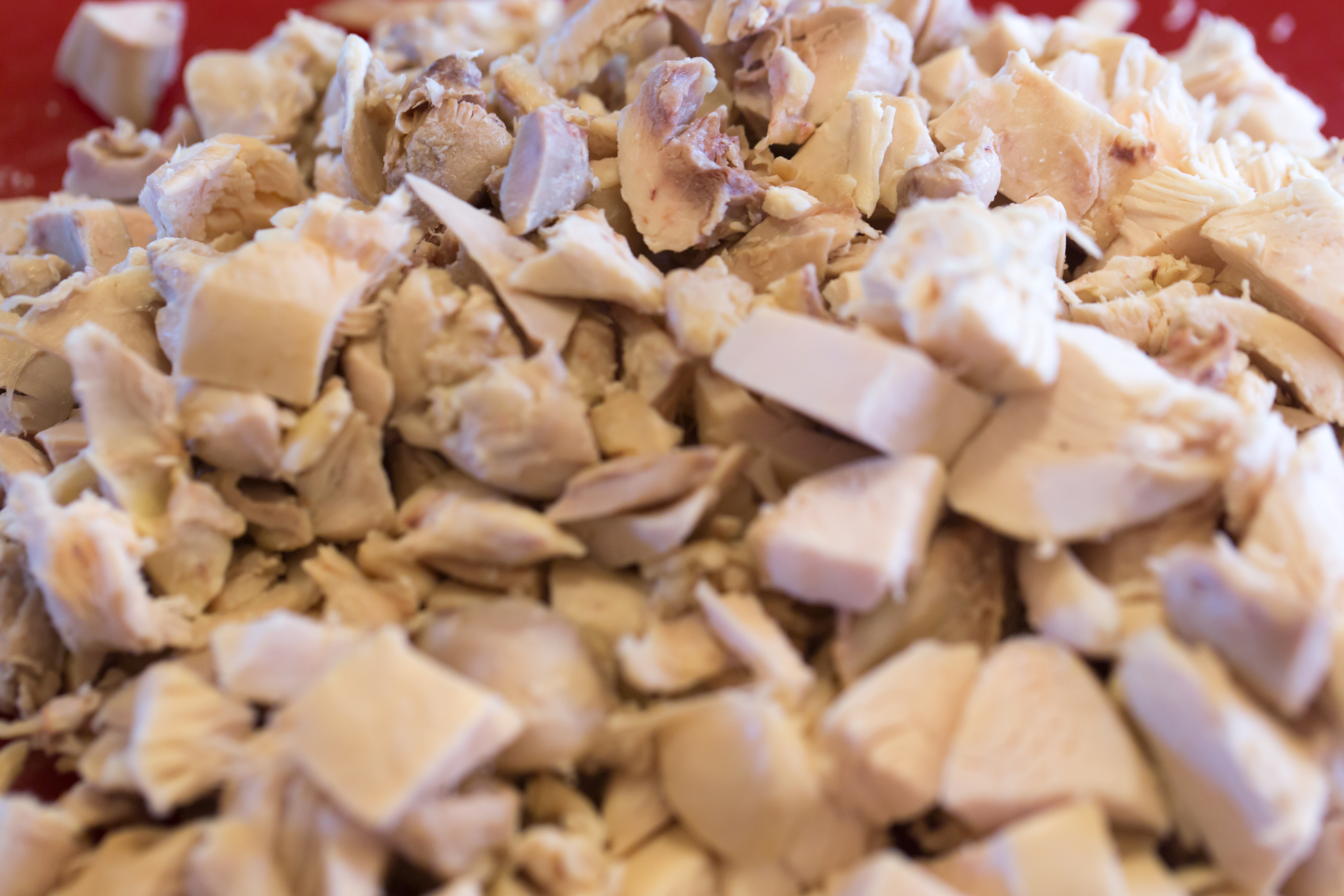
  2. When the chicken is cool enough to handle, remove the skin. bones, and any veins you might see. Cut the chicken meat into bite sized pieces and set aside.
  3. Cut the andouille sausage into 1 inch sections and then quarter each section. Set aside.
  4. Combine the chopped onion, celery, green pepper, and scallions in a large bowl. Place next to the roux pot so you can add it quickly to the roux before it burns.
  5. Using a very heavy pot and long-handled metal spoon, place the oil over high heat. As the oil begins to shimmer and just before it smokes, sprinkle the flour gradually into the oil while stirring constantly. The flour should sizzle as it hits the hot oil. It will start to darken immediately. Constant stirring is essential, being ure to scrape the corners of the pot. You can stop whenever the roux is colored to your liking, but Cajun moms will push it until it is almost black (ALMOST black – if you get some black flecks, it means that you have burned the roux and need to start over)
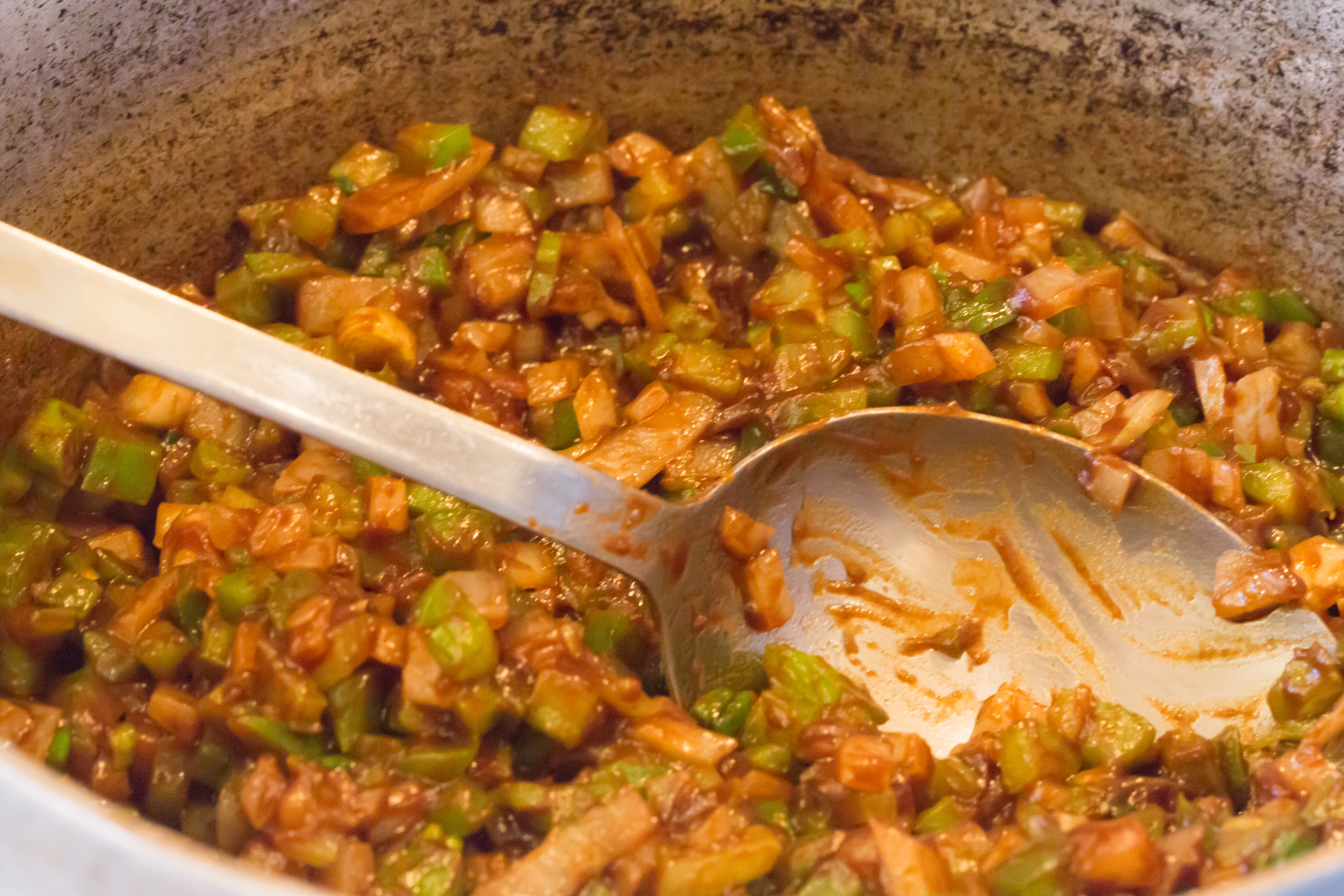
  6. Immediately dump in the chopped vegetables to stop the roux from darkening further. Stir. Reduce the heat to medium-low, and continue to cook until the vegetables are soft and translucent.
  7. Stir in enough of the chicken stock to get the consistency you want. Return to the boil. Add the chicken and andouille and simmer for another 30 minutes to meld the flavors.
  8. Correct the seasoning with salt, pepper, and hot sauce.
  9. Serve in a large soup bowl over a heap of cooked white rice. Pass chopped scallions, filé, and more hot sauce so that all can suit themselves.


A bowl of chicken and andouille gumbo

A bowl of chicken and andouille gumbo


File in the obligate Old Crow bottle

File in the obligate Old Crow bottle


Your choice of Louisiana hot sauces

Your choice of Louisiana hot sauces


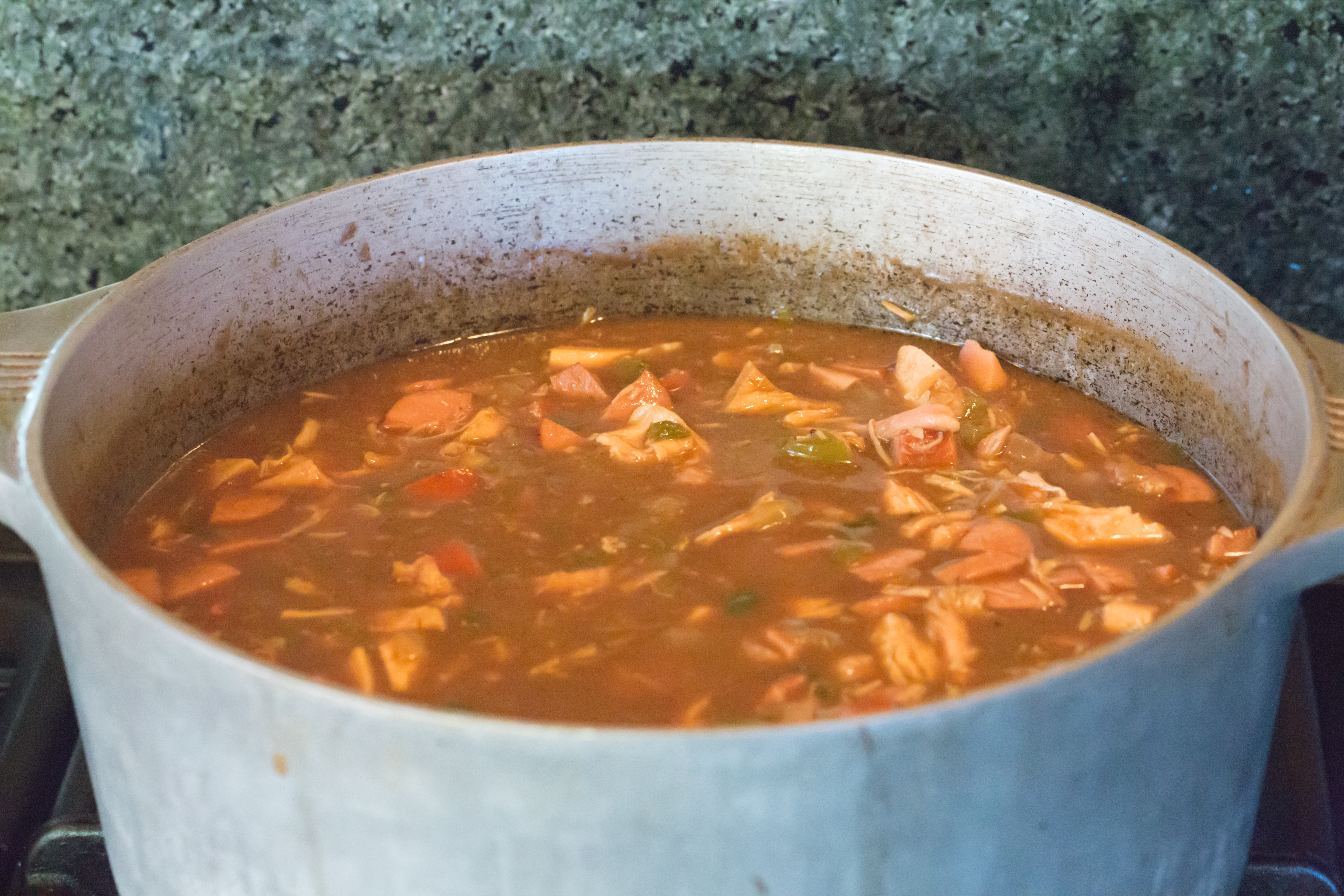
Apot of gumbo ready to be served over rice

Apot of gumbo ready to be served over rice


Cooked chicken ready for the gumbo pot

Cooked chicken ready for the gumbo pot


Andouille sausage

Andouille sausage


Gumbo base simmering

Gumbo base simmering


The Cajun Holy Trinity stirred in to stop the roux from darkening too mucn

The Cajun Holy Trinity stirred in to stop the roux from darkening too mucn


Roux beginning to cook but it needs to get a lot darker than this

Roux beginning to cook but it needs to get a lot darker than this


You need the biggest metal spoon you can find to keep you from getting burned with Cajun napalm

You need the biggest metal spoon you can find to keep you from getting burned with Cajun napalm


The bowl of chopped vegetables ready to be dumped into the roux

The bowl of chopped vegetables ready to be dumped into the roux


Chopped vegetables

Chopped vegetables


The Cajun Holy Trinity

The Cajun Holy Trinity


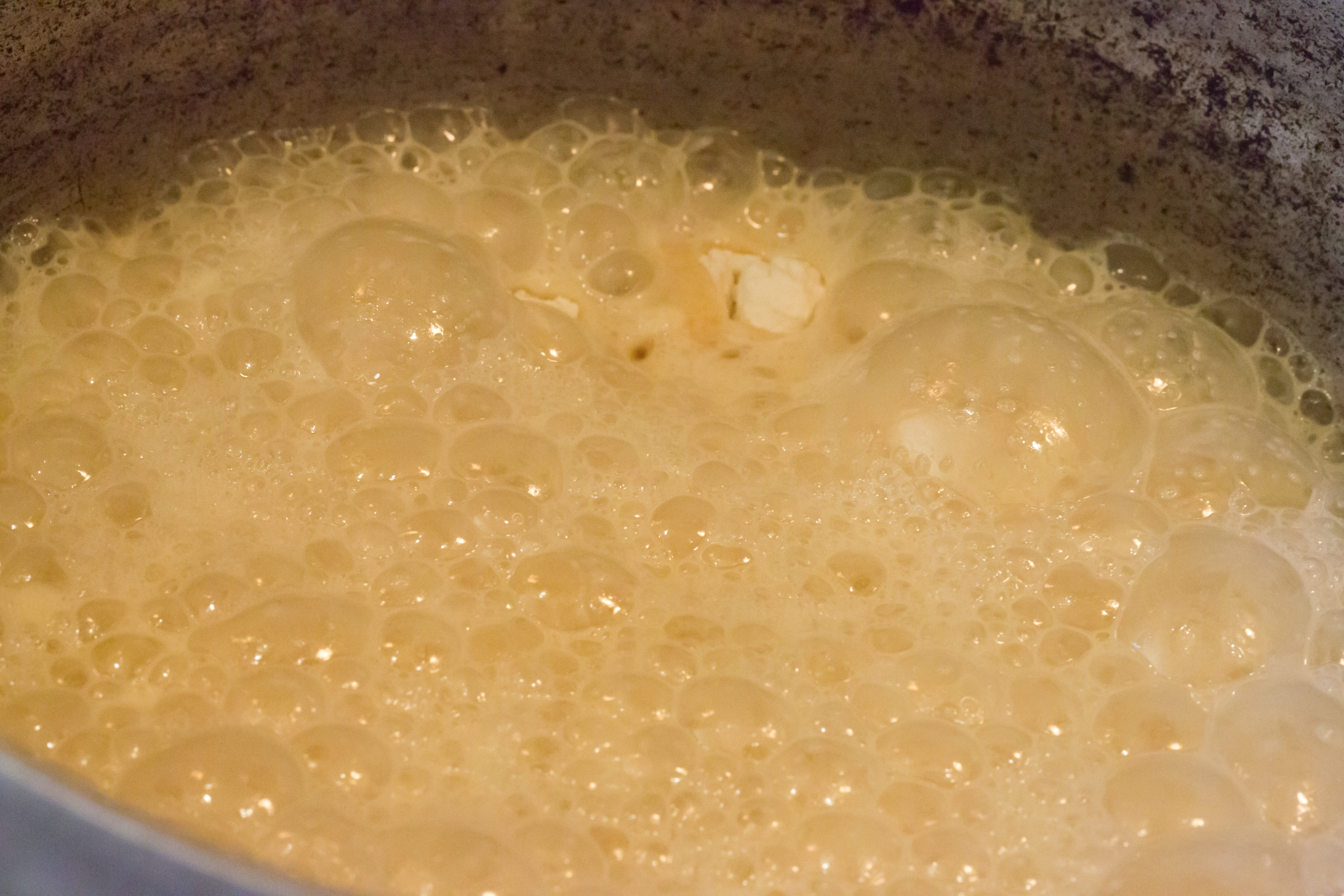
Cooking the chicken to also make a double-rich chicken stock

Cooking the chicken to also make a double-rich chicken stock

This recipe should easily serve 8 to 12 hungry people

5 Comments

Filed under Food, Photography, Recipes