BOXED MACARONI DINNER INCOGNITO

Some time ago I wrote about James Kraft and his invention of Velveeta processed cheese food. His small company morphed into a giant food manufacturer that has been responsible for some of the inventions that have made American cuisine what it is. Those inventions include Miracle Whip salad dressing, Cheez Whiz, Parkay margarine,  and arguably the most famous of all, the Kraft Macaroni and Cheese Dinner that came into being in 1937.

Since then, there is probably not a single American child who has not had boxed macaroni and cheese. In fact, in our family it is a child’s favorite that is often preferred to Mom’s carefully crafted (no pun intended) macaroni and cheese made from the finest ingredients. The good news is that children’s tastes change as they grow older.

Recognizing the appeal of boxed macaroni and cheese dinners with kids, some time back when we were watching over some of our grandchildren for several days, I bought a box but wound up not using it. It came home with us and has been residing in our pantry for awhile (It is virtually indestructible and will probably last forever, along with my box of Velveeta). It has become a bit of an embarrassment, so when I was reorganizing the pantry a while back, I decided to use it with the sub-plot of disguising it so much that it would fool an adult.

Well, it turned out to be pretty well disguised, but sorry to say, you will not be fooled. Still it was a pleasant diversion and something that went ok with soy-sauce-and-lemon-vinaigrette-braised flounder.


RECIPE

Boxed Macaroni Dinner Incognito

Ingredients

  • 1 7.25-ounce package of Kraft macaroni and cheese dinner
  • 1 10-ounce package of frozen spinach, thawed
  • 1 teaspoon Pernod (optional)
  • 5 button mushrooms, sliced
  • 2 tablespoons olive oil (doesn’t need to be EVOO)
  • salt and pepper
  • ¼ cup panko
  • 1 ounce Parmesan, grated
  • butter to dot the top of the casserole

Method

  1. Prepare the macaroni and cheese dinner according to instructions on the box. Pour the finished dinner into a bowl and set aside.
  2. With your hands, squeeze as much water out of the thawed spinach as you can. Chop finely.
  3. Saute the mushrooms over medium heat in the olive oil. Drain.
  4. Combine the spinach and mushrooms with the prepared dinner. Stir in Pernod to your taste, but be careful as it can be overpowering if used too liberally)
  5. Adjust the seasoning with salt and pepper
  6. Top with panko and grated Parmesan. Dot with butter.
  7. Bake in the middle of a 350° F (177° C) oven for 40 minutes or until the top is browned and bubbling. Serve.


5 Comments

Filed under Food, Photography, Recipes

PAPPARDELLE WITH FAVA BEANS AND PROSCIUTTO

This past week I discovered a new vendor at the farmers market, a young man with a big basket of fava beans. I bought what I thought was a huge bag, forgetting that fava beans are one of those joys of fresh vegetables that is associated with a lot of effort and a very small return except in flavor. I shelled what looked like a quarter bushel of favas,  blanched the beans, took off the rubbery outer layer, and wound up with a cup of bright green beans. It’s no wonder that many cooks consider them either the equivalent of gold or not worth the effort.

Fava beans are one of the few (only?) Old World beans, and they have been grown for centuries in the Mediterranean basin. It seems a quirk of geography and genetics, then, that some individuals of Mediterranean extraction, most commonly, may harbor a deficiency of an enzyme, glucose-6-phosphate-dehydrogenase (G6PD for short) that makes them susceptible to substances found in fava beans. If an individual is sensitive, he – more common than she – may experience a sudden illness with rapid breakdown of red blood cells, and even kidney failure and death unless it is recognized and rapidly treated. The illness is well-known and has been called favism to show the link with fava beans. Fortunately, the vast majority of individuals can eat fava beans without worry.

I had thought that favas and prosciutto would go well with lightly sautéed bucatini pasta, but alas there was none to be found in any of the local stores. At that point I turned to my copy of Encyclopedia of Pasta, written in Italian by Oretta Zanini de Vita and translated by Maureen B. Fant (University of California Press, Berkeley, 2009). If you haven’t seen that little volume, you should check it out. It describes nearly every pasta shape you can imagine, tells how each pasta is made, and suggests how to use each one.

With all of the sensory overload of that beautiful book, I remained undecided until I remembered some wonderful pasta that I had purchased at our village market. I found it in the pantry, four-foot lengths of pappardelle folded in half and dried for “easy storage”. The manufacturer, Maestri Pastai,  makes all kinds of unusual types and sizes of pasta. That’s great if you have a hard time finding exactly what you are looking for and don’t have the time or skill to make it yourself. Check out their website.

The rest of the ingredients for this dish were easy to find. I had a spare package of prosciutto in the refrigerator, and that seemed like the perfect foil for the favas. The scallions came from the market, the mint from the back yard, and there is always a chunk of Parmesan in the refrigerator.

RECIPE

Pappardelle with Fava Beans and Prosciutto

Ingredients

  • 2 pounds fresh fava beans
  • 5 ounces dried pappardelle
  • 3 tablespoons unsalted butter
  • 3 tablespoons olive oil
  • 4 scallions cleaned and cut into ½ inch slices, white and green ends
  • 3 ounces prosciutto, thinly sliced and cut or torn into bite-sized pieces
  • 25 fresh mint leaves cut finely into chiffonade
  • 2 ounces fresh Parmesan, grated
  • salt and pepper

Method

  1. Shell the fava beans by breaking off one end and opening the pod along the seam. Collect the beans in a small bowl
  2. Plunge the shelled beans into two quarts of vigorously boiling salted water. Return to the boil for one minute – no more – and then drain the beans and transfer to a large bowl filled with ice water.
  3. When the beans have cooled, remove the outer skin with your fingers, being careful not to mash the beans. Collect the bright green inner beans in a small bowl and set aside.
  4. In a large pot, bring three quarts of salted water to the boil. Add the dried pappardelle and stir occasionally until the pasta is cooked, al dente, about 12 minutes, longer if you live at high altitude. Drain the pasta but do not rinse.Return to the pot along with the butter and olive oil. over medium heat. Add the scallions. Stir occasionally until the butter is completely melted and slightly colored. The pasta should have absorbed the oil and butter and sautéed lightly, but not browned.
  5. Stir in the fava beans and prosciutto until they are warmed through – 2 or 3 minutes. Stir in the mint leaves.  Adjust the seasoning with salt and pepper. Top with grated Parmesan,  and serve immediately.

5 Comments

Filed under Food, Photography, Recipes

STUFFED SQUASH BLOSSOMS REDUX

It’s the time of year again when squash blossoms make their appearance at the local farmers market. When that happens, I always buy a dozen for stuffing. Of course, if you have your own zucchini patch, you can harvest your own squash blossoms. Choose the male flowers without the swelling at the bottom that will ultimately become the mature squash.

It is surprising how many things you can do with these delicate flowers. There is a lovely soup, sopa de flor de calabazas, and you can use them in quesadillas, pancakes, etc., etc., but I always wind up stuffing them.  Whatever you do with them, use them the day you buy or pick them because they fade very quickly. If the blossoms have stems, you can keep them fresh in ice water in the refrigerator with a plastic bag over them, just as you keep parsley and other herbs. Even then, you should try to use them the same day you buy or pick them.

Exactly three years ago, I posted a recipe for stuffed squash blossoms which I liked a lot (still do), but the batter was a little heavy. The mushrooms I used to stuff them were tasty, but there are so many other options, that I thought you might like this version which has a lighter tempura batter and a stuffing of local ingredients. You can even fry squash blossoms with no stuffing and no batter at all. In truth, whatever you do with the flowers, they almost always turn out delicious.

One step that is often overlooked is the removal of the stamen. You can stuff the blossoms with the stamen still in, but it may make things a little bitter, and besides you want there to be as much room for the stuffing as possible. To perform that little surgical task, you can use a pair of long tweezers. I use a surgical hemostat. Scissors might work, and if your fingers are not too fat, they might work, as well. An important caution with this step is not to tear the sides of the blossom cup or the leaves. If you do that you run the risk of having all the filling run out while frying, even with a patch job. Some images on the internet show part of the flower cut away. If you are just going to stuff the flowers, that will work, but if you plan to fry them, the stuffing needs to be hidden away.

Stuffed squash blossoms sound a bit complicated. They aren’t really, and they are certainly worth the effort.

RECIPE

Fried Squash Blossoms Stuffed with Goat Cheese and Pine Nuts

Ingredients

  • 8 ounces chèvre-style goat cheese softened at room temperature
  • 1 tablespoon fresh lemon juice
  • 2 tablespoons shallot very finely chopped
  • ¼ cup parsley, finely chopped
  • ½ cup pine nuts
  • salt and pepper
  • 12 fresh, large squash blossoms
  • 2 cups all-purpose flour, divided
  • 1 large egg yolk
  • 1½ cups ice water
  • peanut oil for frying

Method

  1. In a small bowl, combine the softened goat cheese and lemon juice to form a smooth paste. Stir in the shallot and parsley.
  2. In a small dry skillet over medium heat, roast the pine nuts for a few minutes, stirring them frequently, so that they brown slightly and release their oils. Be very careful not to burn. Remove from the heat. Cool. Chop coarsely if you like, and stir them into the cheese mixture. Adjust the seasoning with salt and pepper. Set aside.
  3. Prepare the blossoms by removing the stamens, being careful not to tear the petals of the flowers. If the flowers are dusty, you may rinse them, although they do best with as little handling as possible.
  4. With a spoon, pastry sleeve, or your fingers, fill each blossom with stuffing. I have found the greatest success using my fingers. Fill only to the base of the petals so that you can fold them over one another and seal them with a dab of the cheese mixture. Arrange on a plate and chill for the few minutes needed to prepare the batter and heat the cooking oil.
  5. Place one cup of flour in a pie plate.
  6. In a small bowl that is big enough to dip the blossoms individually, beat the egg yolk and ice water together and then stir in the remaining cup of flour. The batter should be smooth, but it is not essential to get out all of the lumps as long as they are not too big.
  7. Fill a deep heavy-bottomed pot with 2 inches of cooking oil and heat to 375°. It’s a good idea to use a thermometer if you have one. Temperature will plunge when you start to fry, so you will need to regulate the flame.
  8. Remove the filled squash blossoms from the refrigerator, and one at a time, dip them into the flour, shaking off any extra. Then dip them into the batter, drain for a minute, and transfer to the hot cooking oil. Working in batches of no more than three or four, fry the blossoms, turning them frequently until they are lightly browned and crisp on all sides.
  9. Drain on multiple layers of paper towel and transfer to a plate in the oven at 200° until they are all fried. Serve immediately.
  10. Three to six individual blossoms make a good appetizer-sized serving for one person. You can gild the lily, so to speak, with a dipping sauce or salsa, but the stuffed flowers can easily stand on their own.


6 Comments

Filed under Food, Photography, Recipes

BLACK HARICOTS VERTS TURNED GREEN

Just as with everything else, there are trends and fashions at the farmers market. Year before last it was cardoons. Last year it was kohlrabis. Now those are old hat. This year one of the new items is black haricots verts. Actually they’re not black but a very deep shade of purple that looks black. The beans are very distinctive, heaped up in baskets next to the regular green pole beans. It’s very hard to resist buying some if you are looking for something a little different to try out.

Many of you experienced cooks probably already know this, but I was surprised and more than a little disappointed when I dropped the beans into boiling water to blanch them, and the purple/black color disappeared. Suddenly my haricots verts were, indeed, green.

Curious to know why that happened, I turned to the most reliable expert on kitchen science that I know, Harold McGee, author of a regular column in the New York Times and numerous books including On Food and Cooking: The Science and Lore of the Kitchen (Second edition, Scribner, New York, 2004). Sure enough, there he had a short scholarly discussion of anthocyanins (pp. 267-268, 281-281) It turns out that the red and purple colors of most flowers and vegetables are due to a group of about 300 related chemicals known as anthocyanins. They are very sensitive to alkalinity and acidity as well as some metals, which help to determine the color that the chemical gives to a flower or vegetable. They are also highly water-soluble, so when the spaces where they are stored break open during the cooking process, the coloration is rapidly diluted and dissipates. Hence, the beautiful black beans turn a beautiful chlorophyll-green. And that’s ok, too, because the blanched haricots verts can be used for whatever might be one of your favorite dishes.

I decided to use them in a chilled salad with scallions and dill, topped with a balsamic vinaigrette. The bright green chlorophyll color was terrific.

RECIPE

Haricots Verts Vinaigrette with Scallions and Dill

Ingredients

  • 1 pound fresh haricots verts, washed and trimmed
  • 4 scallions cut in ½ inch slices, whites and greens included
  • ¼ cup fresh dill fronds, coarsely chopped
  • 1 tablespoon white wine vinegar
  • 1 tablespoon balsamic vinegar (not the expensive stuff)
  • 1 clove garlic, peeled and minced
  • 2 teaspoons Dijon mustard
  • salt and pepper
  • pinch of sugar
  • 6 tablespoons extra virgin olive oil (the good stuff)

Method

  1. In a large pot, bring 2 quarts of salted water to a rolling boil
  2. Add the green beans in a single batch and return the water to the boil
  3. Boil the beans for no more than 4 minutes so that they remain crisp. Drain and immediately plunge into a prepared large bowl of ice and chilled water.
  4. When the beans have cooled, drain and transfer them to the refrigerator until they are ready to use. (Remove any remaining pieces of ice)
  5. Prepare the scallions and dill. Set aside.
  6. Using a whisk and a small bowl, combine the vinegar, minced garlic, mustard, salt, pepper, and sugar.
  7. Whisking continuously, slowly stir in the olive oil to make a vinaigrette. Correct the seasoning.
  8. In a large bowl, combine the haricots verts, scallions, and dill. Dress with the vinaigrette to suit your taste.  Adjust the seasoning. Chill, tightly covered, in the refrigerator for an hour to let the flavors blend.
  9. Serve alone or on lettuce leaves.


5 Comments

Filed under Food, Photography, Recipes

NATIVE PLANTS AND GORDITAS

This last week we drove down to El Paso, Texas, for the New Mexico Native Plant Society annual meeting. Yes, El Paso is in Texas, although there are many who wish it were in New Mexico: many of the residents of the city as well as many Texas politicians. El Paso is in the same time zone as New Mexico, an hour out of sync with almost all of Texas, and the population is decidedly different from those of Dallas and Houston. On top of that, it’s over five hundred miles from El Paso to Houston and San Antonio, and only thirty miles to the New Mexico border and a little over two hundred miles to Albuquerque. But the main reasons that El Paso is part of the New Mexico Native Plant Society is that the ecology (read desert) of El Paso is similar to much of New Mexico; both are on the edges of the Chihuahuan Desert and so the plants are very similar, unlike the live oaks and Spanish moss of East Texas.

We lived in El Paso for a number of years, so the meeting was an opportunity for us to renew old friendships, visit our old neighborhood, and enjoy some of the good regional food of the Border.

Susan went to meetings while I drove around old haunts and took naps, but both of us took time out to eat at two of our old-time favorites, the Little Diner in Canutillo, Texas, and the H & H Car Wash & Coffee Shop in downtown El Paso. We ate at a trendy new restaurant in the refurbished warehouse district. We didn’t much like it, so it will go nameless. But we also enjoyed drinks and snacks in the Liquids Bar in our hotel, a wonderfully revnovated derelict of a hotel that had sat vacant for many years after having a moment of glory in the distant past when Elvis Presley performed there.

Here are a few images of native plants from New Mexico that you might enjoy.

The Little Diner is a local institution. It is extremely hard to find in a residential area of the little town of Canutillo. It sits right next to a coin laundry, so you can do your washing while you are having lunch. Unfortunately, the original owner has died, and her daughter now runs the place. Some of our El Paso friends reported that it had gone down hill, but we had a great experience. The specialty of the house is gorditas, fat little masa pillows deep-fried, slit open, and stuffed with seasoned beef, cheese, tomatoes, and lettuce. You add the salsa to your liking. They are so unlike the pale copies sold at Taco Bell that you wonder how they share the name. They come three to a plate with beans and a salad, so even a big man should not go away hungry. To my knowledge, gorditas are fairly localized to this part of the border. I have never seen them on Tex-Mex menus in the rest of Texas, and they are not a part of the cuisine around Santa Fe.

Gorditas at the Little Diner

Gorditas at the Little Diner

H & H Car Wash is legendary. It was awarded the 2001 James Beard Award for American Classics. Not bad for a hole-in-the wall with a counter and about 10 stools along with two booths. Never mind that you can get your car washed and filled with gas and also get your shoes polished while you wait your turn for jumping on one of those stools. The day we visited, there were heavy rains, decidedly unusual for El Paso (It’s in the desert, remember?) So the car wash didn’t have much business, and as a result the coffee shop was also not crowded. Being able to speak Spanish helps when you order. Actually, many of the staff speak English, but here you are on their turf, and they don’t cut a lot of slack unless it is clear that you need HELP.

I ordered what I always order, huevos rancheros. Their version is unique, and I favor my own version, but it is still delicious and, anyway, that’s the reason I came to eat. Susan got the eggs and sausage. Since it was Saturday morning, we could have also gotten a bowl of menudo that was heating in a big pot on the back of the flat-top. We both passed, but that’s another story.

The night we ate at the bar, we ordered queso fundido (“melted cheese”). The first time we ever had that dish was nearly thirty years ago in Tlaquepaque, Mexico. It was so good with freshly made corn tortillas that it has been a favorite of ours ever since. The bar’s version came with crostini, cutting across cultures, but it was delicious. I will give you a recipe in a subsequent post.

Queso fundido at Liquids

Queso fundido at Liquids

All in all, we had a great visit, and enjoyed some food that we can’t get locally.


10 Comments

Filed under Food, Photography, Restaurants, Travel

ROASTED CORN AND BACON WAFFLES

Fresh corn on the cob is in season, and we always try to take advantage of the harvest before it’s over. Our favorite way to prepare fresh corn is to boil it for a few minutes, slather it with butter, season it with salt and pepper, and eat it directly off the cob. In our family, there are those who use the circular approach, eating the kernels in orderly fashion as they turn the ear of corn in their hands, and there are those who use “the typewriter” approach, working systematically from one end of the ear to the other before starting over. Either way seems to work.

Very atypically, we had some boiled ears left over after a recent meal, but I didn’t want them to go to waste. My first thought was to make corn soup or chowder. That can be delicious as we found out when Sarah and Evan served it at one of their demonstrations in Shreveport. Then I remembered, I had some leftover bacon (Is there such a thing as leftover bacon?) and that made me think of waffles.

First, I cut the corn kernels off the cob using my special corn cutter. It really doesn’t work all that well, but it is one of those gadgets I am reluctant to throw away. I think a sharp chef’s knife works as well or better. I roasted the corn by popping it in a medium oven for twenty minutes until some of the kernels were lightly caramelized. Then I added the roasted kernels to the cornmeal-based waffle batter and went from there.  Here’s the recipe.

Corn kernel cutting tool

Corn kernel cutting tool

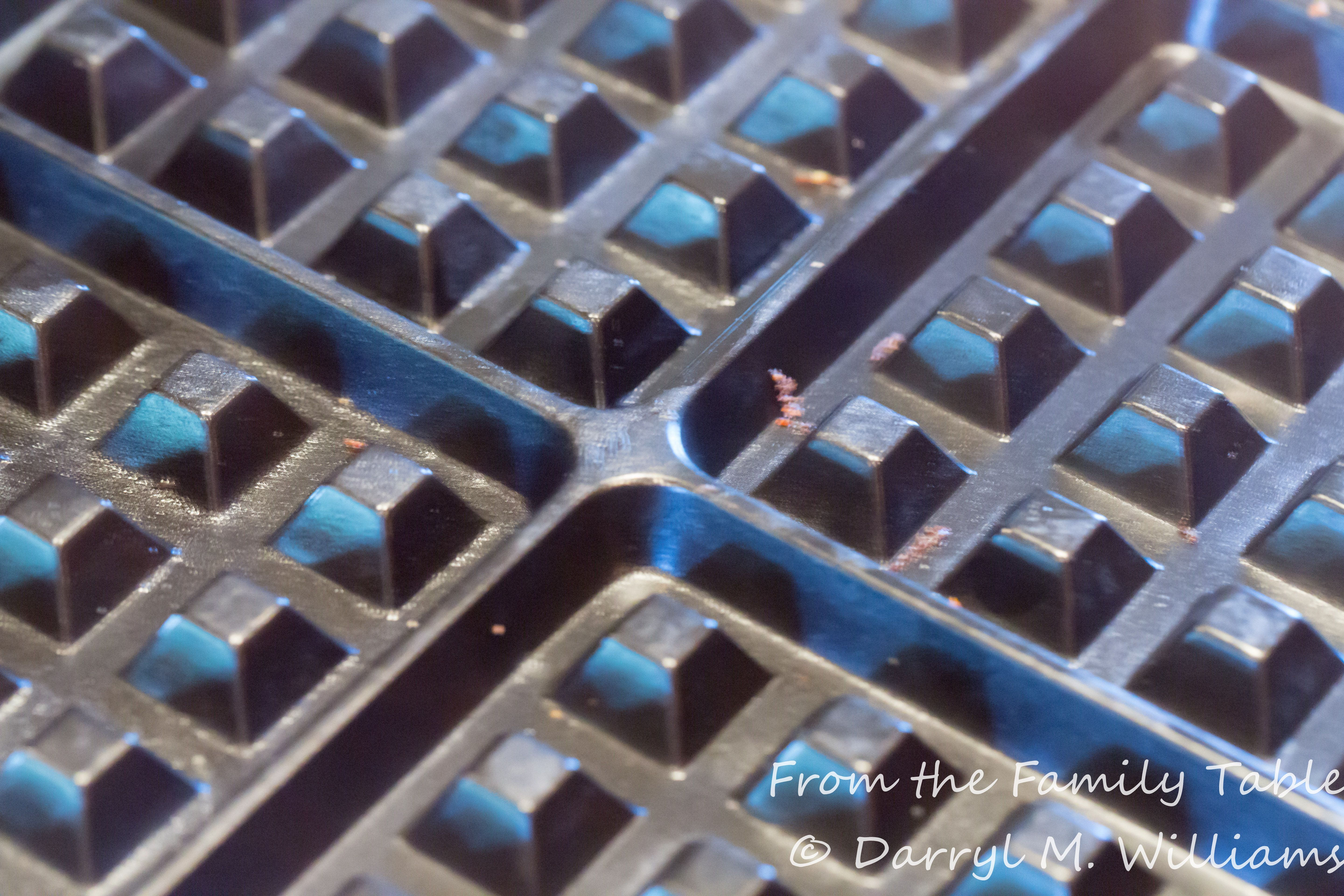
Waffle iron

Waffle iron


Roasted corn

Roasted corn

Roasted corn and bacon waffles with butter and maple syrup

Roasted corn and bacon waffles with butter and maple syrup

RECIPE

Roasted Corn and Bacon Waffles

Ingredients

  • 2 ears boiled corn
  • 2 eggs
  • 1¾ cups buttermilk
  • 1 cup all-purpose flour
  • 2 teaspoons baking powder
  • ½ teaspoon baking soda
  • 1 tablespoon sugar
  • ½ teaspoon salt
  • 1 cup yellow cornmeal
  • ¼ cup melted bacon fat
  • 8 slices of bacon, cut into 1 inch squares

Method

  1. Cut the kernels of  corn off the cobs with a sharp knife or with a special tool. Place the cut kernels in a rimmed baking sheet and place in the middle of a pre-heated oven at 350° F. Turning every five minutes, roast the corn kernels until they are lightly browned. Remove from the oven and cool.
  2. In a large bowl, beat the eggs lightly. Then stir in the buttermilk.
  3. In a separate bowl, combine the  flour, baking powder, baking soda, salt, and cornmeal, whisking together with a spoon or fork
  4. Combine the dry ingredients with the liquid ingredients until smooth
  5. Stir in the roasted corn kernels.
  6. Add the bacon fat, and stir until incorporated.
  7. Ladle the batter into a heated waffle griddle, making sure the corn is well mixed in.  Then sprinkle 4 to 6 bacon pieces on each waffle segment.
  8. When the waffles are brown, repeat until the batter is used up.
  9. Serve the waffles while still warm with a poached or fried egg on top or with butter and maple syrup.
  10. Makes 8 to 10 4½ inch square waffles.

12 Comments

Filed under Food, Photography, Recipes

A TALE OF TWO PEACH ICEBOX PIES: STRAWN’S EAT SHOP REVISITED

During our recent visit to Shreveport, we stopped at our old neighborhood haunt several times. The chicken-fried steaks, hamburgers, and fries were all tasty and much as we remembered them. But the main purpose of our frequent visits was to get a slice of one of their famous icebox pies. Strawberry is probably the most popular, but the fresh peach and coconut cream are not far behind. Although the names identify the fillings, the rest of the contents are very similar: a good down-home crust, a layer of custard, the fruit, and real whipped cream on top that hides the contents. To assist the serving staff, every pie has a slice of fruit plunked down in the middle of the whipped cream. You can buy a whole pie and take it home. Many folks do that, and we did, too, but an honest-to-goodness North Louisiana lunch consists of the plate special of the day, along with sweetened iced tea (Is there any other kind in Louisiana?) and a big slice of pie.

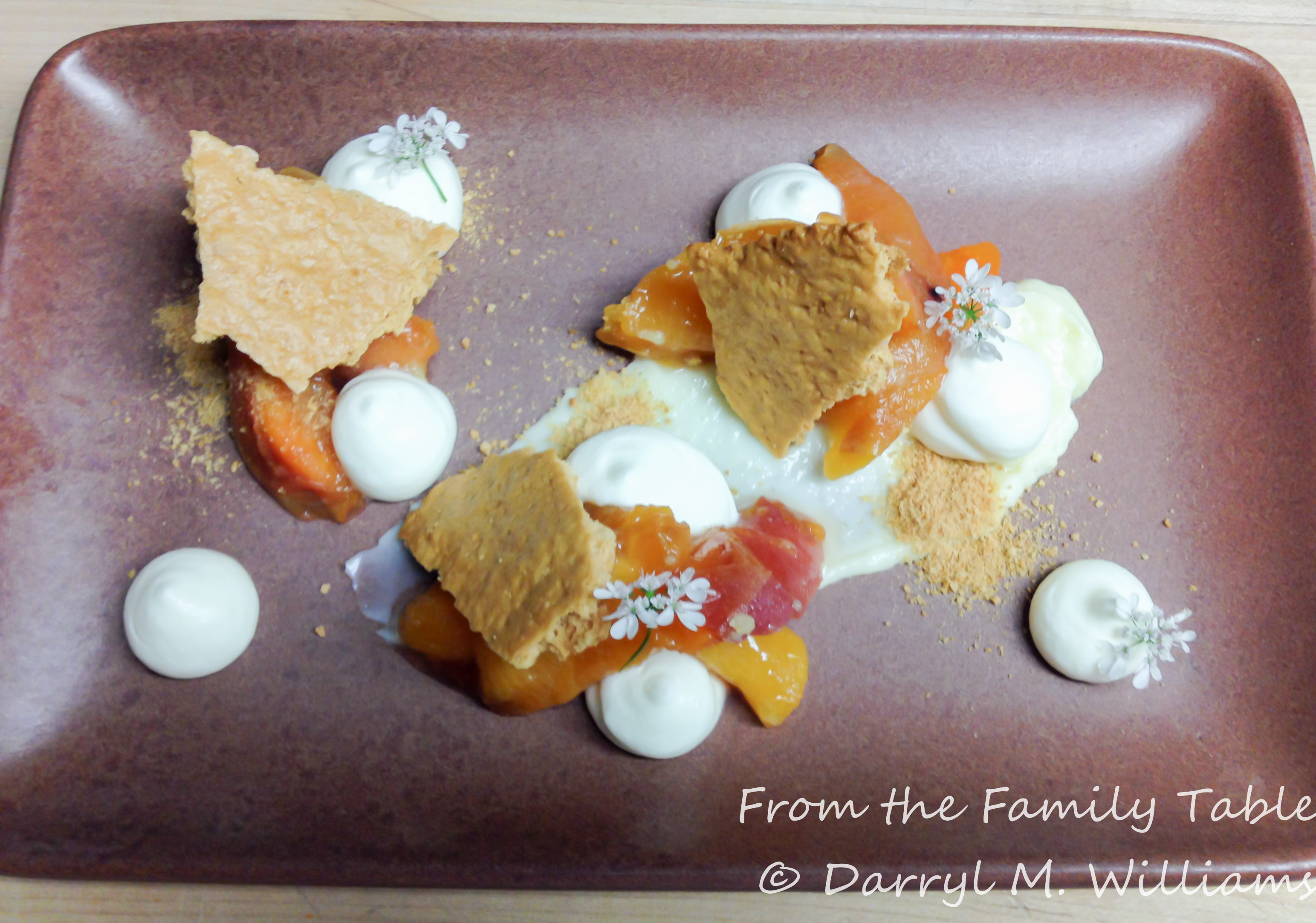
Sarah decided to create a new dessert for Rich Table based upon Strawn’s peach pie. Hers became a deconstructed version with dollops of custard and whipped cream topped with fresh peaches. Along side were pie-crust sables. It turned out to be a very sophisticated dessert that became a big hit the first night it appeared on the menu.

The deconstructed version of peach icebox pie served at Rich Table, San Francisco

The deconstructed version of peach icebox pie served at Rich Table, San Francisco

My version is a little more straightforward: cream pie topped with fresh peaches and whipped cream. Since peaches are in season right now, it is a perfect dessert for a patio meal at sunset.

RECIPES

Almond Pie Crust

Ingredients

  • 1 cup all-purpose flour
  • ¼ cup almond meal
  • ¼ teaspoons salt
  • 1 stick (8 tablespoons) unsalted butter, cut into pieces
  • ¼ teaspoon almond extract
  • 2 teaspoons ice water

Method

  1. Place all of the ingredients in the beaker of a food processor fitted with the metal blade
  2. Pulse several times and then process until the dough forms a ball.
  3. Remove the ball of dough from the processor and wrap with plastic film. It may be a little sticky from the heat of the blade. That’s ok. It will firm up in the refrigerator.  Refrigerate 30 minutes or until firm.
  4. When you are ready to bake the crust, press the dough into the bottom and along the sides of a 9 inch metal pie pan, forming an edge of dough on the rim of the pie pan.
  5. Pierce the bottom and sides of the crust all over with a fork. Bake in the middle of an oven pre-heated to 425° F for 12 to 14 minutes or until the crust is a golden brown. Remove to a cooling rack and cool completely in preparation for filling.

Cream Filling

Ingredients

  • 1 cup whole milk
  • ¼ cup sugar
  • 3 tablespoons all-purpose flour
  • ¼ teaspoon salt
  • 4 egg yolks, beaten until smooth and slightly foamy
  • 2 teaspoons vanilla extract
  • ¼ teaspoon almond extract
  • 2 tablespoons unsalted butter

Method

  1. In a heavy saucepan, bring the milk to a boil and turn off the heat
  2. Combine the sugar, four, and salt in a medium bowl. Very slowly pour the hot milk into the dry mixture, whisking continuously to prevent lumps of flour from forming. As you add the milk, you can increase the rate of pouring until it has been completely added to the mixture.
  3. Return the mixture to the saucepan and adjust the heat to medium. Stirring continuously, heat the mixture slowly until it boils and thickens.
  4. Remove from the heat and cool for a minute. Beat in the egg yolks. Then return to the heat, and return to the boil for one minute. Remove from the heat, and beat continuously for another minute, allowing it to cool slightly.
  5. Stir in the vanilla and almond extracts and butter until they are completely incorporated. Transfer to a bowl. Cover directly with plastic film and refrigerate for at least one hour until you are ready to assemble the pie.

Peaches and Whipped Cream Topping

Ingredients

  • 5 medium ripe peaches
  • 1 tablespoon sugar
  • 1 cup heavy whipping cream
  • 1 tablespoon confectioner’s sugar (or to taste)

Method

  1. Blanch the peaches in boiling water for 10 seconds and then cool
  2. Peel the blanched peaches and cut them into slices. Sprinkle with sugar and refrigerate, covered, until ready to use.
  3. When you are ready to assemble the pie, whip the cream with confectioner’s sugar until it forms  stiff peaks.

Assembly

  1. Spread the pastry cream evenly on the bottom of the pie shell.
  2. Drain the peach slices if necessary, and arrange over the top of the pastry cream
  3. Cover the peaches completely with the whipped cream. Refrigerate for one hour before serving.


8 Comments

Filed under Food, Photography, Recipes, Restaurants, Travel

DILLED-SALMON PANZANELLA – ITALIAN BREAD SALAD

It’s summer, and the perfect time for a refreshing salad. In our family, recipes for panzanella, the traditional Italian bread salad, are currently all over the place. Sarah and Evan made a version for their cooking demonstrations in Shreveport that included pork from their pig-butchering demonstration. Now they have a recipe in the July issue of Food and Wine (pages 172-173)  for a version that uses rotisserie chicken from the grocery store and fresh strawberries. Carol in Los Angeles made her recipe for us during our recent visit there. Hers was a more classic rendition that was equally delicious and went well with barbecued pork ribs.

Here is my spin. It contains Romaine lettuce and salmon, which are not included in  traditional recipes, but I think they add to the flavors.  I know, I know -salmon doesn’t even sound Italian, but Marcella Hazan has two salmon recipes and a commentary in her  Essentials of Classic Italian Cooking (Alfred A. Knopf, New York, 1992). I felt justified in using salmon. Try to use wild-caught fish if you can, but farmed salmon will also work. If you don’t like salmon, then shrimp or shell fish would probably also be tasty.

As well, don’t even bother trying the recipe if you don’t have a good quality artisanal rustic loaf of bread, or the end result will be a limp dough ball. The bread in this recipe was the farm loaf from a wonderful local artisanal bakery, Sage Bakehouse.

RECIPE

Dilled-Salmon Panzanella

Ingredients

  • 4-6 ounces salmon fillet, pin bones removed
  • fish stock, enough to cover salmon
  • ½ cup coarsely chopped dill fronds
  • salt
  • 1 garlic clove, peeled and coarsely chopped
  • 3 anchovy fillets, drained
  • 1 tablespoon capers, drained
  • 1 large Santa Fe Grande pepper, seeded and sliced into ¼ inch rings (any sweet yellow pepper may be substituted)
  • ¼ cup + 3 tablespoons  extra virgin olive oil
  • 1 tablespoon red wine vinegar
  • 1 tablespoon champagne vinegar
  • 1 small red onion
  • 4 cups 1-inch bread cubes (4 1-inch slices of a good artisanal rustic loaf should yield about 4 cups. Remove crusts if you like)
  • 3 large, ripe tomatoes
  • 2 small snacking cucumbers cut into ½ inch rounds
  • 1 Romaine heart washed and torn into bite-sized pieces
  • salt and pepper to taste

Method

  1. In a saucepan large enough to hold the salmon, bring the fish stock to the boil, and then reduce to simmer. Add the prepared salmon and poach for 5 minutes or until cooked through, turning once. Remove the salmon to a plate to cool
  2. Remove the skin from the cooled salmon, and with a fork, pull the fish into bite-sized pieces. Place in a covered dish, salt to taste, and add the chopped dill. Chill in the refrigerator, covered, until ready to add to the salad.
  3. Using a mortar and pestle, mash the garlic, anchovies, and capers into a coarse paste. Transfer to a small bowl and add  the pepper rings along with ¼ cup of olive oil and the vinegars. Mix well and let stand at room temperature until ready to assemble the salad.
  4. Slice the red onion into rounds, preferably suing a mandoline, and place in ice water until ready to be drained and added to the salad.
  5. On a small rimmed baking sheet, drizzle the bread cubes with the remaining olive oil, and place in the middle of an oven preheated to 350° F. Toast for 20 minutes, stirring every 5 minutes or so. When the bread cubes are lightly browned, remove from the oven to cool.
  6. Place the bread cubes in your serving bowl. Cut one of the tomatoes into large chunks and squeeze over the bread, using a food mill to release the juice and bits of pulp, leaving skins and seeds behind. Stir the bread cubes so they absorb the juices and let stand for 10 minutes. (Actually, I used a potato ricer, which is much easier to clean than my food mill)
  7. Blanch the remaining 2 tomatoes in boiling water for 10 seconds. Cool, peel, seed, and cut into ½ inch chunks.
  8. Assemble the salad by adding the  peppers and their marinade, drained red onion, tomatoes, cucumbers and lettuce to the bowl of bread cubes. Gently stir in the salmon and chopped dill. Adjust the seasoning with salt and pepper if needed. Toss and serve immediately.


4 Comments

Filed under Food, Photography, Recipes

CREAMED PEAS, NEW POTATOES, AND PEARL ONIONS – BOUNTY FROM THE FARMERS MARKET

I went to the farmers market this weekend and was surprised to find that the fruits and vegetables usually available this time of year were missing. We live at 7,000 feet, so the growing season is usually later than in other parts of the country. We also had a late spring,  and things are just behind schedule. On top of that, I’ve recently visited farmers markets in Southern California, Texas, and Louisiana where the season is much further along.

The market did have a lot of greens and root vegetables, but not many stone fruits or tomatoes. I found a few heirloom tomatoes that had been grown under protective tents. I’m going to use those to make panzanella. I also found the first peaches of the season, and I plan to use those for my version of Strawn’s Café Famous Peach Ice Box Pie.

The big finds, though, were green shell peas and tiny new potatoes. When I was growing up, we always planted green peas by Saint Patrick’s Day to assure a good crop. Then, when they came in, my grandfather, father, and I would sit on the back step, eating them raw, fresh out of the pod. In the American South, green peas are called English peas to distinguish them from the black-eye, Crowder, purple hull, and cream peas that are so important there. I don’t know what the English call green peas. Maybe one of my blogger friends from the UK can help me out.

The freshly dug potatoes looked delicious, and at one stand they had been carefully sorted by size, so that one basket was filled with tiny potatoes no more than an inch and a half across and all practically the same size. Boiled new potatoes like those are among the luxuries of early summer.

All of that reminded me of one of my favorites of childhood: creamed peas, new potatoes, and pearl onions. So that’s what I made for supper. Even though that’s an old-timey dish, it was every bit as good as I remembered.

RECIPE

Creamed Peas, New Potatoes, and Pearl Onions

Ingredients

  • 1 pound small new potatoes, washed
  • 1 cup pearl onions, fresh or frozen
  • 1½ pounds unshelled green peas, shelled
  • 2 tablespoons butter
  • 2 tablespoons all-purpose flour
  • 1 cup whole milk
  • salt and pepper
  • ½ teaspoon sesame oil or to taste
  • 3 tablespoons fresh dill fronds, snipped

Method

  1. Bring a large pot of salted water to the boil. Add the potatoes, return to the boil and cook until the potatoes are pieced with a cooking fork, about 20 minutes. They should be not quite cooked through.
  2. Add the pearl onions and return to the boil for another 5 minutes. Then add the peas and boil for another 5 minutes or until the peas are done. Drain.
  3. In the meantime, in a small saucepan over medium heat, melt the butter and stir in the flour. The mixture should be foaming. Stir for a few minutes to cook the flour.
  4. Pour in the milk and stir continuously until the mixture thickens. It is alright if it begins to boil, but at that point remove from the heat.
  5. Adjust the seasoning with salt and pepper and add sesame oil to taste. Be gingerly, as sesame oil can be overpowering. Stir in the snipped dill
  6. Pour the sauce over the drained vegetables. Mix until well combined. Serve immediately.
  7. Serves two to four as a side dish.


4 Comments

Filed under Food, Photography, Recipes

CHOCOLATE VELVET ICE CREAM

Our older daughter, Carol, loves to cook. During our recent visit to help her unpack, we thought that we would order a lot of take-out, but she insisted on cooking in the midst of unpacking, dealing with repairmen and installers, working as a full-time attorney, and serving as scheduler and chauffeur for many adolescent activities. Never mind her role as a health care activist.

Carol is a great all-around cook, but her specialty is desserts for which she always gets her kids to “help”. Mostly because of that, we usually gain at least five pounds on any visit to Los Angeles.

This time, she made some delicious outdoor meals (It is summer near the beach in Southern California, after all.) along with two outstanding desserts: a cherry/peach tart made from fruit she bought at the farmers market, and this chocolate velvet ice cream.

The original recipe for the ice cream was published in the August, 1997 issue of Gourmet magazine. It is now on the web at the Epicurious web site where it gets a four fork user rating, and 88% of correspondents say they would make it again. . It has enough chocolate for even the most serious chocoholic and is amazingly creamy and smooth. Chocolate ice cream is my grandson’s favorite dessert, so he was in heaven and enthusiastically helped with the preparation.

You will need an ice cream maker, but the handy little Cuisinart countertop model will work just fine.

The original recipe called for Dutch-process cocoa, which I was unable to find in my local grocery stores. The so-called “natural” cocoa is more common in the USA, although you can probably find the Dutch version if you look hard. You can also order it on the internet. According to Harold McGee in his classic On Food and Cooking, Revised, Scribner, New York, 2004, p. 705 “dutching” is the process of alkalinizing cocoa with potassium carbonate. That gives it a smoother taste, but it also means that in baking you may need to use baking powder because the cocoa won’t react with baking soda to give a rise. Since there is no baking here, it’s fine to substitute natural cocoa in this recipe although it may give a sharper, more bitter taste to the final product. In my view, that is not enough to worry about.

Also, you will notice that the recipe for the custard is basically a chocolate crème anglaise finished off with a ganache. How can you possibly go wrong with that combination? After you have chilled the custard you will see that it is quite dense. For that reason, it is important to beat it until it is lighter and more fluffy before you spin it in the ice cream maker. In the end, the ice cream is like eating a frozen chocolate pot de crème because that is basically what it is. This recipe makes about 1 quart of ice cream.

RECIPE

Chocolate Velvet Ice Cream

Ingredients

  • 6 ounces quality bittersweet chocolate or bittersweet chocolate nibs
  • 1 cup sugar
  • ½ cup unsweetened  cocoa (Dutch-process preferred)
  • 1½ cups heavy cream
  • 1 cup whole milk
  • 3 large egg yolks

Method

  1. Chop the chocolate or measure out the chocolate nibs and set aside.
  2. In a 4 quart heavy saucepan, combine the sugar, cocoa, cream and milk with a whisk. Over medium heat, bring the mixture to the boil, stirring occasionally.
  3. In the meantime, beat the egg yolks until smooth  in a bowl large enough to contain the milk and cream mixture.
  4. Whisking the eggs continuously, pour the hot milk and cream mixture very slowly into the beaten yolks. You may scramble the eggs if you add the hot mixture too quickly. If that happens, you will have to start over.
  5. Return the mixture to the saucepan, set over medium low heat, whisking constantly. Use a thermometer so that the temperature does not rise too quickly, especially toward the end of cooking. Otherwise, you will again get scrambled eggs and have to start over.
  6. When the mixture reaches 170° F (79 °C) , remove from the heat and stir in the chopped chocolate. Continue whisking until the chocolate is completely melted.
  7. Strain the mixture into a clean bowl. Use a sieve, chinois, or tamis. Cover the custard with plastic wrap and refrigerate for at least three hours or overnight.
  8. When you are ready to spin the ice cream, beat the custard with an electric mixer until thick and fluffy. Then transfer to the freezing vessel of the ice cream mixer and spin until the ice cream has reached the desired consistency, probably about 45 minutes.
  9. Ripen the ice cream by transferring it to an air-tight container and storing in the freezer until hard – at least 2 hours.

6 Comments

Filed under Food, Photography, Recipes, Travel