Category Archives: Recipes

RT ROTISSERIE-STYLE CHICKEN SOUP WITH FARRO

RT Rotisserie has been chugging along since its opening, refining the menu, adjusting staffing patterns, getting the delivery system worked out, and tinkering with other details related to opening a new restaurant. One issue that they have faced from the beginning is what to do with roasted chicken left at the end of the day. Planning supplies is one of the most difficult challenges that a restaurant, especially a new one, faces. Of course, you don’t want to run out while a customer is waiting for his or her order, and you don’t want to have so much leftover that it gets tossed out. If rotisserie chicken is your thing, the solution is to turn roasted chicken into chicken soup. Whole roasted chicken makes a delicious takeout, and roasted chicken on a Dutch crunch roll with a choice of sauces is what many customers are after. Unfortunately, chicken soup gets second billing. That’s too bad, because as far as I’m concerned, RT Rotisserie chicken soup should get star treatment. It is unlike any other chicken soup that I have ever eaten. It has a robust, earthy flavor, and it is filled with chicken and what I judge to be farro. As well, the broth is brimming with unusual vegetables and a blend of herbal flavors. It should be obvious that RT Rotisserie is not going to reveal their recipe, so I have tried to reconstruct the soup. Let me hasten to note that this is not the original version – and it is nowhere as good as the original. Still, it is a pretty good chicken soup in its own right. Since I don’t have a brass and enamel French Rotisol rotisserie in my kitchen, I had to do some substituting. I fried the chicken with barbecue dry rub and then finished it off in chicken stock. That gave the stock a roasted flavor that mimicked the real thing. You could use more or less farro, or you could substitute wheat berries or barley. There are lots of other substitutions that you can make the soup your own. As for me, I will have to be satisfied with my version until my next trip to San Francisco.

RECIPE

RT Rotisserie-Style Chicken Soup with Farro

Ingredients

  • 4 chicken thighs
  • buttermilk
  • 2 tablespoons salt
  • dry poultry rub
  • 3 tablespoons canola oil
  • 2 quarts (8 cups) chicken stock
  • 1 cup dried farro
  • 3 baby bok choy
  • 1 cup chopped mint leaves
  • 1 cup chopped basil leaves
  • 1 cup chopped cilantro leaves
  • 1 cup chopped parsley leaves
  • 5 scallions, chopped
  • 1 tablespoon white sesame seeds
  • 1 tablespoon black sesame seeds
  • salt and pepper to taste

Method

  1. Place the chicken thighs in a sealable container, cover with buttermilk, and add salt. Cover and refrigerate overnight, turning occasionally. Remove the chicken thighs from the buttermilk mixture, pat dry, and coat generously with dry poultry rub. Place in the refrigerator, uncovered, overnight. Fry the chicken thighs over medium heat in a heavy pan with canola, turning occasionally until browned on both sides. In the mean time, bring the chicken stock to the boil in a heavy soup pot. Transfer the chicken thighs to the boiling liquid and cool at the simmer for 15 minutes or until the thighs are cooked through. Remove the cooked chicken to a plate to cool. Remove skin and bones from the thighs, cut the meat into bite-sized pieces and set aside.
  2. Return the chicken stock to the boil. Stir in the farro and cook at the simmer for 20 minutes or until the grain is soft.
  3. Cut the bok choy in half crosswise then in fourths lengthwise. Add to the broth and return to the boil. Stir in the mint, basil. cilantro, parsley, scallions, and white and black sesame seeds. Return to the boil and simmer for 10 to 15 minutes until the bok choy is tender. Adjust seasonings with salt and pepper. Serve while still hot.

Cook’s Notes

  • Undoubtedly you could skip the buttermilk brining, the dry rub, and the overnight drying, but I think that contributes to the rich flavor of the soup.
  • Our family uses a dry poultry rub for barbecuing chicken. We have had the recipe for years, but there are many dry rubs commercially available, and probably your family has its own favorite.
  • Farro is a grain that has been enjoyed in Italy for centuries. It has become increasingly popular in the United States, especially in restaurants. Farro usually refers to emmer wheat, a relative of our usual wheat, but it may also refer to other grains. You should be able to find it in a large, well-stocked grocery store, but if you can’t you can easily substitute wheat berries or pearled barley. For that matter, you could substitute rice or pasta. The amount is up to you.
  • One way to tell when the soup is cooked is to look at the white sesame. It will tend to float on the surface until it is cooked. That’s a good sign that the soup is ready.


1 Comment

Filed under Food, Photography, Recipes, Restaurants

SHRIMP-STUFFED ROASTED ARTICHOKE

Before we left for our child-tending excursion in San Francisco, I bought two beautiful artichokes at the grocery store. They were on special for Mothers Day. We wound up eating out a lot during the week, and so the artichokes languished in the refrigerator. When we returned home, I was worried that the artichokes might have spoiled. They had not, so I was confronted with what to do with them. Usually I boil them and serve them with Hollandaise, but I wanted to do something a little different. I remembered a wonderful dinner that we enjoyed many years ago in Ruston, Louisiana. Our host had gone to enormous trouble to wedge a bit of spicy shrimp into every space between the leaves. Such a dish is a traditional Louisiana favorite, but it is usually reserved for special dinners because it takes so much effort. I thought that maybe I could make something that approximated that long-ago creation with not so much work. It turns out that this version is really easy if you have a food processor. Probably a Vita-Mix would work, too.

RECIPE

Shrimp-Stuffed Roasted Artichoke

Ingredients

  • 2 large artichokes
  • 2 slices good quality French bread
  • leaves from 6 stems of parsley
  • 3 cloves garlic, peeled and chopped coarsely
  • 2 tablespoons fresh lemon juice
  • 2 tablespoons olive oil + more to drizzle on the tops of the stuffed artichokes
  • ¼ teaspoon Old Bay seasoning
  • salt and pepper to taste
  • Tabasco sauce to taste (optional)
  • 1 cup ready-cooked salad shrimp, thawed
  • ½ cup grated Parmesan cheese

Method

  1. Prepare the artichokes by trimming the stem and the tips of the leaves. Cut off the top of the artichoke and remove the inner leaves to reveal the choke. Using a spoon, scrape out the fuzzy bits of the choke.
  2. Cut the bread into cubes and place in a food processor. Process until the bread forms coarse crumbs. Add the parsley leaves, chopped garlic, lemon juice, and olive oil and process until well combined but not puréed. Add the Old Bay, salt and pepper, optional Tabasco sauce, shrimp and grated Parmesan and process for just a few seconds until the shrimp are finely chopped but not puréed.
  3. Fill the center of each artichoke with the shrimp mixture and then spread the remainder over the tops of the artichokes. pressing down to force some of the mixture between the leaves.
  4. Place the stuffed artichokes in an oven-proof pan filled with about 1½ inches of water. Drizzle the tops with olive oil. Cover the pan with heavy aluminum foil, and poke four holes in the foil. Place in the middle of an oven preheated to 375°F. Roast for 1 hour covered, then remove the foil and roast, uncovered, for another 15 minutes. NOTE: Be very careful when you remove the foil, as steam may rush out and burn your fingers.
  5. Transfer the roasted artichokes to plates and serve with Hollandaise. I used Julia Child’s never-fail quick blender sauce.

5 Comments

Filed under Food, Photography, Recipes

SWEET CHERRY GALETTE

It is just at the end of the season for cherries at our local farmers’ market. My son-in-law and grandson love them – don’t we all – so Carol has been making a lot of things cherry, including a delicious cherry, hazelnut, mâche salad. One of our Sunday dinner conversations focused on all the different things you could do with cherries. Lots of recipes were discussed, but the conversation kept coming back to Cherries Jubilee. The dish has such a romantic name, and it conjures up images of elegance and maybe a little bit of indulgence. Especially for the younger members of the family the thought of leaping flames at table side is the most exciting aspect of the dish. The last Cherries Jubilee that I remember at home was nearly 40 years ago. The most memorable Cherries Jubilee was not even the real thing. Our ski patrol had an annual camping expedition, always held in the dead of winter. On a weekend, after the lifts had closed we gathered at the lift shack on the highest run on the mountain. Then we would ski off to an isolated spot in the woods, pitch our tents before dark, and prepare an evening meal. The first year, everyone brought freeze-dried stew or canned tuna. Everyone except Bob, who was the most experienced mountaineer. We thought he would bring some sort of dehydrated food from one of his expeditions. Instead, he brought an elaborate main dish and then prepared flaming canned cherries that he ladled over a handful of fresh snow in each camper’s dish. That set the mark, and each year thereafter (this being a highly competitive group) the challenge was on for who could make the most elaborate and exotic meal out in the winter wilderness.

With that story in mind, I decided to make Cherries Jubilee for the next Sunday family dinner. I bought a big bag of cherries – and then for various reasons our dinner was postponed. I still needed to do something with those cherries, so I decided to make a cherry pie, actually a cherry galette. I used a commercial pie crust to make it easy, and I added the Kirsch that would have gone into the flambé. It turned out to be simple to make and a good use for cherries before they spoiled. If, when our Sunday dinners resume, there are still cherries available, I’ll go back to my original plan. Otherwise, the family will have to be satisfied with Bananas Foster.

RECIPE

Sweet Cherry Galette

Ingredients

  • 4 cups sweet cherries, pitted
  • 1/3 cup brown sugar
  • 1 teaspoon fresh lemon juice
  • 2 teaspoons cornstarch
  • ¼ teaspoon kosher salt
  • ½ teaspoon vanilla extract
  • ½ teaspoon mint extract
  • 2 tablespoons Kirsch (optional)
  • 1 prepared pie crust
  • 1 tablespoon chilled unsalted butter, cut into 16 pieces
  • cream
  • turbinado sugar

Method

  1. Place the pitted cherries in a large bowl. Gently stir in the brown sugar, lemon juice, cornstarch, salt, vanilla and mint extracts, and Kirsch. Let stand for 15 minutes.
  2. On a lightly-floured surface, roll the prepared pie crust into a circle about 11 inches across. Transfer the crust to a rimmed baking sheet that has been lined with parchment.
  3. Arrange the cherry mixture in the center of the pie crust, taking care to leave a two-inch space around the edge. Dot the cherry mixture with the butter pieces. Drape the edges of the pie crust over the cherry mixture, pressing the folds to seal the dough.
  4. Paint the turned-up pie crust with cream and sprinkle with turbinado.
  5. Bake in the middle of an oven that has been preheated to 425°F for 25 to 30 minutes, or until the crust is browned and the filling is bubbling.
  6. Remove from the oven and cool on a rack. Serve slightly warm or at room temperature. A scoop of vanilla ice cream makes a good addition.

Cook’s Note: Carol has an electric cherry pitter which makes short work of the task. I have a little device that pits cherries one at a time. The job takes longer, but you can turn on the TV or pour a glass of wine or both to make things go faster.


8 Comments

Filed under Food, Photography, Recipes

PASTA-BEAN SALAD PRIMAVERA

Spring is well along, and the local farmers’ market is in full swing with lots of fresh fruits and vegetables available. Everyone in our local family is on one or another diet, not to mention their variety of food proscriptions: no onions, no mayonnaise, nothing spicy. So when it became my turn to cook our weekly family dinner, I decided it was a good time for salads. Let everyone push to the side whatever ingredient they wouldn’t or couldn’t eat. The main dish was a cross between a pasta and bean salad with the addition of vegetables and eggs from the farmers’ market as well as some canned items from the grocery store. There was a lot of prep time. I shelled fresh fava beans. I roasted corn. There were eggs to hard boil, chicken to cook and dice, and cans to open. But once that was all done, assembly was quick and easy so that I could sit in the family circle and participate in the discussion. The beauty of pasta and bean salads is that there really is no recipe, and you can add or subtract whatever you want. This version came so loaded that finicky eaters could have a field day picking out ingredients. Since I didn’t include onion or chiles and dressed the salad with vinaigrette, I addressed those objections at the outset. I didn’t see anyone picking at his or her plate,

RECIPE

Pasta-Bean Salad Primavera 

Ingredients

  • 1 pound fresh fava beans, shelled, blanched, husked. Set aside, refrigerated, until ready to assemble.
  • 2 ears fresh corn, dry roasted and kernels removed. Set aside, refrigerated, until ready to assemble.
  • 4 jumbo eggs, boiled and peeled. Set aside, refrigerated, until ready to assemble
  • 1 large chicken breast, poached, cooled, and cut into ½ inch cubes. Set aside, refrigerated, until ready to assemble.
  • 2 bell peppers, seeds removed, diced. Set aside, refrigerated, until ready to assemble.
  • 2 ribs celery, diced. Set aside, refrigerated, until ready to assemble.
  • large cucumber, seeds removed and diced. Set aside, refrigerated, until ready to assemble.
  • ½ pound mushrooms, boiled for 15 minutes, cooled and halved. Set aside, refrigerated, until ready to assemble.
  • 4 ounces pine nuts, lightly toasted in a dry skillet. Set aside until ready to assemble
  • 1 cup each of pasta shapes, cooked and drained.  (I used orecchiette, penne and farfalle, but you can use your favorites)
  • 1 cup olive oil vinaigrette, home-made or bottled
  • 14 ounce can, cannellini beans, drained and rinsed
  • 14 ounce  can, black beans, drained and rinsed
  • 14 ounce can, black-eyed peas, drained and rinsed
  • 14 ounce can, large, pitted black olives, drained and rinsed
  • 14 ounce can, quartered artichoke hearts, drained
  • 5 ounce can, sliced water chestnuts, drained
  • 5 ounce can, sliced bamboo shoots, drained
  • 8 ounces feta, cut into ½ inch cubes
  • 1 cup grape tomatoes
  • ½ cup snow peas, ends removed and cut into ¾ inch slices
  • 1 tablespoon sesame oil
  • salt and pepper to taste

Method

  1. Boil the pasta according to directions. If cooking times for the various pastas are greatly different, add the individual varieties at the appropriate time. Drain the cooked pasta and combine with half of the vinaigrette.
  2. In a very large bowl, and reserving the hard-boiled eggs, add all of the remaining ingredients to the pasta: fava beans, corn, chicken, peppers, celery, cucumber, mushrooms, pine nuts, cannellini beans, black beans, black-eyed peas, olives, artichoke hearts, water chestnuts, bamboo shoots, grape tomatoes, snow peas, and feta.
  3. Stir in the remaining vinaigrette and sesame oil. Add salt and pepper to taste. Transfer to a large serving bowl and arrange sliced hard-boiled eggs on top.

Cook’s Notes

  • This recipe makes LOTS of pasta salad. It is easily enough to serve at least 12 people generously. It also makes great leftovers for the next day’s lunch
  • Roasting corn in a dry skillet over high heat gets a nice char, but you can also achieve the same thing in the oven or over an open flame.
  • I used four different colors of bell pepper for contrast and used only half of the diced peppers for this recipe, reserving the other half for another recipe.
  • Boiling the mushrooms causes them to compact and absorb the vinaigrette better. If you like, you can boil them in water with a little vinegar and pickling spices to make them a little tastier.
  • Dry roasting of pine nuts brings out their distinctive flavor. Just be careful not to scorch them.
  • You can use whatever shape pasta you like, but ones with ridges or indentations – like macaroni, penne, or orecchiette – will soak up the dressing and the melded flavors. Just be sure to check on cooking times because if they are too different you could wind up with a mixture of firm and mushy pasta.
  • You can substitute crumbled feta or any other cheese you favor. I like cubes of feta because they hold their shape and have a distinctive tart flavor.

4 Comments

Filed under Food, Photography, Recipes

RECENT FAMILY FEASTS AND HOMEMADE ROLLS

The holidays of spring are nearly over, and I have been eyeing my bathroom scale with disbelief. My son and his family were in SoCal this past week because of a family situation that did not foster celebration. They’re back in the Bay Area with the plan to observe a family Seder last night. Carol invited us to her house for a feast on Sunday. And a feast it was! I spent several days making gravlax along with a Swedish dill-mustard sauce from a recipe of a dear, old-time friend. That, along with garlic crostini, deviled eggs (some stuffed with shrimp), and olives, made the appetizers for our Happy Hour on the patio while watching the sun go down over the ocean. Why wouldn’t you like Southern California?

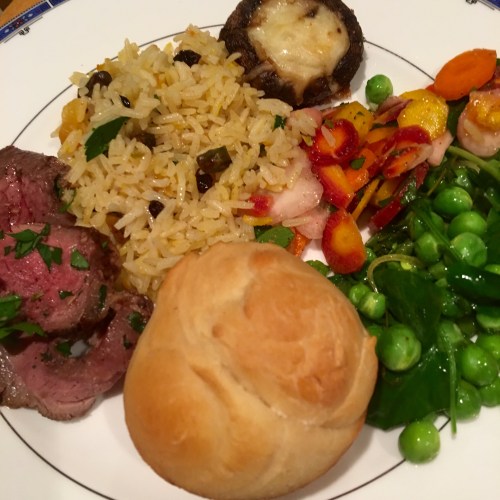
But that was only a modest prelude to the meal that lay ahead. Here’s the menu:

  • roasted leg of lamb
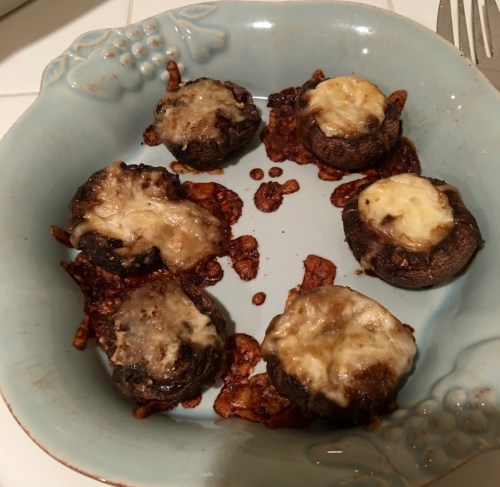
  • stuffed mushrooms
  • rice pilaf with currents and hazelnuts
  • fresh green peas, snap peas, and watercress sprouts
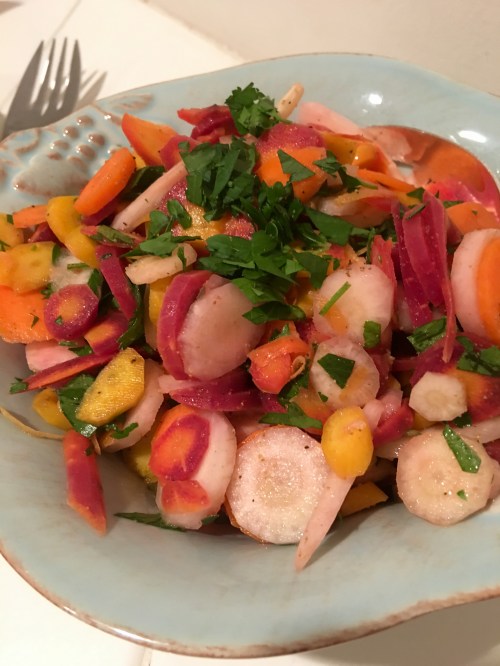
  • Moroccan carrots

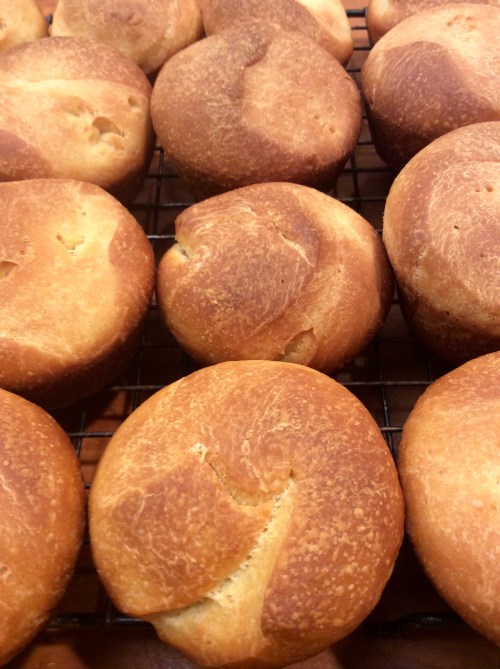
Susan made two contributions to the meal. First she made a batch of rolls from her mother’s recipe. Over the years we had had them at many meals on the farm when there weren’t biscuits. They were always popular – and delicious. She also made coconut cupcakes at the request of one of the young folks. Then they decorated them with frosting, shredded coconut and nerds (I lost points when that was the only candy I could find at the store, but they actually turned out to be a positive addition to the final version.)

Carol has a very large collection of cookbooks, and she is always looking for different versions of common foods along with unusual foods. Over the years she has gradually brought her whole family out of the doldrums of eating only meat and potatoes. She also always puts her own twist on the recipe.  I’m not sure of the source recipes of several of the dishes, but I know that the Moroccan carrots came from Amanda Hesser’s The Essential New York Times Cookbook (W.W. Norton and Co, New York, 2010) The dish is delicious, and Carol used a mix of various colors of carrot to create a stunning visual effect. The same thing was true with a dish of fresh green peas and snap peas. The recipe called for pea tendrils, but my son-in-law struck out looking for them in several stores, and the farmers’ market was closed for Easter. Carol, always innovative, substituted watercress sprouts. IMHO the substitution improved the dish.

Kevin had bought some special wine for the occasion, and I contributed a bottle of Klinker Brick old vine zinfandel from last year’s visit to Lodi.

Needless to say, it was a very special and memorable family evening.

Here’s the recipe for Mom Mom’s homemade rolls.

RECIPE

Mom Mom’s Homemade Rolls

Ingredients

  • ½ cup sugar
  • 6 tablespoons vegetable shortening
  • 2 teaspoons salt
  • 1 1/3 cups milk
  • 1 package dry yeast
  • ½ cup lukewarm water
  • 2 eggs
  • 6½ cups all-purpose flour

Method

  1. Place sugar, shortening, and salt in a large bowl.
  2. Scald milk and pour over ingredients in bowl. Stir until mixed, and let cool.
  3. Dissolve yeast in water.
  4. Beat eggs lightly and add to yeast mixture. Then add these ingredients to the cooled milk mixture.
  5. Beat in the flour to form a smooth dough. Allow to rise until doubled (about 2 hours) or refrigerate for later use.
  6. Shape into rolls and place in greased muffin pans. Let rise again until doubled.
  7. Bake in a preheated 350°F oven for 15-20 minutes or until browned to your liking

Makes 36 medium rolls

Cook’s Note: The easiest shape is to cut out circles with a biscuit cutter and place them in the pans. You can make fancier shapes by rolling balls of dough between your palms; clover leaf rolls with three small balls dipped in melted butter and placed 3 to each cup; fan-tans with 5 or 6 layers of rolled-out dough separated with melted butter and cut into squares; Parker House with flattened balls of dough with an off-set crease cut across them, topped with melted butter, folded on the crease,  and baked on a greased cookie sheet.

4 Comments

Filed under Food, Photography, Recipes

MEYER LEMON BAVARIAN CREAM PIE

The local farmers’ market has just gotten going seriously for the season. A couple of weeks ago there were only a few stands with limited choices. Now there are several rows of canopies and lots of choices. There are spring vegetables: asparagus, green peas, leaf lettuce, and radishes. The big stars, though, continue to be citrus of all sorts. There are fruits that are seldom seen outside of Southern California. Pomelos as big as grapefruits! (That’s supposed to be a joke. Pomelos are often bigger than grapefruits, and on top of that they are thick-skinned close relatives.), blood oranges, many varieties of clementines, and my favorite – Meyer lemons.

The Meyer lemon was originally found in China and thought to be a cross between a lemon and a mandarin orange.  It was brought to California and popularized by a guy named – you guessed it –  Meyer. When Meyer lemons were found to be symptomless carriers of a virus that destroyed other citrus trees, the lemon trees were chopped down wholesale, not to be grown again until a virus-free strain was discovered. Now they are widely available.

Meyer lemons are beautiful. They are larger than other lemons with a dark yellow-orange skin and a beautiful fragrance. They are sweeter than the usual lemon, but they are still more sour than an orange. They are juicy and usually contain a number of seeds, so they really lend themselves to cooking with the juice and/or zest.

What could be a better use than in a Bavarian cream? Bavarian cream is a classic dessert. Julia Child devotes pages to its many variations. At the same time, Bavarian cream is really just another classic – crème Anglaise – doctored up with flavoring, meringue, and whipped cream all stabilized with gelatin. One more step is to put the Bavarian cream into something to hold it. Charlottes lined with lady fingers are common, but a pie shell works just as well and is a lot easier.

So, that’s what I wound up doing with the beautiful Meyer lemons I found at the farmers’ market.

RECIPE

Meyer Lemon Bavarian Cream Pie

Ingredients

  • 1 prepared 9 inch pie shell (purchased or use your favorite recipe) in a glass pie pan
  • 2 ripe Meyer lemons, juiced and zested
  • 2/3 cup sugar, divided
  • 5 large egg yolks
  • 1 cup whole milk
  • 1 envelope (¼ ounce) unflavored gelatin
  • 3 egg whites
  • ¾ cup heavy whipping cream

Method

  1. Bake the pie shell according to instructions and set aside.
  2. Juice and zest the Meyer lemons, straining and reserving ½ cup of the juice. Set aside the measured juice and zest.
  3. In a large bowl, whisk together 1/3 cup sugar and egg yolks until well combined.
  4. In a medium, heavy saucepan, heat the milk over low heat until it comes to a simmer. Gradually pour the heated milk into the egg mixture, stirring constantly. Return the egg mixture to the saucepan over low heat.
  5. Stirring frequently to avoid curdling of the bottom, heat the mixture gradually over low heat until it thickens enough to coat the spoon. Check frequently with a thermometer to avoid exceeding 170°F. The yolks will curdle at a higher temperature, and you will have to start over.
  6. Meanwhile, pour the reserved lemon juice into a medium bowl and sprinkle the gelatin on top. Let the gelatin bloom for at least 5 minutes. Pour the hot, thickened egg mixture over the gelatin and lemon juice. Stir for several minutes to make sure the gelatin is dissolved.
  7. Set the bowl in a larger bowl filled with ice and water. Stir constantly until the mixture is cool. Then strain through a fine-meshed sieve into another bowl. Stir in the reserved lemon zest.
  8. Beat the egg whites with a rotary mixer until they form stiff peaks. Stir in the remaining 1/3 cup sugar and continue to beat until the sugar is completely incorporated. Fold, by thirds, into the custard mixture. Folding gently, making sure the meringue is completely incorporated.
  9. Whip the cream into soft peaks. Fold in, making sure the mixture is completely combined.
  10. Pour the completed custard into the reserved pie shell. Cover lightly with plastic wrap or aluminum foil and chill overnight in the refrigerator.
  11. Serve plain – or better – with whipped cream.

Cook’s Notes

  • The unflavored gelatin is a key part of the recipe: not enough and the Bavarian will not set while too much and it will be rubbery; not properly bloomed and it will never completely dissolve; if it is not completely stirred in, the cream may separate. Gelatin comes in several forms. The most common is granular, packaged in small packets, but there are also liquid as well as sheets that are used by professional bakers. I don’t know what equivalents might be.
  • Be patient! Don’t try to rush the custard with high heat. You will end up with scrambled eggs.
  • It is very important to strain the thickened custard mixture. No matter how careful you are, there will be bits of curdled yolk that will take away from the smoothness of the finished custard.
  • Obviously, stir in the zest after you strain the custard.
  • You can add a little liqueur if you like. Limon cello is the obvious choice – 1 or 2 tablespoons.
  • You shouldn’t try to rush the chilling; otherwise the Bavarian might not set up properly. Overnight is best; four full hours might work in a pinch.
  • The need for bowls and saucepans is intensive. You should definitely set up mis en place for your ingredients and plot out a strategy for cookware. A scanning thermometer is very handy.


5 Comments

Filed under Food, Photography, Recipes

KAS KNEPHLA REVISITED

Over the years, three of my posts have consistently drawn the most visitors. One provides a recipe for West Texas cowboy biscuits along with the description of a cowboy cookout. The second is about my son-in-law’s spin on leftover lamb shanks. By far, the most popular has been a recipe for the unofficial, unacknowledged state dish of North Dakota, kas knephla. (Please note that there are several variants of spelling, but they are commonly known as cheese buttons.)

While unpacking my books during our recent move, I came across a thin red volume entitled “Dorcas’ Treasured Recipes.” So far as I can tell, the book was published around 1955 by members of the Dorcas Society of the Kulm, North Dakota Congregational Church. Kulm is the closest town near my grandmother’s family farm at Wirch, sits in the southeastern part of North Dakota and has a population of around 350. The town was founded in 1892, reached its greatest population of around 700 at the 1930 census, and claims Angie Dickinson as its most noteworthy citizen. (She moved elsewhere at age 11.) Her father apparently worked as an editor of the town newspaper, The Kulm Messenger. Kulm is not too far from Strasburg, the hometown of Lawrence Welk, and likely was an early venue when Welk began his orchestra.

“Dorcas’ Treasured Recipes” is a tidy little book with pages that have become brittle and yellow with age. The  print, published in offset by the Kulm Messenger from a typewritten manuscript, has faded. What has not faded is the spirit of the women who pulled the book together. There are poems, prayers, and recipes that provide insight into the daily lives of these prairie women and testimony to their skills as good cooks.

Leafing through the pages I found several recipes for hamburger casseroles and one for corn dogs. The recipe that caught my eye was contributed by Mrs. Mathilda Brost, titled KAS KNEPHLA. Here is the recipe as published, followed by my recipe for quick and absolutely not authentic North Dakota Cheese Buttons.

KAS KNEPHLA

3 c. flour                                                                      For filling

½ tsp. B.P.                                                                          1 pt. cottage cheese

2 tsp. salt                                                                              yolk of 2 eggs

2 egg whites                                                                         ½ tsp. salt

2/3 c. cold water                                                                 pepper and diced onion

Mix all together into a firm dough. Add more flour if necessary. Divide into 3 parts and roll each out like a pie crust. Cut into about 16 squares. Put about a heaping tsp. filling in each.  Press edges together to seal. Boil a few at a time for 5 min. in about 2 qts. boiling water. Drain and pour the following sauce over: – optional –

Brown a few bread crumbs in a half stick of butter. Or: — Make a sour cream gravy as follows: Melt 2 tbsp. butter, add 1 tbsp. flour. pour in ½ c. milk and 1 c. sour cream, and a little chopped onion.

RECIPE

Quick North Dakota Cheese Buttons

Ingredients

  • 1 pint, small curd cottage cheese
  • 2 eggs
  • 1 teaspoon salt
  • ground black pepper to taste
  • 12 ounce package wonton wrappers (about 60 wrappers)
  • 12 ounces bacon, cut crosswise into ½ inch pieces
  • 1 cup dried ½ inch bread cubes
  • 8 tablespoons (one stick) unsalted butter

Method

  1. In a fine-mesh cheesecloth or a fine-meshed large strainer, drain and squeeze as dry as you can the cottage cheese.
  2. Combine the drained cottage cheese, two eggs, salt and pepper.
  3. In batches, spread the wonton wrappers on a flat work surface. Place about 1½ teaspoons of the cottage cheese mixture in the center of each wonton wrapper. Fold into triangles and seal the edges by painting them with water and pressing them firmly between your fingers. Once you have formed the cheese buttons, you should cook them fairly quickly as the cottage cheese will soak through the wrappers. You should be able to make about 40 cheese buttons.
  4. Bring 3 quarts of salted water to the boil, and in batches, boil the cheese buttons for about 5 minutes. They should float to the surface when they are done. Remove with a slotted spoon, drain on paper towels, and keep warm in a 200°F oven until you have boiled all of the buttons.
  5. Meanwhile, fry the bacon over medium-low heat until it is lightly browned and crisp. Remove the bacon and stir in the bread cubes, frying them until they are lightly browned. Be careful not to burn them. Combine the bread cubes with the bacon.
  6. In the same pan, melt the butter and stir it until it is browned and fragrant. Stir in the bacon and bread cubes.
  7. Combine the cheese buttons with the bacon, bread and butter mixture. Serve immediately.

4 Comments

Filed under Food, Photography, Recipes

BANANA SPLITS

We have been spending a lot of time lately with our Los Angeles grandchildren. In particular, Susan has been assisting in school-related transportation. All of that is different from when I was growing up. First, few if any kids walk to school, and at least in Southern California there are no orange school buses. Parents line up for blocks in their cars before the schools open in the morning, waiting to drop off their child in a congested delivery area and then creating a neighborhood traffic jam on their way out. The process is repeated – some of it in reverse – at the end of the school day. Second, hours are completely different school to school so that the bell may ring at 7:30 in the high school but not until 8:30 in the middle school.  This makes it easier for parents with kids in more than one school, but it also keeps one on the road for hours. Then, I guess just to keep you on your toes, Tuesday hours are likely to be different from Monday hours – but not every week. We now have a detailed schedule plastered on the kitchen wall, just the same as the one at my daughter’s house. With a schedule like that, you are bound to need a little refreshment in the afternoon, and my wife and grandson are kindred spirits.

They often make a stop at the local outlet of Handel’s Ice Cream. By now they have the routine completely worked out: walk up to the window, study the menu of at least 30 or 40 flavors of ice cream, place your order, and when it is dished up, sit at a garden table in front and eat up. There are more elaborate treats, including milk shakes and sundaes. The most treasured item is the banana split, and when there is need for a special celebration (or maybe not so special) it calls for a banana split.

Handel’s version of the banana split is fairly traditional except that it comes in a plastic disposable dish. One day I was reminiscing about my childhood and ice cream parlors with Naugahyde-covered stools and glass bowls designed especially to hold a banana split. My grandson found that an interesting story (an unusual reaction of one of my grandchildren to one of my stories) and wanted to find one of those glass dishes.

Thus, began my quest. None of the local stores had the bowls in stock, and the owner of the kitchen store allowed as how they probably weren’t made anymore. All I had to do was look on Amazon to find a carton of six bowls made by Libbey Glass priced at about $4 apiece. I ordered them, and they arrived moderately safely with only one broken. They looked like the ones that I remember from my childhood, long with curved-up ends and just big enough to hold a split banana and three scoops of ice cream.  Finding ice cream was easy, and I settled on the classics: vanilla, chocolate, and strawberry.

Sauces took more effort. I am still getting used to the local grocery store, and I couldn’t find sauces, so I decided to make my own. The pineapple was easy, although not as satisfying as the real thing. For the chocolate sauce, I made a cream-predominant ganache, and for the butterscotch, I used an internet recipe from The Perfect Cake (Susan G. Purdy) by way of the Washington Post and the famous blog, Smitten Kitchen.

Since it was my week for dessert at the Sunday family dinner, I made banana splits. They turned out to be a big, big hit with my grandson. Not surprisingly, they turned out to be a big hit with everyone else.

RECIPES

Chocolate Ganache Sauce

Ingredients

  • 8 ounces (by weight) heavy cream
  • 4 ounces (by weight) chocolate chips, chopped (best quality you can find)

Method

  1. Bring the cream to a boil in a small saucepan and immediately remove from the heat.
  2. Sprinkle the chopped chocolate chips into the warm milk, shaking the pan gently to make sure the chocolate is in contact with the cream.
  3. Let stand, undisturbed, for 5 minutes to allow the chocolate to melt.
  4. Stir until the mixture is smooth and completely combined. Transfer to a container and cool.
  5. Since the sauce contains cream, you should refrigerate if you do not use it immediately. That will make the sauce too thick to pour. You can rewarm it very gently with a 5 to 10 second pulse in the microwave.

Butterscotch Sauce

Ingredients

  • 4 tablespoons unsalted butter
  • ½ cup dark brown sugar (packed)
  • ½ cup heavy cream
  • ¾ teaspoon kosher salt
  • 1½ teaspoons vanilla extract

Method

  1. In a small saucepan, melt the butter over medium-low heat
  2. Add the sugar, cream, and salt, whisking to combine completely.
  3. Bring to a low boil for about 5 minutes, stirring occasionally.
  4. Remove from the heat, stir in the vanilla, and cool. Refrigerate if not using immediately.

4 Comments

Filed under Food, Photography, Recipes

CHOCOLATE BUDDHA’S FINGERS

Buddha’s hand may be the strangest looking fruit or vegetable in the produce section at the grocery store. It is easy to see how it got its popular name: Buddha’s hand looks like a many-fingered hand or a misshapen lemon with long finger-like projections and dark ends that could be fingernails. In fact, it is a member of the citrus family and one of the fruits that are lumped together as citron. Unlike a lemon, Buddha’s hand has neither flesh nor juice, only skin and pith. It does have a wonderful fragrance, sort of a combination of lemons and flowers. With no flesh or juice, about the only options open to the cook are to use the zested skin for flavoring or the pith for more substance.

If you have ever baked or eaten the notorious Christmas fruitcake, you probably have encountered citron. It is the sugary chunks that glisten in the cake, often in alarming bright colors of yellow or green. And that seems to be the breadth of culinary options, candied. Baking a fruitcake that would sit in someone’s refrigerator uneaten for a year or more seemed like a poor use for this interesting fruit. It occurred to me that cutting a Buddha’s hand into “fingers”, candying them, and then dipping them in chocolate might be a better option and more fun.

As you can see, the end result was not as attractive as I had hoped. For one thing, the chocolate bloomed under my amateur hand.  Even at that, the candied fingers tasted good, and the almost exotic lemon/floral flavor added to the richness of chocolate.

RECIPE

Chocolate Buddha’s Fingers

Ingredients
  • 1 medium-sized Buddha’s hand
  • water
  • 1 cup sugar
  • 12 ounces mini chocolate chips

Method

  1. Wash and dry the Buddha’s hand. With a sharp paring knife, cut between the individual segments of the fruit to form “fingers”.
  2. Place the fingers in a small saucepan, cover with water, and bring to the boil. Boil slowly until the white part of the fingers becomes translucent, about 20 – 30 minutes.
  3. Stir in the sugar and continue to boil until the liquid is reduced to a thick coating. Watch carefully so that the sugar does not burn. Transfer the sugar-coated fingers to a sheet of waxed paper to cool.
  4. Dry the candied fingers until the sugar coating is firm. This may take overnight.
  5. In a small saucepan over very low heat, melt the chocolate chips until they can be stirred to a smooth consistency. Stir in the candied fingers. When they are completely coated with chocolate, transfer them individually with tongs to a sheet of waxed paper. Cool until the chocolate is completely firm, at least 3 hours. Store in an airtight container.

9 Comments

Filed under Food, Photography, Recipes

SMOKED SALMON NIÇOISE

Carol invited us to dinner last night. She was having salmon. She likes it, but her husband does not. He had to work late, so it was the perfect opportunity for her to have a dinner of salmon. It turned out to be relatively easy and absolutely delicious.

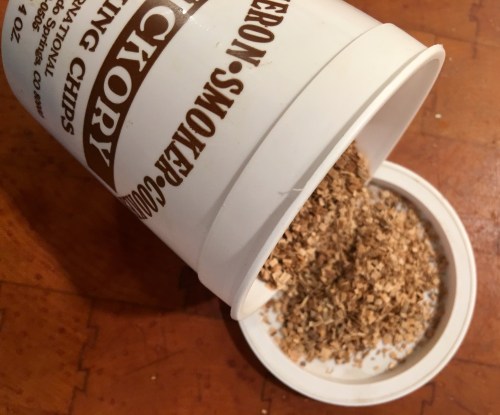
The thing that made the dish especially good was that Carol smoked the salmon in her Camerons stove-top smoker. That is definitely a kitchen gadget to have, even if you don’t use it very often. The standard model is a stainless steel pan with collapsible handles and an air-tight lid designed to keep smoke inside the pan and not in the kitchen (It really works.) Inside are a flat tray and a rack. You put a pile of very small wood chips (purchased from Camerons, of course.) in the bottom of the pan, cover with the tray, and arrange the food to be smoked on the rack. Slide the cover nearly but not-quite closed and put the whole contraption over two burners on your range. The heat from the burners should be low to medium–low – enough to get the wood chips smoking but not so hot that the food burns. When the first wisps of smoke begin to come out, push the lid completely closed. There should be no leaks. Then smoke the food for the desired time. In the case of salmon, about 20 minutes should do. Remove from the heat for a few minutes and then remove the lid. You will smell the smoke, but it should not invade the kitchen. Check to make sure the food is cooked to your liking. If not, you can close the lid again and heat for another few minutes.

img_0920img_0921

If you don’t have a smoker, you can accomplish the same thing by basting the salmon with a mixture of ½ teaspoon liquid smoke and 2 teaspoons soy sauce before broiling in the oven.

RECIPE

Smoked Salmon Niçoise

Ingredients

  • 1 pound salmon filet, bones removed
  • 4 cups lettuce cut or torn into bite-sized pieces
  • 4 hard-boiled eggs, peeled and sliced (see post on how to peel a hard-boiled egg)
  • 8 small new potatoes, boiled, chilled, and cut into 1½ inch chunks
  • 2 cups green beans, cut in 2 inch lengths, blanched, cooked, and chilled
  • 20 pitted black olives
  • 4 teaspoons drained capers
  • 10 cherry or grape tomatoes, halved lengthwise
  • salt and pepper to taste
  • homemade vinaigrette or your favorite bottled salad dressing

Method

  1. Pat the salmon dry and place in the smoker. Smoke according to instructions with the smoker.
  2. In the meantime, arrange the lettuce in the middle of each of 4 plates.
  3. Arrange the sliced eggs, potatoes, beans, olives, capers, and tomatoes equally among the plates.
  4. Remove the salmon from the smoker, cut into 4 equal slices and arrange on the plates.
  5. Season as needed with salt and pepper
  6. Drizzle with vinaigrette and serve immediately.


2 Comments

Filed under Food, Photography, Recipes