Category Archives: Food

BARLEY TABBOULEH

The first time I ever ate tabbouleh was nearly 50 years ago at a backyard potluck for our laboratory work group. The offerings included several varieties of potato salad, lots of baked beans, and delicious barbecued chicken. But the standout – and by far the most exotic – was some refreshing tabbouleh brought by our secretary who came from a large Lebanese family. I could have eaten the whole bowl, and I am sure that I made a pig of myself. Since then, our family has made tabbouleh many times, and often for potluck dinners. We keep a bag of bulgur in the refrigerator so that we can make tabbouleh whenever the craving hits. I have never thought of using anything but bulgur – until I tasted some tabbouleh from Sarah’s refrigerator during our recent visit. She had substituted barley, and it was delicious. I gave it a try for our latest Sunday family dinner. It wound up becoming the inspiration for a Mediterranean-themed evening. The downside of tabbouleh is that it involves a lot of chopping and dicing. The upside is that once the chopping and dicing are done, it only takes a few minutes to assemble. I like tabbouleh with a distinctly lemon taste, so I used the juice of 2 lemons. If that’s too much for you, cut back to one lemon.

RECIPE

Barley Tabbouleh

Ingredients

  • ½ cup pearled barley
  • 2 cups salted water
  • olive oil
  • 2 large bunches parsley
  • 1 bunch mint
  • 3 large Roma tomatoes
  • 2 small Persian cucumbers
  • 3 cloves garlic, minced
  • juice of 2 lemons
  • ¾ cup extra virgin olive oil
  • salt and pepper to taste

Method

  1. Stir the barley into boiling salted water and cook at a low boil for 45 minutes or until soft with a little crunch. Drain, rinse, and toss with olive oil to prevent the grains from sticking together. Set aside.
  2. Wash and shake dry the parsley. Trim the leaves of stems. You should have about 6 cups of unpacked parsley leaves. Chop finely or pulse several times with a Vita-Mix set on “3”. Set aside.
  3. Wash the mint and remove the leaves. You should have about 1 cup of unpacked mint leaves. Chop finely or pulse several times with a Vita-Mix set on “3”. Set aside.
  4. Blanch, peel, and seed the tomatoes. Cut into ¼ inch dice. Set aside.
  5. Dice the cucumbers into ¼ inch pieces. Set aside.
  6. In a large bowl, combine the cooked barley, chopped parsley, chopped mint, tomatoes, cucumbers and minced garlic. Stir in the lemon juice and olive oil. Adjust seasoning with salt and pepper. Chill in the refrigerator for one hour. Serve.

Leave a comment

Filed under Food, Photography, Recipes

CHERRIES JUBILEE

A while back, I wrote about sweet cherry season and a request for cherries jubilee. I wound up making a cherry galette instead, with the promise that if there were cherries still around I would make cherries jubilee for the next Sunday family dinner. Cherries are still around at the market, so here’s cherries jubilee, flames and all. It is said that the dish was invented by the famous chef, Escoffier, for a dinner celebrating the Diamond Jubilee of Queen Victoria. That was in the era when flames at tableside were considered very fancy. Inventions of the time included Crepes Suzette and Baked (or Bombe) Alaska.

The next rush of flambéing was in the middle of the twentieth century with its epicenter in New York City and the restaurants favored by “cafe society”.  Steak Diane made its appearance then, as did Bananas Foster (invented in New Orleans), After that, fashion moved on and the popularity of tableside service, especially with leaping flames, virtually disappeared.  I am not certain, but I think there may be a resurgence of interest; at least in our family there has been a recurring request.

There are many recipes for cherries jubilee on the internet, and there are lots of variations: most call for fresh cherries, but you can make cherries jubilee with canned cherries, ready-made cherry pie filling or even cherry Jello. The best version that I could find, and the one that seemed most likely to be true to the original was that recorded by Ethan Becker in his revision of The Joy of Cooking. I used that recipe as a template with my own revisions. The result turned out to be a celebratory conclusion to our last family dinner.  The good news is that no one was burned, and the smoke alarms did not go off. As an aside, to be fool-proof, you should heat the brandy before you try to light it, but be gentle with the heating to avoid burning yourself.

RECIPE

Cherries Jubilee

Ingredients

  • 4 cups ripe sweet cherries
  • ¼ cup Kirsch
  • ¾ cup turbinado sugar
  • juice of 1 lemon, strained
  • ¼ cup brandy

Method

  1. Wash and pit the cherries. In a large bowl, combine them with the Kirsch, cover and refrigerate for 6 hours,  gently stirring occasionally.
  2. When you are ready to serve, transfer the Kirsch-soaked cherries to a chafing dish or large flat-bottomed pan along with the sugar and lemon juice. Over medium-low heat, heat the mixture until the cherries release their juices and the sugar is dissolved. Continue to simmer until the sauce is slightly thickened.
  3. In the meantime, heat the brandy in a small saucepan over low heat. Do not boil. Light the heated brandy by tilting the pan slightly over the flame or with a long match or fireplace lighter. Pour the flaming brandy over the cherries and allow the flames to extinguish themselves. After the flames have died down, stir the mixture gently.
  4. Serve immediately over individual bowls of vanilla ice cream. Serves 6.

2 Comments

Filed under Food, Photography, Recipes

RT ROTISSERIE-STYLE CHICKEN SOUP WITH FARRO

RT Rotisserie has been chugging along since its opening, refining the menu, adjusting staffing patterns, getting the delivery system worked out, and tinkering with other details related to opening a new restaurant. One issue that they have faced from the beginning is what to do with roasted chicken left at the end of the day. Planning supplies is one of the most difficult challenges that a restaurant, especially a new one, faces. Of course, you don’t want to run out while a customer is waiting for his or her order, and you don’t want to have so much leftover that it gets tossed out. If rotisserie chicken is your thing, the solution is to turn roasted chicken into chicken soup. Whole roasted chicken makes a delicious takeout, and roasted chicken on a Dutch crunch roll with a choice of sauces is what many customers are after. Unfortunately, chicken soup gets second billing. That’s too bad, because as far as I’m concerned, RT Rotisserie chicken soup should get star treatment. It is unlike any other chicken soup that I have ever eaten. It has a robust, earthy flavor, and it is filled with chicken and what I judge to be farro. As well, the broth is brimming with unusual vegetables and a blend of herbal flavors. It should be obvious that RT Rotisserie is not going to reveal their recipe, so I have tried to reconstruct the soup. Let me hasten to note that this is not the original version – and it is nowhere as good as the original. Still, it is a pretty good chicken soup in its own right. Since I don’t have a brass and enamel French Rotisol rotisserie in my kitchen, I had to do some substituting. I fried the chicken with barbecue dry rub and then finished it off in chicken stock. That gave the stock a roasted flavor that mimicked the real thing. You could use more or less farro, or you could substitute wheat berries or barley. There are lots of other substitutions that you can make the soup your own. As for me, I will have to be satisfied with my version until my next trip to San Francisco.

RECIPE

RT Rotisserie-Style Chicken Soup with Farro

Ingredients

  • 4 chicken thighs
  • buttermilk
  • 2 tablespoons salt
  • dry poultry rub
  • 3 tablespoons canola oil
  • 2 quarts (8 cups) chicken stock
  • 1 cup dried farro
  • 3 baby bok choy
  • 1 cup chopped mint leaves
  • 1 cup chopped basil leaves
  • 1 cup chopped cilantro leaves
  • 1 cup chopped parsley leaves
  • 5 scallions, chopped
  • 1 tablespoon white sesame seeds
  • 1 tablespoon black sesame seeds
  • salt and pepper to taste

Method

  1. Place the chicken thighs in a sealable container, cover with buttermilk, and add salt. Cover and refrigerate overnight, turning occasionally. Remove the chicken thighs from the buttermilk mixture, pat dry, and coat generously with dry poultry rub. Place in the refrigerator, uncovered, overnight. Fry the chicken thighs over medium heat in a heavy pan with canola, turning occasionally until browned on both sides. In the mean time, bring the chicken stock to the boil in a heavy soup pot. Transfer the chicken thighs to the boiling liquid and cool at the simmer for 15 minutes or until the thighs are cooked through. Remove the cooked chicken to a plate to cool. Remove skin and bones from the thighs, cut the meat into bite-sized pieces and set aside.
  2. Return the chicken stock to the boil. Stir in the farro and cook at the simmer for 20 minutes or until the grain is soft.
  3. Cut the bok choy in half crosswise then in fourths lengthwise. Add to the broth and return to the boil. Stir in the mint, basil. cilantro, parsley, scallions, and white and black sesame seeds. Return to the boil and simmer for 10 to 15 minutes until the bok choy is tender. Adjust seasonings with salt and pepper. Serve while still hot.

Cook’s Notes

  • Undoubtedly you could skip the buttermilk brining, the dry rub, and the overnight drying, but I think that contributes to the rich flavor of the soup.
  • Our family uses a dry poultry rub for barbecuing chicken. We have had the recipe for years, but there are many dry rubs commercially available, and probably your family has its own favorite.
  • Farro is a grain that has been enjoyed in Italy for centuries. It has become increasingly popular in the United States, especially in restaurants. Farro usually refers to emmer wheat, a relative of our usual wheat, but it may also refer to other grains. You should be able to find it in a large, well-stocked grocery store, but if you can’t you can easily substitute wheat berries or pearled barley. For that matter, you could substitute rice or pasta. The amount is up to you.
  • One way to tell when the soup is cooked is to look at the white sesame. It will tend to float on the surface until it is cooked. That’s a good sign that the soup is ready.


1 Comment

Filed under Food, Photography, Recipes, Restaurants

SHRIMP-STUFFED ROASTED ARTICHOKE

Before we left for our child-tending excursion in San Francisco, I bought two beautiful artichokes at the grocery store. They were on special for Mothers Day. We wound up eating out a lot during the week, and so the artichokes languished in the refrigerator. When we returned home, I was worried that the artichokes might have spoiled. They had not, so I was confronted with what to do with them. Usually I boil them and serve them with Hollandaise, but I wanted to do something a little different. I remembered a wonderful dinner that we enjoyed many years ago in Ruston, Louisiana. Our host had gone to enormous trouble to wedge a bit of spicy shrimp into every space between the leaves. Such a dish is a traditional Louisiana favorite, but it is usually reserved for special dinners because it takes so much effort. I thought that maybe I could make something that approximated that long-ago creation with not so much work. It turns out that this version is really easy if you have a food processor. Probably a Vita-Mix would work, too.

RECIPE

Shrimp-Stuffed Roasted Artichoke

Ingredients

  • 2 large artichokes
  • 2 slices good quality French bread
  • leaves from 6 stems of parsley
  • 3 cloves garlic, peeled and chopped coarsely
  • 2 tablespoons fresh lemon juice
  • 2 tablespoons olive oil + more to drizzle on the tops of the stuffed artichokes
  • ¼ teaspoon Old Bay seasoning
  • salt and pepper to taste
  • Tabasco sauce to taste (optional)
  • 1 cup ready-cooked salad shrimp, thawed
  • ½ cup grated Parmesan cheese

Method

  1. Prepare the artichokes by trimming the stem and the tips of the leaves. Cut off the top of the artichoke and remove the inner leaves to reveal the choke. Using a spoon, scrape out the fuzzy bits of the choke.
  2. Cut the bread into cubes and place in a food processor. Process until the bread forms coarse crumbs. Add the parsley leaves, chopped garlic, lemon juice, and olive oil and process until well combined but not puréed. Add the Old Bay, salt and pepper, optional Tabasco sauce, shrimp and grated Parmesan and process for just a few seconds until the shrimp are finely chopped but not puréed.
  3. Fill the center of each artichoke with the shrimp mixture and then spread the remainder over the tops of the artichokes. pressing down to force some of the mixture between the leaves.
  4. Place the stuffed artichokes in an oven-proof pan filled with about 1½ inches of water. Drizzle the tops with olive oil. Cover the pan with heavy aluminum foil, and poke four holes in the foil. Place in the middle of an oven preheated to 375°F. Roast for 1 hour covered, then remove the foil and roast, uncovered, for another 15 minutes. NOTE: Be very careful when you remove the foil, as steam may rush out and burn your fingers.
  5. Transfer the roasted artichokes to plates and serve with Hollandaise. I used Julia Child’s never-fail quick blender sauce.

5 Comments

Filed under Food, Photography, Recipes

THE BIG DAY HAS ARRIVED – RT ROTISSERIE OPENS

After months of planning, construction delays, major renovations, and recipe testing, RT Rotisserie opened during the Memorial Day weekend. The first day was a big success: A good-sized group was lined up before the doors opened, and the line at the order counter continued unabated through the lunch hour. There were the to-be-expected opening day hiccups. Staffing could have been different. Some of the dishes needed adjustments. Menu changes were already under discussion. And, of course, there was the inevitable and predictable plumbing emergency. In spite of all of that, the opening went smoothly, and Sarah and Evan returned home well after midnight, satisfied with the day.

We had travelled from Los Angeles to take care of the boys during opening week. That’s a challenge for a couple of old folks, but we managed to keep the little ones entertained. They only asked, “Where’s Mommy?”, a few times. Still, we did get a chance to try out the food at the restaurant. Our son and his family came up from Silicon Valley. They had originally planned to go on a canoeing and camping trip in the Sierras, but the road to their favorite lake had been damaged during the winter’s heavy storms. Instead, they joined us in a trip to RT Rotisserie after the lunchtime rush. Still, I think there was a little shock when eight of us appeared in line in a smallish space that seats 49. Later we learned that other large family groups had come in earlier in the day.

We enjoyed several things from the menu. First was the centerpiece of the offerings, rotisserie chicken. Preparation includes an overnight brining in house-made buttermilk fortified with brine and several herbs and spices. Then the brined chicken is air-dried in a large refrigerated walk-in for a day so that the skin will roast to a tasty crispness. Huge slabs of pork belly undergo similar treatments before they are filled with a tasty stuffing and then placed on the spit. Most surprisingly whole heads of cauliflower are given a similar preparation before they are roasted. When they came to the table in their own special sauce, they were unlike any cauliflower I have ever had. They could be a meal in themselves.

A parade of sauces, including chimichurri, Douglas fir sauce, brought the main items to new levels.

Sides were delicious: umami-dusted sweet potato fries, grilled potatoes, and a chicken soup with a rich broth filled with chunks of chicken, chopped vegetables, barley, and fragrant herbs. Dishes of strawberry- and milk-flavored soft serve ice cream in swirls kept the kids entertained while we waited for our food. Unfortunately we did not get to sample Sarah’s dessert, chocolate sablé ice cream sandwiches.

After all that food, we went home and tried to squeeze in a nap. With what must have been a sugar rush, the boys would have none of that. But they and we had had a good day, and RT Rotisserie seemed to be off to a good start.

8 Comments

Filed under Food, Photography, Restaurants

SWEET CHERRY GALETTE

It is just at the end of the season for cherries at our local farmers’ market. My son-in-law and grandson love them – don’t we all – so Carol has been making a lot of things cherry, including a delicious cherry, hazelnut, mâche salad. One of our Sunday dinner conversations focused on all the different things you could do with cherries. Lots of recipes were discussed, but the conversation kept coming back to Cherries Jubilee. The dish has such a romantic name, and it conjures up images of elegance and maybe a little bit of indulgence. Especially for the younger members of the family the thought of leaping flames at table side is the most exciting aspect of the dish. The last Cherries Jubilee that I remember at home was nearly 40 years ago. The most memorable Cherries Jubilee was not even the real thing. Our ski patrol had an annual camping expedition, always held in the dead of winter. On a weekend, after the lifts had closed we gathered at the lift shack on the highest run on the mountain. Then we would ski off to an isolated spot in the woods, pitch our tents before dark, and prepare an evening meal. The first year, everyone brought freeze-dried stew or canned tuna. Everyone except Bob, who was the most experienced mountaineer. We thought he would bring some sort of dehydrated food from one of his expeditions. Instead, he brought an elaborate main dish and then prepared flaming canned cherries that he ladled over a handful of fresh snow in each camper’s dish. That set the mark, and each year thereafter (this being a highly competitive group) the challenge was on for who could make the most elaborate and exotic meal out in the winter wilderness.

With that story in mind, I decided to make Cherries Jubilee for the next Sunday family dinner. I bought a big bag of cherries – and then for various reasons our dinner was postponed. I still needed to do something with those cherries, so I decided to make a cherry pie, actually a cherry galette. I used a commercial pie crust to make it easy, and I added the Kirsch that would have gone into the flambé. It turned out to be simple to make and a good use for cherries before they spoiled. If, when our Sunday dinners resume, there are still cherries available, I’ll go back to my original plan. Otherwise, the family will have to be satisfied with Bananas Foster.

RECIPE

Sweet Cherry Galette

Ingredients

  • 4 cups sweet cherries, pitted
  • 1/3 cup brown sugar
  • 1 teaspoon fresh lemon juice
  • 2 teaspoons cornstarch
  • ¼ teaspoon kosher salt
  • ½ teaspoon vanilla extract
  • ½ teaspoon mint extract
  • 2 tablespoons Kirsch (optional)
  • 1 prepared pie crust
  • 1 tablespoon chilled unsalted butter, cut into 16 pieces
  • cream
  • turbinado sugar

Method

  1. Place the pitted cherries in a large bowl. Gently stir in the brown sugar, lemon juice, cornstarch, salt, vanilla and mint extracts, and Kirsch. Let stand for 15 minutes.
  2. On a lightly-floured surface, roll the prepared pie crust into a circle about 11 inches across. Transfer the crust to a rimmed baking sheet that has been lined with parchment.
  3. Arrange the cherry mixture in the center of the pie crust, taking care to leave a two-inch space around the edge. Dot the cherry mixture with the butter pieces. Drape the edges of the pie crust over the cherry mixture, pressing the folds to seal the dough.
  4. Paint the turned-up pie crust with cream and sprinkle with turbinado.
  5. Bake in the middle of an oven that has been preheated to 425°F for 25 to 30 minutes, or until the crust is browned and the filling is bubbling.
  6. Remove from the oven and cool on a rack. Serve slightly warm or at room temperature. A scoop of vanilla ice cream makes a good addition.

Cook’s Note: Carol has an electric cherry pitter which makes short work of the task. I have a little device that pits cherries one at a time. The job takes longer, but you can turn on the TV or pour a glass of wine or both to make things go faster.


8 Comments

Filed under Food, Photography, Recipes

FAVA BEANS

Recently I wrote about a pasta-bean salad that included fava beans. Carol had told me that they had appeared in a local market, so I immediately went there to buy a pound for the salad. Fresh fava beans, along with green peas and asparagus, are among the joys of the spring garden. They also become a labor of love and of diminishing returns. Preparing them requires a couple of labor-intensive steps (at least in the USA and France). As well, a large pile of bean pods wind up as a handful of bright green beans.

Favas, also called broad beans, have been around for thousands of years. They have been an important part of the diets of many civilizations in the Middle East and around the perimeter of the Mediterranean. In Egypt they were considered to be a food of the common people. In other places, they have been elevated to the status of a delicacy, and of course they were included in the menu of Dr. Hannibal Lecter’s request for a final meal in the terrifying movie, “Silence of the Lambs.” The beans are versatile: they can be an alternative to chickpeas in hummus; they can be fried crispy and serve as a snack; they can be sauced with vinaigrette and stand alone; they can be eaten as any other bean. And they are delicious.

Fava beans also gave rise to the term, favism, a mysterious illness that puzzled medical people for many years. Victims who ate fava beans could develop anemia, jaundice, fever, pain, kidney failure, and even death. Careful research eventually demonstrated that the illness was due to substances, vicine and related compounds,  in fava beans that caused the red blood cells of susceptible individuals to break down, releasing their contents including hemoglobin. This resulted in all of the serious effects. Susceptible individuals were found to have an inherited deficiency of an enzyme, glucose-6-phosphate dehydrogenase (G6PD), that is important in glucose metabolism and produces glutathione, a critical protectant against oxidation within red blood cells.  Vicine is a potent oxidation agent, and similar substances in various foods and medications can cause the same illness. An irony is that the populations most commonly affected by the deficiency are those surrounding the Mediterranean – people who often use fava beans as an important part of their diet. The nature of the genetics is that men are much more likely than women to be affected.

When you prepare fava beans, you need to be ready for a lot of effort. In the USA, there are 3 steps and a pound of raw bean pods will yield only about a half cup of brilliant green, flavorful beans. You need to decide whether or not they are worth the effort. Removing the inner shell is a step that is often skipped, especially if the beans are young and tender. Also, the inner shell adds to the crispiness if you decide to fry the beans for a snack.

Step 1: Shell the beans. This is easy and uses the same method that one employs for shelling green peas or black-eyed peas or Crowder peas. Select pods that are full. The beans in younger pods may be more tender and may obviate the need for Step 2. If you have a lot of beans to prepare, this is a perfect place for the old East Texas approach of several folks sitting on the porch in rocking chairs, gossiping while they pop the beans into bowls in their laps.

Step 2: Bring a large pot of salted water to the boil. Plunge the shelled beans into the boiling water, working in batches if necessary. Return to the boil for 1 minute. Then transfer the beans rapidly to a generously sized and well-iced bowl of ice water. When the beans have cooled, transfer them to a bowl.

Step 3: Using your fingers or the sharp tip of a paring knife, open the thick shell of the bean and pop out the bright green inner bean. Repeat the process until all of the beans have been harvested. Use the beans in whatever recipe appeals to you. In general, the simpler the preparation the better the result because the flavor of the bean stands out.


Leave a comment

Filed under Food, Photography

PASTA-BEAN SALAD PRIMAVERA

Spring is well along, and the local farmers’ market is in full swing with lots of fresh fruits and vegetables available. Everyone in our local family is on one or another diet, not to mention their variety of food proscriptions: no onions, no mayonnaise, nothing spicy. So when it became my turn to cook our weekly family dinner, I decided it was a good time for salads. Let everyone push to the side whatever ingredient they wouldn’t or couldn’t eat. The main dish was a cross between a pasta and bean salad with the addition of vegetables and eggs from the farmers’ market as well as some canned items from the grocery store. There was a lot of prep time. I shelled fresh fava beans. I roasted corn. There were eggs to hard boil, chicken to cook and dice, and cans to open. But once that was all done, assembly was quick and easy so that I could sit in the family circle and participate in the discussion. The beauty of pasta and bean salads is that there really is no recipe, and you can add or subtract whatever you want. This version came so loaded that finicky eaters could have a field day picking out ingredients. Since I didn’t include onion or chiles and dressed the salad with vinaigrette, I addressed those objections at the outset. I didn’t see anyone picking at his or her plate,

RECIPE

Pasta-Bean Salad Primavera 

Ingredients

  • 1 pound fresh fava beans, shelled, blanched, husked. Set aside, refrigerated, until ready to assemble.
  • 2 ears fresh corn, dry roasted and kernels removed. Set aside, refrigerated, until ready to assemble.
  • 4 jumbo eggs, boiled and peeled. Set aside, refrigerated, until ready to assemble
  • 1 large chicken breast, poached, cooled, and cut into ½ inch cubes. Set aside, refrigerated, until ready to assemble.
  • 2 bell peppers, seeds removed, diced. Set aside, refrigerated, until ready to assemble.
  • 2 ribs celery, diced. Set aside, refrigerated, until ready to assemble.
  • large cucumber, seeds removed and diced. Set aside, refrigerated, until ready to assemble.
  • ½ pound mushrooms, boiled for 15 minutes, cooled and halved. Set aside, refrigerated, until ready to assemble.
  • 4 ounces pine nuts, lightly toasted in a dry skillet. Set aside until ready to assemble
  • 1 cup each of pasta shapes, cooked and drained.  (I used orecchiette, penne and farfalle, but you can use your favorites)
  • 1 cup olive oil vinaigrette, home-made or bottled
  • 14 ounce can, cannellini beans, drained and rinsed
  • 14 ounce  can, black beans, drained and rinsed
  • 14 ounce can, black-eyed peas, drained and rinsed
  • 14 ounce can, large, pitted black olives, drained and rinsed
  • 14 ounce can, quartered artichoke hearts, drained
  • 5 ounce can, sliced water chestnuts, drained
  • 5 ounce can, sliced bamboo shoots, drained
  • 8 ounces feta, cut into ½ inch cubes
  • 1 cup grape tomatoes
  • ½ cup snow peas, ends removed and cut into ¾ inch slices
  • 1 tablespoon sesame oil
  • salt and pepper to taste

Method

  1. Boil the pasta according to directions. If cooking times for the various pastas are greatly different, add the individual varieties at the appropriate time. Drain the cooked pasta and combine with half of the vinaigrette.
  2. In a very large bowl, and reserving the hard-boiled eggs, add all of the remaining ingredients to the pasta: fava beans, corn, chicken, peppers, celery, cucumber, mushrooms, pine nuts, cannellini beans, black beans, black-eyed peas, olives, artichoke hearts, water chestnuts, bamboo shoots, grape tomatoes, snow peas, and feta.
  3. Stir in the remaining vinaigrette and sesame oil. Add salt and pepper to taste. Transfer to a large serving bowl and arrange sliced hard-boiled eggs on top.

Cook’s Notes

  • This recipe makes LOTS of pasta salad. It is easily enough to serve at least 12 people generously. It also makes great leftovers for the next day’s lunch
  • Roasting corn in a dry skillet over high heat gets a nice char, but you can also achieve the same thing in the oven or over an open flame.
  • I used four different colors of bell pepper for contrast and used only half of the diced peppers for this recipe, reserving the other half for another recipe.
  • Boiling the mushrooms causes them to compact and absorb the vinaigrette better. If you like, you can boil them in water with a little vinegar and pickling spices to make them a little tastier.
  • Dry roasting of pine nuts brings out their distinctive flavor. Just be careful not to scorch them.
  • You can use whatever shape pasta you like, but ones with ridges or indentations – like macaroni, penne, or orecchiette – will soak up the dressing and the melded flavors. Just be sure to check on cooking times because if they are too different you could wind up with a mixture of firm and mushy pasta.
  • You can substitute crumbled feta or any other cheese you favor. I like cubes of feta because they hold their shape and have a distinctive tart flavor.

4 Comments

Filed under Food, Photography, Recipes

RT ROTISSERIE NEARLY THERE

A couple of weeks ago we went to the Bay Area for a few days to celebrate some family events and to give a hand where we could. Peter and René planned to celebrate their wedding anniversary with a stay by themselves in a nice San Francisco hotel. Ukulele lessons, soccer games, and practice for a science fair got in the way, so the whole family came to the city for a brief overnight and a visit with Sarah and her family in their new house.

Sarah and Evan decided that the stress of opening a new business was not enough, and so they also chose to buy a new house.  It is a remodeled century-old house near Ocean Beach with more room for their two boys than their small and seemingly shrinking apartment in the Presidio. Now they face the joys and travails of homeownership.

While we were there, Sarah worked on cannoli for  a special Italian wine dinner at Rich Table. Evan also worked on the Italian dinner menu along with supervising the painters and carpenters putting the finishing touches on RT Rotisserie. The original  goal was to have the restaurant inspected and opened within the week. Stress! That hasn’t worked out. City permits and inspections always take longer than one expects, and construction always gets slowed down by an unanticipated problem with plumbing, or a brick wall, or some such thing. Now the opening date seems established as Memorial Day weekend. We plan to return to San Francisco to give a hand with the boys so that Sarah and Evan can give full attention to the opening.

Rich Table had incorporated many of Sarah and Evan’s ideas about what a restaurant should be. They wanted the food to be sophisticated, the menu to change constantly, and the atmosphere to be casual enough that the diner can relax and just enjoy the food. They have certainly realized their goals.

RT Rotisserie has a different origin and a different vision. Sarah and Evan found a space just a block from Rich Table. It was in an old building in the style of the neighborhood and had been vacant for a couple of years. In its most recent iteration it had been a Chinese takeout, and the space needed a lot of renovations to make it workable. Rich Table had been opened on a shoestring; RT Rotisserie would require substantially more investment. Earthquake mitigation retrofitting was required. The basement floor had to be dug out with a new, lower floor. Walls were moved, and the insides were completely torn out.  The outside wasrefinished, but in keeping with codes about historical preservation. After six plus months of renovations, the space is beautiful and inviting. Planters with live plants adorn the walls. Shiny new chairs and tables are lined up. Brand-new walk-in cold room and freezer are in the basement. But the stars of the new equipment are a soft-serve ice cream machine and a beautiful red and polished brass rotisserie oven from France that could be a decorative piece instead of being the workhorse of the operation.

That says a little about the vision and the menu. The restaurant will welcome sit-down customers, but it will also encourage walk-ins and take-outs. The menu will be simple, but that doesn’t mean it won’t have the flavor and presentation that Rich Table has become noted for. The rotisserie will be used to roast porchetta, chicken and – for vegetarians or those who just like the taste – cauliflower. Sally Hurricane’s famous fried chicken will be available, and there will be a good choice of Rich Table-style sides. Who knows what they plan to do with the soft-serve, but I am sure it will be delicious. Good choices of beer and wine will also be available.

They’ve asked me to provide some of my images for wall decoration. I am deeply honored.

I can hardly wait to see the grand opening. I hope that it will be a big success.


4 Comments

Filed under Food, Photography, Restaurants

RECENT FAMILY FEASTS AND HOMEMADE ROLLS

The holidays of spring are nearly over, and I have been eyeing my bathroom scale with disbelief. My son and his family were in SoCal this past week because of a family situation that did not foster celebration. They’re back in the Bay Area with the plan to observe a family Seder last night. Carol invited us to her house for a feast on Sunday. And a feast it was! I spent several days making gravlax along with a Swedish dill-mustard sauce from a recipe of a dear, old-time friend. That, along with garlic crostini, deviled eggs (some stuffed with shrimp), and olives, made the appetizers for our Happy Hour on the patio while watching the sun go down over the ocean. Why wouldn’t you like Southern California?

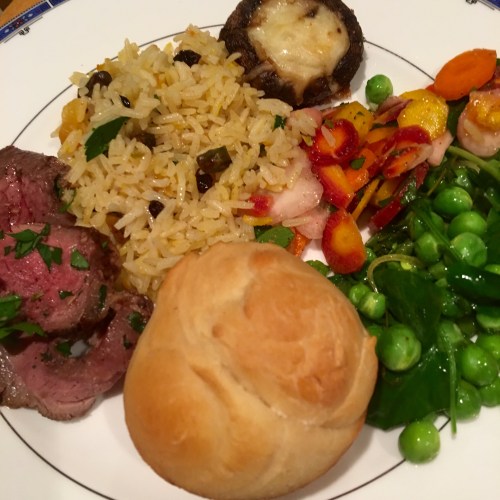
But that was only a modest prelude to the meal that lay ahead. Here’s the menu:

  • roasted leg of lamb
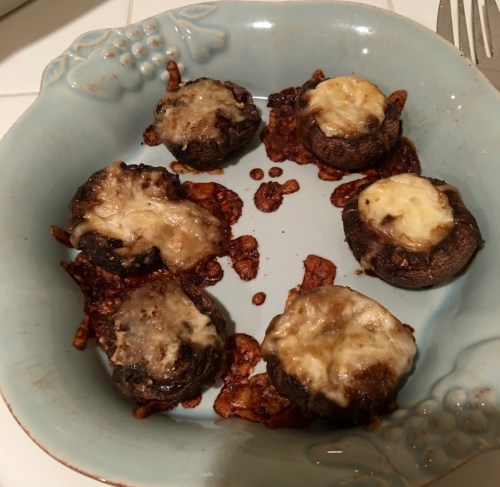
  • stuffed mushrooms
  • rice pilaf with currents and hazelnuts
  • fresh green peas, snap peas, and watercress sprouts
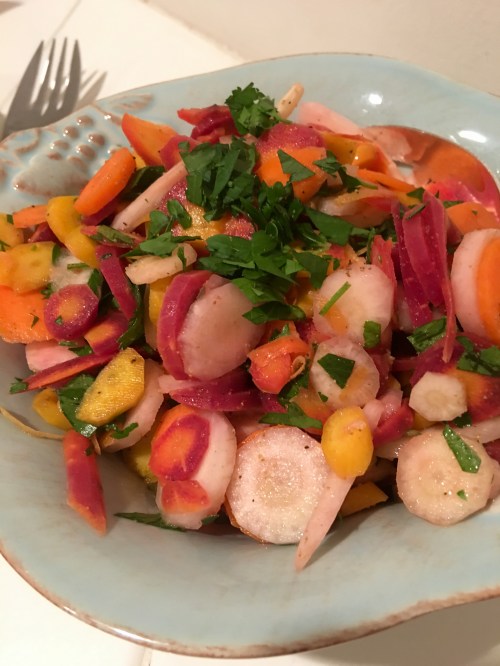
  • Moroccan carrots

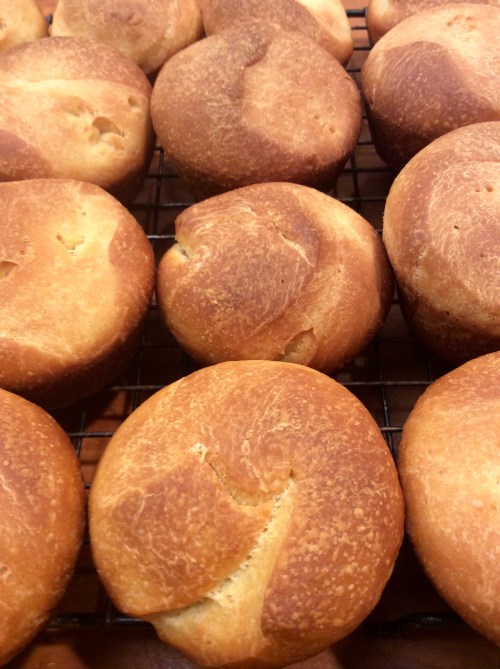
Susan made two contributions to the meal. First she made a batch of rolls from her mother’s recipe. Over the years we had had them at many meals on the farm when there weren’t biscuits. They were always popular – and delicious. She also made coconut cupcakes at the request of one of the young folks. Then they decorated them with frosting, shredded coconut and nerds (I lost points when that was the only candy I could find at the store, but they actually turned out to be a positive addition to the final version.)

Carol has a very large collection of cookbooks, and she is always looking for different versions of common foods along with unusual foods. Over the years she has gradually brought her whole family out of the doldrums of eating only meat and potatoes. She also always puts her own twist on the recipe.  I’m not sure of the source recipes of several of the dishes, but I know that the Moroccan carrots came from Amanda Hesser’s The Essential New York Times Cookbook (W.W. Norton and Co, New York, 2010) The dish is delicious, and Carol used a mix of various colors of carrot to create a stunning visual effect. The same thing was true with a dish of fresh green peas and snap peas. The recipe called for pea tendrils, but my son-in-law struck out looking for them in several stores, and the farmers’ market was closed for Easter. Carol, always innovative, substituted watercress sprouts. IMHO the substitution improved the dish.

Kevin had bought some special wine for the occasion, and I contributed a bottle of Klinker Brick old vine zinfandel from last year’s visit to Lodi.

Needless to say, it was a very special and memorable family evening.

Here’s the recipe for Mom Mom’s homemade rolls.

RECIPE

Mom Mom’s Homemade Rolls

Ingredients

  • ½ cup sugar
  • 6 tablespoons vegetable shortening
  • 2 teaspoons salt
  • 1 1/3 cups milk
  • 1 package dry yeast
  • ½ cup lukewarm water
  • 2 eggs
  • 6½ cups all-purpose flour

Method

  1. Place sugar, shortening, and salt in a large bowl.
  2. Scald milk and pour over ingredients in bowl. Stir until mixed, and let cool.
  3. Dissolve yeast in water.
  4. Beat eggs lightly and add to yeast mixture. Then add these ingredients to the cooled milk mixture.
  5. Beat in the flour to form a smooth dough. Allow to rise until doubled (about 2 hours) or refrigerate for later use.
  6. Shape into rolls and place in greased muffin pans. Let rise again until doubled.
  7. Bake in a preheated 350°F oven for 15-20 minutes or until browned to your liking

Makes 36 medium rolls

Cook’s Note: The easiest shape is to cut out circles with a biscuit cutter and place them in the pans. You can make fancier shapes by rolling balls of dough between your palms; clover leaf rolls with three small balls dipped in melted butter and placed 3 to each cup; fan-tans with 5 or 6 layers of rolled-out dough separated with melted butter and cut into squares; Parker House with flattened balls of dough with an off-set crease cut across them, topped with melted butter, folded on the crease,  and baked on a greased cookie sheet.

4 Comments

Filed under Food, Photography, Recipes