Category Archives: Food

HEART OF PALM PUFFS – A GALLERY OPENING

A few weeks ago I had what I thought was a wonderful opportunity. I was invited to show some of my photographs in a nearby artists’ cooperative gallery. I put together about  half a dozen of my favorite images, framed, and matted them. Along with oils, watercolors, pottery, and jewelry from other artists, the photos were arranged for a show.

As is the local tradition, the new show was inaugurated with a Friday evening opening complete with sparking water, wine, and appetizers. Each artist was asked to bring some kind of food, so that set off a perpetual struggle in my mind – what to serve? I found a recipe for chorizo tapas that sounded delicious, but I worried that gallery visitors might get grease on one of the oil paintings. Then I thought of empanadas filled with hearts of palm. I had first tasted them forty years ago at a party held by one of our Brazilian friends.

The bonus that moved me toward this option  was that I had a can of hearts of palm in the pantry. At the same time, making the dough for empanadas seemed like more effort than I wanted so I decided to use frozen puff pastry. The end result turned out to be these heart of palm puffs.

Heart of palm, also called palm heart or palmito, can be harvested from the growing tips of nearly all palms, but  this may destroy the palm. The commercial variety comes from the peach palm, a plant from the Amazon that now is grown throughout Central and South America. It is sustainable without destroying the palm for future growth.  Supposedly you can find fresh palm hearts in gourmet grocery stores, but I have only seen the canned variety.

The gallery opening was crowded, and the puffs disappeared. So did the gallery. What the reader needs to know is that nearly every person who lives in Santa Fe considers himself/herself to be an artist. The other factor is that there may be more galleries than residents. That is a certain formula to assure that many galleries disappear quickly amidst the competition. That was the fate of our co-operative, and my first show did not survive for this post.

RECIPE

Heart of Palm Puffs

Ingredients

  • 1 can (14 ounces) hearts of palm
  • Old Bay seasoning
  • salt and pepper
  • 1/3 cup parsley, minced
  • 1/3 cup Parmesan cheese, grated
  • 1 sheet frozen puff pastry, thawed
  • 1 egg yolk, beaten with 1 tablespoon water
  • 1 egg white beaten with 1 tablespoon water

Method

  1. Drain the hearts of palm, slice them into ½ inch coins, and marinate them, covered, in the refrigerator, with a little of the liquid from the can, a good sprinkle of Old Bay seasoning, salt, and pepper
  2. Combine the parsley and Parmesan cheese. Set aside.
  3. Thaw the puff pastry according to package instructions. Then on a lightly floured surface, roll out the dough so that it is about 1/16 inch thick. It should be large enough that you can cut 40 2 inch squares.
  4. Working quickly so that the pastry does not dry out, place a heart of palm disc in the middle of half of the pastry squares. Top with a ¼ teaspoon of parsley and Parmesan cheese mixture.
  5. Dab the edges of the square with the egg yolk mixture, top with another square, and press the edges together with a fork.
  6. Place the puffs on a Silpat-lined baking tray. Brush the tops with the egg white mixture.
  7. Bake for 15 minutes in the middle of an oven preheated to 400° F.
  8. When golden brown, remove the puffs from the oven, and cool them on a cooling rack.

2 Comments

Filed under Food, Photography, Recipes

COLE SLAW – MY CONTRIBUTION TO THE CRAWFISH BOIL

A week or so ago my post provided the details of a crawfish boil in Silicon Valley. For that great event, my daughter-in-law asked me to make coleslaw. I call her the “Salad Queen” because she whips up the most delicious salads on a moment’s notice, but she claimed that coleslaw was not something she liked to make. I confess that I’m not a big fan of most coleslaw, either. That’s because they often contain the core of the cabbage head, the cabbage is in big chunks with the heavy taste of cabbage, and the salad is swimming in runny mayonnaise.

Years ago I learned the first important lesson for coleslaw from my younger daughter when she was only about ten years old. She was assigned to do the cabbage chopping for a family gathering. We thought she would be finished in just a few minutes, but a half hour later she was still chopping and the cabbage was as fine as I had ever seen it. She had also removed the core of the cabbage before she started the project. Everyone loved one of her first cooking projects.

The second lesson comes from a consideration of the origins of the word, coleslaw. It is derived from the Danish word, koolsla, meaning cabbage (cole) salad ( sla, a contraction of salade). The point of all that is you can use any kind of cabbage or even cabbage relatives you want (especially shredded Brussels sprouts, but also broccoli, rabe, or cauliflower) , and you can put anything else that catches your fancy in the salad.  Apples, carrots, celery, and chopped nuts are among the most common additives.

The third lesson for me is that a little mayonnaise goes a long way – much farther than you think. In recent times, I always add less mayonnaise than I think the dish needs. That includes tuna salad, sandwiches, and coleslaw In every instance what I have learned is that less is better, and you can always add more. Of course, homemade mayonnaise is better than bottled, and it doesn’t take too much extra time to make. Another option is not to use mayonnaise at all; freshly made vinaigrette is a refreshing substitute.

For the crawfish boil, I decided to use napa (Chinese) cabbage and red cabbage along with red onion, carrot, bell pepper, and celery for the basic salad. I used vinaigrette with a shot of sesame oil for the dressing. Here is the recipe.

RECIPE

Coleslaw

Ingredients

  •  1 large head, napa cabbage, cored, sliced and chopped very finely
  • 1 small head red cabbage, cored, sliced and chopped very finely
  • 1 medium red onion, diced
  • 1 large carrot, peeled, grated, and chopped finely
  • 1 bell pepper, seeded, ribs removed, and diced
  • 3 stalks celery, diced
  • 2 teaspoons celery seed
  • salt and pepper to taste

Method

  1. In a large bowl, combine all of the ingredients

Vinaigrette

Ingredients

  • 2 tablespoons fresh lemon juice
  • 1 tablespoon prepared mustard, preferably Dijon
  • ¼ teaspoon garlic powder
  • ½ teaspoon granulated sugar
  • 6 tablespoons extra virgin olive oil
  • ½ teaspoon sesame oil
  • salt and pepper to taste

Method

  1. In a small bowl, combine the lemon juice, mustard, garlic powder, and sugar.
  2. While whisking continuously, drizzle in the olive oil until completely incorporated.
  3. Stir in the sesame oil, and correct seasonings with salt and pepper

Dressing the Salad

  1. Pour only about half of the vinaigrette onto the coleslaw and gently stir in until the salad is completely dressed
  2. Add more dressing as needed, being especially careful not to use too much. The coleslaw should be moistened but not damp with dressing
  3. Refrigerate until ready to serve.
Napa cabbage

Napa cabbage

Red cabbage

Red cabbage

Red onion

Red onion

Carrots

Carrots

Celery

Celery

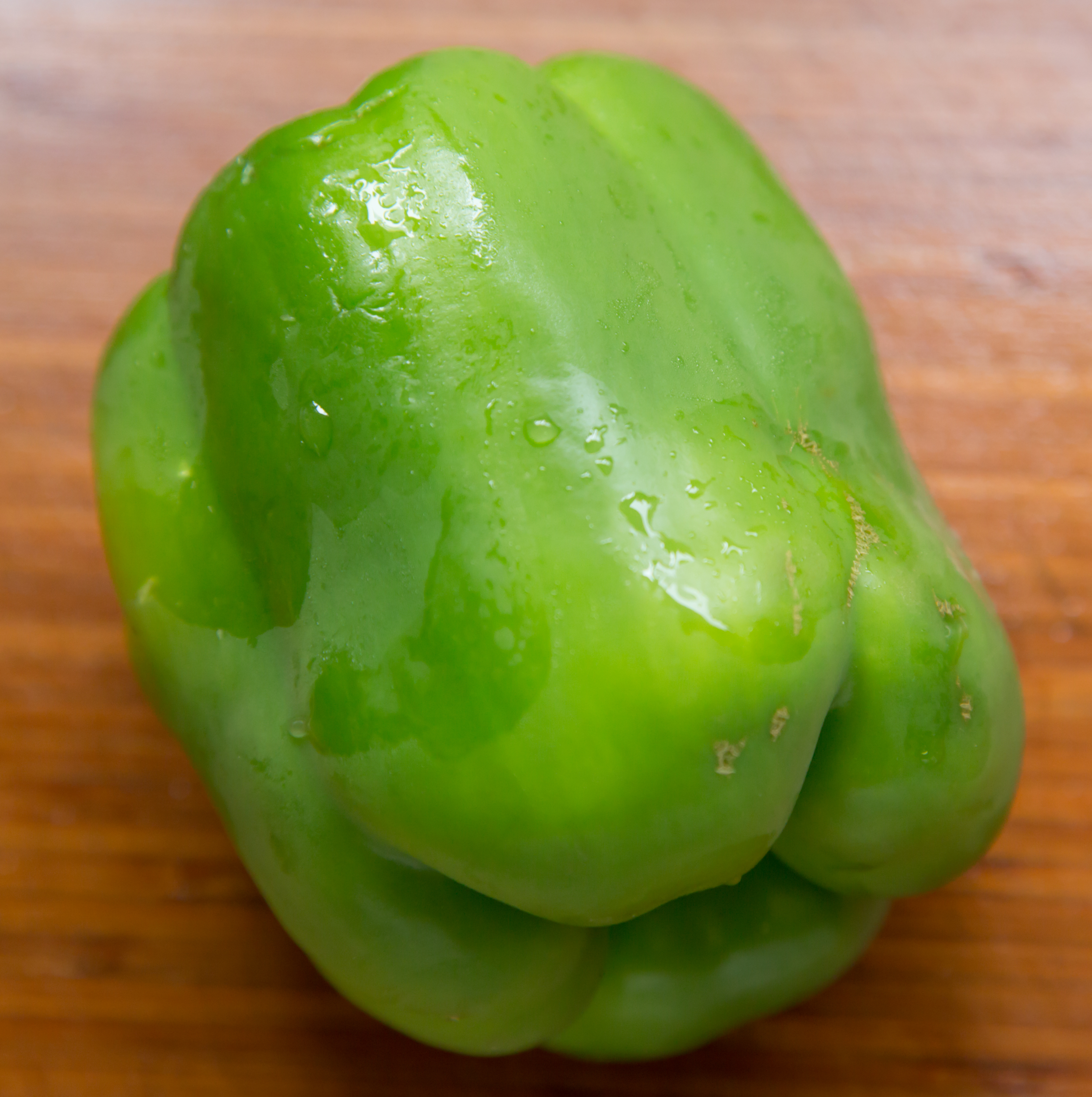
Green bell pepper

Green bell pepper

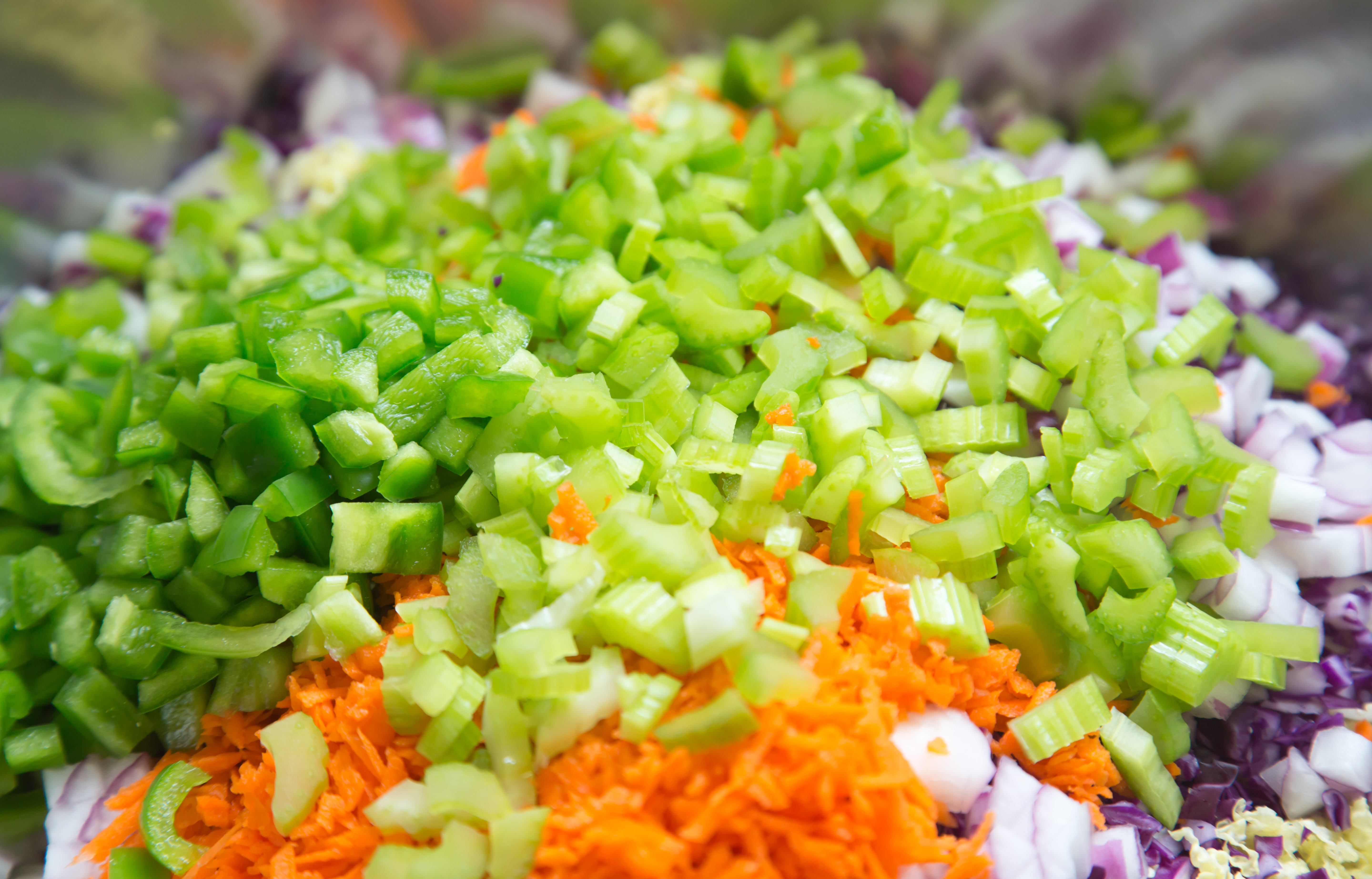
Chopped vegetables

Chopped vegetables

Finished coleslaw

Finished coleslaw

1 Comment

Filed under Food, Photography, Recipes

CAJUN CRAWFISH BOIL – IN SILICON VALLEY??

Our children grew up in Louisiana, and now they all live in California.They still love authentic Creole and Cajun cooking, but it is definitely hard to come by in the Golden State. For the last several years, my son and his wife have tried to change that. Every spring – crawfish season – they have a backyard crawfish boil for their friends, neighbors, co-workers, and their families. As is usual with crawfish boils, it has become a bigger and bigger production each year.

As an aside, there is a strict Louisiana terminology for the crustaceans: crayfish are what you dissect in high school biology classes; crawdads are what you catch for fishing expeditions; crawfish are what you eat. Often the experience of the boil participants becomes evident depending upon what they call the main dish. In Louisiana, mudbug is a perfectly acceptable alternative term, but in other places, the name causes a bit of squeamishness.

In preparation for the party, my son has consulted  one of friends from Louisiana known for his crawfish cooking skills. Peter has read lots of recipes in cookbooks and online. Most importantly, he has identified a reputable and reliable source for authentic Louisiana mudbugs. Then, there is the ordering process to make certain that the crawfish are shipped at the right time and arrive as scheduled so that they are still lively. Crawfish season starts during the winter months. Then, the critters are small but with soft shells. By now, almost the end of the season, the crawfish are much bigger, but their shells are often hard enough that novice eaters have problems getting to the succulent tail meat.

When the date of the party is set, my son places his order with Louisiana Crawfish Company in Natchitoches, LA.  The crawfish cost from $3.50 to $6.00 a pound depending upon size and quality and how many you order.  (Crawfish cost 89 cents a pound for our first crawfish boil 40 years ago.)  At this point, the key question is always how many should you order? For a novice crowd, allow 1 pound per person. For crawfish fans, allow 2 pounds per person. For aficionados (just about everyone in Louisiana) allow 5 pounds per person. Remember, if there are leftovers – unlikely – you can harvest the tail meat and freeze it for crawfish étoufée at some later time.  Of course, there are overnight shipment expenses, so the cost for crawfish for an average-sized party will run to close to $300.

The next step is to plan the rest of the menu. There are some absolutely necessary items: ice-cold beer, corn on the cob, new potatoes, onions, ice-cold beer, and ice-cold beer. Then there are optionals: something to eat while you wait for the crawfish to cook, bread or corn bread, coleslaw, watermelon, and desserts. Guests usually volunteer to bring a dessert. By all means, take them up on their offer.

There are certain equipment requirements for  a successful boil. You will need a large plastic or galvanized tub to purge the crawfish before you cook them. A high temperature propane burner will get the water boiling as quickly as possible. You also need to have a very sturdy stand that will hold a very heavy pot of water. The largest cooking pot and lid that you can find – 50 gallons is common – will let you cook a good-sized batch at one time. Find a canoe paddle for stirring the pot. You will need a large strainer with handle in order to scoop out the crawfish and vegetables when they are cooked.  A table covered with newspapers  will hold a batch of food for guests to get to. With a genteel group, paper plates should be in abundance. For serious crawfish eaters, cardboard flats of the sort you get with cases of beer work better.


STARTING THE BOIL

Remember, it takes a lot of heat and a long time to bring 30-40 gallons of water to the boil, so start this step several hours before you plan on eating. If the water boils too soon, you can always turn the temperature down for a time. Light the fire on the burner and adjust it to a hot flame. Be sure to have enough propane. There is nothing worse than running out of propane in the midst of a boil.  Fill the cooking pot with water from your garden hose. You will probably need two people to lift the pot; one gallon of water weighs 8.35 pounds. Season the water with enough salt to taste briny – a cup or two should be enough. Add two lemons cut in half. Drop in two bags of Zatarain’s Crawfish and Crab Boil. If you can’t find the bags, a bottle of the liquid variety should be enough. If you want, you can add some paprika and chile powder.  With most orders, Louisiana Crawfish Company will include a container of their Creole seasoning. It is really not necessary to add any more seasoning to the water, because you’ll be sprinkling on the cooked crawfish.

PURGING THE CRAWFISH

The crawfish will arrive in large sacks with lots of ice packed around them. Since they are cold-blooded, the crawfish will be alive but not very lively. You need to wake them up in a tub of water to which you have added a goodly amount of salt – half a box should be enough. The salt will cause the crawfish to empty their alimentary tract, so the water will become very dirty looking. You can drain the water and do a second treatment until the water clears, but be sure to drain the water as the crawfish will die if left in the water. Pick out any crawfish that float to the surface of the water, as they have most likely died in transit. Alton Brown declares that there are better ways to accomplish this step, but hey, he’s from Georgia and not a real Cajun.

PREPARING VEGETABLES

While the water is heating and crawfish are purging, prepare the vegetables that will cook with the crawfish. Remove the husks  and silks of fresh ears of corn. Break each ear in half. Allow 1 to 2 ears per guest. If necessary, scrub baseball-sized red potatoes. If you can only find larger potatoes, cut them in half. Allow 1 to 3 potatoes for each guest. Remove the outer husk from golf ball to baseball sized onions.  Allow 1 to 2 onions for each guest.

COOKING

The water must be at a full boil when you are ready to cook. Add the onions and potatoes first, as they will take the longest to cook. After about 15 minutes, add crawfish and corn. Add enough that the guests already in line can get several. From time to time, stir the pot with your paddle. When you think the crawfish are done, around 15 minutes (just to be sure, the cook usually samples from time to time), snag one and test for doneness. When everything is cooked, use your strainer to retrieve everything and dup  it out on the newspaper-covered table. Sprinkle with chile powder or Creole seasoning. Then encourage folks to help themselves while you get ready for your next batch. If you want, you can increase the spiciness of subsequent batches by adding  chile powder or Creole seasoning as you start each batch. This is often a good idea if not everyone likes spicy crawfish, so by this technique, the first batches are not as spicy, and they get spicier as time goes on, to go with the ice-cold beer.

HOW TO EAT A CRAWFISH

Eating your first crawfish is a little intimidating, especially if you have never had instruction. It’s actually very easy: just pull the crawfish apart at the joint between the body and the tail; then pry open the first ring of the tail shell with your thumbnail, squeeze  the tail fan firmly between the thumb and index finger of your other hand; and the tail meat will slide into your waiting mouth. The process is not always that easy and smooth, but with a little practice you will be eating crawfish as fast as you can pull them apart,

More advanced eaters relish the little morsel of fat that stays in the thorax shell and will “suck the head” to extract the tasty treat.

CLEANING UP

In preparing a crawfish boil, you will wind up using a lot of heavily salted water. Never empty the leftover water on the lawn or in your flower beds or you will wind up with a yellow spot in the grass or dead peonies.

As to the shells, it is a good idea to station plastic-lined garbage cans around the yard.  Then, when the party is over, you can just tie up the bags and dispose of them. Be aware that there is nothing that smells as bad as day-old crawfish bodies, so dispose of them as quickly as you can. They do not make good compost.
11 Comments

Filed under Food, Photography, Recipes

CHIPOTLE CULTIVATE SAN FRANCISCO

We just returned from a week in the San Francisco Bay area. Our trip was primarily a baby-sitting junket, but we wound up experiencing a non-stop rush of food events. The main reason for our trip was so that our daughter and son-in-law could go to New York City to cook in a charity event in Rockefeller Center for CityMeals on Wheels, but we wound up baby-sitting while they cooked at their restaurant, Rich Table, for visiting chefs attending the Chipotle Cultivate Festival in Golden Gate Park. Then there was the NYC event itself, and while the offspring were out of town, we helped my son and his family with their annual crawfish boil in Silicon Valley, and then cooked a birthday dinner for my son.  In between all of this we had a spectacular all-holds-barred dinner at Rich Table and a late lunch at the Presidio Social Club, a lovely little place on the Presidio grounds. Finally we attended the awards ceremony for San Francisco’s Rising Star Chefs held in the Giants’ AT&T Park. Sarah and Evan cooked again, and the reception was a real food blowout.

Now we have to work on losing the weight we gained during this food extravaganza.

My first report from the week is about the Chipotle Cultivate Festival, sponsored by the Chipotle Mexican Grill restaurant chain. This started out as an event in Chicago’s Lincoln Park three years ago, spread to Denver’s City Park last year, and now this year moved to include San Francisco’s Golden Gate Park. The event was held in Hellman Hollow with nearby Lloyd Lake. The festival was free with lots of live music, so there were big crowds. Chipotle had food stands around the grounds with some of their specialties for sale. There were lots of other food vendors, but one of the highlights was a series of cooking demonstrations by well-known chefs. Amanda Freitag, perhaps best known as one of the judges on the Food Network’s Chopped, travelled from New York City. So did Douglas Quint and Bryan Petroff, co-owners of Big Gay Ice Cream Trucks, wildly popular in NYC. Ludo Lefebvre, Jon Shook, and Vinny Dotolo came up from Los Angeles. Michael Charello of Bottega in Napa Valley, Richard Blais from Atlanta, corporate chefs from Chipotle, and San Francisco chefs Minh Tsai, Evan Bloom, Led Beckerman, and Sarah and Evan rounded out the list of chefs who did cooking demonstrations throughout the day.

Sarah and Evan chose to prepare Sarah’s popular dessert, caramelized olive oil cake with fresh strawberry sauce and cream cheese ice cream. Oil cakes have been around for years, but recipes in cookbooks are often hard to find. Oil is used as a substitute for butter or shortening. Its liquid state at room temperature makes a moist cake, but that also means it will not support cake loft as much as solid fats. For that reason, the cake is more dependent upon incorporated air in other ingredients so it is important to beat those ingredients enough to give the cake lightness. Olive oil has only recently become a popular ingredient. The 1975 edition of the Joy of Cooking has three recipes for oil cakes but also strong advice to avoid olive oil because of its strong flavor. These days, that strong flavor has made olive oil cakes popular.

An additional step that makes Sarah’s cake special is caramelization. As she says, you can caramelize the top, the top and bottom,or all sides, depending how much time you want to spend. One way to caramelize the cake is to sprinkle it with sugar and use a salamander or torch as you might for a crême brulée, but that may be too tricky, so you can accomplish the same thing in a very hot skillet or griddle. The caramelization step can only be done when you are ready to serve the cake.

The second part of the demonstration dish was a strawberry sauce made from fresh strawberries. California strawberries fresh from the farm are totally unlike the flavorless, cardboardy kinds you get in the supermarket. The farm varieties are red, juicy, sweet, tender, and filled with the strawberry flavor of long ago. Adriana Silva, the owner of   Tomatero Farms near Watsonville and the strawberry purveyor, also participated in the demonstration. She has gone from 2 to 200 acres under cultivation in just a few years, and she raises six different varieties of strawberries which come in at different times during the season. The variety used for the demonstration was “Seascape”, a red, sweet beauty.

The final part of the dish for the demonstration was a generous topping of cream cheese ice cream, churned at Rich Table that morning. It is like eating a bite of cold New York cheesecake except that it melts in your mouth.

RECIPE

Olive Oil Cake

Ingredients

  • 8 large eggs
  • 1½ cups granulated sugar
  • 1 teaspoon salt
  • 1½ lemons, zested
  • 1 1/8 cups whole milk
  • 1½ cups all-purpose flour
  • 1 cup cake flour
  • 1 1/3 cups almond flour
  • ¼ cup baking powder
  • 1½ cups extra virgin olive oil + more to grease the cake pan
  • granulated sugar to caramelize the top

Method

  1. In the bowl of a stand mixture, combine the eggs and sugar. With the mixer set on medium speed, cream the eggs and sugar together for at least five minutes to incorporate as much air into the mixture as possible. It should form a smooth, shining ribbon.
  2. Turn the mixer to low and add the salt and lemon zest
  3. Slowly drizzle in the mil with the mixer still running.
  4. While the eggs and sugar are mixing, sift together the flours and baking powder.
  5. Add the sifted flours to the mixture, continuing to beat on low.
  6. Drizzle in the olive oil very slowly as you would making mayonnaise.
  7. Prepare a half sheet cake pan ( 16 x 12 x 3 inches) by oiling liberally with the extra olive oil
  8. Pour the batter into the prepared pan. Use a spatula to make sure the batter fills the corners of the pan.
  9. Bake in the middle of an oven pre-heated to 325°F for 25 minutes or until the cake springs back to the touch and/or tests clean with a toothpick
  10. Remove from the oven. Cool on a baking rack for five minutes. Then invert onto a flat surface. Gently transfer the cake. You may need to use your fingers or a thin spatula get the cake out in one piece.
  11. When ready to serve, cut the cake into serving-size pieces, sprinkle with sugar, and place sugared-side down on a clean hot griddle or skillet. When the sugar is caramelized (2-3 minutes) serve caramelized side up with sauce, whipped cream, or ice cream.

3 Comments

Filed under Food, Photography, Recipes, Restaurants, Travel

GOODBYE TEXAS – EAST TEXAS CASSEROLE

We recently had a wonderful family gathering with our children (their spouses didn’t attend) and some of our grandchildren. My wife’s family has had a beautiful farm in East Texas for over fifty years. Our children had spent many times during their growing-up years there, enjoying swimming, fishing, hiking. horse riding, and just generally having a good time. Now, because we all lived so far away and because travel to the fairly remote place was difficult and expensive, we decided to sell the farm. After we had accepted an offer on the farm, we needed to make one last visit to load up personal items and to enjoy the place for one last time.

It turned into a great family gathering when all of the kids found a few days to spare in their busy schedules. For nearly a week, people came and went, fished and hiked, laughed, sat in front of a camp fire, and ate some good food.

Our family has been lucky to have excellent cooks in many generations, so one of the best memories for all of us is the good food we have enjoyed on the farm: festive Thanksgiving dinners, fried catfish, fresh vegetables from the once-one-acre garden, and wild blackberries from the surrounding fields and woods. One meal that we all remember was a huge buffet that ladies of the church had prepared for a family gathering many years ago at a time of family sadness. The spread was lovingly prepared, but the most noteworthy dish was made by one of my late mother-in-law’s closest friends. I call it East Texas Casserole, but if you look for the recipe on the internet, you will find it called Redneck Casserole. I have changed the name because I would never call any of the gracious ladies of the church society rednecks. The dish is easy to prepare – one of those open the can and dump creations – and it gets uniformly good reviews on the web. You can prepare it in 30 minutes or so.

Most internet recipes call for grated Cheddar cheese, but to me that is not really authentic. For the real thing you will need to use Velveeta cheese food. I grew up on the stuff, and so did most other kids of that era, including my wife. The product has an interesting history which you can read about in great detail in The Oxford Companion to American Food and Drink edited by Andrew F. Smith (Oxford University Press, New York, 2007)

The short story is that two American cheese companies were looking for ways to prevent cheese from spoiling so rapidly and to store it at room temperature. A process was patented by Joseph L. Kraft in 1916. Tinned cheese was distributed to the troops in World War I (Remember Spam in World War II?) Eventually the two cheese companies agreed to share the patent and Velveeta made its brand-name appearance in 1928. Velveeta must contain at least 51% cheese (that’s why it is called cheese food) and will keep almost for eternity on a shelf at room temperature. These amazing properties are due to sodium citrate and, later, sodium phosphate among other preservatives. Subsequently Kraft brought out boxed macaroni and cheese in 1937, using a dehydrated version of Velveeta. Millions of boxes are sold each day, and it is discouraging to many mothers when their offspring prefer Kraft’s macaroni and cheese dinner to their carefully made from-scratch version.

RECIPE

EAST TEXAS CASSEROLE

Ingredients

  • 1 medium onion, diced
  • 2 tablespoons cooking oil
  • 1 can (22 ounces) Bush’s barbecued beans
  • 1 package (8) hot dogs, sliced into ½inch rounds
  • 1 pound (about 2 cups) frozen tater tots
  • 8 ounces Velveeta cheese food, grated (chill the Velveeta in the refrigerator for about 30 minutes to make it easier to grate)

Method

  1. Preheat oven to 350°F.
  2. Heat a 2 quart cast iron skillet over medium heat.Add the diced onions and oil, stirring until the onions are translucent, but not browned, about 55 minutes. Remove from the heat.
  3. Stir in the canned beans and hot dog slices.
  4. Arrange the frozen tater tots on top of the mixture.
  5. Bake on the middle rack of the preheated oven until the tater tots are golden brown, about 30 to 40 minutes.
  6. Remove the skillet from the oven, sprinkle the top with the grated Velveeta, and return to the oven for about 5 minutes. Then turn the heat off in the oven and continue to bake for a few minutes until the Velveeta is well melted. Serve immediately.

11 Comments

Filed under Food, Photography, Recipes, Travel

REGGIE’S AMAZING MICROWAVE PRALINES

Reggie Graves, one of our best friends from our days in Louisiana, recently paid us a visit. Reggie is well-known for his championship chili – I have written about it in the past – but he is an excellent cook besides that.  Whenever we have a chance to visit with Reggie, you can be sure that there will be good food and lots of talk about food.

We were definitely not disappointed on this visit. Reggie brought us a huge bag of shelled pecans and the promise to make his favorite microwave pralines.

During one evening of reminiscing about old times, we talked about a famous praline shop in the New Orleans French Quarter on Decatur between Jackson Square and the French Market. I am not sure that the shop still exists, especially after the devastation of Hurricane Katrina. The memory lingers on, beginning with the fragrance of caramel and roasted pecans drifting out onto the street for blocks around the shop. The accompanying visual is of a huge woman hovered over an equally huge copper pan filled with bubbling caramel and pecans. The woman would stir and stir the mixture until it was just right, and then she would ladle dollops of the blazing hot mixture onto a cool marble table. When the pralines had cooled, she would wrap them in squares of waxed paper, ready for sale to the many tourists who had lined up to watch her. Of course, the taste memory is biting into a golden brown praline filled with pecans and cooked so perfectly that the caramel was soft and chewy without any sugary texture.

Making pralines at home can be a challenge. First, you probably don’t have a big copper vat. Then there is the matter of getting the caramel cooked just right so that it is creamy without a trace of sugar crystals. That means that many home cooks – this one included – prefer to buy their pralines from a good candy store.

Those challenges are what makes this recipe so great. You can make perfect pralines in just a few minutes using your microwave. The biggest problem is to make certain that the time of cooking is tied to the wattage of your microwave oven. This recipe is designed for a 1000 watt appliance. To make it a general recipe, I tried to see if there are tables or graphs to suggest how you should adjust cooking time according to oven wattage. Indeed, there are lots of tables available, but I found most of them confusing and difficult to use. Instead, I developed a simple formula which you can use as a beginning guideline. You will probably need to experiment to find the ideal time for your oven, but a beginning point is to divide 1000 by the wattage of your oven and multiply the cooking time in this recipe (12.5 minutes) to find the approximate correct cooking time for your oven.

The other essential secret is to use a large enough (eight cups at least) microwave-proof bowl to boil the praline mixture.

With that, here is the recipe:

RECIPE

Ingredients

  • 1 pound light brown sugar
  • 1 cup heavy cream
  • 2 cups shelled pecan halves
  • 2 tablespoons butter
  • enough softened butter to grease a large baking sheet

Method

  1. In the large microwave-proof bowl or pitcher, combine the brown sugar and cream.
  2. Using a 1000 watt microwave oven with turntable, cook the brown sugar and cream mixture on High for exactly 12.5 minutes
  3. Using a hot pad, transfer the bowl with the cooked mixture to a heat-proof surface.
  4. Stir in the pecan halves and the butter,
  5. Working quickly, when the pecans are completely coated and the butter is melted and incorporated, form the pralines
  6. With a soup spoon or tablespoon, ladle spoonfuls of the mixture onto the buttered baking sheet.
  7. Cool enough before eating so that you don’t burn your tongue, but pralines are delicious warm or cold.
  8. If you get tired of eating just the pralines, try crushing them before sprinkling them over dishes of vanilla ice cream

2 Comments

Filed under Food, Photography, Recipes

SHRIMP, CORN, AND BLACK BEAN SALAD WITH CHILE-LIME VINAIGRETTE

I’m still working on emptying the freezer. I found more shrimp. I also had some leftover corn on the cob from a cookout the day before. With a can of black beans from the pantry, all of that seemed like the makings of a spring salad. For this recipe, you need to boil the shrimp in their shells, along with some crab boil. My choice is Zatarain’s liquid boil, because it is easy to use, but any brand will work.  Don’t cook the shrimp too long or they will become tough. Chill them in ice water before you peel them, and then refrigerate  until you are ready to use them.  Prepare the corn by cutting the kernels off the cobs. A sharp knife is just fine for the job, but if you are a gadgeteer, you might have fun using a special device for removing the kernels while leaving a beautiful, symmetric cob.

Dress the salad with the accompanying chili-lime vinaigrette to complete the Southwestern slant of the salad. This should serve two to four.


RECIPES

Shrimp, Corn, and Black Bean Salad

Ingredients

  • 10  16-20/pound frozen shrimp with shells, thawed
  • 2 tablespoons liquid Zatarain’s crab boil
  • 2 tablespoons salt
  • 2 cooked ears of corn
  • 1 can (14 ounces) black beans, drained and rinsed
  • ½ cup chopped green bell pepper
  • 2 ribs, celery, diced
  • ½ medium red onion, diced
  • ¼ cup pecan halves, chopped coarsely
  • ¼ cup sliced black olives
  • 2 ounces feta cheese, crumbled
  • 8 cherry tomatoes, halved
  • salt and pepper to taste

Method

  1. Add the thawed shrimp to 4 quarts of boiling water to which has been added the salt and crab boil. Return to the boil and boil for 5 minutes. Drain and chill the shrimp in water and ice. When cool, peel the shrimp. Refrigerate until ready to use.
  2. With a sharp knife or circular corn cutter, cut the kernels off the corn cobs. Set aside until ready to assemble the salad.
  3. In a large bowl, combine the corn kernels, black beans, bell pepper, celery, onion, pecan pieces, and olives. Add the feta cheese crumbles and toss lightly.
  4. Dress with the chile-lime vinaigrette, toss lightly, and top with shrimp and tomato halves.
  5. Serve. Makes 2 to 4 servings

Chile-Lime Vinaigrette

Ingredients

  • 1 large lime, juiced
  • 1 tablespoon Dijon mustard
  • ¼ teaspoon garlic powder
  • ¼ teaspoon ground cumin
  • ½ teaspoon ground red chiles (your choice of heat)
  • ½ teaspoon salt
  • ¼ teaspoon ground black pepper
  • 1 teaspoon  turbinado sugar
  • 6 tablespoons extra virgin olive oil

Method

  1. In a medium bowl, whisk the lime juice and mustard together untill well combined.
  2. Whisk in the dry ingredients until completely incorporated.
  3. Slowly, one tablespoon at a time, whisk in the olive oil. Make sure that each tablespoonful is completely incorporated before adding the next.
  4. Correct the seasoning with salt and pepper. Then use the entire recipe to dress the shrimp and vegetable salad. Serve immediately.

3 Comments

Filed under Food, Photography, Recipes

CINCO DE MAYO, MARGARITAS, AND ZACATECAS

There is a common misunderstanding that Cinco de Mayo is the Mexican equivalent of the American Fourth of July. Actually Mexican Independence Day is September 16th (Dieceséis de Septiembre) and it is a really big national holiday in Mexico. On the other hand, Cinco de Mayo memorializes the victory of a seriously outmanned Mexican army fighting an invading French force in the city of Puebla. The event is celebrated in Puebla, but the holiday really got its start among Mexican immigrants in Los Angeles and other Western and Southwestern cities around the time of the American Civil War (1860-1865) The purpose of the celebration was to demonstrate native pride among the Mexican immigrants. Over time the day has come to be celebrated in much of the United States, and now has seen retrograde movement into Mexico where it is increasingly celebrated.

My own view is that the day has become popular because it provides an excuse to celebrate spring, drink your share of Coronas and/or margaritas, and eat lots of tacos and chips and salsa. That seems reason enough, and I plan to celebrate Cinco de Mayo this year.

Even though Mexican beer (Tecate, Corona, Bohemia, Dos XX, Negra Modelo) is probably the most popular alcoholic beverage for the holiday, there are undoubtedly many pitchers of margaritas drunk before the day is over. These days, many bartenders use bottled margarita mix and cheap tequila. This is a recipe for a not-very-tasty drink that can be used simply to get a buzz (and a headache). A well-made, delicious margarita should be made with fresh lime juice, good quality tequila (preferably “white” or clear, not brown, with the label, “100% agave) and your choice of orange liqueur. Commonly Triple Sec is used, but it is a little harsh for my taste. Cointreau and Grand Marnier are preferable, but my new favorite is Citronge, made by the Mexican distiller of Patrón tequila. You will also need ice to dilute the other ingredients a bit and bring out the flavors. Use coarse salt if you like a salty rim. Just don’t ask me about frozen margaritas – I don’t much like them.

Zacatecas is one of the great colonial cities of Mexico. Shortly after the Spanish conquest, an enormous lode of silver was discovered, and Zacatecas mines provided much of the silver wealth of the Spanish Empire. The city is nested in a beautiful mountain valley with the Sierras nearby. In its heyday, the city was filled with ornate churches decorated with silver, gold, and other precious materials. The churches have been long ago  stripped of their riches, but the beautiful buildings remain. Many shops are filled with gorgeous silver jewelry and household goods. There are charming restaurants and cafés along with comfortable hotels. One of the most comfortable lodgings is fashioned from an abandoned bull ring with modern rooms surrounding the still-existing bull ring. You can almost see the toreadors and hear the crowds.

There is now a namesake of this fascinating city.  Restaurateur Mark Giffen, a James Beard Foundation winning chef best known for his elegant Santa Fe restaurant, The Compound, has created Zacatecas Tacos + Tequila in the Nob Hill district of Albuquerque. It is a casual space that is popular with students from nearby University of New Mexico along with older patrons. There are lots of choices of tequila, as the name suggests, and you can tailor your own margarita with your favorite tequila and orange liqueur. The food consists of creative twists on old standbys – something you would expect from a chef with Giffen’s credentials and reputation.

The queso fundido is beautifully presented and flavorful. House-made chorizo serves as the base of the dish. It is tasty and not too spicy. The cheese is melted , lightly browned, and appropriately oozy. The dish reminds me of the first time I ever had the dish in a sidewalk café in Tlaquepaque, Mexico over thirty years ago.

The fish tacos are well presented with perfectly grilled fish and well-seasoned cole slaw. The best part is the fresh house-made corn tortillas.

The chicken molé is unlike any version of the dish I have ever had. Topped with a nest of fresh spinach, the tender chicken breast is smothered in molé and surrounded with grilled calabacitas.

All in all, ours was a good dining experience and worth another visit.

RECIPE

Favorite Margarita

Ingredients

  • juice of 1 large lime
  • 2 ounces 100% agave tequila
  • 1 ounce orange liqueur
  • 2 ice cubes

Method

  1. Combine all of the ingredients in a cocktail shaker. Shake.
  2. Strain into a 6 ounce bar glass filled with ice cubes. (optional, moisten the rim beforehand and dip in coarse salt.)

4 Comments

Filed under Food, Photography, Recipes, Restaurants

SHRIMP-STUFFED POBLANO CHILES WITH TOMATILLO-CHIPOTLE SALSA

One of the classic dishes of Mexico is chiles en nogada: poblano chiles stuffed with shredded pork (picadillo) and topped with walnut sauce (nogada), and pomegranate seeds. Supposedly the dish was invented in the city of Puebla in 1821. The green poblano chiles, white  walnut sauce, and red pomegranate seeds symbolize the colors of the Mexican flag. In season, chiles en nogada is a popular dish throughout Mexico , especially on September 16, Mexican Independence Day.

This is not the season. Fresh walnuts are not available and pomegranates don’t appear until late summer. Still, I thought about making the dish when I located some walnut halves in the freezer I am under instructions to clear out. I also saw some nice looking poblanos in the supermarket. As well, the walnut sauce sounded too complicated, so I decided to stuff the chiles with some pre-cooked, pre-shelled shrimp from the meat counter and cremini mushrooms from the refrigerator drawer. Then I topped it all with crema, the Mexican version of sour cream. The final dish still turned out green, white, and red because I used some tomatoes in the stuffing.

As a side dish, I made a tomatillo salsa with chipotle. That took only a few minutes and gave a little extra kick for those who wanted it. Avocado slices finished things off for a festive and surprisingly light dinner.

RECIPES

Shrimp-Stuffed Poblano Chiles

Ingredients

  • 4 fresh poblano chiles
  • ¼ cup walnut halves or pieces
  • 2 tablespoons olive oil
  • 6 crimini mushrooms, washed, trimmed, and quartered
  • ½ pound pre-cooked, shelled shrimp (31/40 per pound)
  • 3 Roma tomatoes, peeled, seeded, and chopped coarsely
  • ¼ cup scallions including green tops, sliced
  • ½ cup cilantro leaves, coarsely chopped
  • juice of ½ lime
  • salt and pepper to taste
  • 1 tablespoon adobo sauce (optional, see recipe below)
  • Mexican crema

Method

  1. Roast poblanos over an open flame until the skin is evenly charred. Place in a zipper bag, seal, and let rest until cooled. Then remove the charred skin under running water, slit one side, remove seeds and core, dry, and set aside.
  2. In a small sauté pan over medium heat dry roast the walnuts until lightly browned and the oils have begun to be released. Stir frequently. Be careful not to burn. Remove from the heat, cool, chop coarsely, and set aside.
  3. In the same sauté pan, heat the olive oil over a medium flame. Add the quartered mushrooms and sauté until they are soft and lightly browned. Drain, cool, and set aside.
  4. In a medium bowl, combine the shrimp,  walnuts, mushrooms, shrimp, tomatoes, scallions,  cilantro, and lime juice. Adjust the seasoning with salt and pepper. Stir in the optional adobo to suit your taste.
  5. Fill the prepared poblano chiles and arrange on individual plates. Drizzle with crema, and serve.

Roasted Tomatillo-Chipotle Salsa

Years ago, the first time I made this for my chef son-in-law, he liked it so much that he copied the recipe to the collection he keeps in his laptop. The salsa is refreshing and quite different from the usual bottled kinds. You can make it as hot as you like by varying the number of chipotles and the amount of the adobo sauce. Tomatillos, along with tomatoes, belong to the nightshade family, but they are more tart than tomatoes, stay green when ripe, and are covered with a papery husk that needs to be removed before eating or cooking. They can be eaten raw, but the tart flavor is not very good, in my opinion. Roasting them mellows the flavor. Tomatillos  used to be hard to find except in Mexican grocery stores, but now they are in nearly every supermarket. Chipotles are actually smoked jalapeños. You can find them canned in a spicy adobo sauce.

Ingredients

  • 5-6 fresh tomatillos (about 1 pound)
  • 1 tablespoon olive oil
  • 1 small red onion, chopped fine
  • ½ cup cilantro leaves, stemmed and chopped coarsely
  • 2 chipotles (canned in adobo sauce)
  • 1 tablespoon vinegar
  • 1 teaspoon dried Mexican oregano
  • salt and pepper to taste

Method

  1. Remove the husks of the tomatillos. Then broil them for 15 to 20 minutes on a baking sheet that has been lined with aluminum foil. Turn occasionally. Remove from the broiler when the skin has dark brown spots all over and the flesh is soft and somewhat watery.
  2. In a small skillet, sauté the chopped onion in the olive oil until soft and translucent. Do not brown.
  3. Transfer the onion to a medium bowl. Chop the tomatillos finely and add them to the onion. Add more adobo sauce if you want the salsa to be more piquant. Stir in the vinegar and cilantro. Correct the seasoning with salt and pepper.
  4. Serve as a dip with tortilla chips or as a condiment with a main course.

1 Comment

Filed under Food, Photography, Recipes

RICH TABLE – KEEPING OUR FINGERS CROSSED

What a year this has been! About this time last year Rich Table was a construction site, and Sarah and Evan were wondering if they could open on time. They were also wondering if they would get enough customers to pay the bills.  Their anxieties have been addressed. The doors of their new restaurant opened right on schedule, and almost from the beginning, they have been busy. One of the biggest complaints on Yelp is that getting a reservation is almost impossible. As proud parents, we know the feeling. When we are visiting San Francisco, we need to call Sarah weeks ahead to make sure we have a table. Sometimes we have had to sit at the bar, and once we only got in when there was a last-minute cancellation.

Great reviews on local food blogs and by Michael Bauer in the San Francisco Chronicle have certainly helped with their popularity, but the excellent service by “celebrity” wait staff, creative cocktails, and – of course – the imaginative food have drawn in lots of repeat customers and regulars.

The chefs have travelled to places as far away as Chicago and Mumbai to cook at the invitation of restaurants and chefs in those settings.

Now, even before the first anniversary of their enterprise, Sarah and Evan are enjoying an experience that once they could only dream of. Along with their friends,  the husband-wife team who operate State Bird Provisions in another part of San Francisco, they are among five finalists for the James Beard Foundation award for the outstanding new restaurant in the United States.

For those of you who don’t know, the James Beard Foundation Awards is cooking’s version of the Oscars. It is black-tie/long dresses in the Lincoln Center in New York City. There are categories for all sorts of food-related honorees, including best chef, best restaurant, best restaurateur, best television show, best cookbook, even best food blog (I am not on the list). There are lots of pre- and post-event parties, so it becomes a days-long celebration of food. I am certain that there is a lot of amazing food at all of the parties and events.

I thought you might be interested in the lists of finalists in two categories: Best New Restaurant and Individual Food Blog, so here they are:

BEST NEW RESTAURANT

  • Empellón Cocina                       NYC
  • Grace                                           Chicago
  • The Ordinary                             Charleston
  • Rich Table                                  San Francisco
  • State Bird Provisions               San Francisco

INDIVIDUAL FOOD BLOG

  • Cannelle et Vanille                       www.cannellevanille.com    Aran Goyoaga
  • Hunter Angler Gardener Cook   www.honest-food.net           Hank Shaw
  • Vinography                                      www.vinography.com           Alder Yarrow

Cookbook, television, and journalism awards will be announced on May 3, 2013. The other awards will be announced May 6, 2013. If you are interested in checking out all of the finalists in all of the categories, go to www.jamesbeard.org/awards

6 Comments

Filed under Food, Restaurants