Tag Archives: Rich Table

LETTER FROM UNSCENE SHREVEPORT: FARMERS MARKET

Today we went to the Farmers Market at the Festival Plaza in downtown Shreveport near the banks of the Red River. We arrived at 7 AM, but there was already a long line of customers waiting to buy fresh corn from the Bailey Farms trailer filled with sacks from the fields of the Mennonite colony in Arkansas. The crowds were otherwise fairly light, but within a short time, the plaza was filled with folks of all descriptions, and the vendors were busy selling their wares. Unscene Shreveport is an ongoing project of the Shreveport Regional Arts Council, who are trying to revitalize the riverfront while bringing new ideas about art and food to the community. The executive director, Pam Atchison, met with Sarah and Evan, along with local chef, Jason Brady, to plan events of the day and to talk about the cooking challenge.

Amateur cooks were encouraged to  participate in a free cook-off using a “secret” ingredient from the farmers market. The entrants drew their assignments from a big basket – either tomatoes or squash. It was interesting to see how many were puzzled about  what to do with tomatoes, which were in abundance –  ripe or green, big or small, heirloom or otherwise. There were lots of choices for squash as well.

On Monday evening, contestants were to return with eight helpings of their dish. Sarah, Evan, and Jason would be the judges and also cook a meal from market selections. Then there would be a sort of covered-dish supper with all the entrants invited to sample their competitors’ offerings.  Extra points for using more ingredients from the market. As we wandered around the plaza we saw the bounty of the Ark-La-Tex (the region where the three states come together with Shreveport as the unofficial capital) There were berries of all kinds, fresh watermelons, authentic Louisiana pralines by Dardie, fried pies, fresh and pickled quail eggs, hen’s eggs, meat of several varieties, cookies, cupcakes, bread, goat cheese, and on an on.

I’m looking forward to Monday.

Leave a comment

Filed under Food, Photography, Travel

UNSCENE SHREVEPORT : HERBED PORK CHOPS AND MEXICAN CORN

This is my first post from the Shreveport Unscene. The project is a year-long event designed to advance music, the arts, and food in the Shreveport area. Sarah and Evan are doing a two week residency with the goal of  promoting the use of fresh fruits and vegetables in restaurant menus and, along the way, in the family menus of the community. They will be cooking with products from the local farmers market and challenging local chefs to do the same.

Shreveport has a rich food tradition with many Southern and Louisiana specialties. But like much of the South, its food is heavy on deep frying – chicken fried steak, Southern fried chicken, fried catfish and hush puppies, not to mention Natchitoches meat pies, corn dogs, fried pickles, and even deep-fried ice cream. Bucking that tradition will be a challenge.

On our day of arrival, Sarah and Evan went to the farmers market, which is held twice a week. The market is much larger on the weekend, so during the week the choices were limited, but they found fresh pork chops, onions, garlic, new potatoes, sweet yellow peppers, corn from a Mennonite colony in nearby Arkansas, blueberries, raspberries, and fresh cream.

They augmented these products with prosciutto from the gift basket in their room and red onions, cilantro, vegetable oil, and balsamic vinegar from the nearby grocery store. Then they cooked our evening meal from all of this bounty, sort of as a trial run. Sometimes it’s ok to be a guinea pig.

RECIPES

Herbed Pork Chops

Ingredients

  • 2 tablespoons vegetable oil
  • 4 large pork chops
  • 5 cloves garlic, peeled but whole
  • 1/2 large onion, chopped coarsely
  • salt and pepper
  • 1 red onion, diced finely
  • 1 large bunch cilantro, chopped
  • balsamic  vinegar

Method

  1. In a large sauté pan, heat the oil over high heat, Add the pork chops, garlic, and onions. Brown the pork chops on both sides. Then transfer to an oven-proof dish and place in the oven preheated to 375.  Roast for 20 minutes or until done to your liking. Adjust the seasoning.
  2. In the meantime, combine the red onion, cilantro, and balsamic vinegar in a small bowl. Set aside.
  3. When ready to serve the pork chops, top each with a large tablespoonful of the herb mixture

New Potatoes, Onions, and Sweet Peppers with Pancetta

Ingredients

  • 1 1/2 pounds new potatoes, quartered
  • 1/2 large white onion, chopped coarsely
  • 4 sweet yellow peppers cut crosswise into 2-inch slices
  • 2 tablespoons vegetable oil
  • 1/2 of  reserved herb mix (see recipe ab0ve)
  • 3 ounces prosciutto, sliced into thin ribbons

Method

  1. Add the potatoes, onion, and peppers to a large saute pan over medium high heat with the oil.
  2. Stirring frequently, cook the vegetables until they are soft. Remove from the heat. Serve topped with half the herb mixture and the prosciutto.

Mexican-Style Corn with Yogurt and Queso Fresco

Ingredients

  • 6 ears fresh corn, shucked and silk removed
  • 1/2 cup Greek-style yogurt
  • 1 pound Mexican queso fresco, crumbled
  • Old Bay seasoning (note: one of us is very sensitive to spicy food, so that was the choice of seasoning. Ground chiles or chili powder would also be very good.)

Method

  1. Over high heat, dry roast the corn, two or three ears at a time, until they are lightly charred.
  2. Transfer to an oven-proof pan or dish. Spread the roasted corn with yogurt and then sprinkle with queso fresco and seasoning.
  3. Place in the oven preheated to 375 for a few minutes until the cheese is melted and slightly browned. Serve immediately.


2 Comments

Filed under Food, Photography, Recipes, Travel

BREAKFAST BURRITOS

When I was considering this post, I thought, “Who doesn’t know how to make a breakfast burrito? More than that, who doesn’t have his or her own favorite?”  While all of that is probably true, I decided to write this post anyway.

Part of the reason is that I just made some breakfast burritos for my wife, who started out before dawn to drive more than 14 hours and more than half way through Texas to visit her sister in the Dallas-Fort Worth Metroplex and then to pick up our grandson from the airport to take him to Shreveport, Louisiana, where his parents will be involved in a two-week-long food and cooking demonstration. I will join them and plan to send posts about the events, including my daughter’s demonstration on how to butcher a whole hog! You read that right, and I plan to document the event for posterity.

The second reason for the post is that whenever I visit San Francisco, I always make breakfast burritos for Evan and Sarah as they rush out the door to the restaurant. After the birth of their new son, they have both gone on diets, so I have been told that there will be no more breakfast burritos. So I thought I needed to share with somebody.

RECIPE

Breakfast Burrito

Ingredients

  • 3 tablespoons vegetable oil + more as needed
  • ¼ pound breakfast sausage
  • 2 cups frozen hash brown potatoes
  • 3 crimini mushrooms, coarsely chopped
  • ½ cup diced red onion
  • 6 cherry tomatoes, quartered
  • 2 large eggs
  • ½ cup sharp Cheddar cheese, grated
  • ¼ cup diced green chiles
  • ¼ cup salsa
  • Cholula hot sauce, to taste (optional)
  • salt and pepper
  • 2 extra-large flour tortillas (10½ inch wrap size) I used garden spinach herb flavor, but you can choose any flavor)

Method

  1. Heat the oil in a medium frying pan over medium heat. Add the sausage and sauté until the pink color is lost, breaking it up as it cooks.
  2. Stir in the frozen hash browns, adding more oil if needed. Stir frequently until the potatoes begin to crisp.
  3. Stir in the mushrooms and sauté until they give up their liquid and the mixture is nearly dry. Then add the red onion and tomatoes. Sauté until the onions and tomatoes are softened.
  4. Lower the heat to medium-low and stir in the eggs, mixing them in thoroughly. When the eggs have nearly set up, stir in the green chiles and salsa. If you want more spiciness, adjust the seasoning with hot sauce, salt and pepper. Reduce heat to low as you prepare the tortillas.
  5. Heat a large cast iron skillet or comal over a high flame. When the surface is hot, place one of the tortillas on the skillet and bake for 15 seconds or until it is lightly browned. Turn and bake the other side until lightly browned and the tortilla is softened. Do not cook too long, or the tortilla will become stiff. Set the first tortilla aside and then bake the second.
  6. Place half of  the sausage and egg mixture  in the middle of each tortilla. Fold over opposing edges, and then roll up from one end. Serve immediately or wrap in foil so it can be taken on the road. If you are going to eat them at home, you can cover them with red or green chile sauce.

5 Comments

Filed under Food, Photography, Recipes

CAJETA

It’s May! And I think that Spring may be here. Lots of flowers are in bloom, but we have experienced freezing weather for the last week. As well, it is a month of birthdays: three of our circle of friends are having birthdays within a week of one another, so we are planning a mass celebration. I am making the dessert. My plan is to make takeoffs from Sarah’s Rich Table desserts – salted chocolate sablés and buttermilk panna cotta. Neither of these is an authentic recipe from Sarah (Do you think Dad could talk her out of trade secrets?) but they should be close. I also plan to gild the lily – it is Spring, remember? – with Mexican cajeta to pour over the panna cotta.

The recipe for cajeta comes from the superb cook book, Authentic Mexican, by Rick Bayless and Deann Groen Bayless (William Morrow and Co., New York, 1987, p 293). Even though the recipe calls for regular white sugar, in the past I have used piloncillo, the small cones of unrefined sugar that you can find in Mexican and Central American markets. This time, though, I decided to go with turbinado. The other decision was whether to use goat’s milk or cow’s milk. The authentic version calls for goat’s milk, and it is easy to buy from the stalls selling goat cheese at the farmers market or in cartons at health food groceries, so I went with that.

The only tricky things about the recipe are: (1) don’t let the mixture boil over when you add the baking soda, (2) stir occasionally so that it doesn’t burn on the bottom, and (3) watch for the change in the size of the bubbles as it boils, because that is the sign to let you know it’s almost done.

Cajeta is akin to caramel or butterscotch sauces, and it can be used in exactly the same way. It is delicious over ice cream, fruit, cake, etc. I guess you could just eat it straight out of the bowl, and some folks probably do.

RECIPE

Cajeta

Ingredients

  • 1 quart goat’s milk
  • 1 cup turbinado sugar
  • 1 tablespoon light corn syrup
  • 1½ inch stick of cinnamon
  • ¼ teaspoon baking soda dissolved in 1 tablespoon water
  • 1 tablespoon light rum

Method

  1. In a large, heavy saucepan, combine the goat’s milk, sugar, and corn syrup, stirring until completely dissolved. Add the cinnamon
  2. Over medium heat, bring the mixture to the boil and then  remove from the heat and stir in the dissolved baking soda. It will foam up, so stir it vigorously to prevent boiling over.
  3. Return to the heat and adjust the temperature so that it simmers gently with a low boil. Stir frequently from the bottom of the pan to prevent scorching.
  4. Check frequently and stir. After about 30 – 45 minutes, the mixture will have reduced to about half or less, and the bubbles on the surface will change in size and become more glistening.
  5. Turn down the heat to medium-low, allowing the mixture to reduce still further, but stirring very frequently to prevent burning.
  6. When it has thickened sufficiently  – it should coat the spoon but still be fluid – remove from the heat. Cool for a few minutes, and then stir in the rum.
  7. Allow to cool completely and then transfer to a serving dish or to a wide-mouthed jar. It can be refrigerated for later use, but reheat gently before serving.

7 Comments

Filed under Food, Photography, Recipes

EATING MY WAY THROUGH SAN FRANCISCO – BAR TARTINE

Recently we were visiting in San Francisco around the time of the birth of Sarah and Evan’s second child. By the way, it’s a boy! During our visit we, of course, paid a visit to Rich Table and had a great meal. But the night that Mommy and the new brother came home from the hospital, we wanted to make it a special family evening, so Susan and I went to Bar Tartine in the Mission district.

The restaurant is part of the Tartine group operated by Elisabeth Prueitt and Chad Robertson of Tartine Bakery fame. The co-chefs at Bar Tartine are Nick Balla and Cortney Burns, who are friends with Sarah and Evan. To help us celebrate the new baby, they really pulled out the stops to make it a memorable evening for us as well as for our family. They certainly did that!

The bread on the table was freshly baked  famous Tartine Country Loaf baked by Chad Robertson himself. The bread is one of the best in San Francisco. I say one of the best because Sarah makes a killer loaf of Douglas-fir scented levain for Rich Table.

Of course, we followed Sarah and Evan’s recommendations for what to order, though to tell the truth, I don’t think you can miss on ordering anything on the menu.

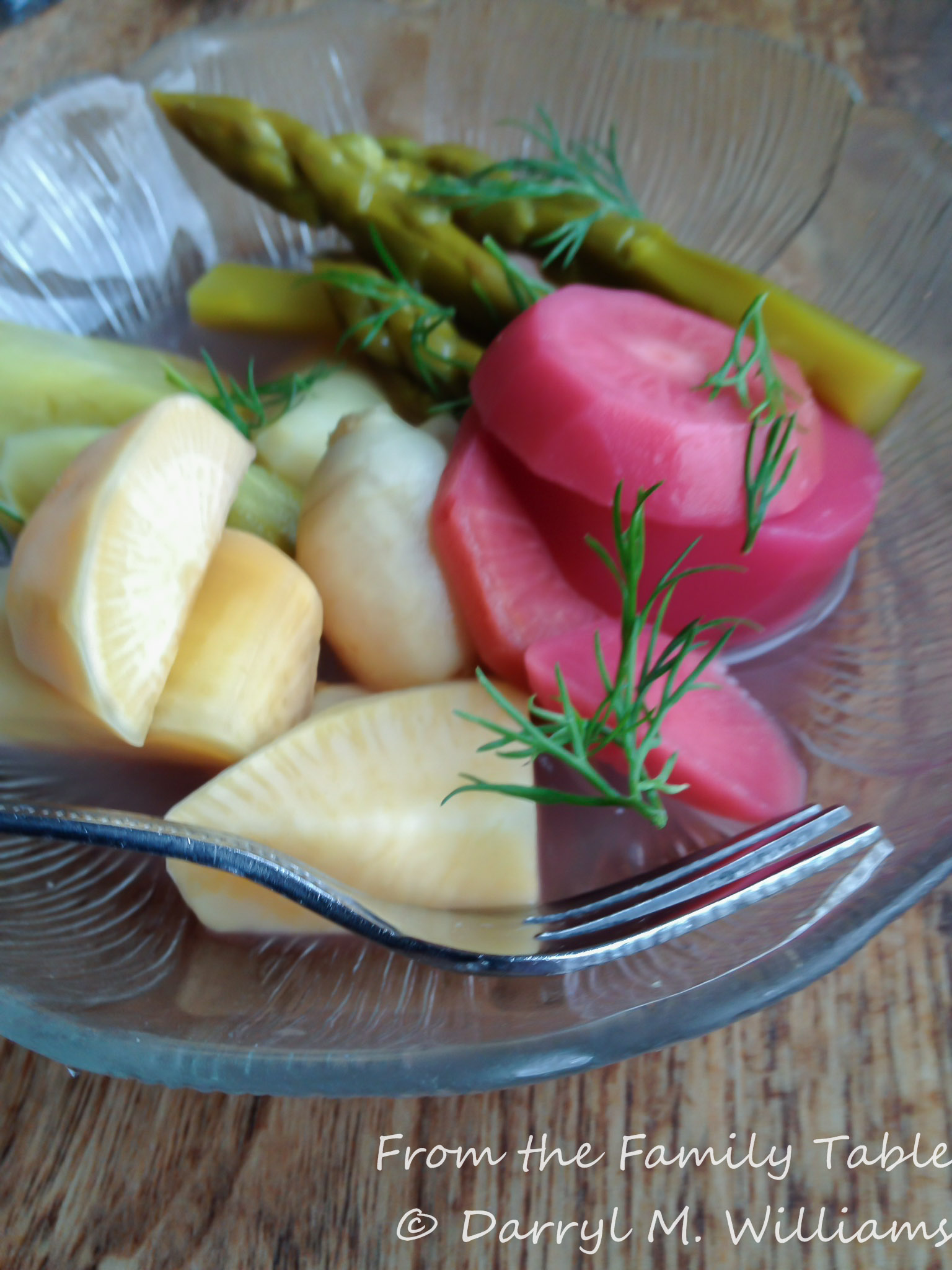
The brine-pickled vegetables are deceptively simple. A colorful plate of root vegetables comes to the table and you find immediately  that the fresh tastes and crunch  of each has been preserved even with a tangy, lightly pickled overtone.

Bar Tartine Brine pickled vegetablesThe potato flatbread with garlic and sour cream is a must. The beautiful presentation makes it almost too pretty to eat – almost, because when you take a bite, the flavors come together and literally seduce you to finish the whole thing.
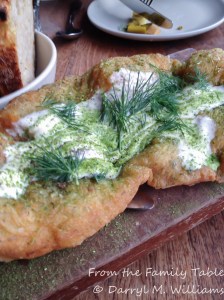
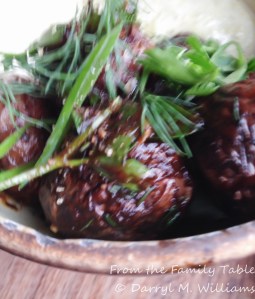
Bar Tartine Potato flatbreadThe smoked potatoes with black garlic are very unusual. If you don’t like smoked foods, then don’t order them, because they are definitely rich with fresh wood smoke. The black garlic adds its own overtones. It is very popular in restaurants in the Bay Area as well as the whole country. It has been used in Asia for centuries as a food and as a health supplement, but it was commercialized in the US by Scott Kim. He says the garlic is fermented in conditions of controlled heat and temperature while others say it is not fermented but rather deeply caramelized by the Maillard reaction over several weeks. Whatever the process, the result is garlic that turns inky black,  given up its pungency, and gained a rich flavor that has been said to have elements of molasses, chocolate, and umami. Kim now provides the black garlic from his operation in Hayward, CA.  (Just down the road from Gilroy, the self-proclaimed “Garlic Capitol of the World”. ) You can learn more about the product or even order your own from Blackgarlic.  I can’t imagine someone not liking the very earthy flavor of this creative dish. The whole new potatoes are  beautifully garnished, tender and very tasty. Unfortunately my shaky image doesn’t do them justice.
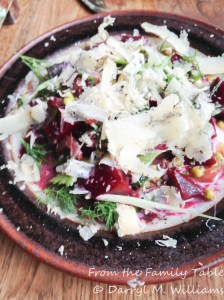
Bar Tartine Smoked potatoesThe beet and blue cheese salad comes  beautifully presented. Now, I am not a big fan of beets in any form, but this salad makes even me a believer. The beets are sweet as they always are, but that plays off the blue cheese so well.
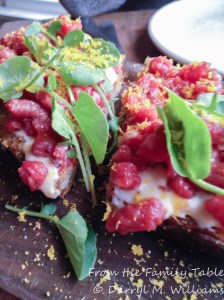
Bar Tartine Beet and blue cheese saladThe beef tartare on koji (an Asian “yeast” – a form of Aspergillus used to ferment various foods including miso, soy sauce, and sake) toast with bottarga (salt-cured fish roe) is beautiful. Fortunately we had a very informed server who filled us in on all of the ingredients. This is unlike any other beef tartare you have ever eaten.
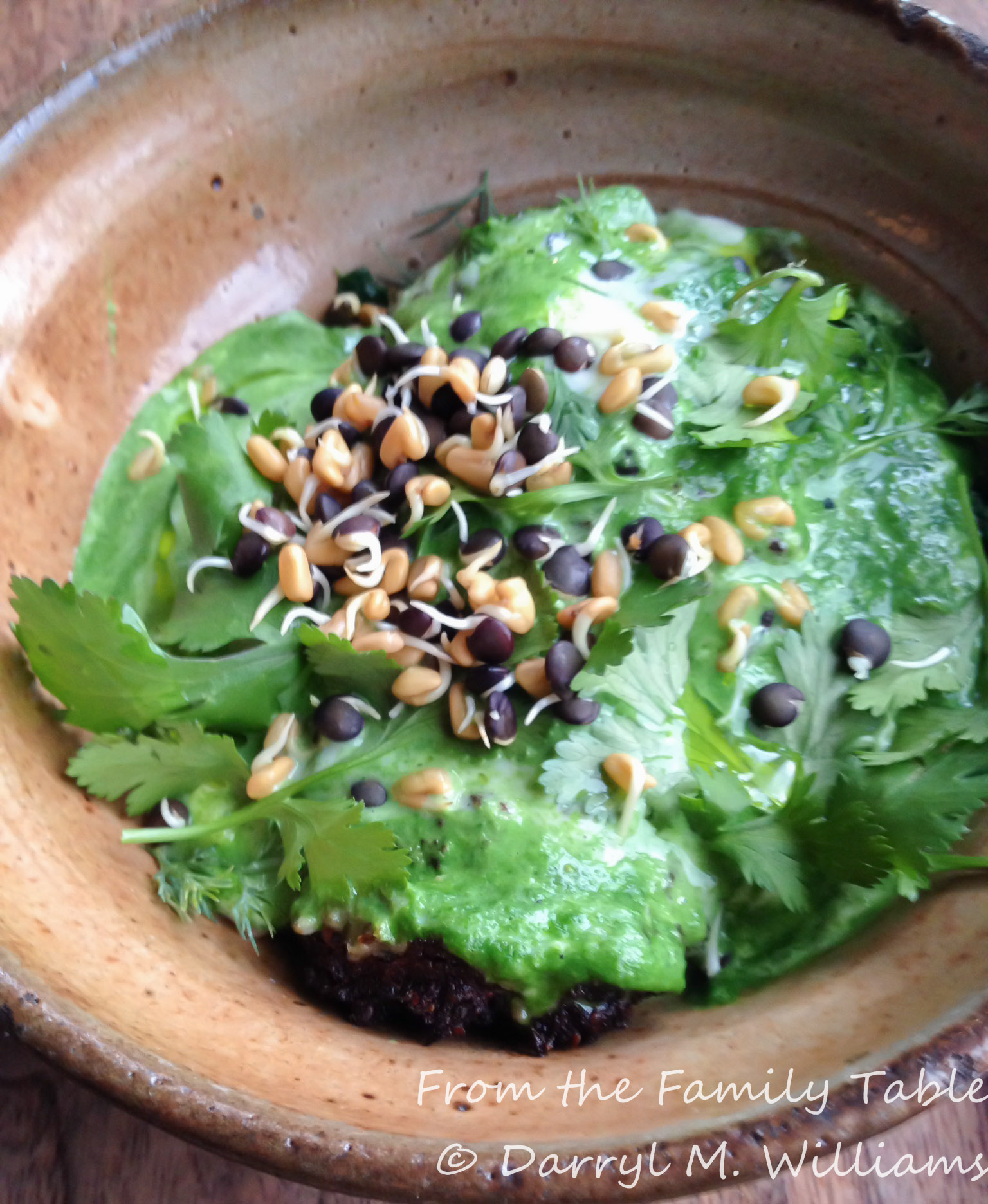
Bar Tartine beef tartareI’ve eaten lentils lots of different ways, usually in a dal or soup, but never sprouted, so the visual impact of the sprouted lentil croquettes with kefir and coriander is spectacular, and the taste is unlike any of those other lentils that I have eaten.
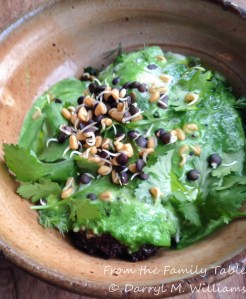
Bar Tartine Sprouted lentil croquettesMy green chili fisherman’s stew with collard was very spicy – much too spicy for Susan – but it came as an emerald-green broth filled with seafood and hen-of-the-woods mushrooms. And collard!! When one is used to the limp, damp clot that’s called collard greens in a Southern cafeteria line, you are unprepared for the lovely, delicious variation presented in this dish.
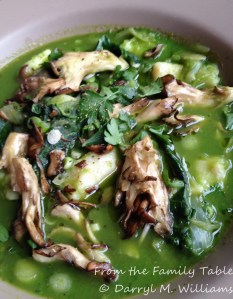
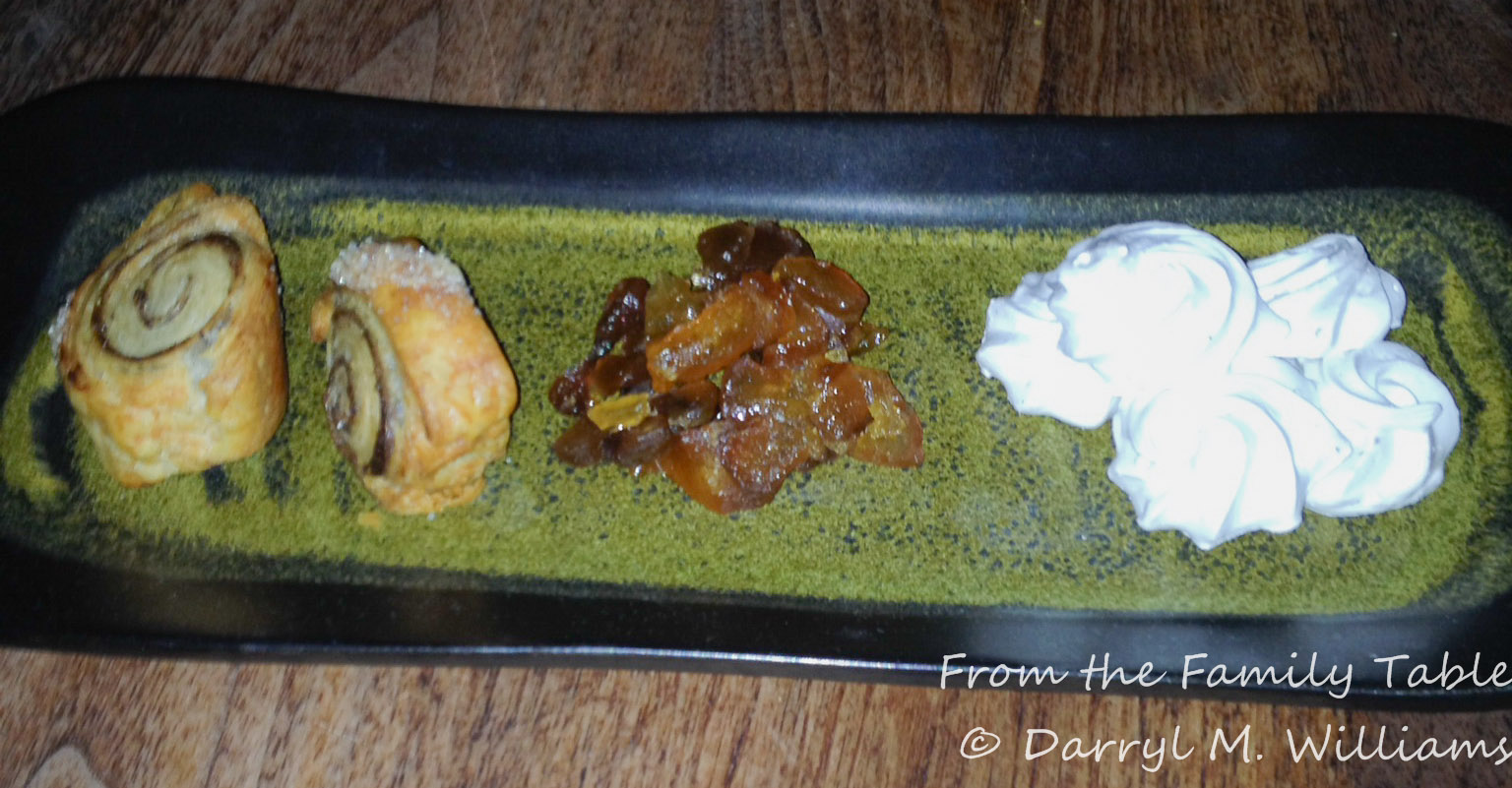
Bar Tartine Fisherman's stewHard as it is to believe, we had room for a little dessert “amuse” of meringues, rugalach, and candied fruit along with a complex carob mousse with goat cheese and black walnuts.
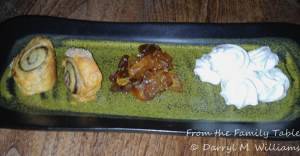
Bar Tartine kugeleh and meringuesBar Tartine Carob mousseAfter such an incredible feast we went back to our beds. In the meantime, the new family had their own very special celebration, and two new brothers got acquainted.
6 Comments

Filed under Food, Photography, Restaurants, Travel

SHAMELESS

We are back in San Francisco awaiting the birth of our new grandchild. It will be Sarah’s second child, and she is more than ready for her pregnancy to be over. While we wait, we are trying to give her a hand as well as helping our son and his family in Silicon Valley. This seems like an opportune time to visit Rich Table. Sarah is not going in, and Evan is working full throttle. The three-year-old will soon learn he is not the center of the universe.

Last night we had a wonderful feast with delicious offerings from the menu.

Rich Table is well known for its inventive, modern cocktails, but we settled on traditional standbys – an Old Fashioned and a Manhattan. Both were very well made, and they were even better with a few  sardine chips (potato chips with sardines woven into slits and served with horseradish creme fraiche) and radishes with toasted fresh yeast. The radishes seem appropriate as the Rich Table menu is festooned with a red radish drawn by Evan’s father.

For starters. we both chose the chilled spring onion soup sever over bay shrimp and green strawberries that had been lightly pickled. Who could believe that a green strawberry could taste so good.

Chilled spring onion soup, bay shrimp, green strawberries

Chilled spring onion soup, bay shrimp, green strawberries

For my pasta course I chose cappellacci (full name: cappellacci dei briganti – literally, brigands’ hats – shaped like little caps) with beef tongue, escarole, and sun dried tomatoes. Rich with butter, the dish was delicious and everything worked together so well. The tongue was tender and flavorful.

Cappellacci, beef tongue, escarole, sun-dried tomato

Cappellacci, beef tongue, escarole, sun-dried tomato

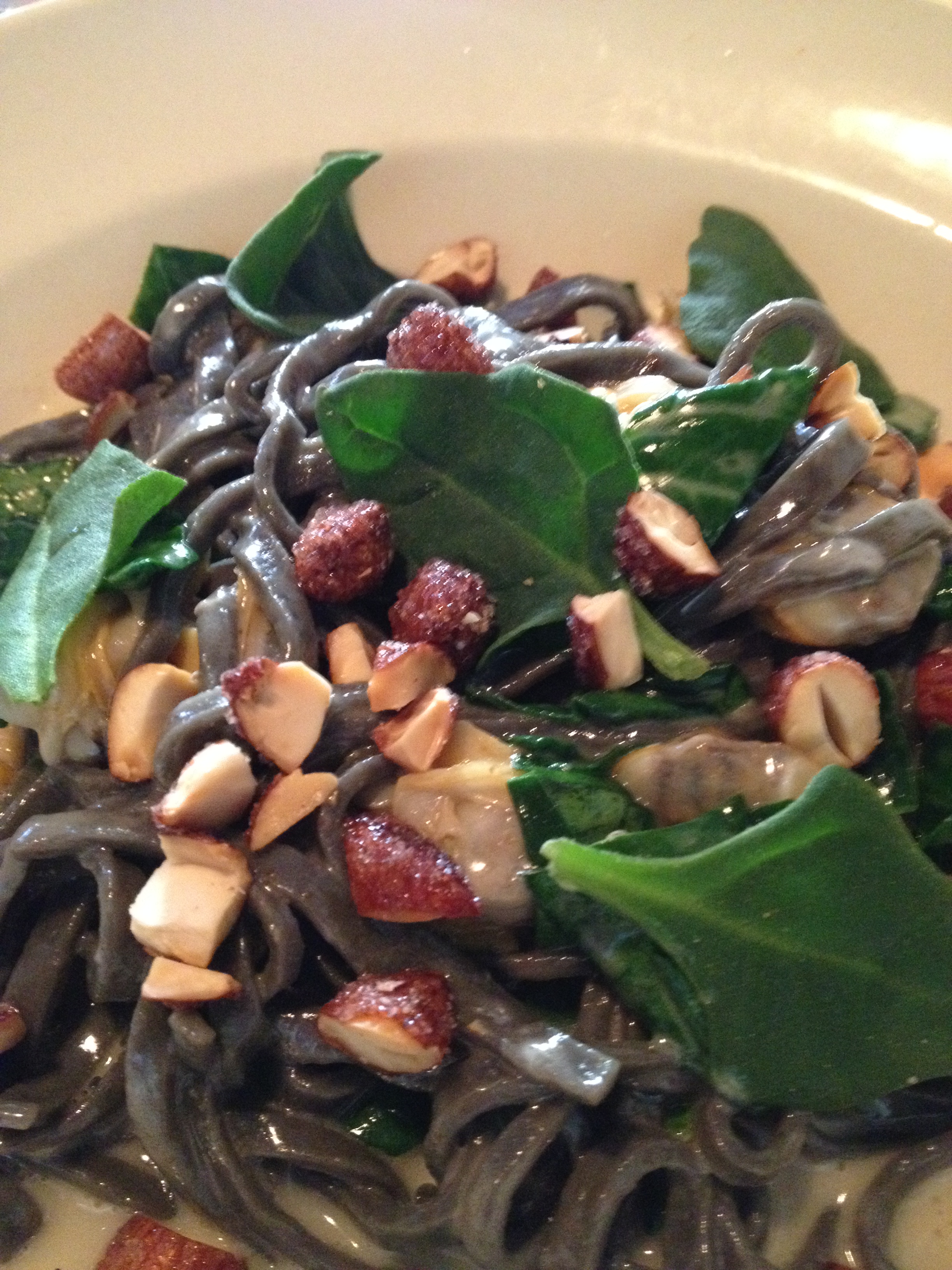
Susan chose black onion chitarra, a sort of pasta made with a form of tight, parallel wires nicknamed a chitarra or “guitar”. The pasta was dark with the black onion and served with manila clams, almond, and spinach. Another delicious dish.

Black onion chitarra, manila clams, almond, spinach

Black onion chitarra, manila clams, almond, spinach

For my main course, I ordered glazed pork cotechino (a traditional Italian sausage) served with asparagus diamonds, sour orange, and a sunchoke coulis. Susan had the swordfish with artichoke and seaweed barigoule, and fava greens.

We could not pass up dessert; we didn’t really try. My choice was panna cotta with a burnt sugar sauce. Susan chose white chocolate cheesecake with fennel and pomegranate  seeds. We both got California creamsicles as an amuse bouche, and Susan finished off with Rich Coffee containing house made Irish Cream!

No shame with any of that. Here that comes. Sarah and Evan are in the running for Food and Wine’s Best New Chef contest. They are in the list of California contestants. You can vote early and often by logging in to the website and casting your vote. Here’s the link:

http://www.foodandwine.com/blogs/2014/03/24/the-peoples-best-new-chef-california-chefs 

8 Comments

Filed under Food, Photography, Recipes, Restaurants, Travel

HORSERADISH MAYONNAISE AND PUFF PASTRY EMPANADAS

The other evening we were invited to a dinner party. It was a little bit of a pot luck, and we were asked to bring a light appetizer. I decided to use some puff pastry from the freezer to make empanadas, but that seemed a little bland, so I also made some mayonnaise as a dipping sauce.

Mayonnaise is so easy to make, and it tastes so much better than the bottled kind, that it seems crazy not to make your own. Especially when you have a fool-proof recipe (so far at least) from one of the world’s greatest chefs. Michel Roux of the Michelin-starred, much-honored Waterside Inn in England, has written a beautiful little book simply called “eggs” (John Wiley and Sons, 2005) filled with amazingly creative, not-so-classic and classic egg recipes including, of course, mayonnaise.

I doctored up the basic recipe using some tricks from Sarah and Evan. The additions of freshly grated horseradish and finely chopped chives or green scallion tops make a great dip that perks up the empanadas.

I filled the empanadas with hearts of palm, parsley, and grated Parmesan, but you can let your imagination run wild: tiny button mushrooms, little shrimp (is that redundant?), water chestnuts, olives (seed removed, of course), cubes of cheese, dolma filling, etc., etc., would all be good. I don’t know, but maybe a little oyster would work.

This recipe makes 20-24 appetizers depending upon how big you make the empanadas

RECIPES

Horseradish Mayonnaise

Ingredients

  • 2 egg yolks, room temperature
  • 1 tablespoon Dijon mustard
  • salt and pepper
  • 1 cup peanut oil, room temperature
  • juice of ½ lemon, more if needed
  • ¼ cup freshly grated horseradish
  • ¼ cup chopped chives or green tops of scallions

Method

  1. Put the egg yolks, mustard, salt and pepper in a small mixing bowl with handles and/or on a towel or other non-slip surface. Combine with a balloon whisk until smooth.
  2. Whisking continuously, add a few drops of oil. When the oil is completely incorporated, add more oil, repeating the process  until the mayonnaise thickens. You may then add the oil in a more continuous stream, but pause occasionally to make sure the oil is fully incorporated before adding more.
  3. When all of the oil has been incorporated, whisk for another minute or so until the mayonnaise is smooth. Then add the lemon juice. The mayonnaise will become visibly less yellow. Adjust with more lemon juice, salt, and pepper to suit your taste.
  4. Stir in the horseradish and chives or scallions. Add more of either to suit your taste.
  5. Refrigerate, covered with plastic wrap, until ready to use. This should hold for several hours.

Puff Pastry Empanadas

Ingredients

  • ¼ cup parsley, finely chopped
  • ¼ cup Parmesan cheese, freshly and finely grated
  • 1 sheet commercial frozen puff pastry, thawed according to directions
  • 1 14½ ounce can hearts of palm, drained and cut into ½ inch coins
  • 1 egg, beaten well with 2 tablespoons water

Method

  1. In a small bowl, combine the parsley and Parmesan cheese. Set aside
  2. On a lightly floured work surface, open the thawed sheet of puff pastry. With a lightly floured rolling pin, flatten the pastry to about 1/16 inch thick
  3. Using a 3 inch circular cookie cutter (a 2½ inch biscuit cutter will do) cut circles in the flattened pastry dough. Working quickly, place a palm coin and about ¼ teaspoon of the parsley/Parmesan mixture in the center of each circle.  Paint the edges of the circles with the egg mixture, using a small pastry brush.
  4. One by one and using your hands, stretch the dough gently to cover the palm disk. Pinch the edges of the half-moon empanada closed with your finger and then seal with the tines of a dinner fork
  5. Arrange the empanadas on a baking sheet lined with parchment paper
  6. Paint the tops of the empanadas with the egg mixture, trying not to let it drip onto the parchment.
  7. Bake in the middle of an oven preheated to 400°F for 15 minutes or until puffed and lightly browned.
  8. Remove from the oven and transfer to a cooling rack to cool.
  9. Serve with the dipping mayonnaise either at room temperature or gently rewarmed.

11 Comments

Filed under Food, Photography, Recipes

YOSEMITE AND THE AHWAHNEE HOTEL’S CHEFS’ HOLIDAY

One of my activities during the recent hiatus from my blog was a child-sitting assignment in Yosemite National Park. (A rough chore, I admit.) Our daughter and son-in-law had accepted an invitation to participate in the Ahwahnee Hotel’s annual Chefs’ Holiday. They did a cooking demonstration of two of their most popular dishes and then cooked a sit-down dinner for around 150 enthusiastic diners.

Of course, everyone knows about the magic of Yosemite National Park. The scenery is so gorgeous that you cannot avoid a gasp when you first see it. The crashing cascades, still water, towering monoliths, and beautiful meadows are spectacular.  Ansel Adams’s  black and white images are classics that less talented photographers like me try to imitate.

Click on image to view gallery

The Ahwahnee Hotel is less well-known although it has been there since the 1920s. The story goes that an aristocrat from England came around the turn of the twentieth century to take in the beauty of the Valley, and there was no lodging up to her standards or expectation. Thus, plans were developed to build a hotel that would suit the most discriminating visitor.  The hotel was built in a secluded meadow with a singular view of Half Dome; it was built of redwood-stained concrete so as to avoid the fires that had destroyed so many of the classic national park lodges of the time. There were lots of amenities, too, with a large staff, beautiful dining room, and comfortable guest rooms. Over the years, the hotel has been well maintained and remains the place where park visitors go when they want to feel a little pampered.

Our first night arrival was late, so we ordered drinks and bar food in the handsome Ahwahnee Bar. The food was good, but inexplicably the chili (in the western United States) was served Cincinnati-style with lots of cloves, cinnamon, and allspice. OK, but not my favorite.

Click on image to view gallery

During the tourist season, Yosemite is well known to be a crowded place, but in the winter there are many fewer visitors. This makes it wonderful to see and photograph the various sights, and it also affords the hotel the opportunity to sponsor some special events. The oldest is the Bracebridge Dinner which is held during the Christmas season and features an English banquet along with costumed players and singers. The Vintners’ Holiday highlights some of the most famous California vineyards and wines. The Chefs’ Holiday attracts well-known chefs and food experts from all over the country for cooking classes and unique dinners in the beautiful dining room.

Click on image to view gallery

Sarah and Evan demonstrated two of the most popular dishes at their San Francisco restaurant, Rich Table: porcini-dusted donuts with a fluffy raclette sauce and sardine chips accompanied by horseradish sauce. Then with the help of the kitchen staff rom the hotel, they prepared a several-course dinner and wine-pairing for 150 people.

Click on image to view gallery

While Sarah and Evan were working, Grandma and Grandpa were obliged to take care of the three-year-old. That meant walks to landmarks, playing in the fresh snow, and observing a herd of beautiful – and tame – deer. It was a most enjoyable task in a beautiful place with few tourists.

8 Comments

Filed under Food, Photography, Travel

SCALLION PANCAKES – FAMILY MEAL

One of the great traditions in restaurants – unfortunately tending to die out – is Family Meal. That’s when everyone takes a break from preparative work to gather together, talk about the evening ahead, and  share a meal prepared by one of the cooks. The meal is almost always comfort food made with leftover ingredients or inexpensive ingredients ordered just for the meal. The great thing is that the cooks rotate the assignment so the pressure is on to prepare something that everyone will enjoy. This is definitely not the time or place to embarrass yourself in front of your peers. Often Family Meal will feature food from childhood – a family favorite or Mom’s secret recipe. I have previously written about Sarah’s brisket and biscuits that became so popular the kitchen staff cheered when they appeared on the menu.

During a recent trip to San Francisco I got to spend the afternoon with Sarah in the prep room at Rich Table. That’s where Jonathan Tu whipped up his mother’s recipe for scallion pancakes. Nearly every Asian nation has its own version of this treat, but they all come down to a simple flour and water dough and chopped green scallions.  Kneading, layering with oil, and rolling out the dough a couple of times makes a flaky, multi-layered pancake rivaling puff pastry but without all the hassle.  There are a few little tricks or special touches in rolling out the dough, but in the end scallion pancakes are so simple and so good.

Jonathan served his pancakes with chicken sausage, rice, and a sauce of mustard, soy sauce, sesame oil, and chili flakes, but it’s up to you to choose your favorite dipping sauce or topping.


RECIPE

Scallion Pancakes

Ingredients

  • 2½ cups all-purpose flour
  • 1 cup water
  • kosher salt
  • ½ cup chopped scallions, including green tops
  • sesame oil

Method

  1. In a large bowl, combine the flour and water. Mix until it holds together and forms a ball. Continue to knead for about 10 minutes or until the dough becomes soft and shiny.
  2. Cover the dough with plastic wrap and let rest for 30 minutes.
  3. Divide the dough into four equal balls. On a well-floured work surface, roll out one of the balls to about 1/8 inch thick. Keep the remaining balls covered with a cloth until you are ready to roll them out..
  4. Drizzle the top of the rolled out dough with sesame oil. Sprinkle with ¼ of your chopped scallions and kosher salt. Fold it over and roll it out again.
  5. Roll up the flattened dough like a cigar. Divide the cigar crosswise into two pieces. Coil each piece like a snake or snail. Flatten the coil with your hand and then roll out into a circle with a rolling-pin.
  6. Repeat with the remaining balls of dough. You should have eight pancakes.
  7. Heat a heavy cast iron skillet to medium high or use a heated plancha. Lightly oil the cooking surface, and then transfer one of the pancakes to the skillet or plancha. Cook for two minutes. Then flip and cook the other side for two minutes. The pancakes should be a light golden brown.
  8. Repeat with each of the remaining pancakes. You may keep them in a warm (200°F) oven while you cook the rest.
  9. Cut each pancake into 6 or 8 wedges and serve with dipping sauce or accompaniments of your choice.

3 Comments

Filed under Food, Photography, Recipes, Restaurants, Travel

LEVAIN WITH FENNEL FRAGRANCE

One of the favorites on the Rich Table menu is Sarah’s country style levain. The bread is served warm with house-churned cultured butter. Sometimes the bread is scented with Douglas fir, but the most popular version is when it is flavored with wild fennel “pollen”. The pollen is actually the bright yellow tiny flowers of wild pollen that grows all over Northern California and blooms from mid to late summer. Rich Table has their own forager who brings the pollen in from fields north of San Francisco, and the restaurant has an abundance now. Unfortunately the source is regional and seasonal – that’s one of the reasons for using Douglas fir – but if you don’t happen to live in Northern California, ground fennel seeds can make a workable substitute. The smell and taste are not as delicate, and if you use too much can be overpowering, so use it carefully.

On a recent visit to San Francisco, I watched Sarah make her bread in the basement prep kitchen at Rich Table. The experience inspired me to try to adapt the recipe for the home baker. This is pretty close to the real thing, but Sarah did not share any of her baking secrets with Old Dad.

Sarah’s recipe makes twelve large loves, too much for the home baker. For that reason, I have pared down the ingredients to make two generous loaves. I have made some other modifications to make it easier for the home baker. First, professional bakers weigh their ingredients, while home bakers usually measure things in cups and spoons, so I have set the quantities in the home style. Second, if you have your own sourdough starter, that is great, but if you don’t you can substitute packaged dry yeast. Third, if you have harvested your own wild fennel “pollen” (actually fennel flowers) that’s also great, but you can substitute ground fennel from your spice shelf.  Finally, you can mix the dough by hand, but that is a labor of love, so I have used a stand mixer equipped with a dough hook for the kneading and gluten-release process. Resting times are very important to make sure the gluten releases and supports good lift of the dough.

RECIPE

Levain with Fennel Fragrance

Ingredients

  • 3 cups + ¼ cup water
  • 1 cup levain* or substitute 1 envelope dry yeast
  • 6 cups bread flour
  • ½ cup whole wheat flour
  • ½ cup rye flour
  • 1 tablespoon salt
  • ½ teaspoon ground fennel seeds
  • vegetable shortening or butter for greasing bread pans

* Baker’s note: You can find the method for making your own levain or sour dough starter in an earlier post. If you choose to use yeast instead, increase the water and flour in the recipe by ½ cup each.

Method

  1. Place 3 cups water in the large bowl of a stand mixer. Using the paddle attachment, mix in the levain (it should float in the water, otherwise it has not risen enough) or yeast. You should feed your levain the night before you bake to make sure it has good rising power the next morning.
  2. Slowly mix in the flour, a cup or so at a time.  When the dough becomes stiff enough, change to the dough hook attachment.
  3. Add all the flour. Then beat with the dough hook at a slow speed for 10 minutes until smooth and shiny.
  4. Let the dough rest in the bowl for 30 minutes.
  5. Dissolve the salt in the ¼ cup water.
  6. Beat the salt mixture and ground fennel into the rested dough until completely incorporated.
  7. With a scraper, transfer the dough to a large metal bowl.
  8. Cover the dough with a plastic film and let rest for 30 minutes. Then turn the dough gently in all directions with moistened, clean hands. Recover the dough with the plastic film.
  9. Repeat turning the dough every 30 minutes for three additional times.
  10. Turn the dough out on a well-floured work surface. Divide into two equal pieces. Each piece should weigh a little over 2 pounds.
  11. Shape each piece of dough into a ball and let rest for 5 minutes.
  12. After the rest, shape the dough by lifting the far edge of the ball and pulling it to the center. Repeat this motion in all directions. Pinch closed any seams and let rest, covered with a cloth, for 10 minutes while you prepare the baking pans.
  13. Prepare two 9 x 5 inch bread pans by greasing the insides well with vegetable shortening  or butter.
  14. Arrange the dough pieces, seam side down, in the two bread pans, cover with a clean cloth, and set in a warm place to rise until doubled.
  15. While the bread is rising, pre-heat the oven to 450°F (232 °C)
  16. When the loaves have risen, slash the tops with a sharp knife and transfer to the middle of the pre-heated oven.
  17. Bake for 15 minutes. Then reduce the oven temperature to 350°F  (177°C) and continue to bake for 45 additional minutes. Turn the loaves front to back at least once during the baking.
  18. At the end of the baking time, test for doneness by thumping the bottoms for a hollow sound. Transfer the baked loaves to a cooling rack and allow to cool completely.

7 Comments

Filed under Food, Photography, Recipes, Restaurants, Travel