Tag Archives: Carol

FOUR-CHEESE-STUFFED PHYLLO TORTE

Our six-months probationary period is up, and I think we now qualify as Angelinos. We drive, relatively terror-free, on the 405 and think nothing of an hour+ cross-town odyssey for a 15 minute appointment. The very best part of our transplant has been getting more involved with our children and their families. As part of that, the Sunday dinner has become a firmly entrenched tradition that we all anticipate each week.

I have written a number of times about our family dinner. The guidelines are fairly straightforward: the venue alternates between our home and Carol’s family home; whoever hosts is responsible for the main dish and sides; the other is responsible for appetizer and dessert; both bring a bottle of wine that is interesting; cleanup is sort of a joint effort except that the home team winds up finishing the dishes. These guidelines have remained intact except that the appetizer has been dropped from the menu. That is because even without it, there is a lot of food. Everyone is on a diet, and I have gained 10 pounds since moving to Los Angeles. Of course, this dish is not responsible for all of my weight gain, but it certainly helped push us to dropping the appetizer rule.

The recipe is an adaptation of one from Melissa Clark of New York Times fame by way of Lynne Rossetto Kasper and Sally Swift in their cookbook, The Splendid Table’s How to Eat Weekends. If you choose to make it, I guarantee that there will be gasps of amazement when you bring the finished torte to the table. Then there will be complete quiet as folks sit around wolfing down the whole thing. At the same time, it is easier to make than you might think. I know that Carol saves it for special occasions. You might want to do that, too.


RECIPE

Four-Cheese-Stuffed Phyllo Torte

Ingredients

  • 2 cups feta cheese, drained, dried, and crumbled
  • 1½ cups cottage cheese, drained
  • 1½ cups Asiago cheese
  • 1½ cups grated Parmesan cheese
  • ½ medium onion, diced
  • 2/3 cup chopped fresh dill fronds
  • ½ teaspoon ground nutmeg
  • 1 teaspoon ground cinnamon
  • juice of ½ lemon
  • zest from ½ lemon
  • ½ teaspoon ground black pepper
  • salt to taste
  • 3 large eggs, lightly beaten
  • 1 package frozen phyllo dough, thawed according to instructions on the carton
  • 3 sticks unsalted butter, melted
  • honey

Method

  1. In a large bowl, prepare the filling by combining the four cheeses, onion, dill, nutmeg, cinnamon, pepper, and salt. Stir in the eggs, and set aside.
  2. Unfold the stack of phyllo leaves on a work surface covered with plastic wrap. Cover the stack with another layer of plastic wrap and a damp kitchen towel. Keep unused sheets of dough from drying out while you work with individual sheets.
  3. Brush the inside of a 12-inch Bundt pan with some of the melted butter. Lay a sheet of phyllo across the pan, pushing it down against the sides of the pan and breaking a hole around the center tube of the pan. Repeat in a crisscross fashion with additional sheets of phyllo until the inside of the pan is completely covered with many layers of the dough.
  4. Fill the lined Bundt pan with the cheese filling, folding the free ends of the phyllo sheets over the filling and pressing it together gently. With a sharp knife, pierce the assembled torte all the way through to the bottom of the pan in many places – 2 or 3 dozen. Pour the remaining melted butter over the torte.
  5. Place on a baking sheet and bake in the middle of an oven preheated to 375°F for 75 minutes or until the torte is browned and puffy.
  6. Cool in the pan for 1 to 2 hours.
  7. When ready to serve, unmold the tart by flipping it onto an inverted plate. Remove the baking pan, garnish the torte as you please, and serve. Pass honey to be drizzled over individual slices as desired.

2 Comments

Filed under Food, Photography, Recipes

POACHED PEACHES AND RASPBERRY SAUCE: PÊCHES CARDINAL

It was Carol’s turn to create the main menu for our weekly family dinner. (Soon I hope to share some of her recipes.) She always comes up with an array of interesting dishes that go well together. Did I mention she is a good cook IMHO? This past Sunday she made some delicious toasted walnuts with rosemary, sea salt, and brown sugar for the happy hour. The walnuts were impossible to resist. Then she served a salad of tomatoes, shaved fennel and green beans, all from the farmers market. The main dish was grilled shrimp wrapped in prosciutto. Corn on the cob and muffins made with zucchini from the farmers market rounded out the menu. As usual, my assignment was dessert.

This time of year it is so easy to build a meal with offerings from the farmers market, and  I followed the theme. Peaches and other stone fruit are at the height of their season along with berries of all sorts. This past Saturday we went to the Torrance Market, one of the largest in the Los Angeles area, instead of our smaller local event. The choices available were astounding. One of the biggest stalls specializes in stone fruit, so I could choose yellow peaches, white peaches, yellow nectarines, white nectarines, pluots, plums, all with several varieties of each. Remembering a classic recipe from the first volume of Mastering the Art of French Cooking, I went with white peaches that, from the samples available, were much sweeter than the yellow varieties. I had to go to the berry booth to find plump and fresh raspberries.

The recipe for pêches cardinal is deceptively simple: poach the peaches in a heavy syrup; make a sauce with the raspberries; cover the peaches with the sauce; serve. Of course, you can embellish the dish with ice cream, whipped cream, toasted nuts and/or whatever appeals to you. However, the devil is in the details, as they say. The peaches should be poached in a single layer with their skins intact. The raspberries should be forced through a sieve to form a puree without the seeds. If you don’t take that somewhat tedious step, the seeds will haunt you in the finished dish, even if you use a Vitamix to make the final sauce. And all of that is worth the effort, because the sauce becomes velvety. Warn your guests that the peaches still have their pits. Even though the preparation is easy, the result is both elegant and delicious.

RECIPE

Poached Peaches and Raspberry Sauce: Pêches Cardinal

Ingredients

  • 6 cups water
  • 2¼ cups sugar
  • 2 tablespoons vanilla extract
  • 6 fresh, ripe, unblemished peaches
  • 2 pints raspberries, 18 raspberries set aside for garnish
  • ¾ cups sugar
  • 6 mint sprigs for garnish
  • sweetened whipped cream for garnish
  • chopped toasted walnuts for garnish
  • vanilla ice cream (optional)

Method

  1. In a large saucepan that will hold the peaches in a single layer, combine the water, sugar and vanilla extract. Bring to a simmer, stirring to make sure the sugar is completely dissolved. Add the peaches, and return to the simmer. Turning the peaches occasionally, simmer them for 8 minutes. Remove from the heat and cool for 20 minutes. Drain the peaches on a rack, and peel while still warm. Arrange the peaches in a deep serving dish, and chill in the refrigerator.
  2. Force the raspberries through a sieve to remove the seeds. You should wind up with about 1 cup of raspberry puree. Combine the puree with sugar. Blend in a Vitamix or conventional blender on a high setting for 3 minutes. The mixture should thicken and turn a beautiful pink color. Chill.
  3. When both the peaches and raspberry sauce are well chilled, spoon the sauce over the peaches, and chill in the refrigerator until ready to serve.
  4. When you are ready to serve, remove from the refrigerator and garnish with the reserved raspberries, mint sprigs, whipped cream, and walnuts. Serve in bowls along with a scoop of ice cream, if desired.

2 Comments

Filed under Food, Photography, Recipes

RECENT FAMILY FEASTS AND HOMEMADE ROLLS

The holidays of spring are nearly over, and I have been eyeing my bathroom scale with disbelief. My son and his family were in SoCal this past week because of a family situation that did not foster celebration. They’re back in the Bay Area with the plan to observe a family Seder last night. Carol invited us to her house for a feast on Sunday. And a feast it was! I spent several days making gravlax along with a Swedish dill-mustard sauce from a recipe of a dear, old-time friend. That, along with garlic crostini, deviled eggs (some stuffed with shrimp), and olives, made the appetizers for our Happy Hour on the patio while watching the sun go down over the ocean. Why wouldn’t you like Southern California?

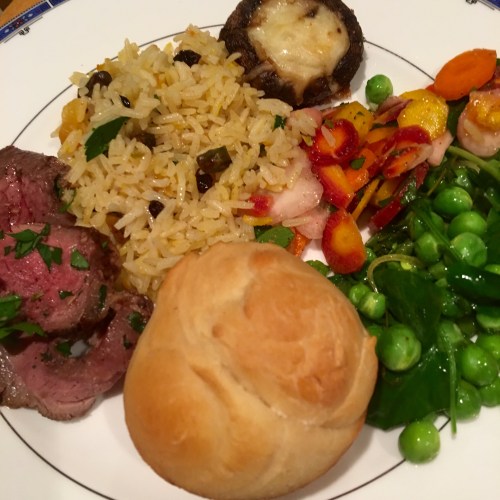
But that was only a modest prelude to the meal that lay ahead. Here’s the menu:

  • roasted leg of lamb
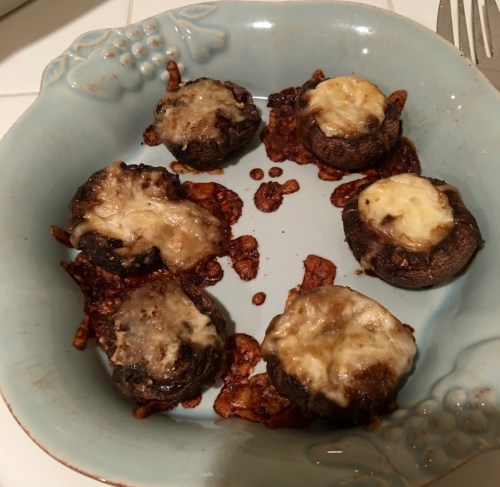
  • stuffed mushrooms
  • rice pilaf with currents and hazelnuts
  • fresh green peas, snap peas, and watercress sprouts
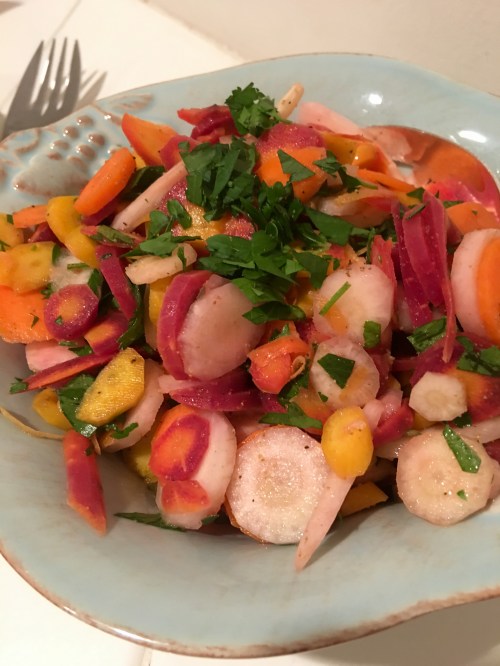
  • Moroccan carrots

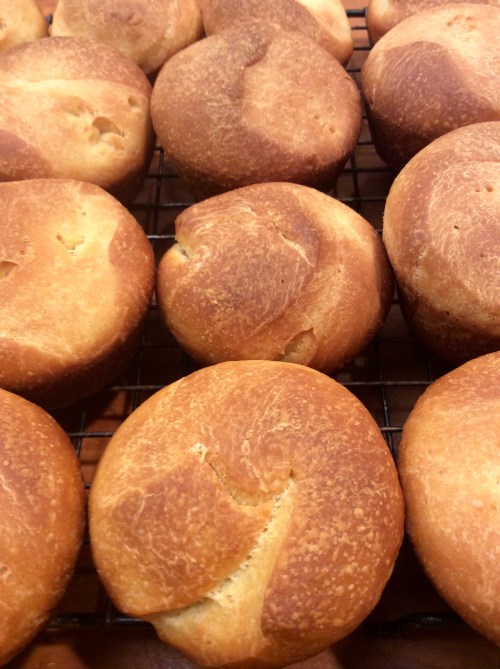
Susan made two contributions to the meal. First she made a batch of rolls from her mother’s recipe. Over the years we had had them at many meals on the farm when there weren’t biscuits. They were always popular – and delicious. She also made coconut cupcakes at the request of one of the young folks. Then they decorated them with frosting, shredded coconut and nerds (I lost points when that was the only candy I could find at the store, but they actually turned out to be a positive addition to the final version.)

Carol has a very large collection of cookbooks, and she is always looking for different versions of common foods along with unusual foods. Over the years she has gradually brought her whole family out of the doldrums of eating only meat and potatoes. She also always puts her own twist on the recipe.  I’m not sure of the source recipes of several of the dishes, but I know that the Moroccan carrots came from Amanda Hesser’s The Essential New York Times Cookbook (W.W. Norton and Co, New York, 2010) The dish is delicious, and Carol used a mix of various colors of carrot to create a stunning visual effect. The same thing was true with a dish of fresh green peas and snap peas. The recipe called for pea tendrils, but my son-in-law struck out looking for them in several stores, and the farmers’ market was closed for Easter. Carol, always innovative, substituted watercress sprouts. IMHO the substitution improved the dish.

Kevin had bought some special wine for the occasion, and I contributed a bottle of Klinker Brick old vine zinfandel from last year’s visit to Lodi.

Needless to say, it was a very special and memorable family evening.

Here’s the recipe for Mom Mom’s homemade rolls.

RECIPE

Mom Mom’s Homemade Rolls

Ingredients

  • ½ cup sugar
  • 6 tablespoons vegetable shortening
  • 2 teaspoons salt
  • 1 1/3 cups milk
  • 1 package dry yeast
  • ½ cup lukewarm water
  • 2 eggs
  • 6½ cups all-purpose flour

Method

  1. Place sugar, shortening, and salt in a large bowl.
  2. Scald milk and pour over ingredients in bowl. Stir until mixed, and let cool.
  3. Dissolve yeast in water.
  4. Beat eggs lightly and add to yeast mixture. Then add these ingredients to the cooled milk mixture.
  5. Beat in the flour to form a smooth dough. Allow to rise until doubled (about 2 hours) or refrigerate for later use.
  6. Shape into rolls and place in greased muffin pans. Let rise again until doubled.
  7. Bake in a preheated 350°F oven for 15-20 minutes or until browned to your liking

Makes 36 medium rolls

Cook’s Note: The easiest shape is to cut out circles with a biscuit cutter and place them in the pans. You can make fancier shapes by rolling balls of dough between your palms; clover leaf rolls with three small balls dipped in melted butter and placed 3 to each cup; fan-tans with 5 or 6 layers of rolled-out dough separated with melted butter and cut into squares; Parker House with flattened balls of dough with an off-set crease cut across them, topped with melted butter, folded on the crease,  and baked on a greased cookie sheet.

4 Comments

Filed under Food, Photography, Recipes

SMOKED SALMON NIÇOISE

Carol invited us to dinner last night. She was having salmon. She likes it, but her husband does not. He had to work late, so it was the perfect opportunity for her to have a dinner of salmon. It turned out to be relatively easy and absolutely delicious.

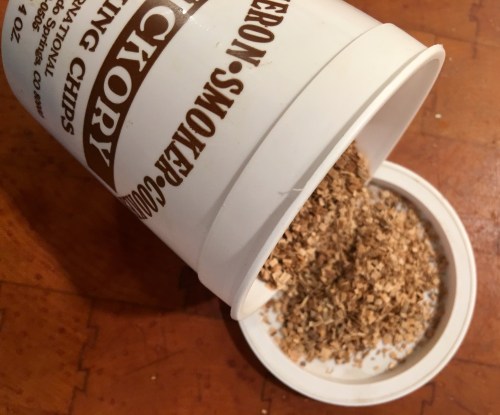
The thing that made the dish especially good was that Carol smoked the salmon in her Camerons stove-top smoker. That is definitely a kitchen gadget to have, even if you don’t use it very often. The standard model is a stainless steel pan with collapsible handles and an air-tight lid designed to keep smoke inside the pan and not in the kitchen (It really works.) Inside are a flat tray and a rack. You put a pile of very small wood chips (purchased from Camerons, of course.) in the bottom of the pan, cover with the tray, and arrange the food to be smoked on the rack. Slide the cover nearly but not-quite closed and put the whole contraption over two burners on your range. The heat from the burners should be low to medium–low – enough to get the wood chips smoking but not so hot that the food burns. When the first wisps of smoke begin to come out, push the lid completely closed. There should be no leaks. Then smoke the food for the desired time. In the case of salmon, about 20 minutes should do. Remove from the heat for a few minutes and then remove the lid. You will smell the smoke, but it should not invade the kitchen. Check to make sure the food is cooked to your liking. If not, you can close the lid again and heat for another few minutes.

img_0920img_0921

If you don’t have a smoker, you can accomplish the same thing by basting the salmon with a mixture of ½ teaspoon liquid smoke and 2 teaspoons soy sauce before broiling in the oven.

RECIPE

Smoked Salmon Niçoise

Ingredients

  • 1 pound salmon filet, bones removed
  • 4 cups lettuce cut or torn into bite-sized pieces
  • 4 hard-boiled eggs, peeled and sliced (see post on how to peel a hard-boiled egg)
  • 8 small new potatoes, boiled, chilled, and cut into 1½ inch chunks
  • 2 cups green beans, cut in 2 inch lengths, blanched, cooked, and chilled
  • 20 pitted black olives
  • 4 teaspoons drained capers
  • 10 cherry or grape tomatoes, halved lengthwise
  • salt and pepper to taste
  • homemade vinaigrette or your favorite bottled salad dressing

Method

  1. Pat the salmon dry and place in the smoker. Smoke according to instructions with the smoker.
  2. In the meantime, arrange the lettuce in the middle of each of 4 plates.
  3. Arrange the sliced eggs, potatoes, beans, olives, capers, and tomatoes equally among the plates.
  4. Remove the salmon from the smoker, cut into 4 equal slices and arrange on the plates.
  5. Season as needed with salt and pepper
  6. Drizzle with vinaigrette and serve immediately.


2 Comments

Filed under Food, Photography, Recipes

CHOPPED CHICKEN LIVER

We found a container of frozen chicken livers in our chest freezer. Susan thought that was an invitation to make chopped chicken liver to spread on toast for a light dinner during our current heat wave. That sounded like a good idea. We have several recipes, but I wanted to try something that was possibly more “authentic.”

I turned to Amanda Hesser’s The Essential New York Times Cookbook, which is an up-to-date, authoritative cookbook that has become a consistent go-to. She had a recipe for chopped chicken livers from Russ and Daughters on East Houston Street on the Lower Eastside. What could be more authentic than that?

Between them, our two girls lived in New York City for a number of years. Actually, for much of the time  they lived close to Manhattan. Carol lived in Hoboken while it was “cheap”. Now the hipsters have moved in, and it is no longer cheap. Every day she rode the bus through the Lincoln Tunnel to the Port Authority close to her job at the McGraw-Hill building.

Sarah lived in Hoboken for a time, too. She took the PATH to the World Trade Center. Then she moved to a couple of places in Queens, including a walk-up in Long Island City. The apartment was directly over an auto body shop, but it had a definite advantage. If you crawled out of the kitchen window you could enjoy a “terrace” that was actually the roof of the auto shop. There were no guard rails, so there was danger of falling into the salvage yard behind the garage, protected by two snarling, leaping, unchained German shepherds (They’re called “junk yard dogs”). When you were out on the terrace, but only if you balanced on a chair, you could see the tallest spires of a bit of the Manhattan skyline. I think New York realtors call that a peek-a-boo view. I don’t think the neighborhood is in danger of gentrification.

Years later, I saw the movie, Julie and Julia. I am convinced that they used Sarah’s apartment for one of the sets for that movie.

Eventually, Sarah and Evan moved to the Red Square Apartments on East Houston on the Lower Eastside. To this day you can recognize the building by the clock with random numbers and the 18 foot statue of Lenin with his arms outstretched in the direction of Wall Street. This neighborhood has undergone gentrification. Sarah and Evan probably couldn’t afford to live there anymore. There are multiple high-rise condominium buildings along with a fancy new grocery store AND a giant Whole Foods.

This is a long-winded introduction to tell you about the culinary delights of East Houston. There is more than one Punjabi takeout for the taxi drivers. There are several tiny but well known restaurants with long lines for Sunday brunch. But the jewels of eating are on the south side of Houston. The most famous is undoubtedly Katz’s Delicatessen, saved from threatened destruction during the gentrification process. The place is not to be missed. Just remember to follow precisely the instructions for diners before you start the process, especially in keeping track of your bill. You will be rewarded by one of the largest, most delicious pastrami (or whatever meat you choose) sandwiches you have ever had.

Then there’s Yonah Schimmel for knishes. The place goes back more than a hundred years, and I think it has not been renovated in a hundred years. Honestly, I am not a big fan of knishes, but this is the real thing, and just like an IHOP pancake it will stick to your ribs all day long.

My favorite food stop, though, is Russ and Daughters, specializing in smoked fish, caviar, herring, and related delicacies. It, too, dates back to more than a hundred years ago. It looks like it was updated in the 1930s, with art deco signs and lettering, straight out of a black and white movie with Nick and Nora Charles. The phalanx of servers is intimidating and definitely no-nonsense, but they turn out to be friendly (as much as you can expect), fast, and efficient. Besides their lox, they are famous for their chopped chicken livers. Here’s an interpretation of their recipe:

Chopped Chicken Liver

I thawed one container of frozen chicken livers, about one pound. I rinsed them and blotted them dry. Then I fried them in 2 tablespoons of vegetable oil, about 3 minutes on each side, and set them aside on a plate. Using a sharp chef’s knife, I chopped them coarsely. (You can use a food processor, but then the delicate livers will turn to mush.)

I hard-boiled three eggs, chilled them, and peeled them. Using a fork, I mashed them coarsely.

I diced two large yellow onions. Then I caramelized them in a sauté pan in 2 tablespoons of vegetable shortening, about 40 minutes.

Finally, I combined the sautéed chicken livers, mashed eggs, and caramelized onions. I adjusted seasoning with salt and pepper, and chilled in the refrigerator for an hour before serving with rye flat breads.

I’m not sure my recipe is authentic, but it turned out to be very tasty.


9 Comments

Filed under Food, Photography, Recipes

FIVE YEARS AND COUNTING

On July 16, 2011 I published my first post on From the Family Table. It was about a fresh green pea soup made with pea pod stock. So, this is the fifth anniversary of my blog. During that time I have published 353 posts and nearly as many recipes. Looking back on that first effort I am struck by the amateurish image and the clumsy narrative. I think – at least I hope – that things have gotten better.

Five years ago my two daughters were at low points in their careers, and so I thought that working together on a cookbook might give them a break that they needed. We agreed on cooking with corn as a theme as there didn’t seem to be any books quite like that. (I soon discovered that the premise was wrong.) I started reading about the history of corn and collecting recipes from wherever I could find them, including the original editions of the Boston Cooking School Cookbook (by Fannie Farmer) and the Joy of Cooking. I learned a great deal. Cornbread alone provides enough material for a thick cookbook. In fact, it already has – several times.

In the meantime, the careers of both girls took off. Sarah became caught up in opening a new restaurant, and now she’s working on her own cookbook. Carol took on added responsibilities in her office, and now she is busy and happy with family and professional activities. Needless to say, their interest in the cookbook project faded. At the same time I was buying and reading books on food styling, food photography, and book publishing. One of the books made a strong recommendation that in this modern world a blog was required for recognition. Recognition, of course, was needed to provide credibility with editors and publishers. I had visions of book contracts, photo shoots,  and maybe even a TV spot or two.

Five years have passed, and to date nothing has happened with the corn cookbook,  I don’t have any book contracts, nor have I gotten any solicitations from the Food Network. What I have gotten is a lot of satisfaction in writing and imaging  the food that I make or enjoy in a restaurant. More importantly, I have made friends all over the world. And even though I have never met most them, I have gotten to learn about their families and their adventures, marvel at their cooking skills, and share in some of the joys – and disappointments – that go with living life. I’d like to thank all of them – I wish I could do it personally – for their readership, their gracious comments, and their generosity.

I’m not sure how much longer I can think of new things to write about. It gets harder the longer I write and the older I get. But I’ll keep doing it as long as I continue to enjoy it. Thanks again to all of my internet friends. I plan to celebrate the day with cake and candles. Oh, and maybe a glass of nice wine while I sit in my back yard and enjoy the sunset.

26 Comments

Filed under Photography

PARTS IS PARTS: HOW TO SAVE THE WISHBONE

During our daughter’s recent visit we made one of her favorite meals going back to when she was a toddler: fried chicken, mashed potatoes, cream gravy, green beans, and homemade biscuits. Carol was pleased with the menu, but she also had a special request. She loves the wishbone and the ritual of making a wish. The problem is that these days chicken is mostly sold already cut up, and the breast is simply split down the middle so that the wishbone is destroyed.  For fried chicken, I almost always buy a whole chicken and cut it up. I think that it tastes fresher and crispier. (although I know that is just my food snobbery showing through) That way, the wishbone is preserved.

Carol asked the friendly and helpful butcher at her local grocery store if he could cut up a chicken so that she could save the wishbone. He allowed that he didn’t know how to do that. Carol wanted me to make a video to show him the process. That seemed a little extreme, but I agreed to let her take some still shots of the process to show her butcher the next time she visited his shop.

During our “shoot”, Carol suggested that I should include the demonstration in my blog.  My initial reactions was, “What!!!???” Then it occurred to me that if a butcher at a full-service shop doesn’t know how to do it, there are probably a lot of other folks who also don’t know how to do it. Breaking down a chicken is not a lost art like writing in Sanskrit. On the other hand, it is a fading kitchen skill that is disappearing because of plastic wrap and mass marketing. So here is my version of cutting up a chicken to preserve the wishbone.  ALERT!!  There are some very graphic images in the demonstration. If you are squeamish, my advice is to forego the rest of the blog and just buy chicken in shrink-wrapped packages. The bonus for reading on is that you will wind up with nine pieces of chicken while still having the back for chicken soup.

HOW TO CUT UP A CHICKEN TO PRESERVE THE WISHBONE

  1. Remove the chicken from the wrapping. There is disagreement about whether you should rinse the chicken or not. Do whatever you feel more comfortable about. Just make sure that you have removed the neck and and organ parts from the body cavity. Place the chicken on a cutting board that can be easily and thoroughly cleaned afterwards.image
  2. Have available a sharp chef’s knife and poultry shears. A paring knife and/or boning knife are also useful.
  3. First cut: With chef’s knife, make a cut in the crease between one of the thighs and the body of the chicken. Cut down smoothly as you pull the leg away from the body. You will cut down to the bone and expose the joint between the body and thigh. Pull the thigh down and cut through the joint, continuing until the thigh has separated from the body.
  4. Locate the joint between the thigh and drumstick on the separated leg. With your index finger you will feel a slight indentation between the thigh and drumstick. That indicates the joint inside. With the chef’s knife, cut through the joint until you have separated the thigh and drumstick.
  5. Repeat steps 3 and 4 on the other leg.
  6. Separate one of the wings by using the chef’s knife to cut into the breast about 1 inch away from the joint between the wing and breast. Cut through the joint, and the wing should separate from the rest of the chicken. Cut off the wing tip at the joint.
  7. Repeat step 6 on the other wing.
  8. To separate the breast from the back, use the chef’s knife or poultry shears to cut horizontally between the openings made by removing the wings and the opening at the tail. Cut on both sides, and then spread the two pieces apart and cut any bones or skin that are holding the two halves together. Set aside the back to make chicken stock and/or chicken soup. The meat on the back will be ample for a rich chicken soup.IMG_4130.JPG [507492] Separating back
  9. You will now have the whole chicken breast on the cutting board. In the next steps you will cut it into three pieces, one with the intact wishbone.
  10. Run your index finger up and down the center of the chicken breast. You should feel the keel bone. As your finger moves in the direction of where the neck was, you will feel the keel bone disappear and only soft tissue will remain. That spot is where you want to make a horizontal cut. On a younger, smaller bird, you will be able to cut completely through the breast with your chef’s knife. With a larger bird, you will need to use your poultry shears. Cut through completely and you will have a U-shaped piece with the wishbone intact. Set aside.
  11. Turn the remaining piece of the breast over. Slice through the thin membrane overlying the keel bone and with your fingers or a boning knife, scrape the breast meat free of the keel bone on both sides until you reach the level where the keel bone is joined to the overlying skin. Cut the keel bone away from the skin, and you will have two equal-sized portions of breast meat. Divide them with the chef’s knife along the seam made by the removed keel bone.
  12. With your fingers or a paring knife or boning knife, remove any bones remaining on the two equal-sized portions of breast meat. IMG_4133.JPG [509981] Removing bones from breast
  13. You will now have 9 pieces of chicken for frying: 2 drumsticks, 2 thighs, 2 wings, and 3 pieces of breast meat. In addition, you will have the back for stock or soup along with the liver, heart, gizzard, and neck to use as you wish.

P.S.: A special thanks to Carol for suggesting this topic.

10 Comments

Filed under Food, Photography, Recipes

CALIFORNIA DREAMIN’ AND SOUR CREAM COFFEE CAKE

Our daughter in Los Angeles invited us to join her family for Easter. The visit would include holiday activities along with birthday celebrations, real estate adventures, and lots of cooking. On Saturday, the ritual dying of Easter eggs was completed. At dawn, the traditional Easter egg hunt was finished in record time.

Easter breakfast was an event that we could never have experienced in Santa Fe. The meal included something that could only be enjoyed in a few places across the country – most notably California and Florida. Our daughter’s husband and son went out into the backyard to harvest oranges for freshly squeezed juice. Meanwhile, she stirred up a delicious coffee cake and fried some link sausages.  She served it all with a fresh berry and kiwi fruit compote. Here’s the recipe for the coffee cake, copied from her hand-written recipe card.

RECIPE

Sour Cream Coffee Cake

Ingredients

  • ¾  cup flour
  • ¾ cup sugar
  • ½ cup brown sugar
  • 2 tablespoons cinnamon
  • 2 tablespoons cold unsalted butter
  •  1 cup pecans, chopped
  • 12 tablespoons unsalted butter + 2 tablespoons for greasing pan
  • 4 large eggs
  • 1½ cups sour cream
  • 1 tablespoon vanilla
  • 2¼ cups flour
  • 1¼ cups sugar
  • 1 tablespoon baking powder
  • ¾ teaspoon baking soda
  • ¾ teaspoons salt

Method

  1. In a food processor, combine flour, sugar, ¼ cup brown sugar, and cinnamon. Process for 15 seconds. Transfer 1¼ cups of the mixture to small bowl, and stir in the remaining brown sugar. Set aside for filling.
  2. Add butter and chopped pecans to the mixture remaining in the food processor. Pulse to a coarse pebbly consistency. Set aside for topping.
  3. Grease a 10 inch tube pan. Preheat oven to 350ºF.
  4. In a medium bowl, whisk together eggs, one cup of sour cream, and vanilla.
  5. In the bowl of a stand mixer, combine flour, sugar, baking powder, baking soda, and salt. Add butter and remaining ½  cup of sour cream. Beat on low until the mixture resembles wet sand, about 1½ minutes. Increase speed to medium and beat for 10 seconds. Scrape down.
  6. Lower the mixer speed to medium low and add the egg and sour cream mixture in three additions. Increase speed to medium high and beat for about 1 minute, until light and fluffy.
  7. Using a rubber spatula, spread 2 cups of batter on the bottom of the pan, smoothing the surface. Sprinkle evenly with ¾ cup filling. Repeat and then spread remaining batter over top. Sprinkle with topping.
  8. Bake for 50-60 minutes, until the cake is firm to touch and a skewer comes out clean. Cool in pan on cooling rack for 30 minutes. Then invert onto plate, removing the baking pan. Invert again onto the cooling rack, and cool to room temperature. Serves 12-16


9 Comments

Filed under Food, Photography, Recipes

CORZETTI WITH SAUSAGE AND CLAMS

Our daughter, Carol, has been visiting us for a few days without her family. For her it has been a relaxing time with no chauffeuring duties to swimming, school meetings, the morning school rush, and cooking. She has been doing some work from her office, but she has also found time to sleep a little late, to shop, and to eat out.

Carol has her own big library of cookbooks, but it is different from my collection, so she has spent time leafing through some of my newer acquisitions. She also enjoys working in the kitchen with Susan and me, and we enjoy that, too.  We agreed to cook together on a recipe that appealed to her. She found a recipe in Flour + Water (Ten Speed Press, Berkeley, 2014), the eponymous cookbook from the San Francisco restaurant owned by Thomas McNaughton, a friend of Sarah and Evan.

The recipe she chose was entitled, “Corzetti with Sausage, Clams, and Fennel”, page 186. It involved making pasta – which sounded like fun. The challenge was to re-create the corzetti. Oretta Zanini de Vita (Encyclopedia of Pasta, translated by Maureen B. Fant, University of California Press, Berkeley, 2009) describes the pasta dating back to the thirteenth century and consisting of a bit of pasta dough with two thumb indentations to resemble an “8”. That shape was apparently for commoners because by the Renaissance the pasta was often pressed with special wooden stamps that included coats of arms and other designs. These days you can buy corzetti stamps on the Internet. They are designed to cut the pasta into circles with an imprint on both sides. The little devices are often made of exotic woods and quite beautiful. Trouble is, you have to make a lot of corzetti to justify the purchase as the stamps run $60 or more.

We made do with what I had: a 1½ inch ring from my nest of pastry cutters and a wooden mold that I use for butter and springerle cookies. Carol and I wound up imprinting only one side of the pasta, but that was effort enough for two cooks. The finished pasta, though, cooked beautifully, and the sauce was delicious. It all turned out to be a perfect meal with a nice Italian red, a tossed salad, and a fresh baguette. Pistachio gelatto finished it off. This recipe should serve four generously.

Note: Fennel “pollen” is a common ingredient on the West Coast as wild fennel grows prolifically along the roadsides from south of Big Sur to north of the Bay Area. The yellow “pollen” (I think it is actually the flowers and seeds) is often foraged by chefs from the Bay Area. Ground toasted fennel seeds will make an adequate substitute.

RECIPES

Pasta

Ingredients

  • 2 cups all-purpose flour
  • 1 teaspoon kosher salt
  • 2 large eggs
  • 3 egg yolks
  • 1½ teaspoons extra virgin olive oil
  • water

Method

  1. Heap the flour in the middle of a large, flat, clean surface. Form a well in the middle. Add the salt
  2. Add the eggs, egg yolks, and olive oil to the well, and with a fork, combine the eggs and oil, being careful not to incorporate any of the flour. When the eggs are combined, gradually pull bits of the flour into the mixture until it is completely incorporated. Sprinkle in a few drops of water if you cannot incorporate all of the flour.
  3. Draw the mixture into a ball. Knead for 10 minutes until the dough is smooth and slightly shiny. Add a few more drops of water if necessary. Wrap with plastic film and let rest at room temperature for at least 30 minutes.
  4. When you are ready to roll out the pasta, cut the dough in fourths, working with one piece at a time and rewrapping the remaining pieces.
  5. Pat the piece of dough into a flattened, elongated piece and run it through the pasta machine rollers at the widest setting. Fold in thirds and run through the rollers once more. Repeat the process one more time. Then run the dough through the rollers, decreasing the setting by steps until you have reached the thickness you desire.  (Different machines will have different settings.) You shouldn’t need to flour the dough, but if it is too sticky, lightly dust it while you roll it out.
  6. Place the rolled dough under a clean kitchen towel while you roll out the remaining pieces of dough.
  7. With a 1½ inch circular pastry cutter, cut the sheets of pasta. Then, using a stamp of the same diameter, press firmly on each dough circle to form an imprint. Separate the imprinted circles from the remaining dough (Save that for some other use.) and let rest until you are ready to boil it.

Sausage and Clam Sauce

Ingredients

  • 3 pounds Little Neck clams
  • 1 tablespoon olive oil + more for sautéing the sausage
  • 1 shallot, thinly sliced
  • 1 garlic clove, thinly sliced
  • 2 cups + ½ cup white wine
  • 8 ounces bulk pork sausage
  • 1 medium red onion, diced
  • ½ teaspoon fennel pollen (if you can’t harvest your own fennel pollen, dry-toast fennel seeds and grind finely in a spice grinder. Substitute ½ teaspoon of the ground fennel
  • 2 garlic cloves, minced
  • 1 cup chicken stock
  • juice of ½ lemon
  • salt and pepper to taste
  • extra virgin olive oil
  • 1 tablespoon chopped Italian parsley
  • 1 tablespoon snipped chives
  • grated Romano cheese (optional)

Method

  1. Scrub the clams and let them stand in cold water in a colander for a few minutes to give up their sand. Drain.
  2. In a large sauté pan, heat the olive oil over a high flame. Stir in the shallot and cook until translucent. Add the sliced garlic, 2 cups of white wine, and the washed clams. Cover and cook until the clams open, about 10 minutes. Remove the clams and continue to boil the liquid until it has reduced by half. Cool the liquid completely.
  3. Remove the clams from their shells and return to the cooled liquid. Refrigerate until ready to use.
  4. Wipe the sauté pan clean and return to high heat. Add a tablespoon or so of the olive oil. Then stir in the sausage and brown on all sides, breaking it up as you cook it. Stir in the red onion. Cook until the onion is translucent, about 2 minutes.
  5. Stir in the fennel and minced garlic. Continue to cook until the garlic is lightly browned (Do not burn!). Add ½ cup of white wine and boil until it has almost completely evaporated.
  6. Add the chicken stock, the clams, and their cooking liquid. Bring to the simmer.

Assembly

  1. Cook the pasta by adding it to a large pot of boiling, well-salted water. Return to the boil and cook for 3 – 5 minutes or until the pasta is al dente. Be careful not to overcook.
  2. Drain the pasta and add to the sausage and clam sauce. Simmer the mixture for 2 to 3 minutes until the sauce thickens a bit. Adjust the seasoning with lemon juice, salt, and pepper. Drizzle with extra virgin olive oil.
  3. Divide the pasta and sauce between four plates, top with parsley and chives, and serve immediately. Top with optional grated Romano cheese.

7 Comments

Filed under Food, Photography, Recipes, Restaurants

POACHED MIGAS

Sarah always has a lot of new cookbooks. She and Evan buy a lot, and on top of that they receive others from publishers. During our last visit, we spent a lot of time looking at recent selections. One, in particular, caught the attention of both Susan and me. I wound up buying a copy because I think that anyone who likes cookbooks would want this one on his or her bookshelf.

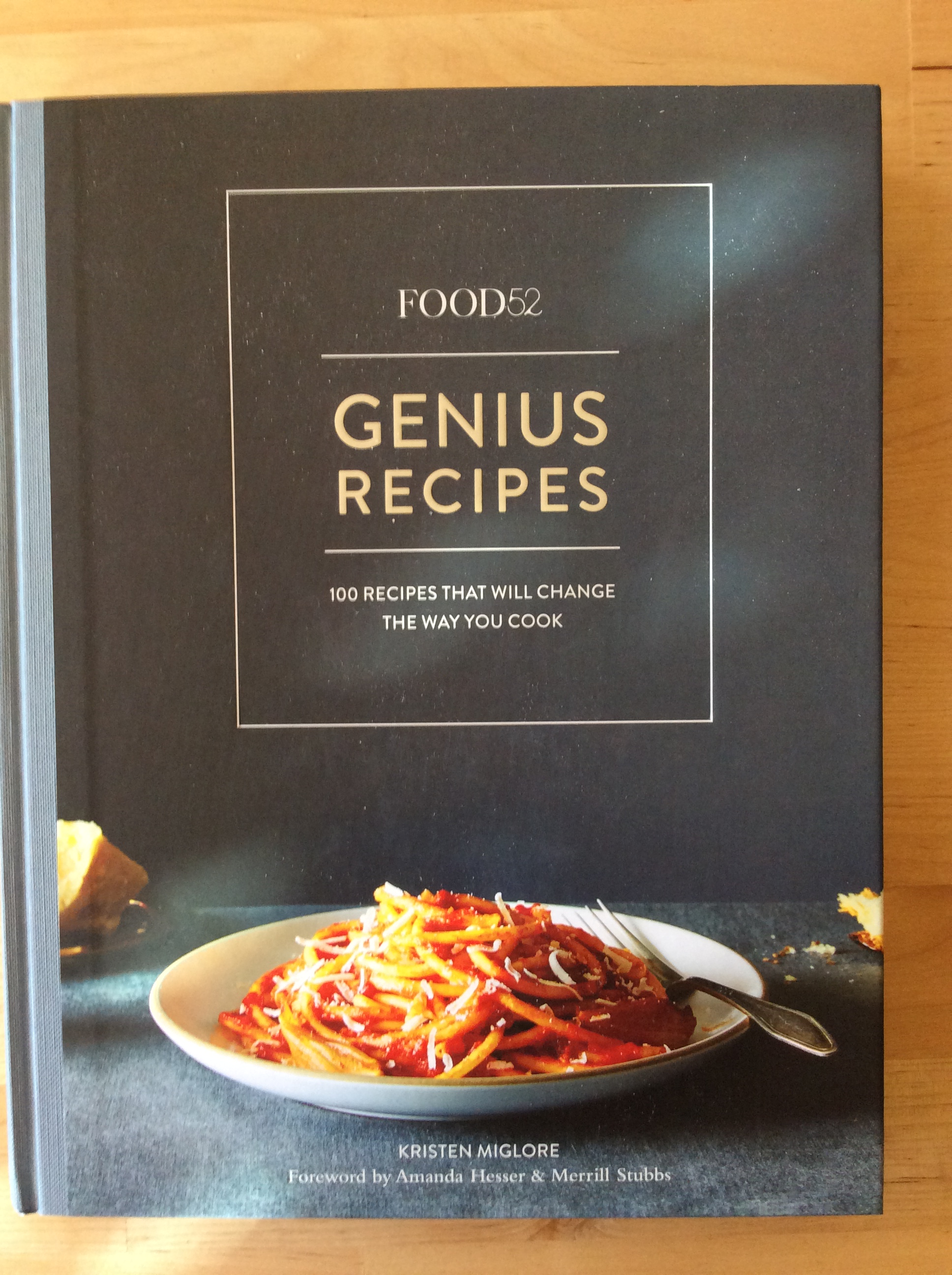
The name of the book is Genius Recipes: 100 Recipes That Will Change the Way You Cook. The book is written by Kristen Miglore, Executive Editor of the food website, Food52.com. It is filled with beautiful images by the author and published by Ten Speed Press, Berkeley.

Genius Recipes

Genius Recipes

Some critics complain that the recipes are not really “genius” and that some of them don’t work. They are partially correct. Some of the recipes, at least in my hands, don’t work and some of them I will not make again.

The real genius behind all of the recipes is that they contain tricks that you never knew or methods that make you think, “Now, why didn’t I think of that.” As well, there are recipes that have become classics. An example of that is Shirley Corriher’s Touch-of-Grace Biscuits that was daughter Carol’s first contribution to our family cookbook. Who would think that a wet blob of dough could turn into light Southern biscuits?

Another recipe that intrigued me was Daniel Patterson’s Poached Scrambled Eggs. Daniel is chef/owner of Michelin-two-star Coi where Evan and Sarah worked before they opened Rich Table. The story behind the recipe is that Daniel’s wife made him toss out his beloved Teflon-lined sauté pan, so he had to come up with a new way of scrambling eggs for his breakfast. The genius of the recipe – why didn’t I think of that – is based upon a common folly of cooks who have tried to poach the perfect egg only to have it break in the cooking water. Patterson simply mixed the eggs before he put them in the poaching liquid, and mirabile dictu, he had a scrambled egg.

This recipe takes that technique one step further. Migas are a great Tex-Mex dish which requires two basic elements – eggs and stale corn tortilla pieces – and whatever else suits your fancy. I first ate them at a cafe in Austin near the University of Texas campus. Since then they have become a family favorite that is always on the menu at family gatherings. One of the keys to this recipe is to have all of the add-ins prepped and ready to go before you cook the eggs.

RECIPE

Poached Migas

Ingredients

  • 3 corn tortillas
  • 4 crimini mushrooms, sliced
  • vegetable oil
  • 3 scallions, cut in ¼ inch slices, including green tops
  • 2¼ ounces sliced black olives
  • 3 strips bacon, cooked until crisp and then crumbled
  • ½ green or red bell pepper, seeded and chopped
  • 3 snacking peppers, chopped
  • 4 ounces Hatch green chiles, diced (optional)
  • 1 medium tomato,  seeded and chopped
  • ½ cup Cheddar or Monterey jack cheese (use a combination of the two if you wish)
  • ½ cup coarsely chopped cilantro leaves
  • 4 eggs, beaten
  • 4 tablespoons butter, melted
  • salt and pepper
  • salsa
  • sour cream for topping

Method

  1. Lightly coat the tortillas with vegetable oil. Cut into ¼ inch strips and spread out on a baking sheet. Bake at 200° F for about 20 minutes or until the strips are crisp. Cool and set aside.
  2. Sauté the mushrooms in about 2 tablespoons of oil. Set aside
  3. Gather the add-in ingredients on your work surface.
  4. In a medium saucepan, bring salted water to the boil. Turn off the heat, stir the water vigorously to create a vortex, and pour the beaten eggs into the vortex. Cover the saucepan tightly for a full minute. Remove the lid and drain the cooked eggs in a fine-meshed sieve, shaking to remove any excess water.
  5. Return the drained eggs to the saucepan along with the melted butter. Stir to loosen the eggs and incorporate the butter.
  6. Stir in the tortilla strips, mushrooms, scallions, olives, bacon, peppers, optional green chiles, tomato, cheese, and cilantro.
  7. Adjust seasoning with salt and pepper. Top with salsa. Serve immediately while still hot. Pass sour cream for topping if desired.


10 Comments

Filed under Food, Photography, Recipes, Restaurants