Category Archives: Travel

UNSCENE SHREVEPORT : HERBED PORK CHOPS AND MEXICAN CORN

This is my first post from the Shreveport Unscene. The project is a year-long event designed to advance music, the arts, and food in the Shreveport area. Sarah and Evan are doing a two week residency with the goal of  promoting the use of fresh fruits and vegetables in restaurant menus and, along the way, in the family menus of the community. They will be cooking with products from the local farmers market and challenging local chefs to do the same.

Shreveport has a rich food tradition with many Southern and Louisiana specialties. But like much of the South, its food is heavy on deep frying – chicken fried steak, Southern fried chicken, fried catfish and hush puppies, not to mention Natchitoches meat pies, corn dogs, fried pickles, and even deep-fried ice cream. Bucking that tradition will be a challenge.

On our day of arrival, Sarah and Evan went to the farmers market, which is held twice a week. The market is much larger on the weekend, so during the week the choices were limited, but they found fresh pork chops, onions, garlic, new potatoes, sweet yellow peppers, corn from a Mennonite colony in nearby Arkansas, blueberries, raspberries, and fresh cream.

They augmented these products with prosciutto from the gift basket in their room and red onions, cilantro, vegetable oil, and balsamic vinegar from the nearby grocery store. Then they cooked our evening meal from all of this bounty, sort of as a trial run. Sometimes it’s ok to be a guinea pig.

RECIPES

Herbed Pork Chops

Ingredients

  • 2 tablespoons vegetable oil
  • 4 large pork chops
  • 5 cloves garlic, peeled but whole
  • 1/2 large onion, chopped coarsely
  • salt and pepper
  • 1 red onion, diced finely
  • 1 large bunch cilantro, chopped
  • balsamic  vinegar

Method

  1. In a large sauté pan, heat the oil over high heat, Add the pork chops, garlic, and onions. Brown the pork chops on both sides. Then transfer to an oven-proof dish and place in the oven preheated to 375.  Roast for 20 minutes or until done to your liking. Adjust the seasoning.
  2. In the meantime, combine the red onion, cilantro, and balsamic vinegar in a small bowl. Set aside.
  3. When ready to serve the pork chops, top each with a large tablespoonful of the herb mixture

New Potatoes, Onions, and Sweet Peppers with Pancetta

Ingredients

  • 1 1/2 pounds new potatoes, quartered
  • 1/2 large white onion, chopped coarsely
  • 4 sweet yellow peppers cut crosswise into 2-inch slices
  • 2 tablespoons vegetable oil
  • 1/2 of  reserved herb mix (see recipe ab0ve)
  • 3 ounces prosciutto, sliced into thin ribbons

Method

  1. Add the potatoes, onion, and peppers to a large saute pan over medium high heat with the oil.
  2. Stirring frequently, cook the vegetables until they are soft. Remove from the heat. Serve topped with half the herb mixture and the prosciutto.

Mexican-Style Corn with Yogurt and Queso Fresco

Ingredients

  • 6 ears fresh corn, shucked and silk removed
  • 1/2 cup Greek-style yogurt
  • 1 pound Mexican queso fresco, crumbled
  • Old Bay seasoning (note: one of us is very sensitive to spicy food, so that was the choice of seasoning. Ground chiles or chili powder would also be very good.)

Method

  1. Over high heat, dry roast the corn, two or three ears at a time, until they are lightly charred.
  2. Transfer to an oven-proof pan or dish. Spread the roasted corn with yogurt and then sprinkle with queso fresco and seasoning.
  3. Place in the oven preheated to 375 for a few minutes until the cheese is melted and slightly browned. Serve immediately.


2 Comments

Filed under Food, Photography, Recipes, Travel

PECOS PUEBLO AND BARBECUE

Instead of the traditional, requisite Memorial Day cookout, we decided to take a day trip. After putting the American flag at the mail box, we drove down the interstate to the Pecos Pueblo National Historical Monument. We had not been there for several years, and so we thought it would be a great visit. The weather was beautiful as was the drive up from Santa Fe to Glorieta Pass where the road to the monument takes off. Because the pass is one of the main breaks in the Rocky Mountains in New Mexico between the eastern plains and the Rio Grande basin, it is filled with history.

During the Civil War, the Confederates had organized the Confederate Arizona Territory which included southern parts of what are now Arizona and New Mexico (some things never change) with the ultimate goal of seizing the gold and silver mines of California and Colorado.  Santa Fe had fallen to the Confederates, and things were looking bad for Union forces until the two sides met in Glorieta Pass where the Colorado infantry and the New Mexico militia turned back the Confederates whose supply train was ultimately destroyed, forcing them to give up their effort.

Glorieta Pass is also where the Santa Fe Trail crossed from the prairies into the Santa Fe region. The trail followed earlier native American trails and was established in the late 1700s, but eventually became the main trade route from Missouri settlements in the United States with Mexico, of which Santa Fe was a part until the end of the Mexican War in 1848.

But preceding all of that, the region was the center of trade between the peoples of the plains and the pueblos. Pecos Pueblo sat at the juncture and became a thriving trade center. At its peak, there were over 2,000 individuals living in a five-story dwelling. The Spanish explorers first visited the pueblo in 1640 and immediately set about to convert the population to Christianity. A huge church was built to hold all 2,000 residents at one time. During the Pueblo Revolt of 1680, the church was set on fire and destroyed, but in the re-conquest, another, less grandiose church was built. Over time the pueblo fell on hard times and the population diminished until the few remaining individuals relocated to Jemez Pueblo. The structures fell into ruins – a sight-seeing side trip for folks traveling on the Santa Fe Trail. Now, only ruins remain, but the site is an impressive and interesting glimpse of the local history.

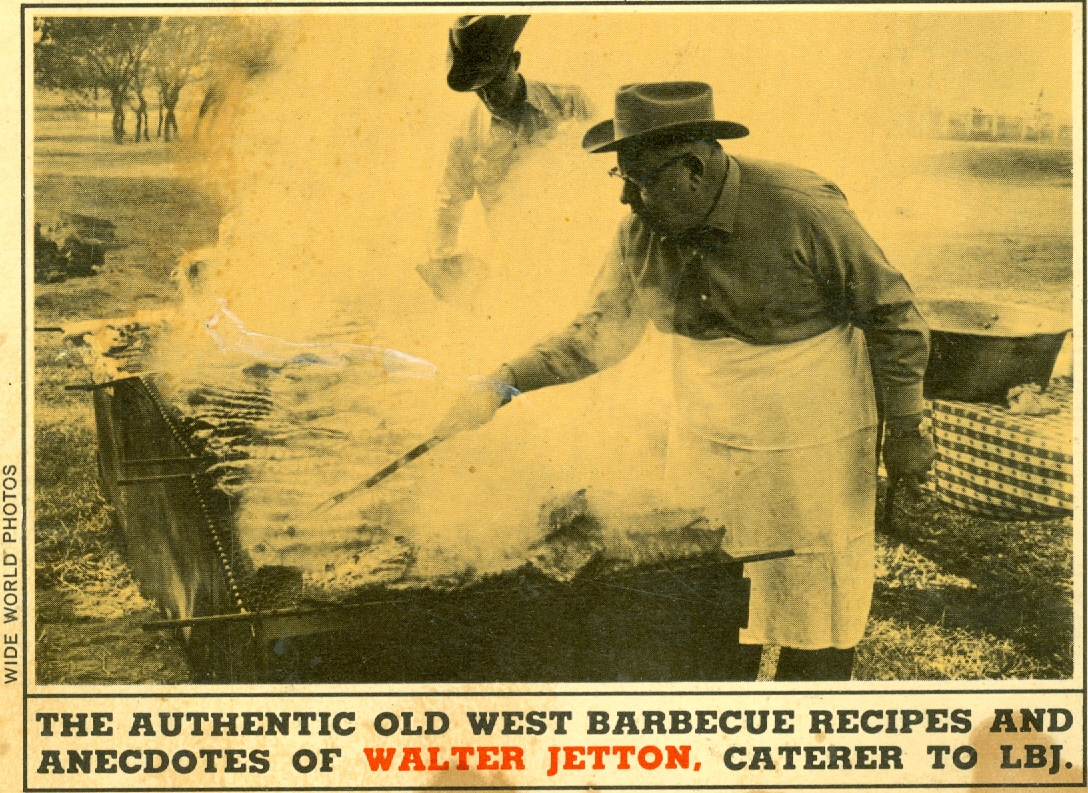
So much for my ramblings. Now it’s on to recipes. We decided to delay our traditional cookout and wound up having barbecued ribs, Susan’s famous brisket, Sarah’s herbed potato salad, coleslaw, and Southern buttermilk cornbread. For the barbecue, I used recipes from a cook book that has been in our family for 50 years: Walter Jetton’s LBJ Barbecue Cook Book (Pocket Books, Inc., New York, 1965, $1.00) Walter Jetton billed himself as caterer to the LBJ Ranch. He was from Fort Worth, but spent a lot of time in Washington, D.C. introducing Hubert Humphrey and other politicians to authentic Texas barbecue. Here are my modest revisions of his recipes for dry rib rub and barbecue mop, two essential condiments for barbecue.

Walter Jetton at the barbecue - from the cover of his 1965 cook book

Walter Jetton at the barbecue – from the cover of his 1965 cook book

RECIPES

Dry Rib Rub

Ingredients

  • 3 tablespoons salt
  • 3 tablespoons sugar
  • 1½ teaspoons lemon powder
  • 3 teaspoons Accent MSG
  • 1 tablespoon ground black pepper
  • 1½ teaspoons paprika

Method

  1. Combine all ingredients in a container with a lid
  2. Rub the mixture generously on all surfaces of the rack of ribs before you place it on the barbecue

Barbecue Mop

Ingredients

  • 1 tablespoon salt
  • 1 tablespoon dry mustard
  • 2 teaspoons garlic powder
  • 1 teaspoon ground bay leaf
  • 2 teaspoons chili powder
  • 1 tablespoon paprika
  • 1 tablespoon Accent MSG
  • 2 teaspoons Louisiana Hot Sauce
  • 1½ cups Worcester sauce
  • ¾ cups white vinegar
  • 1 carton (32 ounces) beef stock
  • ¾ cups vegetable oil

Method

  1. In a large bowl, combine first seven (dry) ingredients
  2. Stir in the liquid ingredients until completely mixed
  3. Cover and let stand overnight at room temperature
  4. With a small (new) dish mop, brush on barbecue meats frequently as you cook them.
  5. Refrigerate any that is left over when you have finished barbecuing. Store it in a tightly-lidded jar. It will last for a long time.

7 Comments

Filed under Food, Photography, Recipes, Restaurants, Travel

EATING MY WAY THROUGH SAN FRANCISCO – BAR TARTINE

Recently we were visiting in San Francisco around the time of the birth of Sarah and Evan’s second child. By the way, it’s a boy! During our visit we, of course, paid a visit to Rich Table and had a great meal. But the night that Mommy and the new brother came home from the hospital, we wanted to make it a special family evening, so Susan and I went to Bar Tartine in the Mission district.

The restaurant is part of the Tartine group operated by Elisabeth Prueitt and Chad Robertson of Tartine Bakery fame. The co-chefs at Bar Tartine are Nick Balla and Cortney Burns, who are friends with Sarah and Evan. To help us celebrate the new baby, they really pulled out the stops to make it a memorable evening for us as well as for our family. They certainly did that!

The bread on the table was freshly baked  famous Tartine Country Loaf baked by Chad Robertson himself. The bread is one of the best in San Francisco. I say one of the best because Sarah makes a killer loaf of Douglas-fir scented levain for Rich Table.

Of course, we followed Sarah and Evan’s recommendations for what to order, though to tell the truth, I don’t think you can miss on ordering anything on the menu.

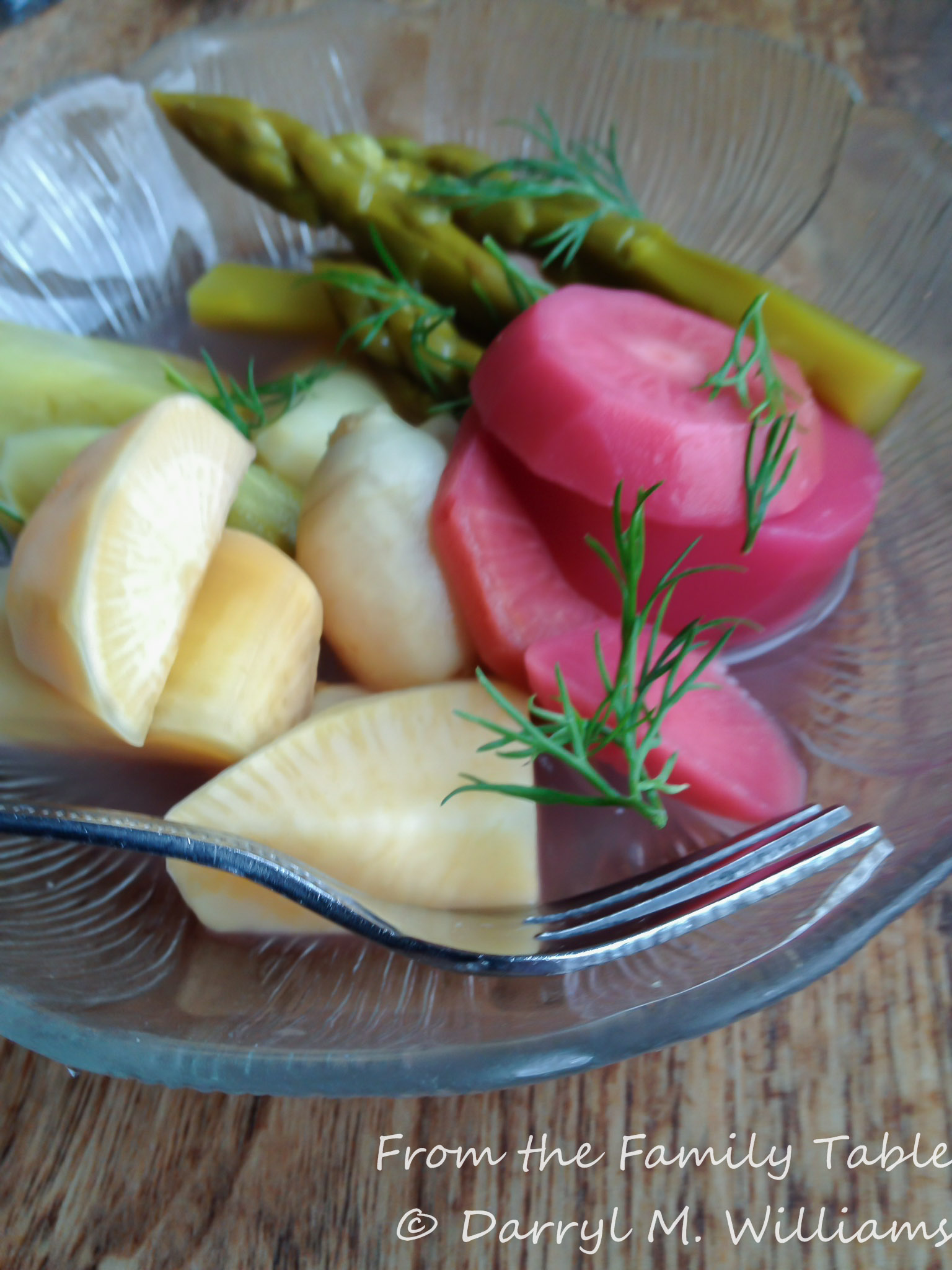
The brine-pickled vegetables are deceptively simple. A colorful plate of root vegetables comes to the table and you find immediately  that the fresh tastes and crunch  of each has been preserved even with a tangy, lightly pickled overtone.

Bar Tartine Brine pickled vegetablesThe potato flatbread with garlic and sour cream is a must. The beautiful presentation makes it almost too pretty to eat – almost, because when you take a bite, the flavors come together and literally seduce you to finish the whole thing.

Bar Tartine Potato flatbreadThe smoked potatoes with black garlic are very unusual. If you don’t like smoked foods, then don’t order them, because they are definitely rich with fresh wood smoke. The black garlic adds its own overtones. It is very popular in restaurants in the Bay Area as well as the whole country. It has been used in Asia for centuries as a food and as a health supplement, but it was commercialized in the US by Scott Kim. He says the garlic is fermented in conditions of controlled heat and temperature while others say it is not fermented but rather deeply caramelized by the Maillard reaction over several weeks. Whatever the process, the result is garlic that turns inky black,  given up its pungency, and gained a rich flavor that has been said to have elements of molasses, chocolate, and umami. Kim now provides the black garlic from his operation in Hayward, CA.  (Just down the road from Gilroy, the self-proclaimed “Garlic Capitol of the World”. ) You can learn more about the product or even order your own from Blackgarlic.  I can’t imagine someone not liking the very earthy flavor of this creative dish. The whole new potatoes are  beautifully garnished, tender and very tasty. Unfortunately my shaky image doesn’t do them justice.

Bar Tartine Smoked potatoesThe beet and blue cheese salad comes  beautifully presented. Now, I am not a big fan of beets in any form, but this salad makes even me a believer. The beets are sweet as they always are, but that plays off the blue cheese so well.

Bar Tartine Beet and blue cheese saladThe beef tartare on koji (an Asian “yeast” – a form of Aspergillus used to ferment various foods including miso, soy sauce, and sake) toast with bottarga (salt-cured fish roe) is beautiful. Fortunately we had a very informed server who filled us in on all of the ingredients. This is unlike any other beef tartare you have ever eaten.

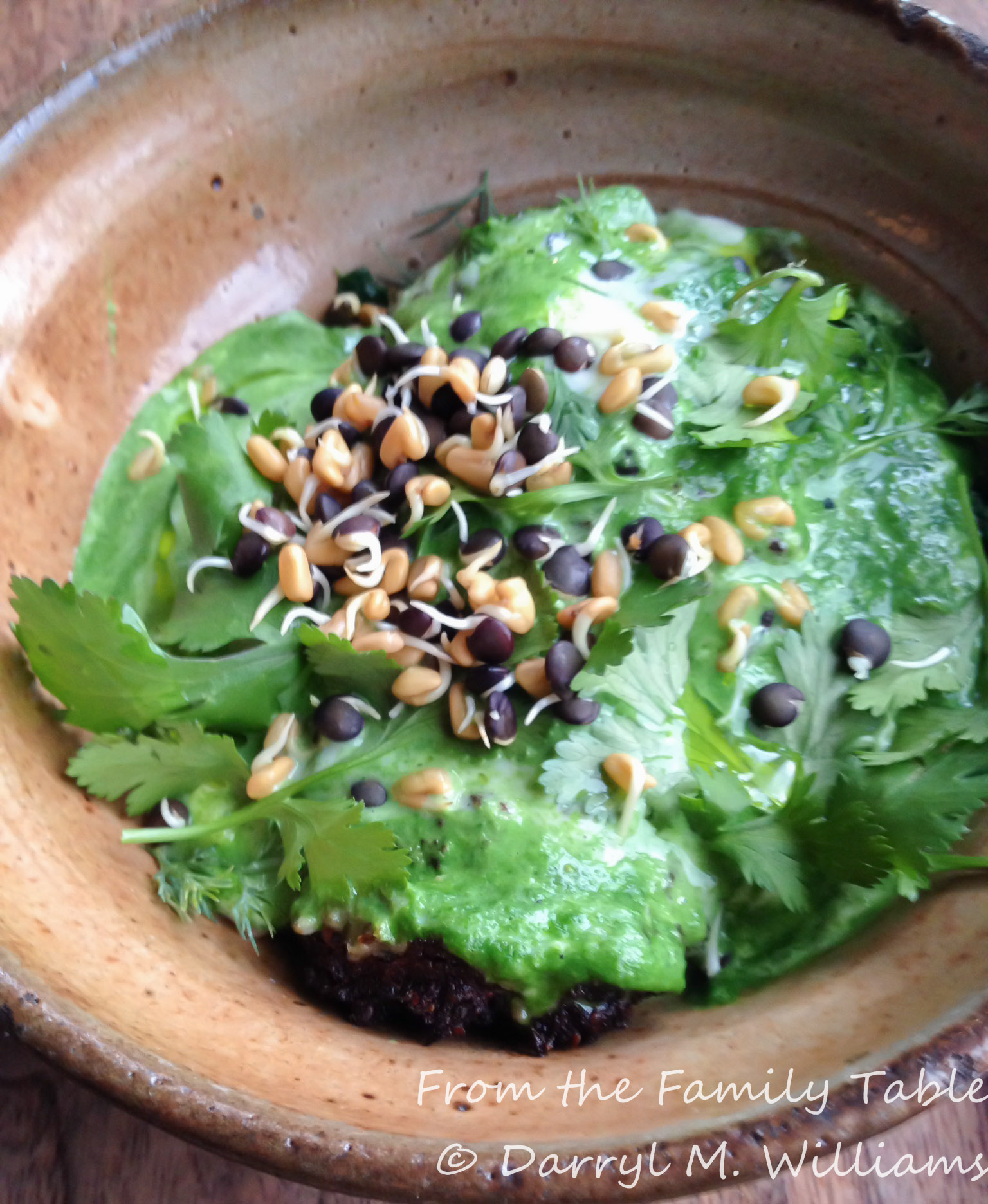
Bar Tartine beef tartareI’ve eaten lentils lots of different ways, usually in a dal or soup, but never sprouted, so the visual impact of the sprouted lentil croquettes with kefir and coriander is spectacular, and the taste is unlike any of those other lentils that I have eaten.

Bar Tartine Sprouted lentil croquettesMy green chili fisherman’s stew with collard was very spicy – much too spicy for Susan – but it came as an emerald-green broth filled with seafood and hen-of-the-woods mushrooms. And collard!! When one is used to the limp, damp clot that’s called collard greens in a Southern cafeteria line, you are unprepared for the lovely, delicious variation presented in this dish.

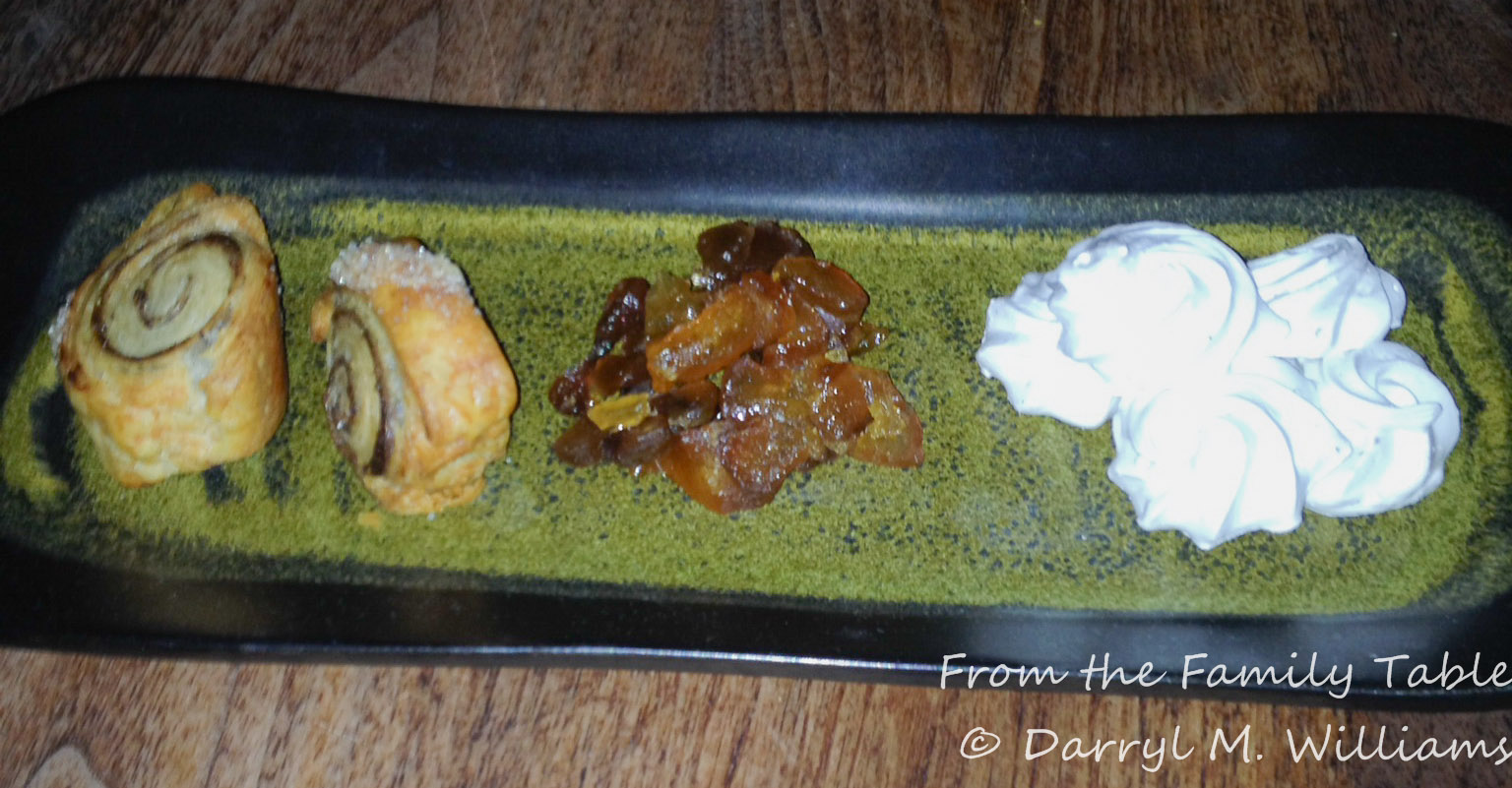
Bar Tartine Fisherman's stewHard as it is to believe, we had room for a little dessert “amuse” of meringues, rugalach, and candied fruit along with a complex carob mousse with goat cheese and black walnuts.

Bar Tartine kugeleh and meringuesBar Tartine Carob mousseAfter such an incredible feast we went back to our beds. In the meantime, the new family had their own very special celebration, and two new brothers got acquainted.

6 Comments

Filed under Food, Photography, Restaurants, Travel

EATING MY WAY THROUGH SAN FRANCISCO – b. PATISSERIE

It is hard to say enough good things about the b. Patisserie. This French-style bakery has been open only a short time , but it has already collected a lot of awards and a big following. It is located in Pacific Heights/Laurel Heights at 2821 California Street. The chef/owner, Belinda Leong, a friend of Sarah and Evan, is an experienced pastry chef with many awards. She is formerly the pastry chef at the Michelin-starred Manresa in Los Gatos, CA and has also spent time in the fabled Parisian patisserie, Pierre Hermé.

The main attraction of b.’s is, of course, sweet pastry in the French style, but there is also a wide selection of granolas, mousses, quiches, and tartines so you can enjoy a nice lunch or snack with dessert. There ae pln†y of tables inside as well as some comfortable chairs outside. If you prefer, you can have it all packed in a box to take home, but then you have to forego the very interesting people watching.

There is a wide selection of croissants from plain (Is there such a thing as a “plain” croissant?) to a completely decadent chocolate, banana-almond version that is filled with a velvety banana cream.

The kouign amann is a wonder. Made of a light dough (I think it is puff pastry) and shaped like an opening flower bud, the outside is a caramelized brown, crisp and glistening with sugar crystals, reminiscent of a palmier. Break open the petals and the inside is filled with a nectar from the transformed sugar inside. You will need extra napkins even if you eat it with a fork.

The passion fruit-flavored bostock is redolent of almonds and the wonderful scent of passion fruit. The creamy little cake is so elegant and so flavorful.

When we visited, it was lunch time, so I ordered a muffuletta tartine. If you have been to New Orleans, you probably have had a muffuletta from the Central Grocery in the French Quarter where it is said the sandwich was invented more than a hundred years ago. The original is served on a giant Italian bread roll with provolone, salami and cappicola. The thing that really makes it a muffuletta and different from other subs, heroes, and po’boys, though, is the unique “olive salad” rich with garlic, olive oil, chopped olives, and pickled vegetables.

Belinda’s muffuletta nails the flavors of the original, including the olive salad. But it is so much more: served on a thin slice of flavorful toasted French bread slathered with olive salad, covered with Black Forest ham, Genovese salami, and mortadella topped with provolone melted under the salamander. Only one word: delicious.

To help you make your own muffuletta, either like the original or as a tartine, I am providing you with one of our family secrets, a recipe for olive salad that we collected when we lived in Louisiana and have subsequently included in our family cookbook.

RECIPE

Louisiana Olive Salad

Ingredients

  • 2/3 cup chopped green olives
  • 2/3 cup chopped black olives
  • 2/3 cup chopped celery
  • 1/4 cup chopped pimiento
  • 3 cloves garlic, minced
  • 1 anchovy filet, mashed
  • 1 tablespoon capers
  • 1/2 cup parsley, chopped
  • 3 tablespoons grated Parmesan cheese
  • 1 teaspoon dried oregano
  • ¼ teaspoon black pepper
  • 1/2 cup olive oil
  • ¼ cup fresh lemon juice

Method

  1. In a large bowl, combine all ingredients
  2. Let stand over night at room temperature.
  3. Use a generous serving when making a muffuletta.
Louisiana olive salad

Louisiana olive salad


6 Comments

Filed under Food, Photography, Recipes, Restaurants, Travel

THE PRESIDIO SOCIAL CLUB

The Presidio is one of the jewels of San Francisco. It is hard to believe that it was once an army base; it is easy to believe that it was one of the most sought-after postings in the army. Several of my military friends were stationed there, and they describe a wonderful life.

Now the Presidio has been taken over by the National Park Service. The apartments for enlisted men and NCOs have been substantially upgraded and are now available for rent. Many of the officers’ homes have been converted into boutique offices or upscale housing. The base hospital has been turned into very stylish apartments. I have been told that the base commander’s home now rents for more than $30,000 per month. From the outside it is a grand house, and the views of San Francisco Bay are amongst the best in the city.

There are tennis courts, a beautiful golf course, and miles of walking and biking trails woven amid great stands of eucalyptus and pines as well as huge beds of native plants.. All of this is left over from army days. Not hard at all to see why the Presidio was such a choice assignment.

Some of the administration buildings have been converted to tourist attractions. These include an interesting Walt Disney museum, George Lucas Productions, a bowling alley, and a conference center. The Crissy Field airstrip has been turned into a waterfront mall of dark green lawn, perfect for flying kites or for outdoor events.

Walt Disney Museum in old administrative buildings

Walt Disney Museum in old administrative buildings

The scenery is spectacular. The Golden Gate Bridge is right there; the Marin Headlands are a beautiful view; and the imposing cliffs of Land’s End rise from the other direction. I forgot to mention Baker Beach, popular with the whole city.

With all of this activity and the wonderful attractions, there are not many places to eat. Fortunately, there is the Presidio Social Club near the Lombard Street Gate. During the Second World War, a barracks building was converted into clubhouse for enlisted men and women. Over the years, it had become a bit shabby and then with the imagination of the Park Service the place was refurbished and opened as a charming restaurant and bar.  The walls are covered with images of people from past days having a good time. The rooms are furnished with old-timey lights and spare-but-trendy chairs and tables. There is a nice but limited selection of wines, and it is a good place to get that old San Francisco classic, the Negroni. The food is well-prepared and includes some creative takes on comfort food – deviled eggs, meatloaf, grilled cheese, and chicken salad – as well as some more substantial offerings.

More famous San Francisco restaurants like Greens are not too far away, but the Social Club is definitely a great place for a break during your visit to the Presidio.

Leave a comment

Filed under Food, Photography, Restaurants, Travel

SHAMELESS

We are back in San Francisco awaiting the birth of our new grandchild. It will be Sarah’s second child, and she is more than ready for her pregnancy to be over. While we wait, we are trying to give her a hand as well as helping our son and his family in Silicon Valley. This seems like an opportune time to visit Rich Table. Sarah is not going in, and Evan is working full throttle. The three-year-old will soon learn he is not the center of the universe.

Last night we had a wonderful feast with delicious offerings from the menu.

Rich Table is well known for its inventive, modern cocktails, but we settled on traditional standbys – an Old Fashioned and a Manhattan. Both were very well made, and they were even better with a few  sardine chips (potato chips with sardines woven into slits and served with horseradish creme fraiche) and radishes with toasted fresh yeast. The radishes seem appropriate as the Rich Table menu is festooned with a red radish drawn by Evan’s father.

For starters. we both chose the chilled spring onion soup sever over bay shrimp and green strawberries that had been lightly pickled. Who could believe that a green strawberry could taste so good.

Chilled spring onion soup, bay shrimp, green strawberries

Chilled spring onion soup, bay shrimp, green strawberries

For my pasta course I chose cappellacci (full name: cappellacci dei briganti – literally, brigands’ hats – shaped like little caps) with beef tongue, escarole, and sun dried tomatoes. Rich with butter, the dish was delicious and everything worked together so well. The tongue was tender and flavorful.

Cappellacci, beef tongue, escarole, sun-dried tomato

Cappellacci, beef tongue, escarole, sun-dried tomato

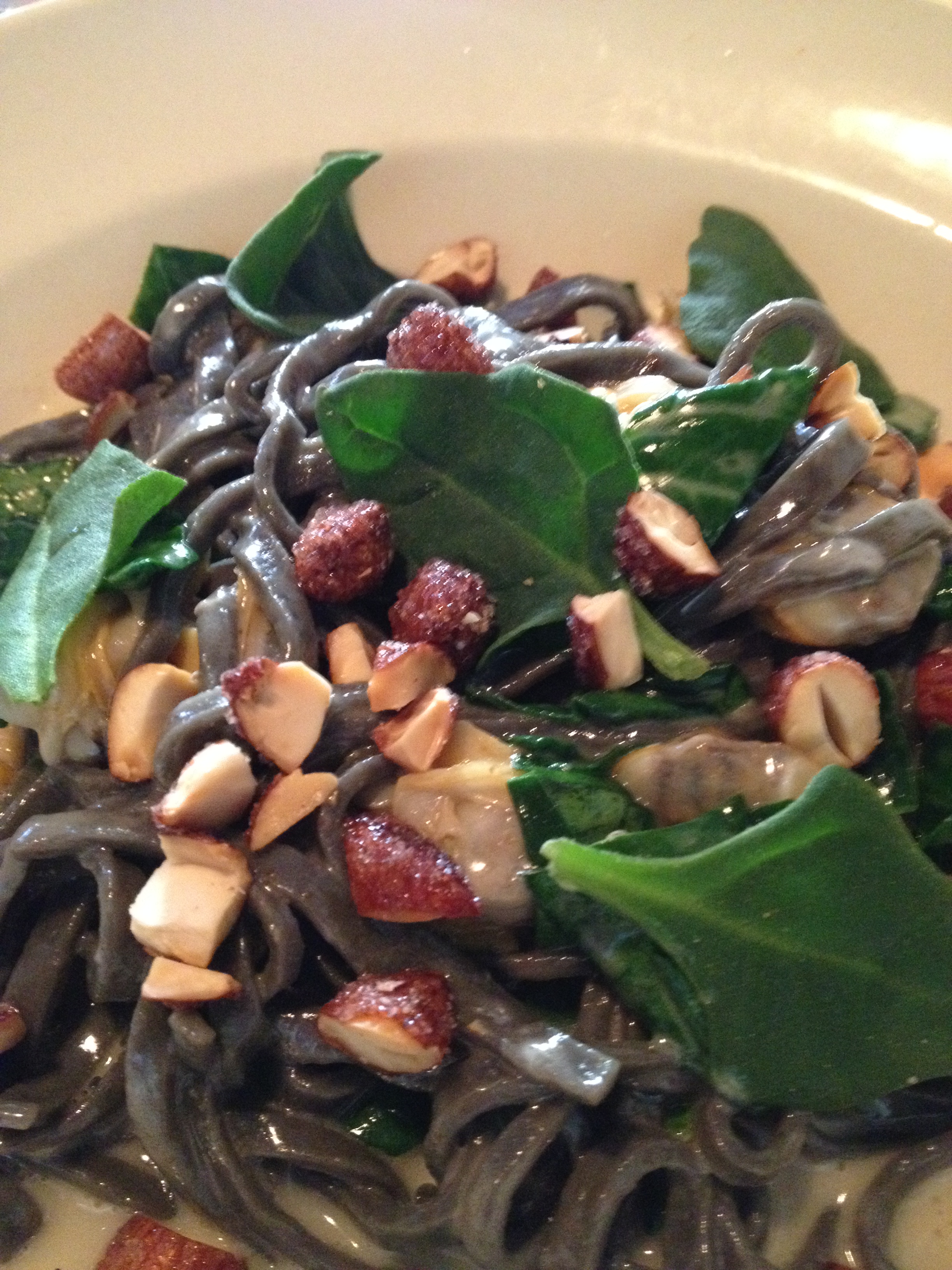
Susan chose black onion chitarra, a sort of pasta made with a form of tight, parallel wires nicknamed a chitarra or “guitar”. The pasta was dark with the black onion and served with manila clams, almond, and spinach. Another delicious dish.

Black onion chitarra, manila clams, almond, spinach

Black onion chitarra, manila clams, almond, spinach

For my main course, I ordered glazed pork cotechino (a traditional Italian sausage) served with asparagus diamonds, sour orange, and a sunchoke coulis. Susan had the swordfish with artichoke and seaweed barigoule, and fava greens.

We could not pass up dessert; we didn’t really try. My choice was panna cotta with a burnt sugar sauce. Susan chose white chocolate cheesecake with fennel and pomegranate  seeds. We both got California creamsicles as an amuse bouche, and Susan finished off with Rich Coffee containing house made Irish Cream!

No shame with any of that. Here that comes. Sarah and Evan are in the running for Food and Wine’s Best New Chef contest. They are in the list of California contestants. You can vote early and often by logging in to the website and casting your vote. Here’s the link:

http://www.foodandwine.com/blogs/2014/03/24/the-peoples-best-new-chef-california-chefs 

8 Comments

Filed under Food, Photography, Recipes, Restaurants, Travel

YOSEMITE AND THE AHWAHNEE HOTEL’S CHEFS’ HOLIDAY

One of my activities during the recent hiatus from my blog was a child-sitting assignment in Yosemite National Park. (A rough chore, I admit.) Our daughter and son-in-law had accepted an invitation to participate in the Ahwahnee Hotel’s annual Chefs’ Holiday. They did a cooking demonstration of two of their most popular dishes and then cooked a sit-down dinner for around 150 enthusiastic diners.

Of course, everyone knows about the magic of Yosemite National Park. The scenery is so gorgeous that you cannot avoid a gasp when you first see it. The crashing cascades, still water, towering monoliths, and beautiful meadows are spectacular.  Ansel Adams’s  black and white images are classics that less talented photographers like me try to imitate.

Click on image to view gallery

The Ahwahnee Hotel is less well-known although it has been there since the 1920s. The story goes that an aristocrat from England came around the turn of the twentieth century to take in the beauty of the Valley, and there was no lodging up to her standards or expectation. Thus, plans were developed to build a hotel that would suit the most discriminating visitor.  The hotel was built in a secluded meadow with a singular view of Half Dome; it was built of redwood-stained concrete so as to avoid the fires that had destroyed so many of the classic national park lodges of the time. There were lots of amenities, too, with a large staff, beautiful dining room, and comfortable guest rooms. Over the years, the hotel has been well maintained and remains the place where park visitors go when they want to feel a little pampered.

Our first night arrival was late, so we ordered drinks and bar food in the handsome Ahwahnee Bar. The food was good, but inexplicably the chili (in the western United States) was served Cincinnati-style with lots of cloves, cinnamon, and allspice. OK, but not my favorite.

Click on image to view gallery

During the tourist season, Yosemite is well known to be a crowded place, but in the winter there are many fewer visitors. This makes it wonderful to see and photograph the various sights, and it also affords the hotel the opportunity to sponsor some special events. The oldest is the Bracebridge Dinner which is held during the Christmas season and features an English banquet along with costumed players and singers. The Vintners’ Holiday highlights some of the most famous California vineyards and wines. The Chefs’ Holiday attracts well-known chefs and food experts from all over the country for cooking classes and unique dinners in the beautiful dining room.

Click on image to view gallery

Sarah and Evan demonstrated two of the most popular dishes at their San Francisco restaurant, Rich Table: porcini-dusted donuts with a fluffy raclette sauce and sardine chips accompanied by horseradish sauce. Then with the help of the kitchen staff rom the hotel, they prepared a several-course dinner and wine-pairing for 150 people.

Click on image to view gallery

While Sarah and Evan were working, Grandma and Grandpa were obliged to take care of the three-year-old. That meant walks to landmarks, playing in the fresh snow, and observing a herd of beautiful – and tame – deer. It was a most enjoyable task in a beautiful place with few tourists.

8 Comments

Filed under Food, Photography, Travel

SCALLION PANCAKES – FAMILY MEAL

One of the great traditions in restaurants – unfortunately tending to die out – is Family Meal. That’s when everyone takes a break from preparative work to gather together, talk about the evening ahead, and  share a meal prepared by one of the cooks. The meal is almost always comfort food made with leftover ingredients or inexpensive ingredients ordered just for the meal. The great thing is that the cooks rotate the assignment so the pressure is on to prepare something that everyone will enjoy. This is definitely not the time or place to embarrass yourself in front of your peers. Often Family Meal will feature food from childhood – a family favorite or Mom’s secret recipe. I have previously written about Sarah’s brisket and biscuits that became so popular the kitchen staff cheered when they appeared on the menu.

During a recent trip to San Francisco I got to spend the afternoon with Sarah in the prep room at Rich Table. That’s where Jonathan Tu whipped up his mother’s recipe for scallion pancakes. Nearly every Asian nation has its own version of this treat, but they all come down to a simple flour and water dough and chopped green scallions.  Kneading, layering with oil, and rolling out the dough a couple of times makes a flaky, multi-layered pancake rivaling puff pastry but without all the hassle.  There are a few little tricks or special touches in rolling out the dough, but in the end scallion pancakes are so simple and so good.

Jonathan served his pancakes with chicken sausage, rice, and a sauce of mustard, soy sauce, sesame oil, and chili flakes, but it’s up to you to choose your favorite dipping sauce or topping.


RECIPE

Scallion Pancakes

Ingredients

  • 2½ cups all-purpose flour
  • 1 cup water
  • kosher salt
  • ½ cup chopped scallions, including green tops
  • sesame oil

Method

  1. In a large bowl, combine the flour and water. Mix until it holds together and forms a ball. Continue to knead for about 10 minutes or until the dough becomes soft and shiny.
  2. Cover the dough with plastic wrap and let rest for 30 minutes.
  3. Divide the dough into four equal balls. On a well-floured work surface, roll out one of the balls to about 1/8 inch thick. Keep the remaining balls covered with a cloth until you are ready to roll them out..
  4. Drizzle the top of the rolled out dough with sesame oil. Sprinkle with ¼ of your chopped scallions and kosher salt. Fold it over and roll it out again.
  5. Roll up the flattened dough like a cigar. Divide the cigar crosswise into two pieces. Coil each piece like a snake or snail. Flatten the coil with your hand and then roll out into a circle with a rolling-pin.
  6. Repeat with the remaining balls of dough. You should have eight pancakes.
  7. Heat a heavy cast iron skillet to medium high or use a heated plancha. Lightly oil the cooking surface, and then transfer one of the pancakes to the skillet or plancha. Cook for two minutes. Then flip and cook the other side for two minutes. The pancakes should be a light golden brown.
  8. Repeat with each of the remaining pancakes. You may keep them in a warm (200°F) oven while you cook the rest.
  9. Cut each pancake into 6 or 8 wedges and serve with dipping sauce or accompaniments of your choice.

3 Comments

Filed under Food, Photography, Recipes, Restaurants, Travel

LEVAIN WITH FENNEL FRAGRANCE

One of the favorites on the Rich Table menu is Sarah’s country style levain. The bread is served warm with house-churned cultured butter. Sometimes the bread is scented with Douglas fir, but the most popular version is when it is flavored with wild fennel “pollen”. The pollen is actually the bright yellow tiny flowers of wild pollen that grows all over Northern California and blooms from mid to late summer. Rich Table has their own forager who brings the pollen in from fields north of San Francisco, and the restaurant has an abundance now. Unfortunately the source is regional and seasonal – that’s one of the reasons for using Douglas fir – but if you don’t happen to live in Northern California, ground fennel seeds can make a workable substitute. The smell and taste are not as delicate, and if you use too much can be overpowering, so use it carefully.

On a recent visit to San Francisco, I watched Sarah make her bread in the basement prep kitchen at Rich Table. The experience inspired me to try to adapt the recipe for the home baker. This is pretty close to the real thing, but Sarah did not share any of her baking secrets with Old Dad.

Sarah’s recipe makes twelve large loves, too much for the home baker. For that reason, I have pared down the ingredients to make two generous loaves. I have made some other modifications to make it easier for the home baker. First, professional bakers weigh their ingredients, while home bakers usually measure things in cups and spoons, so I have set the quantities in the home style. Second, if you have your own sourdough starter, that is great, but if you don’t you can substitute packaged dry yeast. Third, if you have harvested your own wild fennel “pollen” (actually fennel flowers) that’s also great, but you can substitute ground fennel from your spice shelf.  Finally, you can mix the dough by hand, but that is a labor of love, so I have used a stand mixer equipped with a dough hook for the kneading and gluten-release process. Resting times are very important to make sure the gluten releases and supports good lift of the dough.

RECIPE

Levain with Fennel Fragrance

Ingredients

  • 3 cups + ¼ cup water
  • 1 cup levain* or substitute 1 envelope dry yeast
  • 6 cups bread flour
  • ½ cup whole wheat flour
  • ½ cup rye flour
  • 1 tablespoon salt
  • ½ teaspoon ground fennel seeds
  • vegetable shortening or butter for greasing bread pans

* Baker’s note: You can find the method for making your own levain or sour dough starter in an earlier post. If you choose to use yeast instead, increase the water and flour in the recipe by ½ cup each.

Method

  1. Place 3 cups water in the large bowl of a stand mixer. Using the paddle attachment, mix in the levain (it should float in the water, otherwise it has not risen enough) or yeast. You should feed your levain the night before you bake to make sure it has good rising power the next morning.
  2. Slowly mix in the flour, a cup or so at a time.  When the dough becomes stiff enough, change to the dough hook attachment.
  3. Add all the flour. Then beat with the dough hook at a slow speed for 10 minutes until smooth and shiny.
  4. Let the dough rest in the bowl for 30 minutes.
  5. Dissolve the salt in the ¼ cup water.
  6. Beat the salt mixture and ground fennel into the rested dough until completely incorporated.
  7. With a scraper, transfer the dough to a large metal bowl.
  8. Cover the dough with a plastic film and let rest for 30 minutes. Then turn the dough gently in all directions with moistened, clean hands. Recover the dough with the plastic film.
  9. Repeat turning the dough every 30 minutes for three additional times.
  10. Turn the dough out on a well-floured work surface. Divide into two equal pieces. Each piece should weigh a little over 2 pounds.
  11. Shape each piece of dough into a ball and let rest for 5 minutes.
  12. After the rest, shape the dough by lifting the far edge of the ball and pulling it to the center. Repeat this motion in all directions. Pinch closed any seams and let rest, covered with a cloth, for 10 minutes while you prepare the baking pans.
  13. Prepare two 9 x 5 inch bread pans by greasing the insides well with vegetable shortening  or butter.
  14. Arrange the dough pieces, seam side down, in the two bread pans, cover with a clean cloth, and set in a warm place to rise until doubled.
  15. While the bread is rising, pre-heat the oven to 450°F (232 °C)
  16. When the loaves have risen, slash the tops with a sharp knife and transfer to the middle of the pre-heated oven.
  17. Bake for 15 minutes. Then reduce the oven temperature to 350°F  (177°C) and continue to bake for 45 additional minutes. Turn the loaves front to back at least once during the baking.
  18. At the end of the baking time, test for doneness by thumping the bottoms for a hollow sound. Transfer the baked loaves to a cooling rack and allow to cool completely.

7 Comments

Filed under Food, Photography, Recipes, Restaurants, Travel

LIGHT WEIGHT FOOD – BOW HUNTING FOR ELK IN THE WILDERNESS

Our son, Peter, is the outdoorsman in our family. He hikes, rock climbs, skis, canoes, and anything else that will get him into the outdoors. When all the rest of us have opted for a motel room, he will choose to sleep outside in a bag on a ground cloth. He was excited, then, when he was selected in a lottery to bow hunt for elk in one of the wilderness regions of the Jémez Mountains in New Mexico. He drove to our house in Santa Fe almost non-stop from his home in Northern California, stopping for a few hours’ sleep in the Mojave Desert.

We helped him pack food for his expedition, and in a few hours he was off for what turned out to be a five-day adventure. He went to the San Pedro Park Wilderness with much of the trip over dirt roads. When he got to the trail head, he loaded up his back pack and went for a two-mile hike to his campsite. There were no other hunters, and he had planned the hike so that it would not be too far back to the car in case he bagged an elk and needed to pack out the meat. He wound up hiking another two miles to find a good hunting spot.
Map of the San Pedro Parks Wilderness

Map of the San Pedro Parks Wilderness

Hiking can be a strenuous activity, especially with a 50-60 pound pack. It’s fairly easy to use up 400 calories an hour, and even possible to use up 1000 calories an hour, never mind the fluid loss. Thus, it is very important to stay well hydrated and to have a good supply of food. Even if you had pure calorie sources – carbohydrate, protein, and fat – at 4, 4, and 9 calories per gram, respectively, you would need at least a pound of food a day to stay in balance. Of course, these days you can buy elaborate dehydrated meals at the outdoor sporting goods store, but they are very expensive and they also take away some of the fun of planning and packing for a wilderness trip.

Using dehydrated or low-weight foods available at the grocery store, we worked up a menu for the expedition. All you need is a good backpacking camp stove and a reliable source of water. Remember to cut instructions off the sides of boxes and drop them in the zippered plastic bag with the food. Put individual dry ingredients in zippered sandwich bags and drop them in the bag of the main dish.

Also pack a small squeeze bottle filled with cooking oil and another small container of butter or margarine. Bring small salt and pepper shakers.

Gorp, more commonly known as trail mix, is a hiking standby. These days you can buy any number of varieties with a wide range of different nuts, dried fruits, and candies. Some of them are extremely expensive and – in my view – not very good It’s just as easy to make your own, and that way you can include ingredients that you like.

Soup made from a packet of dehydrated soup is good while waiting for the main dish to cook.

Macaroni and cheese, especially the boxed kind, is an old-time kids’ favorite. It is nothing but dried ingredients. Add a little dry milk powder and some Spam lights, and you have a dish that can be cooked in just a few minutes. At the end of a hard day of hiking it will please everyone, kids and grownups alike.

Tuna casserole is another standby. With the new packaging of tuna in  foil pouches, this becomes even more light weight. Instant or fast-cooking pasta makes this an easy effort even with just a backpacking stove.

Salmon and rice casserole becomes another possibility with the advent of dry packaging of salmon just like tuna. A can of salmon would weigh over a pound, while the “dry” pack weighs 2.5 ounces

Dried fruit – banana chips and apricots make good desserts, along with chocolate bars.

Energy bars weigh only about 2 ounces each and pack an impressive 250 calories, about 1/3 of it from fat

RECIPES

Gorp

Ingredients

  • 10 ounces sunflower seeds, roasted (880 calories)
  • 16 ounces dry roasted peanuts (2560 calories)
  •  7 ounces “runts” or other candy-coated chocolate candy (715 calories)
  • 6 ounces walnut pieces (1100 calories)
  • 6 ounces whole almonds (935 calories
  • 9 ounces dried cranberries (780 calories)
  • 8 ounces raisins (775 calories)

Method

  1. If the sunflower seeds are raw, roast them by spreading them out in a jelly roll pan and placing them in the middle of an oven preheated to 300° F (177° C). Bake for 15 minutes, turning them frequently. Remove from the oven and cool before adding to the remaining ingredients.
  2. In a large bowl, combine all of the ingredients and mix well.
  3. Place in zippered plastic bags. This makes enough gorp for 4 or 5 bags, one for each day of the trip.

Macaroni and Cheese with Spam Lights

Ingredients

  • 1 box commercial macaroni dinner, including cheese packet
  • 1½ tablespoons powdered milk
  • 2 cups water
  • 1 tablespoon butter
  • 1 pouch Spam lights

Method

  1. Place all of the dry ingredients in separate packages in a larger plastic bag
  2. In a camper’s cooking pot, bring 2 cups of water to the boil. Add the dry macaroni and cook until tender.
  3. Pour off all but about ¼ cup of water. Stir in the contents of the cheese packet and the powdered milk. Add butter.
  4. Drain and stir in the pieces of Spam lights. Cut them up a bit if you wish.
  5. Mix well and serve immediately. Serves one or two hungry hikers.

Tuna Casserole

Ingredients

  • 4 ounces quick-cooking pasta
  • 1 2 ounce packet dehydrated mushroom soup
  • 3 tablespoons dehydrated mashed potatoes
  • 1 2.6 ounce pouch tuna
  • 2 cups water

Method

  1. Place all of the dry ingredients in separate packages in a larger plastic bag.
  2. In a camper’s cooking pot over a camp stove, bring 2 cups of water to a boil. Add the pasta and mushroom soup. Cook until tender.
  3. Stir in the dehydrated mashed potatoes and the tuna, drained.
  4. Eat. Should serve one or two .

Salmon and Rice Casserole

Ingredients

  • 1 cup instant rice
  • 1 envelope dehydrated vegetable soup
  • 1 2.5 ounce pouch salmon
  • 2 cups water

Method

  1. Place all the dry ingredients in separate packages in a large plastic bag.
  2. In a camper’s cooking pot over a camp stove, bring water to a boil. Add the instant rice and dehydrated soup and stir until cooked and the water is absorbed.
  3. Drain the salmon and stir into the mixture.
  4. Eat. Should serve one or two.

For breakfast, be sure to bring tea or instant coffee and packets of instant oatmeal. For lunch, if you want to pack the extra weight, dry Italian salami,  Parmesan or other hard cheese, small cans of Vienna sausages  or Kipper Snacks, along with hard tack or crackers are perfect. Just remember you will have to pack out the cans, and Kipper Snacks can be smelly. Remember, too, if there are bears in the area, the smells will be a magnet. Be sure to secure your food appropriately.
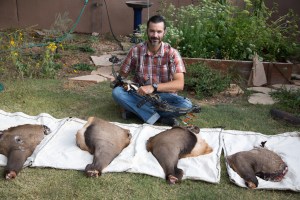
The hunter and some of his elk meat

The hunter and some of his elk meat

The end of this story is that Peter hiked in two miles, set up camp, and then hiked another 2 miles in stocking feet (!!!) to the spot where he got his elk with one arrow at a range of 45 yards. Then he spent a whole day cutting up and packing out the meat in three separate 4 mile (8 mile round trip) hikes to his car. He had a long sleep when he got back to our house.

4 Comments

Filed under Food, Photography, Recipes, Travel