Category Archives: Photography

FRITO PIE AND BLUE CORN-GREEN CHILE CORN BREAD

A couple of weeks ago I wrote about the Terlingua International Chili Cook Off.  It was an interesting event with lots of cooks who live and breathe competition chili. I decided right away that I would never be in a chili cook off much less as champion. Still, the excitement got me to thinking about making chili. This is the perfect time of year to make a pot. Nearly everyone has his or her own recipe, and probably everybody believes that his or hers is the best. No doubt that’s how the Terlingua cook off got its start in the first place.

Frito pie with blue corn-green chile corn bread

To me, a bowl of chili is not complete without a handful of Fritos sprinkled on the top, along with chopped onion, grated cheddar cheese and maybe some sour cream and jalapeño slices on top of the Fritos. Hey – I’ve just described one version of Frito pie.

No one knows for sure when Frito pie was invented, but one story traces its start in the 1960s  to the F. W. Woolworth store on the Plaza in Santa Fe. For many years, the Woolworth store was an iconic tourist Mecca because of the pie. Unfortunately, the store is long gone, but Frito pie continues as one of the quintessential dishes of Santa Fe. Many restaurants offer their own version, and people love most of them.  Many charity fund-raisers sell Frito pies with great success.

Frito pie has spread across America, and each region has its claim as to the best and most traditional version. You can put the Fritos on the top; you can put them on the bottom. You can bake a casserole. You can dump some chili in a bag of Fritos. Every version has its proponents. Sadly, you can even use canned chili. But for me the quality of the dish is totally dependent upon the chili you put in it. So I am sharing my recipe for chili. Didn’t I already say that everybody thinks his or her is best?

Frito pie can be eaten by itself, but a warm tortilla or a piece of cornbread put the finishing touch on the meal. So I am also providing a recipe for cornbread made with another New Mexico tradition, blue corn meal. Green chiles, onion, cheese, and piñon nuts combine to make a unique Santa Fe cornbread. The recipe also contains powdered gluten. These days it should be easy to find in the baking section of a large grocery store. Gluten is not necessary, but it gives the cornbread a better rise and lighter texture. Corn contains no gluten, and blue corn meal is very fine so that those two characteristics sometimes make a cornbread that is flat and very crumbly. Gluten gives a crusty loaf with a light, well-textured inside.

RECIPES

Chili

Ingredients

2 Cups dried pinto beans

6 Cups water

1 Tablespoon cooking oil

1 medium onion, chopped

1 pound ground beef, 15% fat

4 Cups beef stock

1 can (14 ½ oz) diced tomatoes

2 cloves, garlic, minced

1 packet (5 grams) Sazón Goya

½ teaspoon ground cumin

2 Tablespoons whole dried Mexican oregano

1-3 Tablespoons chili powder (or more according to taste)

1 teaspoon sugar

2 Tablespoons freshly squeezed lemon juice

3 Tablespoons corn meal

salt and pepper to taste

  1. Soak the dry beans overnight in the water.
  2. In the morning, heat the oil over medium heat  in a heavy-bottomed pot. Add the chopped onions, and cook, covered, until translucent. Do not let them brown.
  3. Add the ground beef, breaking it up as you stir, and brown it completely.
  4. Add the beans with their soaking liquid and stir in the beef stock. Bring to the boil.
  5. Stir in the tomatoes, garlic, Sazón Goya, and cumin. Add the oregano by crushing finely with your hands over the pot. Stir in the desired amount of chili powder and return to the boil, immediately reducing the heat to a simmer.
  6. Simmer, covered,  for two hours or until the beans are soft. Stir frequently, and add water if needed.
  7. About a half hour before you are ready to serve, add the sugar, lemon juice, and corn meal. Simmer uncovered until the corn meal has thickened the gravy.  Adjust the seasonings with salt, pepper, and more cumin and chili powder if desired.
  8. Serve in bowls and pass Frito chips, grated Cheddar cheese, chopped onions, and sour cream for toppings.

Blue Corn Meal Cornbread with Green Chiles, Cheese, and Piñon Nuts

Ingredients

½ Cup piñon nuts

1 Cup all-purpose flour

1 Cup blue corn meal (Do not use atole. It is too finely ground.)

1 Tablespoon gluten powder

1 teaspoon baking powder

½ teaspoon baking soda

1 teaspoon salt

4 oz canned chopped green chiles (choose your heat – mild to hot)

½  Cup grated sharp Cheddar cheese

½ Cup chopped green onions including the tops

1½ Cups buttermilk

2 eggs, lightly beaten

4 Tablespoons butter, melted

  1. Grease a heavy 8 inch cast iron skillet generously and place it in the middle of the oven as you preheat the oven to 425°. Meanwhile prepare the batter.
  2. In a dry skillet over high heat, toast the piñon nuts until the oils are released and the nuts have begun to brown slightly. Be careful not to burn them. Allow them to cool and then chop them coarsely. Set aside.
  3. In a large bowl, combine the corn meal, flour, baking soda, salt, and baking powder.  Add the chopped, toasted nuts, green chiles, grated Cheddar cheese, and green onion. Mix well.
  4. In another bowl, combine the buttermilk, beaten eggs, and melted butter.
  5. Pour the liquid ingredients into the dry mixture and stir together until they are well blended. Do not overbeat.
  6. Remove the preheated skillet from the oven and pour in the batter, working quickly. Return the skillet to the oven and bake for 25 minutes.
  7. Cut into wedges and serve immediately with plenty of butter and honey on the side.
Leave a comment

Filed under Food, Photography, Recipes

BOUILLABAISSE

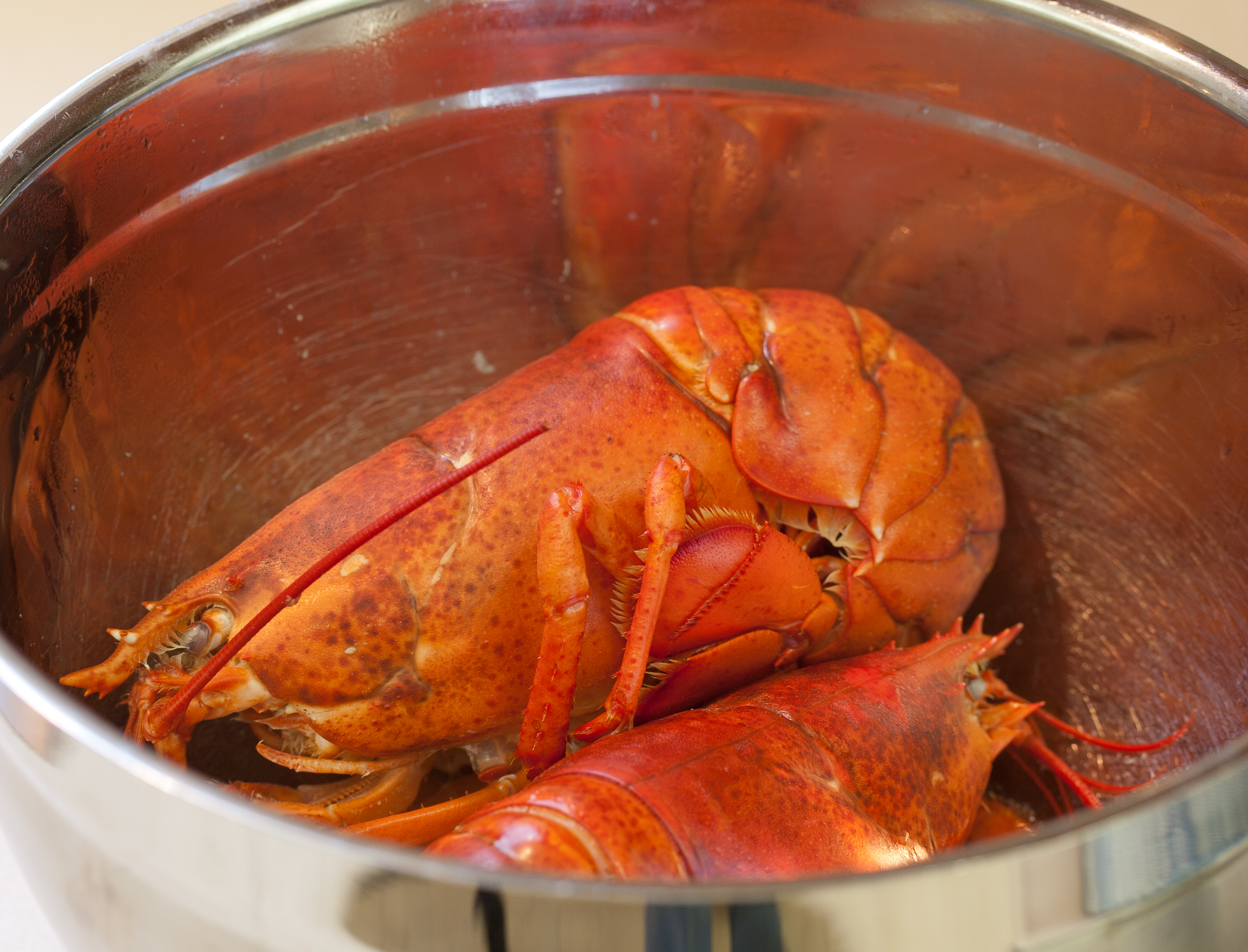
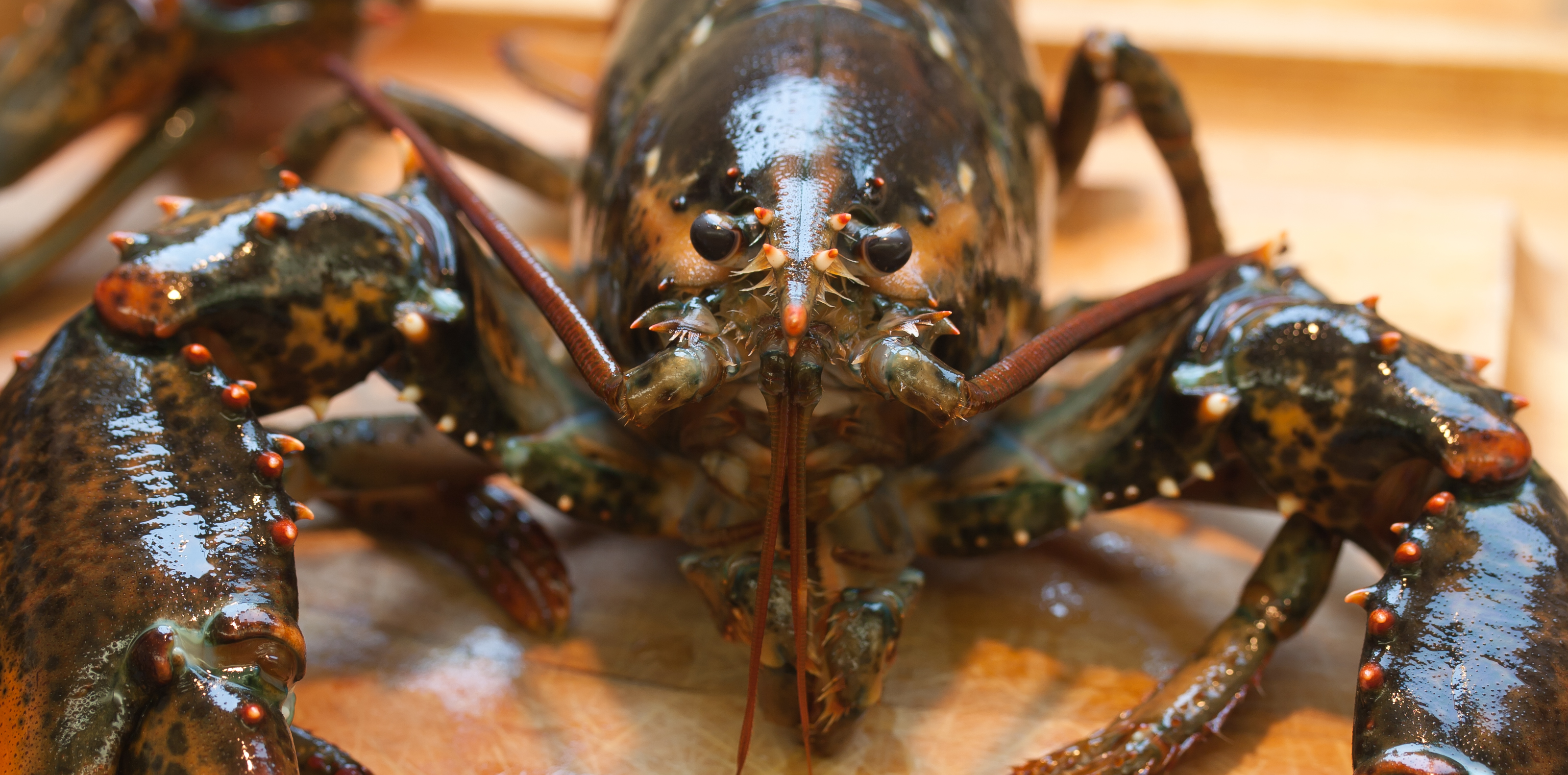
Live lobster

Fish soup or chowder in one of the true delights of an early winter evening this time of year. There are so many delicious soups that it is hard to list them: clam chowder – both New England and Manhattan – cioppino, fish stew, seafood gumbo, and on and on. Probably the most elegant of all, though, is bouillabaisse.

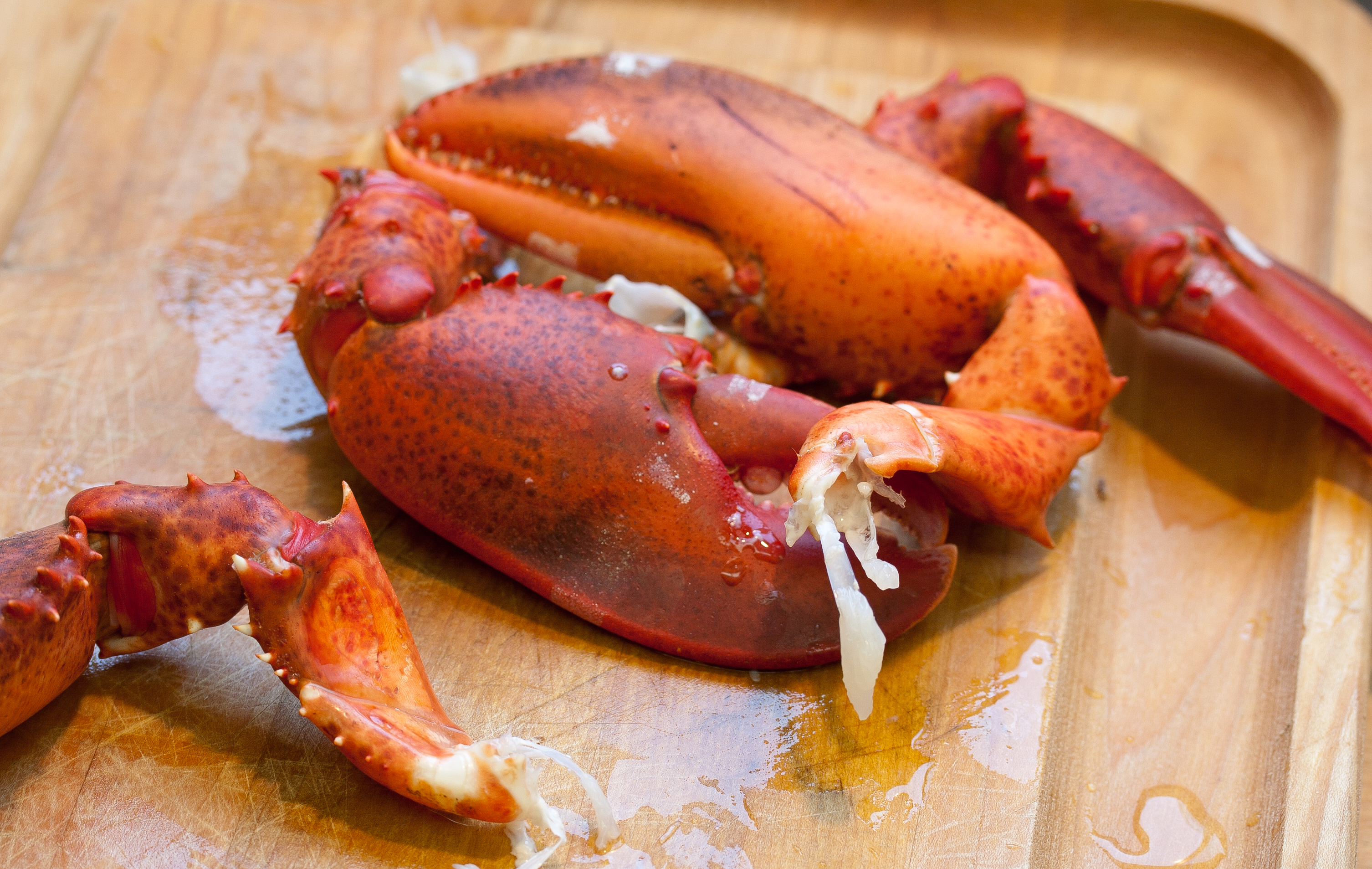
Cooked lobster

Lobster ready to go in the soup

In Volume I of “Mastering the Art of French Cooking”, Julia Child reminded us that bouillabaisse started out as a simple fish soup made from the catch of the day or from leftovers of the fish monger. These days, though, the soup has morphed into something special served at the best restaurants.  There are hundreds of variations of this French classic, and each is claimed to be more authentic than the next.

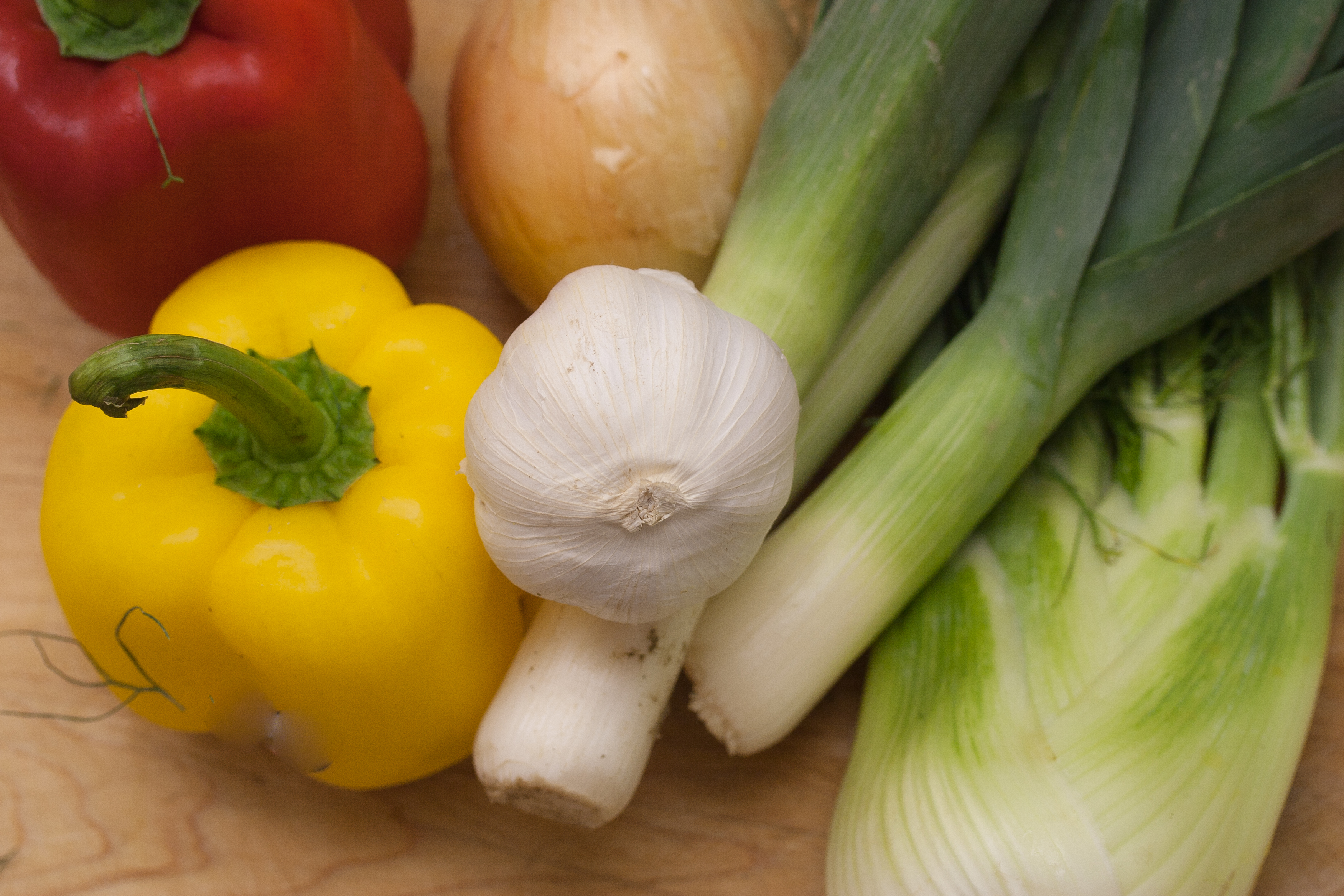
Fresh vegetables for the soup

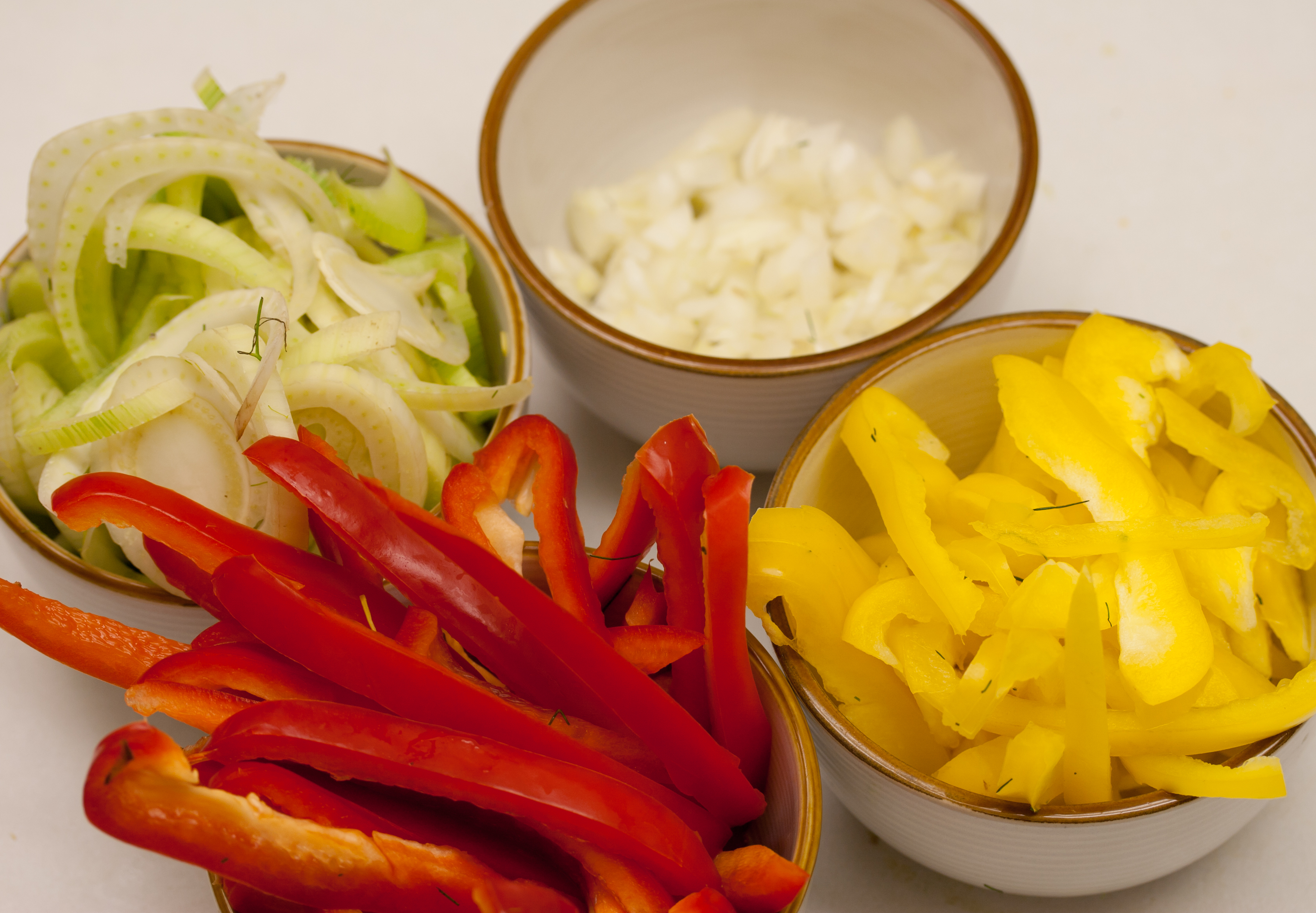
Prepared vegetables

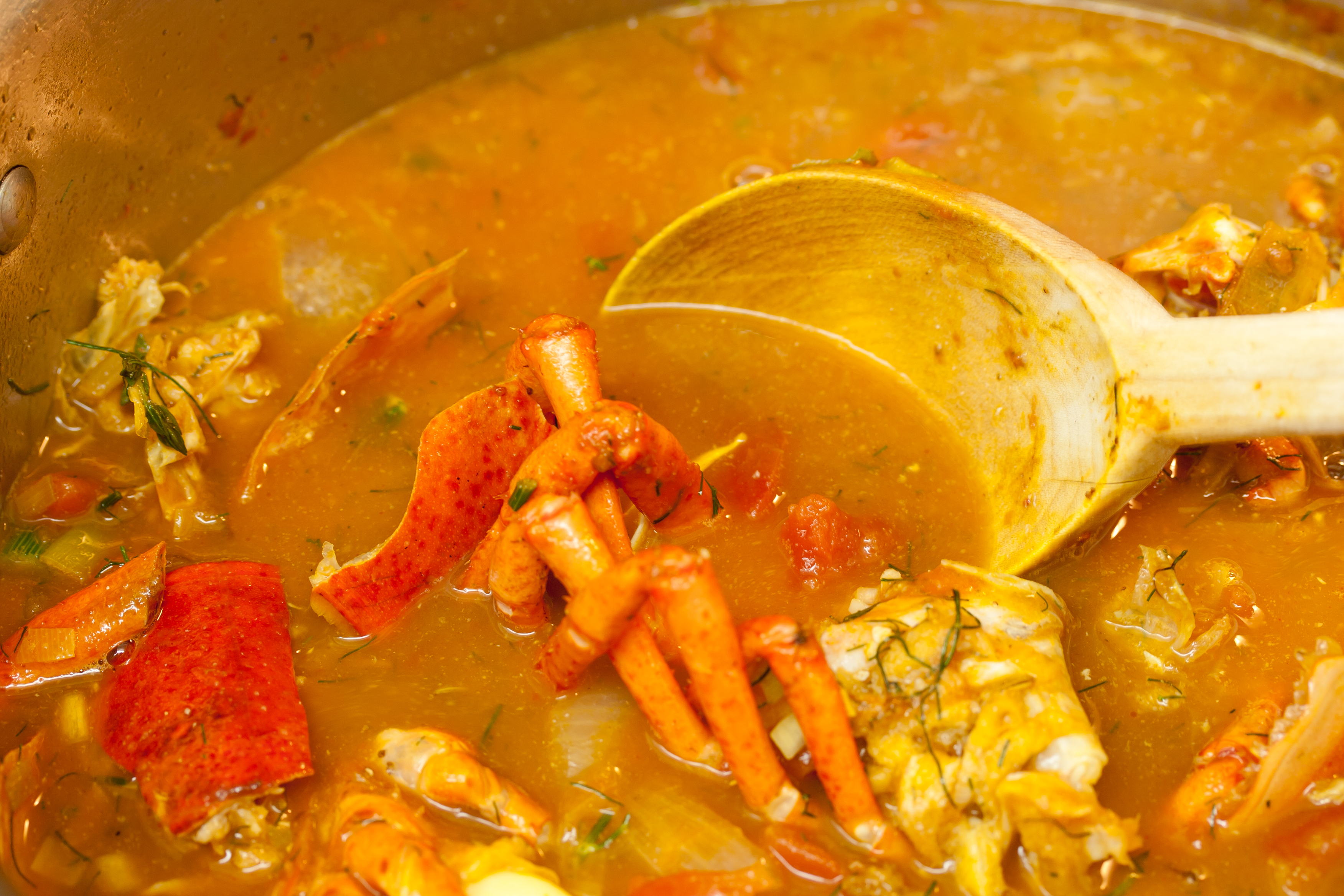
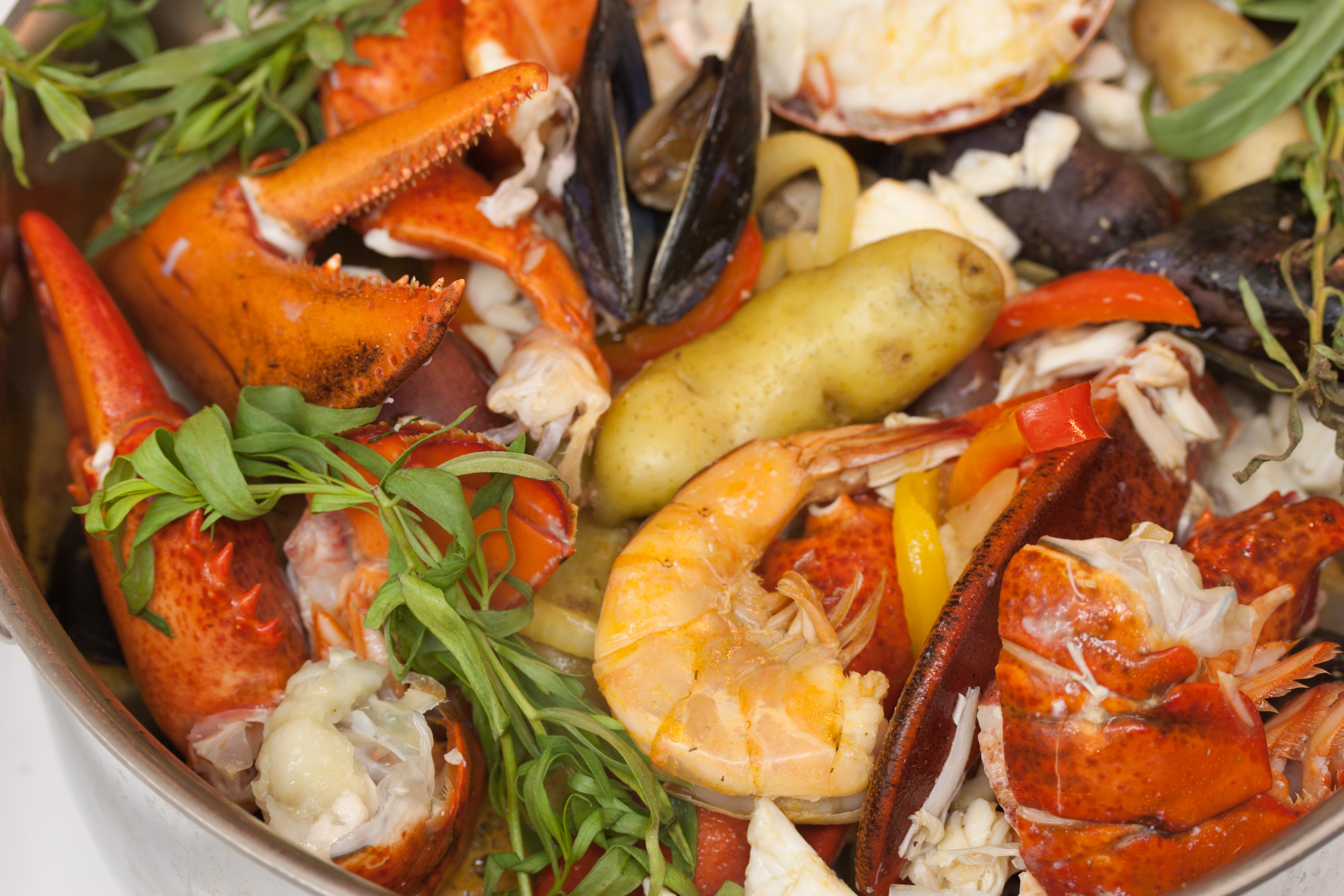
Whenever we visit our daughters, they always try to make something special and yet also play on one of our favorites. This year, we visited our daughter in Los Angeles during the Thanksgiving week. This is her version of bouillabaisse, based upon a recipe by Alfred Portale in his classic cookbook, “Gotham Bar and Grill Cookbook”, Doubleday, 1997. It is filled with lobster, clams, mussels, shrimp, and crabs. You can add any other fish you like, and squid is also a good addition.

Stirring the pot

Ready to be served to the hungry crowd

The recipe is lengthy, to say the least, but worth the effort and expense.

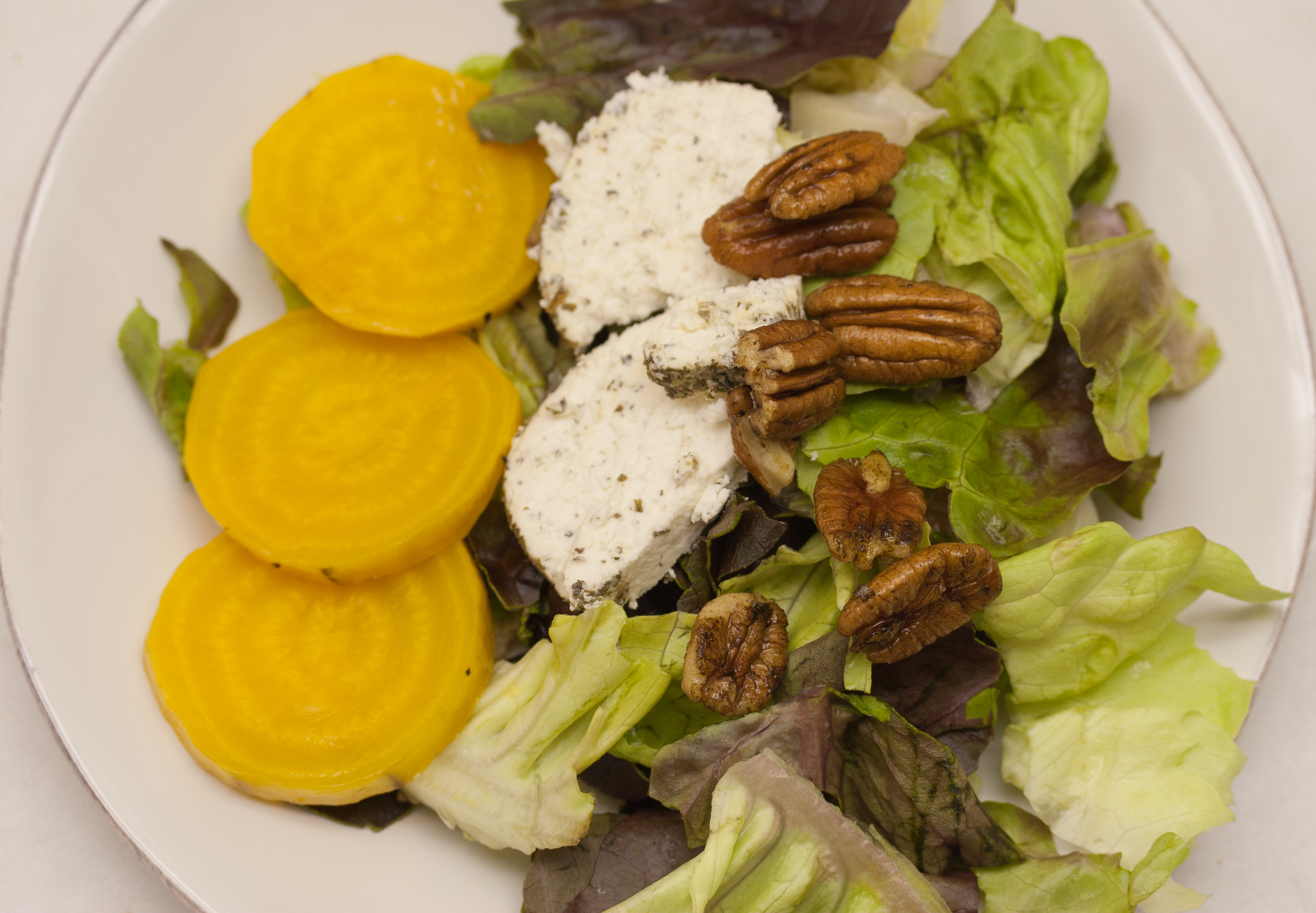
Serve it with a light salad. My daughter chose a salad of roasted golden beets, sugared pecans, and warm goat cheese on a bed of mesclun. She also served a crusty French bread for dipping after the shellfish and lobsters are all eaten.

Roasted beet salad with candied pecans and warm goat cheese

RECIPES

Ingredients

Bouillabaisse

2 live lobsters

1/2 Cup olive oil

4 Cups fish stock

1 medium onion, chopped

1/2 Cup chopped fresh fennel

1/2 Cup chopped leeks, whites only

1 head garlic, cut in half

2 teaspoons ground fennel seed

2 teaspoons ground white pepper

10 sprigs fresh thyme

2 sprigs fresh tarragon

1 star anise

1/2 teaspoon saffron threads

1/4 teaspoon sweet paprika

1/8 teaspoon red pepper

1 bay leaf

4 Tablespoons tomato paste

1 Cup canned tomatoes with juice

1 Cup dry white wine

2 Cups chicken stock

1 medium red bell pepper, seeded and thinly sliced

1 medium yellow bell pepper, seeded and thinly sliced

1/8 teaspoon saffron threads

24 large, unshelled shrimp

24 Manila clams

20 mussels

8 ounces lump crab meat

2 Tablespoons Pernod

Bouilli Butter

3 three-inch strips of orange zest

8 Tablespoons unsalted butter, softened

1 large garlic clove mashed to a paste with salt

1/2 teaspoon chopped fresh tarragon

Kosher salt to taste

1/2 teaspoon sweet paprika

1/4 teaspoon ground star anise

1/4 teaspoon ground fennel seed

1/4 teaspoon saffron

1/4 teaspoon cayenne

1/4 teaspoon white pepper

  1. Bring at 3 gallons (12 quarts) of salted water to a rolling boil in a large pot. Plunge the lobsters in the boiling water, cover, and cook for about 4 minutes.
  2. Remove the lobsters to a cutting board, twist off the large claws and return them to the pot for an additional 4 minutes.
  3. Separate the lobster heads from the tails. Cut the tails in half lengthwise and combine them with the cooked claws in a large bowl. Cover and refrigerate.
  4. In a large stockpot over medium heat, heat the oil and then add the lobster heads. Cook for about 10 minutes, stirring frequently, until the lobster heads are bright red. Then add the fish stock, onions, fennel, leeks, and garlic. Reduce the heat to low, cover, and cook for about 5 minutes.
  5. Add the fennel seed, white pepper, thyme, tarragon, star anise, saffron, paprika, red pepper, and bay leaf. Cook for 5 minutes. Then add the tomato paste, tomatoes, and wine. Raise the heat to high and cook until reduced to about half.
  6. Add the chicken stock and enough water, if needed, to cover the ingredients. Bring to a boil then reduce the heat and simmer uncovered for 45 minutes.  Remove from the heat for 20 minutes. Then strain into a large container, pressing the solids to extract the flavor.
  7. Cook the fingerlings in  a large pot of salted boiling water until tender, about 15 minutes. Set aside in the cooking water.
  8. In a large stockpot, heat the remaining oil over low heat. Add the onion and fennel, cooking until tender. Add the red and yellow peppers, cooking for another 15 minutes
  9. Add the strained stock. Bring to a boil over high heat. Drain the potatoes and add them to the boiling stock. Add the shrimp. clams, and mussels. Cover and cook for 3 minutes. Then add the cooked lobster with its juices and the crab.  Cook until all the shellfish open, about 3 minutes.
  10. In the meantime, prepare the bouilli butter. Blanch the orange zest in boiling water for 1 minute, drain, chop finely, and combine with paprika, star anise, fennel, saffron, cayenne, and white pepper. Add to the softened butter and combine throughly. Place the mixture on a plastic wrap, shape into a log, and chill for one hour in the refrigerator.
  11. Strain through a large colander into a large bowl. Transfer the shellfish and vegetables to a large serving bowl. Pour the strained liquid back into the stockpot and bring to the boil. Add Pernod and 4 tablespoons of the prepared bouilli butter. Then pour the soup into the serving bowl.
  12. Serve in large, deep soup bowls with plenty of good French bread for dipping.

Serves 6 to 8

Leave a comment

Filed under Food, Photography

SCHOOL LUNCHES AND BENTO BOXES – WHAT IS A MOTHER TO DO?

When I was growing up, my mother would make a peanut butter and jelly sandwich and put it in a brown paper sack along with some carrot sticks, an apple or orange, and some home-made cookies. When we moved to the suburbs the school had a lunch program. For twenty-five cents children could get a hot meal served in a war surplus Army metal divided tray. For a quarter you got a main dish like spaghetti, a salad, hot bread, fruit, dessert, and a little glass bottle of milk. All the kids loved lunch and lunchtime because the food was good, and it was a break from the classroom. Nobody threw anything away. The reason it was so cheap was that the meal was mostly made from “commodities” which the government had purchased from the farm subsidy program. Cheese, meat, chickens, eggs, butter, and produce were all part of the program, so it was possible to make a tasty meal from high quality ingredients. The other reason the lunches were so popular was that they were made by the “lunch ladies” who usually were mothers of some of the school children. Their kids were often your friends, and the cooks knew everyone’s name. In those days, nobody would dream of wasting food, especially in front of a mother who might tell your mother. Besides, the ladies would often make special treats like home-made potato chips to go with juicy hamburgers and all the trimmings.

My mom became one of those lunch ladies, and for many years she cooked meals which the children loved. Her fresh, hot rolls were famous as were her pumpkin pie and chocolate sheet cake. She loved “her children” and they loved her.

Then something happened. The commodity program shrunk dramatically. School boards across the country decided that they needed to cut payrolls and that they could provide lunches cheaper by contracting with big restaurant firms. The home-made lunches disappeared, and in their place came frozen TV-dinner-like meals that got heated up in the microwave. It was about the same time that a garbage barrel got placed at the end of cafeteria line where kids could dump their uneaten tray and head for the vending machines filled with soft drinks, corn snacks, and candy bars. It was about that time, too, when the decision was made to count ketchup as a vegetable to make sure of the “nutritional value” of the meal, and when childhood obesity began to inch up.

Now some schools have contracted with caterers who have the child choose from a menu of items that are popular with kids. The food is apparently better, but it is still not the solution to having the kids eat a healthy lunch.

In frustration, my daughter Carol decided to do something about it. Peanut butter sandwiches are often no longer allowed. Although she is not really concerned about some of the other food restrictions which have multiplied seemingly geometrically in the last few years –  mercury content of tunafish, dairy products in drinks, estrogens in soy products, gluten in bread – and on and on – she wanted to make a lunch her kids would eat, and so she turned to bento boxes.

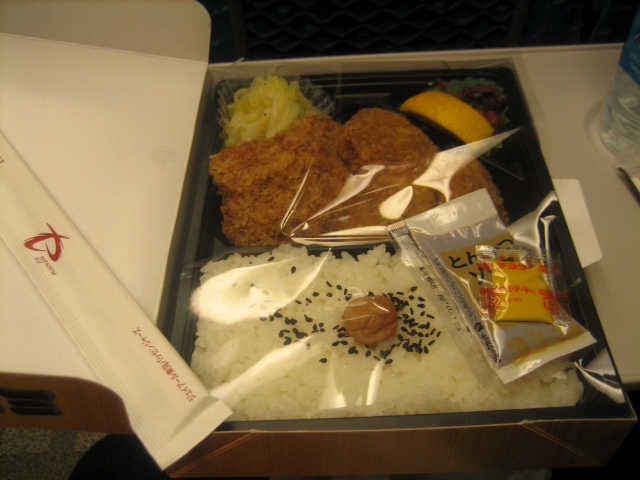
Sarah's authentic bento box from the Kyoto train station

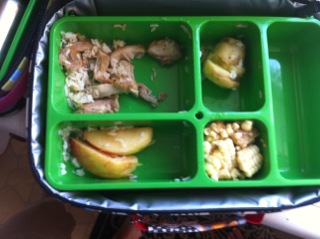
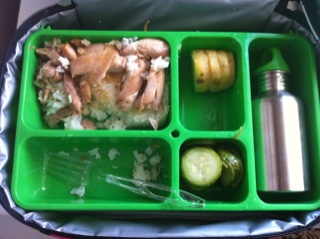
She picked up a copy of “The Just Bento Cookbook” by Makiko Itoh (one of this year’s top ten cookbooks on the Amazon list) and bought some bento boxes. Then she prepared this menu from the book: chicken kijiyaki, pan-steamed sweet potato, cucumber and turnip salad with lime, rice, and apple bunnies.

Carol's bento box in the morning

Being the good cook that she is, Carol made a point of seasoning the food to kid tastes and arranging it beautifully in the boxes.

Cameron's bento box in the afternoon

Ciara's bento box in the afternoon

Alas, with all that effort, she felt let down when her kids returned from school with their bento boxes in tow. Now, it’s on to another ploy to get her kids to eat a healthy lunch at school.

RECIPES (adapted from “The Just Bento Cookbook” by Makiko Itoh, published by Kodansha International, 2010)

Chicken Kijiyaki

1 chicken thigh, boned with skin on

1 Tablespoon rice wine vinegar

1 Tablespoon soy sauce

1 teaspoon sugar

  1. Pierce the skin of the chicken with a sharp fork and place it skin-side down on a hot non-stick skillet. Saute until the skin is crisp, turn over and saute the other side until done.
  2. Remove the chicken from the pan, clean the skillet with a paper towel and return the skillet to the heat. Add the mirin, soy sauce, and sugar, stirring until the sugar is melted and the sauce is hot. Return the chicken, turning it to coat it with the sauce. Remove the chicken from the pan, let it cool, slice it, and arrange it in the bento box.

Pan-steamed Sweet Potato

1 small sweet potato, peeled and sliced into 1/2 inch rounds

1/8 teaspoon salt

1 teaspoon honey

  1. Arrange the sweet potato slices in a single layer in a sauce pan. Add enough water to half cover the slices. Sprinkle with salt.
  2. Bring to the boil. Then cover and reduce the heat to low. Cook for about 10 minutes or until the sweet potato slices are tender. Turn once about half way through the cooking.
  3. Drain the water from the sauce pan, drizzle honey over the slices. Then let them cool completely before packing them in the bento box.

Cucumber and Turnip Salad with Lime

1 small cucumber

1/2 turnip, peeled

1 teaspoon salt

zest of 1 lime

1/2 Tablespoon fresh lime juice

  1. Cut the cucumber in half lengthwise and slice very thin half-moons.
  2. Slice the turnip into small, thin slices and combine with the cucumber slices
  3. Rub the vegetables all over with the salt. Let stand for 10 minutes until they are limp. Then squeeze out any excess water
  4. Add the lime zest and lime juice. Place in a covered container, and refrigerate overnight

Apple Bunnies

1 ripe, red apple

juice of 1 lime

1 Cup water

  1. Cut the apple into wedges and remove the core
  2. With a sharp paring knife, score the skin of an apple with the shape of a triangle, its base at the top of the wedge
  3. Again with the sharp knife cut through the apple just below the skin on either side of the triangle
  4. Gently remove the skin from the triangle
  5. Place the carved apple in the lime juice added to the water to prevent discoloration of the cut apple and so that the “ears” curl and

Leave a comment

Filed under Food, Photography

COMPETITION CHILI OR WHAT IS TERLINGUA REALLY LIKE?

Sunset on the Chisos Mountains

I just returned from a week at Big Bend National Park and the Terlingua International Chili Championship. The Big Bend of Texas is a magical place. It is a vast desert dotted with amazing island mountain ranges. The  Basin in the center of the Chisos Mountains is filled with alpine conifers and is also home to black bears, peccaries ( also know as javelinas), and mountain lions.  There are many oases out in the desert with cottonwoods turning golden this time of year. The Rio Grande carves deep canyons as it makes its eponymous big bend. In the spring, especially after a rainy winter, a huge diversity of wildflowers turn the harsh landscape into an unparalled garden.

View of the Cook Off

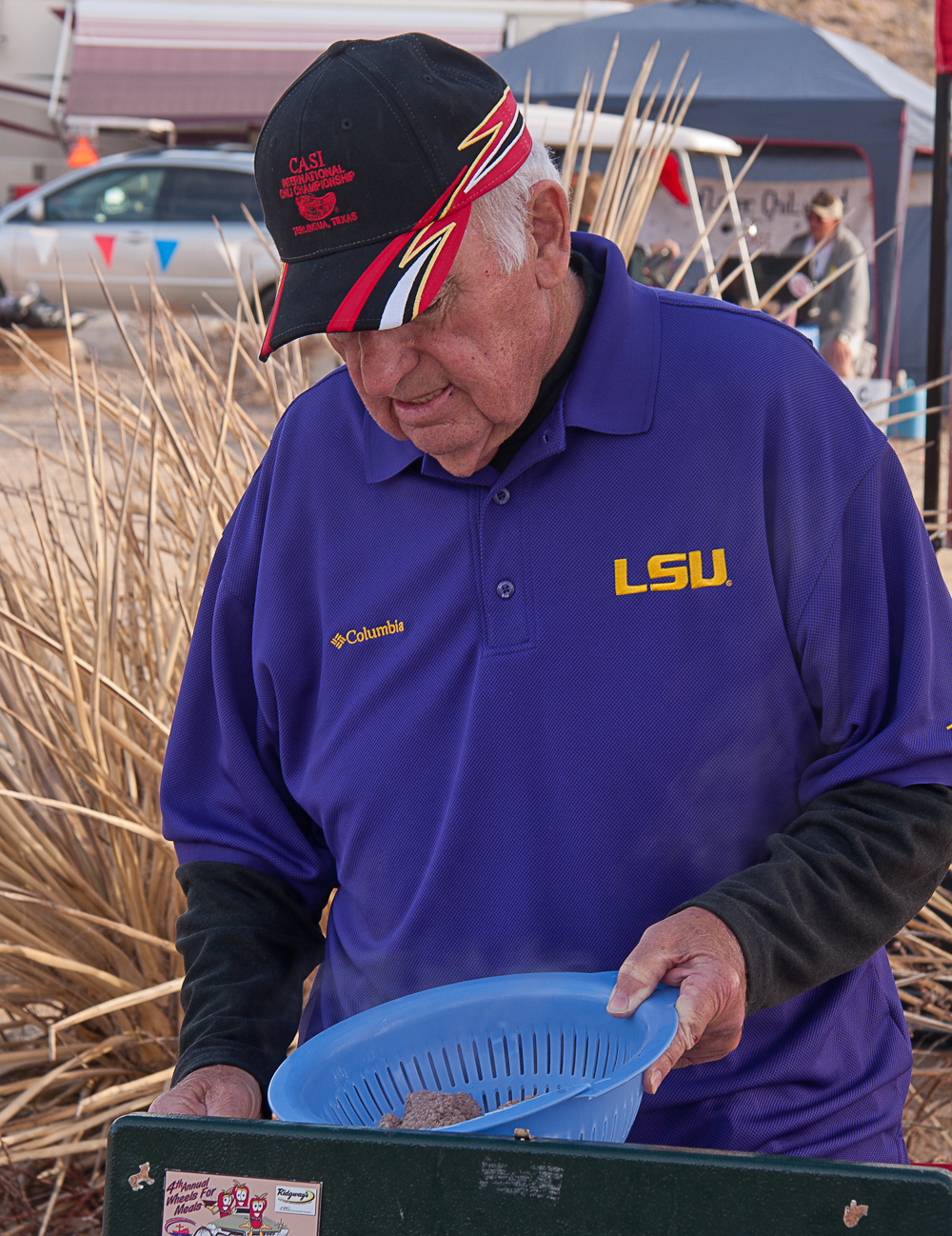
For many, all of this natural beauty is secondary. These are folks who are waiting for the annual Terlingua International Chili Championship. The cook off began in 1967 with some of the legends of chili cooking. Unfortunately as often happens in nascent organizations, there was a falling out with the division into two competing organizations, the Chili Appreciation Society Internationa (CASI) and the International Chili Society (ICS). For a time, the two organizations held competing contests just a short distance from one another – and in fact ICS continues to have a cook off “behind the store” where the original contests were held.  But ICS branched out across the country  and then began to have what it billed as the “World Championships” in California and other places. This year’s event was held in Manchester, New Hampshire.  Still, the CASI event continues to be the granddaddy of cook offs and remains true to its roots in Terlingua, a nearby semi-ghost mining town.

Reggie Graves cooking

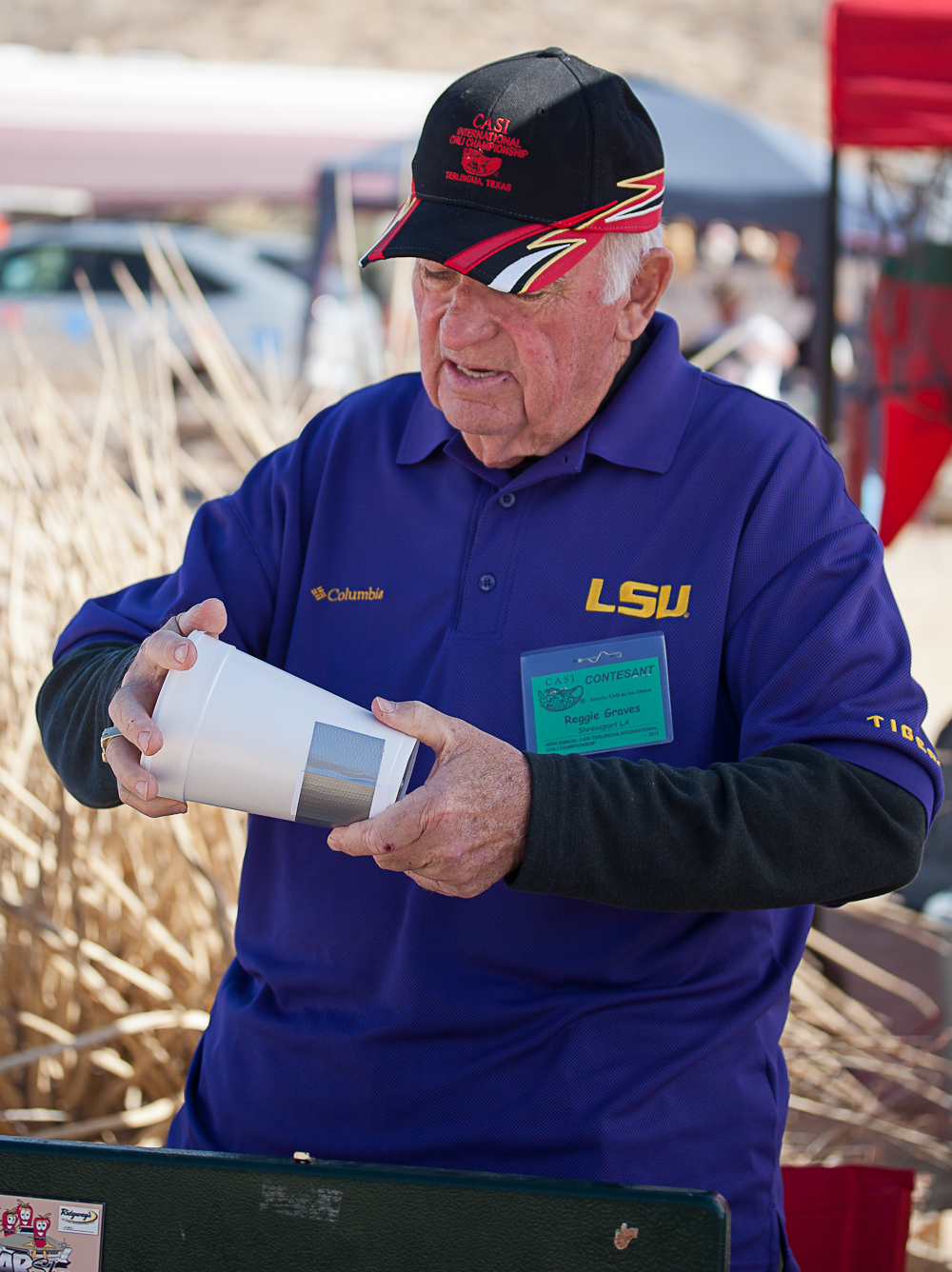
Susan and I attended the CASI cook off to see our old friend, Reggie Graves, who has returned to competitive chili cooking after a break of several years. Reggie is known by everyone at the contest because of his friendly spirit and because he cooks up a mean pot of chili. Everyone there seemed glad to have him back.

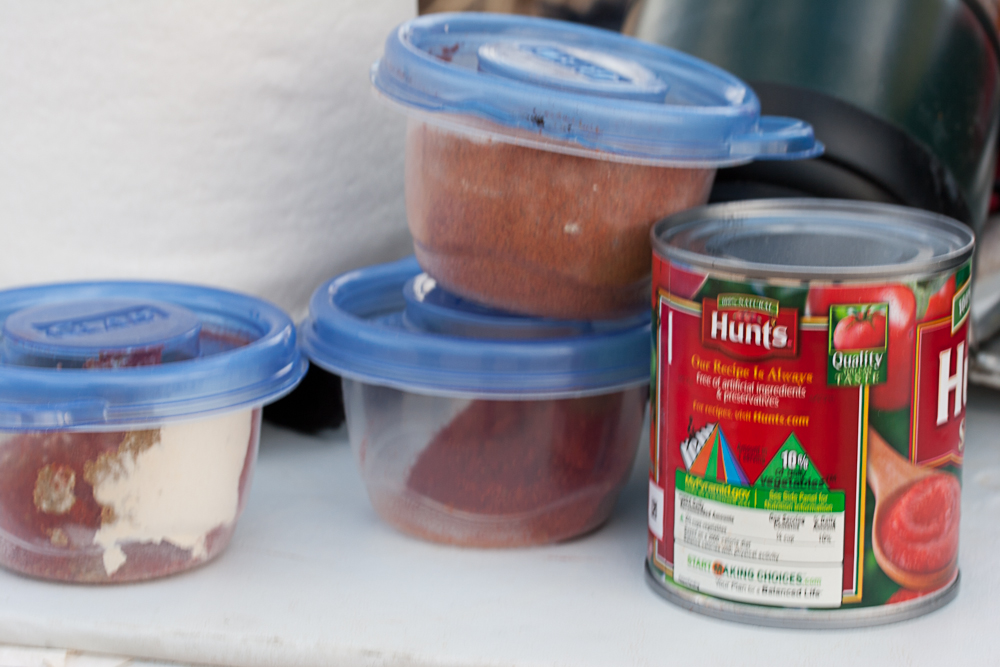
Tomato sauce and "dumps" ready to go

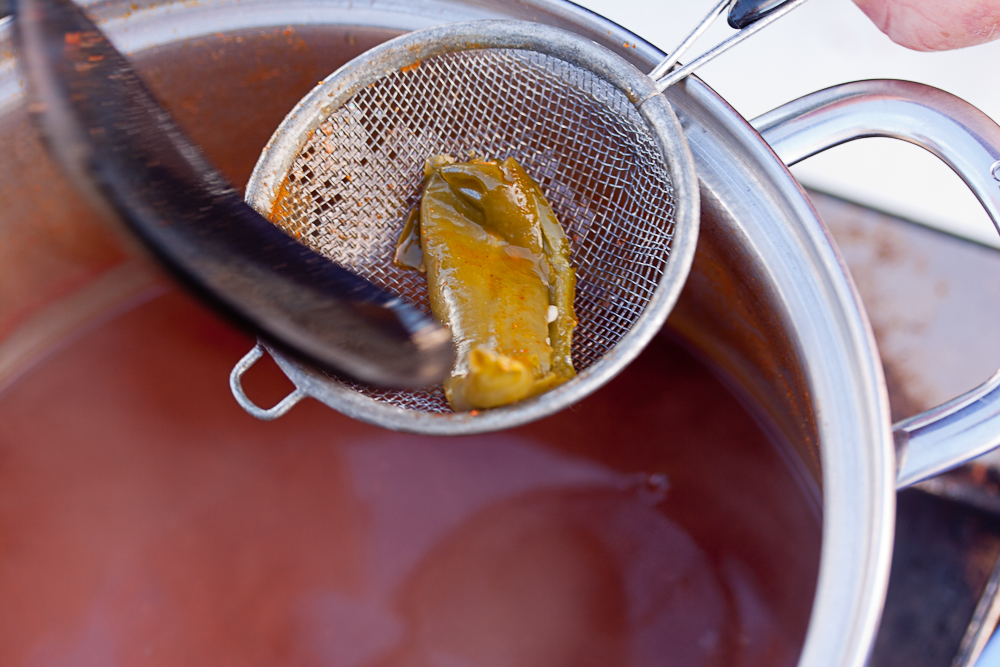
Squeezing the last bit of juice out a hot chile

This year marked the 45th cook off, and although most of the competitors are from Texas, many come from all over the United States and even other countries. This is truly the big-time, because cooks must qualify by winning enough points awarded in sanctioned local and regional contests throughout the year. There are hundreds of RVs and tents set up in little villages across the desert for days before the contests start. Everyone seems to be having a good time, and there is plenty of beer to go around. Lots of crazy hats and a few outrageous costumes. In the area known as Krazy Flats you may even see a fair bit of skin. Of course, the big event is the chili cook off on Saturday, but lots of other cooking contests are held earlier in the week: salsa, beans, wings, barbecue, and desserts among them.

Chili is a truly American dish (some say a truly Texas dish), and nearly everyone has his or her favorite recipe. More than that, nearly every home chili cook believes that his or hers is the best chili on the planet. Firehouse cooks achieve their fame with their chili, and grandmas make their chili for special family occasions. Some recipes call for tomatoes. Some recipes call for beans. Some recipes call for fresh hot peppers. About the only things that most chilis have are meat and chili powder.

Competition chili is different. More than one person has declared that competition chili is not intended to be the evening meal. Its purpose is to highlight the skills of the cook to use the essential ingredients, meat and chili powder, better than anyone else. One thing is certain: you will never find beans or tomatoes in competition chili. You will also not find chopped onions or minced garlic. One explanation for this is that the judging is supposed to be strictly anonymous, and if a bit of onion or a garlic clove should turn up in the competition cup, it might signal the identity of the cook.

Meat cooking in the sauce

Chili almost ready for "turn-in"

Competition chili recipes adhere to a common ritual with five basic steps: (1) preparation of the meat, (2) cooking and preliminary seasoning of the meat, (3) addition of chili powder, pepper, and other seasonings, sometimes called “the first dump”, (4) addition of fresh chili powder and other seasonings shortly before serving the chili, sometimes called “the second dump”, and (5) preparing and filling the styrofoam cup to be turned in to the judges. Of course, competitive chili cooks all have their own secrets for every step in the process. And fashions come and go. For example, years ago, winning was impossible without using carefully cubed chuck roast; now nearly everyone uses coarse ground beef. Some cooks use packets of ketchup from their favorite fast-food restaurant. Everyone has his or her favorite mix or mixes of chili powder. Some folks even throw in a little grape jelly! Who knows what other secrets are out there?

Speaking of chili powder, the stuff that competition cooks use is different from the ground chiles (note the spelling difference) used in Mexican and New Mexican cooking. Chili powder comes pre-mixed with different combinations of ground chiles, garlic powder, ground cumin, ground oregano, other ingredients, and usually silicates to keep it from lumping. There are also light and dark versions depending upon the chiles used and the degree of roasting. Most cooks buy their spices from a couple of spice merchants in the Fort Worth area and/or use bottled powders from Mexene, one of the sponsors of the event.

Jerry Hunt, 1990 Champion

Reggie preparing his "turn-in cup"

RECIPE

The recipe that follows is an amalgamation of those of several previous champions, including Jerry Hunt of Shreveport, LA, the 1990 champ. No secrets are included, and don’t expect to win even a local contest with this recipe, but it will give you a starting place if you want to become a competitive chili cook.

Competition Chili

Ingredients

2 pounds ground beef, coarse grind, 20% fat

1 Tablespoon cooking oil

1 Tablespoon onion powder

8 ounces unsalted tomato sauce

14½ ounces (1 can) beef broth

2 Tablespoons (divided) light chili powder

3 Tablespoons (divided) dark chili powder

1 teaspoon garlic powder

½ teaspoon salt

1 Tablespoon (divided) ground cumin

½ teaspoon red pepper

½ teaspoon black pepper

1 teaspoon chicken granules

1 teaspoon paprika

¼ teaspoon brown sugar

1 package Sazón Goya

  1. Brown the meat in the cooking oil, adding the onion powder while stirring
  2. When the meat has browned, add the tomato sauce and beef broth. Stir to combine and cook for 30 minutes.
  3. (First Dump) Combine 1 Tablespoon of light chili powder, 2 Tablespoons of dark chili powder, garlic powder, salt, ½ Tablespoons ground cumin, red pepper, black pepper, and chicken granules. Add the mix to the meat, stir to combine, and cook at a simmer for 1 hour.
  4. (Second Dump) Combine 1 Tablespoon of light chili powder, 1 Tablespoon of dark chili powder, paprika, ½ Tablespoon cumin, brown sugar, and Sazón Goya. Add the mix to the pot, stir well to combine and cook at a simmer, covered for 30 minutes. Add water and salt if needed.
  5. While the chili is cooking, prepare the “turn-in cup” by coating the inside with a little of the chili. Discard or taste the extra.
  6. Transfer some of the finished chili to the prepared “turn-in cup” and make your way to the judging stand.

1 Comment

Filed under Food, Photography

SCARY FOOD FOR HALLOWEEN

When I was growing up, Halloween parties often consisted of dunking for apples and playing pin the tail on the donkey. Some of the more adventurous moms created scary experiences: with blindfolds on, the kids stuck their hands in a bowl of cold spaghetti while being told it was “guts”. Another bowl was filled with “eyeballs” – actually peeled grapes. Those experiences now seem silly, and modern cooks come up with all kinds of creepy Halloween dishes.

A pan of ghost potatoes

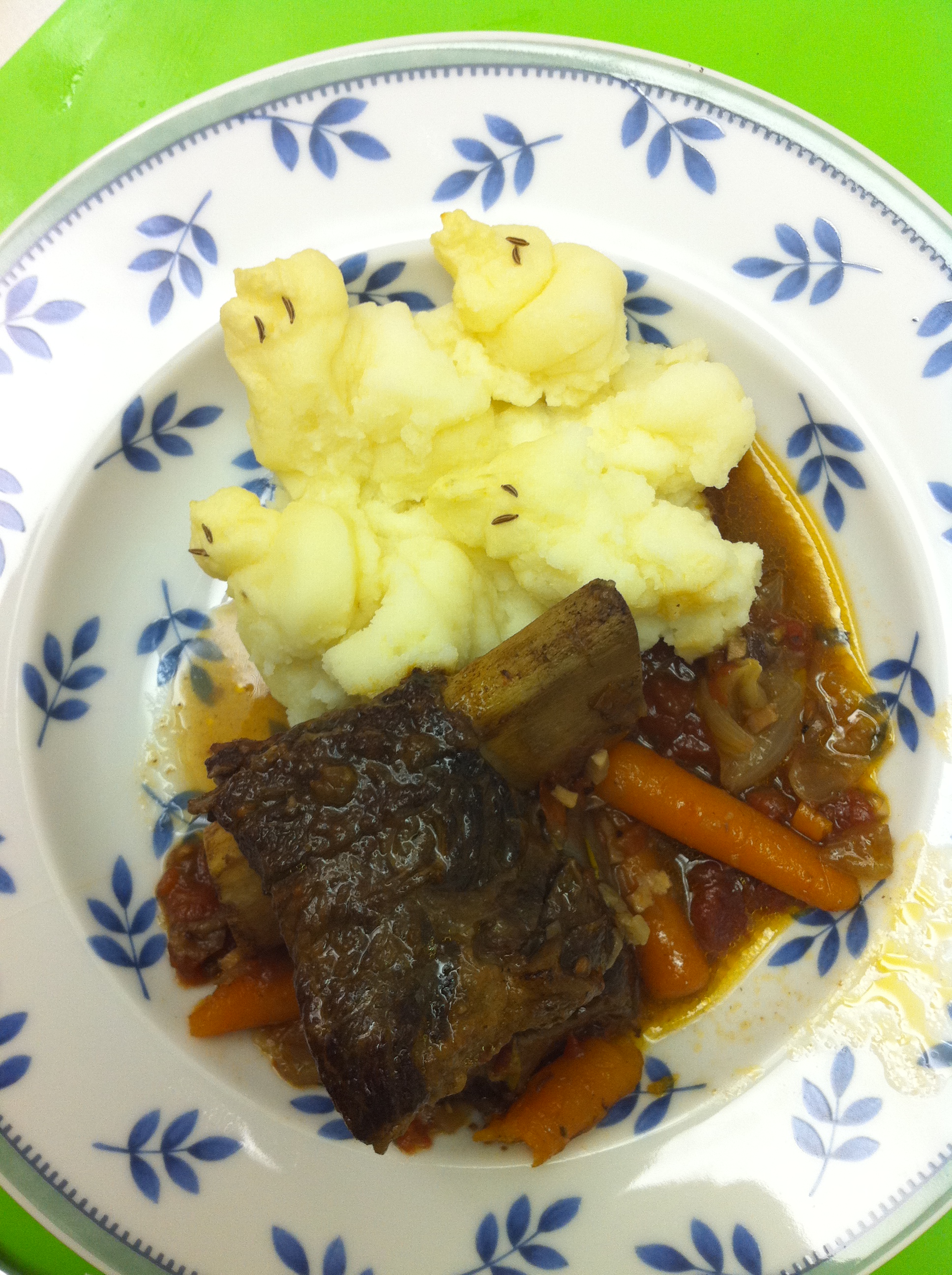
Skeleton ribs with ghost potatoes

As I’ve mentioned before, my daughter Carol goes out of her way to make sure that her kids eat a healthy and balanced diet. She does that with some creative cooking along with her full-time job and community responsibilities. Although not always up to her usual healthy-food standards, her Halloween meals turn into extravaganzas that almost make the requisite trick or treating an afterthought.There are several dishes which have become Halloween traditions. She has found the recipes in several sources including Epicurious.com, but she has put her own spin on them to make them hers.

Mummy frankfurters

Ghost cupcake

You, too, can go to the internet to find all sorts of Halloween recipes, but with a little thought and some creativity you can invent your own versions of scary food, keeping in mind the spider webs, ghosts, black cats, skeletons, vampires, and yes, even zombies that make up the modern cast of characters for a Halloween party.  To get your brain working, here are a few favorite recipes of Carol and her kids.

RECIPES

Ghost Potatoes  (Adapted from Epicurious.com and Gourmet, October 1995)

Ingredients

4 pounds potatoes, peeled and cubed

salt and pepper to taste

6 Tablespoons butter

1¼ Cups milk

3 large egg yolks

Caraway seeds

  1.  Place the cubed potatoes in a large pot of salted water. Bring to the boil and cook until easily pierced with a fork, about 20 minutes. Drain and rice with a food mill or potato ricer into a large bowl.  Season with salt and pepper. Keep warm.
  2.  While the potatoes are cooking, combine the butter and milk in a small saucepan and heat over a medium flame until the butter is melted.
  3.  Combine until smooth  the riced potatoes, butter and milk mixture, and egg yolks using an electric beater.
  4.  Spread about one-third of the mixture in the bottom of a 1-quart baking dish. Then transfer the remaining potatoes to a pastry bag fitted with a ¾ inch plain tip.
  5. Using the pastry bag, pipe individual mounds or “ghosts” on the bed of potatoes. Garnish each ghost with two caraway seeds for eyes. (You may need clean tweezers for this step)
  6. Bake in a preheated oven at 400° for 20 minutes or until the ghosts are golden

Skeleton Ribs

Ingredients

2 Tablespoons vegetable oil

4 pounds beef short ribs, bones in

1 medium yellow onion, peeled and cut in half

1 stalk celery, cut in thirds

1 large carrot, cut in thirds

2 whole cloves garlic, peeled

5 branches fresh thyme

2 whole bay leaves

2 Cups beef stock

1 Cup dry red wine

3 Tablespoons tomato paste

1 Tablespoon Worcestershire sauce

1 pound peeled baby carrots

1 Tablespoon corn starch dissolved in ½ cup water

1 Tablespoon fresh lemon juice

salt and pepper to taste

  1. In a heavy metal oven-proof pot with lid, heat the oil over a medium-high flame on the stove. Add the short ribs, turning them frequently until evenly browned on all sides. Remove the browned ribs to a plate.
  2. Add the onion, celery, and large carrot to the pot, Add more oil if necessary. Brown the vegetables over medium-high heat. Then return the ribs to the pot. Add the garlic, thyme, bay leaves, beef stock, red wine, tomato paste, and Worcestershire sauce . Bring to the boil. Then cover. Transfer to the middle of an oven preheated to 225°.
  3. Continue to braise for at least three hours or until the ribs are tender and the bones are loosened. Check from time to time and add more liquid if needed.
  4. About 40 minutes before you are ready to serve, add  baby carrots.
  5. When the meat and vegetables are thoroughly cooked, remove the pot from the oven. Discard the onion, celery, large carrot, thyme, and garlic. Transfer the ribs and baby carrots to a plate. Cover with aluminum foil and keep warm in the oven.
  6. Drain the liquid into a sauce pan, skimming any excess fat. Then bring to a boil over a medium-high flame and reduce to about one half. Correct the seasoning with salt and pepper and stir in the corn starch dissolved in ½ cup of water. Stir constantly until the sauce is thickened. Add the lemon juice and stir briefly.  Adjust seasoning with salt and pepper. Remove from the heat.
  7. Divide the ribs and vegetables into four servings and sauce with the thickened gravy

Mummy Franks

Ingredients

8 ounces refrigerated crescent rolls

8 large frankfurters

cooking spray

mustard

  1. Unroll the crescent roll dough and cut into ¼ inch strips
  2. Wrap the frankfurters in the strips of dough to resemble mummy wrappings. If you wish, leave one end of each frankfurter free for a “face”.
  3. Place the wrapped frankfurters on an ungreased baking sheet. Spray them lightly with cooking spray and bake them for 15 minutes in an oven preheated to 375°.
  4. Remove from the oven. Decorate, if desired, with dots of mustard for “eyes” and serve immediately.

Ghost Cupcakes

Ingredients

Two dozen of your favorite chocolate cupcakes

1 batch of homemade chocolate frosting or one 16 ounce can of prepared chocolate frosting

Ice cream, divided into 24 1½ inch balls and frozen until ready for assembly

16 ounces frozen whipped topping, thawed

48 miniature M&Ms

  1. Cut 1½ inch cone-shapes from the centers of the tops of the cupcakes. Reserve the cones.
  2. Frost the tops of the cupcakes, leaving the hole free.
  3. Place an ice cream ball in each of the holes in the cupcake tops, Top the balls with the cones and press the assembly down to set it in the hole
  4. Place the thawed whipped topping into a large zippered plastic bag. Cut off a corner of the bag and use it as a pastry bag to pipe whipped topping around the ice cream ball and around the base of the cone-shaped cake on top of the ice cream. Then pipe more topping to cover the cupcake and to make a peaked ghost head that covers the ice cream and cake cone.
  5. Decorate the ghost head with two M&Ms for eyes. Return to the freezer until ready to serve. If frozen solid, let the frozen cakes stand at room temperature for 10 minutes before serving.

1 Comment

Filed under Food, Photography

MAC AND CHEESE/SHRIMP AND GRITS

Macaroni and cheese is as American as you can get. Some authorities attribute its invention to Thomas Jefferson, although that is probably apocryphal. Jefferson did bring pasta machines to the United States, but the first known published recipe came from a Philadelphia chef in the early 1800s. Whatever the real origin, the dish soon became popular in Virginia and the rest of the South. It appeared on the tables of many Southern homes as well as hotel and railroad diner menus for many decades extending into the twentieth century. Early recipes called for boiling the macaroni for an hour or longer until it fell apart. Then it was combined with cheese, covered with bread crumbs, and baked into what resembled a sort of pudding. Honestly, it sounds pretty disgusting regardless of its popularity.

The "gold standard" - boxed mac and cheese

The real event for mac and cheese, though, came in 1937 near the dawn of the prepared food rage that still engages America’s home cooks. Kraft brought out a boxed version complete with dried macaroni and a powdered cheese sauce  that was billed as cheap, fast, and easy. The original recipe on the box called for bread crumbs on top and baking, but these embellishments were soon abandoned in favor of speed.  Boxed mac and cheese was immediately popular and became more popular during the Second World War. After the war, when the whole style of home cooking was changing, it became a real favorite, especially with kids.

I remember loving mac and cheese as a child – pouring the macaroni out of the box into the boiling water, waiting for it to cook, draining it, and adding the powder from the little envelope along with some milk and butter. My grandkids still love that version, and when all else fails to please their finicky kid-type appetites, macaroni from the box is sure to appeal to them. For me during college days, boxed macaroni was a standby along with ramen noodles. Maybe that’s why and when it lost interest for my more grown-up tastes.

These days, restaurants including some very high-end places in our town are bringing out their fancy versions of this old-time favorite. You may find mac and cheese made with bleu cheese, green chiles, goat cheese, curly pastas, mushrooms, and even truffles.

Shrimp and artichoke mac and cheese coming out of the oven

Another favorite comfort food, especially if you are a Southerner or even if you have only visited the South, is shrimp and grits. This delicacy of Southern cooking has a lot in common with macaroni and cheese – a smooth creamy base of starch, oozing, gooey cheese, and maybe a little crust on the top to give it just a bit of bite.

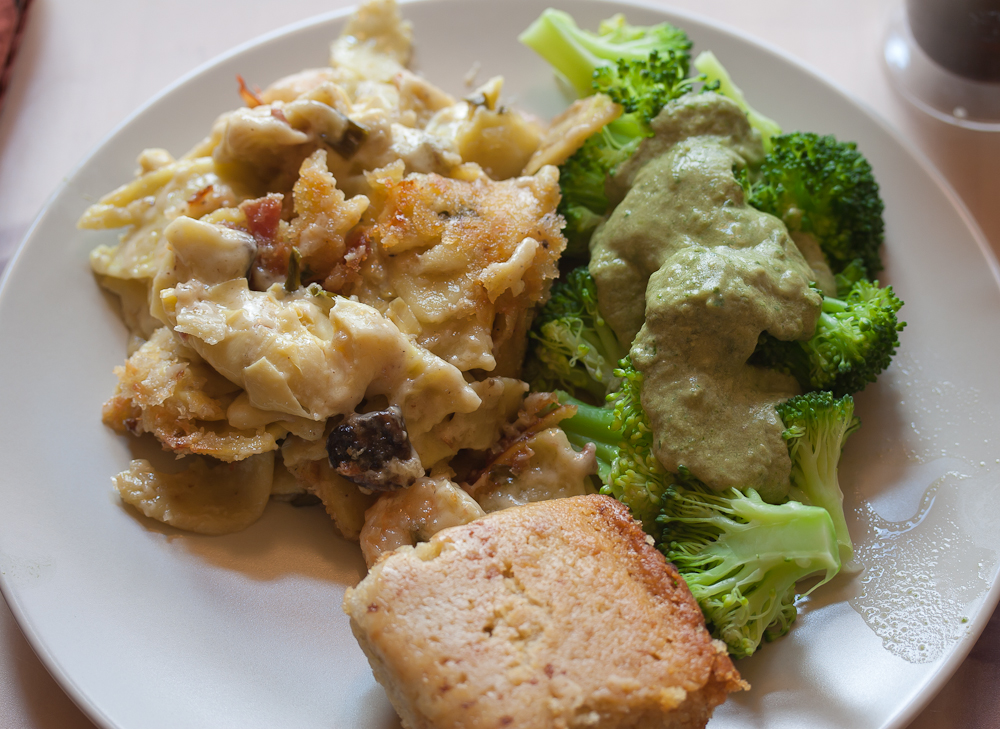
Served with broccoli, broccoli puree and cornbread

A couple of weeks ago, I was wondering what I could do to liven up the mac and cheese that I was making for dinner. What I came up with is this riff on shrimp and grits. It is guaranteed to be gooey and loaded with cheesy flavor. The shrimp, bacon,  mushrooms, and artichokes make it a lot more substantial than the old-timey product made straight out of the box. I doubt that my grandkids would like this version, but I certainly did.

SHRIMP AND ARTICHOKE MACARONI AND CHEESE

You can use regular elbow macaroni for this dish, but it is more interesting to use different shapes or colors that you have been wanting to try. I have used foglie di carciofo, a flat, round pasta flavored with dried artichoke. It seems perfect for the dish,  but any other would do.

Ingredients

butter

panko

12 oz (3 cups) dried pasta

5 oz (4 strips) thick-sliced bacon

5 medium (4 oz) cremini mushrooms, sliced

14 oz (1 can) or fresh or frozen artichoke hearts, quartered

1 lb raw shrimp, peeled

4 Tablespoons unsalted butter

4 Tablespoons flour

1½ Cups milk

½ Cup  cream

2 ounces Cheddar cheese, grated

2 ounces Monterey jack cheese, grated

4 ounces Swiss cheese, grated

4 ounces sour cream

salt and pepper to taste

grated Parmesan cheese

melted butter

  1. Generously butter the inside of a two-quart baking dish. Coat the insides with panko and set aside. Reserve additional panko for the top.
  2. In a large pot, bring 2 quarts of salted water to the boil. Add the pasta and return to the boil. Cook the pasta for 12 minutes or until al dente, stirring frequently. Drain and return to the pot. Set aside.
  3. In a 9 inch heavy-bottomed skillet over medium heat, sauté the bacon until not quite crisp. Remove the bacon and drain it on several thicknesses of paper towel. Chop coarsely and set aside.  Then add the mushrooms to the still hot skillet and sauté in the bacon fat until lightly browned. Add the artichoke hearts and shrimp and continue to sauté until the shrimp are pink – about 3 minutes. Set aside.
  4. In a medium sauce pan over medium heat, melt the butter and add the flour, stirring constantly to make a light roux. Be careful not to brown. Add the milk and cream and stir constantly until thickened.  Add the grated cheeses and sour cream and continue to stir until the cheeses are completely melted.  Pour the mixture over the reserved pasta. Add the mushroom, artichoke, and shrimp mixture and stir gently to combine.  Adjust the seasonings with salt and pepper.
  5. Transfer the mixture into the prepared baking dish, top with additional panko and  grated Parmesan cheese. Baste the top with melted butter.
  6. Bake in the top third of a preheated oven at 350° for about one hour or until the top is golden brown. Transfer to a cooling rack for about 5 minutes and then serve immediately.

Yield: Serves 4 to 6 generously

2 Comments

Filed under Food, Photography

RICOTTA

Ricotta is an Italian concoction. The term means “cooked again” because the original version was made from the whey which was the byproduct of the making of other cheeses. The whey would be heated, acidified, and allowed to curdle before straining into a thick semi-soft curd which was used to enrich many other dishes. Ricotta made from skim milk is common on grocery shelves, but now even the Italians often make it from whole milk and even cream. The result is a delicate cheese that resembles fresh farmer’s cheese or cream cheese. There is really no comparison between store-bought and home-made ricotta. You can use vinegar, lemon juice, or other acids to form the curd, but to my taste, lemon juice is preferred because it imparts a fruity tang that enhances the delicacy of the ricotta.

Ingredients for ricotta

Heat the milk, cream and salt mixture to 190°

Here is a recipe from Sarah, who used hers for a dish in one of her pop-up dinners. Using her recipe, you will be amazed at how easy it is to make your own ricotta and how much better tasting it is. You may never buy it again.

Once you have made your ricotta, the next decision is what to do with it. First off, dip in a spoon and taste it. That should give you some ideas. The hazard with that approach is that you will be tempted to eat the whole thing. The silken texture, subtle lemon flavor, and the sweetness of cream should all come through. These qualities make fresh-made ricotta a perfect foil for fresh fruit or a fruit compote. Even thick sauces like chocolate or butterscotch are excellent complements. Naturally, one thinks of using it in a lasagna, but it would be a shame to overwhelm the flavor by store-bought noodles and the thick marinara sauce so common in lasagna today. Consider using homemade pasta along with a light saucing of the ricotta alone or with spinach. Go light on the cheese as well.

Strain the clabbered mixture through cheesecloth

Ricotta pancakes are a perfect choice for highlighting the delicate flavor of the fresh stuff. The following recipes use the whole batch you have made: part of it going into the pancakes and part of it going into the blueberry sauce to serve on top. The recipes should make enough pancakes to serve four people. Leftover batter – if there is any – can be used to bake more pancakes which, after cooling, should be separated with waxed paper, wrapped tightly in plastic and foil, and frozen for another day.

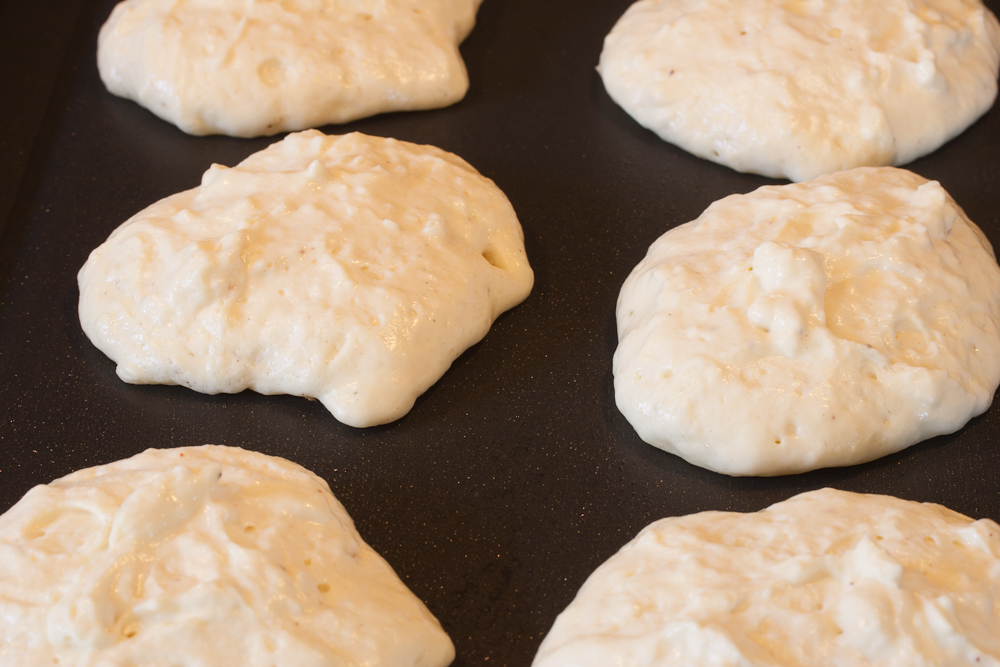
Pancakes on the griddle

RECIPES

Ricotta

Ingredients

3 Cups whole milk                                                                                                                                                                                                                                                                                                                             1 Cup cream                                                                                                                                                                                                                                                                                                           1 tsp salt                                                                                                                                                                                                                                                                                                                 3 Tbsp fresh lemon juice

  1.  Combine the milk, cream, and salt in a two-quart saucepan. Heat to 190°
  2.  Remove from the heat. Add  the lemon juice, stirring gently 2 or 3 times to completely mix. Let rest for 5 minutes.
  3.  Line a colander or large strainer with dampened cheesecloth or a moist, clean kitchen towel. Place the colander on a large bowl to catch the whey.
  4.  Pour the coagulated milk/cream mixture into the colander and let it drain for one hour. Transfer the drained ricotta to a bowl, cover, and refrigerate.

Yield: About 12 ounces (1½ cups)

Notes:

1. You may substitute an equal volume of vinegar for the lemon juice.                                                                                                                                                                                                  2. You can save they whey and repeat the process for authentic old-time ricotta.                                                                                                                                                                               3. More salt helps preserve the ricotta if you choose to use it at a later time.                                                                                                                                                                                       4. The longer you strain it, the thicker and creamier the ricotta gets and then even thicker and   creamier with chilling

Pancakes after turning

Ricotta Pancakes

Ingredients

2 large eggs, separated

1 Cup buttermilk

1½ Tbsp sugar

1 Cup (8 oz) fresh-made ricotta

¾ Cup all-purpose flour

½ tsp baking soda

½ tsp baking powder

zest of 1 lemon

⅛ tsp nutmeg

¼ tsp salt

  1. In a medium bowl, whisk together the egg yolks, buttermilk, sugar, and ricotta.
  2. In a separate bowl, combine the dry ingredients: flour, baking soda, baking powder, lemon zest, nutmeg, and salt
  3.  In a third small bowl, beat the egg whites until they form stiff peaks.
  4.  Pour the dry ingredients into the wet ingredients and whisk until combined.
  5.  Fold in the egg whites.
  6.  Drop the batter by 1/4 cupfuls onto a preheated, lightly greased griddle. Bake until bubbles form and burst on the tops. Then flip and bake on the other side until both    sides are golden.
  7.  Serve immediately with the blueberry sauce.

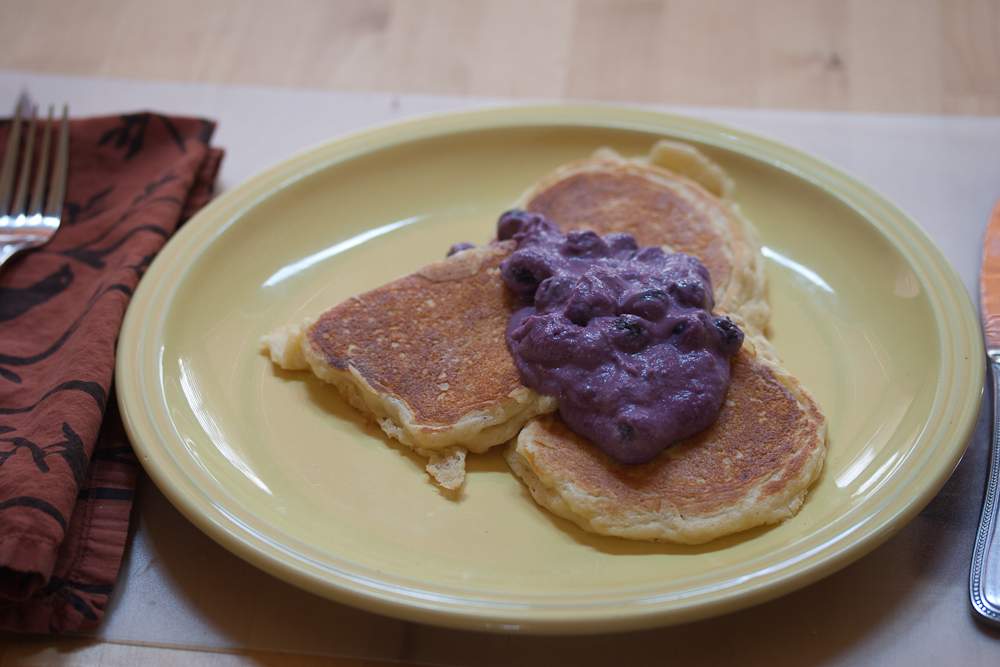
Pancakes with blueberry sauce

Fresh Blueberry and Ricotta Sauce

Ingredients

1 Cup fresh blueberries

1 Tbsp fresh lemon juice

⅛ tsp salt

¼  Cup confectioner’s sugar

1 Tbsp cornstarch

zest of 1 lemon

½ Cup (4 oz) fresh ricotta

½tsp vanilla extract

1 Tbsp limoncello (optional)

  1. In a small  saucepan, combine the blueberries, lemon juice, salt,  sugar and corn starch. Heat gently, stirring
    continuously until the cornstarch thickens and the berries begin to release
    their juices.
  2. Stir in the ricotta, vanilla extract,  and limoncello, stirring until just warmed.
  3. Ladle two or three spoonfuls on three pancakes.  The sauce is best if served immediately while still warm, but you can make it
    ahead and chill. Let come to room temperature or warm gently before  serving.

Leave a comment

Filed under Food, Photography

TOUCH OF GRACE BISCUITS

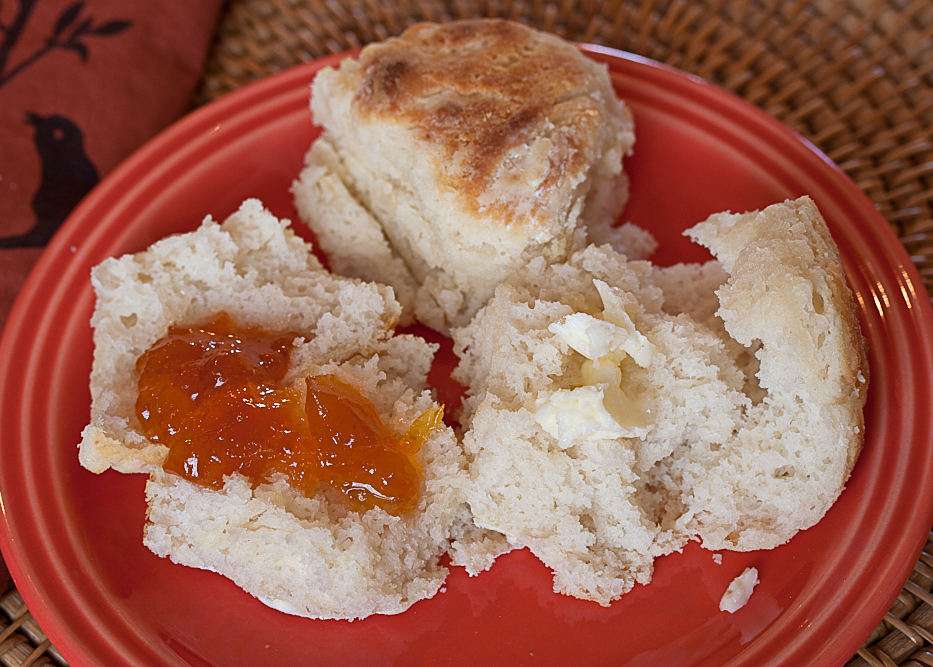
A few years ago, my wife Susan and I compiled a family cook book based upon the hundreds of hand-written index cards in our jammed recipe box. We also asked our children to send us their favorite recipes. Carol, our older daughter, sent us a recipe for “Touch of Grace Biscuits” which she described as one of her favorites. Although she was born in the Mountain West, she grew up in the Deep South, so her palate often favors Southern tastes.  She has perfected Touch of Grace Southern biscuits. There are lots of recipes for biscuits, but few of them seem to rise up tall with a flaky inside.  These definitely do. This recipe is one of Carol’s specialties that she gleaned from a couple of Southern cookbooks.  There are various explanations for the “touch of grace” title, but they all trace back to the noted Southern food expert and cook book author, Shirley O. Corriher. According to Bernard Clayton in his encyclopedic “Complete Book of Breads”, six Atlanta cooks including Shirley Corriher were gathered together by Nathalie Dupree to create the best Southern biscuit from a large collection of recipes. Ms. Corriher offered up her grandmother’s recipe which she described as made with a “touch of grace”. Another version says that the source was a hand-written note in the margin of the recipe. Ms. Corriher herself describes the origin of the name in her own book, “CookWise: the Secrets of Cooking Revealed”. Unable to duplicate her grandmother’s biscuits, Shirley Corriher asked, “Nannie, what did I do wrong?” to which her grandmother replied, “Honey, I guess you forgot to add a touch of grace.” Whatever the real story of the name, these biscuits remain popular and appear in many a Southern baking book.

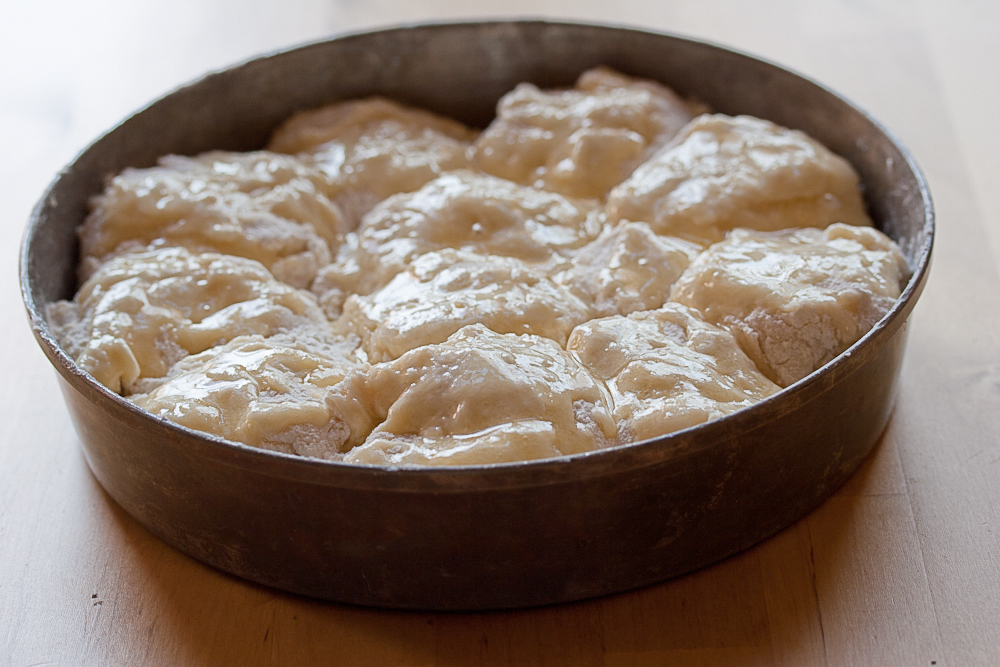
Touch of Grace Biscuits ready for the oven

One of the key ingredients for the recipe is Southern self-rising flour. Most Southern bakers insist that the only flour to use is White Lily flour.  To the dismay of many, the original mill in Knoxville, TN closed in 2008 after operating since 1883.  Production was shifted to two mills in the Midwest by the new owner, the J.M Smucker Company, who insists that the new product is indistinguishable from the old. Blind testers refute that statement and have demonstrated that they can tell the difference. Some Southern home bakers resorted to hoarding the old stuff when they learned of the plan to relocate the mill.  Apparently, there were many reasons that White Lily was different from the flour that you buy at grocery stores outside of the South. Perhaps most importantly, White Lily was made from softer Southern wheat with only about 8 percent protein while Northern and Midwestern flours are milled from wheats with 10 to 12 percent protein. The flour was supposed to be ground more finely, bleached with chlorine rather than other bleaching agents, and sifted several times before packaging. Even without the original White Lily flour, Touch of Grace biscuits are light and delicate. I can only wonder how much better they would be with White Lily.

Touch of Grace Biscuits fresh from the oven

Here is the recipe as my daughter sent it to me. The ingredients are exactly the same as the original by Shirley Corriher with some minor modifications in the method. The dough will be much softer than usual biscuit dough. That is why you don’t cut the biscuits but rather form them into rough balls and dredge them in all-purpose flour before putting them in the pan. Crowding them will make them rise higher.

TOUCH OF GRACE SOUTHERN BISCUITS

Ingredients

1½  Cups              sifted self-rising flour

1/8 tsp                  baking soda

1/3 tsp                  salt

1 Tbsp                   sugar

3 Tbsp                  shortening (not butter)

1¼  Cups             buttermilk

1 Cup                    all-purpose flour

2 Tbsp                  butter, melted

  1. Preheat oven to 475º and spray round cake pan with cooking spray
  2. Combine self-rising flour, soda, salt, and sugar  in large mixing bowl. Work in shortening using a pastry blender until the mixture is a pea-sized meal.
  3. Stir in buttermilk  and let stand for 2 to 3 minutes. The dough should be soft and wet.
  4. Pour the all-purpose flour into a pie pan.  Spoon a lump of the dough into the flour, working and shaping it into a soft round. Shake loose any extra flour and place the round in the greased cake pan, continuing to shape and place biscuits until the pan is full. Have the biscuits touch one another as you fill the pan.
  5. Brush the tops of the shaped biscuits with the melted butter and bake for 15-20 minutes until the biscuits are a golden brown.  Serve immediately.

Yield: About one dozen biscuits

Ready to eat with butter and jam

As an aside, self-rising flour is a fairly standard Southern ingredient which may be relatively un-used or even hard to find in other parts of the country. Exactly what is it? Self-rising flour is a regular flour that has been pre-mixed with baking powder. Because of that, you should not use it when a recipe calls for yeast as a leavening agent. If Southern-style self-rising flour is not available, you can make your own by sifting together 1 cup all-purpose flour, ½ cup “instant” flour (Wondra is a popular brand which contains a mixture of wheat and malted barley flavors) and 1½ tsp baking powder.

Leave a comment

Filed under Food, Photography

GARDEN AND FOOD PHOTOGRAPHY

This last week I spent intensive hands-on study time with the well-known English food and garden photographer, Francesca Yorke. She led a course at the Santa Fe Photographic Workshops for eight of us interested in gardens and food. The course made a sensible progression from making images of flowers and plants along a city street, through visiting some interesting and different gardens, then photographing a bustling farmers market and a garden store, and finally doing some hands-on cooking and photography with Chef John Vollertsen (Johnny Vee) at his Las Cosas Cooking School.

Wildflower on Canyon Road

Francesca Yorke is a superb teacher who is able to give frank and honest criticism without intimidation or belittlement. She has shot some of the most famous gardens and worked with some of the most well-known  food personalities in England, so her experience is rich. Each day she showed us some of her best images, and that provided a wonderful learning experience and inspiration.

Broccoli

Our first visit was Santa Fe’s famous Canyon Road where we had the opportunity to shoot images of flowers in planter boxes, wildflowers growing in vacant yards, or interesting leaves and berries on shrubs and trees along the sidewalks. Although things had begun to fade in anticipation of the autumn, there was still an abundance of color for all of the student photographers.

Bread and butter at the farmers market

For a couple of days, we traveled to several gardens in the city and in Albuquerque. Grasses were in abundance, there was interesting statuary aplenty, and some of the leaves had begun to change into the radiant hues of autumn – reds, yellows, and dappled oranges. In one garden, there was a menagerie of piglets, sheep, goats, and chickens so that there were lots of action and human interest photo opportunities for those of us who were getting a little bored with flowers.

Roasted tomatoes

The farmers market was a busy place with vendors selling all sorts of fruits and vegetables, chili roasters going full blast, and lots of people who made for terrific photo opportunities. The garden store, too, was a great place for photos not only of flowers, but also of  pots, watering cans, prowling insects, and tools.

Artichoke ravioli with lemon-Parmesan cream sauce

Every day we took time out for lunch at restaurants which Francesca had chosen to reflect good cooking and good eating. Then she took us to her studio where we practiced food styling with a cornucopia of items she had purchased at the local store. We used her collection of bottles, jars, cutlery, bowls, plates, and linens to try our hands at creating photo images that would be suitable for a magazine article or for inclusion in a cookbook. While none of us succeeded in that goal, there were plenty of great shots. Fran looked over our shoulders with helpful suggestions without being intrusive.

Sprinkling powdered sugar on the strawberry shortcake

The last day was clearly the highlight of the whole experience. We traveled to Las Cosas kitchen store where we were met by the enthusiastic Chef Johnny Vee (John Vollertsen). We took turns cooking and photographing a meal prepared from recipes in Johnny’s cookbook, “Cooking with Johnny Vee” (Gibbs Smith Publisher).  The menu was simple but interesting – garden herb focaccia, farmer’s market salad with tomato confit and goat cheese “truffles”, artichoke ravioli with lemon and Parmesan cream, and strawberry buttermilk biscuit shortcake. Everyone participated in the cooking so we all pronounced it delicious. And it was!

Then back to the workshop where we viewed the best of the best images from the class. There were some amazing photos. Francesca had done her job, and the class departed with newly honed photographic skills and a new set of photographer friends.

1 Comment

Filed under Food, Photography

PLUM TART

A while back, I wrote about some of the favorite foods we shared during our annual family rendezvous in Big Sur. Someone asked for the recipe for the plum tart . This is the tart that Sarah made for the adults at our family cookout. Choose whatever sweet plums suits your fancy, although they should be free stone so that you can slice them easily. Use your favorite pie crust recipe, and bake the shell “blind” to receive the filling. The tart is best when topped with crème fraîche, whipped cream, or ice cream.

Plum tart

PLUM TART

(Adapted from Deborah Madison’s Seasonal Fruit Desserts)

Ingredients

1 nine-inch pie crust, baked blind (see below)

1½ pounds fresh free stone plums, skins on

4 teaspoons brown sugar

¼ teaspoon ground cinnamon

¼ teaspoon ground cardamom

¼ teaspoon ground cloves

zest of one orange

⅔ Cup walnuts, toasted in a dry skillet and chopped finely

  1. Line a nine-inch pie pan with your favorite pie crust recipe. Crimp the edges, pierce the bottom several times with the tines of a fork. Line with aluminum foil, and fill with beans or pie weights. Bake for 15 minutes in the middle of a 375° oven. Remove from the oven. Remove the weights and foil and cool on a rack.
  2. In the meantime, slice the plums and set aside.
  3. Combine the sugar, spices, and zest with a mortar and pestle to release the orange oils. Then toss with the chopped walnuts.
  4. Scatter ⅔ of the walnuts in the bottom of the pie shell. Cover with the plum slices, arranging them so that some of the skins are showing.
  5. Scatter the remaining walnuts over the top of the plum slices.
  6. Bake at 375° for about 35 minutes or until the plums have begun to release their juices.

Yield: Serves 6 to 8

Leave a comment

Filed under Food, Photography