Category Archives: Food

CUCUMBER-NORI-SESAME SALAD AND SAUTÉED ROYAL TRUMPET MUSHROOMS: THE FINISHING TOUCHES

Just two more dishes to finish the description of the celebratory meal we had from foods we collected at the Ferry Building Farmers Market. Both are easy to make but surprisingly unique.

Cucumber-nori-sesame salad

The first was a refreshing salad made with amazingly crunchy and green baby cucumbers and fresh salad greens accented with bits of nori and toasted white sesame seeds.

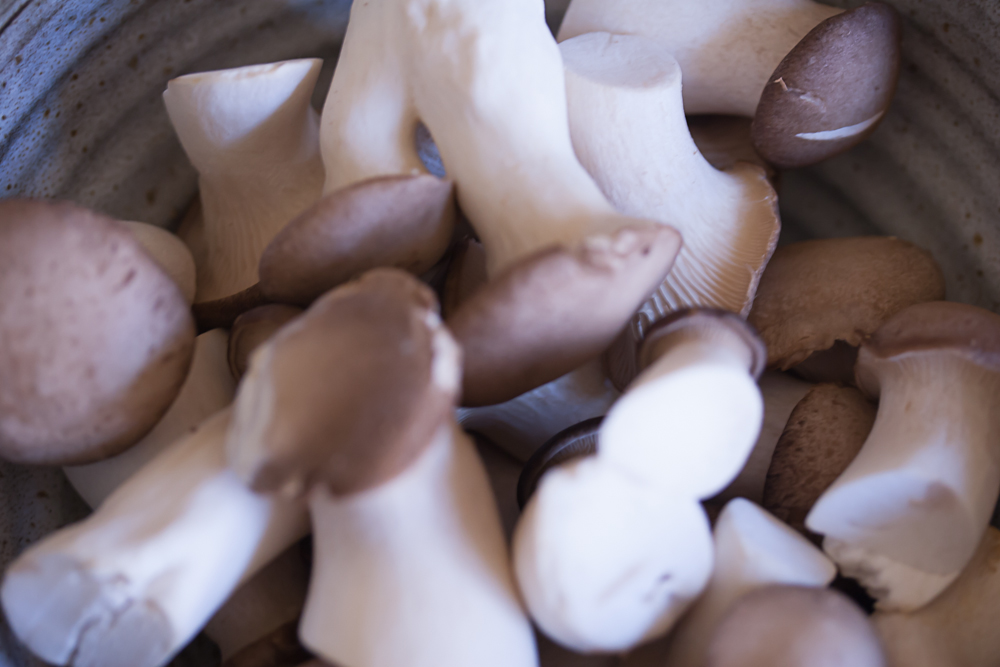
Royal trumpet mushrooms

The second was a delicate sauté of royal trumpet mushrooms with scallions.

Scallions

Sautéed mushrooms and scallions ready to serve

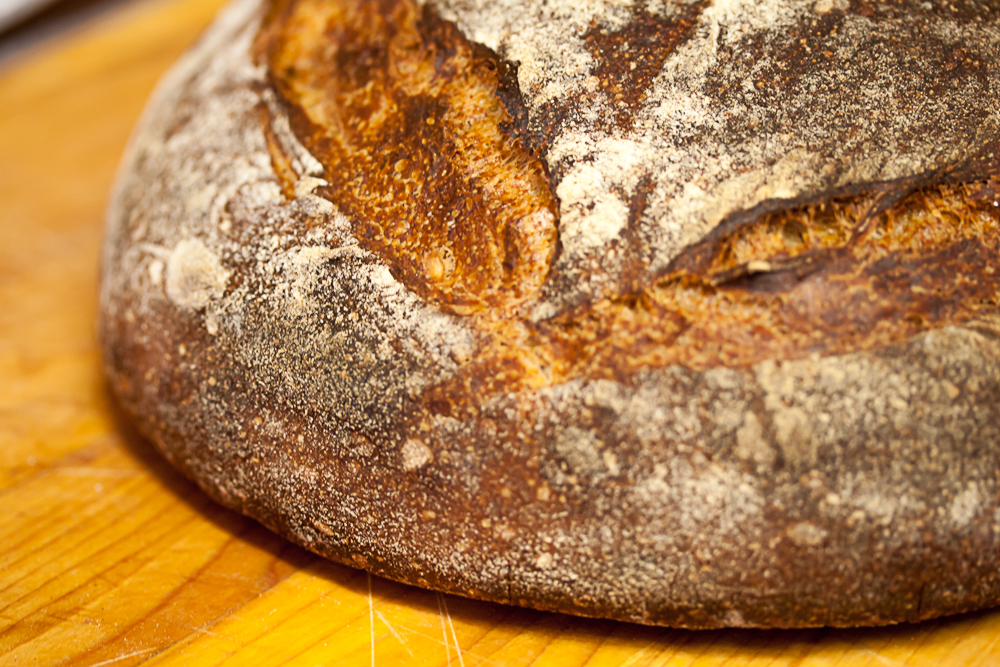
As a bonus not from the farmers market we had a fresh loaf of home-baked Tartine basic country bread made from the recipe in Chad Robertson’s elegant and detailed cookbook, Tartine Bread, Chronicle Books, Ltd, San Francisco, 2010, pages 41-79. (Yes, that’s a long recipe. I plan to post an abbreviated version soon. That should enable you to reproduce the absolutely best home-made bread I have ever tasted).

Fresh loaf of Tartine-style bread

RECIPES

Cucumber-Nori-Sesame Salad

Ingredients

  • 4 small, firm baby cucumbers cut crosswise into ½ inch slices
  • 2 Cups mixed baby salad greens
  • ½ 7 inch sheet of nori cut into ½ inch squares
  • vinaigrette (home-made is the best, but use your favorite)
  • ½ teaspoon sesame oil (optional)
  • salt and pepper to taste
  • 2 Tablespoons white sesame seeds, lightly toasted

Procedure

  • Combine the cucumbers, greens, and nori in a serving bowl.
  • Dress lightly with your favorite vinaigrette. If you like, add the optional sesame oil. Toss.
  • Adjust seasoning with salt and pepper.
  • Sprinkle with sesame seeds and serve immediately.

Should serve four

Sautéed Royal Trumpet Mushrooms with Scallions

Ingredients

  • 2 Tablespoons unsalted butter
  • 2 Tablespoons olive oil (use EVOO – extra virgin olive oil – if you like)
  • 1 small basket (about 2 Cups) fresh royal trumpet mushrooms, cleaned and trimmed
  • 1 bunch (6 to 8) scallions, trimmed and cut crosswise into ½ inch pieces, including the green tops
  • salt and pepper

Procedure

  • Heat the butter and olive oil in a medium sauté pan over medium-high heat.
  • Add the mushrooms and scallions and sauté until cooked through.
  • Correct seasonings with salt and pepper.
  • Serve immediately.

Table set with sweet peas

We set the table with the bouquet of multi-colored sweet peas bought from the flower stall, plated up the feast, and enjoyed it while Evan finished his last day at the restaurant.

Ready to eat

2 Comments

Filed under Food, Photography, Recipes

MORE FARMERS MARKET DINNER: BRAISED LAMB SHANKS

San Francisco’s Ferry Building Farmers Market is much more than the outdoor stalls which attract crowds a couple of days each week. There are all sorts of shops inside the building selling everything from kitchen gear to local caviar. The cheese shops are outstanding, the bakeries are great, and the mushroom place has a huge choice of the freshest specimens. For the carnivores, there are several great shops, but a favorite of both Sarah and me is Prather Ranch. We bought four succulent lamb shanks already done up in plastic, but clearly very fresh. These would be the centerpiece of our farmers market meal.

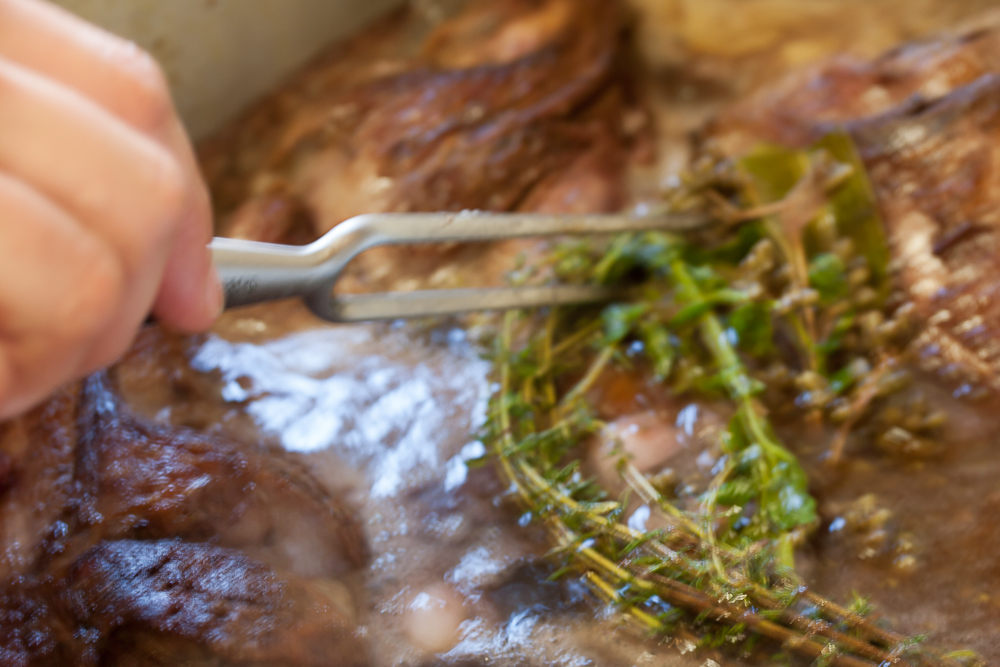
Turning the braising lamb shanks

After getting the lamb shanks home, Sarah browned them in a huge Magnalite casserole along with a couple of cloves of smashed garlic and some aromatic vegetables: carrots and onions. Chefs seem divided over the use of celery in the classic mirepoix combination of onions, celery, and carrots. Some refuse to use celery as they think it is too bitter. Whatever your own personal bias might be, be sure to brown the lamb shanks in some oil and your choice of vegetables. Add some stock or water and a good slug of red wine. Season with salt and pepper. Toss in a generous handful of fresh thyme and Mediterranean (not Mexican) oregano. Bring to a boil, and then cover and reduce the heat to the lowest simmer.

Some purists insist on using rosemary and garlic as the classic seasoning for lamb. You can do that instead if you prefer, but I can guarantee that thyme and oregano work beautifully.

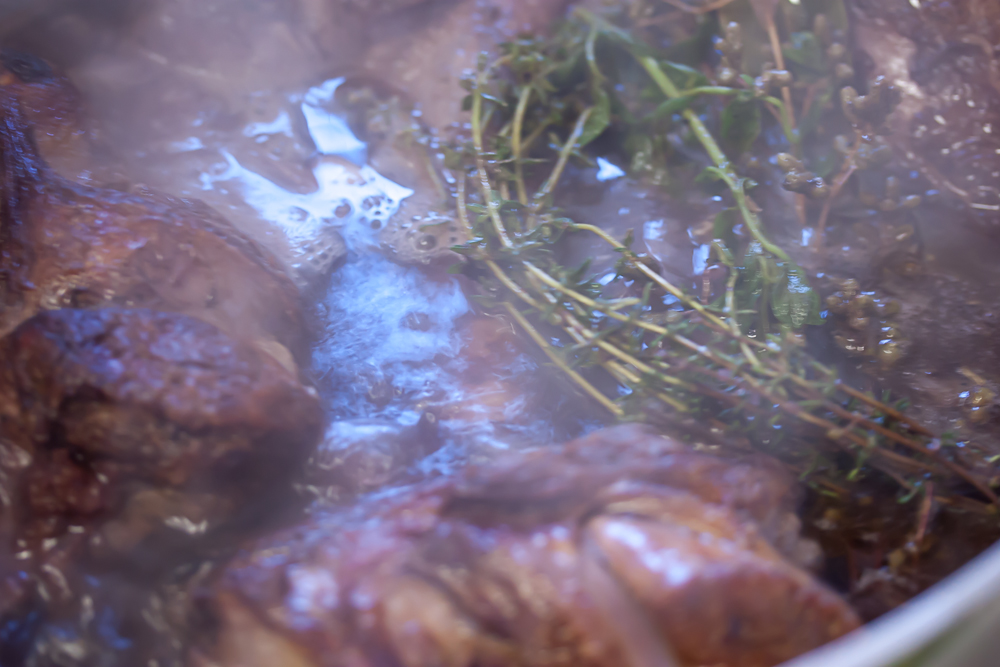
Steaming braising liquid with herbs

Sarah finished her dish over low heat on the stove top, turning and basting frequently as well as skimming off excess fat. If you prefer, you can braise the lamb shanks, covered,  in the oven at low heat – no more than 250°F. Be sure to check the pot frequently and skim the rendered fat. Plan to braise the shanks for at least 2 to 3 hours or until the meat is well done, tender, and falling off the bone.

When they are done to your liking, remove the lamb shanks to a platter and serve them immediately while still warm.

Finished lamb shanks

Lamb shanks vary greatly in size, but in most cases you should allow one for each diner. With only three of us and four lamb shanks we wound up with leftovers.

Ready to serve

3 Comments

Filed under Food, Photography, Recipes

ASPARAGUS: LET IT STEW IN ITS OWN JUICE

Another part of our recent meal provided from our trip to the Ferry Building Farmers Market. Even though these days asparagus is available the year around, local, really fresh asparagus is still a harbinger to the spring in northern climes. It is then that it is at its best. There are lots of great ways to cook asparagus – steamed, boiled, baked, and grilled. This method taught to me by Sarah produces the greenest, freshest-tasting asparagus I’ve ever had.

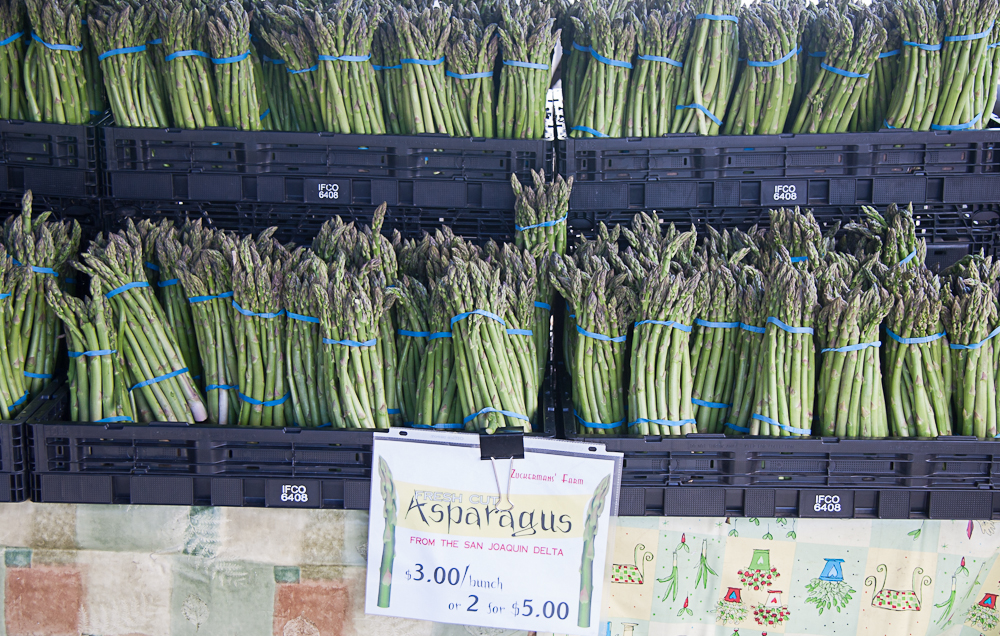
Fresh asparagus spears

We bought three bundles of the thickest stalks we could find in the asparagus stall at the market.

Juicing the asparagus stems

When we were ready for dinner, Sarah cut the thick ends of the stalks where the tender flesh begins. You probably already do the same. I usually throw away those woody ends, but Sarah dropped them into her electric juicer and got the greenest asparagus juice I’ve ever seen. Actually, I’d never seen asparagus juice before.

Peeling the asparagus spears

Next, using a very sharp paring knife, Sarah made the very thinnest peelings of the skins of the asparagus spears.

Peeled asparagus spears ready to cook

Then she put the juice, seasoned with just a little salt and pepper, in a pan large enough to allow the spears to lie flat. She brought the juice to a boil, dropped in the spears, and cooked them for just a few minutes until the asparagus was tender. The finished spears were a bright green color and fragrant.

Asparagus spears cooking in asparagus juice

Sarah served the asparagus with just sections of lemon to squeeze over it, but you can use whatever is your favorite asparagus sauce – hollandaise, aioli, or home-made mayonnaise.

2 Comments

Filed under Food, Photography, Recipes

FERRY BUILDING FEAST: OYSTERS WITH CUCUMBER-DILL MIGNONETTE

Our trip to the Ferry Building Farmers Market coincided with the day that Sarah and Evan got the keys for their new restaurant space, so we were in a celebratory mood. Never mind that Evan had one last night at his current restaurant, Susan, Sarah, and I were going to have a party.

Selecting the best oysters

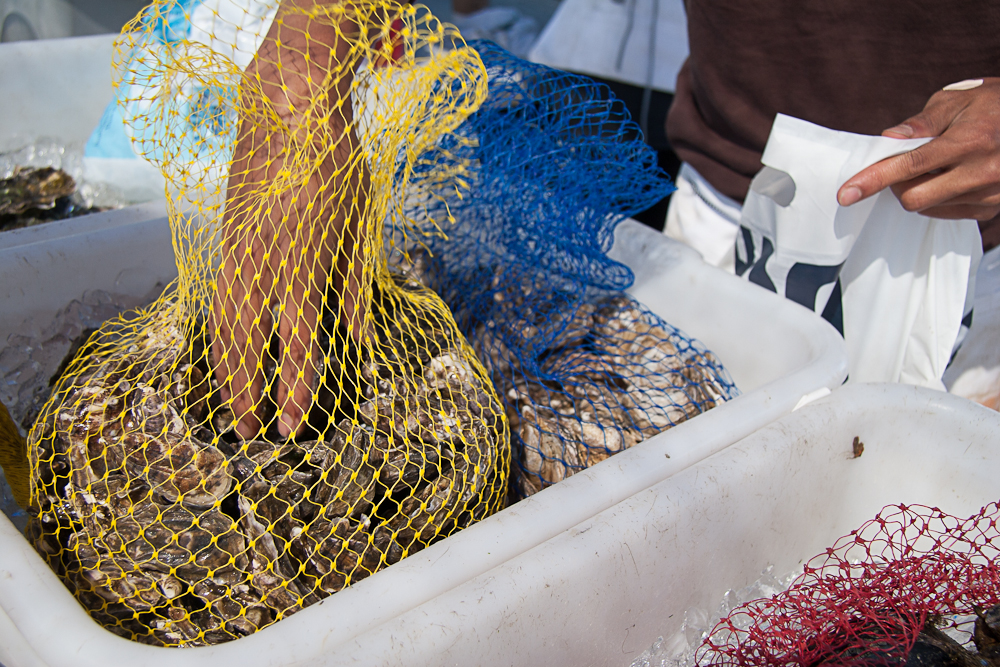
And what better way to begin the celebration than champagne and oysters on the half shell. Two dozen oysters sounded just about right for the three of us, and the oysters from Hog Island Oyster Company were fresh and just the right size. We brought home a mesh bag iced down for the short journey home.

Opening the oysters with an oyster knife

At dinner time, Sarah brought out her oyster knife and made short work of the shucking. Of course, she is a professional, so she knew what she was doing. She wrapped each shell in a kitchen towel and grabbed it firmly with one hand. Using an oyster knife, she slipped the point of the knife into the hinge of the shell, twisted the knife firmly, and popped open the innocent oyster. She cut the muscles holding the oyster in the shell, removed the top shell, and placed the fresh oyster on a bed of ice.

Opening the oysters with an oyster knife

If you have never opened an oyster on your own. There are a few important pointers. First, be sure to use a good-quality oyster knife. Regular knives can bend and break, and you can wind up plunging the blade into your hand. Serious injuries to blood vessels and tendons can result. Second, the towel is supposed to provide some protection so it should not be flimsy. If you are  a little nervous, Kevlar gloves are available and provide more safety. If you are still anxious, have your fish monger shuck the oysters before you bring them home.

Oysters on the half shell with lemon

You can eat raw oysters with no dressing. That’s the way real aficionados do it so they can taste the brine of the sea. For me, a little lemon juice brightens the taste. In Louisiana they douse with hot sauce. The classic accompaniment is a fresh mignonette sauce. The following recipe is for Sarah’s version based upon ingredients from the farmers market.

RECIPE

Cucumber-dill mignonette

Ingredients

  • ½ cup champagne vinegar
  • 4 teaspoons finely chopped shallots
  • 4 teaspoons finely diced cucumber
  • 2 teaspoons finely minced fennel fronds
  • 2 teaspoons finely minced dill weed
  • 2 teaspoons coarsely ground black pepper
  • salt to taste

Method

  1. In a small bowl, combine all of the ingredients with a wire whisk
  2. Serve immediately or chill until ready to serve

Oysters, mignonette, and sparkling wine ready for the celebration

We opened a bottle of California sparkling white wine, toasted the new restaurant, and enjoyed our raw oysters with cucumber-dill mignonette.

Toasting the new restaurant

2 Comments

Filed under Food, Photography, Recipes

THE FERRY BUILDING FARMERS MARKET

Susan and I have been making the Great California Loop away from a computer for over two weeks, child tending in all of our children’s houses. That doesn’t mean that we have not had some good food adventures along the way. Over the next several posts, I will describe some of those experiences.

Chefs chatting in front of the Ferry Building

And what better place to begin than San Francisco’s famous Ferry Building Farmers Market? The Saturday edition is the most popular and crowded. It is a big-city street fair with buskers a-plenty, kids on skate boards, families with babies in strollers, and lots of tourists. If you watch carefully you can see some of the best known chefs in the city shopping for their weekend menus and visiting with one another. The main reason for the market’s popularity is the amazing cornucopia of the freshest Northern California food products, and this time of the year the choices are simply amazing.

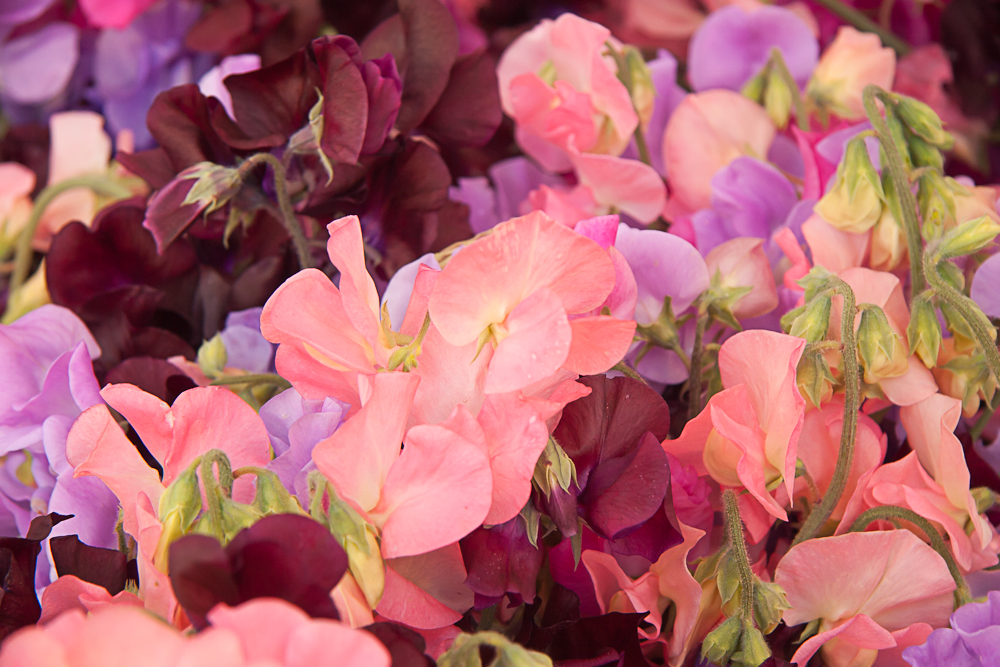
Sweet peas

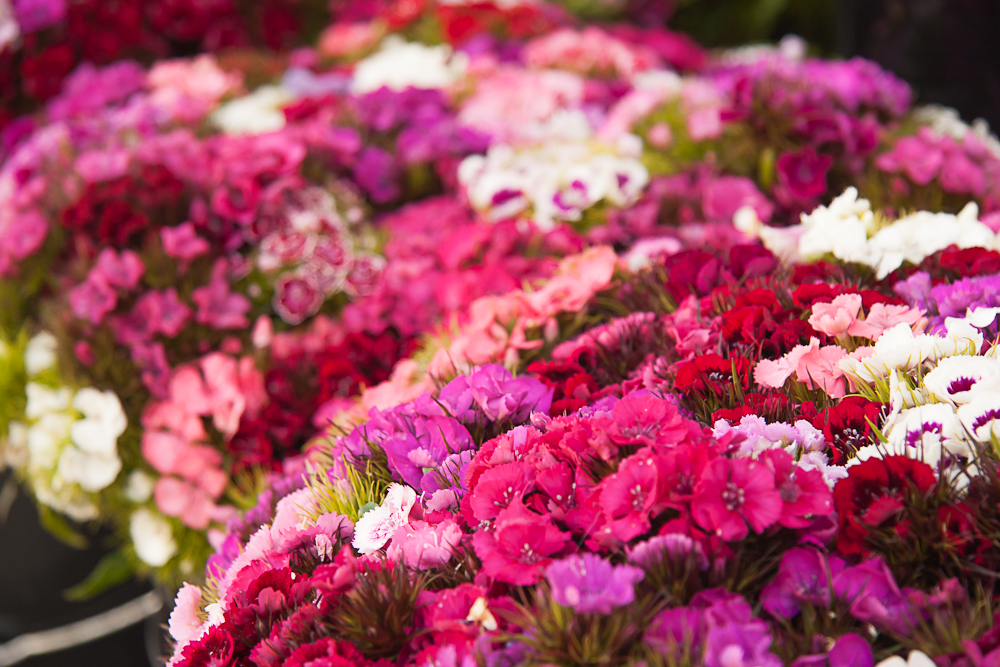
Sweet Williams

We  were in a celebratory mood because Sarah and Evan finalized the contract for their new restaurant space just before we headed to the market. Sarah thought we needed to be festive so our first stop was in the bank of flower stalls at the front of the building. The fragrance of the sweet peas attracted us, and Sarah bought an armful of blossoms of all hues.

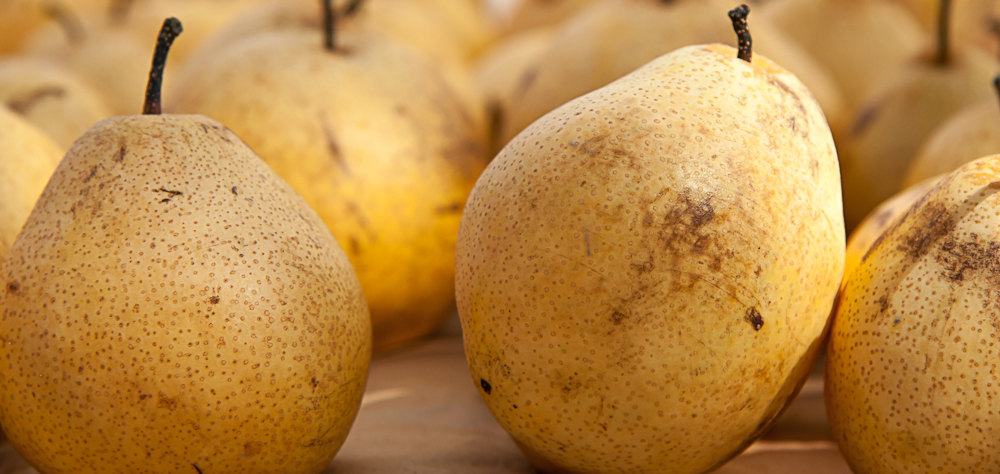
Asian pears

We passed up the Asian pears and other fresh fruits because we had already opted for fresh-churned ice cream for dessert.

Choose your asparagus

Next stop was the asparagus stall. There were bundles of thick, medium, and thin stalks arranged in orderly rows. The abundance made it hard to choose, but we finally settled on three bundles of beautiful, thick, fresh stalks before moving down the row of vendors.  Fresh dill, thyme, and oregano all made it to our shopping bag.

Beautiful vegetables

Mushrooms! Baskets filled with all varieties of the tasty fungi. Criminis, whites, Portobellos, oysters, shitakes, and my favorites – lion’s manes. There were some giant royal trumpets, but we chose a basket of the most beautiful small-size trumpets.

New potatoes

New potatoes in all colors, sizes, and shapes – a good choice for smashed potatoes.

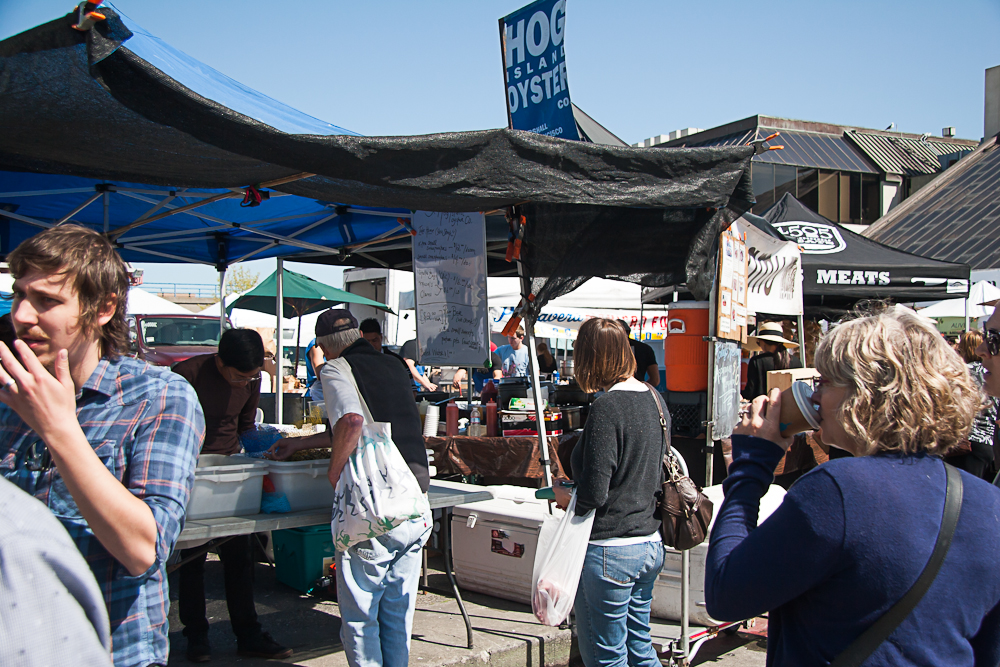
Hog Island Oyster Company

Hog Island Oyster Company  http://www.hogislandoysters.com is one of the landmarks of the market. We often go to their restaurant for fresh oysters or clam chowder, but today we went to their food stall. They had choices of small and large local sweet oysters-in-the-shell and some crenelated beauties from British Columbia. Sarah got a dozen each of the small sweets and the BCs.

Sarah at the Prather Ranch shop

Then we went inside the Ferry Building to the Prather Ranch stall   http://www.pratherranch.com where we found some juicy lamb shanks.

Chilaquiles

A little more shopping for green garlic to braise with the lamb shanks and some baby cucumbers to turn into a salad. Then, with shopping finished we stopped off for an early lunch. There were all sorts of choices including fried chicken, porchetta sandwiches, and lots of Mexican food. We settled on plates of freshly made chilaquiles to eat al fresco on a make-do seat along a planter wall. Evan loaded up his supply for the restaurant, and Sarah and I packed ours up for what looked like a feast that evening.

Leave a comment

Filed under Food, Photography

FORAGING ALONG THE SAN FRANCISCO BAY

Urban foraging in dumpsters has become a popular way to augment food sources for many hipsters, but that is not the kind of urban foraging my daughter and son-in-law, both professional chefs, do.  Cooking with wild plants has become popular in adventurous restaurants all along the Pacific Coast, from Seattle into California. These new-old discoveries, along with inventive methods of preparation,  provide interesting tastes and new beauty to food. They also  move us away from the over-manufactured and bio-engineered food products that have become so common in modern life. Wild plants also remind us of the sources of all we eat and of the need to conserve and to worry about sustainability
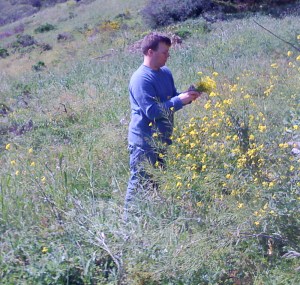
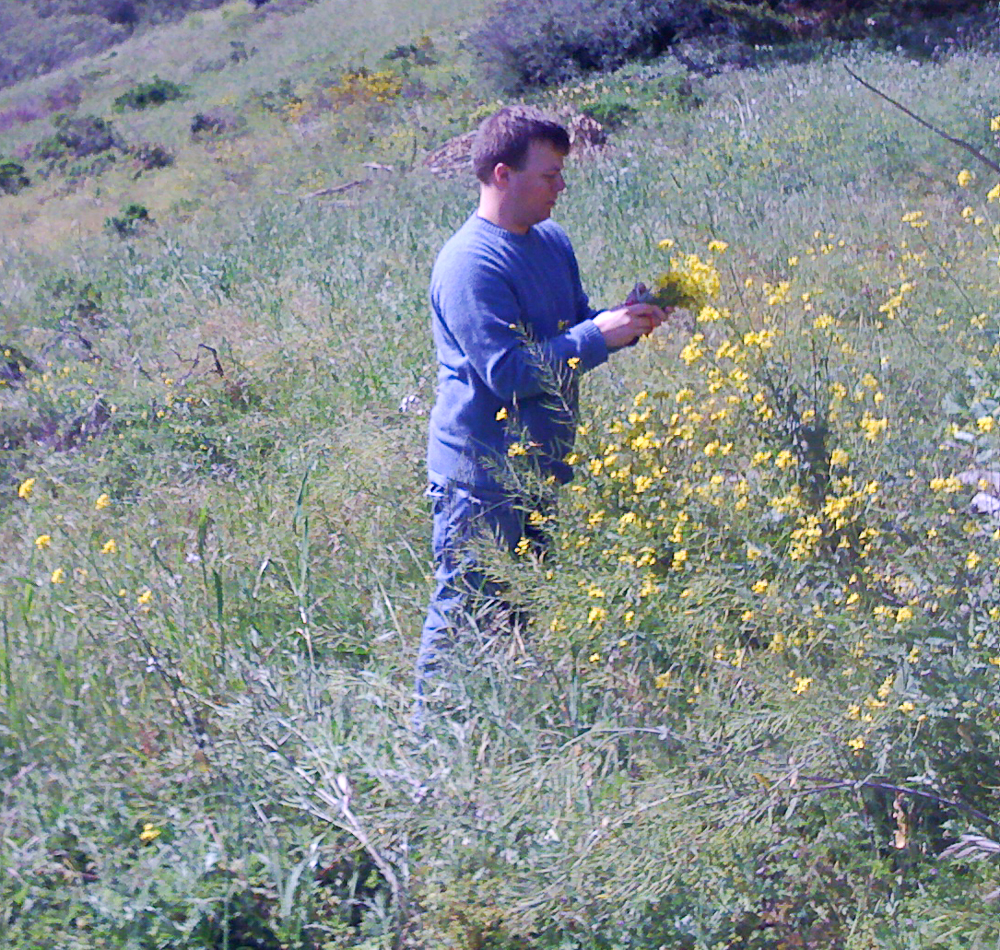
Selecting only the freshest flowers

The San Francisco Bay area  is a wonderful place to find wild edibles while enjoying a casual walk along the shoreline or in the hills and meadows of the surrounding countryside.  My young ones forage every day, because of their cooking which uses wild plants in most of its dishes and  requires a steady supply of fresh produce.

Perfect greens for a perfect salad

The novice forager may not be aware that those with more experience usually subscribe to a number of common-sense  rules:

Know what’s safe and what is not.  It is best to read as much as you can or follow a knowledgeable mentor before you strike out on your own. The bible for many foragers is Euell Gibbons’ s classic, Stalking the Wild Asparagus, first published nearly fifty years ago and still in print. Now there are numerous field guides, books and pamphlets as well as authoritative websites. There are also  guided tours and tutorials to give the beginner some guidance. These are available in the Bay Area as well as many other cities. A good local field guide with pictures and descriptions of the local plants and where they grow is indispensable, especially when you are first beginning to forage. Your local book store will have a wide and appropriate selection for your region. Take time to compare before you select the one or ones you will take with you on your foraging walks.

Never forage on government property, especially national  parks or preserves.  Although in some instances foraging may be permitted on government property, in general it is not. Moreover, there is a popular notion that foraging on such preserves detracts from the notion that such lands are for all to enjoy in a state that is as natural as possible

Don’t forage on private property without permission. Often, it is easy to obtain permission from  land owners to forage what they believe to be noxious weeds or invasive pests. But ask them first, and be sure to explain what you are doing.

Be aware of potentially hazardous places like landfills or shifting terrain. Plants, whether they are wild or domesticated, can incorporate toxic substances from the ground in which they grow. Landfills may be contaminated years after they have grown over.  It may be tempting to forage a choice specimen from an unstable or steep hillside. In those cases, the forager may risk injury or even death in an unexpected landslide.

Don’t dig up anything. A cardinal principle of foraging is sustainability of the environment. While a particular root or tuber may be tempting, digging may disrupt the environment enough that future growth cannot be sustained.

Avoid foraging near the road. Although the plants are often luxuriant and the foraging is easy, fumes and other potentially toxic materials from passing autos could taint your harvest.

It’s ok to keep your favorite places secret. Every forager knows what he or she is looking for, and with experience will learn the ideal places to find those treasures. You are not obliged to tell others where you found a particular plant, especially if it is uncommon. Again, sustainability should be a consideration.

If someone shares a secret spot with you it becomes your shared secret. it’s not ok to tell others. Sometimes an especially good friend will let you in on a particularly choice spot to find a particular edible. Just remember that at that point, your friend’s secret becomes your shared secret. Violation of this rule is a guaranteed way to lose a good friend.

Know what’s in season and where it grows.  It should go without saying that it is a fool’s errand to hunt for fir tips along the beach or to look for sea beans on a mountain trail. Knowing the patterns of the seasons is just as important. Textbooks, field guides, web sites, and guided tours are essential to learn these variations.

Below is a brief list of some of the edibles Sarah and Evan have collected over the time that they have been about this. The actual list of all locally available edible wild plants is much longer. How you develop your own foraging list will depend upon how you want to use the plants, how much time you have to devote to the activity, where you live, and how accessible the mountains, trails, fields, and shores  are to you.

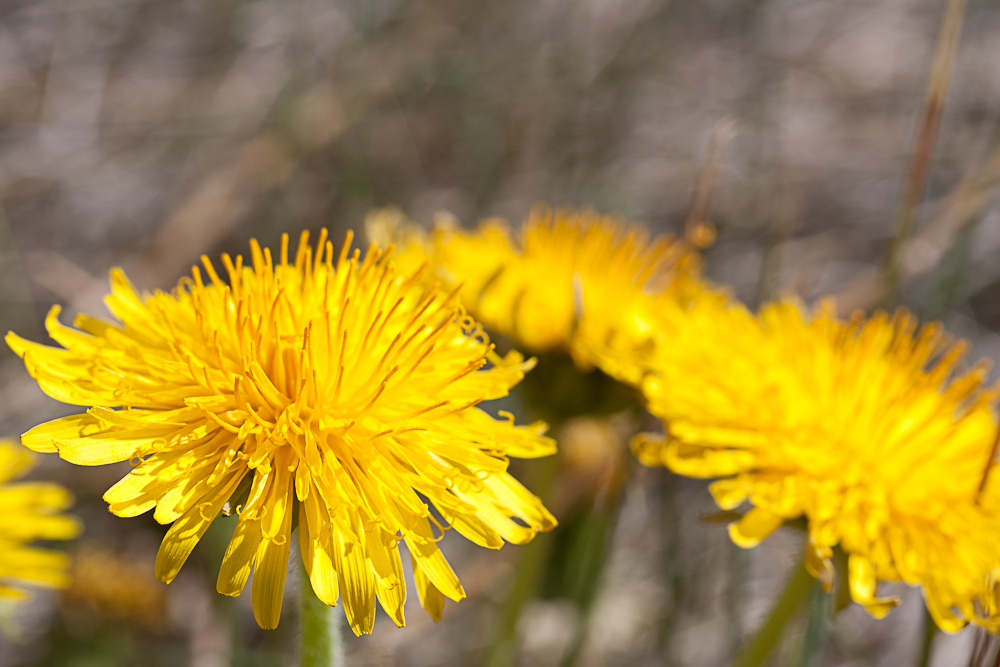
Dandelion blossoms

Dandelion is known by nearly everyone by its bright yellow flowers that brighten lawns and the cliff meadows along the ocean. The tender green leaves should be harvested early in the season because they become more bitter as the season goes on. Collect only the youngest leaves and use them in salads or treat them like spinach. This is nothing like the big, coarse dandelions that you often see in supermarkets.

Wild radish is widespread throughout the region, growing in disturbed soil along the roadside or in neglected fields and orchards.  Foragers go after the attractive flowers of white to pink to purple which are most visible from April to July. The four-petal  flowers add a peppery taste to salads or an attractive garnish to other dishes.

Wild mustard is also widespread, and there are many varieties found throughout Northern California. The most common is black mustard.  The flowers make a beautiful addition to a salad or as a highlight to other plates. The greens, especially when young, can be used in a salad or as a potherb.

Wild fennel grows abundantly along Northern California roadsides, in neglected fields, and open patches all the way down to the beaches. It is different from the fennel that you find in grocery stores and farmers markets because it has no bulb. In the spring, the green fronds can be harvested and chopped for garnish, seasoning for roasted meats, or salads. It can also be cooked as a potherb. In mid-summer when the flowers are in bloom, the pollen can be gathered to sprinkle as a seasoning or incorporated into pasta, pastries and breads, or sauces. Later, the seeds can be eaten raw or used, whether whole or ground, as an anise-like seasoning for sauces, soups, roasted meats, or sweets.

Sea beans, also known by a number of other common names including  sea asparagus, sea pickle,  pickleweed, and glasswort are  not beans at all, but their bright green color, thick stem and no leaves produce an appearance similar to green beans. They are often found in clumps in tidal areas near beaches. They have a crunchy, salty flavor and can be eaten raw in salads or cooked in numerous ways. . Their vivid green stalks, which grow on salt marshes and beaches, have a crunchy texture and a briny flavor with a vegetal aftertaste that’s been likened to asparagus. They are found year around, but best from the early spring to fall.

Douglas fir is a tree that grows in the transition zone between the lower junipers and pines and the higher alpine firs and pines. Douglas firs are common along the hiking trails in the mountains of the Bay Area. In spring, as with other conifers, the Douglas fir branches send out tips of new growth. These tips can be harvested in the early spring when they are particularly tender and aromatic. Although they can be used as domestic  herbs might be used, they are most commonly used to infuse a woodsy essence to spirits, mixed drinks, teas, and oils. They make an aromatic rub for roasted meats as well.

Asparagus is not really wild at all, but it is distributed widely because cultivated asparagus seeds are easily spread by hungry birds and wind currents. Asparagus can be found in many disturbed areas, especially fence lines where there is sandy, moist, but well-drained soil. Like its domestic counterpart, it is best harvested in the spring and early summer.

Wood Sorrel grows throughout the region and can be harvested spring through autumn. The lance-shaped leaves are good in salads and the classic sorrel soup,  but can also be used as a potherb. The rather sharp, acid taste is due to a high content of oxalic acid which in large amounts can cause abdominal pain. Long-term heavy ingestion can even cause kidney stones. Moderate amounts are totally safe, and there are no poisonous look-alikes.

Miner’s lettuce grows in moist areas of lower terrain and mountain slopes throughout the Northwest and most of California. Best harvested in the spring when the leaves are young, it can be harvested in the summer and autumn, too. Use the leaves and flowers in salads or as garnish for other foods.

Purslane, also called Portulaca,  grows at all elevations. Gardeners consider it a pest, and it is found in all sorts of disturbed soils.  It is best in the spring, but can be harvested all year along the coast if you are careful to select the youngest, most tender shoots. That method allows you to harvest the same planting all season long. Much more flavorful than that found at farmers markets, it can be used in salads or boiled as a potherb.

Lamb’s  quarters, like many other so-called wild plants, was introduced from Europe and now is distributed widely throughout the United States. It is found in yards, along the roadside, and in areas of disturbed soil.  It is best harvested in the spring, but can also be harvested in the fall.  The leaves are a distinctive triangular shape; young ones are delicious in salads, but they can also be cooked

Stinging nettle is widespread in moist, disturbed soil along stream beds, mountain trails, the forest edge, or vacant lots. Best harvested late in the fall or in the spring when the leaves are tender, the plant has tiny hairs which contain formic acid and histamine. For this reason, use gloves and a long-sleeved shirt when you harvest, and inactivate the toxins with steaming, boiling, or otherwise heating. Nettle soup is famous.

There are a number of reference materials that both novices and experienced foragers will find useful

Edible Wild Plants  by Thomas S. Elias and Peter Dykeman, Sterling Publishing – a handy field guide with brief descriptions, poisonous look-alikes, and excellent color photos

Weeds of the West  edited by Tom D. Whitson,  The Western Society of Weed Science – an extremely well-illustrated book of plants called weeds, many of which are edible

Feasting Free on Wild Edibles by Bradford Angier, Stackpole Books – divides wild edible plants into useful  categories

Just Weeds: History, Myths, and Uses by Pamela Jones, Chapters Publishing, Ltd. – elegant descriptions of useful plants along with beautiful hand painted illustrations

Identifying and Harvesting Edible and Medicinal Plants in Wild (and Not So Wild) Places by “Wildman” Steve Brill with Evelyn Dean, Hearst Books – although focused on New York City and the East Coast, this is exhaustive and describes seasonal expectations for foraging

Statewide Integrated Pest Management Program University of California  IPM Online. http://www.cal-ipc.org/ip/inventory/weedlist.php – a terrific online resource with excellent pictures of plants that are considered invasive, many of which are edible and perfect for foraging.



5 Comments

Filed under Food, Photography

ONION SOUP WITH GARLIC CROUTONS AND MELTED CHEESE

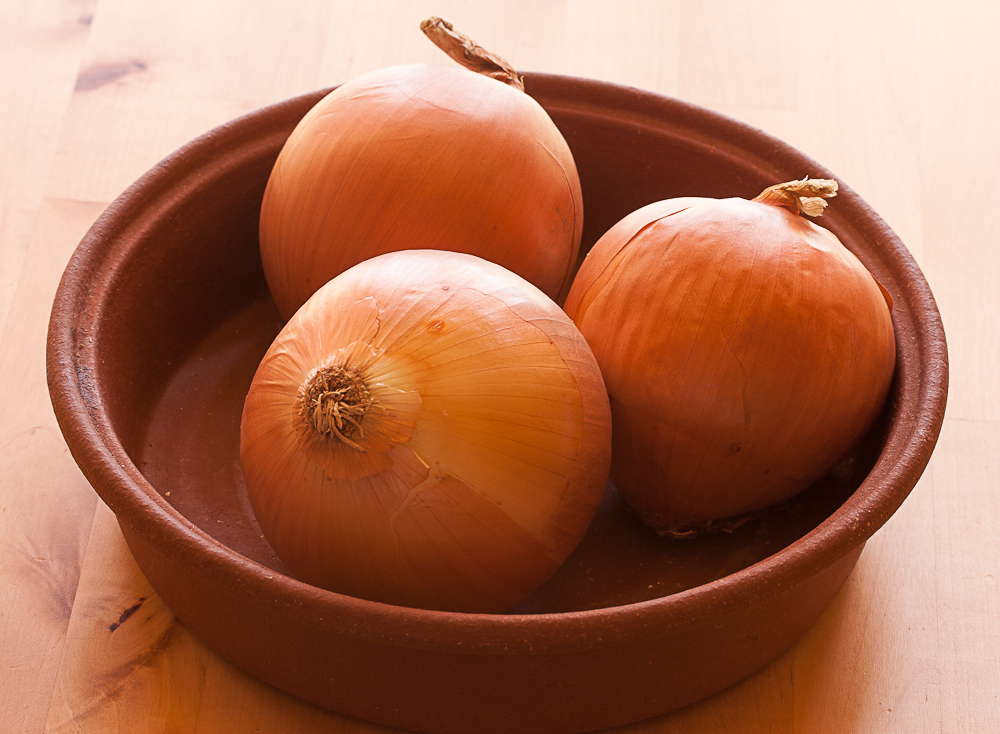
Yellow onions

Who doesn’t like onion soup? My older daughter for one. She actually doesn’t like anything with onions. I can’t understand her taste, because for me a well-made bowl of onion soup topped with a crisp round of garlic crouton and melted Gruyère cheese approaches the perfect simple evening meal. The problem is that there is many a bowl of not-well-made soup. The dehydrated variety doesn’t even really qualify as soup, and the canned sort is not much better. Sometimes you see a version of onion soup in the steam table on a buffet line. That, too, is usually not very appealing. And all of this is too bad because the real thing is so easy to make.
Thinly-sliced onions

Julia Child showed Americans how to make a good soup, along with a lot of her other revelations on good cooking. From time to time we still watch Julia making soup on a black-and-white DVD of her early shows I got as a gift from my children many years ago. I also check out her classic recipe in our tattered, disintegrating copy of Volume One of “Mastering the Art of French Cooking” (pages 43-45). As is always the case, Julia took no shortcuts, and her instructions can sometimes appear daunting.  Those may be the reasons that onion soup is not a mainstay of most kitchens. Another reason may be that the soup is viewed by  modern cooks as a bit old-fashioned. I say too bad to that! The final reason may be that many, like my daughter, don’t like onions. That remains a mystery to me.
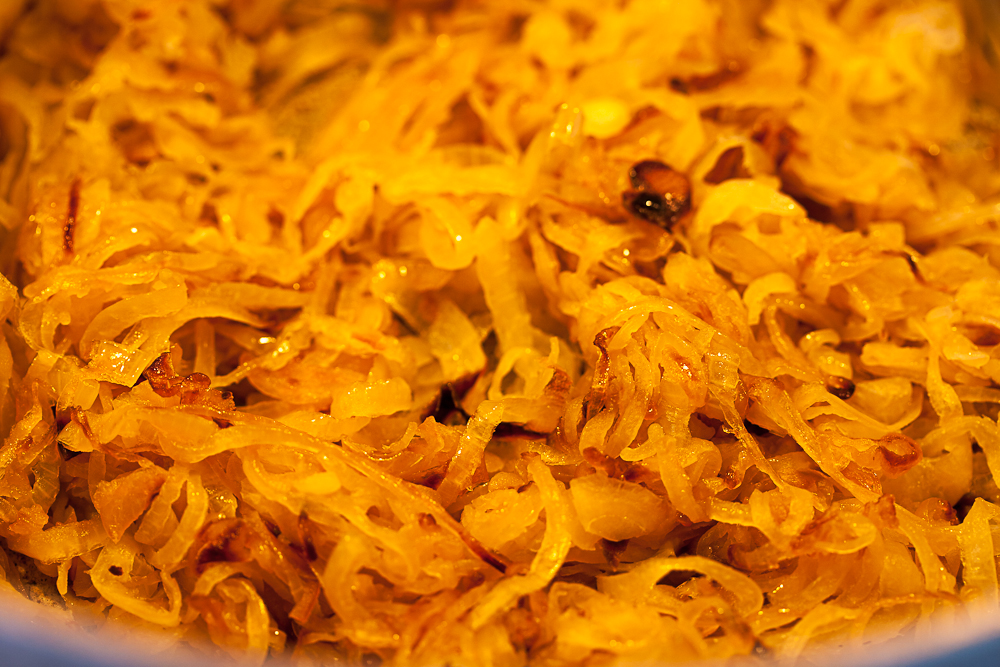
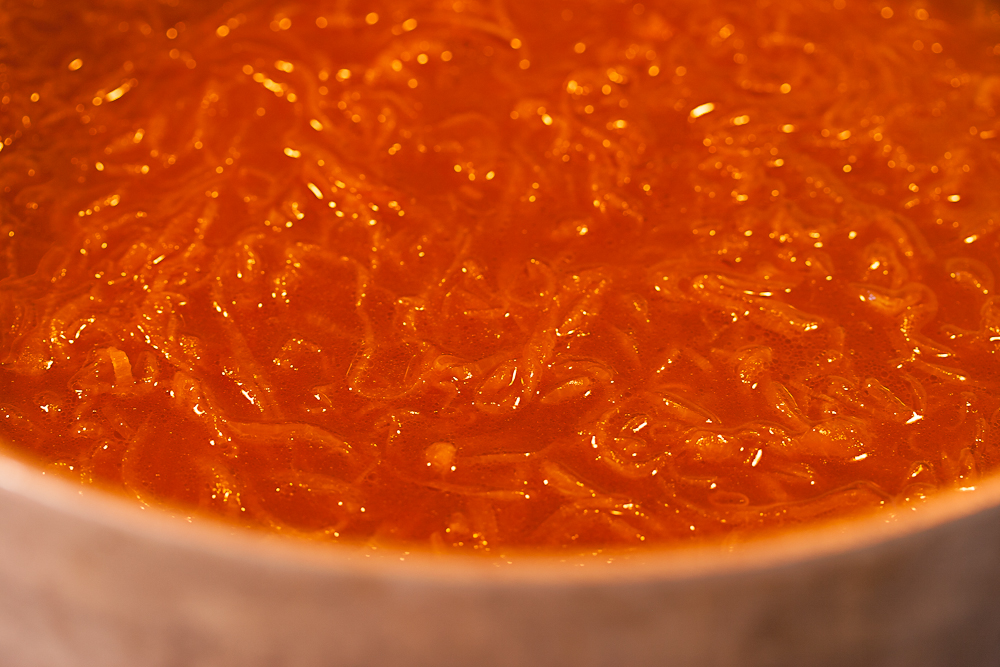
Caramelized onions

The version  that follows is a riff on Julia Child’s recipe, but I have tried to simplify preparation a bit so that you can whip up soup in the afternoon for dinner in the evening. Add some crusty French bread and fresh butter along with a bottle of chilled dry white wine, and you have everything you need for a relaxing evening at home.

Soup at the simmer

RECIPE

Ingredients  

  • 3 Tablespoons olive oil
  • 3 medium yellow onions, slice as thinly as possible (use a mandoline)
  • ½ teaspoon salt
  • ½ teaspoon granulated sugar
  • 3 Tablesoons all-purpose flour
  • 4 Cups beef stock (home-made or packaged)
  • ½ Cup dry, white vermouth
  • pepper to taste
  • 4 half-inch slices of French baguette
  • 2 garlic cloves, peeled and sliced in half crosswise
  • 2 ounces Gruyère cheese, grated coarsely

Ready to pop under the broiler

Preparation

  1. Heat the olive oil over medium heat in a heavy-bottomed 4-quart saucepan with lid. Add the onions and salt. Stir and cover to sweat the onions. Be careful not to let them burn.
  2. When the onions are translucent and soft, remove the lid, turn up the heat to medium-high, and stir in the sugar.
  3. Stirring frequently with a wooden spoon, caramelize the onions until they are golden brown. They will not begin to brown until most of the liquid has boiled off. Be very careful not to let the onions burn.
  4. When you are satisfied with the color of the onions,  add the flour, stirring until the onions are completely coated. Cook a few minutes so that the flou loses its raw taste.
  5. Add the beef stock and vermouth; adjust the seasoning with salt and pepper. Stir well. Cover and turn the heat to simmer so that the mixture just barely bubbles every few seconds. Simmer for at least two hours.
  6. While the soup is simmering, prepare the croutons by placing the baguette slices on a sheet pan in an oven preheated to 200°. Bake until the bread has dried out a bit. Then remove from the oven and scrape the cut garlic over both sides of the bread slices. Return to the oven and continue to bake until the bread has completely dried and turned a light brown color. Remove from the oven, cool the croutons,  and set aside.
  7. When your soup has simmered long enough, ladle it into four oven-proof soup bowls. Top each bowl with a garlic crouton and cover with the grated cheese.
  8. Place the bowls on a sheet pan and slide under a pre-heated broiler for just a few minutes until the cheese is melted and – if you prefer – lightly browned.
  9. Serve immediately.

Is it soup yet? Definitely!

Serves two if you’re really hungry or four if you would rather enjoy the wine.

1 Comment

Filed under Food, Photography, Recipes

PIZZELLE

Special pizzelle iron

As Easter approaches, I remember a wonderful treat from my childhood.

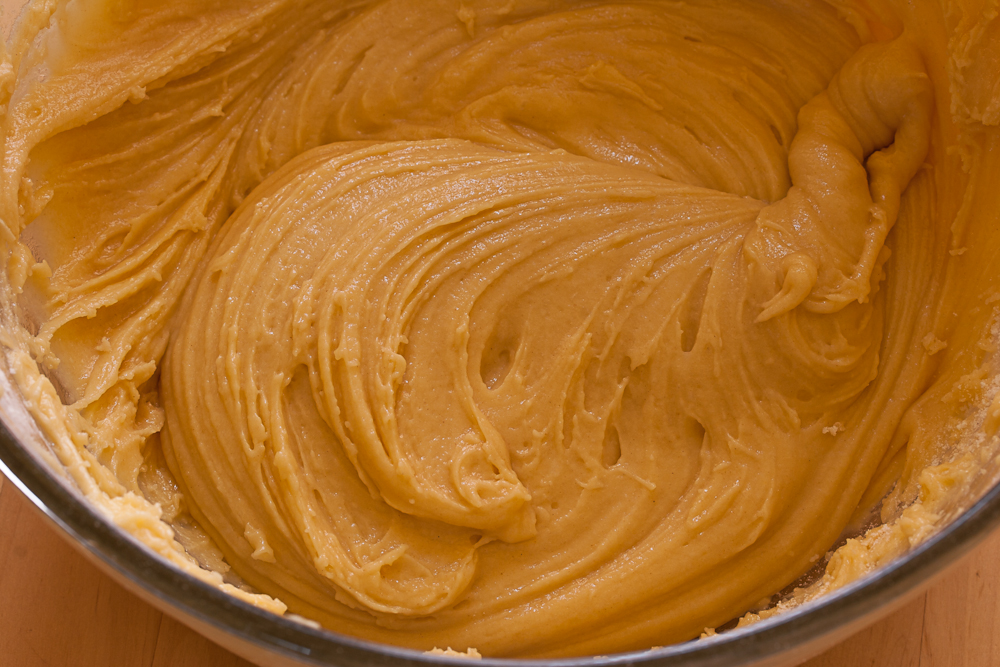
Batter ready to be spooned into the baking iron

When I was about 10 years old, my family lived in an apartment in the midst of a big Italian family. The grandparents, known to all as “Ma and Pa”, lived in the “Big House” which was surrounded by the smaller homes of their many children and their families. Two unmarried daughters as well as the family of one of their brothers also lived in the Big House. It was clear that the Big House served as the social and communications center for the whole family.

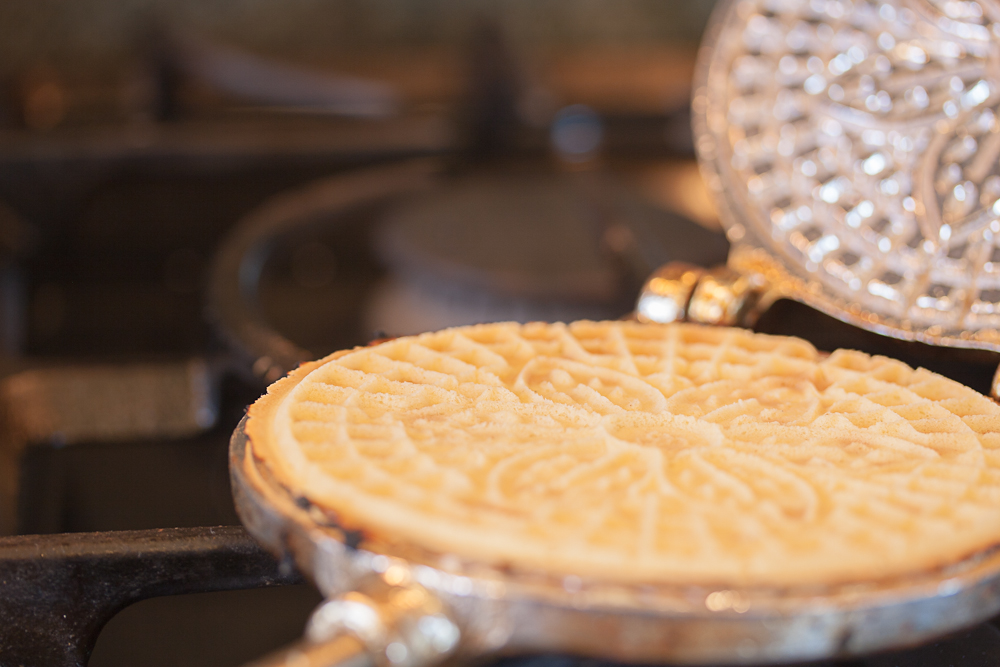
Heating the pizzelle iron

Evening meals were a gathering of the famíglia, with the women serving the meal to the men who ate at a long wooden table in the kitchen. Then the children took their turn, and finally the women ate and cleaned up. This family tradition carried over into many other activities, especially near the holidays. In the spring, before Easter, there was a great deal of cooking and baking in preparation for the celebration ahead.

A spoonful of batter ready to bake

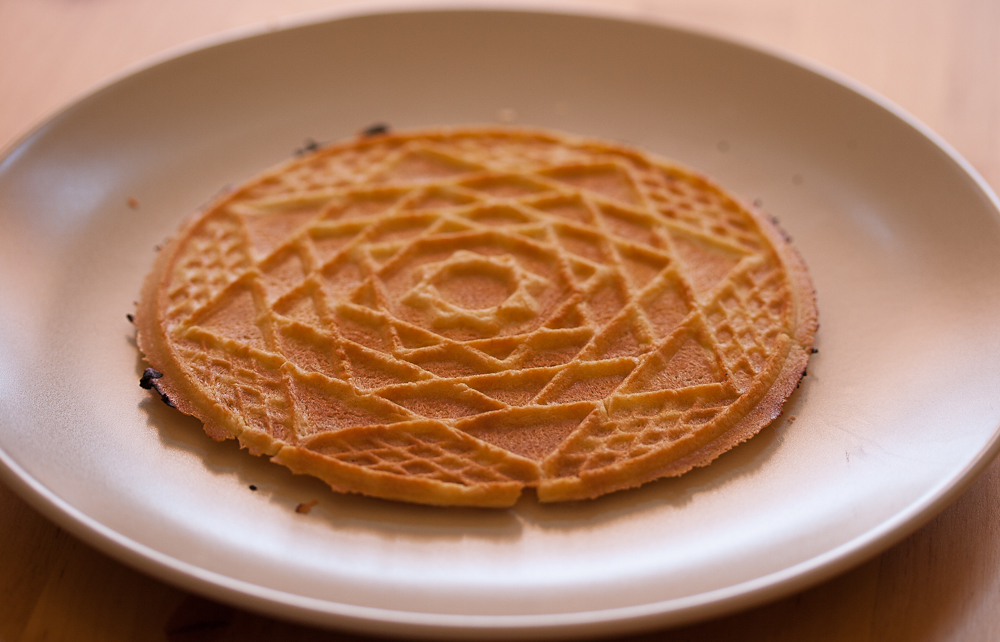
A favorite during this baking spree was the pizzelle. These delicate cookies were baked outside over a hot stove.  Kids clustered around to get them still warm from the griddle. That’s still the best way to eat them. You can spread them with butter or jam while they are still warm, and they are so good. You can also form them around a conical wooden dowel (like the plunger in a chinois) while they are still soft and warm. As they cool, they will firm up and make a perfect cone for your gelato or ice cream.

Nearly ready to take off the iron

You will need a special pizzelle baking iron, but you can find one in most specialty cooking stores or websites.

A crispy pizzelle

 Ingredients
1¾ Cups flour
1½ teaspoons baking powder
1 teaspoon lemon zest
3 eggs
½ Cup sugar
1 stick unsalted butter, melted
1 teaspoon vanilla
¼ teaspoon anise extract
melted butter to brush the pizzelle iron

Wrapping a still-warm pizzelle to make a cone

1. In a small bowl, combine the flour, baking powder, and lemon zest and set aside.
2. In a medium bowl, beat the eggs and sugar together with an electric mixer until pale yellow and smooth. Add the melted butter, vanilla, and anise extract and beat until completely combined.
3. Gradually stir in the flour, baking powder, and lemon zest mixture to form a smooth batter.
4. Heat the pizzelle iron on both sides until very hot. Brush both sides of the mold lightly with butter, spoon in about 1 tablespoon of batter, and close the iron. Trim off any batter that oozes out of the iron. Bake about 1 minute on each side or until the pizzelle is golden brown. Transfer the baked pizzelle to a cooling rack and repeat the process until the batter is used up.

A stack of pizzelles ready to eat

Yield: 24 to 30  5-inch cookies

2 Comments

Filed under Food, Photography, Recipes

RICOTTA PIE WITH ASPARAGUS, MUSHROOMS, AND PROSCIUTTO

Our ovens recently went on the blink, and we had to do without baking for over two weeks while the repairman ordered parts. We made it through the crisis – with some withdrawal symptoms – and our ovens were finally restored to working order. To celebrate, I decided to make a couple of quiches using some shrimp and fresh Spring asparagus from the grocery store. I made the quiches only to discover that I had left out the asparagus. My fall-back plan was to use the asparagus the next night in something else. The plan wound up to be an exercise in cleaning out the refrigerator. I came up with what is not really a quiche, so I called it a ricotta pie. Regardless of the name, it turned out to be a good use for the asparagus.

RECIPES

Pie Crust

Ingredients

  • 1 Cup all-purpose flour
  • ½ teaspoon salt
  • 1/3 Cup vegetable shortening
  • 2 2/3 Tablespoons (8 teaspoons) ice water
  1. Combine the flour and salt in a medium bowl
  2. Add the shortening and cut it into the flour mixture with a pastry blender until it resembles coarse corn meal
  3. Make a well in the center of the mixture and pour in the water, mixing with a table fork until the mixture comes together in a ball.
  4. Knead gently for just a few seconds, shape into a ball, wrap in plastic wrap, and chill in the refrigerator for at least 30 minutes

Pie Filling

Ingredients

  • 16 ounces low-fat ricotta
  • 3 large eggs, lightly beaten
  • 1 Tablespoon Pernod
  • 1 teaspoon Kosher salt
  • ¼ teaspoon finely ground white pepper
  • 1 pound fresh asparagus
  • 6 crimini mushrooms
  • 2 Tablespoons extra virgin olive oil
  • 3 ounces Swiss cheese, shredded
  • 3 ounces prosciutto, thinly sliced
  • 2 ounces Parmesan cheese, freshly and finely grated
  1. In a large bowl, combine the ricotta, eggs, Pernod, salt, and pepper until smooth and well blended. Set aside.
  2. Wash the asparagus, trim the woody ends (saving them for stock), and cut into 1-inch pieces. Set aside.
  3. Clean and slice the mushrooms. Sauté them in olive oil until they have given up their liquid. Drain and set aside.

Just out of the oven

Final Assembly

  1. Remove the chilled pie crust dough from the refrigerator and roll it into a circle large enough to line a 9 inch pie pan with enough to crimp the top edge.
  2. Ladle half of the ricotta mixture into the bottom of the prepared pie shell.
  3. Arrange the asparagus pieces over the filling. Then add the mushrooms, Swiss cheese, and prosciutto in layers.
  4. Cover with the remaining ricotta mixture and sprinkle with the grated Parmesan cheese.
  5. Bake in the middle of an oven pre-heated to 425° for 10 minutes. Then lower the oven temperature to 350° for an additional 60 minutes. Turn the baking pie front to back in the oven about half way through the baking. Watch carefully toward the end of baking and remove from the oven if the pie becomes too brown.
  6. Place the finished pie on a cooling rack for 5 minutes. Then slice into 6 or 8 pieces. Serve while still warm.

Ready to eat

4 Comments

Filed under Food, Photography, Recipes

SANTA FE RESTAURANTS 4: REAL FOOD NATION SUPPER CLUB

We have been going to the Real Food Nation Café for years. The casual atmosphere and the creative food have always hit the spot for lunch or Sunday brunch. I have even been on a photo shoot in a workshop with Francesca Yorke, making images of the wonderful and beautiful herbs and vegetables they grow in their extensive on-site garden. But even though we have talked about it many times, we have never made it to their culinary other-half, the Supper Club. Last night we were able to fill that gap in our Santa Fe experience, and it was well worth the effort.

Maturing eggplant in the Real Food garden

Squash blossoms

Eggplant blossoms in the Real Food Nation garden

Travel to the restaurant is a scenic 2o-minute drive north on I-25 or on the crowded Old Pecos Trail. The café is in a converted gas station, and you might miss seeing the compact square building across the parking lot. That is the Supper Club with its own parking area and a welcoming front door. Inside you will find a small, well-appointed dining room and a friendly staff. It is small – only 22 seats including several at the bar overlooking the open kitchen – so reservations are highly recommended. The problem with that is that the Supper Club does not have its own number in the phone book, so when you call the café they have to transfer your call, sometimes to the consternation of the person answering the phone. During our visit we were granted our own key, so to speak. The direct line is 505-466-2440 and the email address is info@realfoodnation.biz. They’re not on Open Table, either, so a direct call for reservations is needed. The other little idiosyncrasy you need to be aware of is that they are open only Wednesday through Saturday from 5:30 pm to 9 pm. All of that says plan ahead, but if you do, you won’t be disappointed

Dining room in the Supper Club

Water glasses

The dining room was pleasant, mostly two-tops with a couple of four-tops, comfortable leather chairs, and sunny windows with Roman shades if the sun gets in your eyes during Daylight Saving Time. The music would not be my choice – some Frank Sinatra and light jazz/pops – but it was not intrusive and certainly not so loud as to drown out your dinner companion’s conversation. The service was friendly and attentive. The wine list was small but well-chosen and well-priced with full-bottle, half-bottle, and by-the-glass selections. There was a good selection of beers, coffee and tea, soft drinks, and bottled waters as well.

All of that put us at ease in anticipation of a good meal. The bread got a mixed vote from me. The little ciabatta rolls were crisp on the outside with a flaky crumb and extremely tasty. The sliced French bread was dense and ok, not great. But we didn’t come for the bread, anyway.

Menu

Right now the restaurant has a prix fixe menu, three courses for $35. The menu changes frequently, so call ahead or check the web site. Last night there were two choices of appetizer, three choices of entrée, and two choices of dessert. Even at that, chosing was difficult because everything sounded delicious.

Carrot parsnip soup

Susan chose the carrot parsnip soup. The golden bowl came to the table laced with a pool of green-hued extra virgin olive oil.

Frisée salad with balsamic vinaigrette and guanciale

I chose the frisée salad which came with guanciale – little lardons of pork jowl lightly crisped

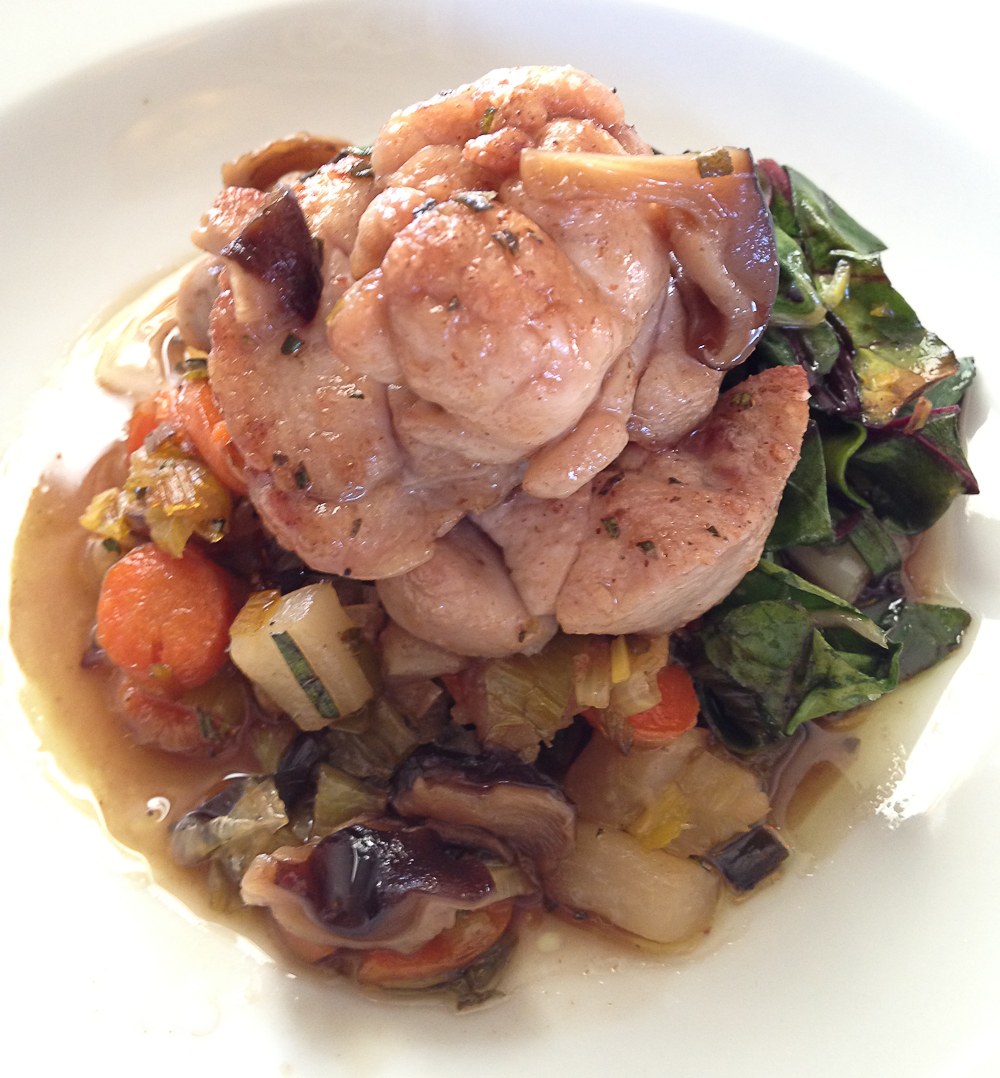
Sweetbreads

We both chose veal sweetbreads which, when well-prepared, is one of our favorite dishes and not commonly available. We were not disappointed. The sweetbreads were perfectly cooked and seasoned. They were complemented by tender Swiss chard and a “hash” of turnips, leeks, and carrots. The sweetbreads were sauced with a fragrant, flavorful mushroom demi-glace.

Hazelnut forestier with three chocolates

Profiteroles

Both desserts were beautifully presented, and a fitting end to the evening. The hazelnut financier came with three different kinds of chocolate. The profiteroles were classically done, and fortunately not too big as I could have eaten more than my diet allows.

Leave a comment

Filed under Food, Photography, Restaurants