Tag Archives: Carol

THREE CITIES OF SPAIN CHEESECAKE

Mothers’ Day and Susan’s birthday coincided this year, so during our visit to Los Angeles, Carol needed a dessert for our celebration. One of Susan’s favorites is cheesecake, and this is one of Carol’s favorite recipes.

She originally found it in Gourmet magazine, and it has been published widely since then in other magazines and on the internet.

But everyone (or nearly everyone) gives credit to the Three Cities of Spain coffee house in Santa Fe for the original. Many years ago, the popular artists’ street, Canyon Road, was a narrow dirt road heading up the canyon from Paseo de Peralta. The Santa Fe artists’ colony was experiencing a boomlet in the 1950s-1970s, and this was one of the places on Canyon Road where the struggling artists hung out, drinking coffee, smoking, and eating cheesecake. There were nearby bars for more serious drinking at night.

For reasons unknown to me, Three Cities of Spain closed in the 1970s, Canyon Road was paved, and the old adobe home which housed the coffee house was transformed into Geronimo, one of the best and most famous restaurants in Santa Fe. The restaurant was named after the man who built the house in 1756.

I think you’ll like the cheesecake.

hree Cities of Spain cheesecake after the first baking
Three Cities of Spain cheesecake after the first baking

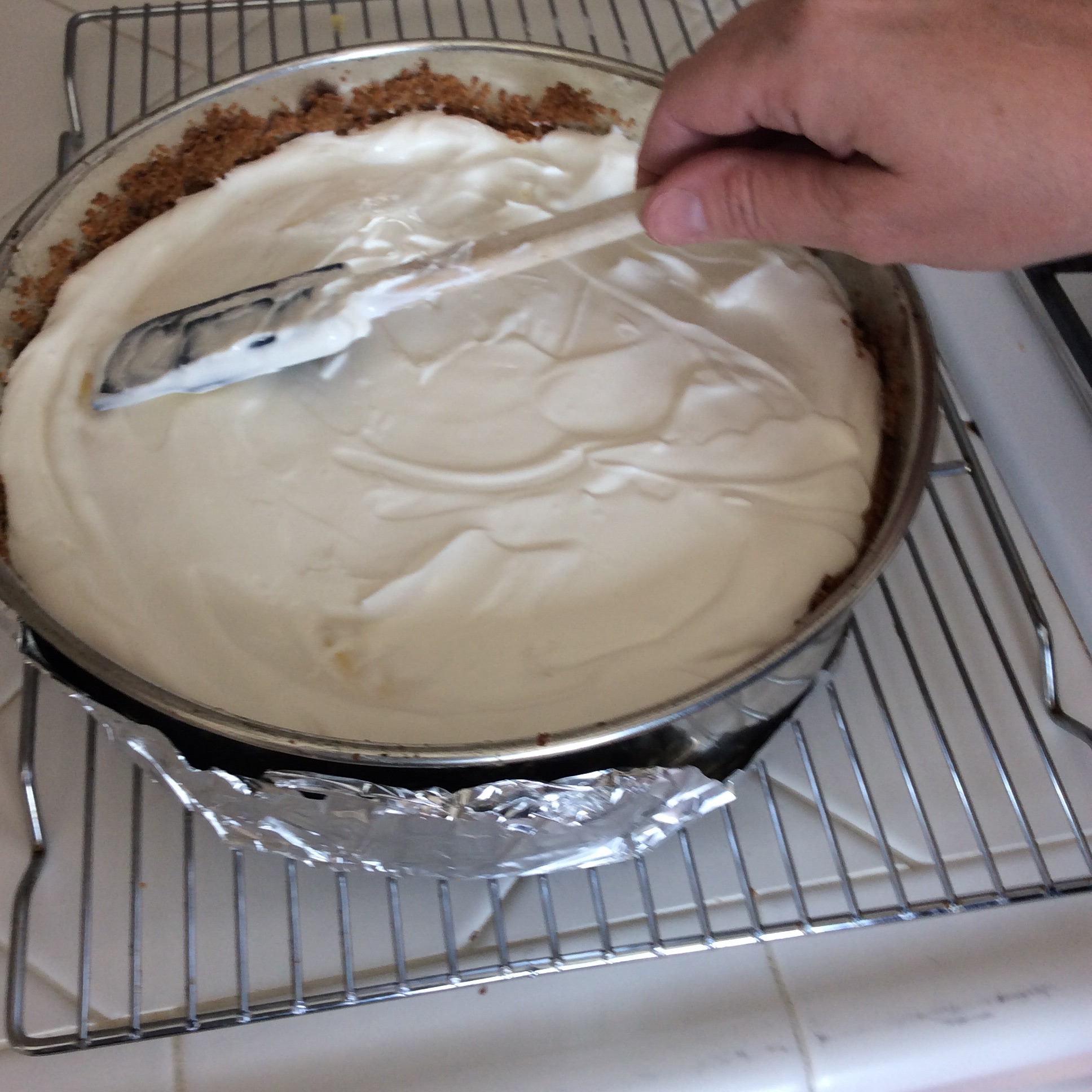
Spreading on the topping.
Spreading on the topping.

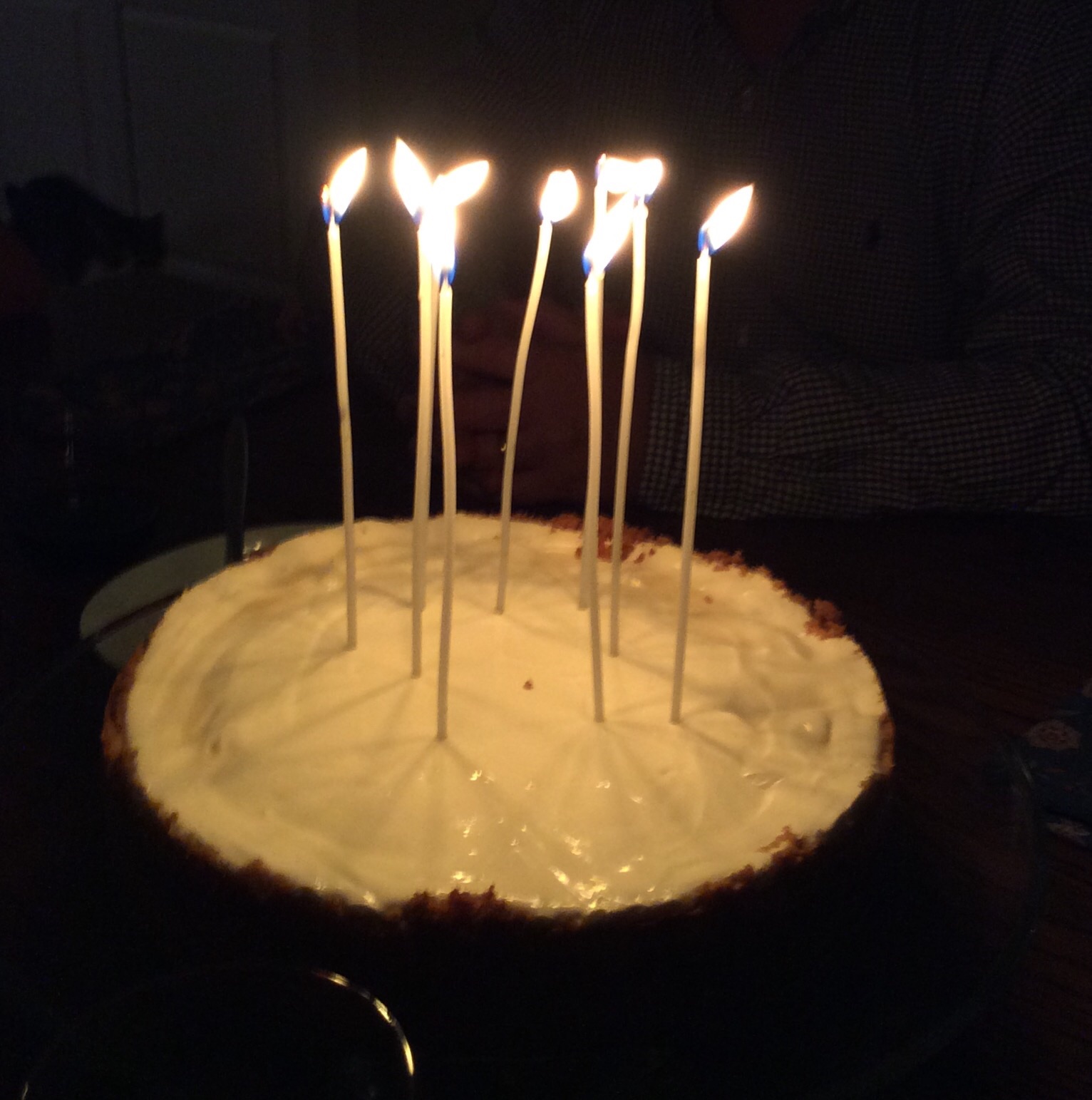
Birthday candles for more mature adults

Birthday candles counted out for more mature adults
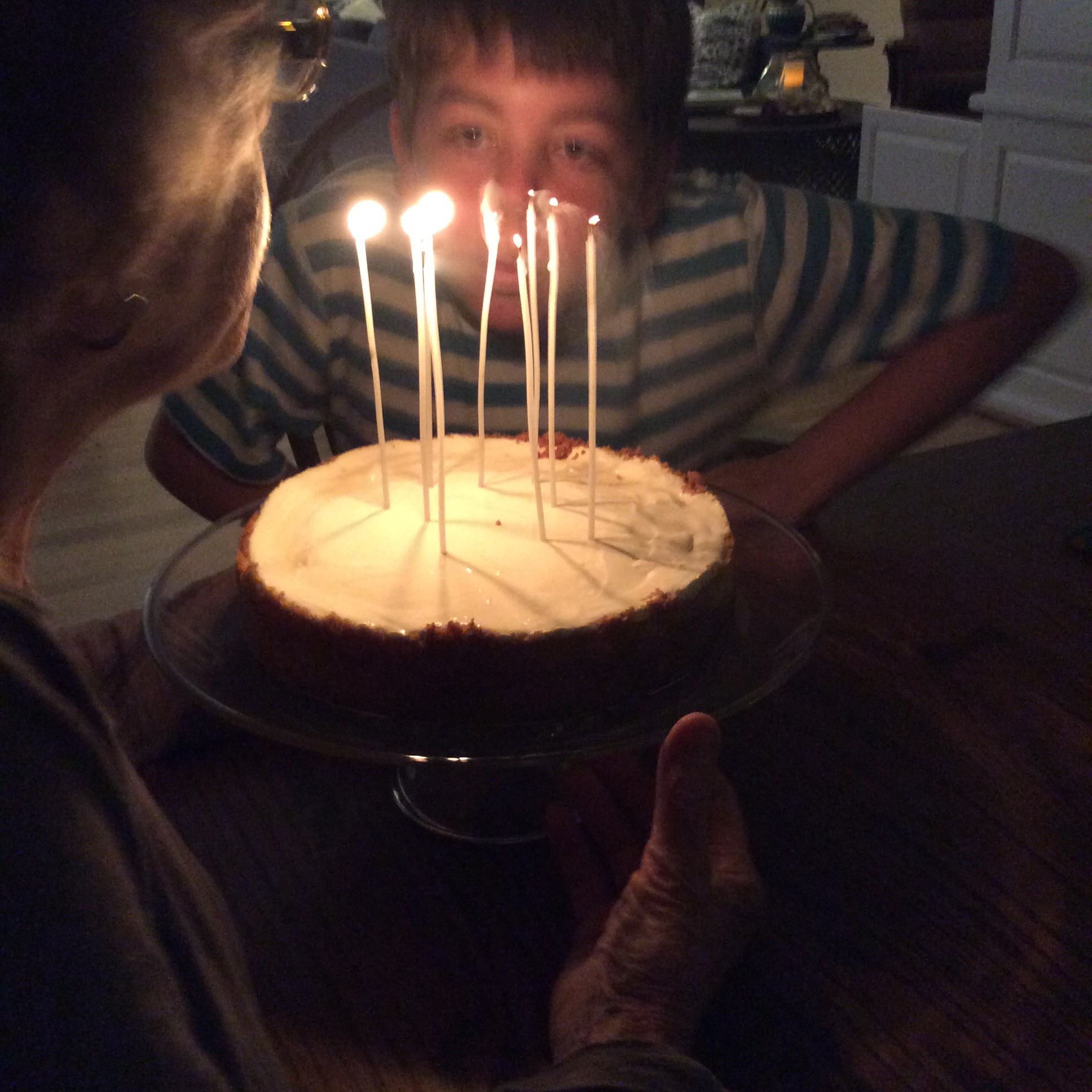
Blowing out the candles

Blowing out the candles

Cheesecake with berries

Cheesecake with berries

RECIPE

Three Cities of Spain Cheesecake

Ingredients

CRUST

  • 11 graham crackers, ground fine (1½ cups)
  • 1/3 cup unsalted butter, softened
  • 1/3 cup sugar
  • 1/8 teaspoon salt

FILLING

  • 24 ounces (3 packages) cream cheese, softened
  • 4 large eggs
  • 1 teaspoon vanilla
  • 1 cup sugar

TOPPING

  • 16 ounces sour cream
  • 1 tablespoon sugar
  • 1 tablespoon vanilla
  • berries (optional)

Method

  1. Stir together crust ingredients. Sprinkle half of mixture onto the bottom of a buttered 9½ inch springform pan. Then press the mixture up the side of the pan about 1¼ inches. Sprinkle and press the remaining half of the mixture into the bottom of the pan.
  2. With an electric mixer, beat the cream cheese until light and fluffy. Then beat in the eggs, one at a time. Beat in the vanilla and sugar until just combined.
  3. Pour the cream cheese and egg filling into the crust. Bake for 45 minutes at 350ºF or until the center of the cake is set.  Cool on a rack for 5 minutes.
  4. Stir together the topping ingredients.  Drop by spoonfuls around the edge of the cake and spread gently into the center.
  5. Return to the 350ºF oven for another 10 minutes.
  6. Remove from the oven and cool completely on a baking rack before chilling overnight in the refrigerator.
  7. Serve at room temperature with or without optional berries.

4 Comments

Filed under Food, Photography, Recipes, Restaurants, Travel

BAKED OYSTERS NEW ORLEANS STYLE

At the end of our train trip from Seattle to Los Angeles, we spent a few days with our daughter, Carol, and her family. She is an excellent cook, and she always tries to make some interesting food during our visits. She also knows that Susan loves oysters, and since she grew up in Louisiana, New Orleans style baked oysters seemed perfect – even though it is May. The recipe in her recipe box is called Oysters Mosska, undoubtedly so as not to get in trouble with Mosca’s restaurant in the New Orleans suburb of Westwego and home to the eponymous Oysters Mosca.

Mosca’s is one of the old-line favorite restaurants of local residents, having opened in 1946 and operated by the same family ever since. Part of its charm is that it is not easy to find. It is on Highway 90 a ways after you cross the Huey P. Long Bridge, but it sits back from the road, is a low-slung white-painted clapboard building that looks more like a house, and has only a small, dimly lit sign. When we were living in Louisiana, I drove right by it more than once. An interesting story is that the place was where everyone went after a night spent in the gambling houses that populated this now-lonely stretch of road. As well, rumor has linked the restaurant to the local Mafia, but the Moscas have neither confirmed nor denied that rumor.

Once inside, you are struck by the liveliness of the place. It is brightly lit and filled with families enjoying themselves. Even with a reservation you may have to wait on the straight-backed chairs lined up against the walls.

Th menu is fairly limited but filled with Italian standbys that all have a full quota of garlic. Virtually every table has at least one order of Oysters Mosca. In the old days, the dish would be served in a metal cake pan, and each diner would fish out his or her helping of succulent oysters.

To my knowledge the family has never provided an authorized version of the recipe for Oysters Mosca. We have a made-up version in our family cookbook that is a close approximation. As I mentioned above, this version comes from Carol’s recipe collection and is labelled “Oysters Mosska”, I suspect to protect against any accusations of copyright infringement.

If you do decide to visit the restaurant, be advised that they do not accept checks or credit cards – cash only. But they do have a convenient ATM inside the dining area.

Oysters cooking in liquor/beef stock sauce

Oysters cooking in liquor/beef stock sauce

Ready for the oven

Ready for the oven

Ready to serve

Ready to serve

Baked oysters New Orleans style

Baked oysters New Orleans style

RECIPE

Baked Oysters New Orleans Style

Ingredients

  • 1 tablespoon vegetable oil
  • ¼ cup yellow onion, diced
  • 1½ tablespoons garlic, chopped
  • 1 pint shucked oysters with liquor
  • 1 cup beef stock
  • 1 tablespoon parsley, finely chopped
  • Creole spice
  • salt and pepper
  • 1 cup bread crumbs
  • 2 tablespoons Parmesan cheese, freshly grated
  • 1 tablespoon basil chopped
  • 1 tablespoon olive oil

Method

  1. n a saute pan over mediu heat, cook onions untile translucent. Then add garlic and stir for about 1 minute.
  2. Add the oyster liquor and the beef stock. Bring to the boil and simmer until the liquids are reduced to about one-half.
  3. Add the oysters and parsley. Return to the boil and then remove from heat. Adjust seasoning with Creole spice, salt, and pepper.
  4. Transfer to a metal cake pan or a shallow baking dish.
  5. Combine bread crumbs, Parmesan, chopped basil, 1 teaspoon of Creole spice, and olive oil. Sprinkle over the top of the oysters.
  6. Place under a pre-heated broiler for 8 to 10 minutes or until the top is brown and bubbling.
  7. Serve immediately. 2 or 3 servings

2 Comments

Filed under Food, Photography, Recipes, Restaurants, Travel

DEVILED CRAB AND MUSHROOM GRATIN

For those of you who live near an ocean, crab is probably not so special, even more so now during crab season. Evan fishes for crabs at the beach near home in San Francisco. Carol goes to a great seafood shop right on the pier in Los Angeles. We land-locked folks are not so lucky. We can buy small plastic containers filled with pasteurized crab from Indonesia, and that’s about it. The pull date on the package is nearly 6 months away, so it is hard to think of the product as “fresh”, although it certainly beats canned crab filled with paper wrapping hard to distinguish from what is called the crab.

In spite of these shortcomings, I recently bought some of the pasteurized crab because I thought it would be easy for Susan to eat. As directed, I looked for bits of shell, and sure enough I found some. I admit that I did use a crutch. Some time ago, we bought a little ultraviolet (“black light”) flashlight from American Science & Surplus to search for scorpions in the desert with the grandchildren. It really works for that, and so I thought it might work with crab. Many restaurants use black light to screen their crab before they use it, so it was not an original idea. Nevertheless, our cheap little black light worked, and I found several pieces of shell and cartilage. One of my images shows my discovery of a bit of cartilage, although holding the camera and flashlight in a dark room while struggling with proper focus and exposure was a set of coordinated activities beyond my skill set.

After that little adventure, I set about using the crab in something that would be soft enough and not too spicy for Susan. Crab and mushrooms seemed like a perfect option.

RECIPE

Deviled Crab and Mushroom Gratin

Ingredients

  • 2 tablespoons unsalted butter
  • 2 tablespoons all-purpose flour
  • ¾ cup milk
  • salt and pepper
  • 1 clove garlic, minced
  • 1 tablespoon prepared whole-grain mustard
  • 2 tablespoons minced parsley
  • 1 teaspoon Pernod
  • 6 crimini mushrooms sliced
  • 2 tablespoons olive oil
  • 1 cup crabmeat
  • 1 cup panko, divided
  • ½ cup freshly grated Parmesan cheese
  • 2 tablespoons melted butter

Method

  1. In a small saucepan over medium heat, melt the butter and stir in the flour. Cook for a few minutes to remove the raw taste of the flour and to make a blond roux. Do not allow to brown.
  2. Stir in the milk and, stirring constantly, bring to a boil until thickened. Adjust seasoning with salt and pepper, and then stir in the garlic, mustard, parsley, and Pernod.
  3. In another saucepan, sauté the sliced mushrooms in the olive oil. Stir into the sauce along with the crab and ½ cup of the panko.
  4. Arrange in one or two buttered ramekins. Top with the remaining panko and grated Parmesan. Brush on melted butter.
  5. Bake in the middle of an oven preheated to 375°F for 15 minutes or until bubbling. Place under the broiler for a few minutes until the top is browned.
  6. Serve immediately. Serves two.


8 Comments

Filed under Food, Photography, Recipes

BENNE WAFERS

“Open sesame,” was the phrase that the miscreants used to open their cave filled with treasure in the story, “Ali Baba and the Forty Thieves”. Popeye said, “Open sez me,” in a cartoon version of the story. It is not entirely clear whether the phrase relates to the spice, sesame, or whether it is a mistranslation of an Arabic phrase. What is certain is that sesame has been used in cuisines throughout the world and throughout history. Some say it is the first spice discovered, and it has been identified in ancient Egyptian tombs.

Say “benne wafers” and you immediately think of Charleston, South Carolina, where they have been part of the local cuisine for hundreds of years. The first time I ever ate one was many years ago in a charming restaurant on Church Street in the middle of that city.  In fact, I think that may have been the very best benne wafer I have ever had. It was a crispy little cracker, not unlike lavash, filled with toasted black and brown sesame seeds. The traditional story of how these tasty bites got their name is that the word “benne” is West African for sesame seeds that the black soon-to-be-slaves brought with them, perhaps even sewn into their clothes and subsequently used in their cooking. The sesame-rich foods found their way to the plantation house and soon became embedded in South Carolina cuisine. There are two versions of benne wafers: one that is sweet and one that is savory. I prefer the savory version. Whatever the real story of benne wafers, there is no doubt that the modern versions are delicious.

During a recent visit to Los Angeles, Susan and I paid a visit with Carol to the Surfas kitchen store in Culver City. There I found a bag of black sesame seeds which reminded me of those long-ago benne wafers in Charleston. Brown sesame seeds are, of course, ubiquitous, but black seeds are not as common, so my find seemed like the perfect chance to try my hand. The recipe is actually a version of a pie crust dough, so it is important to keep your ingredients chilled and not over mix the dough to make sure it is crisp and flaky when baked.

RECIPE

Benne Wafers

Ingredients

  • ¼ cup mixed brown and black sesame seeds
  • 1 cup flour
  • ¼ teaspoon salt
  • cayenne pepper, to taste
  • 3 tablespoons chilled, unsalted butter
  • 1 egg yolk
  • 4 tablespoons ice water

Method

  1. In a dry skillet over low heat, toast the sesame seeds for 15 minutes, stirring frequently, until lightly toasted and fragrant. Be very careful not to burn the seeds.  Cool and set aside.
  2. In a medium bowl, mix the flour, salt, and cayenne. Work in the butter with your fingers or a pastry blender until the mixture resembles corn meal.
  3. Add the cooled sesame seeds, egg yolk and ice water to make a dough. It should be soft, but not sticky.
  4. Form the dough into a ball, wrap with plastic wrap, and chill in the refrigerator for 30 minutes.
  5. On a floured work surface, roll out the dough into a 12-inch circle. With a biscuit cutter, cut into 2-inch rounds.
  6. Place the rounds on an ungreased cookie sheet and bake in a preheated oven at 350°F for 15 minutes or until lightly browned. Cool on a rack. Makes about 2 dozen wafers.

9 Comments

Filed under Food, Photography, Recipes, Travel

FISH STEW AND THE REDONDO PIER

During our recent visit to Los Angeles, we stayed just a short walk from the pier at Redondo Beach, so we made a family outing between the various  holidays. Everyone else for miles around decided to do the same thing, because the boardwalk was jammed with multi-generational families. Many of them were visiting with other multi-generational families giving a festive air to the occasion. The Redondo Pier is filled with attractions similar to those in other seaside tourist towns: restaurants, glass-bottomed boat tours, candy shops, and an arcade with an indoor Tilt-A-Whirl.

One attraction, though, stands out. The Quality Seafood Fish Market, “Largest and Finest Selection of Seafood on the Coast”. It stretches for much of the length of one side of the boardwalk, complete with its own  very popular seafood restaurant around the corner. The best part, though, is the seafood market where you can buy fresh fish and shell fish, some of them live. The place advertises albacore, anchovies, barracuda,  blue runner, bonito, bream, catfish, etc., etc., in alphabetical order. This is Dungeness crab season on the West Coast, and there were Dungeness crabs aplenty. But there were at least four other varieties of local crabs, wiggling in their watery holding tanks. There were also oysters from a number of places along with mussels, several kinds of clams, and even some geoduck – pronounced “gooey-duck”. (Which my daughter declared she would not eat. Not too surprising since she avoids  “objectionable” foods including all allia – onions, red onions, scallions, shallots, leeks – like the proverbial plague.)

Carol bought some live crabs, shrimp with their heads still on, clams, mussels and a couple of varieties of fish, planning to make a fish stew from one of her favorite cookbooks. New Classic Family Dinners, John Wiley and Sons, Hoboken, NJ, 2009, is written by Mark Peel, owner/chef of the Campanile, widely regarded as one of the best restaurants in Los Angeles but now closed while Peel gets involved in his next venture.

Recipes in the book are patterned after simpler meals Peel served in the Campanile on Monday nights (Family Night) and are supposed to be easy enough that the home cook can prepare them.

Carol did all the cooking, but as I peeked into the kitchen from time to time, it did not look that easy. Regardless, the end result was delicious, and there was plenty for 6 adults and 4 kids.  Note that Carol’s recipe has substituted crab for lobster and contains no onion or its relatives except for a bulb of garlic. Also, the recipe is considerably simplified from Mark Peel’s original. For my part, forgive the images. I only had my iPhone on our excursion.

RECIPE

Rich Fish Stew with Crab, Shrimp, Clams, and Sea Bass

Ingredients

BROTH

  • 3 medium Dungeness crabs
  • 1 quart boiling water
  • 3 tablespoons canola oil
  • 1 medium carrot, peeled and coarsely chopped
  • 2 stalks celery, chopped
  • ½ small fennel bulb, diced
  • salt
  • 1 14½ ounce can tomatoes with juice
  • 1 garlic head, cut in half crosswise
  • shells and heads from 2 pounds fresh shrimp
  • 1 cup dry white wine (Sauvignon blanc is a good choice)
  • bouquet garni of bay leaves, parsley, tarragon, and thyme
  • ½ teaspoon cracked peppercorns
  • 2 quarts of liquid: crab boiling liquid+water
  • 3 slices country bread, toasted

STEW

  • Crabs from above
  • ¾ pound Yukon gold potatoes,  boiled until tender and cut into chunks
  • 1 pound white-fleshed fish (sea bass, halibut, snapper), cut into bite-sized pieces
  • 2 dozen clams
  • 2 dozen mussels, de-bearded if necessary
  • 2 pounds shrimp, heads removed, shelled, and deveined
  • 3 tablespoons Italian parsley, chopped coarsely

Method

BROTH

  1. ALERT: DO NOT ASK YOUNG CHILDREN TO HELP WITH THIS STEP. In a large pot lined with a steamer basket, bring the water to a boil. With tongs, lower the crabs into the pot. (Be careful – they will fight back.) Cover tightly, and cook for 12 minutes. Remove the crabs from the pot being careful to save the liquid. Chill the crabs in ice water. Drain and set aside. Measure the cooking water and add more water if needed to make 2 quarts.
  2. Heat the canola oil in a large pot. Add the carrots, celery, and fennel, stirring for a few minutes until lightly browned. Then add the remaining broth ingredients. Bring to a boil, then reduce to a simmer, covered, for about 30 minutes
  3. Strain through a chinois or other strainer, pressing the solids to remove any additional liquid.
  4. Return the strained broth to the cooking pot.
  5. Add the potatoes to the broth; return to the simmer.
  6. Add the fish and simmer for an additional 5 minutes. Then add the clams, mussels, and shrimp and simmer until the clams and mussels have opened and the shrimp is pink, about 5 minutes.
  7. Add the crabs, breaking off the legs and claws. Adjust the seasoning and garnish with chopped parsley. Serve immediately with slices of toasted baguette seasoned with garlic and olive oil. Be sure to have some tools to break open the crabs along with a bowl for shells and plenty of napkins.


4 Comments

Filed under Food, Photography, Recipes, Restaurants

HOMEMADE BAGELS FOR A HAPPY NEW YEAR

Happy New Year to all. As usual, Susan and I did not make it to the magic hour. We did sip some sparkling white wine (Gruet made in New Mexico, so they’re not allowed to call it champagne. But it’s made by the champagne method, and it’s what the internet claims that Jacques Pepin drinks, so we enjoyed the evening.) And we lasted until 10:45.

In the meantime, Carol and her family went to a quiet gathering with another family. Even the kids made it past midnight. I’ve already seen the ball drop in Times Square enough times, and it is never different from year to year.

This morning, Carol wanted to christen her new oven that was installed just yesterday. She elected to make bagels, which are favorites of her family. Besides, the kids can help with the process.

She used the recipe from Bernard Clayton’s book, New Book of Breads, and got up early to have the dough rising while everyone else slept.

When the dough had risen, she formed it into 12 bagel shapes, dunked them in the water bath, drained them, arranged them on baking sheets, topped them with egg wash along with poppy seeds, sesame seeds, caraway seeds, or salt, and then baked them successfully in her new oven.

There were enough bagels so that everyone had two – a great way to welcome in the new year.

Leave a comment

Filed under Food, Photography

CAROL’S CROOK’S CORNER SHRIMP AND GRITS

For Christmas dinner, Carol made two of her family’s favorites: shrimp and grits, and pear and bleu cheese salad. She also made pots de creme in some antique pots from her great aunt. It was a delicious dinner without the turkey, but with plenty of calories.

This post, though, is about the shrimp and grits. Carol and her husband met during their graduate studies in North Carolina. Coming from Louisiana, Carol was used to southern cooking, but her future husband had grown up in New Jersey and had gone to school in the Midwest, so southern cooking had to become an acquired taste. He adapted soon enough.

A favorite haunt for the two of them was Crook’s Corner in Chapel Hill. There, the menu includes pulled pork and North Carolina-style barbecue. But the place has gained its international fame from its version of shrimp and grits. Part of the uniqueness of Crook’s Corner shrimp and grits is that they stone grind their own grits. In fact, Carol still orders her grits from there instead of buying inferior brands at the store. And by inferior, I do mean inferior. Properly cooked grits require at least a half hour of cooking, and old-timey grits are for the most part not to be had. The grocery shelves, even in southern cities, have been filled with “quick” grits and, worse,  “instant” grits. Instant grits are in the same category as instant mashed potatoes and instant rice. If that’s all you’ve ever eaten, it’s no wonder that you don’t like them.

Carol’s recipe comes from the Crook’s Corner cookbook, so it clearly is made with Crook’s Corner grits. If all else fails, you can get your grits from there, too.

RECIPE

Carol’s Crook’s Corner Shrimp and Grits

Ingredients

  • 2 pounds fresh, uncooked shrimp, peeled and deveined
  • 1 cup stone-ground grits
  • 4 1/2 cups water
  • 1 teaspoon salt
  • 8 ounces Cheddar cheese, grated
  • 4 ounces bacon
  • 3 cloves garlic, peeled and minced
  • 1/2 pound white mushrooms, sliced
  • zest of one lemon
  • 1/4 cup coarsely chopped Italian parsley

Method

  1. Rinse the deveined shrimp in running water, and chill until ready to cook
  2. Bring the water and slat to a rolling bol in a deep sauce pan. Let the grits trickle through your fingers into the boiling water slowly while stirring constantly. The water will boil up and overflow unless you stir constantly, and remove from the heat as needed. When the grits have been completely added to the water, stir to remove any lumps, lower the temperature to a low simmer, and cover. Cook for at least 45 minutes. An hour is better. Stir occasionally.
  3. When the grits are cooked, stir in the cheese and keep warm until ready to serve.
  4. In the meantime, heat a large skillet over medium-high heat. Cut the bacon into 1 inch squares and add to the hot skillet. Stir frequently until crisp but not burned.
  5. Add the shrimp to the bacon and rendered bacon fat, stirring occasionally.
  6. When the shrimp begin to turn pink, add the garlic and sliced mushrooms. Stir occasionally until the shrimp are pink and the mushrooms are cooked.
  7. Serve the grits in individual soup bowls topped with the shrimp mixture and garnished with lemon zest and parsley. Pass hot sauce for those who like their shrimp and grits spicy. Seve with crusty French bread and the pear and bleu cheese salad.


Leave a comment

Filed under Food, Photography, Recipes

BLUE CORNMEAL WAFFLES WITH PINE NUTS AND BACON

Food with blue corn in it is always popular when family comes to visit. Blue  corn tortillas are ubiquitous, and blue corn chicken enchiladas with green chile sauce and a fried egg is one of my all-time favorites. Blue cornmeal pancakes are also good. Add pine nuts  and you have a classic New Mexico combination. During her recent visit, Carol specifically requested blue cornmeal waffles,  so of course I had to accommodate her.

RECIPE

Blue Cornmeal  Waffles with Pine Nuts and Bacon

Ingredients

  • 1 cup all-purpose flour
  • 1 cup blue corn meal
  • 2 teaspoons baking powder
  • ½ teaspoon baking soda
  • ¾ teaspoon salt
  • 2 cups buttermilk
  • ¼ cup pure maple syrup
  • 5 tablespoons, bacon drippings, melted
  • 2 large eggs, separated
  • ½ cup pine nuts, lightly toasted
  • ½ cup crumbled crisp-fried bacon

Method

  1. In a large bowl, whisk together the flour, corn meal, baking powder, soda, and salt.
  2. In another bowl, whisk together the buttermilk, syrup, bacon drippings and 2 yolks from the separated eggs
  3. Pour the wet ingredients into the dry ingredients and stir together until just combined.
  4. In another bowl, beat the egg whites until they form stiff peaks. Fold in thirds into the batter being careful not to overbeat.
  5. Fold in the pine nuts and bacon pieces
  6. Spoon a little more of the batter than recommended by the manufacturer into a hot waffle iron. Bake until golden brown.
  7. Serve immediately with butter and maple syrup. Eggs and bacon on the side is a nice addition
  8. Makes about twelve 4-inch square waffles.


Leave a comment

Filed under Food, Photography, Recipes

DILLED-SALMON PANZANELLA – ITALIAN BREAD SALAD

It’s summer, and the perfect time for a refreshing salad. In our family, recipes for panzanella, the traditional Italian bread salad, are currently all over the place. Sarah and Evan made a version for their cooking demonstrations in Shreveport that included pork from their pig-butchering demonstration. Now they have a recipe in the July issue of Food and Wine (pages 172-173)  for a version that uses rotisserie chicken from the grocery store and fresh strawberries. Carol in Los Angeles made her recipe for us during our recent visit there. Hers was a more classic rendition that was equally delicious and went well with barbecued pork ribs.

Here is my spin. It contains Romaine lettuce and salmon, which are not included in  traditional recipes, but I think they add to the flavors.  I know, I know -salmon doesn’t even sound Italian, but Marcella Hazan has two salmon recipes and a commentary in her  Essentials of Classic Italian Cooking (Alfred A. Knopf, New York, 1992). I felt justified in using salmon. Try to use wild-caught fish if you can, but farmed salmon will also work. If you don’t like salmon, then shrimp or shell fish would probably also be tasty.

As well, don’t even bother trying the recipe if you don’t have a good quality artisanal rustic loaf of bread, or the end result will be a limp dough ball. The bread in this recipe was the farm loaf from a wonderful local artisanal bakery, Sage Bakehouse.

RECIPE

Dilled-Salmon Panzanella

Ingredients

  • 4-6 ounces salmon fillet, pin bones removed
  • fish stock, enough to cover salmon
  • ½ cup coarsely chopped dill fronds
  • salt
  • 1 garlic clove, peeled and coarsely chopped
  • 3 anchovy fillets, drained
  • 1 tablespoon capers, drained
  • 1 large Santa Fe Grande pepper, seeded and sliced into ¼ inch rings (any sweet yellow pepper may be substituted)
  • ¼ cup + 3 tablespoons  extra virgin olive oil
  • 1 tablespoon red wine vinegar
  • 1 tablespoon champagne vinegar
  • 1 small red onion
  • 4 cups 1-inch bread cubes (4 1-inch slices of a good artisanal rustic loaf should yield about 4 cups. Remove crusts if you like)
  • 3 large, ripe tomatoes
  • 2 small snacking cucumbers cut into ½ inch rounds
  • 1 Romaine heart washed and torn into bite-sized pieces
  • salt and pepper to taste

Method

  1. In a saucepan large enough to hold the salmon, bring the fish stock to the boil, and then reduce to simmer. Add the prepared salmon and poach for 5 minutes or until cooked through, turning once. Remove the salmon to a plate to cool
  2. Remove the skin from the cooled salmon, and with a fork, pull the fish into bite-sized pieces. Place in a covered dish, salt to taste, and add the chopped dill. Chill in the refrigerator, covered, until ready to add to the salad.
  3. Using a mortar and pestle, mash the garlic, anchovies, and capers into a coarse paste. Transfer to a small bowl and add  the pepper rings along with ¼ cup of olive oil and the vinegars. Mix well and let stand at room temperature until ready to assemble the salad.
  4. Slice the red onion into rounds, preferably suing a mandoline, and place in ice water until ready to be drained and added to the salad.
  5. On a small rimmed baking sheet, drizzle the bread cubes with the remaining olive oil, and place in the middle of an oven preheated to 350° F. Toast for 20 minutes, stirring every 5 minutes or so. When the bread cubes are lightly browned, remove from the oven to cool.
  6. Place the bread cubes in your serving bowl. Cut one of the tomatoes into large chunks and squeeze over the bread, using a food mill to release the juice and bits of pulp, leaving skins and seeds behind. Stir the bread cubes so they absorb the juices and let stand for 10 minutes. (Actually, I used a potato ricer, which is much easier to clean than my food mill)
  7. Blanch the remaining 2 tomatoes in boiling water for 10 seconds. Cool, peel, seed, and cut into ½ inch chunks.
  8. Assemble the salad by adding the  peppers and their marinade, drained red onion, tomatoes, cucumbers and lettuce to the bowl of bread cubes. Gently stir in the salmon and chopped dill. Adjust the seasoning with salt and pepper if needed. Toss and serve immediately.


4 Comments

Filed under Food, Photography, Recipes

CHOCOLATE VELVET ICE CREAM

Our older daughter, Carol, loves to cook. During our recent visit to help her unpack, we thought that we would order a lot of take-out, but she insisted on cooking in the midst of unpacking, dealing with repairmen and installers, working as a full-time attorney, and serving as scheduler and chauffeur for many adolescent activities. Never mind her role as a health care activist.

Carol is a great all-around cook, but her specialty is desserts for which she always gets her kids to “help”. Mostly because of that, we usually gain at least five pounds on any visit to Los Angeles.

This time, she made some delicious outdoor meals (It is summer near the beach in Southern California, after all.) along with two outstanding desserts: a cherry/peach tart made from fruit she bought at the farmers market, and this chocolate velvet ice cream.

The original recipe for the ice cream was published in the August, 1997 issue of Gourmet magazine. It is now on the web at the Epicurious web site where it gets a four fork user rating, and 88% of correspondents say they would make it again. . It has enough chocolate for even the most serious chocoholic and is amazingly creamy and smooth. Chocolate ice cream is my grandson’s favorite dessert, so he was in heaven and enthusiastically helped with the preparation.

You will need an ice cream maker, but the handy little Cuisinart countertop model will work just fine.

The original recipe called for Dutch-process cocoa, which I was unable to find in my local grocery stores. The so-called “natural” cocoa is more common in the USA, although you can probably find the Dutch version if you look hard. You can also order it on the internet. According to Harold McGee in his classic On Food and Cooking, Revised, Scribner, New York, 2004, p. 705 “dutching” is the process of alkalinizing cocoa with potassium carbonate. That gives it a smoother taste, but it also means that in baking you may need to use baking powder because the cocoa won’t react with baking soda to give a rise. Since there is no baking here, it’s fine to substitute natural cocoa in this recipe although it may give a sharper, more bitter taste to the final product. In my view, that is not enough to worry about.

Also, you will notice that the recipe for the custard is basically a chocolate crème anglaise finished off with a ganache. How can you possibly go wrong with that combination? After you have chilled the custard you will see that it is quite dense. For that reason, it is important to beat it until it is lighter and more fluffy before you spin it in the ice cream maker. In the end, the ice cream is like eating a frozen chocolate pot de crème because that is basically what it is. This recipe makes about 1 quart of ice cream.

RECIPE

Chocolate Velvet Ice Cream

Ingredients

  • 6 ounces quality bittersweet chocolate or bittersweet chocolate nibs
  • 1 cup sugar
  • ½ cup unsweetened  cocoa (Dutch-process preferred)
  • 1½ cups heavy cream
  • 1 cup whole milk
  • 3 large egg yolks

Method

  1. Chop the chocolate or measure out the chocolate nibs and set aside.
  2. In a 4 quart heavy saucepan, combine the sugar, cocoa, cream and milk with a whisk. Over medium heat, bring the mixture to the boil, stirring occasionally.
  3. In the meantime, beat the egg yolks until smooth  in a bowl large enough to contain the milk and cream mixture.
  4. Whisking the eggs continuously, pour the hot milk and cream mixture very slowly into the beaten yolks. You may scramble the eggs if you add the hot mixture too quickly. If that happens, you will have to start over.
  5. Return the mixture to the saucepan, set over medium low heat, whisking constantly. Use a thermometer so that the temperature does not rise too quickly, especially toward the end of cooking. Otherwise, you will again get scrambled eggs and have to start over.
  6. When the mixture reaches 170° F (79 °C) , remove from the heat and stir in the chopped chocolate. Continue whisking until the chocolate is completely melted.
  7. Strain the mixture into a clean bowl. Use a sieve, chinois, or tamis. Cover the custard with plastic wrap and refrigerate for at least three hours or overnight.
  8. When you are ready to spin the ice cream, beat the custard with an electric mixer until thick and fluffy. Then transfer to the freezing vessel of the ice cream mixer and spin until the ice cream has reached the desired consistency, probably about 45 minutes.
  9. Ripen the ice cream by transferring it to an air-tight container and storing in the freezer until hard – at least 2 hours.

6 Comments

Filed under Food, Photography, Recipes, Travel