THE TRAIN FROM HELL (OR IS IT TO?)

Our older daughter and her family just moved into a “new” house, so we decided to spend some time with them to help unpack. We have driven the Interstate many times, and it has become very boring. We have also flown to LAX many times, and that also has its own stressors. That inspired us to think about riding the Amtrak from our home station in Lamy, New Mexico to Union Station in Los Angeles. The trip was supposed to start at 2 PM, catching the Southwest Chief that had originated in Chicago at 8 AM and arriving in Los Angeles at around 8 AM the next morning. At least that was what was supposed to happen.

The day before our trip we received an e-mail announcement that the train would be 24 minutes (very specific) late because of delayed connections from the East Coast in Chicago. That seemed innocent enough.

The day of our travel, just as we were about to go out the door to go to the train station, we received another e-mail stating that the train would now be 4 hours late. OK. We hung around home a little while longer and then our neighbor took us for the drive to Lamy. When we arrived, we learned that the train would be even more delayed. The report was that it had been through some very heavy wind and rain storms. The engine struck a fallen tree lying across the tracks, so the engine had to be inspected and a second engine was added just in case. That seemed like cautious good judgment.

Finally, the train pulled into the station at 8 PM, a full six hours late, and we abandoned our plans to enjoy the scenery of New Mexico as the darkness enveloped us even before we got to Albuquerque. Still, we thought we might be able to enjoy the scenery on the other end the next morning. (Barstow??)

We had the car attendant make up our births and we went to sleep, expecting to awaken somewhere in California. That was not to be. The train came to a dead stop in Gallup and didn’t move for two hours. It seems that a drunk had driven his car around the flashing guard gates and smashed his car into the ill-fated engine. He survived without injury, but the engine again was subjected to a careful evaluation. As well, only emergency power was available while they checked the engine. That meant that the toilets did not work and there was no water for 2 hours with a train full of people.  Enough said.

Finally, the train started up again and made it to Winslow, Arizona, a highway distance of only about an hour and a half. Then it ground to a halt. By this time, the engineer and the conductor had used up their travel time so that a new crew had to be brought in from someplace else in order to complete the trip. After another 2 hours or so, the new crew arrived, and the train resumed its travel. By now we were over 12 hours late, but we were assured that the crew “would make up time across the desert.” Nothing like that happened, and the dining car and lounge car staffs were beginning to worry about running out of food as additional provisions had not been arranged.

Which might have been not all bad. It is a pleasure to watch the scenery while you have a meal served with silverware and a cloth napkin, but the flimsy plastic “china and glassware” flew off the table when I tried to puncture one of the slippery whole cherry tomatoes in the salad. In fairness, the staff was very accommodating and just as frustrated as the passengers at being 12 hours late, but their solicitousness didn’t make up for the food.

Unfortunately, I was unable to find a worthwhile food image to make or a dish that I wanted to try to replicate when I got home. On the other hand, my daughter outdid herself with cooking in her new kitchen – barbecue and all the trimmings, panzanella, chocolate velvet ice cream, and cherry-peach crumble. On top of that, she took us to a local seafood restaurant where we feasted on cioppino, raw oysters, and linguine with steamed fresh clams and clam broth.

As to the train, we arrived over 12 hours late, but there turned out to be some very special parts of the trip. We got to see some beautiful scenery around Flagstaff, Arizona, and we met some very nice fellow travelers at the dining table as well as outstanding staff members in the station attendant in Lamy, our railcar attendant, and the wait staff in the dining car. In fact, we would even be willing to chance another trip to Los Angeles.  Surely, there can only be one train from (to?) Hell.


9 Comments

Filed under Food, Photography, Travel

ROPA VIEJA

Old clothes – that’s what it means in Spanish for reasons I’m not sure about, although the explanation I’m most attracted to is that the stew looks like clothes in the wash tub. At the same time, when I enjoy the dish I always think of the plaza at the foot of the Santa Fe Bridge between El Paso and Ciudad Juárez surrounded by warehouses filled with old clothes and signs on the fronts that read “Ropa Usada” (used clothes) where old clothingis sold by the pound.

None of this has anything to do with this delicious Cuban classic for which I developed a hunger for. Unfortunately, our Cuban restaurant recently went out of business, so the only way to satisfy my craving was to make it myself, along with the usual accompaniment, yellow rice.

Ropa vieja must surely be counted as a genuine comfort food. It certainly has a great taste, and it is filling. It takes a little effort to put everything together, but the long, slow cooking assures you that it will be melt-in-mouth tender.

There are probably as many recipes for yellow rice as there are cooks who make it. The most important thing is that the rice is yellow, and there are several ways you can accomplish that. You can use achiote or oil made from heating the seeds, called annatto. You can use saffron if you have an unlimited pocketbook. You can use turmeric. You can use paprika, although that really makes the rice more red than yellow. Lots of cooks use a packet or two of Sazón made by Goya Foods and which contains cilantro, annatto, cumin, and a bunch of other ingredients. I guess you could even use yellow food coloring. Then, of course, you can use a combination of two or more of the above.

The other thing you can do with yellow rice is to add various vegetables. Green peas and chopped bell peppers are common, and pigeon peas or gandules  are also popular. It may be difficult to find gandules if you don’t have a well-stocked ethnic market.

RECIPES

Ropa Vieja

Ingredients

  • 6 ounces bacon, chopped
  • 2 pounds flank steak cut with grain into 2 inch strips
  • salt and pepper to taste
  • 1 medium yellow onion, sliced
  • 1 red bell pepper, seeded and sliced
  • 1 green bell pepper, seeded and sliced
  • 6 ounces tomato paste
  • 1 tablespoon ground cumin
  • 1 tablespoon dried thyme leaves
  • 1 tablespoon dried oregano
  • 5 cloves garlic, finely chopped
  • 1 bay leaf
  • ½ cup dry white wine
  • 2 cups beef stock
  • 14.5 ounce can whole peeled tomatoes
  • ½ cup pitted green olives, halved
  • 4 ounces (1 jar) diced pimentos
  • 3 tablespoons capers, drained
  • 1 tablespoons white vinegar
  • ¼ cup coarsely chopped cilantro

Method

  1. In a large Dutch oven, render the bacon over medium-high heat. Remove the bacon and transfer to a plate.
  2. Season the flank steak with salt and pepper. Then brown in in the bacon fat over medium-high heat. Transfer to a plate.
  3. Add the onion and peppers to the Dutch oven. Add vegetable oil if needed. Cook until soft.
  4. Add the tomato paste, cumin,thyme, oregano, garlic, and bay leaf. Stir until lightly caramelized.
  5. Deglaze the pot with wine. Then return the bacon and steak to the pot. Bring to the boil. Then cover, reduce heat, and simmer for 3 hours until the steak is tender.
  6. Remove the steak to a cutting board. With two forks, shred the meat and then return to the pot with olives, pimento, capers, and vinegar.
  7. Simmer for 30 minutes until the sauce is thickened. Garnish with cilantro and serve

Annato Oil

Ingredients

  • 1/8 cup annatto seeds
  • ¼ cup vegetable oil

Method

  1. Combine the annatto seeds and oil in a very small saucepan and bring to the simmer over a medium-low flame
  2. Simmer for 20 minutes. Cool, and strain the oil into a small jar with a tight-fitting lid.
  3. Use immediately or store in the refrigerator indefinitely.

Yellow Rice

Ingredients

  • 2 tablespoons annato oil
  • 1 medium yellow onion, chopped finely
  • 1½ cups water
  • 1 cup long-grain rice
  • ½ teaspoon ground cumin
  • ¼ teaspoon garlic powder
  • ¼ teaspoon onion powder
  • ½ teaspoon paprika

Method

  1. In a small saucepan, sweat the onions in the annatto  oil over medium heat, being careful not to let them brown.
  2. Add the water and bring to the boil.
  3. Stir in the remaining ingredients. Cover and reduce the flame to the lowest setting.
  4. Cook the mixture, covered, for 25 minutes. Test for doneness. If liquid remains, stir, return to the boil and cook uncovered until the moisture is absorbed. Otherwise, cover the pan again, turn off the heat, and let stand for 5 minutes. Serve.

9 Comments

Filed under Food, Photography, Recipes

SWEET POTATO, GRILLED CORN AND BLACK BEAN SALAD WITH SPICY CILANTRO DRESSING

We have been eating all of the produce we brought back from our Louisiana trip, and everything is nearly gone except for the sweet potatoes we bought in Texas. What luck! Sara Moulton, the current doyenne of American television cooks and noted cook book author, has a syndicated column in our local paper. This week her recipe was for sweet potato salad with a vinegar-based dressing instead of the usual white potato/mayonnaise mix that is so popular around the Fourth of July. I have made a few tweaks to her published recipe. She called for only a half of a chipotle, but my Southwestern background determined that I needed more pep, either with more chipotle or with hot sauce. The original was also a little monochromatic, so I added pimentos for color.  Either her way or my way, I think you will find this a refreshing salad for hot summer days and evenings.

RECIPE

Sweet Potato, Grilled Corn and Black Bean Salad with Spicy Cilantro Dressing

Sweet potato, grilled corn and black bean salad

Sweet potato, grilled corn and black bean salad

Ingredients

  • 1 clove garlic, chopped
  • 1 small shallot, coarsely chopped
  • 1 chipotle in adobo
  • 1 cup chopped fresh cilantro
  • 1 cup rice vinegar
  • salt and pepper
  • 1½ pounds sweet potatoes (about 5 small), peeled and cut into ½ inch cubes
  • 3 ears fresh corn, husked and silk removed
  • 3 tablespoons unsalted butter, melted
  • 15 ounce can black beans, drained and rinsed
  • 4 scallions, whites and green tops, thinly sliced
  • 4 ounces diced pimentos
  • (optional Chalula or other hot sauce to taste)

Method

  1. In a blender, combine the garlic, shallot, chipotle, cilantro, and rice vinegar. Puree until smooth.  Adjust seasoning with salt and pepper. Transfer to a covered jar and set aside.
  2. In a large covered pot with a steamer basket, bring about 2 inches of water to the boil. Add the sweet potatoes, and steam, covered, until fork tender, about 8 minutes
  3. Transfer the steamed sweet potatoes to a large bowl. Pour half of the pureed dressing over the potatoes and mix well, being careful not to break up the potatoes. Set aside to cool.
  4. Brush the ears of corn lightly with the melted butter and then place on a hot grill. You can use your Santa Fe chile roasting grill for this operation. Roast the corn, turning frequently, until it is lightly charred on all sides. Transfer to a plate and cool until it can be handled easily.
  5. Hold each ear on its thick end on a cutting board, and using a sharp knife, cut the roasted corn kernels off the cobs. There will be 3 cups or more of corn kernels.
  6. When the sweet potatoes and corn have cooled, combine the dressed potatoes, corn, black beans, and pimentos. Add the remaining dressing and mix gently until everything is well combined. Adjust seasoning with additional salt, pepper and optional hot sauce.
  7. Serve warm or cover with plastic wrap and refrigerate until chilled and ready to serve.


2 Comments

Filed under Food, Photography, Recipes

TOMATO-CLAM COCKTAIL ASPIC WITH SHRIMP

The other day my wife and I had a conversation about foods from the 50s. So many of them were essentials, and they now have fallen off the radar. I guess we were thinking of wedge salad. You know, a wedge of iceberg lettuce topped with thousand island dressing. I haven’t seen that in a restaurant for years, but every single place in Shreveport had its own version on the menu.

Probably more ubiquitous in those ancient days were gelled salads. I am certain they were inspired not only by the public information officers of the Jello company, but also by early editions of The Joy of Cooking which included them in its long list of open-a-can recipes. There are several recipes in our family cook book including my mother-in-law’s lime Jello and cottage cheese, my mother’s strawberry Jello with canned fruit cocktail, and the festive holiday special, wild cherry Jello with Coca Cola, cream cheese, and pecans. Unfortunately, tomato aspic was lumped in this category of salads, and it also fell out of flavor.

Inspired by the conversation, I decided that a tomato aspic was just the thing for a hot summer evening. Then it occurred to me that variation might be better. A few weeks ago, one of my El Paso friends and fellow blogger (Jim Hastings, The Gringo Gourmet) had written about a Border classic,  Mexican shrimp cóctel, made with tiny shrimp, other seafood, crunchy vegetables, and tomato-clam juice.

If you have ever lived on the US-Mexico Border you know that there are two sure-fire cures for hangover, menudo and tomato-clam juice, so some of the popularity of the cóctel might be explained by its restorative powers. Whatever, it seemed like a good jumping-off place for a refreshing summer aspic.  You can make the aspic as festive as you would like. If you are really feeling up to it, you can set it into a party centerpiece. Gel the mixture in an ornate mold or individual molds to be unmolded and ceremoniously brought to the table. I chose the more pedestrian approach of letting it gel in the bowl I used to mix it in. Also, you can decorate it with avocado or greens, and top it with mayonnaise or aioli. Honestly, I like it just plain with a little avocado on the side.

Here’s the recipe.

 RECIPE

Tomato-Clam Cocktail Aspic with Shrimp

Ingredients

  • ½ cup cold water
  • 2 envelopes unflavored gelatin
  • about 4 cups tomato-clam cocktail juice (Clamato is a popular brand)
  • juice of 1 lime
  • (1 teaspoon Chalulu or other hot sauce, more or less to taste – optional)
  • salt and pepper
  • ½ pound peeled and cooked salad shrimp (350-500/pound. Sold as “Oregon shrimp” at our market)
  • ½ medium red onion, diced
  • ½ cup green bell pepper, diced
  • ½ cup celery, diced (about 1 rib)
  • 1 medium carrot, peeled and grated
  • ½ cup thinly sliced radishes (Use a mandolin if you have one)
  • ½ cup sliced black olives
  • avocado
  • cilantro leaves
  • lettuce leaves
  • mayonnaise

Method

  1. Pour the water into a large mixing bowl. Sprinkle the powdered gelatin onto the surface of the water and allow it to “bloom” for about 5 minutes. It will not fully soften with a shorter time, and it becomes hard to dissolve with alonger time.
  2. Meanwhile heat 2 cups of the tomato-clam cocktail juice to boiling.
  3. When the gelatin is fully bloomed, pour in the hot juice and stir continuously until the gelatin is completely dissolved. This is a critical step because if the gelatin is not completely dissolved it will form tough lumps in your finished aspic.
  4. Add the lime juice to a 2-cup measuring cup and add enough tomato-clam juice to make two cups. Stir this into the gelatin-juice mixture until it is completely incorporated. Let the mixture cool for 5 minutes on the counter top. Then cover tightly with plastic wrap and chill in the refrigerator. In about 1 to 1½ hours, the mixture will begin to set up. It should have the consistency of thick cream. It should be thick enough that the foods you add will not float to the top, but not so thick that you cannot incorporate them evenly into the mixture.
  5. Stir in the shrimp and vegetables, making certain that they are evenly distributed. Cover again with plastic wrap and return to the refrigerator. Chill for at least another 2-3 hours.
  6. If you have decided on the fancy approach, remove from the refrigerator when you are ready to unmold. Place the mold or molds in a sink of hot water for no more than 15 seconds, being careful not to get water on the surface of the aspic. Have a plate or plates ready for the unmolding.
  7. Place the plate on top of the aspic mold and invert everything, mold, plate, and all. The aspic should fall gracefully onto the awaiting plate. If not, heat the mold for another few seconds and try again
  8. Serve with cilantro leaves and sliced avocado or on a bed of lettuce. Add a dollop of mayonnaise if you like.

8 Comments

Filed under Food, Photography, Recipes, Travel

BAKED STUFFED TOMATOES: STOPPING BY A TEXAS FRUITSTAND

We are back home after a very long two weeks in Shreveport, Louisiana. We had a good time and enjoyed seeing old friends, but taking care of two young children is not in the usual job description for folks as old as my wife and me.

Susan had driven her car all the way from Santa Fe, so we knew that we had a long drive back. We decided we were not going through the Dallas-Fort Worth Metroplex even though it was probably the shortest and fastest return. There is too much traffic; we have been there before many, many times; and the cityscape is, well frankly, boring.

Instead, we left the interstate at Tyler and headed up to Sherman, the home  of a beautiful small liberal arts college, Austin College. The road was like so many country roads in Louisiana and Texas: well paved, not much traffic, and lines with farms and big stands of pines and hardwoods. The further west we got, the smaller the trees became. There were several towns along the way, but most were no bigger that a few hundred people. Every town, though, had an enormous high school and an even bigger football stadium. Every town also had several churches. Some had tall spires while others looked like they were just hanging on.

Still steeped in farm-to-table enthusiasm, we stopped at a small roadside stand several miles from any town. They were advertising fresh homemade ice cream along with fresh produce. We certainly helped their cash-flow that day. Susan bought several jars of homemade preserves, honey, pinto and Anasazi beans, sweet potatoes, cantaloupes, watermelon, sweet cherries, fresh peaches, and bright red tomatoes.  We had to re-arrange our already crowded back seat to make room for everything.

We resumed our travel, stopping in Amarillo overnight (That is another story, but probably not appropriate for a blog) and then got back on the interstate to complete our trip home.

Since then, we have been enjoying all of the fruits and vegetables from Shreveport along with more from the fruit stand. We’ve had fresh tomatoes sliced, in a salad, and along with avocado so it occurred to me that a tasty meal might include mashed sweet potatoes, a big slice of ham from the store, and baked tomatoes.  That’s what we had last night.

RECIPE

Baked Stuffed Tomatoes

Ingredients

  • 2 large ripe tomatoes
  • 3 crimini mushrooms, chopped
  • 2 tablespoons extra virgin olive oil + more to drizzle on top of the tomatoes
  • 3 scallions including green tops, chopped finely
  • ½ cup finely chopped flat-leaf parsley
  • ½ cup panko
  • ½ teaspoon Italian seasoning
  • 1 tablespoon white wine vinegar
  • salt and pepper
  • ½ cup freshly grated Parmesan cheese

Method

  1. Cut off the stem ends of the tomatoes. If needed, cut a very thin slice off the blossom end so that the tomato will sit flat. With a grapefruit knife or grapefruit spoon, remove the pulp from the tomatoes, leaving a rim of about ¼ inch of the flesh. Rinse, drain, and set aside.
  2. Rinse any seeds from the pulp, sprinkle with salt, chop finely, and set aside to drain any excess water.
  3. In a small pan, heat the olive oil and sauté the mushrooms until they have given up their liquid and it has evaporated, about three minutes. Set aside.
  4. In a small bowl, combine the mushrooms with their cooking oil, scallions, parsley, panko, Italian seasoning, and vinegar. Blot the chopped tomato pulp dry with paper towels and add it to the mixture.
  5. Correct the seasoning with salt and pepper.
  6. Stuff the tomato shells with the mixture, packing it firmly. Top with the Parmesan cheese, drizzle with olive oil, and place in the middle of an oven preheated to 350° F. Bake for 30 minutes. Using a spatula, transfer the tomatoes to plates and serve immediately.


7 Comments

Filed under Food, Photography, Recipes, Travel

LETTER FROM UNSCENE SHREVEPORT: THE LAST HURRAH

This will be my last post from Unscene Shreveport. Actually, I am already home, but I wanted to describe the final event for Sarah and Evan. Now, after two weeks of looking after a three-year-old and a three-month-old, my wife and I plan to rest.

On Saturday night, the Shreveport Municipal Auditorium became the focus of the food week. There was a small farmers market set up in the lobby, and fifteen local chefs joined Sarah and Evan to prepare an amazing array of dishes that were supposed to focus on the farm-to-table concept. Most, although not all, used products from the farmers market as the main ingredients in their foods.

As well, one local artist was assigned to each of the chefs to capture the food in images. Then there was music, bright lights, colored lights, and wine to establish a party atmosphere. And it was a party – about 600 people showed up.

The Municipal Auditorium is a classic Art Deco building that was completed in the late 1920s or early 1930s. For many years it served as the home of the Louisiana Hayride, a strong radio competitor with the Grand Ole Opry. Many of the greats of country music performed at the Hayride, including Hank Williams and even Elvis Presley. In fact, the street in front of the building has been renamed Elvis Presley Avenue. After the Hayride shuttered its doors, the auditorium fell on hard times. Paint peeled, plaster became loose, and windows got broken. Except for high school graduations, the space was on its way to becoming derelict. In recent years, however, the buildings around have been cleaned up or knocked down, and the Municipal Auditorium has had lots of love and care to restore it to its original grandeur.

Here is the menu for the evening:

  • Sarah, Evan, and their Shreveport host, Chef Jason Brady served pork panzanella using the hog that they had butchered on Thursday.
  • Chef Carolyn Manning of Blue served goat’s milk grits
  • Chef Pansou served creole maux chow
  • Chef Hardette Harris made a green garden salad
  • Chef  Charlie Reed from Superior’s Steakhouse prepared Toulouse beef striploin canapés, duck, and gravlax
  • Chef Giuseppe Brucia of Giuseppe’s made cheese ravioli
  • Chef Jason Reynolds of Zocolo prepared a chilled field pea salad
  • Chef Tootie Morrison of Abby Singer’s Bistro served gumbo balls
  • Chef Cedric Williams made chicken meatballs
  • Chef Kevin Bourg from Wine Country Bistro had a refreshing chilled cucumber soup
  • Tina Palmesano of Jester’s Catering served fresh shrimp tamales
  • Chef Conrad Patterson provided individual pecan pies
  • Chef Andrew Parsons of Lagniappe Foods made crostini topped with fig jam and pork liver paté
  • Chef Eddie Mars from the Petroleum Club served pork cheek bahn day
  • Chefs Lisa and TK Tike of Lilah’s made tres leches cake
  • Chefs Scott Roebuck and Liz Bowen of Serendipity served veggie sliders

After all of that, there was no reason that anyone should go away hungry, but there was one more opportunity for food. Sarah and Evan served their gourmet popcorn to those who wanted to stay for a showing of the movie, Ratatouille.

Leave a comment

Filed under Food, Restaurants, Travel

LETTER FROM UNSCENE SHREVEPORT: EATIN’ REAL CAJUN

Louisiana is culturally divided into the north and south. Shreveport was the jumping off place for the Texas Trail, pioneers coming up the Red River and then driving wagons into Texas. So the culture is much like the rest of the South. On the other hand, French colonists were resettled from Acadia in Canada (Remember Longfellow’s poem, Evangeline?) Acadians became known as Cajuns and much of their culture has persisted, modified by the difficult living conditions and rich food bounty of the swamps.

Over the years, Cajun traditions have spread norh, but it is sometimes hard to find authentic Cajun food nearby. My friend, Reggie Graves, who grew up in East Texas but has lived in Louisiana for many years, told me about a fairly new place near where we are staying. Bergeron’s of Shreveport (Bergeron is one of the common Cajun surnames, so it must be the real thing.)  One reason Reggie suggested the place is that they make delicious meat pies.

I drove down the road to find Bergeron’s and pulled in to a shady parking spot under a huge live oak. The store is reminiscent of the country stores you see in Cajun Country, and the inside was also similar. No place to sit and eat, but cases of food are lined up along the walls and in front of a counter and cash register. There was a big tub of cracklins against the back wall. They sell fresh, cooked, and frozen meats, boudin, soups, and prepared items.

Earlier in the week I had bought frozen tamales at the farmers market from a man who had driven up from Zwolle (zwa-lee), famous for its tamales and its tamale festival. The town is in the Piney Woods, just at the edge of Cajun Country, and it is filled with lumberjacks working in the timber industry

Zwolle tamales

Zwolle tamales

.

Bergeron’s had more than enough to add to the menu for our dinner menu I had planned that evening.

I bought boudin balls – balls of rice-based boudin sausage coated with spicy bread crumbs and deep fried.

Boudin balls

Boudin balls

Next was crawfish pistolles. For these you take brown-and-serve French rolls, hollow them out, stuff them with a spicy crawfish mixture, and then deep fry them. I am not making this up.

Crawfish pistolles

Crawfish pistolles

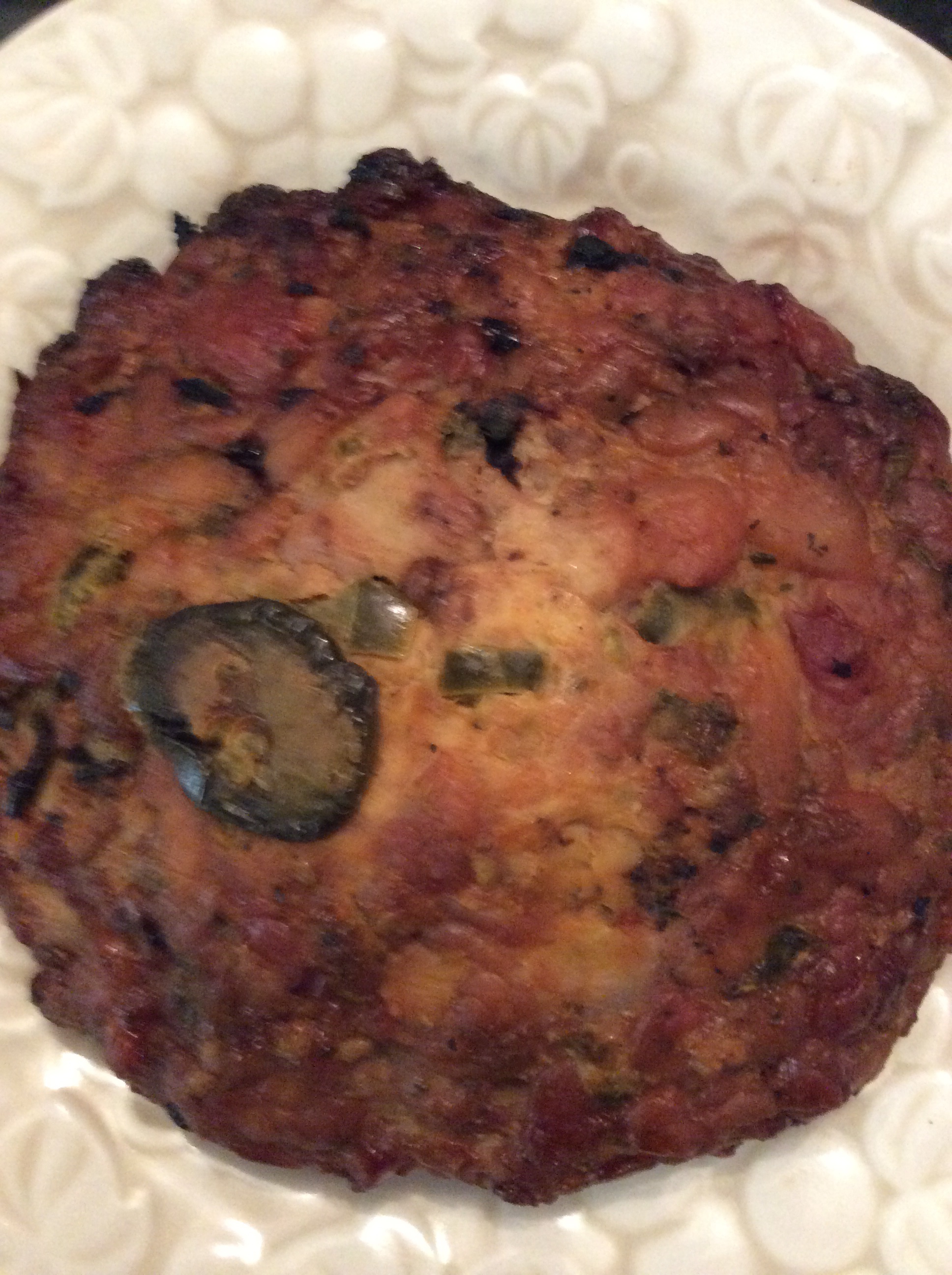
Then there were chicken patties made of spiced, chopped chicken stuffed with cream cheese and jalapenos, and, of course deep fried.

Cream cheese and jalapeno stuffed chicken pattie

Cream cheese and jalapeno stuffed chicken pattie

Finally, I got some meat pies. The originals are from a quaint town south of Shreveport, Natchitoches (nack-a-tish) and they are called Natchitoches meat pies – really like a highly seasoned empanada containing a rich beef and pork farce.

Meat pies

Meat pies

No one is exactly sure of the origins of Zwolle tamales and Natchitoches meat pies. My thought is that both are very old towns and right on the border between the old French and Spanish empires of the region. Borders shifted constantly, and I am certain that settlers did as well.
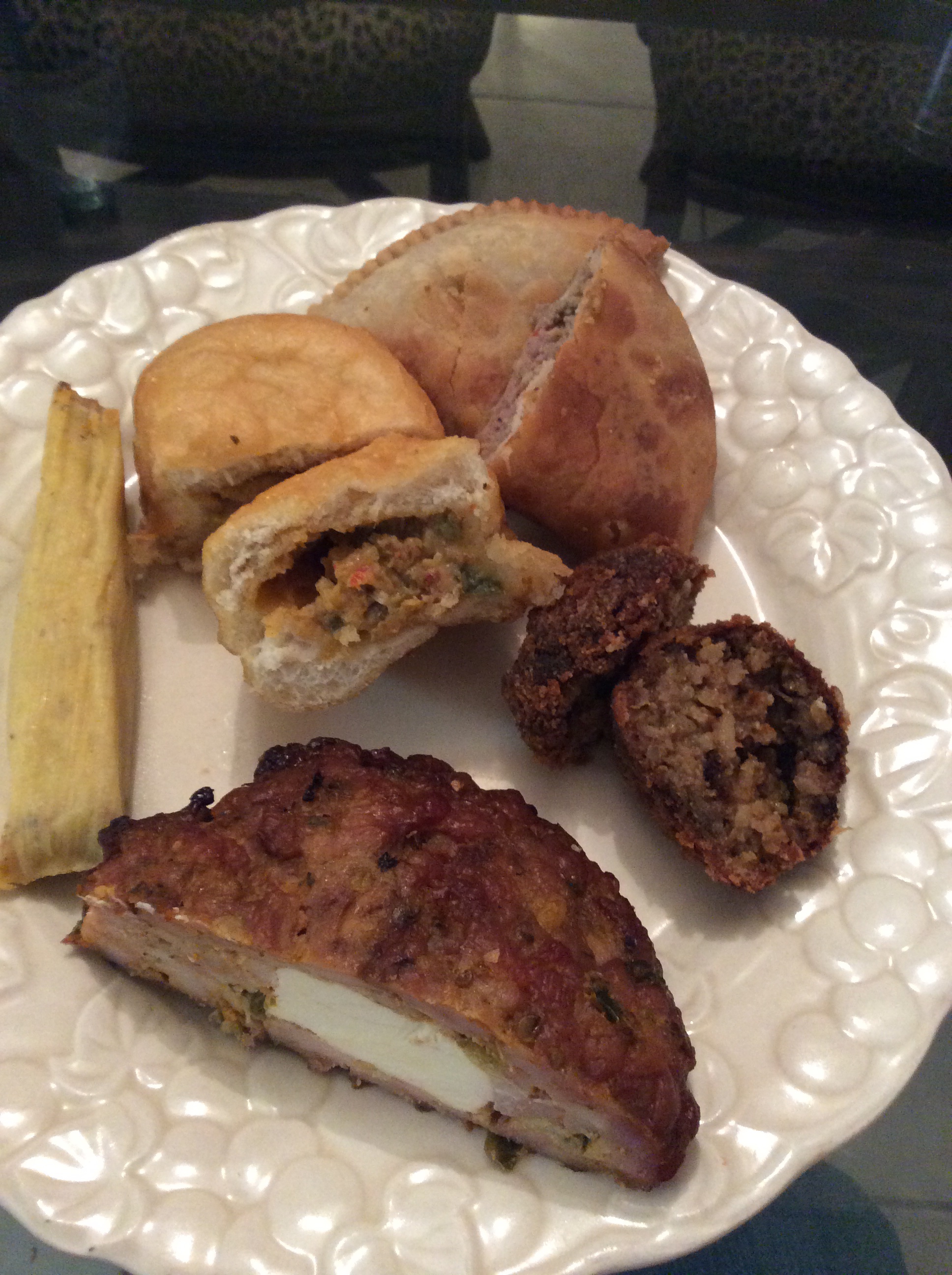
The food all turned out to be delicious, but my one piece of advice is to be sure to take your Lipitor, and have a big bottle of Tums at your bedside.

A plateful of Louisiana goodness

A plateful of Louisiana goodness

2 Comments

Filed under Food, Photography, Recipes, Restaurants, Travel

LETTER FROM UNSCENE SHREVEPORT: BUTCHERING A PIG

Trigger warning: this post is not for vegetarians.

As part of their residency in Shreveport, Sarah and Evan were asked to demonstrate how to butcher a  whole hog. The program was designed for professionals so that they would consider buying whole animals or primal cuts instead of just ordering chops or steaks from the restaurant food supply company. In that way, they could use everything, both as a cost-saving measure and as a way to think of new uses for meat cuts that they had never tried before.

No, Sarah did not slaughter the pig, but it came close: the animal was bled, skinned, and cleaned of offal, but otherwise it came snout to tail with suggestions on how to use every part.

Sarah’s tools included knives that she spent all morning sharpening, a big cleaver, and a hack saw that she bought from the hardware store.

The audience included restaurant professionals, enthusiastic amateurs, old folks who recalled butchering a hog on their grandparents’ farm, farmers from the farmers market who were interested in sustainable farming, and students from the local culinary training program who mostly slept in the back of the hall.

Evan talked while Sarah talked and demonstrated how to separate the various cuts of meat.  She carved out the tenderloin, chops, roasts, hams, and pork belly. She showed how to trim excess fat, and how to remove silver skin for a more tender cut of meat.

In the end, she demonstrated how to get hog cheeks – a delicacy – and what to do with the whole head. Several older people were very interested in that because they remembered making souse and head cheese when they were younger.

In the end, it turned out not to be a beautiful or tasty demonstration, but one that everyone found interesting – except the culinary students.


3 Comments

Filed under Food, Photography, Travel

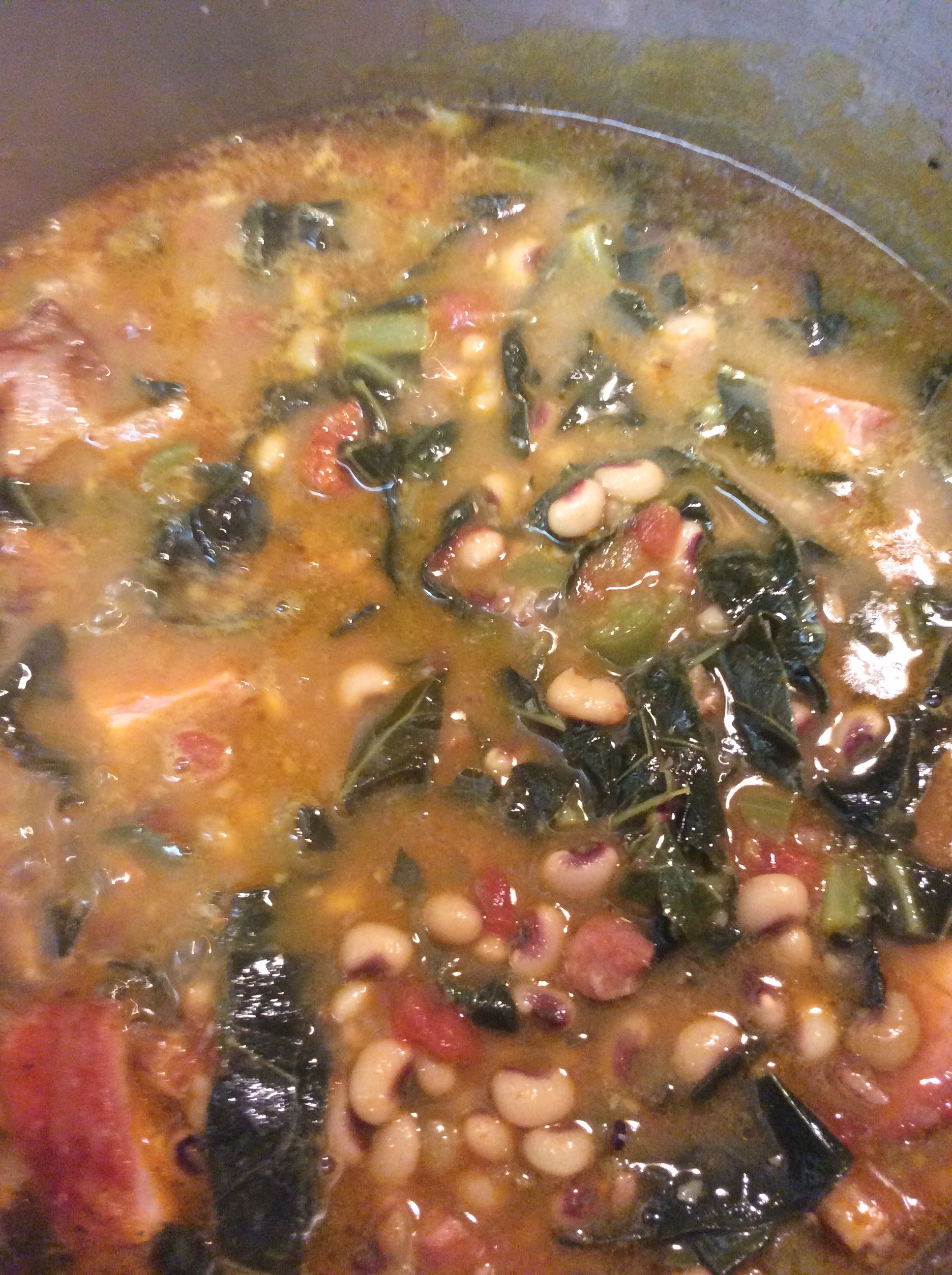
LETTER FROM UNSCENE SHREVEPORT: PURPLE HULL PEAS, TASSO AND COLLARDS

Last night we ate at our apartment after Sarah, Evan, and Van went fishing with Jason Brady and his family. It seemed like a perfect time to cook up some purple hull peas I had bought at the farmers market.  I went to the grocery store to get some salt pork and tasso, but I probably could have found those at the farmers market, too.

You can’t have peas, tasso, and collards without some cornbread to sop up all of the juices, but none of us was in the mood to bake cornbread in our understocked apartment kitchen. Fortunately we had  some leftover corn muffins that had been served with our chicken fried steak at Strawn’s for lunch. The muffins were sweet (Yankee cornbread in Louisiana!?) but they would have to do.

I cooked the meal while the fisher persons were out on the lake.

RECIPE

Cookin'

Cookin’

Purple Hull Peas, Tasso and Collards

Ingredients

  •  2 tablespoons vegetable oil
  • 1 large onion, chopped
  • 8 ounces salt pork, cut into a large dice
  • enough water to cover the salt pork in a small saucepan
  • 32 ounces chicken stock
  • 1 quart shelled purple hull peas, fresh or frozen
  • 1 large green bell pepper, seeded, deveined, and chopped
  • 14 1/2 ounces canned, diced tomatoes (fresh tomatoes would be great, but I forgot to buy them at the farmers market)
  • 3 cloves garlic, minced
  • 1/2 teaspoon sugar
  • 1 1/2 tablespoons vinegar or lemon juice
  • salt and pepper
  • 8 ounces Cajun-style tasso ham, cut into bite-sized chunks
  • 1 large bunch fresh collard greens, washed, trimmed, and cut into a coarse chiffonade
  • Louisiana Hot Sauce to taste (optional)

Method

  1. In a large, covered pot heat the oil over medium-low heat. Add the onions, cover, and sweat until the onions are soft and translucent. Transfer to a bowl.
  2. Bring water to a boil in a small saucepan and add the salt pork. Return to the boil and boil for 5 minutes to remove any excess salt.. Drain and transfer to the large pot over medium heat. Stir frequently to allow light browning.
  3. Return the onions to the pot. Add chicken stock and bring to the boil. Stir in the peas, bell pepper, and garlic. Adjust seasoning with salt and pepper. Return  to a boil and then adjust the heat to a simmer. Simmer, covered for 1 hour or until the peas are soft.
  4. Stir in the tasso and simmer for another 30 minutes.
  5. Add the collard greens and simmer for another 30 minutes or until the greens are thoroughly cooked but not limp. Adjust the seasoning. Be sure to use hot sauce if you like it.
  6. Serve in large soup bowls.

2 Comments

Filed under Food, Photography, Recipes, Travel

LETTER FROM UNSCENE SHREVEPORT: TOMATO AND SQUASH SHOWDOWN

Today is the day of the amateur cook-off. The contestants have had the weekend to think about what they would cook, using either tomatoes or squash. There have been over seventy entrants, more than twice as many as anyone thought. Even at that, there were several who chose not to enter because they couldn’t think of anything to make with tomatoes or squash. One woman asked what the ingredients were. She declined tomato. When she found out the other choice was squash, she said, “I don’t do vegetables,” and left. So much for the farm-to-table movement.

Our guess was that there would be a lot of stewed tomatoes and okra (This is Louisiana, after all.) There would also be a lot of zucchini bread. We’ll see. Turn in time was 5 PM and at 3PM entries were already starting to arrive.

On the way to the place where the contest was to be held, we stopped for barbecue. Big D’s Barbecue has been smokin’ for over 30 years. It is quintessential Louisiana barbecue although too much ketchup for my taste. Still, it is worth the trip. I’ve included an image of their smoker and outdoor dining area (if you can stand the heat) along with their delivery vehicle.

Sarah and Evan’s menu included:

  • Sliced tomatoes with grilled corn, popped sorghum, and white chocolate
  • Green bean salad with raw pecans, coffee vinaigrette, and green-bean chimichirri
  • Honey-roasted potatoes with sunflowers
  • Plum-glazed pork roast

The contest turned out to be an exciting event. Over 70 cooks along with families showed up, so there were nearly 300 people jammed into the hall. The contestants were intense and clearly there to win. Contrary to our expectations, there was not a single serving of tomatoes and okra or zucchini bread, although a 10-year old girl made an elegant squash cake with an elaborate squash glaze. Choosing winners turned out to be more difficult than anyone had thought, but among the winners were a fancy pizza with lots of toppings, a tomato pie, and a squash appetizer. After the judges – Sarah, Evan, and Jason – had sampled everything. (Yes, you read that right.) everyone in the audience stormed the tables to get their own taste of the various entries.

Following the announcement of the winners, Sarah and Evan’s dinner was served, and folks were still hungry! Then there was a lively panel of local food experts talking about the next steps toward getting Shreveport more farm-to-table friendly.

A long evening, but everyone went home well-fed and happy.

Leave a comment

Filed under Food, Photography, Travel