Category Archives: Travel

FAJITAS – HIGH SEASON IN SANTA FÉ

It is clearly high season in Santa Fé. Nearly everyone has visitors, and tourists jam the Plaza. Our own first visitors were two of our grandchildren, and so we tried to have kid-friendly meals that they could help make. When their parents came to visit and pick up their kids, we planned an easy meal for their arrival. We needed something that could wait in case their plane was late. Fajitas came to mind, so I started getting them ready the day before their arrival. The first thing to do was to trim and marinate the skirt steak. Skirt steak, called arracheras  by Mexican cooks, is actually the diaphragm muscle which separates the chest and abdominal cavities. It is well-flavored but tough, so it has to be prepared to make it tender. The first thing to do is to strip off the pleura and peritoneum (the linings of the chest and abdominal cavities respectively). That is an easy but necessary step, using a sharp, pointed knife to cut at  the demarcation line between the steak and the fibrous linings. An overnight soak in marinade, followed by grilling over hot coals are additional steps to create a tender meat for the fajitas. I got the recipe for the tequila marinade from The Sunset Southwest Cook Book (Lane Publishing Co., Menlo Park, CA, 1987, p. 45). If you don’t want to use tequila, just substitute more lime juice.

I had to deal with some of the food dislikes within the family. Some don’t like onions or even things that touch onions. Some can’t tolerate piquant chiles because of food sensitivities. Some don’t like avocados. Because of all these variables, I grilled the onions separately from the meat. Instead of classic pico de gallo (rooster’s beak), I made what I call pico de gallina (hen’s beak) without the jalapeños. I omitted the guacamole, but I would encourage you to include it in your choices of fillings.

In the end, everyone seemed to enjoy the modified fajitas.

The next day  we became inveterate tourists, trying to pack in as many events as possible.

There are lots of things to choose from: the Santa Fé Opera is high on the list, the Chamber Music Festival, dancing on the Plaza, riding the Rail Runner train, visiting the Bandelier ruins, hiking in the mountains, visiting the Shidoni Foundry, swimming at the community center, visiting the many museums, and eating, eating, eating.

The first day of the visit we went to one of our favorite restaurants, Babaluu’s Cocina Cubana, a quirky place away from town with great Cuban food. My daughter and I went to Whole Foods for the picnic for our tailgate dinner that evening at the opera. The opera tailgate is totally unlike the ones you may have attended at a football game. People show up in tuxedos and long gowns with candelabra, white tablecloths, fancy silver, and elaborate food on tables in the middle of the parking lot. Years ago we spent hours getting ready a fancy feast, but we now just go to the market for wine and food.

Following our festive meal, some of us went to the opening of La Traviata. It was our twelve-year-old granddaughter’s first opera and she was excited. She watched intently to the end and shed a few tears when Violetta died.

The next day my wife and I visited the Opera Ranch, the grounds of the Santa Fé Opera where singers, musicians, and technicians gather, practice, and enjoy the beauty of the area. Afterward we had lunch at the Tesuque (Te-su’-kay) Village Market, a combination country store, wine shop, gourmet bakery, and rustic café serving typical Northern New Mexico meals like huevos rancheros and green chile cheeseburgers.  It is very popular with locals.

The kids enjoyed the Shidoni Foundry where bronze sculptures are cast on commission from all over the world. The sculpture garden is filled with some amazing, interesting, and beautiful pieces. The foundry is near the end of Bishop’s Lodge Road, named after Archbishop Jean-Baptiste Lamy, a Frenchman who built a French-styled cathedral on the plaza of very Spanish/Mexican Santa Fé. He had a beautiful summer retreat along the road; the retreat has subsequently become a posh resort.  The archbishop was also the model for  the protagonist in Willa Cather’s famous novel, Death Comes for the Archbishop.

The kids and their parents rode the Rail Runner train. We shopped on the Plaza. We took a short hike in the mountains until we retreated in a thunderstorm. We had another great meal at another favorite restaurant,  Taberna La Boca. Finally my daughter made her famous “Law School Chicken” at the kids’ request. My granddaughter specifically forbade me from writing about “their secret family recipe.”

Then time ran out, and the visit was over.

RECIPES

Tequila Marinade

Ingredients

  • ½ cup fresh lime juice
  • 1/3 cup vegetable oil
  • 1/3 cup tequila (may substitute lime juice)
  • 4 cloves garlic, minced
  • 1½ teaspoons ground cumin
  • 1 teaspoon dry Mexican oregano leaves
  • ½ teaspoon ground black pepper

Method

  1. In a small bowl, combine all of the ingredients.
  2. Set aside until ready to marinate skirt steak

Pico de Gallina

Ingredients

  • 2 medium ripe tomatoes, chopped
  • 1 large white onion, chopped
  • 1 green bell pepper, seeded and chopped
  • ½ cup fresh cilantro leaves, chopped
  • juice of 1 lime
  • salt and pepper to taste
  • ½ teaspoon garlic powder (optional)
  • 1-2 fresh jalapeños, seeded and chopped (optional)

Method

  1. Combine all ingredients in a large bowl.
  2. Cover and refrigerate until ready to use

Fajitas

Ingredients

  • 2 pounds skirt steak, trimmed of membranes
  • 1 batch tequila marinade (recipe above)
  • 3 bell peppers (red, yellow, or green) seeded and sliced into strips
  • 2 large yellow onions, peeled and sliced into strips
  • 1 dozen large flour tortillas
  • 1 batch pico de gallina (recipe above)
  • sour cream

Method

  1. Combine the steak and marinade in a plastic zip bag. Refrigerate overnight, turning frequently to coat the steak on all sides.
  2. When you are ready to cook the fajitas, prepare a hot fire in either a charcoal or gas grill.
  3. Place the steak over the hot fire.  Grill for about 7 minutes. Then turn over and grill for an additional 7 minutes. Baste frequently with reserved marinade.
  4. Meanwhile, place the sliced peppers and onions in a fire-proof grilling basket and place on the grill. Stir or turn occasionally until caramelized on all sides.
  5. When the steak is done, transfer to a cutting board. Arrange the grilled vegetables in a serving bowl.
  6. Rest the steak, covered with aluminum foil for 5 minutes before slicing thinly on the bias.
  7. Meanwhile, warm the tortillas.
  8. Invite each diner to make his or her own fajita with sliced steak and grilled vegetables on a warmed tortilla. Add pico de gallina and/or sour cream as desired.
  9. In a group that is not avocado-averse, fresh guacamole is a welcome addition.
  10. Roll and eat.

6 Comments

Filed under Food, Photography, Recipes, Restaurants, Travel

TWO YEARS OF FUN AND FRIENDS

Just the other day I received a notice from WordPress that my blog had just passed its second anniversary. I was a little surprised with the event, but it caused me to reflect on my writing over the past two years. So far I have published 113 posts which works out to a few more than one a week. Honestly, that has kept me busy with cooking, recipe development, photography and editing. But once a week is not very prolific. There are lots of bloggers who make a point of posting at least once a day. I don’t know how they do it, though why they do it – at least one of the reasons – is to improve their ranking in internet searches.

That is really not one of my motivations, though I enjoy seeing my list of followers increase over time. The main reasons I started this blog were to try to polish my writing style, learn how to write a coherent recipe, improve my photography skills, especially with food, and to communicate with family and friends.  I think I have accomplished these goals although I need to let my readers be the judge of that.

One unexpected benefit of the blog has been the development of friendships with folks whom I have never met from all over the world . I look forward to reading and seeing their blogs; I look forward to their comments about my posts.  In many ways they have become friends. I even imagine that someday I might have the opportunity to meet these cyberspace friends in real life.

I guess I will keep on writing as long as I think I have something to say along with posting images that I think folks might find a little unique.

This time I’m not going to write anything about food, just thank all of you have participated in one way or another with this blog. I will share some images from my home town – Santa Fe, New Mexico. In particular, the images are of sculpture, architecture, and flowers along Canyon Road, Santa Fe’s famous art district.

3 Comments

Filed under Photography, Travel

CHICKEN LASAGNA WITH PUMPKIN AND GREENS – SAN FRANCISCO BAY AREA RISING STAR CHEFS

A while back we spent some time in the Bay Area baby sitting while our kids were involved in out-of-town business trips. One of the payoffs for our efforts was that we got to attend the Silicon Valley crawfish boil I wrote about. Another bonus was the chance to attend the San Francisco Rising Stars celebration sponsored by Starchefs, an organization that publishes magazines and websites catering to food professionals. Once a year, in a different city, Starchefs throws a big event to recognize rising star chefs from that community. This year it was San Francisco’s turn. Sarah and Evan were fortunate enough to be selected among the eight Rising Star chefs, along with outstanding pastry chefs, artisans, restaurateurs, brewers, and mixologists.

The event was held at AT&T Park, the home of the San Francisco Giants. There is a lot of excitement just with the prospect of seeing a huge major league baseball park all spiffed up and without the crowds.

Still, there was a different crowd: for a select few (actually willing to pay a lot more for their tickets) there was a VIP reception in the main-floor restaurant and lounge. “Free” drinks, appetizers when you could intercept the servers, and some women in long gowns – in a baseball park.

After the reception, everyone headed to the seats behind home plate to watch the awards ceremony. One by one the winners were called out of the dugout to run to home base for an introduction, award, and photos.

Next, everyone rode elevators up to the Club level, complete with spectacular views of the stadium and San Francisco Bay behind it. There the winners had all prepared some of their signature dishes and served them from tables set up around the lobby, interspersed with tables of wine paired with each of the dishes.

There was some pretty spectacular food, and this is just a sampler:

  • Nick Balla, Bar Tartine                            Fisherman’s stew with green chile
  • Richie Nakan, Hapa Ramen                   Crispy ramen noodle cake
  • Jessica Largey, Manresa                         Verbena- and chamomile-poached sea bream collar
  • Jason Fox, Commonwealth                    Scallop, hearts of palm, popcorn puree
  • Brett Cooper, Outerlands                       Fish sauce-glazed Berkshire pork belly
  • Duncan Holmes, Sons & Daughters     Squab with marcona almond butter
  • Mark Liberman, AQ                                 Australian beef short ribs with black garlic

Of course, we were partial to Sarah and Evan’s offering from Rich Table, chicken lasagna with pumpkin and greens

All in all, it was a great evening in a great setting in a great city.  My only concern was getting out of the parking lot with all of those other revelers.

2 Comments

Filed under Food, Photography, Restaurants, Travel

CHIPOTLE CULTIVATE SAN FRANCISCO

We just returned from a week in the San Francisco Bay area. Our trip was primarily a baby-sitting junket, but we wound up experiencing a non-stop rush of food events. The main reason for our trip was so that our daughter and son-in-law could go to New York City to cook in a charity event in Rockefeller Center for CityMeals on Wheels, but we wound up baby-sitting while they cooked at their restaurant, Rich Table, for visiting chefs attending the Chipotle Cultivate Festival in Golden Gate Park. Then there was the NYC event itself, and while the offspring were out of town, we helped my son and his family with their annual crawfish boil in Silicon Valley, and then cooked a birthday dinner for my son.  In between all of this we had a spectacular all-holds-barred dinner at Rich Table and a late lunch at the Presidio Social Club, a lovely little place on the Presidio grounds. Finally we attended the awards ceremony for San Francisco’s Rising Star Chefs held in the Giants’ AT&T Park. Sarah and Evan cooked again, and the reception was a real food blowout.

Now we have to work on losing the weight we gained during this food extravaganza.

My first report from the week is about the Chipotle Cultivate Festival, sponsored by the Chipotle Mexican Grill restaurant chain. This started out as an event in Chicago’s Lincoln Park three years ago, spread to Denver’s City Park last year, and now this year moved to include San Francisco’s Golden Gate Park. The event was held in Hellman Hollow with nearby Lloyd Lake. The festival was free with lots of live music, so there were big crowds. Chipotle had food stands around the grounds with some of their specialties for sale. There were lots of other food vendors, but one of the highlights was a series of cooking demonstrations by well-known chefs. Amanda Freitag, perhaps best known as one of the judges on the Food Network’s Chopped, travelled from New York City. So did Douglas Quint and Bryan Petroff, co-owners of Big Gay Ice Cream Trucks, wildly popular in NYC. Ludo Lefebvre, Jon Shook, and Vinny Dotolo came up from Los Angeles. Michael Charello of Bottega in Napa Valley, Richard Blais from Atlanta, corporate chefs from Chipotle, and San Francisco chefs Minh Tsai, Evan Bloom, Led Beckerman, and Sarah and Evan rounded out the list of chefs who did cooking demonstrations throughout the day.

Sarah and Evan chose to prepare Sarah’s popular dessert, caramelized olive oil cake with fresh strawberry sauce and cream cheese ice cream. Oil cakes have been around for years, but recipes in cookbooks are often hard to find. Oil is used as a substitute for butter or shortening. Its liquid state at room temperature makes a moist cake, but that also means it will not support cake loft as much as solid fats. For that reason, the cake is more dependent upon incorporated air in other ingredients so it is important to beat those ingredients enough to give the cake lightness. Olive oil has only recently become a popular ingredient. The 1975 edition of the Joy of Cooking has three recipes for oil cakes but also strong advice to avoid olive oil because of its strong flavor. These days, that strong flavor has made olive oil cakes popular.

An additional step that makes Sarah’s cake special is caramelization. As she says, you can caramelize the top, the top and bottom,or all sides, depending how much time you want to spend. One way to caramelize the cake is to sprinkle it with sugar and use a salamander or torch as you might for a crême brulée, but that may be too tricky, so you can accomplish the same thing in a very hot skillet or griddle. The caramelization step can only be done when you are ready to serve the cake.

The second part of the demonstration dish was a strawberry sauce made from fresh strawberries. California strawberries fresh from the farm are totally unlike the flavorless, cardboardy kinds you get in the supermarket. The farm varieties are red, juicy, sweet, tender, and filled with the strawberry flavor of long ago. Adriana Silva, the owner of   Tomatero Farms near Watsonville and the strawberry purveyor, also participated in the demonstration. She has gone from 2 to 200 acres under cultivation in just a few years, and she raises six different varieties of strawberries which come in at different times during the season. The variety used for the demonstration was “Seascape”, a red, sweet beauty.

The final part of the dish for the demonstration was a generous topping of cream cheese ice cream, churned at Rich Table that morning. It is like eating a bite of cold New York cheesecake except that it melts in your mouth.

RECIPE

Olive Oil Cake

Ingredients

  • 8 large eggs
  • 1½ cups granulated sugar
  • 1 teaspoon salt
  • 1½ lemons, zested
  • 1 1/8 cups whole milk
  • 1½ cups all-purpose flour
  • 1 cup cake flour
  • 1 1/3 cups almond flour
  • ¼ cup baking powder
  • 1½ cups extra virgin olive oil + more to grease the cake pan
  • granulated sugar to caramelize the top

Method

  1. In the bowl of a stand mixture, combine the eggs and sugar. With the mixer set on medium speed, cream the eggs and sugar together for at least five minutes to incorporate as much air into the mixture as possible. It should form a smooth, shining ribbon.
  2. Turn the mixer to low and add the salt and lemon zest
  3. Slowly drizzle in the mil with the mixer still running.
  4. While the eggs and sugar are mixing, sift together the flours and baking powder.
  5. Add the sifted flours to the mixture, continuing to beat on low.
  6. Drizzle in the olive oil very slowly as you would making mayonnaise.
  7. Prepare a half sheet cake pan ( 16 x 12 x 3 inches) by oiling liberally with the extra olive oil
  8. Pour the batter into the prepared pan. Use a spatula to make sure the batter fills the corners of the pan.
  9. Bake in the middle of an oven pre-heated to 325°F for 25 minutes or until the cake springs back to the touch and/or tests clean with a toothpick
  10. Remove from the oven. Cool on a baking rack for five minutes. Then invert onto a flat surface. Gently transfer the cake. You may need to use your fingers or a thin spatula get the cake out in one piece.
  11. When ready to serve, cut the cake into serving-size pieces, sprinkle with sugar, and place sugared-side down on a clean hot griddle or skillet. When the sugar is caramelized (2-3 minutes) serve caramelized side up with sauce, whipped cream, or ice cream.

3 Comments

Filed under Food, Photography, Recipes, Restaurants, Travel

GOODBYE TEXAS – EAST TEXAS CASSEROLE

We recently had a wonderful family gathering with our children (their spouses didn’t attend) and some of our grandchildren. My wife’s family has had a beautiful farm in East Texas for over fifty years. Our children had spent many times during their growing-up years there, enjoying swimming, fishing, hiking. horse riding, and just generally having a good time. Now, because we all lived so far away and because travel to the fairly remote place was difficult and expensive, we decided to sell the farm. After we had accepted an offer on the farm, we needed to make one last visit to load up personal items and to enjoy the place for one last time.

It turned into a great family gathering when all of the kids found a few days to spare in their busy schedules. For nearly a week, people came and went, fished and hiked, laughed, sat in front of a camp fire, and ate some good food.

Our family has been lucky to have excellent cooks in many generations, so one of the best memories for all of us is the good food we have enjoyed on the farm: festive Thanksgiving dinners, fried catfish, fresh vegetables from the once-one-acre garden, and wild blackberries from the surrounding fields and woods. One meal that we all remember was a huge buffet that ladies of the church had prepared for a family gathering many years ago at a time of family sadness. The spread was lovingly prepared, but the most noteworthy dish was made by one of my late mother-in-law’s closest friends. I call it East Texas Casserole, but if you look for the recipe on the internet, you will find it called Redneck Casserole. I have changed the name because I would never call any of the gracious ladies of the church society rednecks. The dish is easy to prepare – one of those open the can and dump creations – and it gets uniformly good reviews on the web. You can prepare it in 30 minutes or so.

Most internet recipes call for grated Cheddar cheese, but to me that is not really authentic. For the real thing you will need to use Velveeta cheese food. I grew up on the stuff, and so did most other kids of that era, including my wife. The product has an interesting history which you can read about in great detail in The Oxford Companion to American Food and Drink edited by Andrew F. Smith (Oxford University Press, New York, 2007)

The short story is that two American cheese companies were looking for ways to prevent cheese from spoiling so rapidly and to store it at room temperature. A process was patented by Joseph L. Kraft in 1916. Tinned cheese was distributed to the troops in World War I (Remember Spam in World War II?) Eventually the two cheese companies agreed to share the patent and Velveeta made its brand-name appearance in 1928. Velveeta must contain at least 51% cheese (that’s why it is called cheese food) and will keep almost for eternity on a shelf at room temperature. These amazing properties are due to sodium citrate and, later, sodium phosphate among other preservatives. Subsequently Kraft brought out boxed macaroni and cheese in 1937, using a dehydrated version of Velveeta. Millions of boxes are sold each day, and it is discouraging to many mothers when their offspring prefer Kraft’s macaroni and cheese dinner to their carefully made from-scratch version.

RECIPE

EAST TEXAS CASSEROLE

Ingredients

  • 1 medium onion, diced
  • 2 tablespoons cooking oil
  • 1 can (22 ounces) Bush’s barbecued beans
  • 1 package (8) hot dogs, sliced into ½inch rounds
  • 1 pound (about 2 cups) frozen tater tots
  • 8 ounces Velveeta cheese food, grated (chill the Velveeta in the refrigerator for about 30 minutes to make it easier to grate)

Method

  1. Preheat oven to 350°F.
  2. Heat a 2 quart cast iron skillet over medium heat.Add the diced onions and oil, stirring until the onions are translucent, but not browned, about 55 minutes. Remove from the heat.
  3. Stir in the canned beans and hot dog slices.
  4. Arrange the frozen tater tots on top of the mixture.
  5. Bake on the middle rack of the preheated oven until the tater tots are golden brown, about 30 to 40 minutes.
  6. Remove the skillet from the oven, sprinkle the top with the grated Velveeta, and return to the oven for about 5 minutes. Then turn the heat off in the oven and continue to bake for a few minutes until the Velveeta is well melted. Serve immediately.

11 Comments

Filed under Food, Photography, Recipes, Travel

MORE EAST TEXAS – FRIED CATFISH AND HUSH PUPPIES

A fish fry is one of the great traditions of the entire South, but nowhere is it more on display than in East Texas and nearby Louisiana and Arkansas. The corners of these three states are so akin to one another that residents of the region call it the ArkLaTex. If you use that name, everyone knows where you live, and everyone knows what you think is important in life. Years ago we lived in Shreveport where one of the favorite eating haunts was the Cypress Inn. This huge, ramshackle place sat on the banks of the Cypress Bayou and though they had a lot of choices on the menu, nobody ever went there except to eat their fried catfish dinner complete with hush puppies.


The hush puppies were golden balls of melt-in-your mouth goodness – crispy outside, creamy inside of cornbread and chopped onions.  Now, you may have had the eraser-shaped hush puppies in one of the big “country-style” chain restaurants, but those are a pale, tasteless copy of the real thing. The Cypress Inn had the real thing, and you could make a whole meal of hush puppies alone.

The catfish was equally delicious with a golden, crunchy outside of cornmeal crust  and the flavorful tender catfish inside.

Catfish, especially those caught from a lake or bayou can have a muddy taste to them. These days, though, most are farmed in huge tanks or ponds. Still, it’s worth using an old trick that locals swore by to get rid of the muddy taste. A good soak in buttermilk is supposed to brighten the taste of the catfish, and I do belive that it works. That soak is part of the method of this recipe.

The other parts of the Cypress Inn meal  were the hand-cut cole slaw and the fresh cobbler, apple or peach depending on the season. You probably have your own favorite recipes for these, but you definitely need to have some slaw, tartar or cocktail sauce, and fruit cobbler handy when you sit down to enjoy fried catfish with hush puppies.


RECIPES

Fried Catfish

Ingredients

  • 4 catfish fillets, skin and bones removed, about 4-6 ounces each
  • 1½ cups buttermilk
  • 1 cup flour
  • 1 tablespoon Old Bay seasoning
  • 1 tablespoon paprika
  • 2 teaspoons salt
  • 1 teaspoon  ground black pepper
  • 1 cup yellow cornmeal
  • vegetable oil for frying

Method

  1. In a shallow pan or plate, cover the catfish fillets with buttermilk. Cover with plastic wrap and refrigerate for at least 4 hours or overnight.
  2. In another pan or plate, combine the flour, seasoning, paprika, salt and pepper.
  3. Fill another pan or plate with the cornmeal
  4. When you are ready to fry the catfish, remove the buttermilk-soaked fillets from the refrigerator and transfer to the plate with the flour mixture, letting any excess buttermilk drain from the fillets. Turn each fillet in the mixture so it is completely coated with the flour mixture.
  5. Then transfer the coated fillets to the cornmeal, again turning them so they are completely coated with the cornmeal
  6. Fry the fillets, one at a time or in batches  in a deep pan with about 2 inches of vegetable oil pre-heated to 350⁰F (177°C), turning them over so that both sides are golden brown and crispy.
  7. Drain on paper towels and serve immediately while still hot.

Hush Puppies

Ingredients

  • 1½ cups yellow cornmeal
  • ½ cup flour
  • 1 teaspoon baking powder
  • ½ teaspoon baking soda
  • 1 teaspoon salt
  • ¼ cup scallions, green tops only, chopped very finely
  • 1 cup buttermilk
  • 1 large egg, beaten
  • vegetable oil for frying

Method

  1. Stir together the cornmeal, flour, baking powder, baking soda and salt so that they are completely mixed
  2. Add the chopped scallions, buttermilk, and beaten egg. Mix so that they are thoroughly combined.
  3. By spoonfuls, drop the mixture into a deep pan with about 2 inches of vegetable oil that has been heated to 350⁰F (177°C), turning until the hush puppies are golden brown on all sides.
  4. Drain on paper towels and serve while still hot.  Makes about 30 hush puppies.


7 Comments

Filed under Food, Photography, Recipes, Travel

CORNBREAD AND SPRINGTIME IN EAST TEXAS

This is the best season to be in East Texas. The winter rains have filled up the ponds and encouraged the emerging leaves into a hundred different shades of green.  The days have warmed without the blazing heat that will begin in only a few weeks. The nights are still cool and perfect for sleeping.

Unlike most of the rest of Texas, the “Piney Woods” are set on rolling hills which are filled with Southern pines, hickories, sweet gums, maples, and oaks of several varieties. This time of year, though, the redbud trees announce themselves as well as Spring. Beautiful shades of pink and red light up the woods.

More hidden in the depths of the forests, dogwoods hang like clouds in the shadows. The branches spread, and the white sepals seem to drift suspended. Close up, the markings remind us of the legend of the dogwood serving as the wood of the cross. It seems appropriate that the beautiful show occurs in the Spring.

East Texas has not lost the commercial opportunities of the redbuds and dogwoods. The Palestine Dogwood Festival (that’s Pal’-a-steen, Texas) provides visitors an opportunity to eat street food, watch the crowning of the festival queen, and tour the beautiful woods.

There are lots of foods that typify East Texas, including fried catfish, hush puppies, greens of all sorts (collards, kale, pokeweed), and at other times of year, black-eyed peas.  For me, though, the quintessential food is cornbread.

Cornbread is almost universally popular, especially in the South. Craig Claiborne, the famous New York Times editor and food critic from Mississippi declared that there are more recipes for cornbread than magnolia trees in the South! Yet finding good recipes for plain cornbread in cookbooks is a difficult task.  Moreover, the popularity of packaged cornbread kits has made it even harder to find a real home-made chunk of cornbread.

If you decide to bake your own cornbread,  there are  decisions that need to be made.  Cornbread made from white cornmeal tends to be more popular in the east with yellow cornmeal gaining increasing popularity the further west you travel.  Northern cornbread, or “Yankee cornbread” as it is commonly called in East Texas, usually contains some sort of sweetening – molasses, maple syrup, sugar, or honey;  Southern cornbread  usually does not contain sweetening, but these distinctions between north and south are not absolute.

This is a version of Southern cornbread, baked in a cast iron skillet as, in my opinion,  all authentic cornbread must be. Some time ago, we had an informal family competition for the best cornbread recipe. This was my entry. One of my daughters used a recipe from one of her friends. It contains sugar (heresy!) and is more like cake. But it is so good that you could wind up eating the whole thing by yourself. I plan to post that recipe in the near future.

RECIPE


Southern Cornbread

Ingredients

  • 2 tablespoons bacon fat for greasing the baking pan
  • 1 cup all-purpose flour
  • 1 cup yellow cornmeal
  • 1½ teaspoons baking powder
  • ½ teaspoon baking soda
  • 1 teaspoon salt
  • 2 jumbo eggs, room temperature
  • 1½ cups buttermilk
  • 4 tablespoons unsalted butter, melted

 Method

  1. Preheat the oven to 425°F (218°C) . Grease a 9 inch cast iron skillet with bacon drippings and place in the oven 10 minutes before you are ready to pour in the batter.
  2. In a large bowl, combine the dry ingredients: flour, cornmeal, baking soda, baking powder, and salt.
  3. In a small bowl, combine the wet ingredients: buttermilk, beaten egg, and melted butter. When they are well combined, stir them into the dry ingredients.
  4. Mix the batter for only a few beats until the mixtures are combined and the large lumps have been smoothed. Do not overbeat.
  5. Remove the heated skillet from the oven, pour in the batter, and immediately return to the oven. Bake for 15 minutes in the top half of the oven. Turn  the skillet 180 degrees and continue to bake for another 15 minutes or  until the top is lightly browned. Remove from the oven, cool for about 5 minutes, then cut into eight wedges, and serve immediately while still warm.

7 Comments

Filed under Food, Photography, Recipes, Travel

TAORMINA, SICILY AND CANNOLI

Sicily is such a beautiful place with deep blue seas and fleecy clouds The surf pounds against the beaches, and the mainland of Italy is just across the Straits. The island traces its history back to Greek times when Syracuse was one of the great city states. Since then it has had a tumultuous history as its own country  as well as under the dominance of many other countries and empires including the Greeks, Romans, Byzantines, Turks, Arabs, and Italy.

That rich history has produced amazing archeology, architecture, food, and customs. The beautiful sunlight has produced a sunny population that seems to take everything in stride.

In the USA, many think of Sicily as the home of the Godfather. That stereotype annoys the locals. At the same time, they often feel obliged to mention it – mostly so they can dispel the myth.

Messina is the port city at the straits, and it is filled with beautiful old buildings and famous churches. Undoubtedly, one could spend days exploring, but the highlight of our trip was a drive along the coast and up a narrow winding road to the town of Taormina. The port is beautiful. with the Stele of the Madonna greeting and saying farewell to vessels as well as wishing a blessing for the city and for all sailors. The mainland of Italy is just across the Strait of Messala which is 1.9 miles across at its closest point and 3.2 miles from Messala to the mainland. Plans to build the world’s longest sing-span suspension bridge are well along.

Taormina has been a tourist destination since Grecian times. The town looks down on the coastline far below, and in the distance, clouds play around the summit of Mount Etna. The air is clear and sunny, and the town streets are lined with interesting shops, ancient palaces, and vendors of all kinds.

One of the required visits is the Greek amphitheater on a hill overlooking the town. The walk is steep but not very long. It is well worth it. The ruin is very well-preserved, and the views from its upper heights are spectacular. It is impossible to visit without thinking of the countless people who have been here before you.

After the visit, the walk back down the hill leaves most tourists either hungry, thirsty, or both. There are plenty of vendors in little stalls to accommodate, and the choices seem limitless, ranging from soft drinks to pasta.

Among the most popular items for sale are the cannoli. There are different sizes and different flavors, and they make great treats to enjoy on the stroll back to the center of the town. The recipe that follows is my take on the pistachio cannoli that we bought on our stroll down the hillside. To make your own, you will need some special aluminum cannoli molds for shaping the shells. Molds should be easily available at a well-stocked kitchen store. A 4 inch cutter is also handy. You may find a nest of cutters of different sizes another useful purchase.


RECIPES

Shells

Ingredients

  • ¾ cup all-purpose flour
  • ¼ teaspoon ground cinnamon
  • ½ teaspoon sugar
  • ½ teaspoon cocoa
  • 1 tablespoon unsalted butter
  • 3 tablespoons limoncello or other citrus-flavored liqueur
  • 2 teaspoons madeira
  • 1 egg white whipped lightly until it is slightly foamy

Method

  • In a medium bowl, combine the flour, cinnamon, sugar, and cocoa.
  • Cut in the butter with a pastry blender so that the mixture resembles coarse meal
  • Add the liqueur and wine and combine with a fork until the mixture comes together as a firm ball
  • Wrap the ball of dough with plastic wrap and refrigerate for 30 minutes or more.
  • Divide the dough in half, and roll out each half on a lightly floured surface to about 1/16th inch thick and large enough to cut out 4 4 inch circles using a cookie cutter or a cardboard circle as a template.
  • Using a rolling-pin, roll each circle into an oval.
  • Wrap each oval around a cannolo mold, long side parallel to the mold. Seal the seam with a dab of the egg white.
  • Fry each cannolo shell  in a heavy pan containing about 2 inches of canola oil and pre-heated to 375°F, turning until the shell is well browned and crisp.
  • Transfer to a pad of paper towels to let cool enough until you can easily remove the mold without burning your fingers.
  • Continue to fry the shaped shells until they are all fried. Set in a dry place ready for filling.

Filling

Ingredients

  • 8 ounces fresh ricotta
  • ¼ cup baker’s sugar
  • 1 teaspoon vanilla extract
  • 1/3 cup miniature chocolate chips + more to sprinkle on the filled cannoli
  • ¼ cup ground unsalted pistachio nuts + more for dusting the fille cannoli

Method

  • In a medium bowl, combine all of the ingredients, mixing well.
  • Transfer to quart-size zippered plastic bag and chill in the refrigerator until you are ready to fill the shells
  • When you are ready,  cut a ¼ inch corner off the plastic bag so that it can be used as a pastry bag
  • Fill both ends of each cannolo. Dust with ground pistachios and sprinkle a few chocolate chips on each end
  • Serve immediately so the cannoli don’t get soggy.

7 Comments

Filed under Food, Photography, Recipes, Travel

SAN FRANCISCO: RICH TABLE AND GREENS

We are once again in San Francisco babysitting. Sarah and Evan were in Mumbai doing a pop-up and in Singapore. While we have been here the semifinalists for this year’s James Beard awards were announced.

With more than a little excitement, we learned that Rich Table had been named to the “long list” of 29 restaurants being considered for “Outstanding New Restaurant”.

San Francisco is well represented in the competitions for best restaurant, best chef, best pastry chef, best bar, best restaurateur, etc. There is one other San Francisco restaurant in the new restaurant category, and 24 candidates in the various categories.

The famous San Francisco restaurant, Greens, is one of twenty semifinalists in the category of Outstanding Restaurant. Greens is now one of the grandes dames of the San Francisco restaurant scene. It has been around since 1979 with Edward Espe Brown as one of its founders and Deborah Madison as the Founding Chef. Brown had already achieved prominence as the author of the “Tassajara Bread Book”, a collection of recipes from his stint as a budding Buddhist, baker, and cook at the Tassajara Zen Mountain Center. Deborah Madison had been cooking at the San Francisco Zen Center and the famous Chez Panisse. At the time, there was no vegetarian restaurant in San Francisco – probably few or none in the entire USA – and a lot of critics gave the venture little chance for success. But the setting was so beautiful and the food was so good, that it wasn’t long before Greens was a huge success.

As well, Brown and Madison wrote the classic “Greens Cookbook”, but they have both moved on to other ventures. Brown lives in Marin and has become a popular cooking teacher, speaker, and mentor as well as being a highly respected Buddhist priest. Deborah Madison has moved to Santa Fe where she has been a chef and teacher and has written books, essays, new articles, and several award-winning cookbooks. She has been recognized by the James Beard Foundation many times and has received a MFK Fisher writing award.

View of Fort Mason and Greens Restaurant from across the marina

View of Fort Mason and Greens Restaurant from across the marina

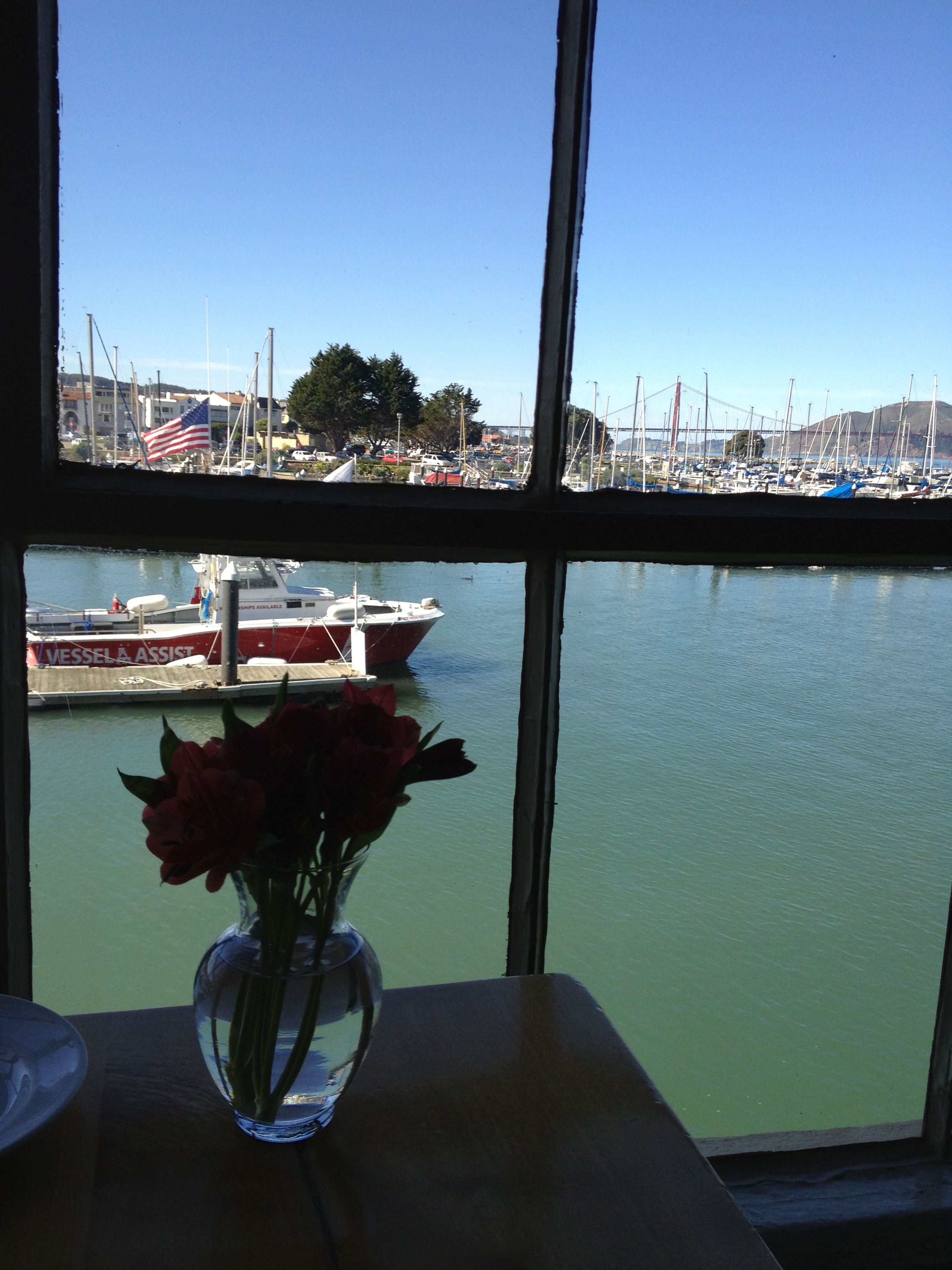
View from Greens Restaurant of the marina and the Golden Gate Bridge in the distance

View from Greens Restaurant of the marina and the Golden Gate Bridge in the distance

Decades later, Greens continues to be recognized as one of the best vegetarian restaurants in the country if not the world.

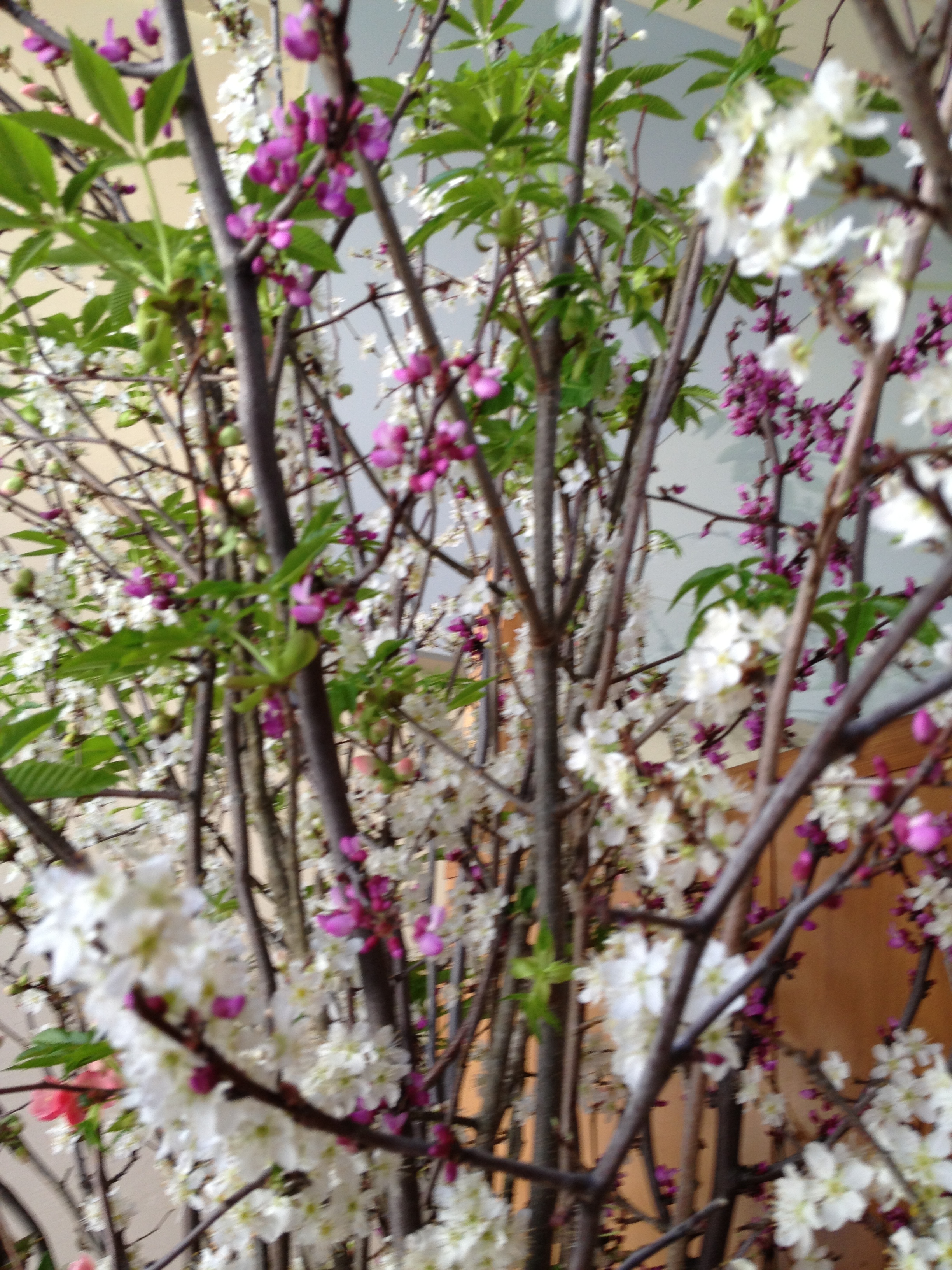
Branches of Spring-flowering trees in the entryway

Branches of Spring-flowering trees in the entryway

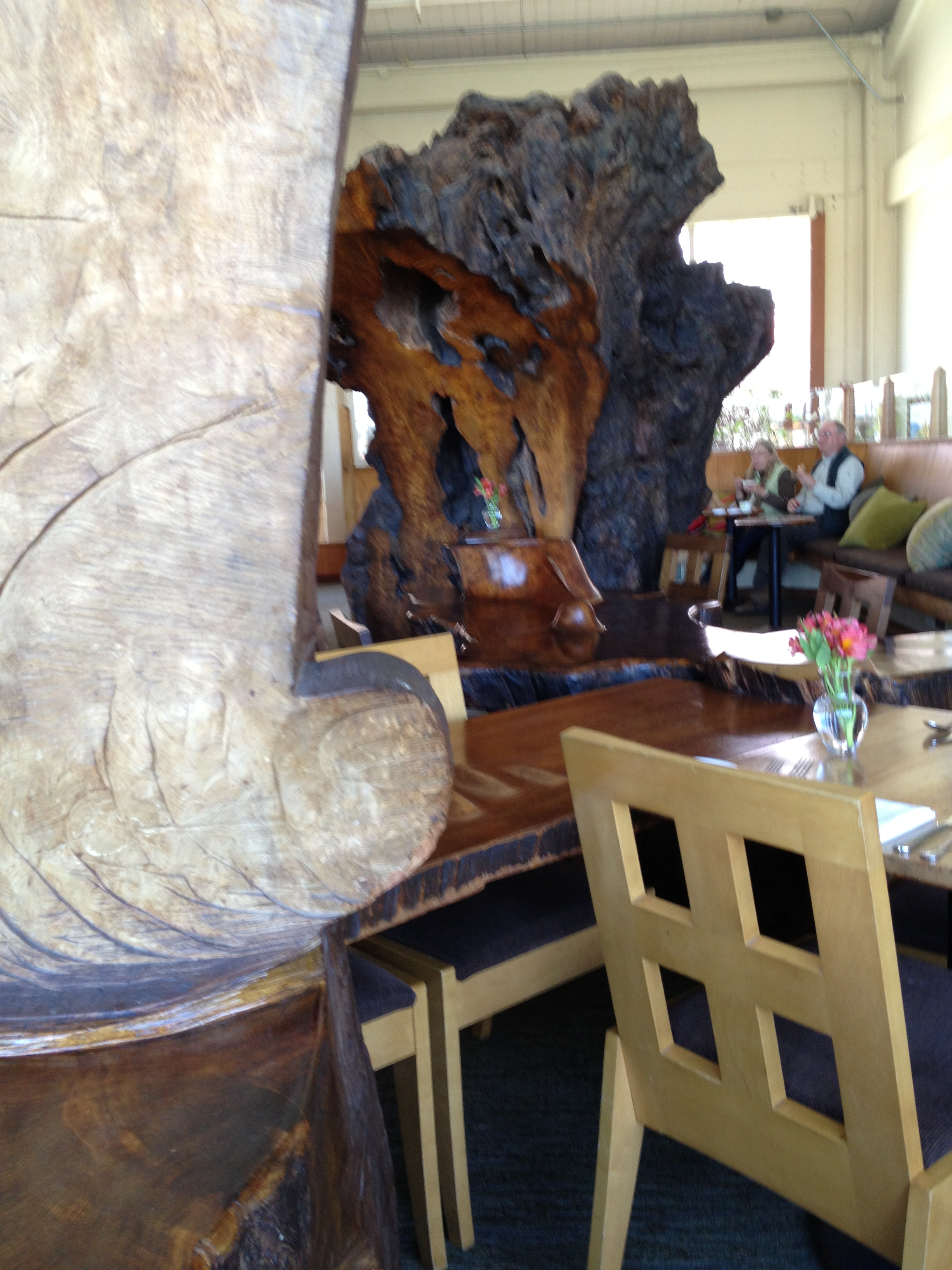
Greens Restaurant dining room with the massive tree trunk

Greens Restaurant dining room with the massive tree trunk

The setting is spectacular, especially for lunch. Seasonal flowers greet you in the entryway before you are led into a spare but elegant dining room centered around a huge polished tree trunk. Sunlight streams through floor-to-ceiling windows which look out on a marina filled with sail boats and the Golden Gate Bridge on the horizon. Tables are polished wood set off by small bowls of fresh flowers.

Flowers in a sunny window

Flowers in a sunny window

The staff is extremely friendly and helpful. They engage in pleasant conversation, but know when it is time to leave you alone. They know the menu in great detail, and since that changes daily, they have to stay on top of what comes out of the kitchen. If you are not sure, they may even invite you to try a small sample.

Bread from Acme Bakery comes to the table promptly while you look over the menu. Water is immediately offered, and if you want something else to drink – wine, beer, cocktails, soft drinks – your order is taken promptly and brought as promptly.

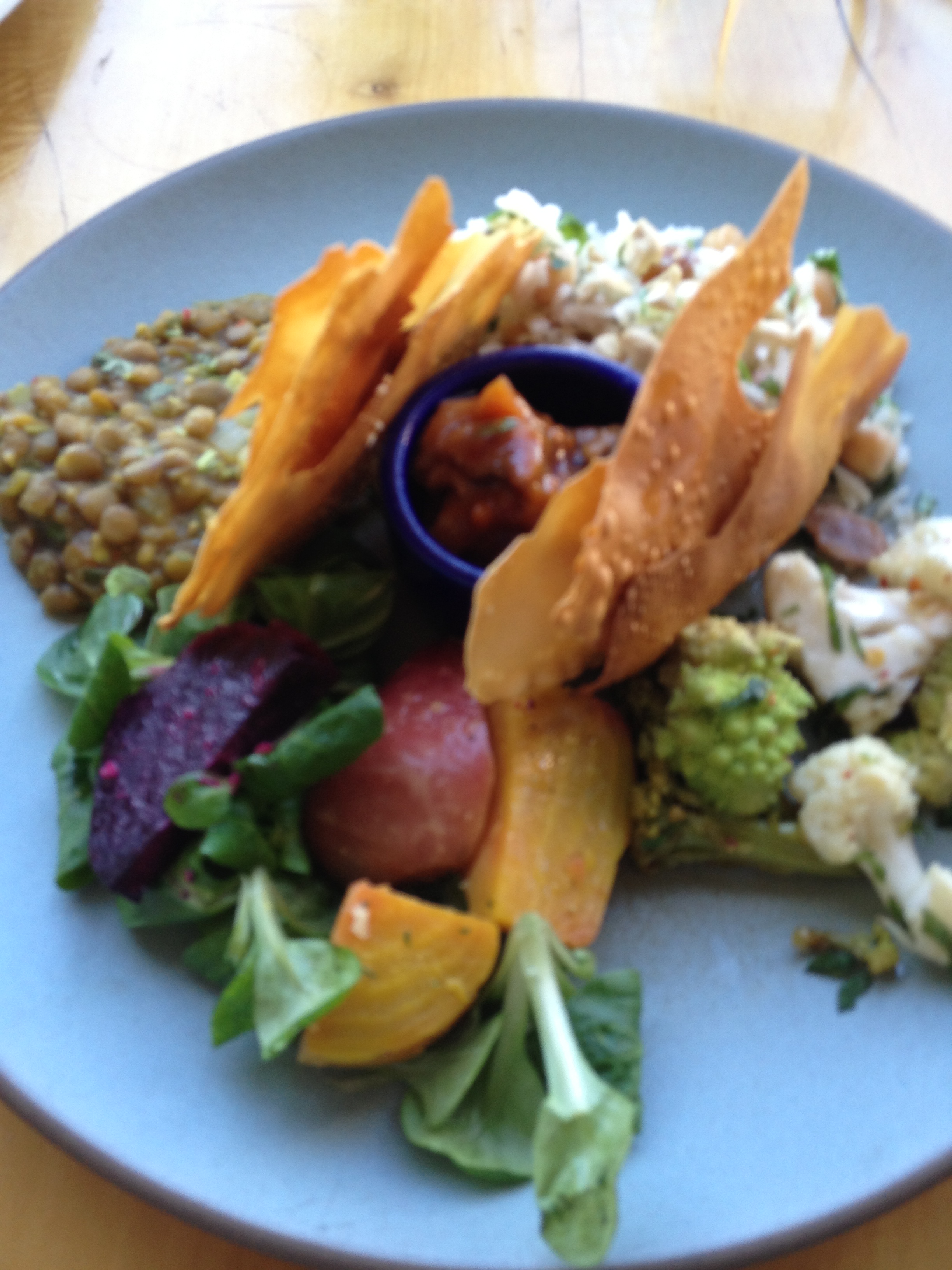
The day we were there, Susan ordered the soup of the day. It was roasted tomato and fennel with a sprinkle of cheese on top. I ordered the Yellow Finn (potatoes) griddle cakes that came with crème fraîche and a spicy root vegetable puree on the side. Susan ordered spring rolls with peanut sauce. When they were served, they were beautifully round and elegantly presented. The peanut sauce was delicious. I ordered the Indian sampler which came with a well-seasoned dal, chilled steamed vegetables, dipping sauces, and some of the best pappadams either Susan or I had ever had.

Slice of watermelon radish with black sesame "watermelon seeds"

Slice of watermelon radish with black sesame “watermelon seeds”

One clever touch was a slice of watermelon radish topped with black sesame seeds which made it look like a tiny slice of watermelon.

Spring rolls with peanut sauce

Spring rolls with peanut sauce

Roasted tomato and fennel soup

Roasted tomato and fennel soup

Yellow Finn potato griddle cakes

Yellow Finn potato griddle cakes

Indian sampler

Indian sampler

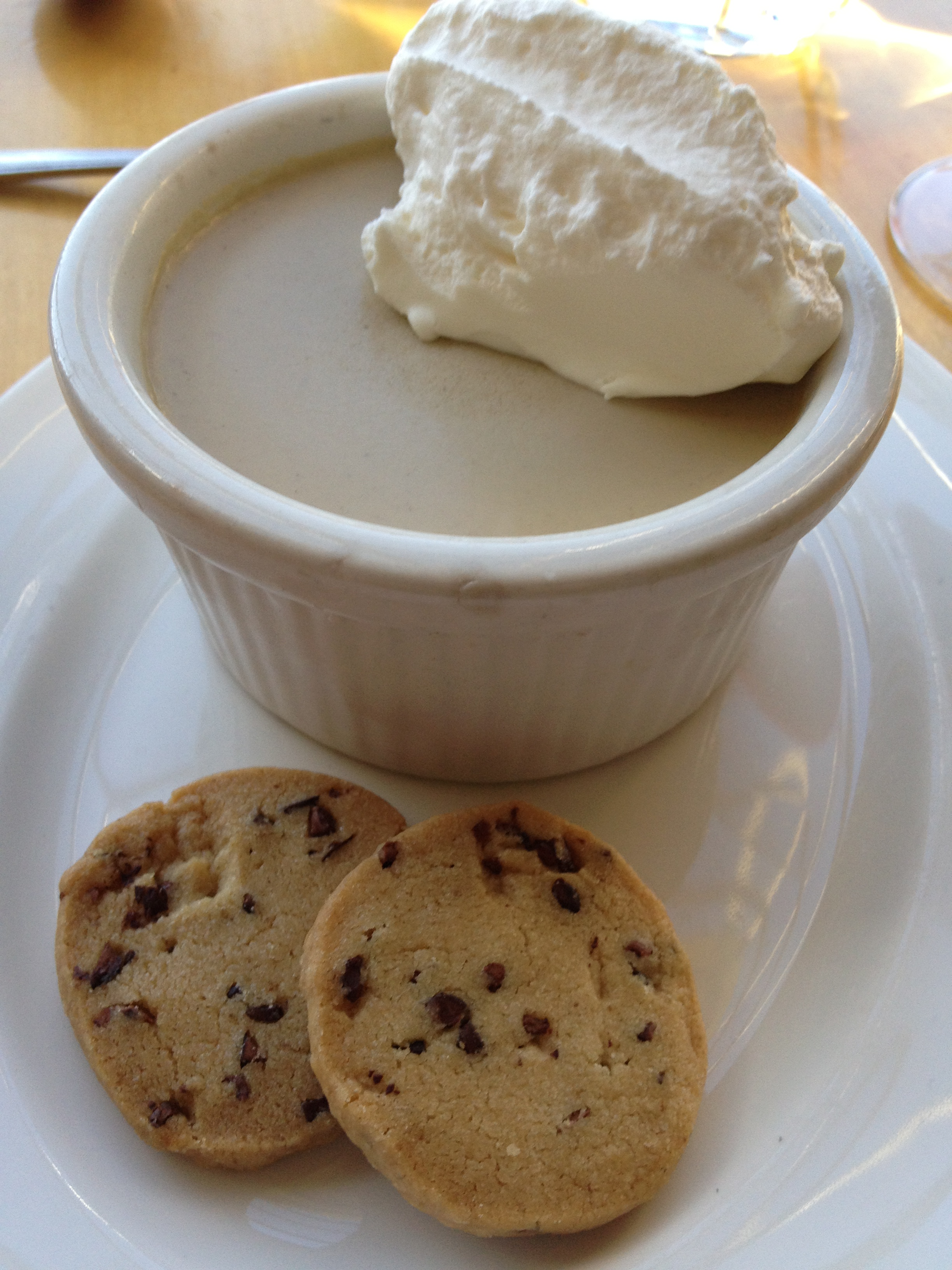
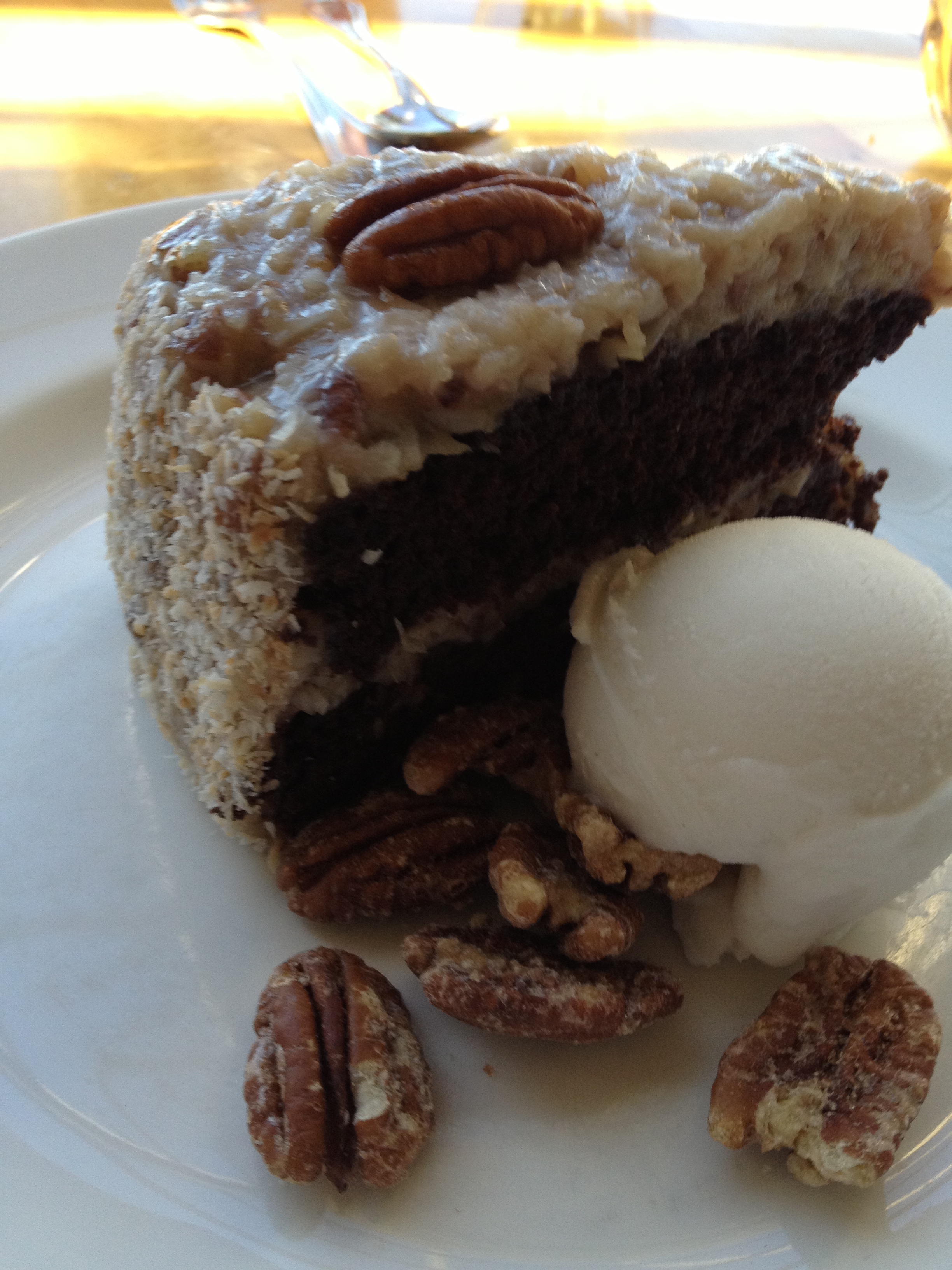
We couldn’t resist dessert. For me it was a mocha pot de crème with tasty little sablés. Susan ordered the vegan German chocolate cake. The pot de crème was delicious. The cake was a little disappointing. In fairness, anyone trying to make a vegan chocolate cake deserves a star. Without the eggs, milk, and butter, the caked turned out a little dry and flavorless. Mercifully, they did not try to make it gluten-free as well.

Mocha pot de creme with sables

Mocha pot de creme with sables

Vegan German chocolate cake

Vegan German chocolate cake

With that minor little negative, we had an outstanding lunch and a wonderful time. Afterward we strolled in the Fort Mason warehouses converted into interesting shops. One that should not be missed is the bookstore operated by the San Francisco Public Library, selling donated used books from library patrons. You could easily browse all day and buy an armload of books for just a few dollars.

It is easy to see why Greens is on the list of outstanding restaurants in the USA.

3 Comments

Filed under Food, Photography, Restaurants, Travel

THE PARTHENON AND BAKLAVA

The Acropolis in Athens must certainly be on most people’s list of places they want to visit. It has been on my list since grade school, so it was a thrill to go there during our recent cruise. At the time of our visit, Athens was a worrisome place. The city is a teeming metropolis of more than three million people and there were demonstrations outside our hotel on Syntagma  Square (also called  Parliament Square) which caused the management to lower metal screens to protect the windows. The changing of the guard in front of the Parliament building went on schedule , but we had to walk past a cordon of police buses and armed military to get to our hotel.

Visiting the Acropolis was as if none of this was happening.  We got off our tour bus across from the entrance and began the long walk up the paths cut into the steep, rocky base of hill. Even though we were “off-season”, there were thousands of other tourists making the same pilgrimage, some racing up the steep stairs while others like me took it more slowly. Marble steps and paths were polished smooth, and one could only reflect on the thousands of years and millions of footprints that produced the patina. Even at that, there were flowers pushing up through the cracks.

As we climbed higher and higher, we could see some of the great landmarks. First was the Odeon of Herodes Atticus. The ruins of this enormous theater, built in the second century are set against the Athens skyline. At one time this was one of the largest covered theaters in the world. Now it is an open air setting where Athens frequently stages modern musical and theatrical productions.

Beyond was a wonderful view of the Olympieion, an enormous temple to Zeus begun in the sixth century BCE but not completed until the reign of the Roman Emperor Hadrian more than 600 years later. Only a few columns remain standing, but it is clear how huge it once was.

We reached the steps of the Propylaea. This served as the ancient entrance to the complex on the Acropolis. Apparently the purpose of the structure was to serve as a barrier to individuals who were not qualified to visit the holy sites.

Off to the left we saw the Temple of Athena Nike with its beautiful columns and lovely symmetry.

Then the centerpiece of the Acropolis: the Parthenon. Construction equipment, scaffolds, and cranes were all over the place obscuring views that were not already obscured by tourists. Even at that, the building is an impressive sight and the ruins are beautiful. The building has been much abused over the centuries. The famous statuary of the friezes was taken by the Scottish Lord Elgin and now resides in the British Museum.  The building has been a Christian church, a Muslim mosque, and a Turkish munitions warehouse at which time it was it was destroyed by the Venetians. It is truly amazing that such a lovely ruin has survived so much abuse and neglect.

The Erechtheion sits off to the side with its famous Porch of the Caryatids. The pillars supporting the roof of the porch are marble maidens – both sculptural and engineering marvels in that their thin necks provide support for the heavy marble roof. Unfortunately, Lord Elgin  took one of the maidens for his estate, and one was seriously damaged, but the others have been moved to the Museum of the Acropolis. Still the replicas capture the marvel of the originals.

Too soon our visit to the Acropolis ended and we rushed back to the bus. It is clear that one could spend a lifetime visiting and studying this magic place.

RECIPE

Baklava

When I think of Greece I think of baklava even though it is apparently originally a Turkish creation. That should not be too surprising since the histories and traditions of Greece and Anatolia have been intertwined for thousands of years (Think Trojan War.) In Greece, baklava is a traditional Easter confection, and apparently it is often made with 40 leaves of phyllo to honor the 40 days of Lent.

In this version, I have used only one of the two packages of dough that come in a one-pound box. There are 20 leaves in the package, so if you are able to fold them over on themselves, you will have the 40 requisite layers. I used an 8 x 8 inch pan, so that wouldn’t quite work, but I think you’ll find it close enough for an amateur try at the real thing.


Ingredients

  • 2 sticks (½ pound) unsalted butter
  • 3 cups mixed walnuts and unsalted pistachios, toasted in a dry sauté pan and coarsely chopped
  • ¼ cup sugar
  • 1 teaspoon powdered lemon peel
  • ½ teaspoon ground cinnamon
  • 1 cup sugar
  • 1 cup water
  • 1/3 cup honey (preferably orange blossom)
  • peel from 1 orange without pith
  • 1 tablespoon fresh lemon juice
  • 2 tablespoons orange liqueur
  • ¼ teaspoon orange flower water
  • ½ pound (one packet from one pound box) frozen phyllo dough, wrapped but thawed for 2 hours

Method

  • Prepare clarified butter by melting in an ovenproof measuring cup in the microwave. Skim off foam and pour off carefully without the solids that settle to the bottom. You should have about 180 mL. Set aside
  • Combine the chopped nuts, sugar, powdered lemon rind, and cinnamon in a small bowl. Set aside.
  • In a small saucepan, combine the sugar, water, orange peel, and lemon juice. Bring to the boil and then reduce heat to the simmer for 15 minutes. Remove from the heat and stir in the liqueur and orange flower water. Strain and set aside. Reheat when ready to pour over the baked baklava
  • On a clean, dry work surface, open the package of phyllo dough.The leaves will probably measure about 9 x 15 inches.  Spread out, cover with a sheet of plastic film, and a damp kitchen towel to prevent it from drying out while you work. Work as quickly as you can.
  • With a pastry brush, paint the bottom and sides of an 8 x 8 inch baking pan. Then take one leaf of dough and fit in the bottom, folding over as much as you can. Brush on some of the clarified butter. Repeat with 4 additional leaves of dough.Then sprinkle the top with 1/3 of the nut mixture.
  • Repeat the layering process twice more. You should have three layers of dough and nuts.
  • Top with the remaining leaves of dough, buttering each one as you go. That should use up all of the phyllo.
  • Score the finished stack into 1½ to 2 inch diamonds with a sharp knife. It is important to do this before you bake the baklava; otherwise the pastry will shatter when you cut it.
  • Bake in the middle of an oven preheated to 325°F for 30 minutes. Reduce the heat to 300°F and bake for 6o minutes more.
  • Meanwhile, reheat the flavored syrup.
  • When the top of the baklava is a golden brown, remove from the oven and cover with the syrup while it is still warm.
  • Let cool completely for at least 4 hours so that the syrup is completely absorbed.
  • Serve by cutting through each score.

Leave a comment

Filed under Food, Photography, Recipes, Travel