Category Archives: Travel

DEVILED EGGS

Deviled eggs seem to be enjoying a renaissance. They are on many menus these days. Sarah often makes them for catered dinners as well as for family occasions. Sometimes she stuffs them with smoked trout or other delicious fillings.
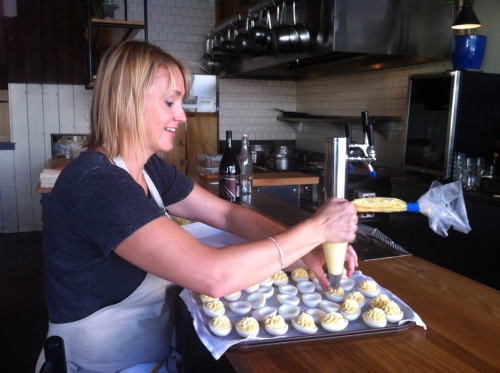
Sarah piping deviled eggs

Sarah piping deviled eggs

But in their simplest form, how difficult can deviled eggs be to make? Hard boiled eggs cut in half; yolk mashed with a little mayonnaise, mustard, lemon, salt and pepper; yolk mixture spooned or piped into the egg white halves; maybe a little garnish of paprika, snipped chives, or crumbled bacon. Simple is not always easy.

During this visit to California, deviled eggs have been on many menus. I have eaten many of them because I like them when they are good.

The best ones so far were served at the School Street Bistro in Lodi. My very minor quibbles were that the yolk filling was too runny (Too much mayonnaise?) and had too much mustard. Otherwise they were delicious, and their garnish of house-made French-fried potato straws was outstanding  I could have eaten a plate of the potato straws by themselves.
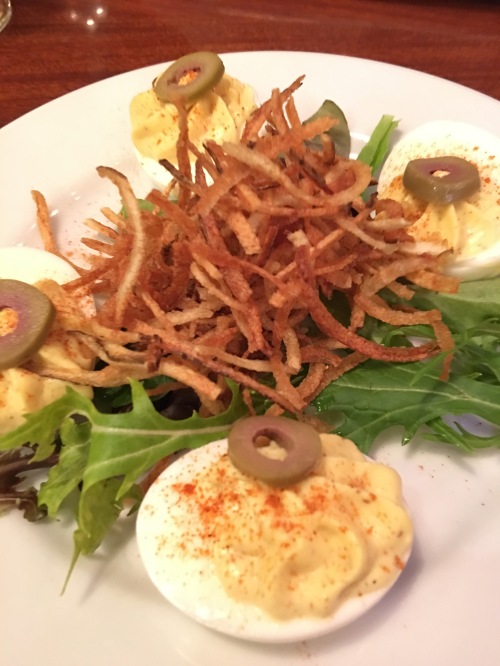
Sunday deviled eggs with potato straws at the School Street Bistro, Lodi, CA

Sunday deviled eggs with potato straws at the School Street Bistro, Lodi, CA

Some of the eggs have had a rubbery texture undoubtedly from the eggs being boiled too hard and/or too long.

The ones I liked the least were the ones that were supposed to be the fanciest. The word, “truffles”, seems to make something more luxe. Visions of pigs rooting up fungi at the base of a French hazelnut tree come into play, or a liveried waiter shaving little shards with his special knife onto a perfect French omelet. That’s not the same as truffle oil. This condiment has been banned from many a high-end kitchen. The well-known San Francisco chef and writer, Daniel Patterson, has written a great piece in the New York Times about why truffle oil does not find favor with professional chefs.

The main reason is that almost no commercial truffle oil contains actual truffles. The fragrance and taste of real truffles come from a complex array of compounds. The most prominent appears to be a chemical, 2,4-dithiapentane, that can be synthesized in a laboratory or factory. And that is the chemical that is added to truffle oil to give it flavor. Small wonder that foods which incorporate commercial truffle oil take on a chemical flavor; some would even say petroleum-like.
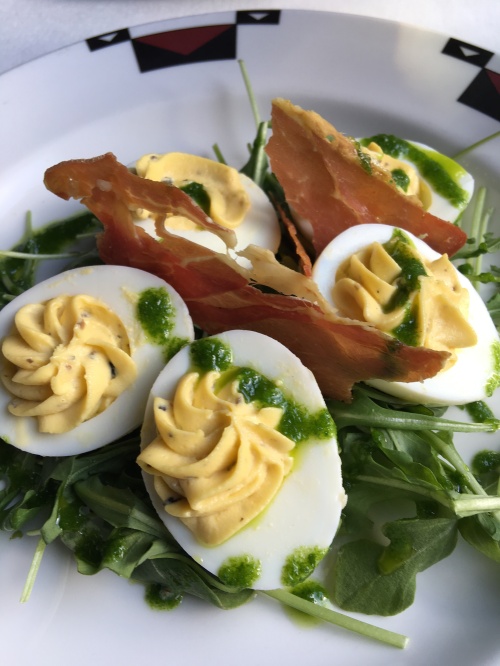
Deviled eggs with truffle oil

Deviled eggs with truffle oil

Here is a basic recipe for deviled eggs, perhaps of the Southern variety. If you don’t like it, experiment by adjusting the amounts of the basic ingredients and add any extras that sound appealing to you. Just – please – don’t add truffle oil.

RECIPE

Basic Deviled Eggs

Ingredients

  • eggs, at room temperature
  • 1 teaspoon mayonnaise for each egg
  • 1/8 teaspoon dry mustard for each egg
  • few drops fresh lemon juice for each egg
  • salt and pepper to taste
  • paprika

Method

  1. Pierce the large end of each egg with an egg piercer and place in a single layer in a saucepan with enough water to cover the eggs by at least an inch. Bring to the boil over high heat, just until large bubbles begin to appear around the eggs. Cover, remove from the heat, and let stand, undisturbed, for 10 to 18 minutes, depending on the size of the eggs and the altitude.* You should work out the time beforehand. Transfer the eggs to a large bowl filled with ice and water. Chill for the same amount of time as you used for the cooking.
  2. Peel the eggs by cracking them all over and, starting at the big end, peeling them under a small stream of running water. The longer the eggs sit in the refrigerator before peeling them, the harder it will be to peel them and the more likely you are to get the dreaded green ring around the yolks, so it is best to prepare them immediately.
  3. Slice the cooled eggs in half lengthwise and gently remove the cooked yolk. Press the yolk through a fine-mesh sieve or strainer into a medium bowl. Stir in the mayonnaise, mustard, and lemon juice. If the mixture is too stiff, very slowly stir in more mayonnaise by half teaspoonfuls until the consistency suits you.  Adjust the mustard and lemon juice to please you. Correct the seasoning with salt and pepper.
  4. Spoon or pipe the yolk mixture into the empty halves of cooked egg white. Garnish with a sprinkle of paprika and serve.

* At 7000 feet, a jumbo egg takes 18 minutes to cook; a large egg takes 16 minutes. Probably at sea level you should deduct about 2 minutes for each cooking time, but it is best to work out specific times for your cooking conditions.

15 Comments

Filed under Food, Photography, Recipes, Restaurants, Travel

LODI

I have been a little quiet in the blogosphere for awhile. We are in Lodi, California, where we will be staying for the month of January. Some time ago I wrote about Lodi when we attended the California State Chili Cookoff Championship https://fromthefamilytable.com/2014/10/26/california-chili-cook-off-championship-2014/ . That’s not the reason we are here this time.

Why, you might legitimately wonder, does one choose to spend January in Lodi? For us, the answer is a bit complex. First, our children have been encouraging us to find a place that could be used as a family retreat. The Sierras are not far away, and that is where two of the families ski and escape the city. Second, we have always wanted to explore this part of California, as we don’t know much about it, and it has a rich history. Finally, we might be able to find a relocation home; we certainly can’t afford LA or the Bay Area.

Lodi is an interesting little town of about 70,000 a half hour away from Sacramento and two hours from San Francisco. It is really all about wine.

As you know, California is responsible for much of the USA’s wine production, and some of it will compete with the finest wines in the world. There are four large wine growing areas in the state: North Coast, Central Coast, South Coast, and Central Valley. These areas are divided into over 130 smaller regions, called AVAs (American Viticultural Areas) according to weather, temperatures, soil, and other growing characteristics. At the same time, some wine fanciers often count only eleven regions where they think high quality wines are produced. These include Los Carneros, Napa, Sonoma, Mendocino, and Livermore in the North Coast; the Sierra Foothills; Paso Robles and Monterey in the Central Coast; Santa Barbara and Santa Inez in the South Coast; and Lodi in the Central Valley. Lodi is the only Central Valley place to be included even though wine production in the Central Valley is enormous.

That’s where Gallo is located – headquartered in Modesto – along with Bronco Winery headquartered in Ceres. Gallo produces many labels including those old college favorites, Boone’s Farm and Carlos Rossi along with the label you can only read if you peel off the brown paper sack – Thunderbird. Bronco Winery is operated by a newer generation of the extended Gallo family. They, too, produce many brands, but probably their most famous is Charles Shaw, Trader Joe’s signature “Two Buck Chuck”. The grapes come from ever-expanding plantings throughout the Central Valley.

In all fairness, Lodi has a giant production facility, too.  Constellation Brands, headquartered in New York and the largest wine producer in the world, several years ago paid over $1 billion in cash to buy out Robert Mondavi. Their Robert Mondavi Woodbridge winery sits at the edge of town. (That’s where the chili cookoff is held each year.) But the essence of the local wine-making mystique is set in the 80 or so family-owned wineries that produce only a few hundred or thousand cases of wine each year.

It is impressive how many different varietals are grown in the nearby area, but the main grape is Zinfandel, and Lodi seems determined to make it a competitor with the varietals popular in Sonoma and Napa. This is not the cloying white Zinfandel of a couple of decades ago. I haven’t seen a bottle of that since we’ve been here. These are stylish, well-made wines that can sometimes run over $100 a bottle.

Here are a few you might look for in your local wine store: Klinker Brick, McCay Cellars, Harney Lane Wines, Michael David Winery.

Unfortunately, the food to go along with the wine is a little disappointing. Places we have enjoyed are the School Street Bistro, The Dancing Fox Winery and Bakery (The food not the wine.), and a small little bistro away from the downtown, Zin Bistro. The latter is a tiny store-front in a strip mall run by husband/wife chefs and owners; it is a great discovery. The night we were there, their rockfish was cooked perfectly – moist and flaky – and their braised lamb shank was delicious with a gremolata and mashed potatoes. So far we think they make the best food in town, although we have a couple of white-tablecloth places still to check out.

We’ve already visited Sacramento and been on one side trip to Yosemite to babysit while Sarah and Evan did a demonstration at the Ahwahnee Hotel’s annual Chefs’ Holiday. More travels and food to report later.

11 Comments

Filed under Photography, Restaurants, Travel

…A JUG OF WINE, A LOAF OF BREAD, AND…

When I was in college, many of my friends memorized lines from Omar Khayyam’s Rubaiyat so that they could impress their true loves. Most of the swains used the quote in the title of this piece, but they probably had not read much else. I think that the book has virtually disappeared from today’s college campuses.

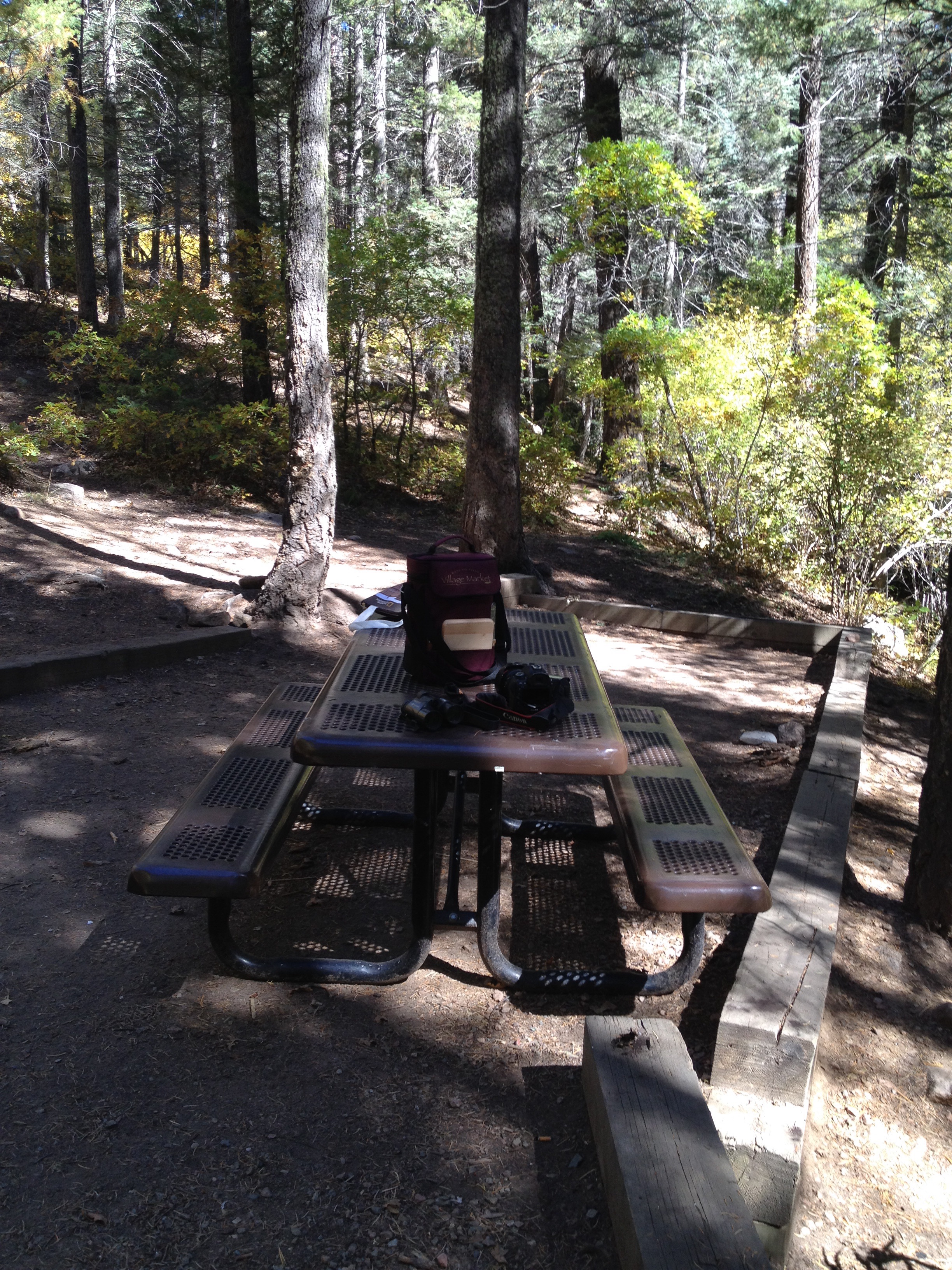
We went on a picnic recently that made me think of the quote. Since our first year of marriage, Susan and I have had an autumn tradition whenever we lived near mountains. We would pack a picnic lunch or evening meal and drive into the mountains to take a walk among the beauty and to sit under the beautiful golden quaking aspens. Of course, the children came along when they were younger. We followed the ritual even when we lived in Louisiana because the Arkansas mountains were not far away; and even though there were no aspens, the colors were spectacular. Only when we lived in Texas,  too far from mountains, did we forego the experience. In most Texas places where we lived, the leaves, except for the beautiful gums, just turned a dull brown and fell off the trees around Thanksgiving.
This year the aspens put on an especially good show, and so we packed up a simple lunch and headed up Hyde Park Road to the ski basin. By now, our hikes have gotten shorter and our drives a little longer. This time, except for about a half-hour walk, it was mostly driving. We were surprised to see the crowds, even in the middle of the week. Aspen Vista, where the entire mountainside is laid out in front of you and the trail is flat, was a huge traffic jam. All of our favorite picnic spots had already been occupied.

Fortunately, we ventured up the road in the state park with its assessment of a $5 day-use fee. There was no one around, and we easily found a table under some beautiful autumn colors.

A lovely spot for a picnic

A lovely spot for a picnic

We unpacked our simple lunch: a nice bottle of Cotes du Rhone, a fresh baguette, a roll of hard Italian salami, a wedge of Manchego, a slab of Havarti, and some chocolate. We feasted under the shimmering aspen leaves and thought back on similar days over the decades. It could not have been a more perfect meal or better afternoon. You see why I thought of Omar Khayyam.

10 Comments

Filed under Food, Photography, Travel

FOR WANT OF A NAIL – THE BUTTERFLY EFFECT

On the last leg of our marathon child-tending expedition in California, we headed back to the Bay Area.  This was also sort of holiday, so we drove up Highway 1 through Big Sur, one of our favorite places to visit.

For the first few days we were in Silicon Valley while our daughter-in-law was in Prague at a meeting. (Someone has to do it, right?) She sent us back images of goulash, beer, and sausage. Otherwise, there were no food adventures. We ordered a lot of takeout. I made macaroni and cheese and opened a jar of spaghetti sauce with NO additional seasoning. Both of the girls have very specific and definite food biases, One night at the dinner table the 9-year-old was asked if we could get her anything. Her reply was, “A good cook.” You get the idea.

Then we went back to San Francisco with the two toddlers while their parents went out of town to judge a cooking contest. That is the source of my tale and the title of this little essay. You recall the old proverb … “For want of a nail, a shoe was lost; for want of a shoe, a horse was lost; for want of a horse, a knight was lost; for want of a knight, a battle was lost; for want of a battle, a kingdom was lost.” Also, there is the butterfly effect in chaos theory which stems from the suggestion that the fluttering of a butterfly can influence a subsequent hurricane.

Sarah and Evan left for Shreveport early in the morning. They talked about getting an Uber car to the airport, and then decided to drive. In retrospect, a big mistake. Then the little one awoke unexpectedly as they were heading out the door. First delay. Interstates 280 and 380 were both busier than expected even though it was early during the morning rush hour. Next delay. Then the airport parking lot was full, so they had to go to the off-site lot. Next delay. The man in front of them couldn’t get the gate to the lot opened so they had to wait for him to solve his problem. The shuttle to the terminal was delayed. But they still had time. Then they faced a long line for baggage and check-in, but they got their bags checked.

Of course, security was impossible, but they finally made it through, only to discover the gate had closed. Unfortunately, their bags had made it on the plane to go through Dallas to Shreveport, so they couldn’t change airlines, and the next available flight was eight hours later. (The lesson from this: don’t check bags if you are running late.) They were told that there were no late flights to Shreveport so that they would have to spend the night in Dallas. Meanwhile their luggage made it to Shreveport.

It is only a 3 hour drive on interstate between DFW and Shreveport, so they decided to rent a car at DFW. By now it was after midnight, and the car rental had a hard time finding a car. Finally, that was solved, and they were in fairly good spirits. UNTIL – about 2 AM, with Sarah asleep as they made it through the East Texas Piney Woods, Evan said, “Oh, my God,” waking Sarah just in time for a loud crash and a huge rush of steam onto the windshield. The steam blocked their view of the road. When they were able to pull over, Sarah got out of the car (Evan was afraid of getting hit by traffic) to find a deer impaled on the radiator. A highway patrolman did come and pulled the deer out of the car, but the car was not driveable.  So the next task was to find a tow truck – a challenge at 3 AM. They were finally towed into the Shreveport airport so that the ruined car could be deposited and the hapless couple could retrieve their luggage. There was no replacement car available, but with some effort one was found at a competing rental agency in exchange for more money.

By this time, it was 6 AM. When they arrived at their hotel, Sarah and Evan were told that their room had been given away, and that the hotel was booked up. Sarah burst into tears; a room was found; and the two were able to catch a couple of hours of sleep before the event.

Everything then went well, and Sarah and Evan had a good time serving as judges for a sort of “Chopped” event featuring some local cooks. They even won a few dollars at the sponsoring casino.

The story ended happily when they came back to their smiling boys. Besides, they will now have a great tale to tell their grandchildren many years from now.

Just remember, your fate may hang on the wings of the butterfly you see in your garden.

14 Comments

Filed under Food, Photography, Travel

FRIED SMOKED SALMON DEVILED EGGS

This last week our traveling child care project moved to Los Angeles. We had assumed that watching teenagers would be easier than toddlers. In some ways we were right. The teenagers clearly have required less direct supervision, and there is not diaper changing. Scheduling is the main problem. Both require transportation to and from school as well as extra-curricular activities. The high school student has a variable schedule: sometimes she needs to be at school at 7:30 and sometimes she doesn’t go until 8:30. There seems to be no fixed schedule. In the evening she has practice for the swimming team. That cuts into the dinner hour. Then she disappears into her room for a prodigious amount of homework.

The middle school student has a different schedule,. He has his own homework, and grandparents are supposed to help in the absence of parents. What?  I can barely remember my own name. Even though the two schools are only a few blocks apart, dropping off and picking up require at least five and sometimes seven separate trips a day. It is a mystery to us how our daughter and son-in-law can get all of this accomplished and still both hold down full-time jobs with commutes of at least one hour each way.

Susan and I had planned to use our spare time doing some of the things in LA that we have wanted to do. We didn’t get that accomplished; mostly we just wanted to take a quick nap. The one outing we were able to accomplish was a visit to Terranea Resort with a nice lunch at one of their restaurants.

Southern Californians are almost as crazy about golf as they are the beach. In the community where our family lives, there are five golf courses, the oldest dating back to over ninety years ago. The most recent additions are the Trump National Golf Course Los Angeles, and its arch competitor, Terranea Resort. Both are built on the cliffs overlooking the Pacific Ocean and offer stunning views, especially at sunset. Both offer luxurious resort facilities, and both have excellent restaurants. Locals seem to prefer Terranea, but that suggestion runs the risk of being a political commentary in this day and time.

We chose to go to the Catalina Kitchen at Terranea. The restaurant is beautifully appointed with a comfortable indoor dining room and an outdoor terrace that looks out on the ocean. The wait staff is very professional but friendly; they know the menu inside and out. The menu is filled with old standards, but the big surprise is that the chef has added new and creative twists to items that have gotten a bit ho-hum. Susan ordered crab Louie, which came piled high with fresh Dungeness crab. I ordered the Caesar salad with salmon. It came with beautiful croutons on the side (They were not out of a package). The dressing had just a hint of anchovy, and on top were beautiful filets of white anchovy. The salmon was perfectly cooked with just a light glaze, and it was a generous portion.

With all of that, the highlight of the meal was fried deviled eggs. They were singularly delicious. They were served in a little pool of bright green basil-infused olive oil, crusted with a lightly browned panko, and topped with a bacon chiffonade and a tiny slice of  radish so thin that you could see through it.

image

I have tried to put my spin on that dish. My version is nowhere as elegant as the model, and it took more effort than the usual deviled egg, but it wound up being fairly tasty. I added smoked salmon to my version, which I thought gave it a nice taste. This recipe makes six deviled eggs, but you can expand the recipe as needed.

RECIPE

Fried Smoked Salmon Deviled Eggs

Ingredients

  • 3 eggs
  • ¼ cup sour cream or mayonnaise
  • 1 tablespoon Dijon mustard
  • snipped dill for filling and as garnish
  • 2 ounces smoked salmon (You could use lox)
  • salt and pepper
  • Tabasco sauce (optional)
  • all-purpose flour
  • 1 egg white
  • 1 tablespoon water
  • panko
  • oil for frying
  • capers
  • snipped chives

Method

  1. Hard boil the eggs according to your usual method. Chill in ice water. Peel. Cut in half lengthwise. Remove the yolk and set aside until ready to fry and stuff.
  2. Press the yolks through a strainer or sieve into a small bowl. Stir in the mustard and dill.
  3. In a small food processor, pulse the smoked salmon until smooth. Stir into the egg mixture. Adjust seasoning with salt and pepper. Add optional Tabasco to taste.
  4. Prepare the breading by placing the flour, egg white mixed with water, and panko in individual small bowls large enough to accommodate the egg white cases but small enough so that they can be completely immersed.
  5. Dry the reserved egg white cases.  Dip the cases into the flour, dusting off any extra. Dip in the egg-water wash, coating completely but draining any extra liquid from the hollow. Coat with panko.
  6. Using a spider or slotted spoon, transfer the coated egg whites one by one into frying oil, about 2 inches of vegetable oil heated to 350°F,, turning until browned on all sides. Transfer the fried egg white cases to several thicknesses of paper towel, using the same spider or slotted spoon to keep the coating intact. Cool.
  7. With a pastry sleeve fitted with a large star shape, pipe the filling into the egg white casings. Garnish with a few capers, some of the snipped dill and snipped chives. Serve.


18 Comments

Filed under Food, Photography, Recipes, Restaurants, Travel

HOG ISLAND OYSTER COMPANY

Hog Island Oyster Company is on Tomales Bay, just a short, beautiful drive north of San Francisco. Once there, you can buy unshucked oysters and other shellfish to take back home with you, or you can have all varieties of raw and cooked oysters, clams, and mussels in a spacious restaurant with great views of the bay.

Don’t worry if you can’t make the time to take the drive. You can still get fresh oysters at the Hog Island Oyster Company at the Ferry Building in San Francisco. The Ferry Building is one of the great destinations for visitors to the city. It has been lovingly renovated and occupies a dominant place on the Embarcadero. On Saturdays it serves as home for a huge farmers market where all of the city’s chefs shop. You are likely to catch a glimpse of someone you have seen on television or in whose restaurant you have eaten.

The Ferry Building is lined with shops filled with hard-to-find food, well-known products like Cowgirl Creamery cheeses, pottery, jewelry, and expensive one-of-a-kind kitchen gadgets.

The building sits right on the water because in times past it served as the terminal for the many ferries that crossed San Francisco Bay. Now the Oakland Ferry has a berth just a few steps away from the restaurant of the Hog Island Oyster Company. The beautiful new Bay Bridge makes a perfect backdrop, so that Hog Island is a popular stop for locals and tourists alike.

The Oakland Ferry and the Bay Bridge in the background

The Oakland Ferry and the Bay Bridge in the background

Expect a crowd on the weekend or when the weather is beautiful. That means you will have to wait, but the line moves quickly. It moves even more quickly if you get a bloody mary from the bar to pass the time.

Waiting in line

Waiting in line

Of course, outdoor seats are at a premium, so you may have to wait a little longer for them. But seats at the counter are often available, and to me they are preferable. You can watch the woman who runs the garde manger station as she whips up salads with blinding speed. Her knife skills are amazing as she cuts fresh basil into a fine chiffonade while she surveys the dining room. You can also watch the three oyster shuckers working non-stop to fill all the orders for oysters on the half shell.

Non-stop oyster shucking

Non-stop oyster shucking

Whenever we visit San Francisco, we almost always make at least one pilgrimage to Hog Island, and we almost always order their biggest tray of raw oysters – 2 dozen, mixed.

This time there were seven different kinds of oysters, so they sent out four each of six kinds. We asked for Kumomotos, our favorite, but they did not include Hog Island’s own Kumomotos. They are beautifully fluted and much smaller than other varieties, but they have a sweetness, brininess, and flavor that are unique. When we complained to the waiter, he promised to bring out some more, and he did. Then we recognized him as a server who had worked at Rich Table when it first opened.

Acme bread

Acme bread

Raw oysters

Raw oysters

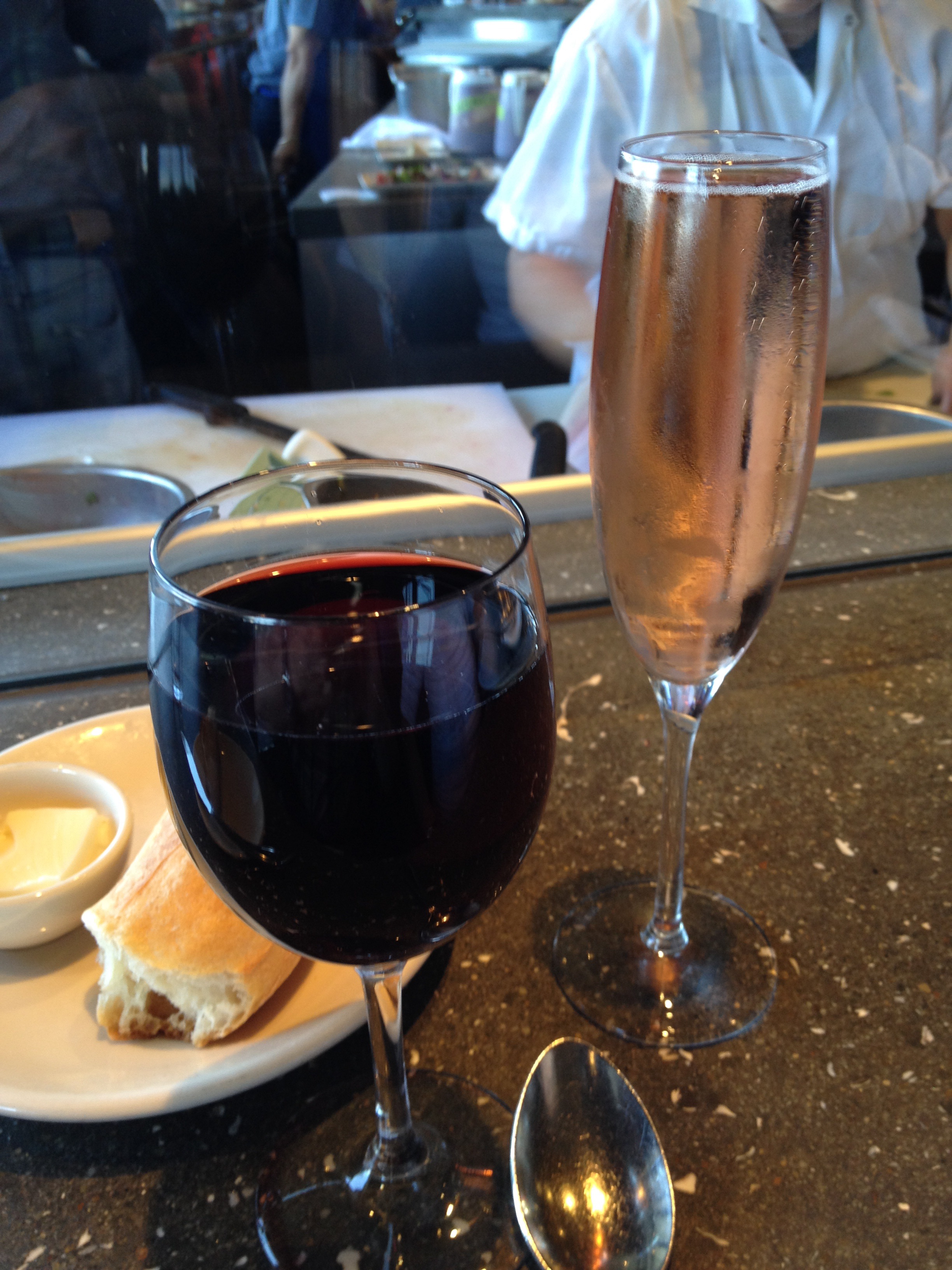
You need a glass of wine to wash down the oysters

You need a glass of wine to wash down the oysters

We had a nice visit with Charles and then got down to business: eating all of those oysters with a tasty mignonette along with glasses of refreshing wine. Next came a plate of yellow fin crudo prepared by the garde manger lady and topped with her incredibly fine basil chiffonade.

Yellow fin crudo

Yellow fin crudo

Susan had an oyster roast instead of her usual clam chowder. I finished up with rustic seafood stew. I asked why, if this is San Francisco, it’s not called ciappino. The reply was that it didn’t have the crab required to call it that. It had everything else. Tentacles of the calamari, heads on the shrimp, clams, mussels, chunks of white fish, savory broth, and toasted Acme bread to soak up any leftover broth.  If there would have been.

Rustic seafood stew

Rustic seafood stew

Then home to catch a quick nap before it was time to pick up they boys.

4 Comments

Filed under Food, Photography, Restaurants, Travel

SKY CITY, INSCRIPTION ROCK AND THE TURQUOISE ROOM

We’ve been traveling west again. This time we will be itinerant baby sitters as we visit San Francisco so that Sarah and Evan can cook at an event in Maui, then on to Los Angeles so that Carol can attend a meeting in Washington, D.C., then back to Silicon Valley so that René can give a talk in the Czech Republic, and finally back to San Francisco while Sarah and Evan go to Shreveport.

We’ll be gone for a month, so we have taken the opportunity to drive with a car loaded with stuff we are giving to our family as we try to downsize. That travel also suggested that we could take some of the back roads we have been wanting to visit for many years.

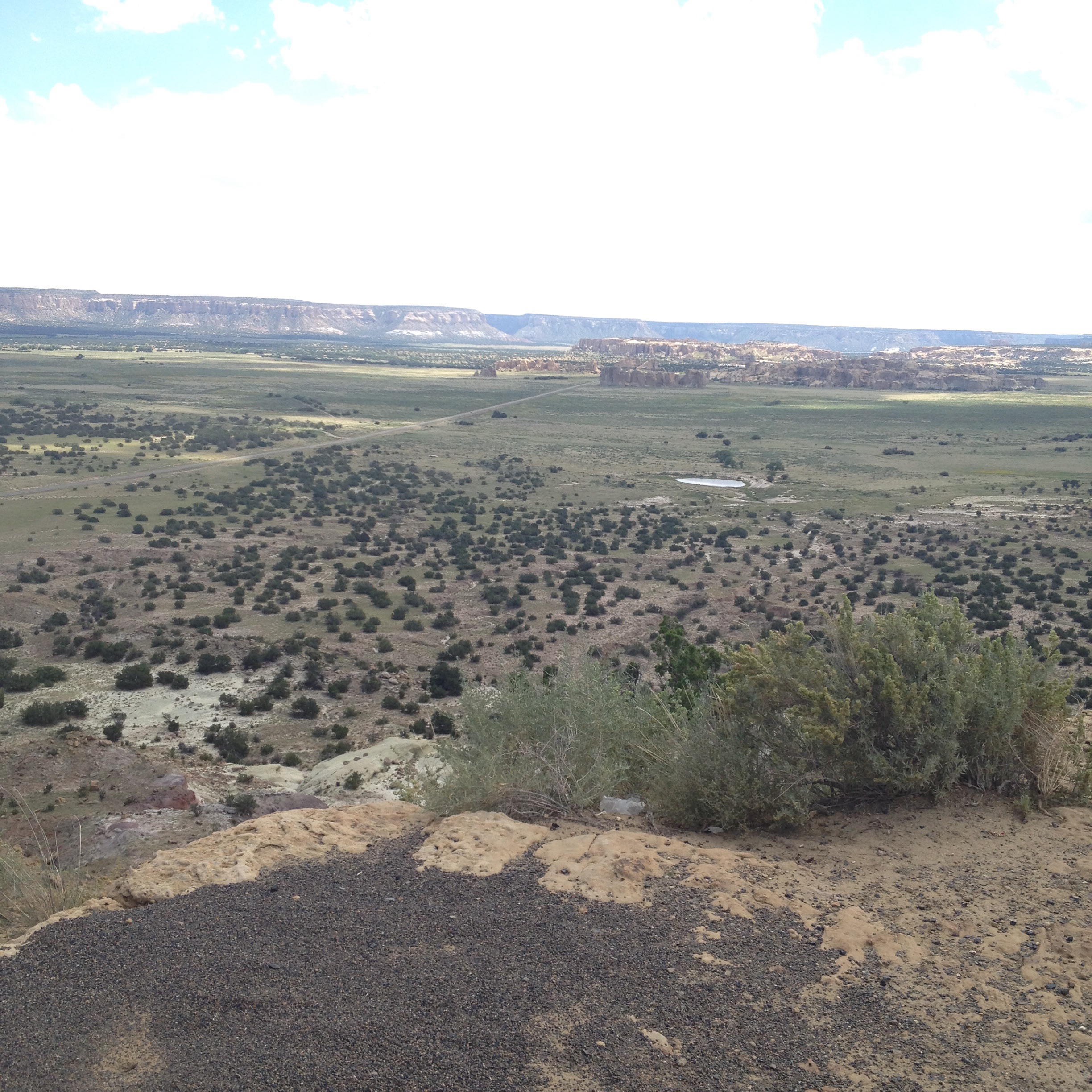
First stop was Sky City. This is the ancient part of Acoma Pueblo. Even though there are now only a few permanent residents, the community is made up of two- and three-story houses made of stone and adobe. The town and its residents have been photographed by many famous and not-so-famous photographers including Edward Curtis and Ansel Adams. The church is particularly photogenic.

The most direct way to get there is to get off I-40 at Exit 108 – which isn’t marked (Probably because it is the exit for the Laguna Pueblo Casino). The exit at the Acoma Casino is marked, but the roundabout is confusingly labeled, and it is easy to miss the turn and wander around on back roads.

These days you go to the visitors center to board a bus for a trip to the top of the mesa. The tour starts every hour on the half hour – though sometimes not. For a fee, you can take a camera. The day we were there a sign at the front of the center read, “No cameras today.” Once inside, my wife was told that the sign was for yesterday but that she could not take her binoculars, which were strictly forbidden. We had missed the tour, but we were told that we could take in the museum – except that the museum was closed. We decided not to wait. Perhaps our timing will be better on our return trip.

View of Sky City

View of Sky City

Acoma is most noted for its pottery. Here are some examples from our collection.

Inscription Rock (El Morro National Monument) should not be missed if you are on the back roads. The scenery is beautiful, including the edge of the Malpais National Monument with its miles of interesting lava formations, mesas, and pine forests. The route is now isolated, but for centuries it was the main trail between Acoma and Zuni Pueblos. After the Spanish arrival, it became a path to the South Sea. California immigrants passed here during the westward expansion, US soldiers and even Union Pacific agents exploring a railroad route stopped at the prominent bluff. They paused at the pool of water at the base of the cliffs and carved their names in the rock. Messages include those of Oñate, the conqueror of New Mexico who cut off the feet of men of Acoma who revolted, along with de Vargas who reconquered New Mexico after the Pueblo Revolt of 1680. This historic and magical place would have been destroyed if the AT&SF railroad hadn’t beaten UP to the punch in building a railroad further to the north where the busy interstate is now located.

We went through Seligman, Arizona, on the historic Route 66, for ice cream. The town was filled with European tourists anxious to get a glimpse of the “Mother Road” and also some refreshments. Seligman is also the inspiration for the town where Lightning McQueen met his sidekick, Mater, in the classic cartoon movie, “Cars”.

Downtown Seligman on Route 66. Where's Lightning McQueen?

Downtown Seligman on Route 66. Where’s Lightning McQueen?

Our final stop for the day was the historic La Posada in Winslow, Arizona. The hotel was designed in 1929 by Mary Colter, the famous woman architect who also designed several other grand hotels for the Santa Fe railroad and Fred Harvey hotels. Some still stand, including the famous hotel on the South Rim of the Grand Canyon. Unfortunately, La Posada had been long ignored and was about to be demolished. It was rescued by the present owner and lovingly restored.  As well, it has been decorated with paintings by the owner’s wife and sculpture by their business partner.

The restaurant, the Turquoise Room, is the biggest surprise. It is undoubtedly the only high-end restaurant on I-40 between Albuquerque and Los Angeles. We always stop and enjoy the food. This time was no different.

The comfortable bar is decorated in the style of a 1930s railroad club car. The dining room is done in the same era, but the food is very modern. For dinner we had cream-cheese-stuffed squash blossoms. I had their “Signature Soup” topped with the initials of the restaurant in chile cream. Then I had shrimp with spinach pappardelle, and we enjoyed a Grand Marnier chocolate soufflé for dinner. For breakfast, Susan had Harvey Girls style orange pancakes with almonds, and I had Arizona green chile eggs, a riff on huevos rancheros which substituted polenta for tortillas.

Probably the last good food we would enjoy until we got to San Francisco.

Leave a comment

Filed under Photography, Travel

NATIVE PLANTS. DURANGO, CO

For the past few days we have been in Durango, Colorado for the annual meeting of the New Mexico Native Plant Society. That sounds strange, doesn’t it? The story goes that nearby Farmington, New Mexico sits in the desert and oil patch of northwest New Mexico with limited native plants. Durango feels isolated from the rest of the Colorado Native Plant Society but has an abundance of native plants. The two cities decided to merge their membership in New Mexico. On top of that, Durango lies at the base of the San Juan Mountains, arguably the most beautiful range of the Colorado Rockies. The mountains are filled with old-growth forests, spectacular wild flowers, and stunning trails. Besides, Durango is a quaint gold and silver mining town from the 1880s with a lot of beautiful Victorian buildings. It is the center for river trips down the Animas River, hub for mountain bikers, and the terminus of the famous Durango and Silverton Rail Road, a vintage narrow-gauge train that takes passengers on a scenic trip through the San Juans to another old mining town, Silverton. With all of that going on, it was not surprising that the meeting sold out well in advance.

At these annual gatherings, Susan always goes to the meetings and field trips. I never do either one. I usually strike out on my own for a private photo shoot. This year was no different except that I didn’t wander that far afield. Because of a crash of my Adobe Lightroom software, I wound up having to post some images from my iPad and iPhone. Apologies for the quality.

The first night we ate at the Mahogany Grille of the Strater Hotel. This landmark was built in 1887 and has been lovingly and beautifully preserved. We were looking forward to our experience, because the restaurant promised fine dining in an antique setting. We were not disappointed with the room, but the dining did not really fulfill the concept of fine dining. For starters, the place was jammed with tourists in short shorts, cut-offs, and flip-flops. Durango is a classic summer tourist town overwhelmed by huge extended families of  all ages, sizes, dress, and demeanor.

The host sat us at a very private booth in the back of the room, so that took care of the crowds problem. The menu sounded very interesting with bruschetta and various toppings, elk chops, lots of grilled meats, corn chowder and what sounded like tasty salads. The kitchen gave it a good effort, but my glazed salmon came out dry and a little burned on the bottom, and Susan’s Colorado trout (That should be local and straightforward) came out so dry that Susan had to ask for some melted butter as a sort of sauce. All in all, a bit of a disappointment, but still a pleasant experience in a great old hotel.

The next night was another story. We were staying in the student apartments at Fort Lewis College, located on a mesa top with the San Juans as a backdrop. A lovely, if Spartan, setting. Because of the long day of walking behind us, we decided to try the college’s “All You Can Eat Buffet” at the student center. The choices included the mashed potato bar with cheese, sour cream and bacon bits, the salad bar, pizza, and the night’s special: tamale pie with grilled chicken. I had forgotten what dorm food can taste like. This brought back memories of my youth. We did not go back for seconds. In fact, we didn’t finish firsts. But the high school and college students who were participating in summer programs seemed to love it. Of course, their favorite was the pizza.

Here are a few of my food images from our two dining-out experiences as well as some shots from my trip along the route of the D&SRR and the San Juan Mountains.

6 Comments

Filed under Food, Photography, Restaurants, Travel

THREE CITIES OF SPAIN CHEESECAKE

Mothers’ Day and Susan’s birthday coincided this year, so during our visit to Los Angeles, Carol needed a dessert for our celebration. One of Susan’s favorites is cheesecake, and this is one of Carol’s favorite recipes.

She originally found it in Gourmet magazine, and it has been published widely since then in other magazines and on the internet.

But everyone (or nearly everyone) gives credit to the Three Cities of Spain coffee house in Santa Fe for the original. Many years ago, the popular artists’ street, Canyon Road, was a narrow dirt road heading up the canyon from Paseo de Peralta. The Santa Fe artists’ colony was experiencing a boomlet in the 1950s-1970s, and this was one of the places on Canyon Road where the struggling artists hung out, drinking coffee, smoking, and eating cheesecake. There were nearby bars for more serious drinking at night.

For reasons unknown to me, Three Cities of Spain closed in the 1970s, Canyon Road was paved, and the old adobe home which housed the coffee house was transformed into Geronimo, one of the best and most famous restaurants in Santa Fe. The restaurant was named after the man who built the house in 1756.

I think you’ll like the cheesecake.

hree Cities of Spain cheesecake after the first baking

Three Cities of Spain cheesecake after the first baking

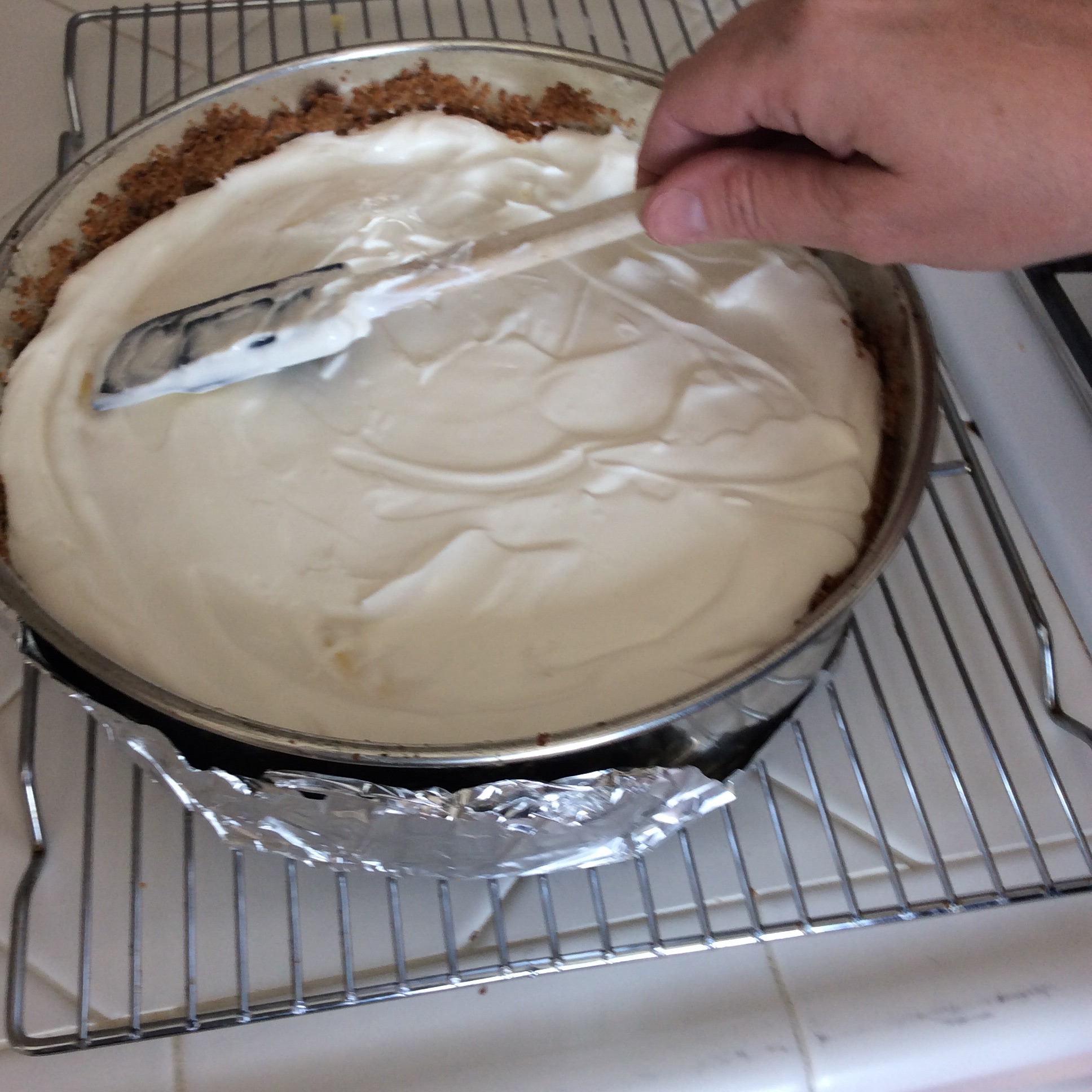
Spreading on the topping.

Spreading on the topping.

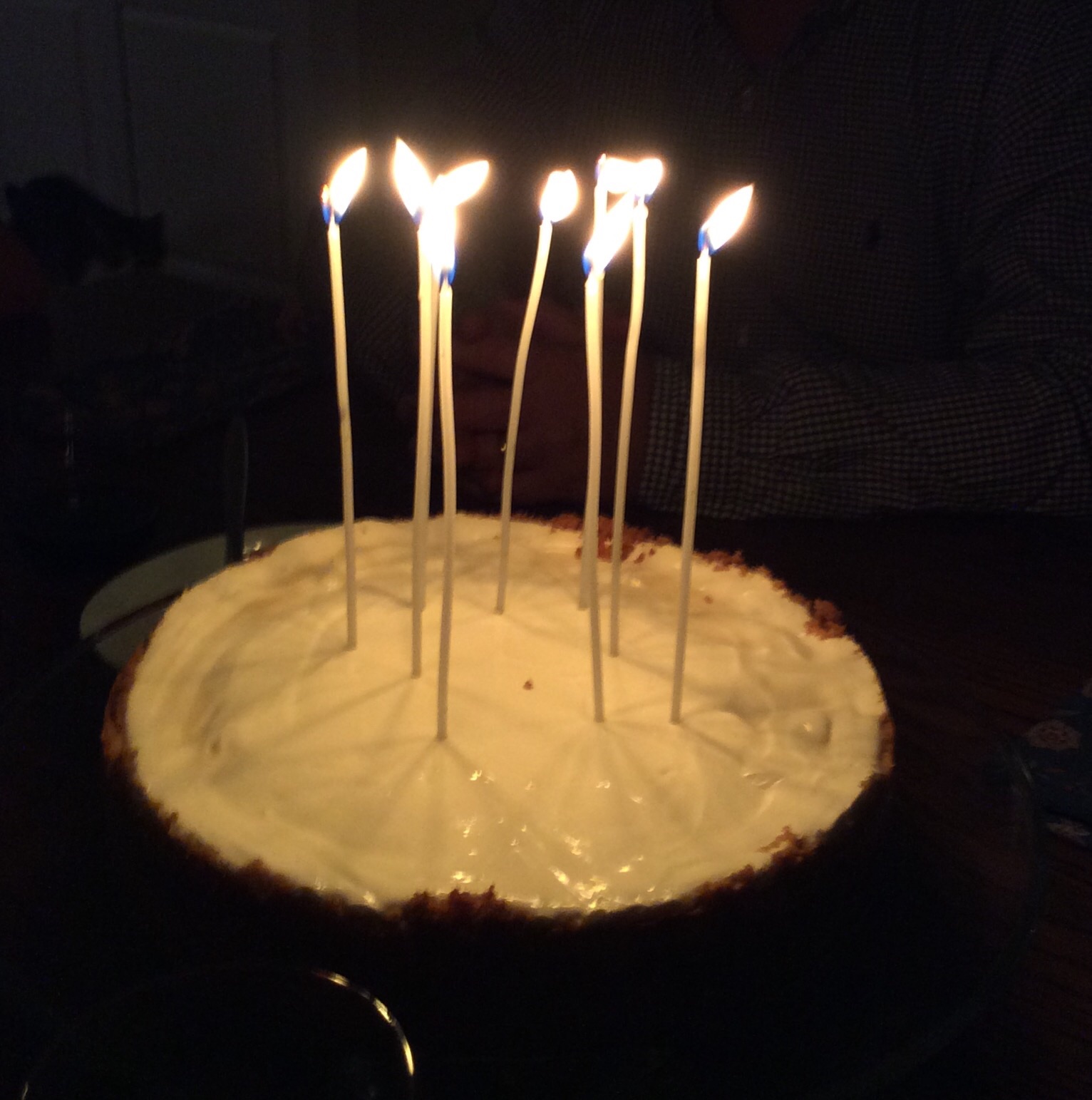
Birthday candles for more mature adults

Birthday candles counted out for more mature adults

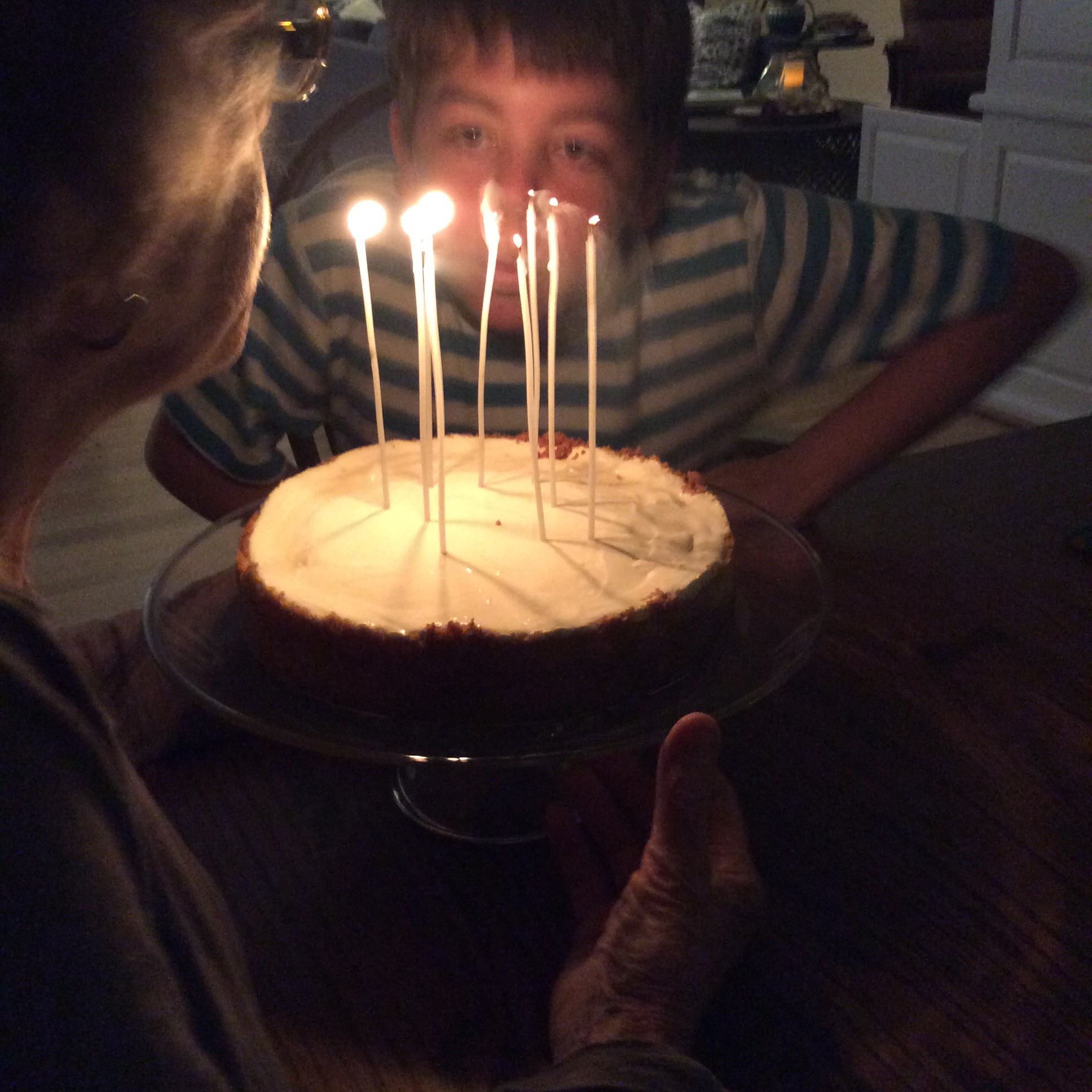
Blowing out the candles

Blowing out the candles

Cheesecake with berries

Cheesecake with berries

RECIPE

Three Cities of Spain Cheesecake

Ingredients

CRUST

  • 11 graham crackers, ground fine (1½ cups)
  • 1/3 cup unsalted butter, softened
  • 1/3 cup sugar
  • 1/8 teaspoon salt

FILLING

  • 24 ounces (3 packages) cream cheese, softened
  • 4 large eggs
  • 1 teaspoon vanilla
  • 1 cup sugar

TOPPING

  • 16 ounces sour cream
  • 1 tablespoon sugar
  • 1 tablespoon vanilla
  • berries (optional)

Method

  1. Stir together crust ingredients. Sprinkle half of mixture onto the bottom of a buttered 9½ inch springform pan. Then press the mixture up the side of the pan about 1¼ inches. Sprinkle and press the remaining half of the mixture into the bottom of the pan.
  2. With an electric mixer, beat the cream cheese until light and fluffy. Then beat in the eggs, one at a time. Beat in the vanilla and sugar until just combined.
  3. Pour the cream cheese and egg filling into the crust. Bake for 45 minutes at 350ºF or until the center of the cake is set.  Cool on a rack for 5 minutes.
  4. Stir together the topping ingredients.  Drop by spoonfuls around the edge of the cake and spread gently into the center.
  5. Return to the 350ºF oven for another 10 minutes.
  6. Remove from the oven and cool completely on a baking rack before chilling overnight in the refrigerator.
  7. Serve at room temperature with or without optional berries.

4 Comments

Filed under Food, Photography, Recipes, Restaurants, Travel

BAKED OYSTERS NEW ORLEANS STYLE

At the end of our train trip from Seattle to Los Angeles, we spent a few days with our daughter, Carol, and her family. She is an excellent cook, and she always tries to make some interesting food during our visits. She also knows that Susan loves oysters, and since she grew up in Louisiana, New Orleans style baked oysters seemed perfect – even though it is May. The recipe in her recipe box is called Oysters Mosska, undoubtedly so as not to get in trouble with Mosca’s restaurant in the New Orleans suburb of Westwego and home to the eponymous Oysters Mosca.

Mosca’s is one of the old-line favorite restaurants of local residents, having opened in 1946 and operated by the same family ever since. Part of its charm is that it is not easy to find. It is on Highway 90 a ways after you cross the Huey P. Long Bridge, but it sits back from the road, is a low-slung white-painted clapboard building that looks more like a house, and has only a small, dimly lit sign. When we were living in Louisiana, I drove right by it more than once. An interesting story is that the place was where everyone went after a night spent in the gambling houses that populated this now-lonely stretch of road. As well, rumor has linked the restaurant to the local Mafia, but the Moscas have neither confirmed nor denied that rumor.

Once inside, you are struck by the liveliness of the place. It is brightly lit and filled with families enjoying themselves. Even with a reservation you may have to wait on the straight-backed chairs lined up against the walls.

Th menu is fairly limited but filled with Italian standbys that all have a full quota of garlic. Virtually every table has at least one order of Oysters Mosca. In the old days, the dish would be served in a metal cake pan, and each diner would fish out his or her helping of succulent oysters.

To my knowledge the family has never provided an authorized version of the recipe for Oysters Mosca. We have a made-up version in our family cookbook that is a close approximation. As I mentioned above, this version comes from Carol’s recipe collection and is labelled “Oysters Mosska”, I suspect to protect against any accusations of copyright infringement.

If you do decide to visit the restaurant, be advised that they do not accept checks or credit cards – cash only. But they do have a convenient ATM inside the dining area.

Oysters cooking in liquor/beef stock sauce

Oysters cooking in liquor/beef stock sauce

Ready for the oven

Ready for the oven

Ready to serve

Ready to serve

Baked oysters New Orleans style

Baked oysters New Orleans style

RECIPE

Baked Oysters New Orleans Style

Ingredients

  • 1 tablespoon vegetable oil
  • ¼ cup yellow onion, diced
  • 1½ tablespoons garlic, chopped
  • 1 pint shucked oysters with liquor
  • 1 cup beef stock
  • 1 tablespoon parsley, finely chopped
  • Creole spice
  • salt and pepper
  • 1 cup bread crumbs
  • 2 tablespoons Parmesan cheese, freshly grated
  • 1 tablespoon basil chopped
  • 1 tablespoon olive oil

Method

  1. n a saute pan over mediu heat, cook onions untile translucent. Then add garlic and stir for about 1 minute.
  2. Add the oyster liquor and the beef stock. Bring to the boil and simmer until the liquids are reduced to about one-half.
  3. Add the oysters and parsley. Return to the boil and then remove from heat. Adjust seasoning with Creole spice, salt, and pepper.
  4. Transfer to a metal cake pan or a shallow baking dish.
  5. Combine bread crumbs, Parmesan, chopped basil, 1 teaspoon of Creole spice, and olive oil. Sprinkle over the top of the oysters.
  6. Place under a pre-heated broiler for 8 to 10 minutes or until the top is brown and bubbling.
  7. Serve immediately. 2 or 3 servings

2 Comments

Filed under Food, Photography, Recipes, Restaurants, Travel