Category Archives: Food

STUFFED SQUASH BLOSSOMS

Summer squash season is at its peak in our local farmers market. The same is true for our neighbors who grow a zucchini plant or two. There are lots of delicious recipes for summer squash, but even the biggest fan tends to grow a little weary about now. Zucchini bread and cake can’t be far away. For all of that, now is the time to start cooking with squash blossoms – they are almost as versatile as the fruit itself – you can put them in scrambled eggs, omelets, soups, salads, and quesadillas. But my favorite way to prepare them is to stuff them, dip them in a light tempura batter, and deep fry them.
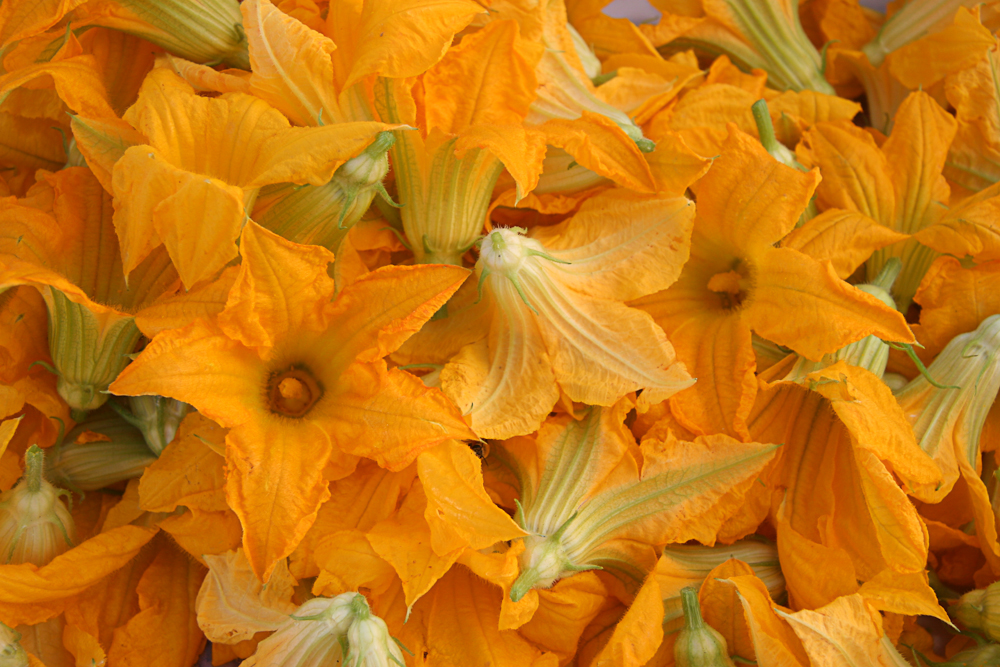
Squash blossoms at the farmers market

Several vendors at our local farmers market specialize in these beautiful offerings, so it is easy to find baskets filled with golden-yellow, delicate blossoms. The farmers usually sell the flowers by the dozen, and you can pick out your choice specimens. If you are a home gardener, you can harvest your own. Select the male flowers (those growing on long stems) so you can keep your harvest of squash (that develop on the female flowers) coming until the cold weather. Whether you buy them or grow your own, you should use the flowers as soon as possible after they are picked. For those from the farmers market, try to use them that same day. They will keep for another day if you keep them in a bag in the crisper of your refrigerator, being careful not to squash them – so to speak.

Some recipes call for removing the long stamen from the center of the flowers before you stuff them, but I prefer to just leave that in (it’s perfectly edible), and my experience is that trying to remove it often leaves you with a mangled flower.

Stuffed squash blossoms ready for batter

When it comes to a choice of stuffing, let your imagination go. Something light probably works best, and don’t use anything that takes a long time to cook, because the battered blossoms will brown in a flash. My favorite stuffing mixtures include cream cheese, good melting cheeses, mushrooms, and nuts.

Stuffed squash blossoms are a perfect accompaniment to cold drinks on the patio, but be sure to make plenty – at least three per person – because they will disappear more quickly than a frosty margarita.

Ingredients
2 Tablespoons butter
4 mushrooms, washed and chopped finely
2 green onions
1/4 Cup unsalted green pepitas, chopped coarsely
1/2 teaspoon salt
1/4 teaspoon black pepper
1/2 teaspoon smoked Spanish paprika
2 ounces cream cheese, room temperature
1/4 Cup Parmesan cheese, finely grated
12 squash blossoms

1 Cup all-purpose flour
2 Tablespoons corn starch
2 teaspoons baking powder
1 teaspoon salt
1 Cup beer, cold
peanut oil for frying

1. In a small skillet over medium heat, melt the butter and then add the finely chopped mushrooms. Cook, stirring frequently, until the mushrooms have released their moisture and it has evaporated.
2. Clean and chop the green onions, including much of the green stems. Then add to the mushrooms, along with the pepitas, continuing to stir frequently for 2 or 3 minutes until the mixture is well combined and evenly cooked. Add the seasonings and remove from the heat to cool.
3. When the mixture is completely cooled, stir in the cream cheese and grated Parmesan, correct the seasoning, and prepare the squash blossoms for stuffing. Do not wash the blossoms
4. One blossom at a time, open the flower gently, spreading the petals so that you can see the deep hollow of the blossom. With your fingers, place about a heaping teaspoonful of the stuffing mixture into the hollow and press it down carefully so that you do not split the petals. Then gently fold the petals over the stuffing, one at a time. You can use a tiny dab of the stuffing mixture to seal the last petal to the little package you have made. Place the stuffed blossom on a plate with the stem pointing straight up.
5. Repeat the process until all the blossoms have been stuffed and arranged on the plate. Transfer the plate to the refrigerator until you are ready to fry the squash blossoms
6. In a medium bowl, combine the flour, corn starch, baking powder, and salt. Then stir in the cold beer. If you prefer, you may substitute a cup of ice water for the beer. The beer will foam up. Don’t worry. The batter will be lumpy. Again, don’t worry – and don’t try to make it smooth.
7. While making the batter, heat enough peanut oil to be about 3 inches deep in a deep-sided pot. Use an instant-read thermometer to make sure the oil is at 350°. You are then ready to fry the blossoms.
8. Remove the blossoms from the refrigerator, dip them in the batter one at a time and transfer them to the cooking oil. You may fry three or four at a time, but be careful not to crowd them. Turn them once while they are frying, and remove them when they are a pale golden brown. Be careful not to let them brown too deeply. Drain them on several thicknesses of paper towels, and serve them immediately while still hot. If necessary, you can hold them for a short time in a 200° oven, but the fresher they are, the better.
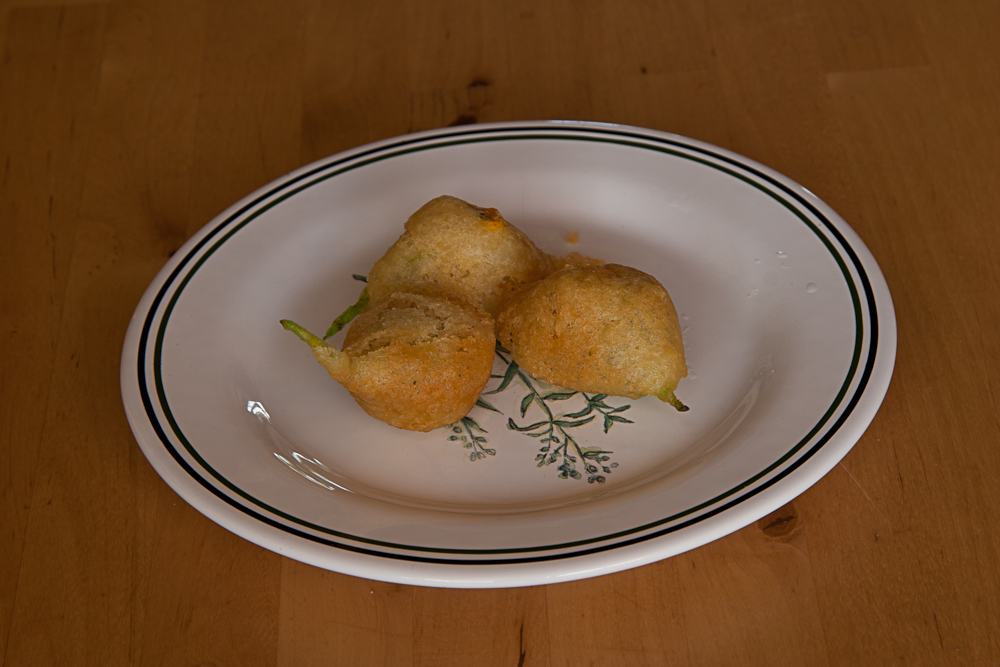
Squash blossoms ready to eat

Yield: Serves four with drinks

4 Comments

Filed under Food, Photography

RETURN OF THE NATIVE – PLANT SOCIETY, THAT IS

Mexican hatsGravlox with Swedish mustard sauceGravlox with Swedish mustard sauce

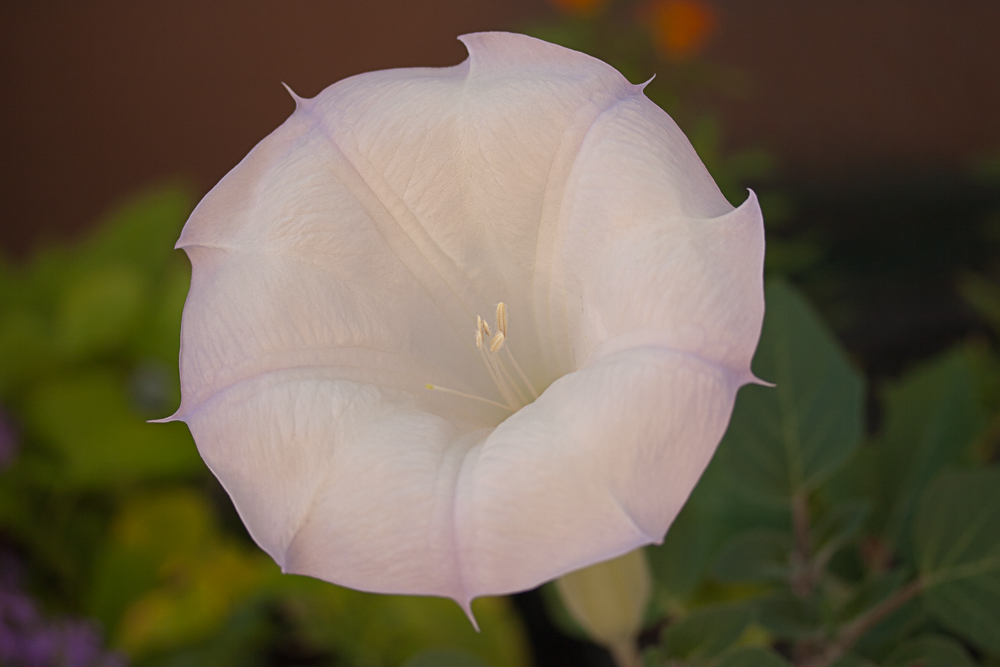
Datura

Butterfly weed

Just the other day we hosted the board of directors of the state chapter of the Native Plant Society. There were forty or fifty people milling around in our backyard, admiring all of the native (and xeric) plants that my good wife has made so much effort to nurture in our drought-plagued high-desert environment. The butterfly weed had begun to fade, but its bright orange flowers created vivid contrasts with the yellows of the evening primroses and desert zinnias. The Mexican hats showed their jaunty heads all around the garden, and the giant blooms of Datura – one of the local “weeds” that Georgia O’Keeffe so favored in her paintings – gradually faded as the evening wore on. Penstemons and salvias attracted the black-chinned and broad-tail hummers even while human intruders marveled at their acrobatics.

Individual caprese with cherry tomatoes

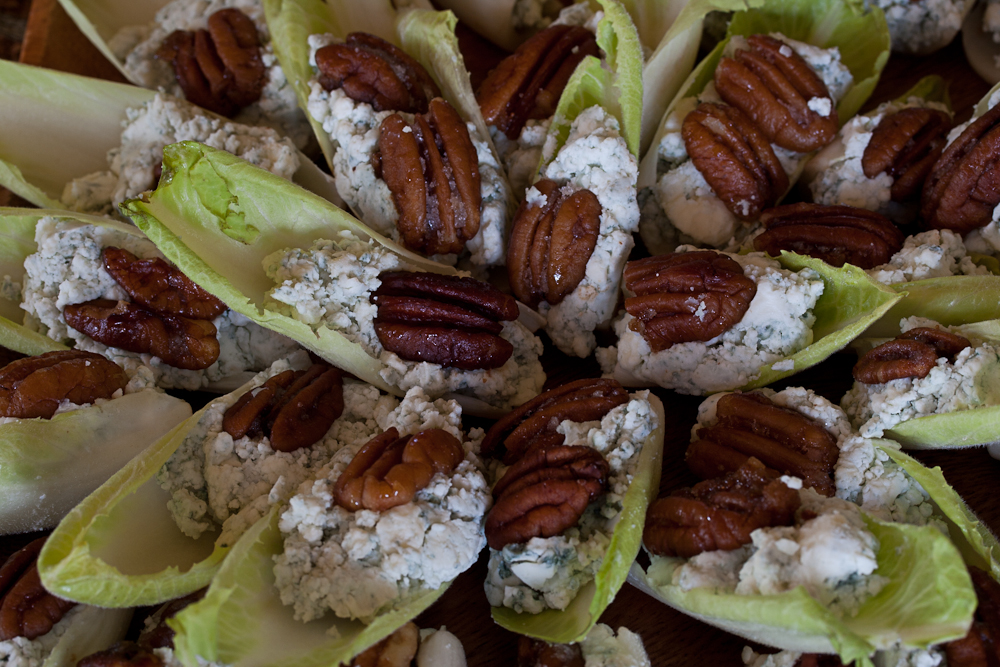
Belgian endive stuffed with goat cheese and pecans

Nature aside, the other highlight of the evening was the food that the local planning committee brought to feed the multitude. I can’t describe them all, but there were beautiful platters of unusual crudités, Vietnamese spring rolls, Belgian endive leaves stuffed with goat cheese and pecans, and little individual capreses made with cherry tomatoes, fresh mozzarella and basil leaves on a stick. My contributions were gravlox made from wild Alaska sockeye salmon, Swedish mustard sauce, and bacon-wrapped dates stuffed with pimentón-dusted marcona almonds. One person worried about possible infections from cured salmon. The risks seem minimal, and there is no consensus on what the risk actually is. Since almost all seafood in our local stores comes to us already frozen, there is probably no risk, but if you are really concerned, freeze it again. The recipe for mustard sauce comes from a dear friend from Sweden.

RECIPES

GRAVLOX

  • 3 to 4 pounds salmon, scaled with skin on (two filets)
  • 1 large bunch fresh dill, washed and shaken dry
  • ¼ cup kosher salt
  • ¼ cup sugar
  • 2 tablespoons black peppercorns, lightly crushed

Gravlox with Swedish mustard sauce

Place  one filet, skin-side down in a deep glass bowl or pan. Cover with the dill. Then sprinkle with the salt, sugar, and pepper. Cover with the remaining salmon filet, skin-side up and cover with plastic wrap. Weight down with a heavy pan or several cans of food, and refrigerate. Turn the fish twice a day for three days. A liquid marinade will develop. Spoon this over the fish as you turn it. Then recover, replace the weights, and return to the refrigerator. When you are ready to serve, remove the salmon from the pan, scrape off the dill and peppercorns, and slice with a very sharp knife held almost flat against the surface of the fish. If you do this correctly, you should get very thin slices without cutting into the underlying skin. A special salmon slicer works best.

ELISABET’S DILL MUSTARD SAUCE
    • ½ cup prepared mustard
    • 3 tablespoons Dijon mustard
    • ¼ cup vinegar
    • ¼ cup sugar
    • ½ cup salad oil
    • 4 tablespoons fresh dill, finely chopped
 Place mustards, vinegar and sugar in a small bowl and whisk until the sugar is dissolved. Add the oil in a thin stream, beating continuously. Stir in the chopped dill. Serve.

1 Comment

Filed under Food, Photography

ELEGANT BARBECUE

“Elegant” and “barbecue” are two words that don’t seem to go together, and the concept seems to be an oxymoron. But recently my daughter and son-in-law prepared a feast for a client showing that you can create eye-popping food from old barbecue standbys.

Barbecued ribs

Of course, the main event – ribs – is something that you don’t want to mess with, especially if you are the weekend grill king and have a recipe that goes back to your grandfather.

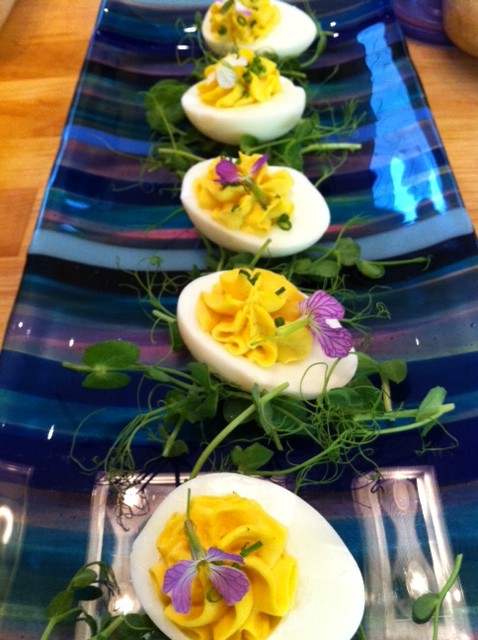
Smoked-trout deviled eggs

But the side dishes can be as complex as your imagination. For example, deviled eggs are usually pretty ho-hum. Try to add some spice by using something like smoked trout.. You can do it easily if you have a backyard smoker, but you can even do it in your kitchen with a Cameron stove-top smoker.  Follow the directions, put a heap of wood chips in the bottom, close up the top, turn on the heat to medium, and smoke for 20 minutes or so. Just be certain that the lid fits tightly and is completely sealed. Otherwise the smoke alarm will disturb the neighbors. When the fish is smoked and the heat is off, carefully remove the lid of the smoker and transfer the trout to a cutting board where you can remove the skin and bones. Then flake the fish and mix it with a little of the sieved egg yolks from your hard-boiled eggs. Season as you wish and pipe the mixture into the waiting egg white halves. Decorate with whatever comes to mind – a sprig of fresh dill, a dab of caviar, or edible flowers.

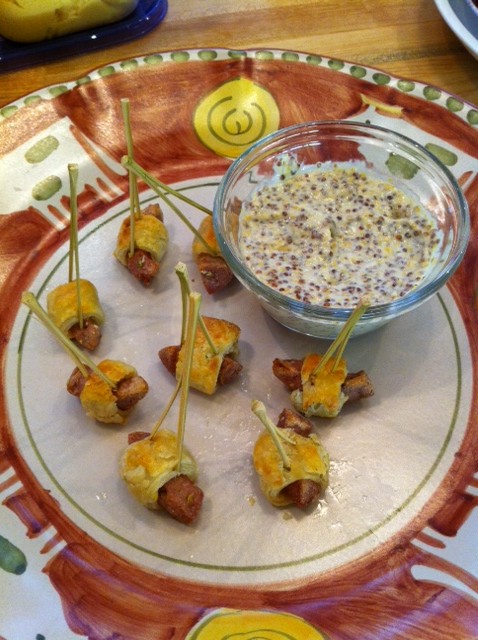
Mortadella pigs-in-a-blanket

Hot dogs are pretty standard barbecue fare, and for me, nothing beats a well-grilled hot dog topped with ketchup, mustard, relish, onions, and whatever else you can think of. Still, the lowly hot dog can hardly be considered elegant. Here’s how you dress it up – try tiny little mortadella sausages wrapped in pastry as pigs-in-a-blanket, and serve them with a piquant mustard-seed dipping sauce.

Frito chili canapé

Even chili and corn chips can be dressed up. Use your favorite chili recipe, preferably without beans, and then spoon it into those big corn chips designed for scooping dips. Garnish each one with a dab of sour cream and a sprinkle of grated cheddar cheese. Arrange the individual chips on a bed of lettuce and let the guests have a go. You and they will all have a good time with this twist on old-fashioned Frito pie.

Leave a comment

Filed under Food, Photography

MOTHER’S NIGHT OUT – OR IN – AS THE CASE MAY BE

Goat cheese semifreddo with figs and walnut nougatine

It seems as though I have spent a fair amount of this summer cooking for myself or eating out or making do with popcorn. The reason is that my wife has been very busy on the baby-sitting circuit, a task that she enjoys. I am glad that our children and grandchildren, too, enjoy the visits. We are a conventional modern American family spread out all over the map. In times past, when parents needed a helping hand for whatever reason, Grandma lived just next door or even in the same house. That was certainly true when I grew up, and I spent many a day in my grandmother’s kitchen watching her cook or helping her with the bread making.

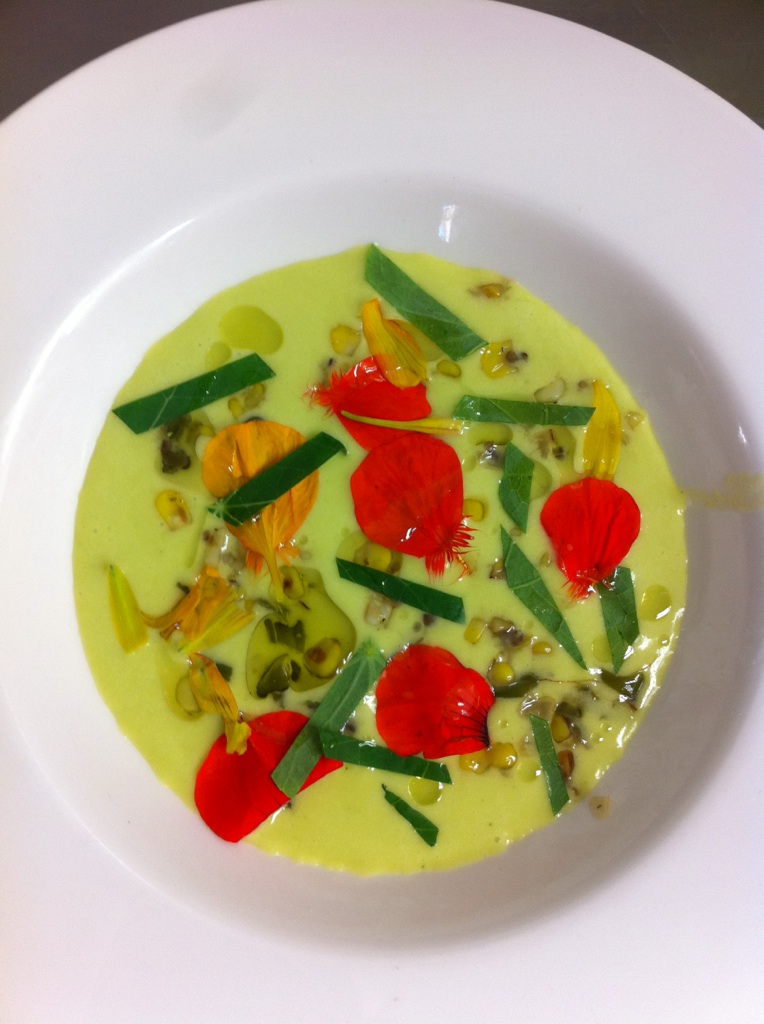
Chilled corn soup with padron peppers and nasturtium flowers

No more; and with two breadwinners in all of our family households, the emergencies seem to be frequent and without a local resolution. The good thing is that all of our children live just a short distance from a good-sized airport, and so do we.
So far this summer, one baby-sitting job occurred because Mom had to go on a business trip while Dad had some major work responsibilities. Another time, Mom had some responsibilities at work, and the kids were out of school with no place to go. Yet another time, one of our daughters became a first-time mom, so of course that required some grandmotherly help. That daughter is a professional chef who worked nearly up until her delivery. Now she is anxious to get back to work, but restaurant and baby schedules are in direct conflict because so much of both occur late at night.
A couple of weeks ago, my wife went to take care of our 3 month-old grandson while my daughter did the pop-up dinner I wrote about recently. It was a very successful event, so my daughter and her husband scheduled another dinner. Big problem – Grandma had already scheduled a baby-sitting date with my other daughter, who had a major project to complete at her work with no reliable childcare backup. Fortunately, she and my wife had built in a little slack in their schedules, so she [Daughter1] was able to fly up from Los Angeles to San Francisco for a day to help Daughter 2 with baby care.
It was a long day and night as Daughter 2 cooked and cleaned up until 2 AM. Baby managed to keep Auntie awake most of that time, and then the return flight to LA was so early in the morning that Daughter 1 got virtually no sleep. She also got no leftovers, so she didn’t get to enjoy what turned out to be another great meal. Still, she didn’t complain because she got to enjoy her young nephew.

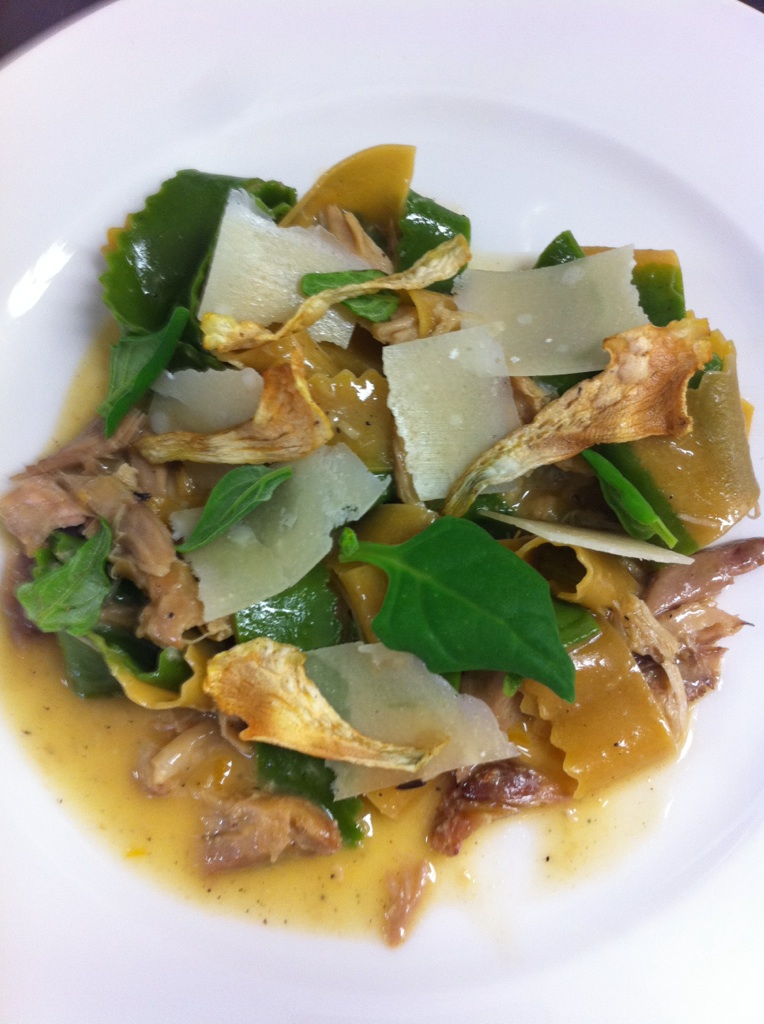
Pappardelle with Douglas fir-roasted chicken and preserved lemon

     Thus is the life of modern mothers and grandmothers. It is hard to see how they manage to squeeze everything into a busy life and do it with love and patience. My hat is off to all the women in my family, including my busy daughter-in-law. They all deserve the love and support of their spouses. Fortunately, I think they all get that {Though secretly they probably all wish it could be more.)
Images this time are from the preparation and presentation of the most recent pop-up dinner.

Leave a comment

Filed under Food, Restaurants

GARLIC SCAPES

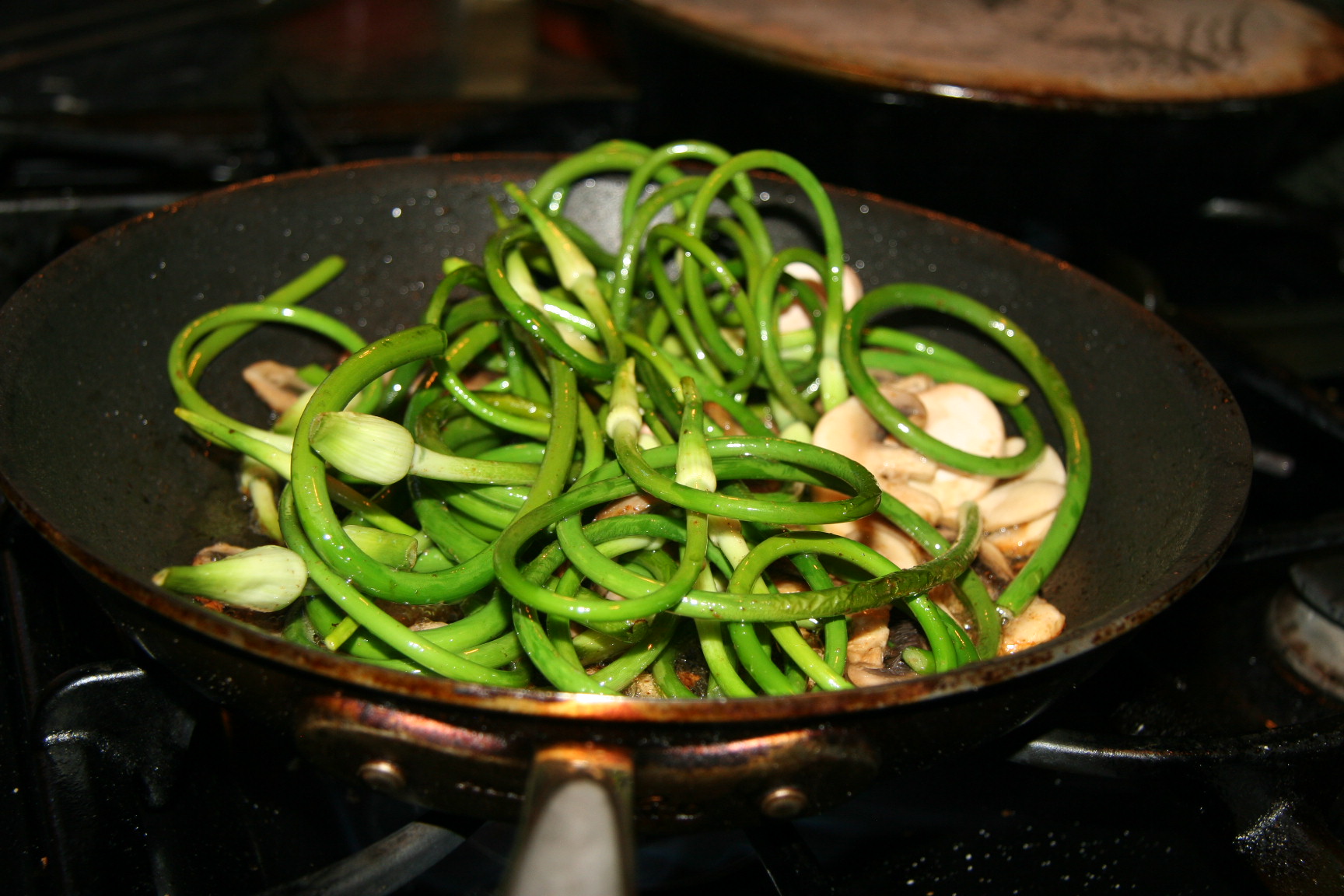
        In our area, the green garlic season is over and so are fresh green garlic soup or green garlic focaccia. The real garlic season is still ahead with the Gilroy Garlic Festival, braids of plump garlic heads, and roasted garlic. . In a very small window of opportunity, it is possible to enjoy garlic scapes. But that window is very narrow, and unless you live in northern climes, you may have already missed it. Still, it is worth a look as you stroll past the booths in your local farmers market. Garlic, like most other allia including chives and onions send up a single, usually leafless flowering stem from the crown of the plant. The flowers blossom – often beautifully – and form seeds or small plantlets. Garlic growers may harvest green garlic early in the spring, but after the scapes appear, the farmers trim them off so that the energy of the plant is pushed toward producing big garlic bulbs that are attractive at the market. Often the scapes curl back on themselves with the flower bud a prominent feature. This curly show is attractive and makes for some unique cooking. Just be careful that when you buy scapes that you select young ones with a tight flower capsule and tender stems. Scapes that are harvested too late can be straight, woody and tough. Once that happens, it is nearly impossible to cook them to tenderness.
        Speaking of Gilroy, the Garlic Festival is just around the corner (July 29 through 31). They call themselves the garlic capital of the world. That is probably not true. If you buy your garlic at the local supermarket, there is a good chance that it comes from China! China produces over 75% of the world’s supply of garlic and nearly 55 times as much as the United States.
        So what do you do with scapes? You can do about the same things that you do with green garlic, but even better is to use them simply sautéed or incorporated into a main dish like a frittata.
RECIPES
SAUTÉED GARLIC SCAPES AND MUSHROOMS
Ingredients
4 Tablespoons butter
2 Tablespoons extra virgin olive oil
4 Cups (about) tender, young garlic scapes trimmed of any woody stems
8 oz cremeni mushrooms, cleaned, trimmed and sliced
1. Heat the butter and olive oil in a medium saucepan over medium heat. When the butter has stopped foaming, add the scapes and mushrooms.
2. Toss frequently until the scapes are softened and slightly wilted and the mushrooms are cooked through (about 5 to 10 minutes) Serve immediately.
Yield: Serves 2 to 4 as a side dish

Sautéed garlic scapes and mushrooms

BACON, POTATO AND GARLIC SCAPE FRITTATA
Ingredients
8 slices bacon
2 russet potatoes, scrubbed
4 Cups tender, young garlic scapes, trimmed of any woody stems
6 large eggs, beaten
½ Cup cream
1 ounce Swiss cheese, shredded

1. In a large oven-proof cast iron frying pan, cook the bacon over medium heat until crisp. Remove the bacon, drain on paper towels, and chop coarsely. Set aside
2. In the meantime, slice the potatoes in half lengthwise and boil in salted water for about 20 minutes until soft but not completely cooked. Drain, cool and cut into ¼ inch thick slices.
3. Add the potato slices to the still hot bacon drippings and stir occasionally until they begin to brown lightly. Add the scapes and continue to stir until the scapes are softened and slightly wilted. Remove from the heat and stir in the chopped bacon.
4. In a bowl, combine the beaten eggs and cream. Then pour over the potato-scape-bacon mixture, stirring to evenly mix.
5. Sprinkle the grated Swiss cheese over the top
6. Place the iron frying pan in the middle of an oven preheated to 275°. Bake for about 30 minutes or until the eggs are set and the cheese is bubbling.
7. Remove from the oven, cut into wedges, and serve immediately
Yield: Serves 4 to 6 for breakfast or a light lunch.

Bacon, potato, and garlic scape frittata

Bacon, potato, and garlic scape frittata

2 Comments

Filed under Food

POP-UP DINNERS POP UP ON MY RADAR SCREEN

Until recently, I thought that the phrase, “pop up” referred to a fly ball in baseball, or an ad on my computer or a kind of camper or even the electropop album by Yelle. But in the food world, it means none of those things. A pop-up dinner is a new trend in food meccas like San Francisco. Lots of restaurants are closed on Monday (Don’t you already know that if you try to eat out on Monday?) So they are not making any money on Mondays With pop-up dinners, other chefs take over the kitchen for the night to prepare what usually turns out to be a great meal with a different twist than that of the regular kitchen. It gives the itinerant chefs a chance to publicize their skills, and it gives the restaurant a chance to make some extra cash There are lots of different arrangements, but one of the most common is for the chefs to cover the costs of food and extra help. They then receive the profit from the meal. At the same time, the restaurant gets the revenues for beer, wine, and spirits. This is usually a win-win-win, because the guests enjoy what is likely to be a great meal, the chefs make a profit, and the restaurant enjoys revenues from a space that would ordinarily only be costing rent on a closed Monday night.
Recently, my daughter and son-in-law, both experienced chefs from Michelin-rated restaurants in New York and San Francisco, and their pastry-chef friend, Max Pouvreau, sponsored a pop-up dinner at the popular SoMa restaurant, Radius. The place was packed, and the guests got to enjoy a creative and eclectic menu with Italian, French, and Asian influences.
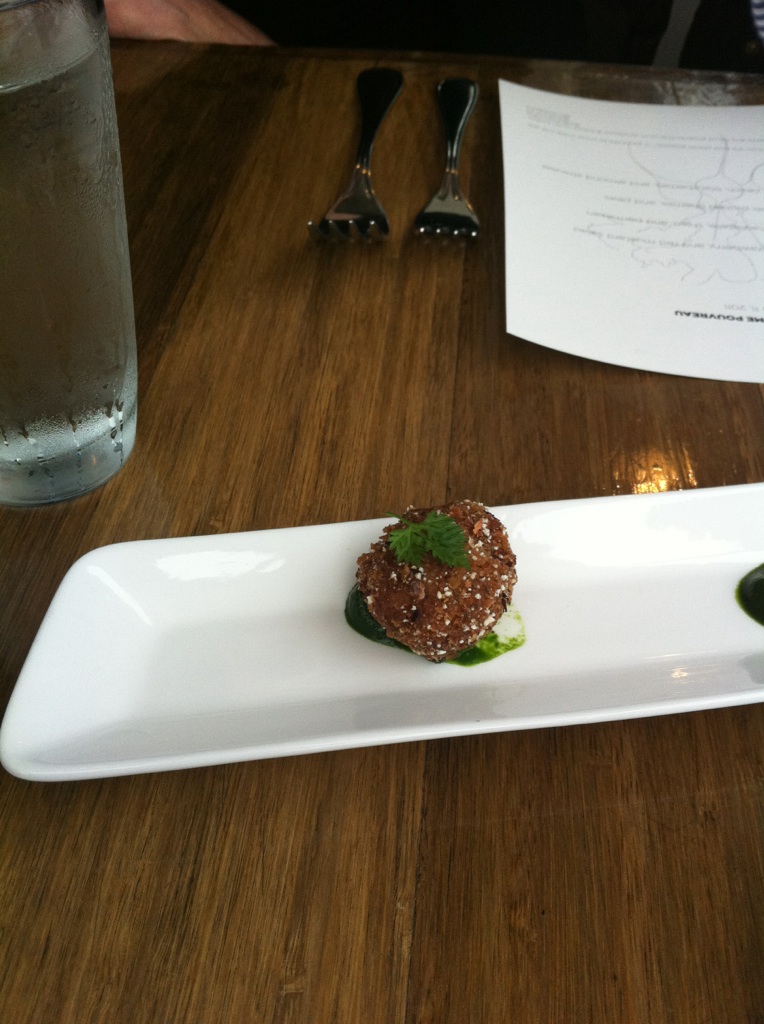
The first course was an onion croquet served on a puree of spinach and cilantro. The inspiration was a Japanese curry house in the Richmond area, Volcano. Who would suspect that onions could taste so good?

First course onion croquet

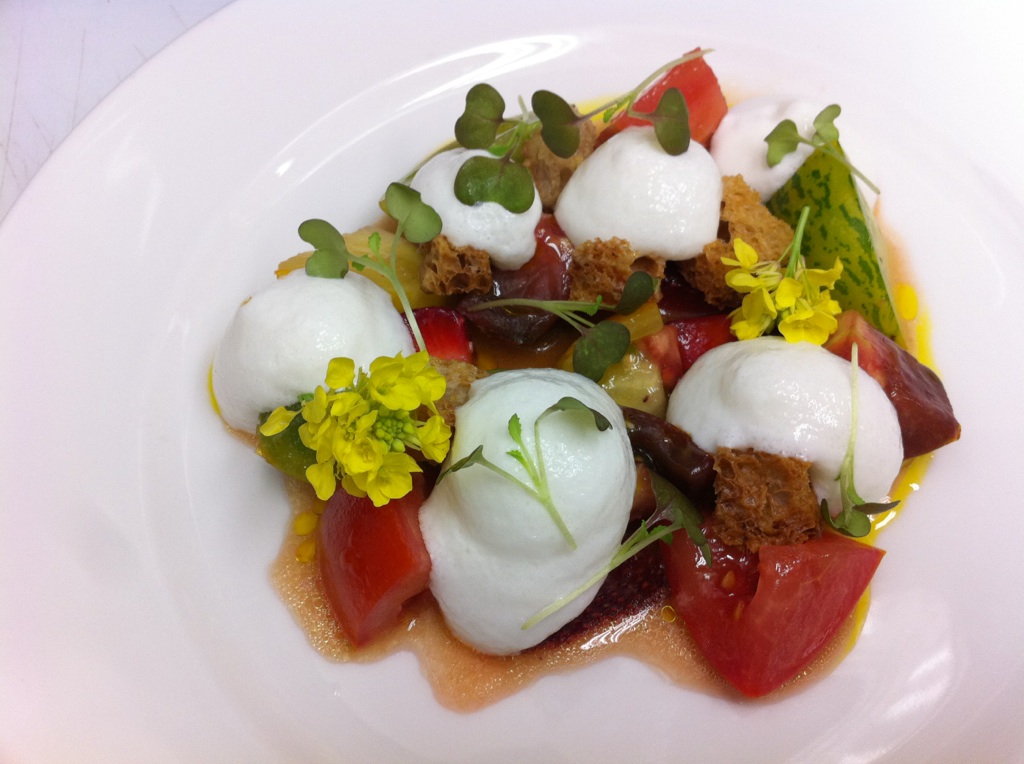
Next came a salad of tomatoes, strawberries, burrata, and red mustard flowers. For those of you who may not have tried burrata cheese, the name comes from the Italian word for “butter”, and the cheese originally came from the Italian region of Puglia. It is made by creating a pouch of freshly made string cheese, filling it with scraps of mozzarella and topping it off with cream before being closed with a tie and wrapped in fresh green leaves. This version was a little different in that the cheese and cream were combined and then whipped together to make delicate, airy pillows with an incredible buttery richness that burst onto the tongue with the first bite.

Tomato, strawberry, and burratta salad

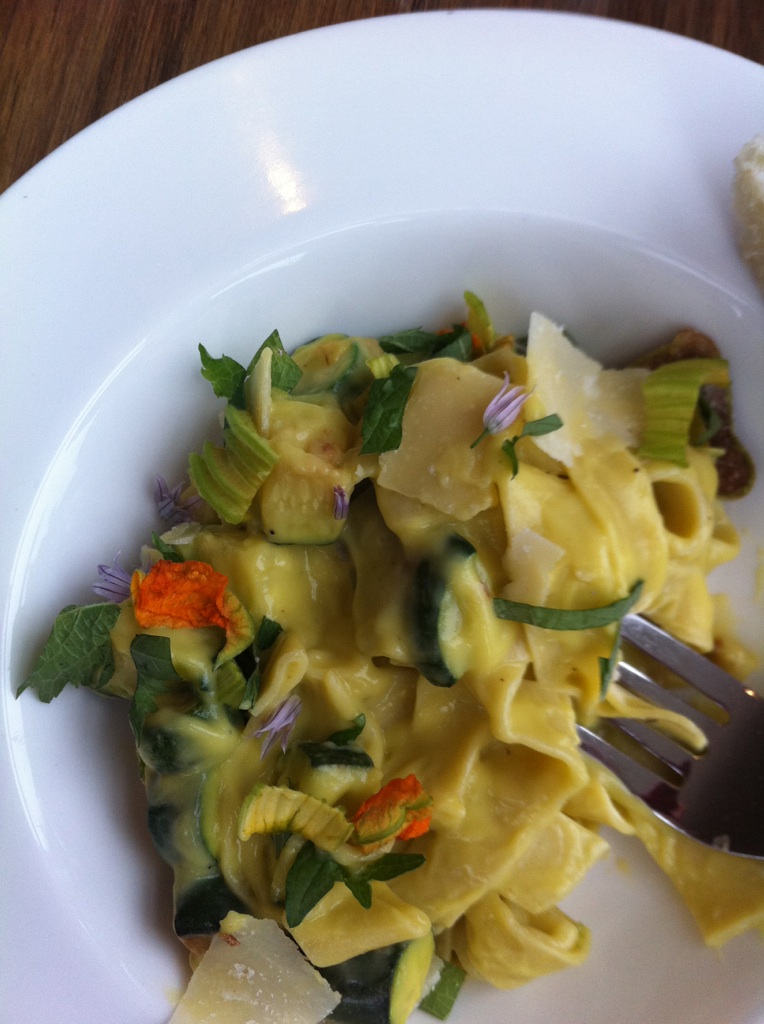
The third dish was summer squash tagliatele with shiso (an Asian herb that combines the flavors of cumin, cinnamon, and basil) and Parmesan. The pasta was rich with egg yolk and wonderfully tender.
Another little amuse bouche was diced cucumber in cucumber gel laced with fresh horseradish, nori powder, and topped with fresh wild radish flowers which had been foraged earlier in the day.


The main dish was buttermilk-poached chicken served with farro, pickled cherries, and fresh green peas.

Buttermilk-poached chicken

Two desserts finished an evening of feasting: The first was blackberry-soaked peaches served with a creamy nasturtium namelaka and almond streusel. The second was a pair of delicate beignets served with a jam of tomatoes and strawberries.

Blackberry-soaked peaches with nasturtium namelaka

All of this suggests that you might enjoy trying out a pop-up dinner. In San Francisco, you can find out about them on one of the food gossip websites: http://www.sf.eater.com or http://www.sanfrancisco.grubstreet.com
If you want to find out where Sarah, Evan, and Max will be next, check out http://www.facebook.com/ChefsNightOff or they can make a reservation at chefsnightoff@gmail.com

2 Comments

Filed under Food, Restaurants

CHILLED FRESH GREEN PEA AND MINT SOUP

The finished product with crusty bread on the side

In our local farmers market, green peas (also known as English peas as I learned when I moved to Texas) are at their height, and nearly every vendor has a pile of bright green pods prominently displayed at the front of the stall. Prices are reasonable, too, if you are willing to make the effort to shell the beautiful green taste treats. My favorite way to eat fresh peas is directly out of hand from the pod, but there are lots of other ways to enjoy them when they are fresh. Pea salads are classics – with many versions to choose from – and a handful of fresh peas in a pasta salad perks up what can be a tired, clichéd tradition of summer. Braised peas and lettuce is also a good dish, or you can simply pan fry some peas in butter for a delicious treat.

But I have always wondered if there isn’t something to be done with the empty pods besides putting them in the compost pile. Of course, that is not a problem with edible peapods or sugar snap peas, but in my view neither of these choices has the flavor and bite of peas out the shell. So I wind up with lots of leftover peapods.
I asked my daughter, the San Francisco chef, if she had suggestions, and she said that she always uses them to make peapod stock that can then be used as any other vegetable stock or – better – as the base for a fresh pea soup. This recipe comes from that discussion. It is important to cool the cooked peas as quickly as you can to maintain the bright green color.

Ingredients
1½ pounds fresh peas in the pod
2 Tablespoons extra virgin olive oil
½ white onion, diced
4 Cups water
8 black peppercorns
2 teaspoons kosher salt
3 Cups loosely packed fresh mint leaves, washed
1½ Cups buttermilk
juice of ½ fresh lemon
1. Shell the peas and store them in the refrigerator until ready to use. Chop the empty peapods coarsely and set aside.
2. In a 4 quart or larger stock pot, heat the oil over a medium low flame, add the chopped onion, and cover for about five minutes to allow the onions to “sweat”.
3. Add the chopped peapods and the 4 cups of water, or enough to cover the pods. Bring to a boil and add the salt and peppercorns. Boil gently for about 30 minutes. Then strain and return the strained liquid to the pot. Reduce the volume to about one-half.
4. Add the reserved peas and mint leaves and continue to boil gently for about 5 minutes or until the peas are tender.
5. Remove the pot from the heat and place in a large bowl filled with ice water and stir the mixture constantly so as to cool quickly.
6. Transfer the cooled mixture to a blender. You may need to do this step in batches. Hold the lid of the blender firmly while you start blending on the lowest setting, increasing the speed gradually. The mixture should form a fine puree. It is not necessary to strain it.
7. Stir in the buttermilk and lemon juice. Correct the seasonings with salt and pepper.
8. Chill in the refrigerator for at least 3 hours before serving.
9. Garnish, if you like, with the dollop of sour cream or Greek yogurt and a sprig of mint
Yield: Serves 4

Leave a comment

Filed under Food